Optimizing Draw Frame Doubling Ratios for Wet Spun Fine Linen Yarns
Optimal wet flax doubling balances three draw passages to keep sliver mass variation below three percent CV for fine yarns.
Gill
Intersecting fallers control long bast fiber bundles mechanically before wet drafting occurs. In long-staple flax processing, the initial draw frame transforms hackled line flax into a uniform continuous strand. Hackled flax bundles enter the first drawing passage at linear densities between 15 ktex and 25 ktex.
These heavy strands contain varying bundle widths, residual shive fragments, and uneven fiber groupings left after comb processing. Controlled mechanical pinning regulates movement through the drafting zone, keeping the strand steady during attenuation.
Needle Field Dynamics
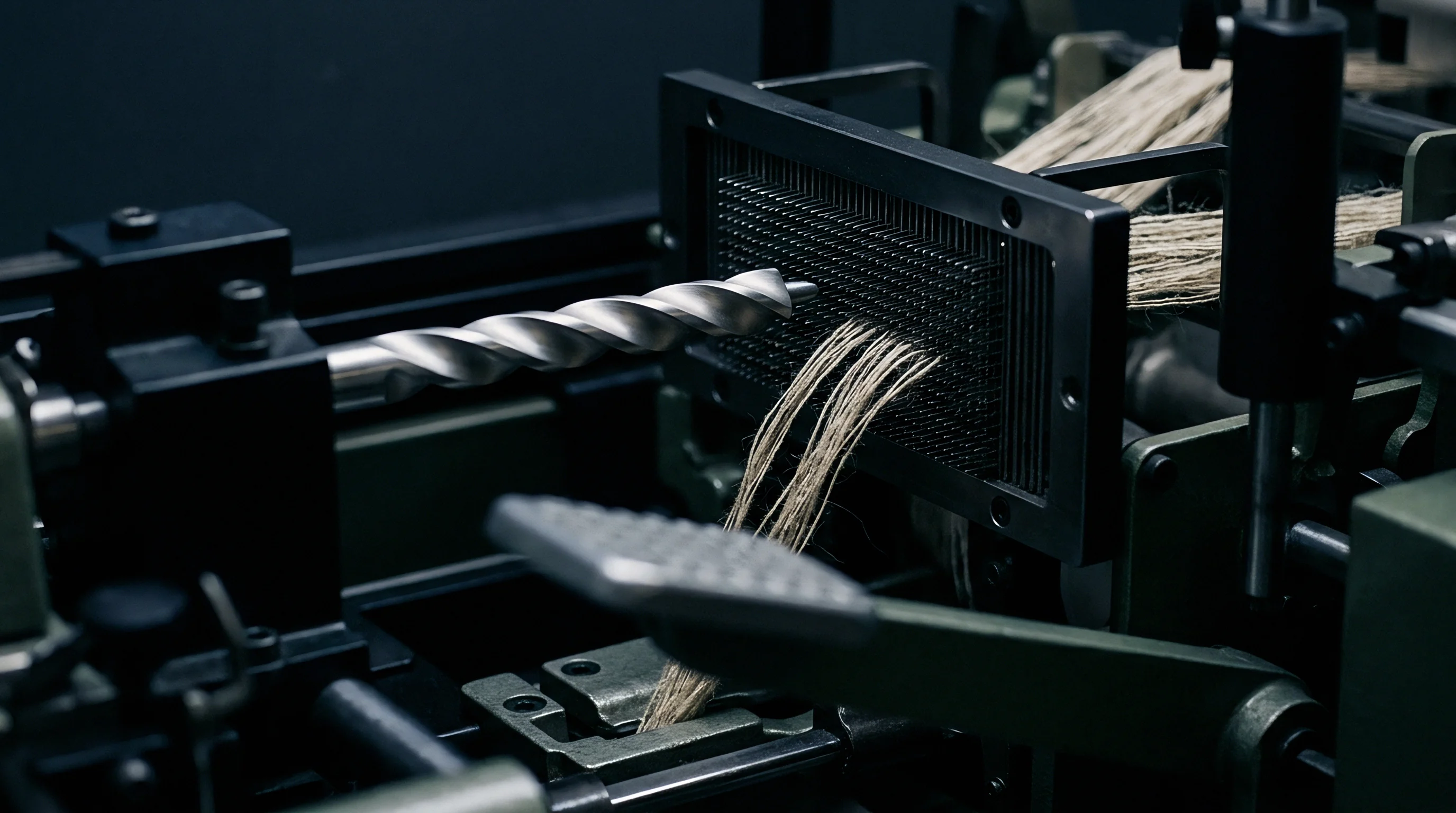
Mechanical transport across the drafting zone demands controlled pin spacing to maintain parallel alignment. Faller bars equipped with steel pins penetrate the bed of fibers, holding shorter strands while long strands slide forward under front roller traction. Pin density increases across successive passages.
The first passage utilizes coarse pin sets at 2.5 to 3.5 pins per centimeter, while the third passage employs finer sets reaching 6 to 8 pins per centimeter. Improper pin density creates uneven drafting zones, causing premature bundle separation or fiber breakage.
Fibers travel through the bed under constrained mechanical friction. Coarse strands resist uniform draft, and if pin bed density fails to match average fiber bundle fineness, groups of unrefined fibers pull through as consolidated clumps. This generates thick places in the drafted sliver.
The nip point between the front draft rollers and the emerging faller field serves as the primary control zone for mass variation.
Passage Allocation and Fiber Parallelism
Linear delivery rates directly dictate mechanical friction within wet bast processing lines. Scutched and hackled line flax requires three distinct drawing passages before roving. The first passage emphasizes fiber straightening and mass reduction; the second focuses on blending and evening out mass variations; the third establishes final sliver weight and maximum fiber orientation prior to roving frame insertion.
Top roll pressure at each drawing head maintains firm contact without crushing delicate flax structures. Synthetic rubber aprons or leather covers on top rollers absorb minor thickness spikes, whereas harder synthetic compounds with Shore A hardness between 80 and 85 provide consistent grip on damp or unconditioned flax strands. The table below outlines standard mechanical parameters across three consecutive draw passages for line flax intended for fine counts.
| Passage Order | Pin Density (pins/cm) | Applied Draft Range | Roller Pressure (daN/cm) | Target Sliver Weight (ktex) |
|---|---|---|---|---|
| Passage I | 2.8 to 3.2 | 4.5 to 5.5 | 35 to 40 | 10.0 to 12.5 |
| Passage II | 4.5 to 5.5 | 6.0 to 7.5 | 40 to 45 | 3.0 to 4.5 |
| Passage III | 6.5 to 8.0 | 7.0 to 9.0 | 45 to 50 | 1.2 to 2.0 |
Operational success relies on systematic equipment setup across every head, where standardizing mechanical adjustments avoids localized drafting failures.
A disciplined review of machine parameters prevents drafting errors before material enters production.
- Pin Bed Condition checking for bent, worn, or missing faller pins across all heads avoids localized mass defects.
- Roller Gauge Distance matching top and bottom roller center spacing to fiber bundle length distributions prevents fiber pinching.
- Sliver Cohesion Tension adjusting back-creel tension prevents pre-drafting stretch before strands enter faller pins.
- Delivery Speed Settings balancing linear output speeds against faller fall rates avoids mechanical jamming.
When sliver mass variation exceeds nominal limits, raw material length variation is frequently blamed rather than incorrect pin bed selection or roll pressure alignment.

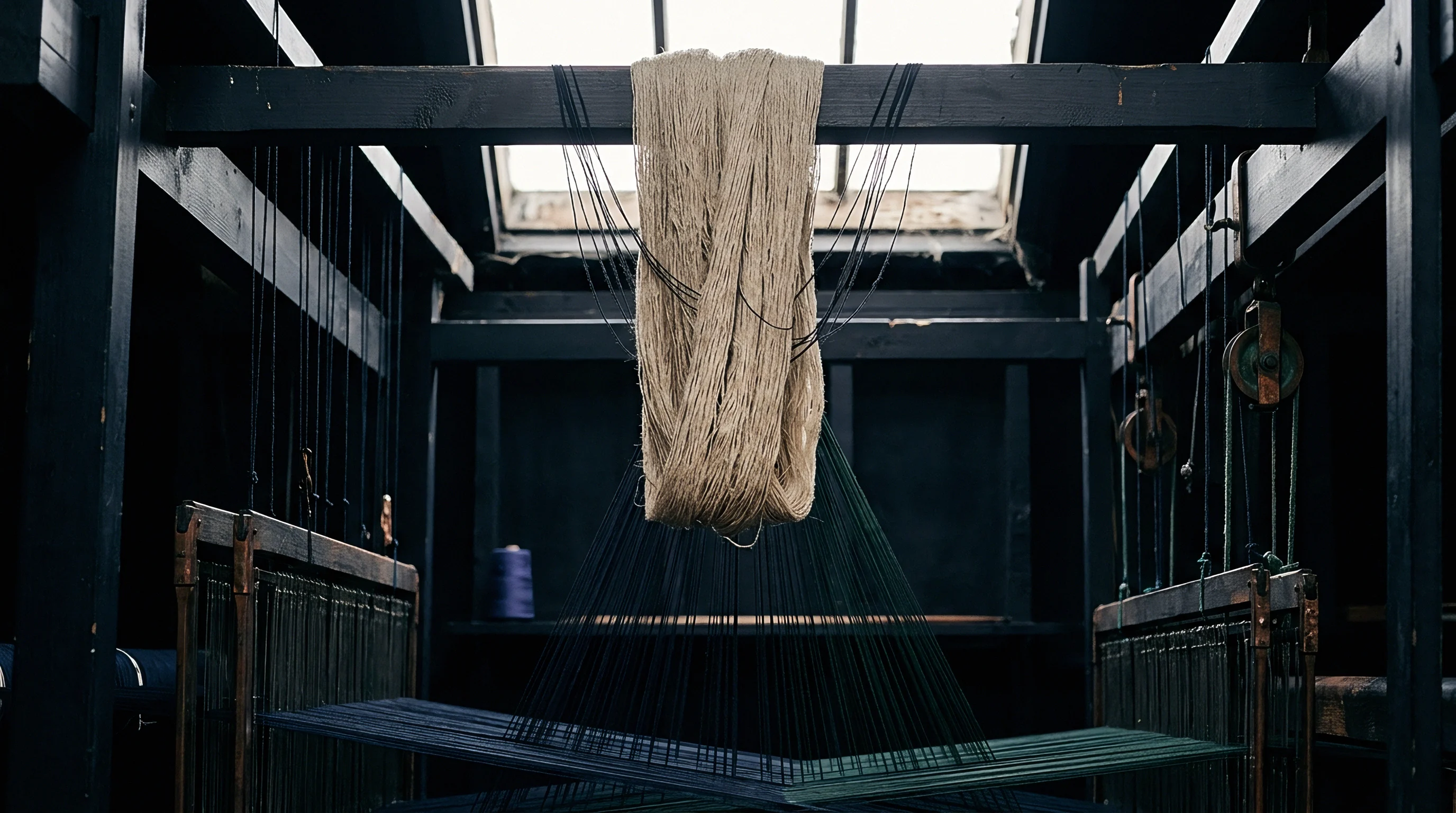
Cohesion
Inter-fiber friction governs how long bast strands react to applied drafting forces. Flax differs from cotton and synthetic fibers because individual filaments aggregate into compound technical fiber bundles held together by natural pectins and hemicellulose. Water-retted flax maintains stronger chemical bonding than dew-retted stock, yielding larger bundle cross-sections entering the mill.
During successive drawing steps, mechanical forces split these compound bundles into finer sub-units, progressively reducing bundle diameter while increasing surface area per unit mass.
Cohesion in wet flax processing relies directly on pectin distribution across technical fiber bundles.
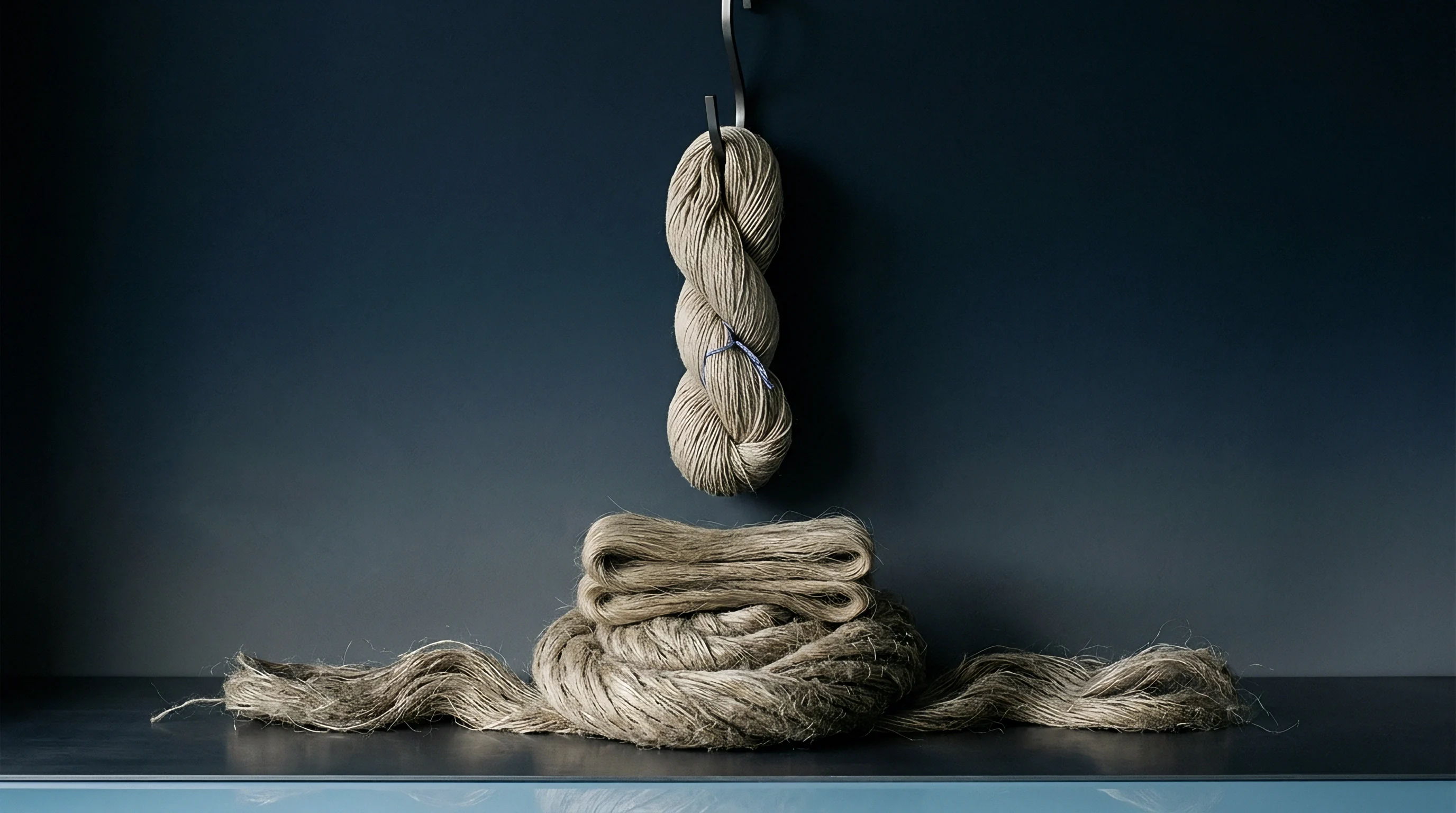
Pectin Matrix and Bundle Splitting
Chemical composition dictates the force needed to slide individual fibers past one another during attenuation. Water-retted flax features a higher proportion of residual middle lamella pectins, requiring higher drafting force than dew-retted alternatives. Dew-retted fibers undergo fungal degradation that partially breaks down intercellular gums, producing softer strands that draft at lower nip pressures.
High drafts applied too early to stiff water-retted stock cause bundle fracture rather than smooth slippage, generating short fiber fragments that degrade yarn strength.
Enzyme-treated flax provides uniform drafting resistance, though over-retting lowers structural strength. Splitting technical bundles into fine ultimate fibers occurs gradually across draw frame passages. High doubling ratios assist this division by repeatedly reorienting fibers, allowing faller pins to penetrate split bundle structures without tearing main fiber shafts.
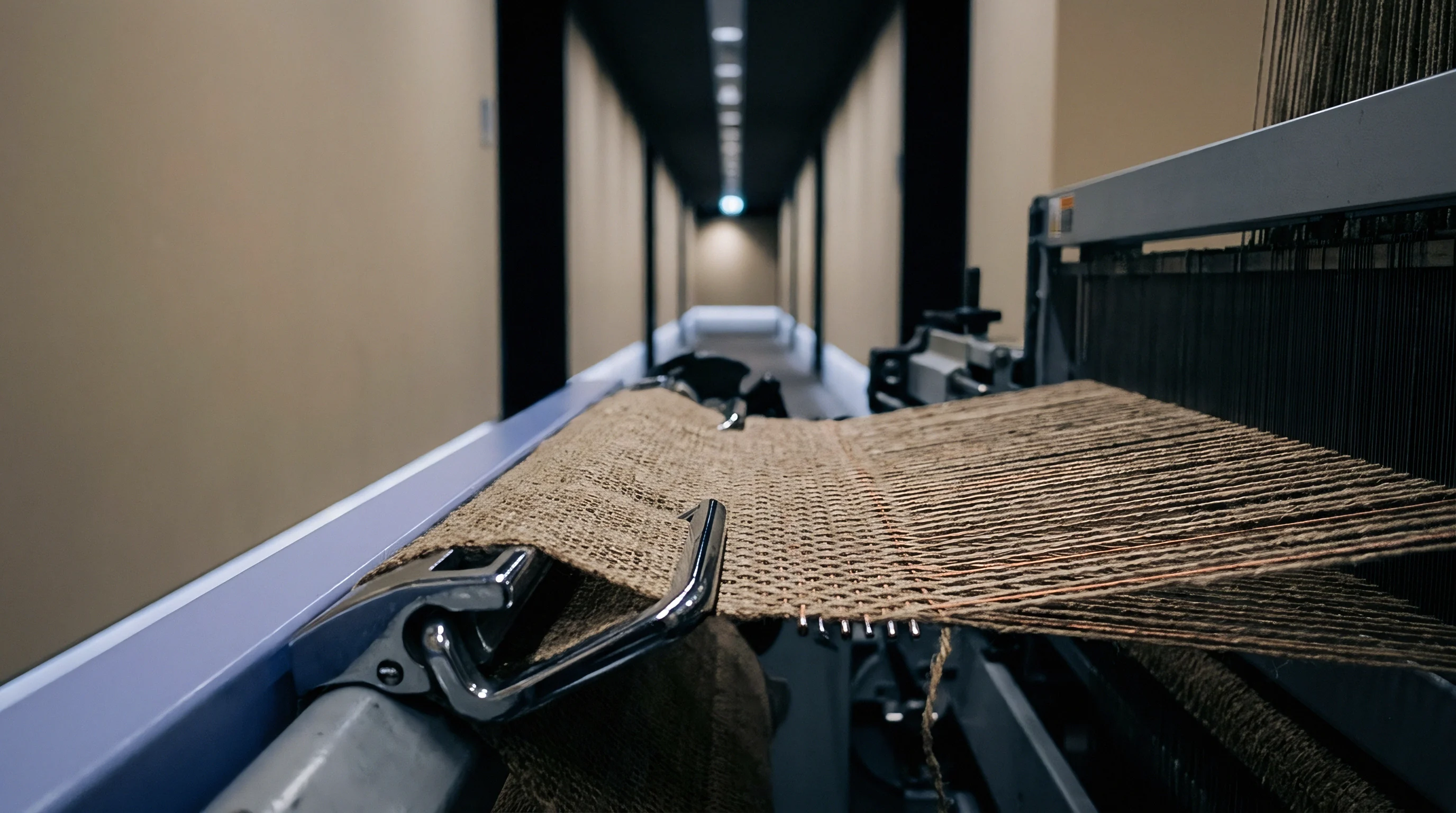
Fineness Distribution across Retting Grades
Fiber fineness dictates maximum achievable yarn count and governs doubling strategy. Fine wet-spun yarns above Nm 60 demand fine initial fiber bundles with low diameter variance; coarse technical fibers cannot yield thin, even slivers regardless of applied draft ratios. Testing fiber bundle fineness via air-permeability methods provides baseline data for setting draft distribution.
| Retting Method | Bundle Fineness (dtex) | Mean Fiber Length (mm) | Residual Pectin Content (%) | Draft Resistance Factor |
|---|---|---|---|---|
| Water Retted | 18 to 24 | 550 to 700 | 4.2 to 5.5 | High |
| Dew Retted | 12 to 18 | 450 to 600 | 2.8 to 3.8 | Moderate |
| Enzyme Treated | 10 to 14 | 400 to 550 | 1.8 to 2.5 | Low |
Fibrillar alignment within technical bundles improves as draft passes increase. Long fibers hold tight cohesion, while short fibers require mechanical constraint to prevent floating during attenuation. Proper draft balancing prevents thin spot formation caused by uncontrolled short fiber movement.
Sliver strength increases when long fibers remain parallel without entanglements.
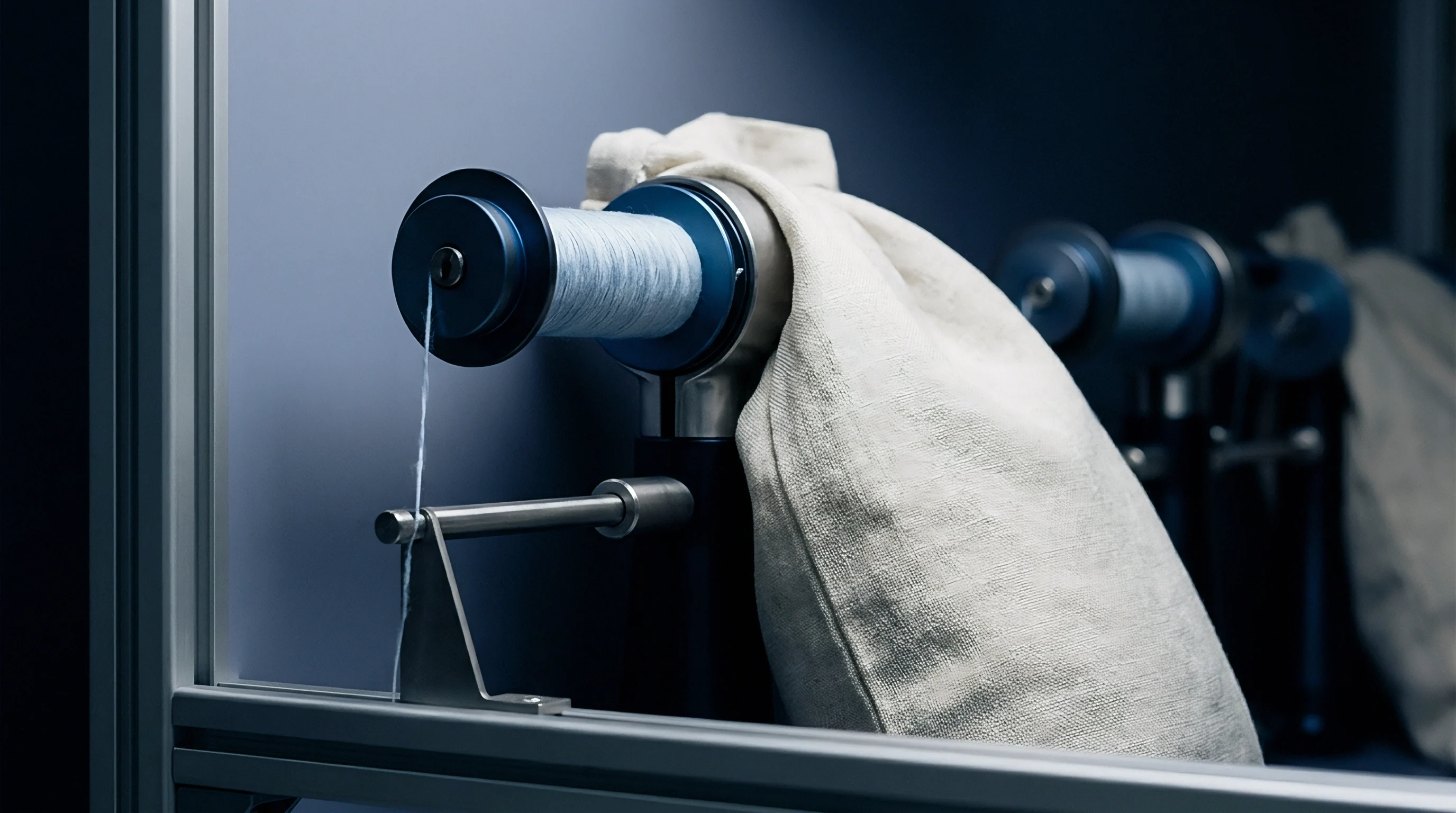
Doubling
Combining multiple slivers at the feed end of a draw frame reduces random mass fluctuations through statistical averaging. The doubling ratio defines how many individual strands enter the drafting zone together to form a single output strand. Total doubling across a multi-passage draw frame sequence equals the mathematical product of individual passage doublings.
A sequence combining 4 slivers at Passage I, 4 slivers at Passage II, and 3 slivers at Passage III yields a total doubling product of 48.
How Does Draft Distribution Control Mass Variations?
Mechanical attenuation introduces periodic irregularity while doubling smooths out random density spikes. Mass variation reduction follows the inverse square root of the doubling count, assuming a perfectly random distribution of feed variations. High doubling numbers significantly compress input mass CV percentages; doubling 16 strands cuts feed-sliver mass variance in half before drafting effects are added.
Combining multiple input slivers reduces random mass variations proportionally to the square root of doubled strands.
Drafting adds new mechanical irregularity caused by fiber stick-slip phenomena and roller eccentricity, leaving total output mass variation as a balance between doubling equalization and draft-induced noise. Excessive doubling demands high mechanical draft to achieve target sliver weight, which risks exceeding drafting stability limits. Fine count spinning relies heavily on high doubling ratios.
Configuring draw frame sequences involves setting specific draft and doubling values at each stage.
- Passage One Setup applying a doubling ratio between 3 and 4 with a total draft of 4.5 to 5.0 stabilizes raw hackled strand variation while preventing roller slip.
- Passage Two Setup utilizing a doubling ratio between 4 and 6 with a total draft of 6.0 to 7.0 promotes bundle splitting and fiber parallelism.
- Passage Three Setup deploying a doubling ratio between 3 and 4 with a total draft matching output linear density requirements yields uniform final slivers.
Excessive drafts create thin zones, though slower front roll speeds improve stability on fine counts. While doubling cancels out random density fluctuations, maintaining a balanced draft distribution is what protects fiber length profiles throughout attenuation.
Contractual specifications under ISO 2649 require mass CV testing on five-meter sliver samples prior to roving approval.
Commercial contracts specify maximum acceptable mass variation limits for delivered sliver lots. Exceeding agreed CV thresholds triggers financial penalties or lot rejections under standardized supply agreements.
Attenuation
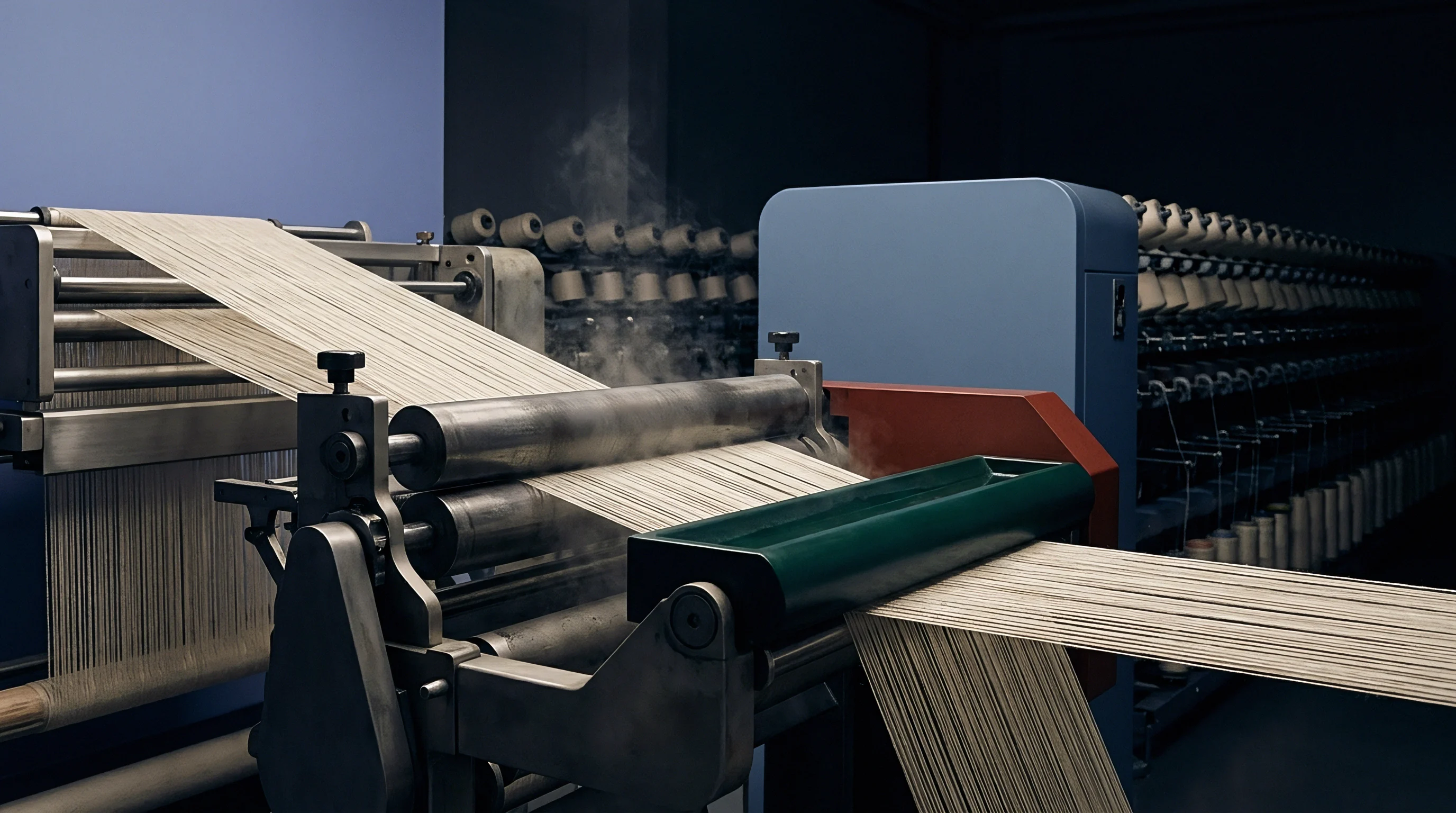
Mechanical drafting attenuates heavy slivers down to thin strands suitable for roving frame creels. Front drafting rollers rotate at higher surface speeds than back rollers, creating a draft ratio defined by speed differentials. In wet flax processing, drafting dynamics depend on clamping pressure at roller nips and pin field control.
Insufficient pressure allows slippage, whereas excessive pressure crushes fibers and accelerates apron wear. Roller slip distorts long-staple alignment.
Draft Wave Elimination
Speed differences between adjacent drafting zones can excite uncontrolled fiber movement known as drafting waves, creating periodic thick and thin spots at regular intervals along the sliver. These waves arise when short fibers move uncontrolled between faller pin release and front roller clamping. Increasing doubling ratios helps damp periodic mass waves by staggering wave phase relationships across combined strands.
Higher drafts increase sliver irregularity, and severe over-drafting introduces periodic mass defects that wet spinning cannot tolerate. The table below details attenuation performance across varying total doubling setups for Nm 80 wet-spun yarn production.
| Configuration | Total Doubling | Total Draft Ratio | Sliver Mass CV (%) | Roving Mass CV (%) | Wet Spinning Breaks per 1000 Spindle Hours |
|---|---|---|---|---|---|
| Low Doubling | 24 (3x4x2) | 28.5 | 4.8 | 6.2 | 42 |
| Medium Doubling | 48 (4x4x3) | 52.0 | 3.1 | 4.5 | 18 |
| High Doubling | 64 (4x4x4) | 70.5 | 3.6 | 5.1 | 27 |
| Extreme Doubling | 96 (6x4x4) | 108.0 | 4.5 | 6.0 | 38 |
Slippage destroys count consistency, and thick places lead directly to end breaks. Poorly chosen doubling ratios increase yarn hairiness and reduce tensile strength, while operating outside optimum draft ranges creates performance issues across the spinning room.
Understanding defect modes allows frame operators to identify drafting problems quickly.
- Periodic Mass Waves caused by eccentric draft rollers or damaged faller pin beds generating repeating thickness cycles.
- Floating Fiber Clumps resulting from wide roller gauges or loose pin fields leading to random thick slubs.
- Drafting Creep occurring when low top roller pressure allows sliver to slide through nips without attenuation.
- Edge Strand Separation caused by bad sliver guides letting outer fibers escape faller pin control.
What mechanical adjustments permanently stabilize drafting wave amplitude across variable staple lengths without reducing frame throughput?

Economics
Drawing configuration decisions impact overall spinning mill profitability and landed yarn costs. Optimizing draw frame doubling ratios requires balancing yarn quality improvements against machine capital expenditure and floor space usage. Higher total doubling demands additional drawing heads or multiple machine passes, increasing electrical power consumption and labor requirements.
Sub-optimal configurations increase end breakage rates at wet spinning frames, causing lost production capacity and increased rework waste.
Yield Losses across Draw Passages
Fiber waste accumulates at every mechanical intervention point. Faller pin fields collect short fibers, fly, and residual shive particles, generating drawing waste that averages 0.8% to 1.5% per passage. High doubling setups running excessive total drafts generate higher waste volumes due to fiber friction and edge shedding.
The financial loss from generated waste increases with fiber refinement, as third-passage sliver represents significantly higher cumulative processing cost than raw hackled flax.
Calculating financial trade-offs between doubling configurations requires analyzing waste rates, spindle efficiency, and labor allocation. A standard financial model compares production costs for Nm 80 wet-spun linen yarn across three doubling strategies based on a 1,000 kg batch scale.
| Cost Component | Low Doubling (24x) | Balanced Doubling (48x) | High Doubling (64x) |
|---|---|---|---|
| Raw Fiber Input (kg) | 1,085 | 1,060 | 1,075 |
| Drawing Process Waste (%) | 2.1 | 2.8 | 3.4 |
| Spinning Efficiency (%) | 84.5 | 93.2 | 89.8 |
| Power Cost per kg Yarn ($) | 0.42 | 0.51 | 0.58 |
| Yarn End Breaks per kg | 12.4 | 3.8 | 6.5 |
| Final Landed Cost ($/kg) | 18.50 | 16.85 | 17.40 |
Auditing sliver mass and drafting behavior ensures consistent quality output.
- Cut one-meter lengths of sliver from three central drawing heads.
- Weigh each sample on a calibrated analytical balance to 0.001 gram precision.
- Calculate average linear density in kilotex.
- Determine mass variation percentage across ten consecutive samples.
- Adjust draft distribution if mass variation exceeds target specifications.
Hackling yield governs total mill profit, and fine linen demands precise draft balancing. Selecting incorrect doubling ratios drives up end breakage rates at wet spinning frames, increasing labor overhead per kilogram and making finished yarn uncompetitive in global markets.