Quantifying Residual Pectins and Protein Content in Fine Bast Sliver
Quantifying residual pectins below 1.2% and proteins below 0.75% via spectrophotometry and combustion prevents wet-spinning end breaks and secures high-count Nm yields.


Sliver
Fine flax processing depends on the controlled removal of non-cellulosic encrustants that bind elemental ultimate fibres into technical fibre bundles. In raw scutched flax, the middle lamella consists of a complex polysaccharide matrix dominated by highly esterified polygalacturonic acids, hemicelluloses, neutral pectins, and structural proteins. Retting weakens this intracellular cement, allowing mechanical hackling and drafting frames to attenuate the fibre strand into a continuous ribbon suitable for wet spinning.
Residual pectin concentrations above target thresholds prevent ultimate fibres from sliding smoothly past one another during drafting, producing severe mass variation and elevated end breakage rates on spinning frames.
The chemical architecture of the bast strand determines its mechanical limit during draw-frame attenuation. Structural proteins, particularly hydroxyproline-rich glycoproteins, remain anchored within the primary cell wall and inter-elementary fibre spaces alongside calcium pectate complexes. When processing high-count wet-spun yarns above Nm 60, these residual non-cellulosic components act as irregular adhesives.
Their localized concentration creates rigid zones along the fibre ribbon, preventing uniform drafting under the pressure of the drawing rolls.
Residual pectin levels exceeding 1.8 percent by mass in combed sliver increase end breakage rates on wet-spinning frames by 34 percent at drafting speeds of 18 metres per minute.
Defects originate from uneven degumming or variable field retting. Understanding the structural distribution of residual non-cellulosic matter requires isolating specific functional components within the technical bundle:
- Intercellular Polygalacturonans form the primary structural glue within middle lamellae, resisting mechanical separation until enzymatic or chemical cleaving lowers their molecular mass.
- Calcium Pectate Complexes create insoluble ion-bridged networks that resist mild hot-water washes, requiring chelating agents or acidic extraction for complete quantification.
- Cell Wall Glycoproteins represent the insoluble protein fraction tightly bound to cellulosic microfibrils, contributing directly to hydrophobic spot resistance during industrial dyeing.
- Arabinogalactans and Rhamnogalactans constitute highly branched side chains that retain bound moisture, altering the swelling behavior of the strand in the wet-spinning hot water trough.
If residual pectins remain unmonitored during sliver preparation, downstream drafting tension fluctuates violently, causing localized thick places that jam spinning nozzles or thin places that sever under winding tension, forfeiting spinning room efficiency and raising waste rates across the mill floor.

Titration
Accurate quantification of non-cellulosic constituents in processed bast strands requires isolating water-soluble pectins, chelator-extractable pectates, and cell-wall proteins through sequential chemical extraction followed by spectrophotometric or combustion analysis. Acidic extraction using ammonium oxalate or ethylenediaminetetraacetic acid dissolves insoluble pectate salts, releasing galacturonic acid monomers into solution. The colorimetric meta-hydroxydiphenyl method subsequently determines total pectin concentration at a wavelength of 520 nanometres, eliminating interference from neutral sugars that distort traditional carbazole assays.
To isolate protein content independently of nitrogenous fertilizers or residual plant sap, combustion analysis via the Dumas method converts all organic nitrogen into gas for thermal conductivity detection. A conversion factor of 6.25 translates total nitrogen percentages into structural protein mass, provided residual inorganic nitrates undergo pre-washing extraction.
| Chemical Target | Extraction Solvent | Analytical Protocol | Detection Limit | Interference Factors |
|---|---|---|---|---|
| 0.5% Ammonium Oxalate (85°C, 2 hr) | m-Hydroxydiphenyl Spectrophotometry | 0.05% w/w | Neutral Hexoses, Pentoses | |
| 0.1 M EDTA / Sodium Hydroxide (pH 10) | Atomic Absorption Spectrometry (Ca/Mg) | 0.02% w/w | Divalent Process Water Cations | |
| Trichloroacetic Acid Wash / Drying | Dumas Total Nitrogen Combustion | 0.01% N w/w | Residual Ammonium Fertilizers | |
| 18% Sodium Hydroxide Solution | Gravimetric Isolation (ISO 699) | 0.10% w/w | Degraded Short-Chain Cellulose |
Laboratory quantification requires precise execution to isolate target polymers without degrading core microfibrils. The sample preparation sequence follows rigorous physical and chemical stages:
- Dry five grams of combed sliver in a ventilated oven at 105°C until reaching constant dry weight.
- Extract neutral lipids and waxes using petroleum ether in a Soxhlet apparatus for four hours to prevent hydrophobic shielding during aqueous extractions.
- Boil the dewaxed residue in distilled water for one hour to remove water-soluble free sugars and light pectic fragments.
- Treat the residue with a boiling 0.5 percent ammonium oxalate solution for two hours to solubilize insoluble calcium pectate salts.
- Filter the extract through a medium-porosity fritted glass crucible, retaining the liquid filtrate for colorimetric galacturonic acid analysis.
- Wash the solid cellulosic residue with cold dilute nitric acid, dry at 105°C, and analyze via total nitrogen combustion to establish residual structural protein mass.
A three-point baseline correction during spectrophotometric measurement reduces galacturonic acid quantification error from 8.2 percent down to 0.4 percent on heavily retted slivers.
Elevated nitrogen figures are often attributed to benign, water-soluble field residues that rinse away inside the wet-spinning trough, but laboratory testing demonstrates that unwashed protein fractions remain locked inside the primary cell wall throughout wet processing, altering yarn dye affinity and causing longitudinal streakiness in finished woven fabrics.


Speck
Incomplete removal of middle lamella components leaves localized adhesive deposits that bind multiple elementary fibres together into rigid, coarse bundles within the sliver mass. These un-retted or under-refined bundles pass through carding and hackling without separating, forming structural imperfections known as non-cellulosic specks or neps. During wet drafting, these hard points resist the mechanical attenuation exerted by the drafting rollers, slipping through as thick slubs or causing sudden tension spikes that snap the adjacent thin strand.
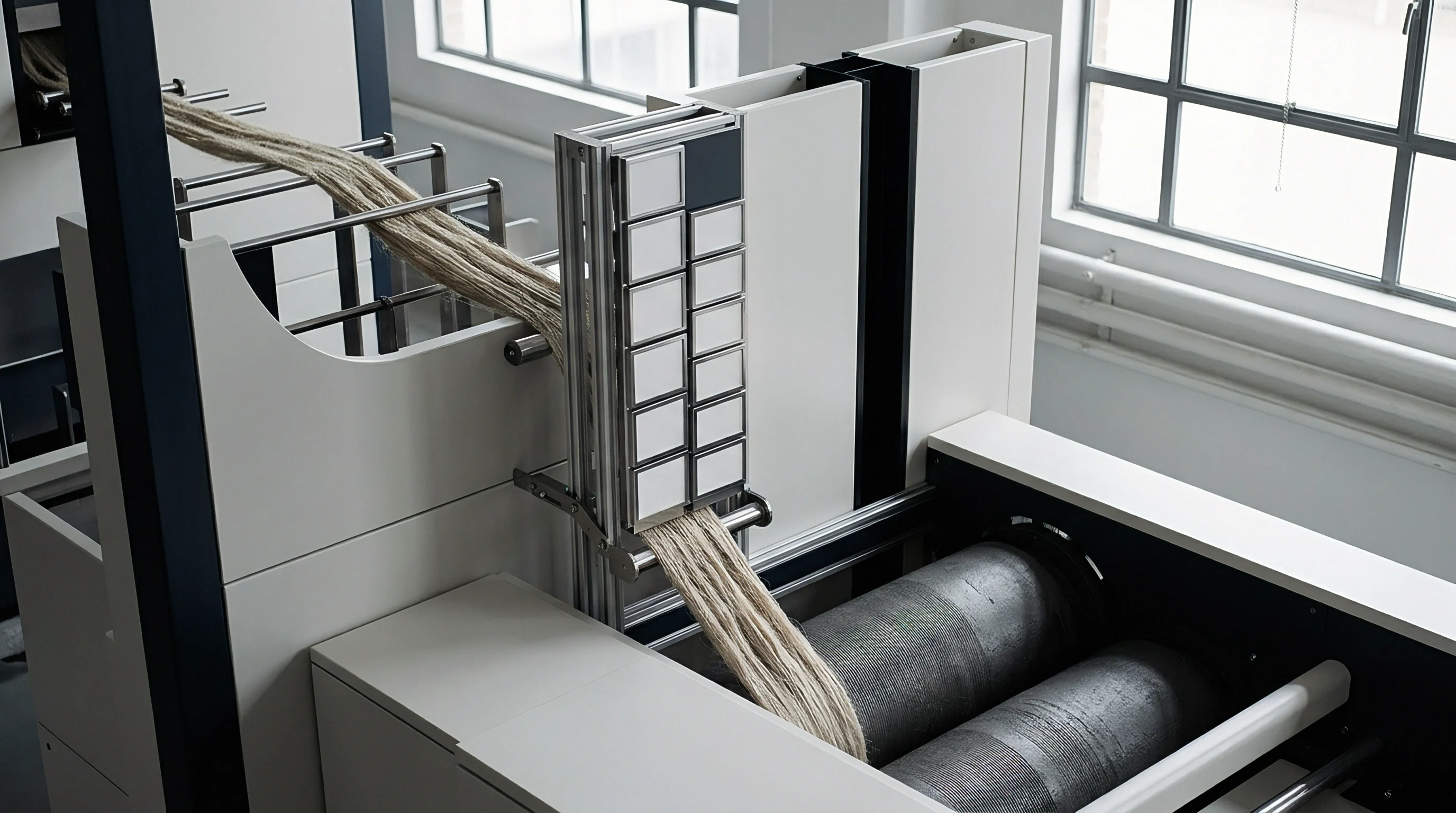
When the fine sliver enters the hot water trough of a wet-spinning frame, temperatures between 60°C and 70°C soften native pectins, transforming them into a sticky gel. If pectin levels exceed standard tolerances, this gel accumulates on drafting rollers, flyer guides, and thread eyes, gathering loose fly and forming abrasive crusts that scrape incoming fibres.

What Threshold Triggers Spinning Frame End Breaks?
End breakage increases exponentially once total residual gum, combining pectins, proteins, and hemicelluloses, exceeds 3.5 percent of total bone-dry sliver weight. At this level, the drafting force required to pull individual ultimate fibres past one another exceeds the tensile strength of the attenuated fibre strand before twist insertion. The strand parts immediately behind the front drafting roller nib, halting production on that spindle.
Sliver carrying over 2.2 percent residual pectin requires a 15 percent increase in drawing roller pressure to maintain drafting stability, accelerating rubber apron wear.
Unremoved structural proteins present distinct physical challenges during yarn finishing. Highly hydrophobic, proteinaceous residues shield underlying cellulose microfibrils from aqueous dye molecules, preventing direct and reactive dyes from penetrating the fibre interior. The resulting fabric exhibits pale speckling across its surface, where coarse, protein-rich fibre bundles rejected the dye bath, demanding expensive chemical scouring re-treatments to recover commercial color uniformity.
Whether modern enzymatic post-treatments applied directly inside the wet-spinning trough can selectively solubilize residual structural proteins without degrading core cellulose microfibril chains remains an unresolved operational question for high-speed mills.
Yield
The total concentration of residual pectins and proteins directly dictates the finest spinnable yarn count (Nm) achievable from a given lot of bast sliver. As sliver purity improves through controlled chemical or biological degumming, the mean linear density of the technical fibre bundles decreases, allowing thinner, more uniform strands to enter the drafting zone. Lower residual gum content enables ultimate fibres to separate completely, maximizing the active fibre count per yarn cross-section at fine counts.
Consider a 1,000-kilogram lot of combed flax sliver evaluated under two distinct degumming profiles to determine commercial count potential and finished fabric yield.
| Parameter | Standard Sliver (Lot A) | Refined Fine Sliver (Lot B) |
|---|---|---|
Lot B yields 470 additional metres of finished woven fabric from the same initial raw fibre mass. The reduction in residual non-cellulosic encrustants allows extreme fibre attenuation without triggering drafting jams or yarn breakage. Reduced end breakage directly lowers labour costs by minimizing manual spindle re-threading interventions across the spinning floor.
Contractual rejection thresholds trigger automatically when composite pectin and protein testing shows values exceeding 2.0 percent for yarns specified above Nm 60.
Low residual pectin content increases ultimate fibre alignment, generating superior surface reflectivity and higher lustre in finished wet-spun yarns. High-purity sliver produces smooth, compact yarn profiles with low hairiness indices, reducing slub formation during subsequent weaving and knitting operations.
Pectin content controls drafting limits, whereas structural protein levels primarily govern dye levelness in finished fabric.

Clause
Commercial contracts for fine bast sliver must embed strict quantitative limits for non-cellulosic impurities, tied directly to standardized testing protocols. Procurement specifications that rely solely on subjective hand-feel or visual color grading expose buyers to severe commercial risk, as soft-handled sliver can still contain elevated calcium pectate concentrations that destabilize wet-spinning operations.
Purchasing specifications for fine long-staple slivers intended for wet spinning above Nm 50 require explicit laboratory verification parameters before shipment authorization:
- Maximum Permissible Pectin defined strictly as total galacturonic acid content not exceeding 1.2 percent by dry weight under ammonium oxalate extraction and spectrophotometric analysis.
- Structural Nitrogen Ceiling capped at 0.12 percent nitrogen by dry weight via Dumas combustion analysis, corresponding to a maximum structural protein threshold of 0.75 percent.
- Moisture regain allowance fixed at 12.0 percent commercial moisture regain in accordance with ISO 6741 testing procedures.
- Sampling acceptance plan executed under ISO 2859-1 single sampling plans for normal inspection, general inspection level II, with an Acceptance Quality Limit (AQL) of 1.5.
A buyer’s most effective protection against non-compliant fibre lots is the insertion of a mandatory chemical test certificate requirement prior to letter of credit drawdown. The contract stipulates that independent laboratory test results showing residual pectin content above 1.5 percent grant the buyer absolute right of lot rejection at seller’s port of origin, shifting all freight, storage, and re-testing costs entirely back to the supplier.
Standardized procurement contracts include explicit terms stating that any sliver lot failing residual pectin thresholds upon destination port re-testing shall be replaced by the seller within twenty-one business days or refunded in full with interest.