Drafting Force Kinetics and Tension Spikes from Bast Fiber Mass Variance
Sliver mass variance generates dynamic force spikes in drafting zones, driving end breaks, reducing frame efficiency, and elevating finished linen yarn costs.


Kinetics
Bast fibre drafting depends on sliding technical bundle complexes past one another within a constricted channel. Unlike extruded synthetics or single-cell cotton, long-staple flax entering the drafting zone consists of composite strands bound together by calcium pectinate matrices and residual hemicellulose. Tensile attenuation relies on inter-fibre friction and pectin film shear under clamping pressure.
When linear mass density varies across a sliver, mechanical resistance to attenuation fluctuates instantly, altering the force vector required to pull the fiber assembly to its target count.
Linear mass variance introduces localized cross-sectional thickening. A mass surge entering the rear roller nip increases the total contact surface area between adjacent technical fibers. Inter-fibre cohesion scales exponentially with cross-sectional fiber density.
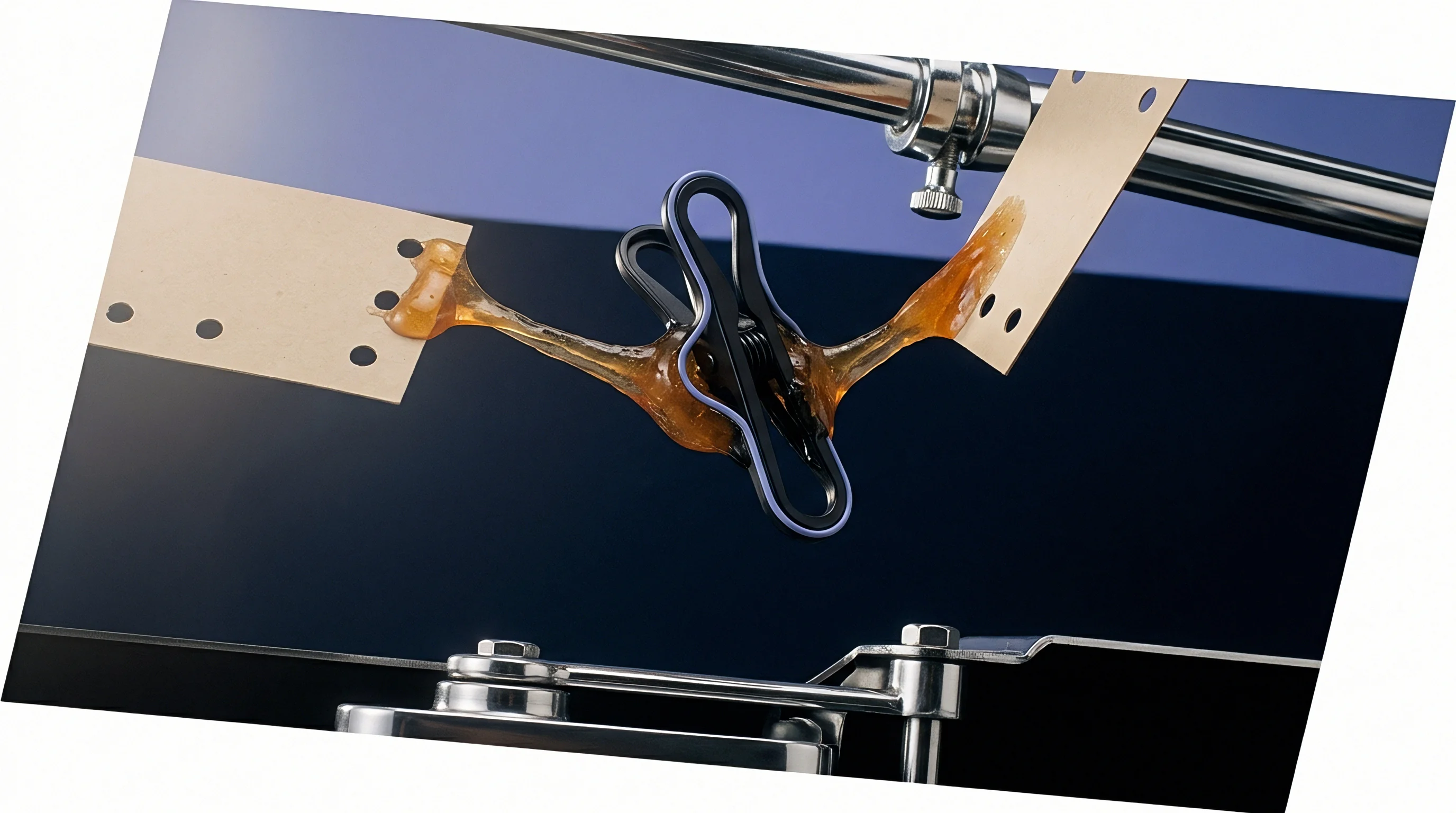
As a dense cluster passes into the drafting zone, the static friction coefficient dominates the kinetic friction coefficient, forcing the drafting rollers to apply elevated longitudinal stress before bundle slippage occurs. This transition creates stick-slip dynamics, generating high-amplitude force transients within milliseconds.

Friction Coefficients and Inter-Bundle Cohesion
Inter-fibre friction inside a bast sliver operates under modified Amontons laws where normal pressure originates from both top-roller clamping load and internal bundle crowding. Retting history dictates the baseline surface energy. Dew-retted flax retaining 3.5 percent residual pectin exhibits a kinetic friction coefficient between 0.28 and 0.34 under dry drafting conditions.
Over-retted material with damaged cortical cell walls drops below 0.22, leading to uncontrolled slippage, whereas under-retted stock exceeding 5.0 percent pectin content drives the friction coefficient above 0.45.
| Fiber Grade and Retting State | Mean Linear Density (tex) | Sliver Mass CV (Percent) | Mean Drafting Force (cN) | Peak Force Transient (cN) |
|---|---|---|---|---|
| Water-Retted Line Flax Grade 1 | 2.1 | 3.2 | 145 | 210 |
| Dew-Retted Long Line Grade 2 | 2.8 | 5.8 | 185 | 340 |
| Enzyme-Treated Combed Tow | 3.4 | 9.1 | 230 | 520 |
| Under-Retted Scutched Tow | 4.2 | 14.6 | 310 | 890 |
Mass surges force nip separation. When an accumulation of unhackled thick places hits the nip point, normal force spikes abruptly. The drafting force equation models this kinetic behavior through the relationship:
F_d = mu cdot N cdot left(1 + frac{Delta m}{bar{m}}right)^2
Where F_d represents dynamic drafting force, mu is the friction coefficient, N is normal clamping force, bar{m} is mean sliver mass, and Delta m represents instantaneous local mass variance. Quadratic scaling demonstrates why small increases in local strand thickness generate disproportionate force spikes during high-speed attenuation.
Peak drafting force scales quadratically with local mass increases when sliver linear density variation exceeds four percent across a ten-centimetre gauge length.
In dry spinning routes, high dynamic force from friction spikes exceeds the structural integrity of the incoming bundle matrix before attenuation completes, causing fiber rupture rather than controlled inter-fiber sliding. In wet spinning routes, warm water immersion softens the inter-cellular pectin, lowering mu to approximately 0.12, yet mass variance continues to drive force fluctuations by altering liquid displacement mechanics within the drafting trough.
The exact threshold where stick-slip friction transitions from controlled attenuation to catastrophic bundle shear across varying retting degrees remains an active topic of investigation among textile tribologists.
Nip
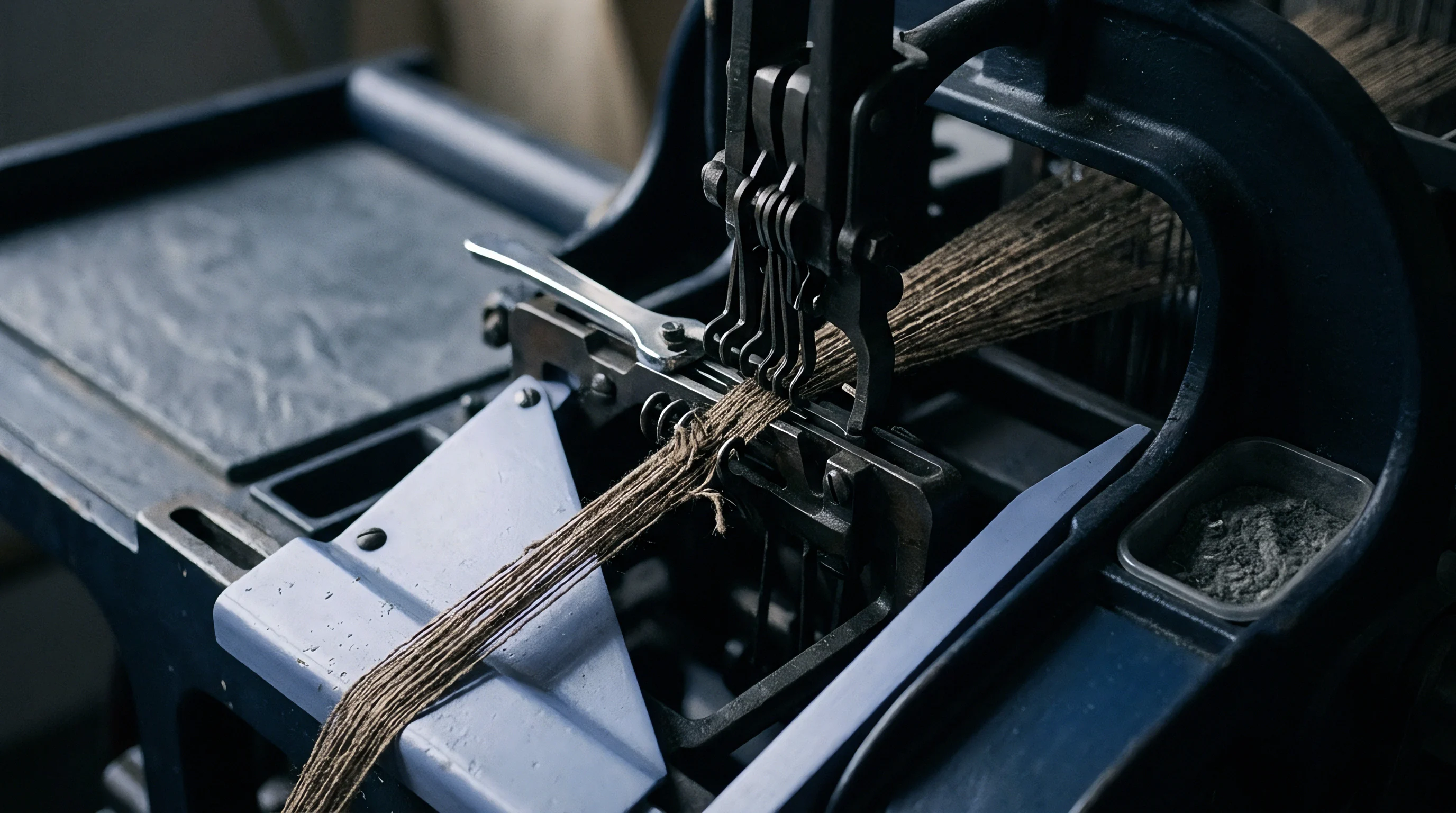
Roller clamping zones transform linear mass variations into hydraulic and mechanical pressure spikes. Top pressure rollers in industrial drawing and spinning frames use synthetic elastomer cots with Shore A hardness values ranging from 68 to 85. As a thick slub enters the nip point between the lower steel fluted roller and the upper elastomeric cot, the local mass increase displaces the roller center distance, flexing the weighting springs and driving localized deformation into the cot surface.
Cot deformation modifies the nip pressure distribution curve. Under uniform sliver mass, the pressure profile across the nip width exhibits a Gaussian distribution centered on the roller axis. A mass spike narrows the effective contact width while multiplying peak vertical pressure.
High pressure compacts the fiber bundle, suppressing relative fiber motion and demanding extreme tensile force from the front delivery rollers to maintain draft speed.

Mechanical Response and Fluted Roller Dynamics
Fluted bottom rollers feature helical or longitudinal grooving designed to grip bast bundles without crushing elementary cell walls. Local mass peaks fill the flutes completely, preventing effective dissipation of normal forces. Excess material locked inside the flutes generates cyclic force variations linked directly to roller rotational frequency, imprinting periodic mass defects into the attenuated sliver.
- Cot Indentation Failure Localized compression exceeding elastic recovery limits creates permanent grooving on rubber top rollers, leading to periodic drafting waves.
- Apron Slip Disruption Mass surges stall lower drafting aprons against drive pulleys, causing abrupt velocity drops and immediate yarn thin spots.
- Bearing Load Deflection Dynamic shock loads from heavy sliver thick places cause micro-deflections in bottom roller shafts, disturbing gauge settings across adjacent spinning positions.
- Flute Clogging Accumulation High pectin mass spikes shear under pressure, packing sticky gum into bottom roller grooves and reducing effective grip depth.
When the front roller pair grabs the leading tip of an unattenuated mass peak while the trailing tail remains trapped in the back nip under elevated pressure, longitudinal tension escalates within microseconds. If tension exceeds the bundle’s total breaking tenacity, tensile rupture occurs before the fiber group clears the front nip.
Cot hardness selections above eighty Shore A accentuate dynamic force spikes whenever incoming sliver mass coefficient of variation surpasses five percent.
Nip separation alters draft distribution across multi-zone drawing systems. As top rollers lift under thick mass passes, actual break draft drops, shifting total attenuation duty onto the main drafting field. The main field, unequipped to process under-drafted material, responds with secondary force spikes that propagate downstream to the spinning frame bobbin.
Matching top roller cot hardness directly to the maximum expected mass peak height prevents surface grooving and stabilizes inter-roller center distances.

Diagnostics
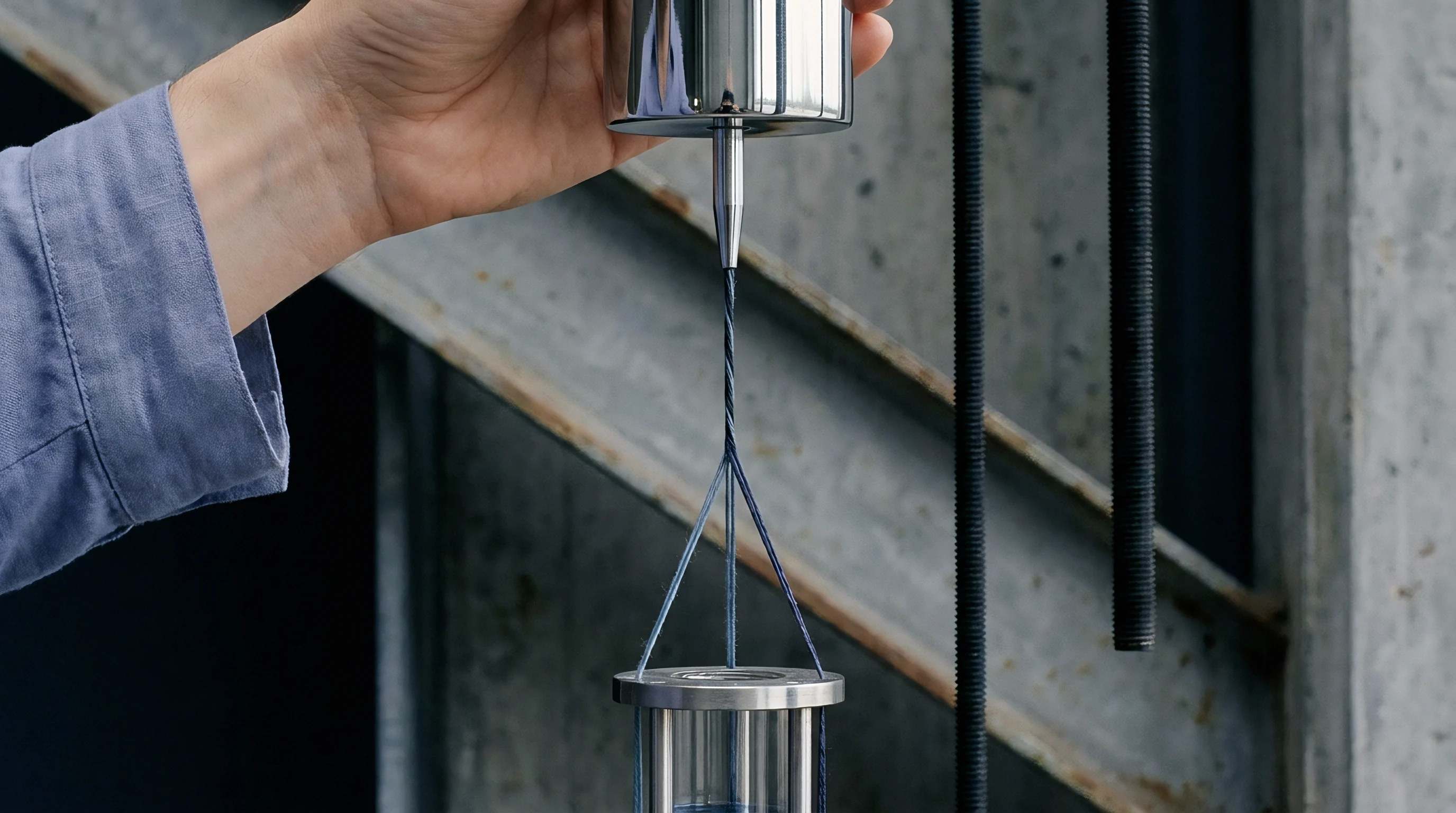
Detecting force kinetics requires high-frequency instrumentation installed directly within the drafting zone. Static weighing procedures and cut-and-weigh sampling fail to capture transient events lasting under five milliseconds. Modern analytical setups integrate quartz piezoelectric force transducers beneath bottom roller bearing blocks alongside high-speed capacitive mass sensors positioned at the back roller guide inlet.
Capacitive sensors evaluate dielectrical properties to plot continuous linear density profiles at millimeter resolution. Cross-referencing real-time mass profiles against load cell force curves establishes the transfer function between mass variance (Delta m) and kinetic dynamic response (Delta F). High signal correlation confirms fiber interaction mechanics as the primary source of force instability.
What Triggers Dynamic Force Transducer Spikes?
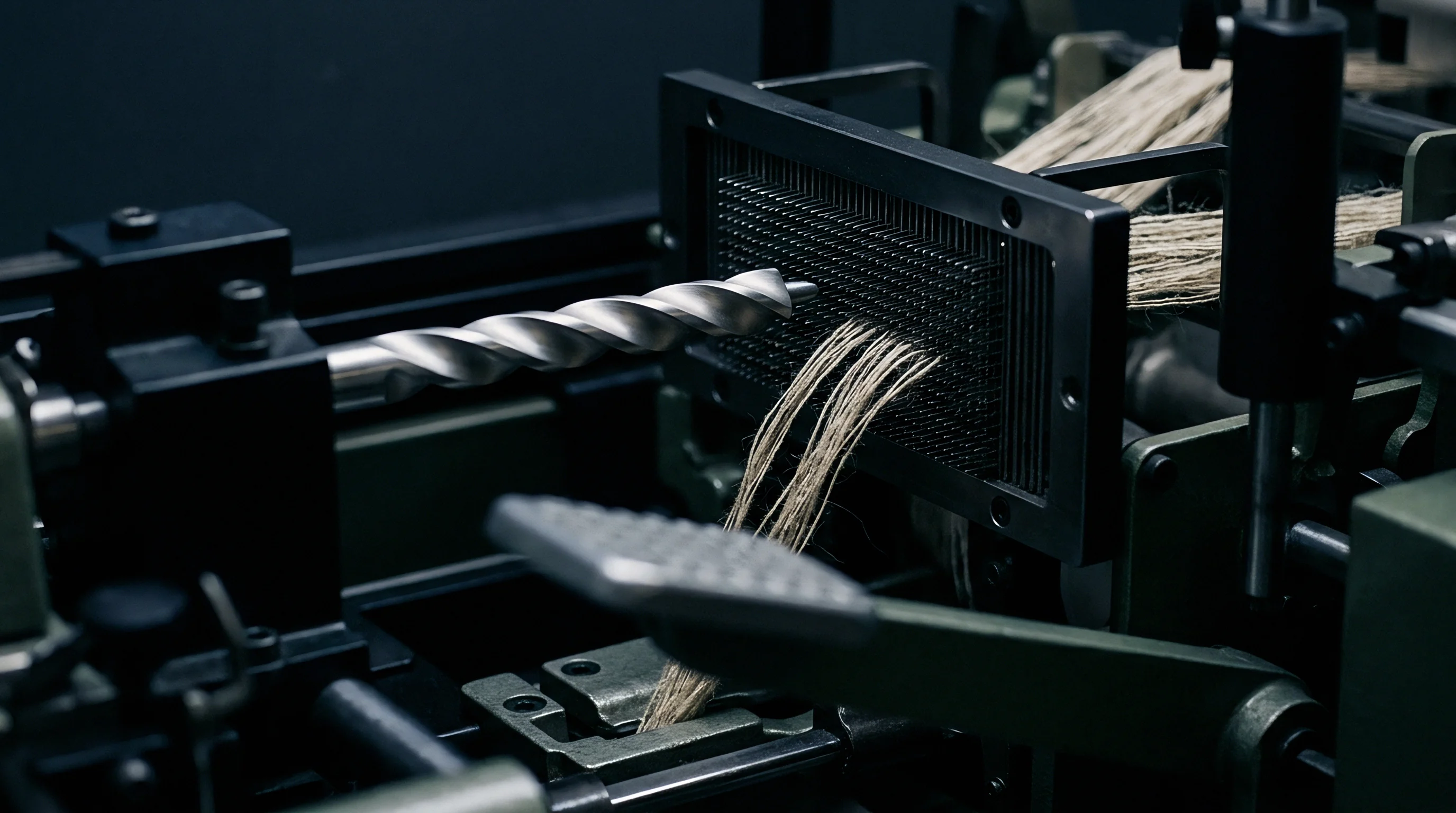
Transducer spikes originate when unretted shive fragments or unseparated coarse bundle clusters pass into the drafting zone. Shive debris acts as an incompressible solid within the fiber matrix. When locked between top and bottom rollers, a shive fragment forces immediate mechanical separation, generating an undamped impulse spike recorded on load transducers as an abrupt voltage jump.
| Measurement Parameter | Piezoelectric Load Cell | Capacitive Mass Monitor | Optical Array Sensor | |
|---|---|---|---|---|
| Sampling Frequency | 10.0 kHz | 1.0 kHz | 2.5 kHz | |
| Force Resolution | 0.01 cN | Not Applicable | Not Applicable | |
| Mass Variance Threshold | Not Applicable | 0.1 percent CV | 0.5 percent CV | |
| Dynamic Response Time | 0.1 ms | 1.0 ms | 0.4 ms | |
| Data gathered under standard laboratory conditioning at 20 degrees Celsius and 65 percent relative humidity per ISO 139 protocols using long-line flax sliver at 4.0 ktex. | ||||
Because local mass peaks can double force, measuring dynamic tension without simultaneous mass tracking leads to incorrect diagnoses of mechanical machine faults. Signal processing algorithms apply fast Fourier transforms to dynamic force data to separate periodic machine frequencies (such as eccentric rollers or worn gears) from stochastic fiber mass noise.
Optical arrays complement capacitive sensors by capturing two-dimensional profile geometry. Mass variance accompanied by sudden width expansions indicates unhackled ribbon structures, whereas mass variance without width change signifies densely packed, over-consolidated elementary fiber cores. Each structural defect produces a distinct force signature during drafting.
Ignoring real-time dynamic force signals leads directly to unmonitored end-breakage spikes, accelerated cot degradation, and unpredicted off-spec yarn shipments that fail downstream tensile test standards.


Control
Suppressing tension spikes requires systematic mechanical calibration aligned with incoming raw material parameters. Machine operators must adjust reach, break draft, pin density, and thermal controls to smooth attenuation mechanics across the drafting field.
Ratch settings dictate bundle overlap, and setting the distance shorter than the longest technical fiber bundle breaks individual fibers, generating severe force spikes as cell walls shear. Setting the ratch excessively wide allows uncontrolled slippage, producing floating fiber masses that create secondary slubs downstream.
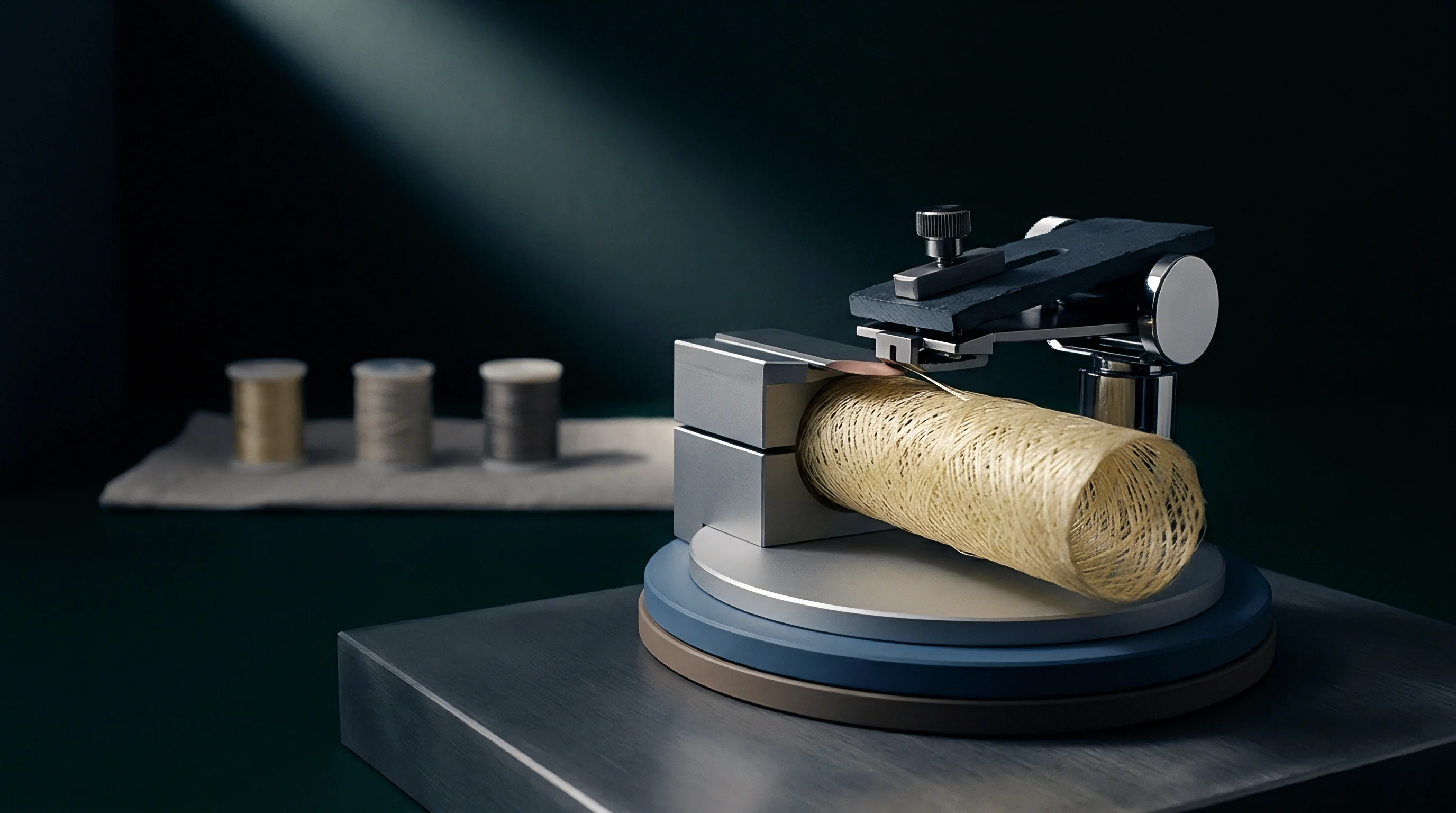
Sequential Calibration Routine for Variable Sliver Infeed
- Determine the maximum bundle length distribution using ISO 6989 tuft measurement or automated optical length analysis on a fifty-gram representative sample.
- Set the ratch distance on the first drawing frame to the ninety-fifth percentile bundle length plus an additional margin of four millimetres.
- Adjust faller bar pin density according to sliver count, selecting a pin pitch that maintains lateral guidance without impeding axial bundle slip.
- Establish the break draft ratio between 1.05 and 1.15 to break inter-bundle pectin bonds without initiating total length attenuation.
- Verify wet-spinning trough temperature at sixty-five degrees Celsius to ensure uniform pectin softening across the entire cross-section before front roller nip entry.
Water temperatures below fifty degrees Celsius fail to reduce pectin yield strength, increasing drafting resistance and leaving the bast bundle rigid and prone to force spikes during wet attenuation. Thermal regulation systems must maintain water temperatures within a two-degree window across all spinning positions.
Ratch settings calibrated four millimetres short of maximum bundle length elevate end-breakage rates by three hundred percent on wet-spinning frames.
Chemical additives in wet spinning troughs further dampen kinetic spikes. Non-ionic wetting agents added at concentrations of 1.5 grams per litre lower surface tension, accelerating liquid penetration into dense fiber bundles. Rapid liquid absorption homogenizes internal friction parameters, reducing peak force amplitudes during draft speed transitions.
Increasing top roller spring pressure does not compensate for high mass variance; it merely accelerates machine wear while exacerbating force transients at the front nip.


Yield
Mass variance and drafting force transients directly dictate mill throughput, yarn yield, and the final cost per metre of woven or knitted linen. Uncontrolled tension spikes trigger end breaks at the spinning frame. Every end break requires operator intervention, creates piecing defects, generates yarn waste, and reduces overall frame efficiency.
Operating a wet-spinning frame producing English Lea 30 (Nm 50) yarn at 6,000 RPM with an end-breakage rate of 45 breaks per 1,000 spindle hours generates a net frame efficiency of 88 percent. If mass variance rises from 4.2 percent CV to 7.8 percent CV, dynamic force spikes drive end breaks to 120 per 1,000 spindle hours, dropping efficiency to 74 percent as spindle downtime cuts directly into output volume.
Cost Modeling and Landed Fabric Value Mechanics
Loss of efficiency scales the fixed overhead cost assigned to each kilogram of finished yarn. Labour, energy, and machine depreciation remain constant while net output declines. Waste generated during piecing operations consumes high-value combed line flax, turning expensive raw stock into low-value soft waste suitable only for coarse dry-spun coarse yarns or non-woven applications.
| Production Metric | Low Mass Variance (3.5 percent CV) | Moderate Mass Variance (6.0 percent CV) | High Mass Variance (9.5 percent CV) |
|---|---|---|---|
| Spinning End Breaks (per 1,000 Spindle Hours) | 22 | 58 | 145 |
| Net Frame Operating Efficiency (Percent) | 93.5 | 84.2 | 68.0 |
| Combed Line Flax Waste Rate (Percent) | 1.8 | 3.5 | 7.2 |
| Yarn Production Cost (USD per kg, Lea 30) | 18.50 | 21.80 | 27.40 |
| Finished Fabric Cost (USD per Metre, 150 gsm) | 4.15 | 4.88 | 6.12 |
When raw long-line flax costs $5.20 per kilogram, an increase in spinning waste from 1.8 percent to 7.2 percent adds $0.30 per kilogram directly to raw material expenditure before accounting for lost machine capacity, directly eroding operating margins.
- Mass CV Tolerance Limits Delivery contracts specifying sliver evenness must enforce maximum mass CV limits measured over one-metre gauge lengths.
- Tensile Peak Guarantees Yarn specifications require minimum single-strand tenacity thresholds alongside maximum allowable tension spike frequencies during winding.
- Waste Allocation Clauses Supply agreements must detail financial liability for hackling and drawing waste spikes exceeding baseline mill allowances.
Attempting to compensate for efficiency losses by raising frame delivery speeds increases dynamic drafting force exponentially, as speed drives kinetic energy spikes that cause immediate compounding wave breaks across all spinning positions.
Standard purchase contracts incorporating ISO 2649 sliver testing protocols specify that incoming line flax sliver exceeding 5.5 percent mass coefficient of variation across ten-metre test lengths entitles the buyer to reject the lot or apply a 12 percent price penalty per delivered tonne.