Pectin Dissolution Rate Optimization across European Flax Attenuation Troughs
Optimize flax wet spinning by maintaining attenuation troughs at 68-72°C with soft water to dissolve pectins without degrading elementary fiber tensile strength.

Bath
Calcium Chelation and Thermal Parameters
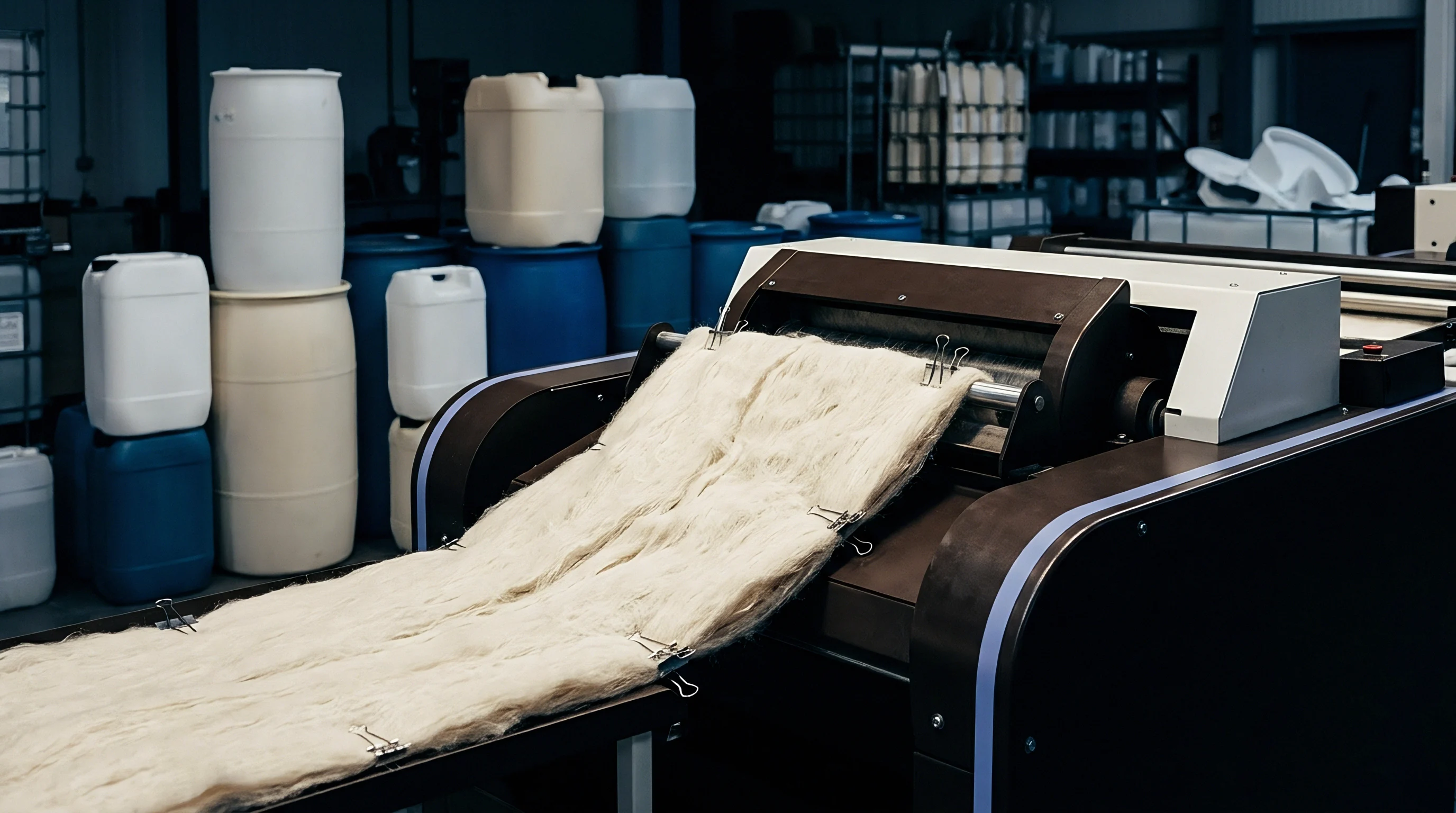
Flax rove enters the wet spinning attenuation trough as a bundle of technical bast fibers bound by a matrix of pectins, hemicelluloses, and calcium polygalacturonate salts. Industrial attenuation troughs processing 100 percent European Flax certified rove (typically 0.8 to 1.2 metric count, Nm) rely on precise hydrothermal control to soften this inter-fiber pectin cement without degrading the cellulosic core of the elementary fibrils. Standard operating troughs maintain water temperatures between 60 and 72 degrees Celsius to plasticize the middle lamella.
Below 58 degrees Celsius, pectin stays semi-rigid, leading to erratic roller slip, uneven attenuation, and frequent rove breaks at the drafting nip. Above 76 degrees Celsius, excessive pectin extraction weakens individual fibril bundles before twist insertion, raising yarn hairiness and reducing ultimate single-end tensile strength.
A bath maintained below the dissolution threshold forces mechanical fiber shearing at the drafting rollers.
Water chemistry inside the trough governs how rapidly insoluble calcium pectate converts to soluble pectin fractions. High concentrations of magnesium and calcium in hard water stabilize the divalent cation bridges between adjacent polygalacturonide chains, suppressing dissolution. Mills operating high-efficiency wet spinning frames use closed-loop demineralization systems to keep total dissolved solids below 50 parts per million and water hardness below 1.5 degrees French hardness (equivalent to 15 milligrams calcium carbonate per liter).
Adding sodium tripolyphosphate or ethylenediaminetetraacetic acid at concentrations between 0.2 and 0.5 grams per liter accelerates calcium cross-link extraction, shifting the dissolution equilibrium toward free, soluble pectin fragments. Monitoring these bath parameters across spinning facilities confirms that raw European Flax sliver achieves predicted count-strength-product values without chemical fiber degradation.
| Trough Zone | Temperature Range | Water Hardness Limit | pH Target | Dissolved Pectin Load |
|---|---|---|---|---|
| Primary Intake | 60 to 64 °C | Max 15 mg/L CaCO3 | 6.2 to 6.8 | 0.08 to 0.15 g/L |
| Submersion Midline | 68 to 72 °C | Max 10 mg/L CaCO3 | 6.8 to 7.4 | 0.35 to 0.55 g/L |
| Drafting Nip Exit | 62 to 66 °C | Max 10 mg/L CaCO3 | 6.5 to 7.0 | 0.60 to 0.90 g/L |
Lower water hardness speeds up pectin dissolution during attenuation.
Kinetics
Should Wet Spinners Adjust Water Turnover Rates?
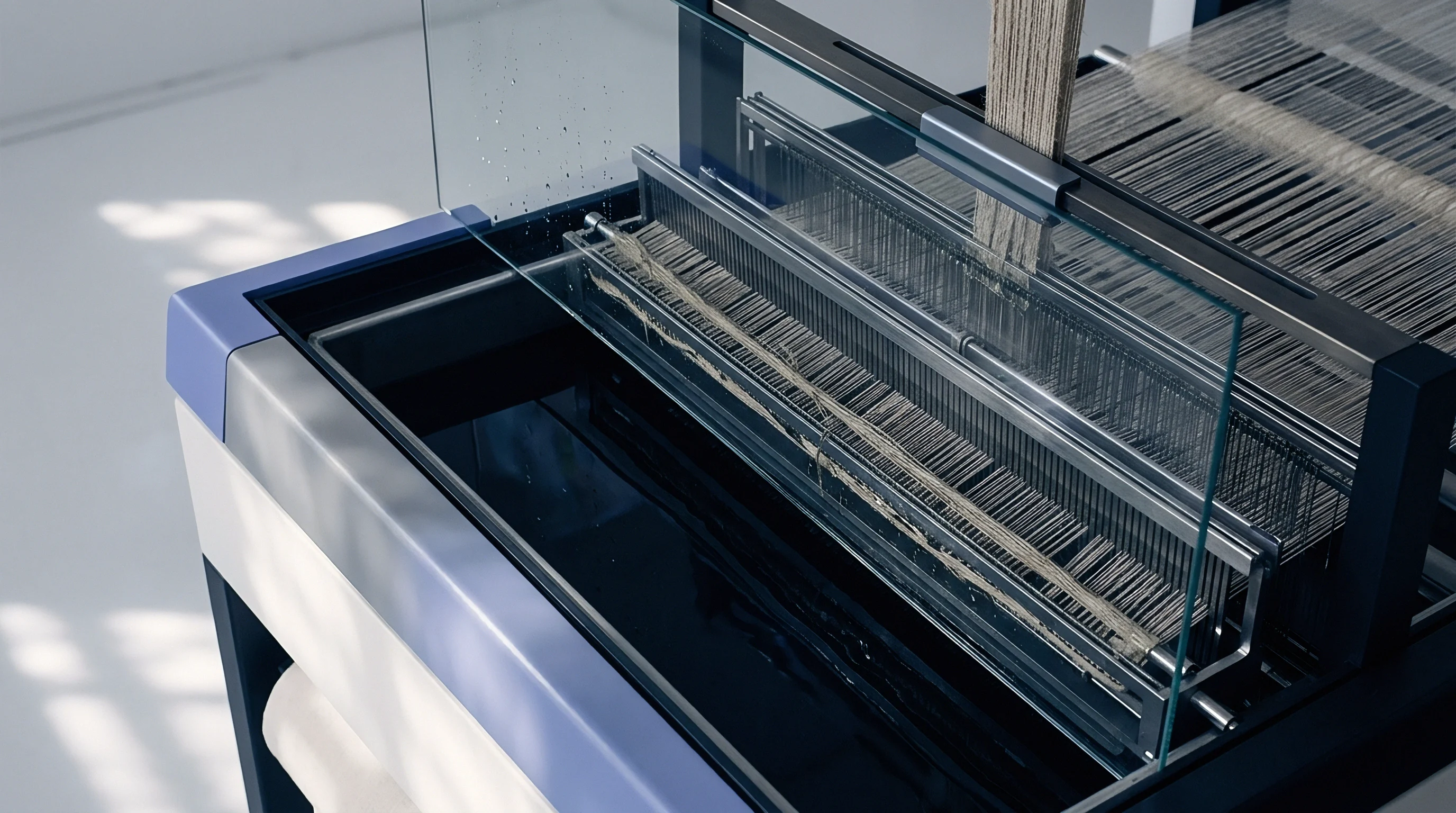
Continuous extraction of polysaccharide binders steadily enriches the process fluid with solubilized galactans, rhamnogalacturonans, and mobile oligosaccharides. As dissolved pectin in the attenuation trough reaches toward 1.2 grams per liter, the concentration gradient across the rove boundary layer drops, slowing further inter-bundle dissolution. Fluid stagnation creates micro-zones of saturated pectin broth around traveling roves, causing uneven fiber attenuation along the yarn axis.
Automated metered replenishment flushes the trough at 1.8 to 2.6 liters per spinning spindle per operating hour, keeping steady-state pectin saturation below 0.65 grams per liter.
Rove immersion time through the submerged guide path establishes the kinetic window for softening. At delivery speeds between 18 and 28 meters per minute, the rove dwells in heated liquor for 1.4 to 2.8 seconds. This provides enough time for external bundle hydration if liquor surface tension stays below 38 millinewtons per meter.
Water with higher surface tension requires longer dwell profiles or the addition of non-ionic wetting agents at 0.1 grams per liter to prevent dry-core rove entering the drafting nip.
A mass balance deficit between scutcher output and spinning yield signals unmeasured organic loss during wet drafting.
The molecular weight distribution of dissolved pectins varies with field-retting duration across Western Europe. Under-retted flax harvested after dry summers retains high-molecular-weight pectin fractions with high degrees of esterification, requiring longer trough dwell times or alkaline pH shifts. Distinct dissolution kinetics occur between dew-retted Normandy flax and Belgian coastal crops owing to regional enzymatic colonization during field lying.
Mills unable to adjust trough exchange rates face high coefficient of variation in yarn mass.
Whether biological variation in agricultural pectin esterification can be fully offset by dynamic trough bath dosing remains an open technical question among spinning engineers.

Draft
Do Attenuation Bath Temperatures Compromise Bast Strength?
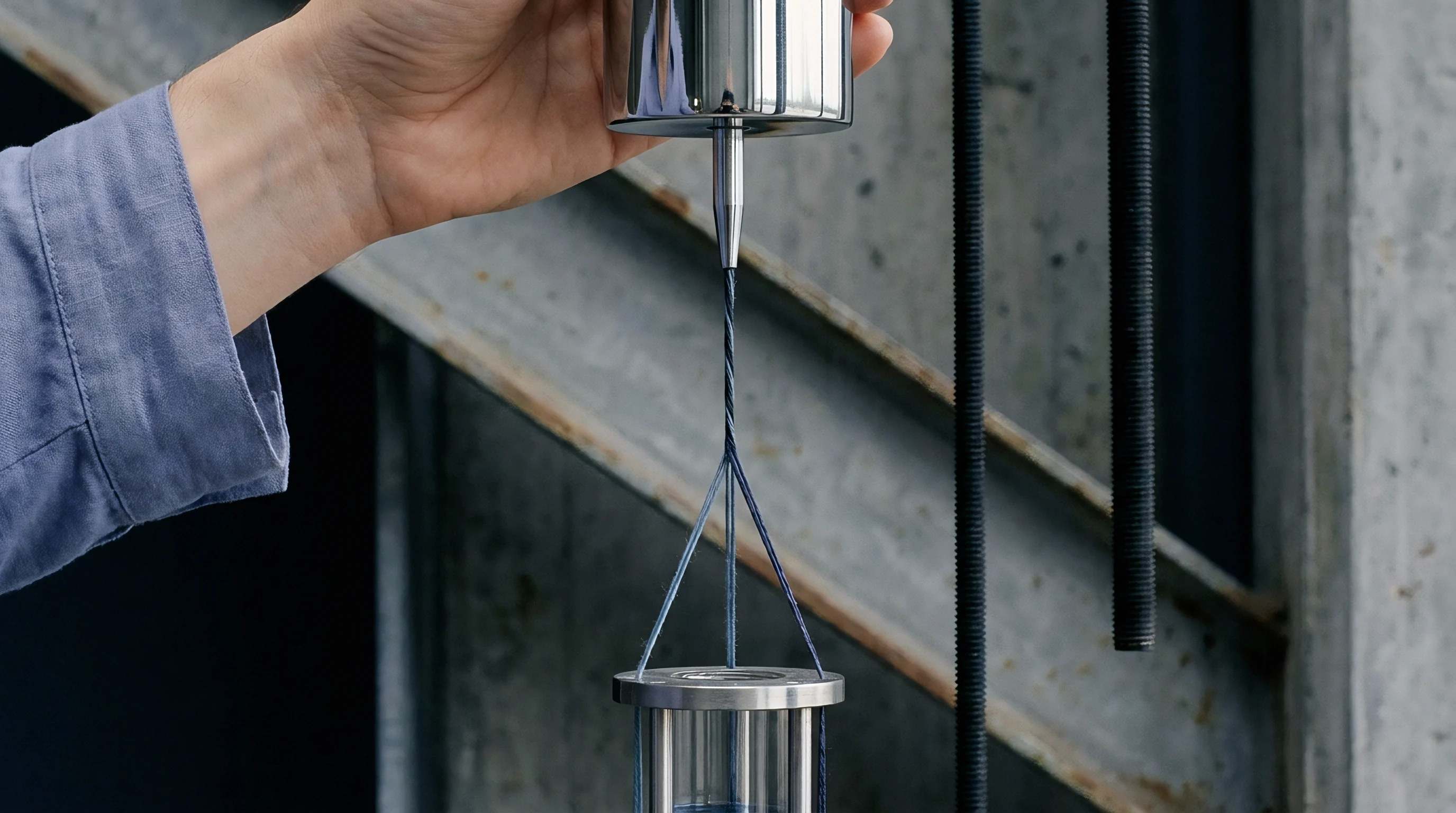
Mechanical drawing relies on controlled inter-fiber slippage along the middle lamella. As rove leaves the heated trough, back rollers feed the softened material across a 45 to 65 millimeter drafting zone toward the front delivery nip. A drafting ratio between 8 and 14 for wet-spun flax counts from Nm 26 to Nm 60 stretches the bundle.
Individual elementary fibers ~ 20 to 40 millimeters long and 15 to 25 micrometers in diameter ~ slide axially past each other as softened pectin allows progressive bundle cleavage without breaking fibers.
Excessive pectin stripping in the attenuation trough destroys the cohesion needed to control short fibers during mechanical acceleration between rollers. When too much binder dissolves, short fibrils float unrestrained in the drafting zone, building up on roller cots and producing slubs. Maintaining a residual pectin content of 1.5 to 2.2 percent by weight on the drafted sliver preserves bundle cohesion through the thread guide and onto the ring rail.
Draft efficiency is evaluated by comparing sliver mass consistency entering the trough against delivered yarn irregularity on high-speed capacitive testers.
- Inadequate Thermal Plasticization leads to high drafting resistance, excessive roller load, fiber rupture, and frequent rove runouts.
- Over-Extraction of Middle Lamella causes unguided floating fibers, cot lapping, erratic drafting waves, and reduced yarn tensile strength.
- Uneven Immersion Depth results in alternating stiff and over-softened rove sections, driving periodic yarn count variation.
- Stagnant Pectin Accumulation raises fluid viscosity around the submerged rove, reducing roller nip grip and destabilizing twist insertion.
Poor attenuation chemistry produces yarn with high unevenness values, causing structural failures in high-speed weaving sheds and leading to dye-lot rejections.
Segregation

Documented Custody from Sliver to Ring Rail
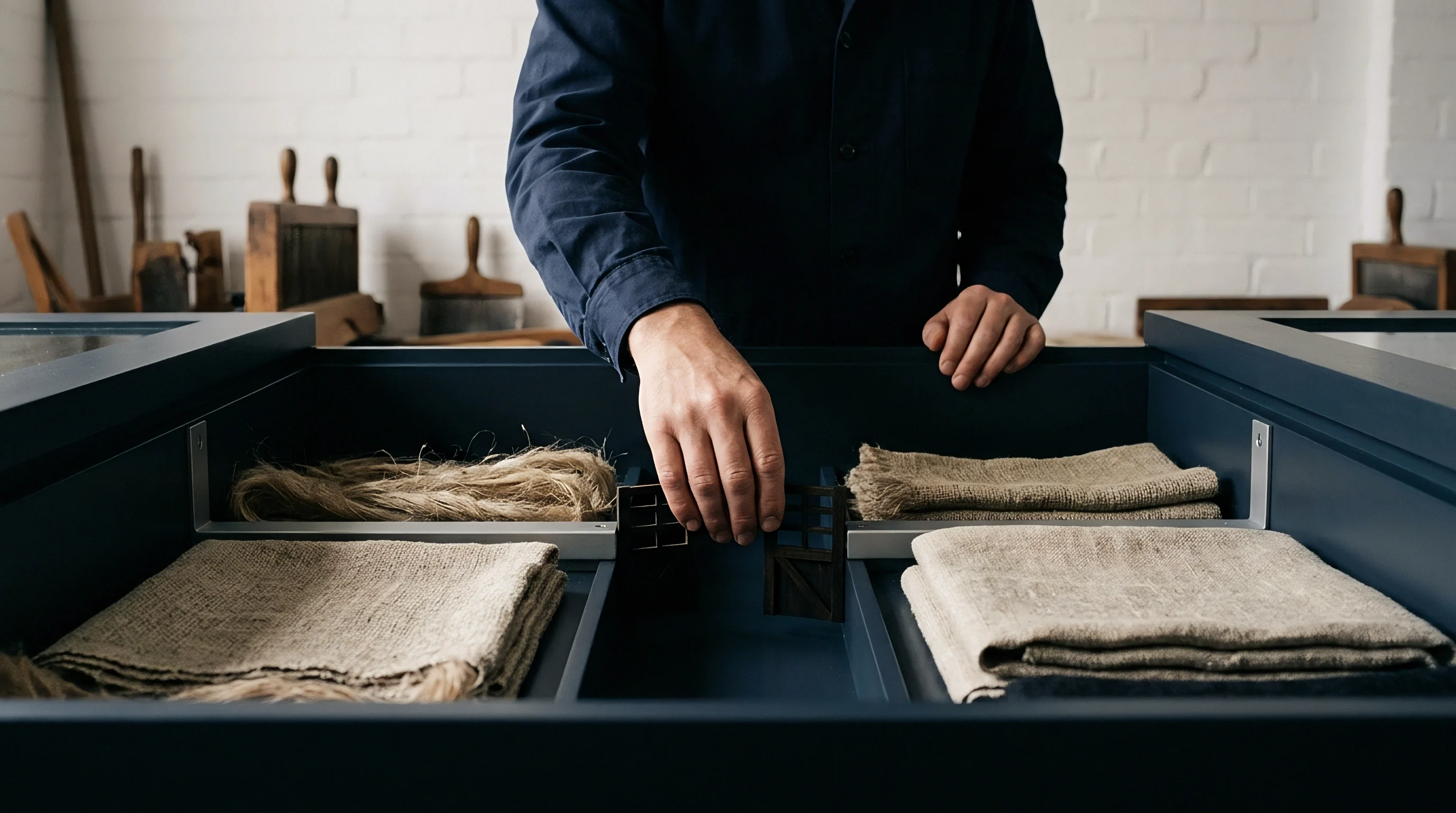
Traceability in the wet spinning department relies on strict physical and documentary isolation of European Flax certified lots from non-certified stock. Sliver preparation records, drawing frame passes, and rove bobbin storage racks must carry clear lot identifiers tying each batch to its original hackling delivery note and Transaction Certificate. Where mills operate shared attenuation troughs across multiple ring frames, cross-contamination risks arise if certified and conventional roves run in parallel wet circuits.
Dedicated trough manifolds fed by segregated water lines prevent chemical and particulate carryover between different fiber origins.
| Processing Stage | Primary Document | Required Lot Match | Physical Checkpoint |
|---|---|---|---|
| Rove Crediting | Scutcher Delivery Note | Scutching Lot to Rove Tag | Bale tag seals and gross weight |
| Trough Loading | Spinning Lot Creel Sheet | Rove Spool Barcode to Frame ID | Frame trough isolation valve position |
| Doffing Stage | Spun Bobbin Transfer Slip | Frame Run ID to Yarn Crate | Moisture regain and tare verification |
| Packaging | Transaction Certificate Request | Mass Balance Reconciliation | Finished carton label vs weighbridge slip |
Mass balance verification during spinning accounts for both mechanical waste and organic extraction loss. In wet drafting, flax bundles shed 2.5 to 4.5 percent of dry matter through pectin solubilization, particulate dropping, and roller washdown. Auditors calculate recovery yields by reconciling dry rove input against dry yarn output plus captured hard and soft spinning waste.
Any mass discrepancy exceeding 1.5 percent above standard pectin extraction tolerances points to uncertified fiber blending or undeclared lot substitution. Direct audits of spinning logs on the mill floor confirm that recorded extraction losses match real attenuation trough parameters.
A Transaction Certificate without corresponding mill-floor creel sheets and frame allocation logs fails customs audit scrutiny under origin verification procedures.
Purchase contracts incorporating the standard European Flax Chain of Custody Annex require spinners to maintain isolated spinning runs, complete creel-to-doff lot logs, and full physical segregation of wet spinning waste streams.

Surcharge

Cost Structures of Thermal and Chemical Regulation
Maintaining continuous attenuation trough control adds measurable operational expenses to spinning operations. Heating water baths to 70 degrees Celsius in high-speed spinning halls uses roughly 0.12 to 0.18 kilowatt-hours per kilogram of spun yarn. Running demineralization plants, dosing chelating agents, and operating automated filtration systems add an estimated 0.04 to 0.07 US dollars per kilogram to base spinning costs.
Mills running uncertified or lower-grade flax often drop bath temperatures to 45 degrees Celsius and reduce water turnover to trim utility bills, accepting poorer yarn uniformity as a trade-off.
Pricing for genuine European Flax wet-spun yarn reflects certified raw material premiums, audited chain of custody compliance, and tight thermal drafting controls. Western European long-line scutched flax carries a raw fiber surcharge of 0.80 to 1.40 US dollars per kilogram over non-certified stock. Factoring in traceability management, segregated wet spinning runs, and third-party Transaction Certificate issuance brings the total finished yarn premium to 1.10 to 1.85 US dollars per kilogram for counts between Nm 26 and Nm 39.
High ambient hall temperatures during summer production runs are sometimes cited as a reason to reduce trough heating, though thermal control remains necessary for stable attenuation.