Wet Spun Linen Warp Tensile Strength and Single End Breakage
Wet spun linen warp breaking strength depends on low strength CV and elastic sizing film to resist cyclic shed tension and prevent single end loom stops.
Tenacity
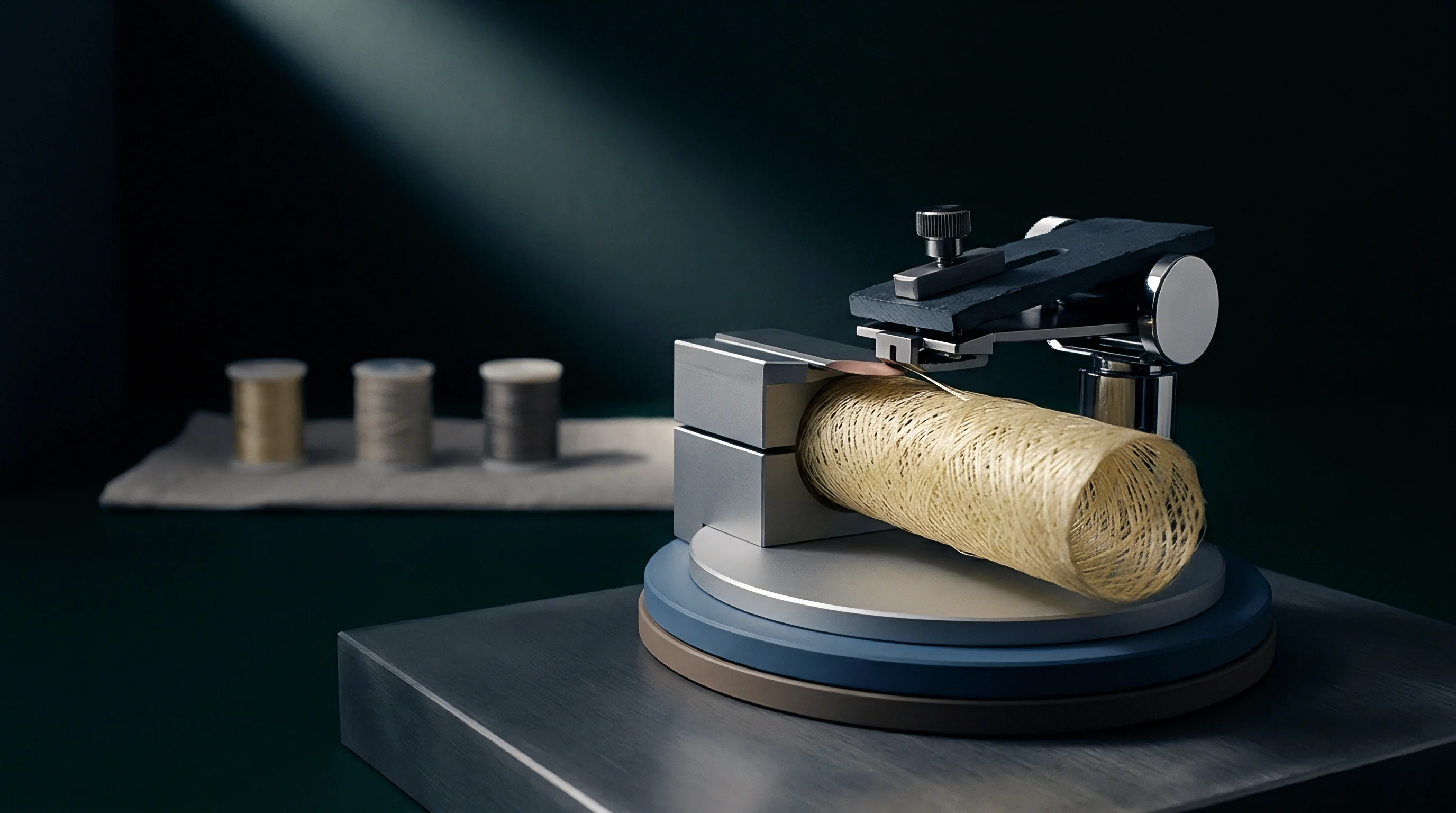
Wet-spun flax yarn owes its physical behavior to hot-water spinning and mechanical extraction. Drafting long flax line fibers through a water bath at 60 to 70 degrees Celsius softens the inter-fiber pectins, allowing ultimate fibers to slide past each other and align closely along the yarn axis before twist is inserted. This produces a dense, compact cross-section with high structural orientation.
Because flax cellulose is highly crystalline, tensile strength actually rises when wet: absorbed moisture swells the cell walls, promoting internal hydrogen bonding and easing localized stresses across the fiber bundle.
Standard dry tensile tests rarely reflect the mechanical stress warp yarns face during preparation and weaving. In wet-spun linen, single-end breaking strength depends on yarn count, twist factor, fiber length distribution, and residual pectin cohesion. Under ISO 2062 test conditions, high-grade long-line wet-spun yarns show breaking tenacities between 18 and 28 centinewtons per tex.
Twist levels typically range from 250 to 400 turns per metre depending on metric count; while added twist improves cohesion among short fiber ends within the bundle, over-twisting skews fiber alignment away from the yarn axis, introducing shear failure under axial loads.
Yarn count ultimately places a ceiling on achievable tenacity.
The primary driver of warp breakage on high-speed shuttleless looms is the coefficient of variation in breaking strength (CV percentage across single-end test specimens). A wet-spun Nm 26 warp yarn might average a breaking force of 720 centinewtons while still exhibiting a strength CV above 16 percent. Across a warp beam carrying 4,000 threads under dynamic tension, yarns do not fail at their mean strength; breaks occur at weak points along the length where count irregularities, slubs, or unsoftened pectin clusters create localized stress concentrations.
Flax fiber moisture content alters single end tenacity by up to twenty percent between ambient laboratory states and water-saturated weaving conditions.
The operational window for wet-spun warp yarns depends on the interplay between yarn count, twist factor, breaking force, and elongation at break. Finer counts such as Nm 50 and Nm 60 require strict control over extraction quality because so few ultimate fibers make up the cross-section. At Nm 50, a typical cross-section contains only about 25 to 30 ultimate fibers, so any thin place or bundle defect becomes a prime failure point during shedding.
| Yarn Count (Nm) | Linear Density (tex) | Twist Level (TPM) | Mean Breaking Force (cN) | Tenacity (cN/tex) | Elongation at Break (%) | Breaking Strength CV (%) |
|---|---|---|---|---|---|---|
| Nm 26 | 38.5 | 280 | 847 | 22.0 | 2.4 | 12.8 |
| Nm 39 | 25.6 | 340 | 588 | 23.0 | 2.1 | 14.2 |
| Nm 50 | 20.0 | 380 | 470 | 23.5 | 1.9 | 15.5 |
| Nm 60 | 16.7 | 420 | 384 | 23.0 | 1.7 | 17.1 |
Compared to cotton or synthetics, wet-spun linen has very low elongation at break, typically stretching only 1.5 to 2.5 percent before failure. Because of this inelasticity, the yarn cannot stretch to absorb dynamic shocks. When the shed opens or the reed strikes the fell of the cloth, tension spikes transfer straight into the fiber bundle.
If peak tension during beat-up exceeds the yield strength of a weak spot, the end snaps instantly.
Film
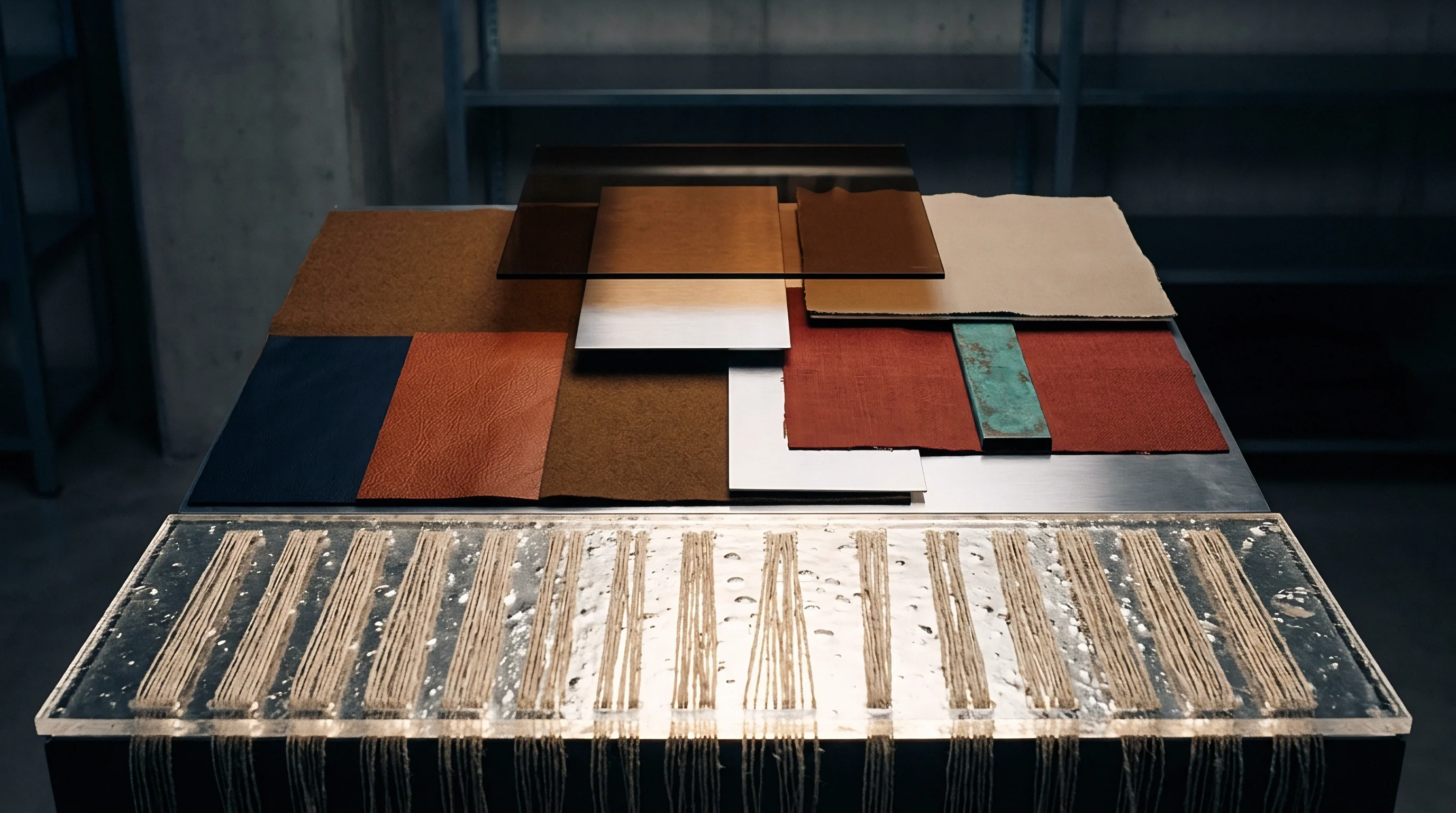
Without sizing, wet-spun flax cannot endure the mechanical stresses of modern weaving. Surface hairiness and low elongation cause loose fibers to snag on neighboring warp ends as the shed opens. Sizing coats the yarn with a protective film, anchoring surface fibers back to the core structure and boosting resistance to cyclic friction.
Modified starches, carboxymethyl cellulose, polyvinyl alcohol, and acrylic copolymer binders are the main film-formers used in linen warp sizing.
Pectins serve as the natural binder between individual ultimate fibers.
How deeply size penetrates and how evenly it coats the surface dictate the gain in yarn performance. Deep size penetration locks the core fibers together, raising rigidity but cutting into residual stretch. Conversely, too much film on the surface leaves a brittle crust that sheds inside the harness, clogging heddle eyes and drop wires.
Dry size pickup for wet-spun linen usually runs between 6 and 10 percent ~ lower than cotton because the dense wet-spun bundle absorbs less liquor.
Size formulations must strike a balance between film cohesion and yarn flexibility. Adding liquid lubricants such as emulsified fats or polyethylene waxes at 1.5 to 3.0 percent of dry solids lowers the kinetic coefficient of friction against metal loom parts, preventing surface fuzzing and fiber shedding during weaving.
- Viscosity Instability produces inconsistent size add-on down the length of the beam, leaving under-sized patches that break under shed-opening tension.
- Over-Drying on slasher cylinders crystallizes or degrades the starch film, making the coating brittle and causing micro-cracks during winding.
- Retrogradation of native starches leads to gelation in the size box, forming thick spots on the yarn that jam in reed dents.
- Inadequate Desizing Compatibility leaves hydrophobic waxes or insoluble polymers on greige fabric, blocking uniform penetration during subsequent bleaching and dyeing.
Evaluating sizing formulations highlights the trade-off between strength gains and retained elongation. Consider an Nm 39 wet-spun linen warp with an unsized single-end strength of 588 centinewtons and 2.1 percent elongation. A high-concentration modified potato starch formula increases breaking strength by 22 percent (to a mean force of 717 centinewtons), but drops elongation to 1.4 percent as surface fibers are cross-linked into a rigid sheath.
Blending potato starch with soft acrylic esters yields a smaller tensile boost ~ 14 percent, up to 670 centinewtons ~ while retaining 1.8 percent elongation. Though the second formula offers lower static strength, it cuts single-end breakage on air-jet looms by 35 percent because the yarn remains flexible enough to absorb dynamic shedding strain.
Conditions in the slasher room directly govern how the yarn behaves on the loom. Squeegee roll pressure, size box temperatures kept between 85 and 90 degrees Celsius, beam tension, and cylinder drying control total beam quality. Target moisture in the sized warp sheet ranges from 7.5 to 9.0 percent: falling below 6 percent makes the fiber bundles brittle, while exceeding 10 percent causes adjacent ends to cling together and snap during leasing.
Sizing chemists working with fine wet-spun yarns still debate the exact point where film flexibility maximizes abrasion resistance without sacrificing too much residual elongation.
Shed
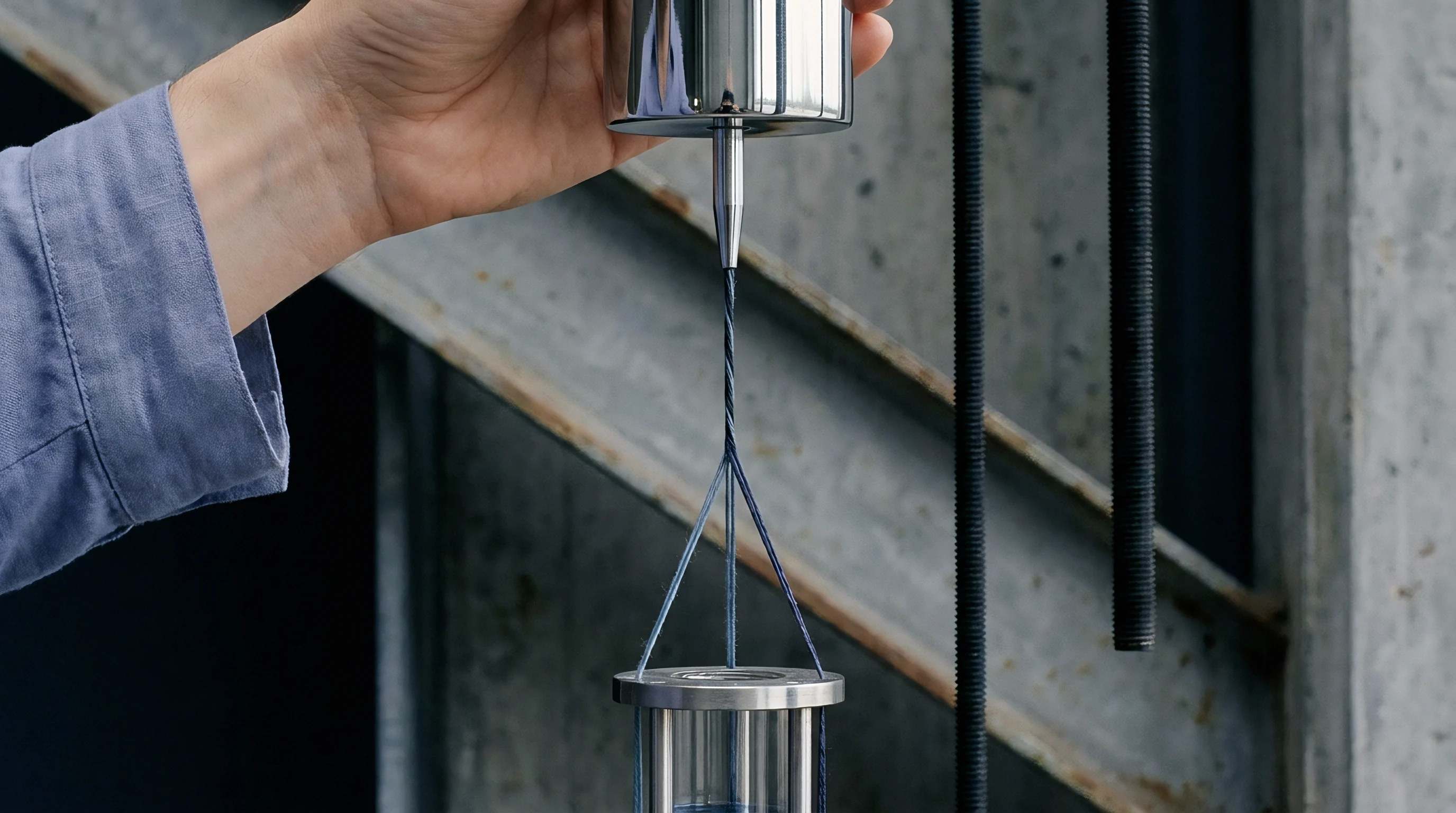
Inside the loom shed, warp threads face continuous cyclic fatigue, sharp tension peaks, and surface abrasion. Each time the shed opens, harness frames move past one another and stretch every end. How far they stretch depends on shed geometry, backrest position, harness lift height, and loom depth.
With an elongation limit below 2.0 percent, wet-spun linen yarn works close to its breaking strain on every single pick cycle.
Absorbed water increases individual fiber diameter.
Abrasion occurs at several places in the shed. Drop wires exert constant friction as they ride on individual ends, heddle eyes scuff the surface on every harness change, and reed dents strike the warp at the cloth fell ~ at speeds over 400 picks per minute on high-speed rapiers. Heat and friction strip away the protective sizing, generating fly and loose slubs that catch in neighboring threads.
- Backrest Roll Deflection sets initial static tension across the warp sheet, aligning threads as they enter the drop wire area.
- Drop Wire Mechanical Contact introduces constant low-amplitude friction on each end, dropping to trigger the stop motion if tension collapses or a thread snaps.
- Heddle Eye Friction subjects yarn segments to reverse bending and linear scuffing twice per cycle as the shed opens and closes.
- Shed Opening Peak Tension pulls constrained thread lengths to peak strain, breaking weak spots during tension surges.
- Beat-Up Impact drives reed dents against the cloth fell, sending sharp axial shockwaves along the active warp length.
Tension spikes are the immediate cause of single-end breakage during weaving. Loom timing dictates how much peak strain reaches the warp sheet: early shedding (crossing before the reed strikes the fell) increases beat-up resistance and drives peak tension higher, while late shedding lowers beat-up tension but risks weft insertion collisions if the shed fails to clear in time.
Standard ISO 13934 testing defines strip tensile limits, yet loom single end breakage correlates strictly with cyclic fatigue endurance under dynamic strain below two percent.
Loom technology strongly affects single-end break rates on wet-spun flax warps. Projectile looms feature smooth shedding dynamics well suited to heavier linen fabrics. Rapiers provide versatile insertion but demand precise shed geometry to prevent end clipping.
Air-jet machines require exceptionally clean, smooth yarns because high-velocity air blasts open loose fiber ends, causing adjacent warp threads to entangle and break.
| Loom Technology | Loom Speed (PPM) | Mean Warp Tension (cN/end) | Peak Warp Tension (cN/end) | Shed Angle (Degrees) | Breakage Rate (Breaks/10^5 picks) |
|---|---|---|---|---|---|
| Projectile | 280 | 35 | 62 | 24 | 1.8 |
| Negative Rapier | 380 | 42 | 78 | 28 | 3.2 |
| Positive Rapier | 420 | 45 | 85 | 26 | 2.9 |
| Air-Jet | 600 | 50 | 105 | 30 | 6.4 |
Excessive warp tension causes outright tensile breaks at weak points, whereas insufficient tension creates slack ends that entangle with adjacent threads, causing double-end breaks and loom stops. Fabric construction also influences shed mechanics: plain weave has the highest number of interlacing points per inch, increasing beat-up resistance far more than 2/2 twill or satin weaves.
Misaligning the backrest roller shifts the neutral warp line, concentrating cyclic fatigue on the lower shed line and triggering premature warp breaks across the entire width of the loom.

Test
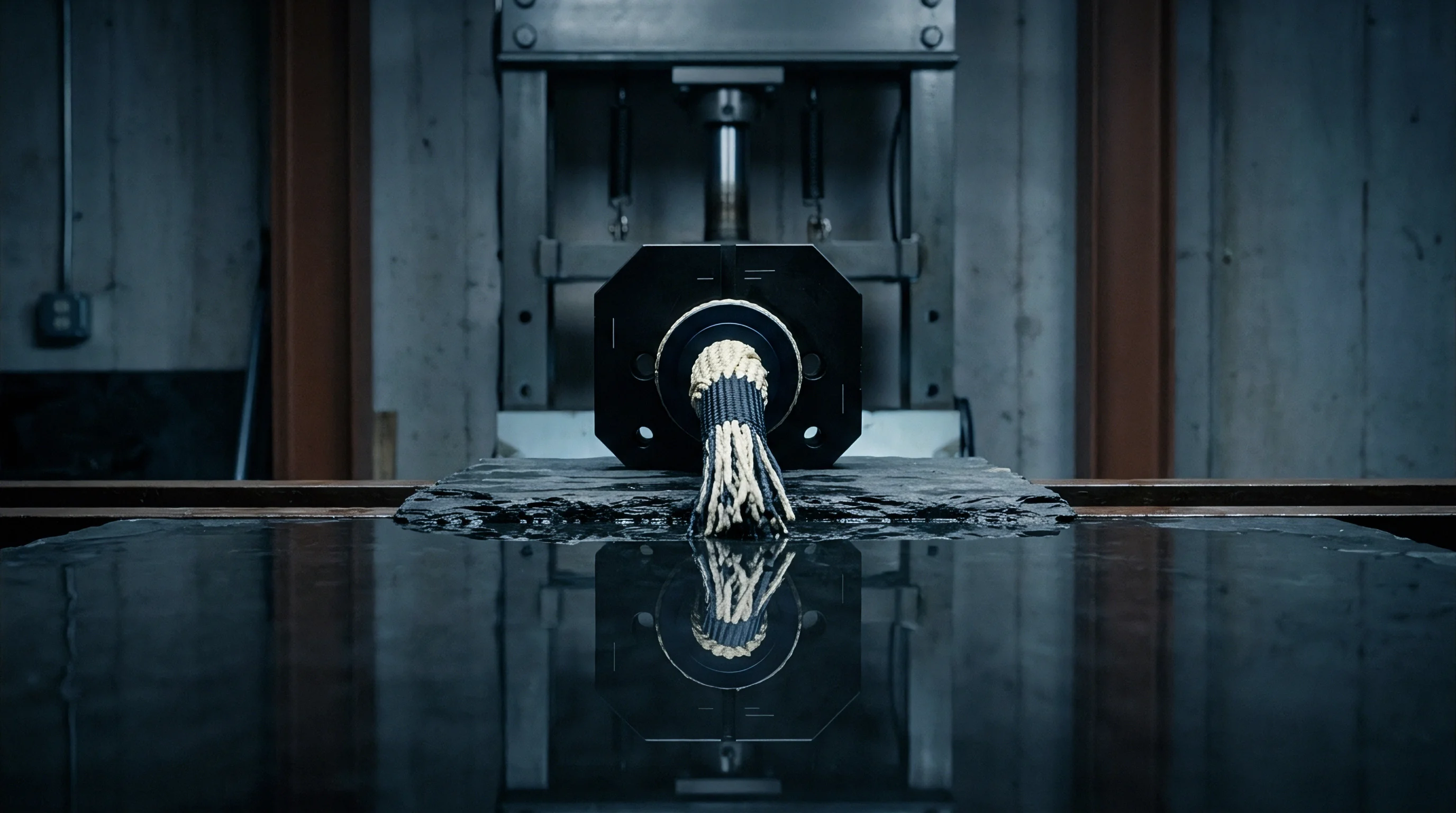
Single-end tensile testing gives basic baseline data for warp yarn qualification, but static average breaking strength alone cannot predict loom performance. Protocols must analyze strength distributions to determine weak-link frequency. ISO 2062 specifies automatic single-end tensile testing at a constant extension rate, typically evaluating 50 to 100 samples per bobbin across multiple package positions.
Dynamic tension peaks are what break yarn in the loom.
Weibull distribution statistics model how wet-spun linen threads fail under axial load. The two-parameter Weibull model determines a scale parameter (characteristic strength) and a shape parameter (the Weibull modulus). A high modulus signals a narrow strength spread and consistent yarn structure.
Yarns with a low modulus harbor frequent weak spots that snap under mild dynamic stress in the shed, even if average tenacity looks good on lab reports.

How Does Single End Breakage Correlate with Weibull Modulus?
Low Weibull modulus values correlate directly with high stop rates in weaving sheds. A yarn averaging 600 centinewtons breaking force with a Weibull modulus under 8.0 will suffer far more warp breaks than a yarn with a lower average strength of 550 centinewtons and a modulus above 12.0. It is the lower tail of the strength distribution ~ the infrequent weak spots ~ that causes loom stops.
Warp yarn quality must be confirmed before beaming. Splicing integrity is another crucial mechanical factor: traditional knots create thick spots that catch in heddle eyes or reed dents, snapping the end immediately. Pneumatic or thermo-chemical splices should retain at least 80 percent of original yarn strength while keeping diameter increases under 20 percent.
Warp yarn qualification standards require a minimum Weibull shape parameter of ten point five to guarantee loom stop rates below three breaks per one hundred thousand picks.
Capillary wicking and moisture equilibrium tests verify that yarn will absorb size liquor evenly. Although flax absorbs water quickly, uneven residual pectin layers can leave hydrophobic spots. Evaluating linear density variations on a Uster Tester captures mass irregularities, highlighting thin spots where fiber counts drop below critical structural thresholds.
- Minimum Single End Tenacity sets a floor for breaking strength across all sample packages.
- Maximum Coefficient of Variation caps strength variation to prevent clusters of weak links on the warp beam.
- Splice Retained Strength Ratio enforces splice integrity to avoid knot-related reed jams.
- Mass CV Percentage restricts linear density variation, limiting the number of thin spots per thousand metres.
- Residual Moisture Percentage sets incoming moisture limits for bobbins to prevent brittleness during beaming.
Standard purchase contracts often stipulate that if a five-bobbin sample exhibits a tenacity CV over 15.5 percent, the lot is subject to rejection or mandatory re-sizing under modified slasher settings.

Stop
Every warp break takes a direct toll on loom efficiency. When a thread snaps, its drop wire falls onto the contact bar, completing a circuit that trips the automatic stop motion. The loom halts immediately to prevent defects like floats, warp streaks, or unwoven bands.
Repairing the end requires manual work: finding the break, drawing the thread from the warp beam, re-threading it through the drop wire, heddle eye, and reed dent, and tying or splicing it back onto the cloth fell.
Repeated friction strips away protective surface fibers.
Weaver workload governs labor efficiency in high-volume weaving operations. On modern air-jet or rapier looms, one weaver typically oversees 12 to 24 machines as long as warp stops stay below 1.5 per loom hour. If poor yarn quality pushes stop rates to 4.0 per hour, weaver capacity breaks down.
Machines stand idle waiting for repairs, driving down shed efficiency and escalating labor costs per metre.
Financial modeling highlights how single-end breaks inflate fabric costs. Take a mill running 40 rapier looms at 380 picks per minute, weaving a dense plain-weave linen fabric at 20 picks per centimetre. That equals 22,800 picks per loom hour.
At an 88 percent baseline efficiency, each loom yields 10.03 metres of greige cloth hourly. With a warp stop rate of 1.2 per hour and repair time averaging 2.0 minutes, total warp downtime comes to 2.4 minutes per hour.
An intact sizing film prevents surface hairiness from fuzzing.
If poor yarn quality drives breaks up to 4.5 per loom hour, warp downtime jumps to 9.0 minutes every hour. Efficiency drops to 77 percent, cutting output to 8.77 metres per loom per hour. Across 40 looms operating over 24 hours, lost production totals 1,209 metres of fabric.
With overhead, power, and labor fixed at roughly 18.00 Euros per loom hour, fixed costs rise from 1.79 Euros to 2.05 Euros per metre, eliminating profit margins on weaving contracts.
| Warp Breaks / Loom Hour | Warp Downtime (Min/Hr) | Shed Efficiency (%) | Hourly Output (M/Loom) | Daily Output (40 Looms) | Loom Overhead Cost (€/M) |
|---|---|---|---|---|---|
| 1.0 | 2.0 | 89.5 | 10.20 | 9,792 | € 1.76 |
| 2.0 | 4.0 | 86.0 | 9.80 | 9,408 | € 1.83 |
| 3.0 | 6.0 | 82.5 | 9.40 | 9,024 | € 1.91 |
| 4.0 | 8.0 | 79.0 | 9.00 | 8,640 | € 2.00 |
| 5.0 | 10.0 | 75.5 | 8.60 | 8,256 | € 2.09 |
Frequent warp stops also degrade fabric quality and market value. Starting marks appear when loom restart dynamics alter beat-up force on the initial pick, leaving visible light or dark bands across the cloth width. In addition, hand-tied knots leave small surface defects that require manual burling and mending during inspection, adding 0.45 Euros per linear metre in mending costs.
- Greige Inspection Logs mapping automated stop timestamps to visual cloth defect locations along the roll.
- Yarn Lot Calibration Dossiers documenting incoming single-end strength distributions and measured size pickup levels.
- Loom Telemetry Reports recording exact stop counts, failure causes, weaver response times, and real-time PPM graphs.
- Laboratory Failure Analysis pinpointing root causes such as unsoftened pectin lumps, fiber slubs, or poor sizing protection.
High single-end breakage rates effectively double labor overhead while limiting line speeds on modern shuttleless looms.

Clause
Commercial contracts for high-grade linen require detailed warp yarn performance criteria to protect buyers against excessive breakage and fabric defects. Purchase specifications should tie yarn breaking force, tenacity CV percentage, dry size pickup, and allowable single-end stop rates directly to financial remedies. Relying solely on basic metric count allows suppliers to substitute cheaper, short-fiber wet-spun yarns that meet weight targets but fail under shed tension.
Drop wires effectively monitor warp thread fatigue in real time.
Supply agreements routinely include quality threshold clauses for incoming warp beams or commission weaving contracts. A standard clause sets a limit of 2.0 warp stops per 100,000 picks on rapier looms operating up to 400 picks per minute. If production logs show stop rates above 3.5 per 100,000 picks over a continuous 5,000-metre run, the contract triggers automatic price deductions or allows the buyer to cancel remaining beam orders without penalty.
Higher loom speeds directly intensify dynamic tension spikes.
Price adjustment formulas link loom downtime directly to invoice settlements, deducting the value of lost loom hours (calculated from agreed mill hourly rates) from the per-metre fabric price. Additional penalties cover the burling and mending labor needed to repair starting marks and knot defects from end repairs. Spinning mills often counter that frequent warp breaks stem from aggressive loom settings, wide shedding angles, or poor humidity control in the client’s weaving shed.