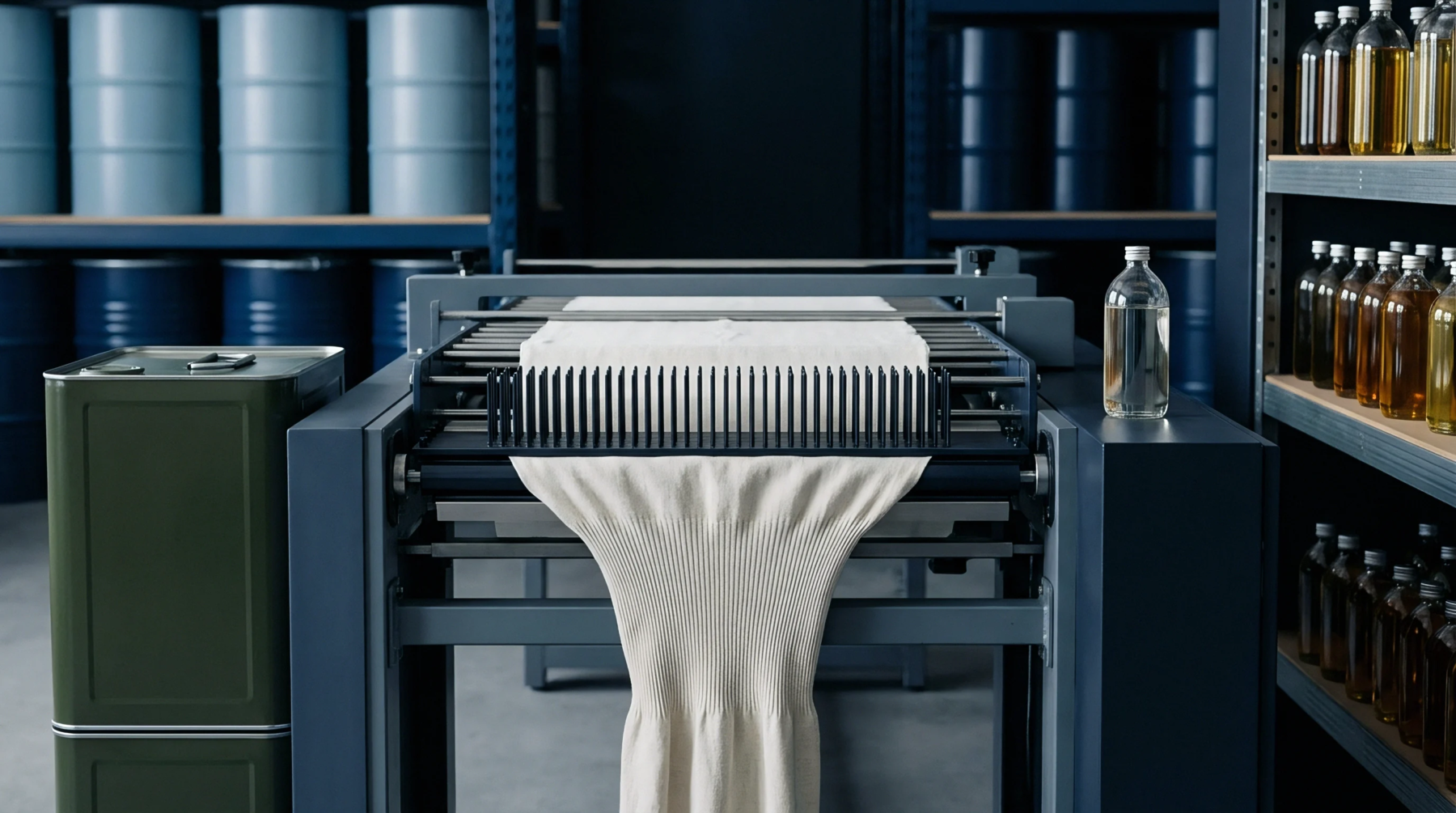
Drafting Precision
The mass per unit length of a sliver or roving increases through the controlled convergence of multiple strands during processing. This doubling ratio represents the numerical relationship between the number of input strands fed into the drawing frame and the resultant single output strand. Engineers adjust this setting to manage the linear density and fiber orientation within the drafted product.
Consistent control over this figure prevents the accumulation of mass irregularities that cause thickness variations in the final yarn.
Mechanical Variance
Slivers undergo repeated attenuation where the initial input count determines the eventual consistency of the material. Heavy strands drawn with low input counts fail to distribute the fibers evenly across the cross section. Variations in the alignment of flax fibers during these stages produce weak spots that break under tension during spinning.
Precise calibration of the input count ensures that the fiber bundle achieves the required density for spinning high quality linen yarns.
Quality Verification
Technical inspectors record the performance of drawing frames by comparing the input count against the documented output requirements for specific fabric specifications. Records found within the mill production log identify the input count used for each lot of flax sliver. Discrepancies between the intended input count and the actual machine output indicate wear within the rollers or improper drafting settings.
A stable output weight across all production batches proves that the machinery holds the required tolerance throughout the entire manufacturing cycle.