
Plain Weave Standing Where a Twill Drapes at Equal Weight
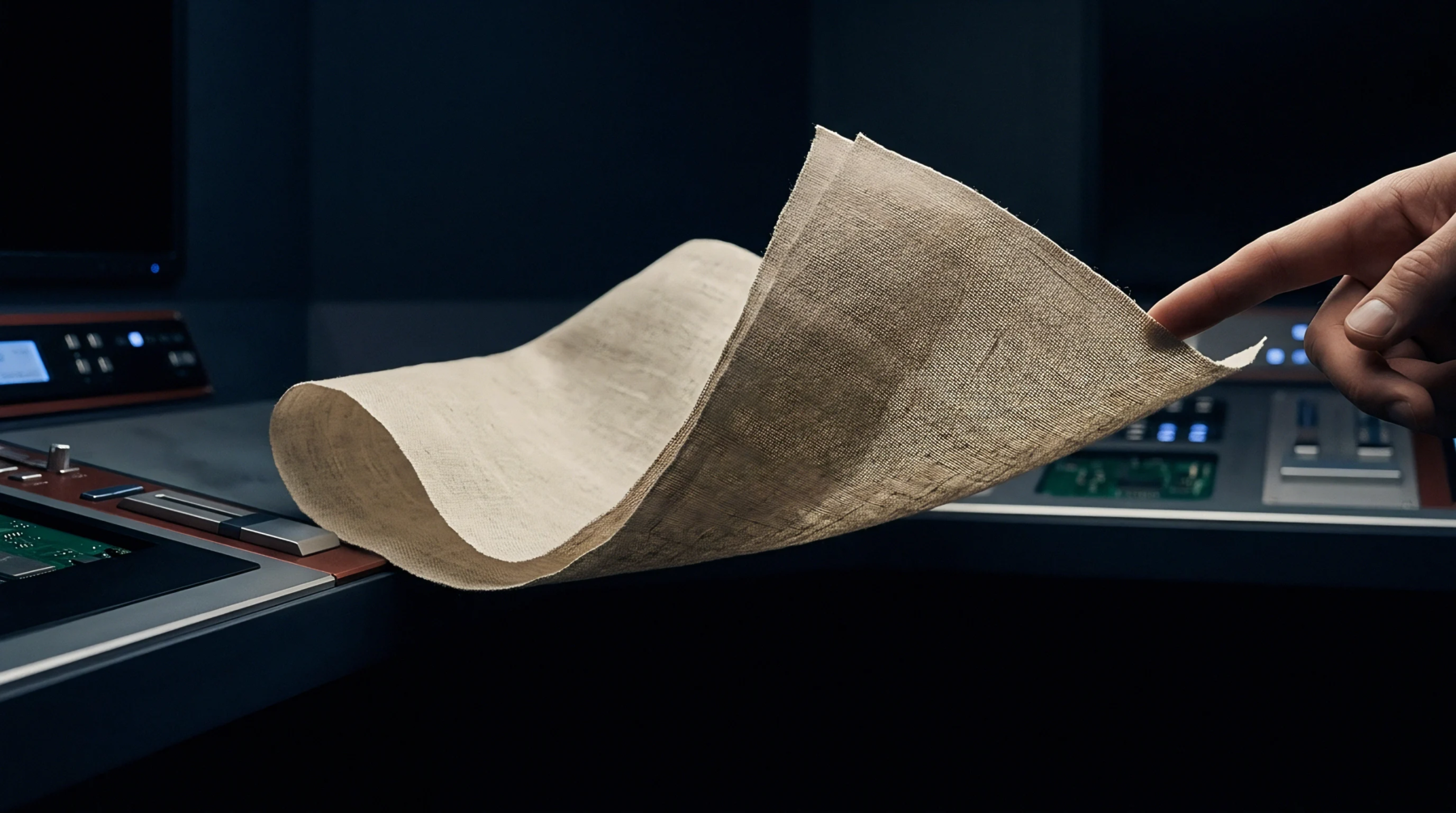
Equal weight plain weave stands rigid while twill drapes because maximum yarn crossover frequency locks crimp and restricts lattice shear mobility.
Equal weight plain weave stands rigid while twill drapes because maximum yarn crossover frequency locks crimp and restricts lattice shear mobility.

Sectional warping batch inspection requires matching drum cone angles to yarn build and scoring periodic band faults under strict four point penalty thresholds.

Standardized greige inspection combines calibrated D65 illumination and 4-point scoring to convert visual cloth defects into precise commercial deductions.

Fine warp setts collapse loom efficiency through yarn cling and stops; buyers absorb costs via sett surcharges unless target efficiency caps are contracted.

High sett warp contracts reconcile unplanned loom downtime and greige demerit credits by balancing loom hour overhead against four point defect penalties.
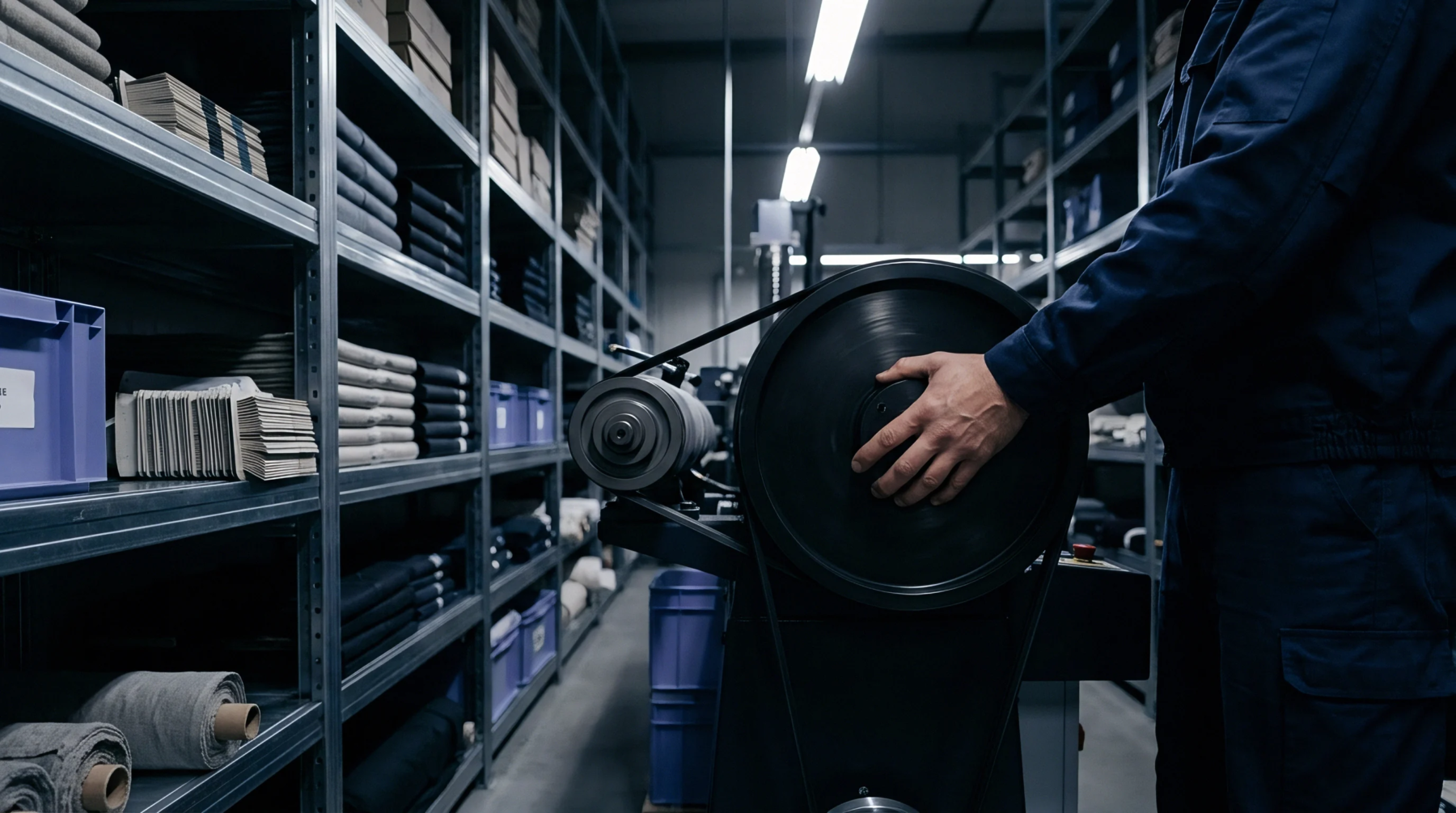
ASTM D5430 four-point scoring normalises greige defects per 100 square yards, capping penalties at four points per yard to decide lot acceptance.

Target linen weight equals yarn tex multiplied by thread density, adjusted for warp size, crimp, wet process mass loss, and area shrinkage factors.

Calculating real landed fabric cost requires dividing hourly loom shed rates by efficiency-adjusted yield and adding verified yarn loss, finishing shrinkage, and freight.
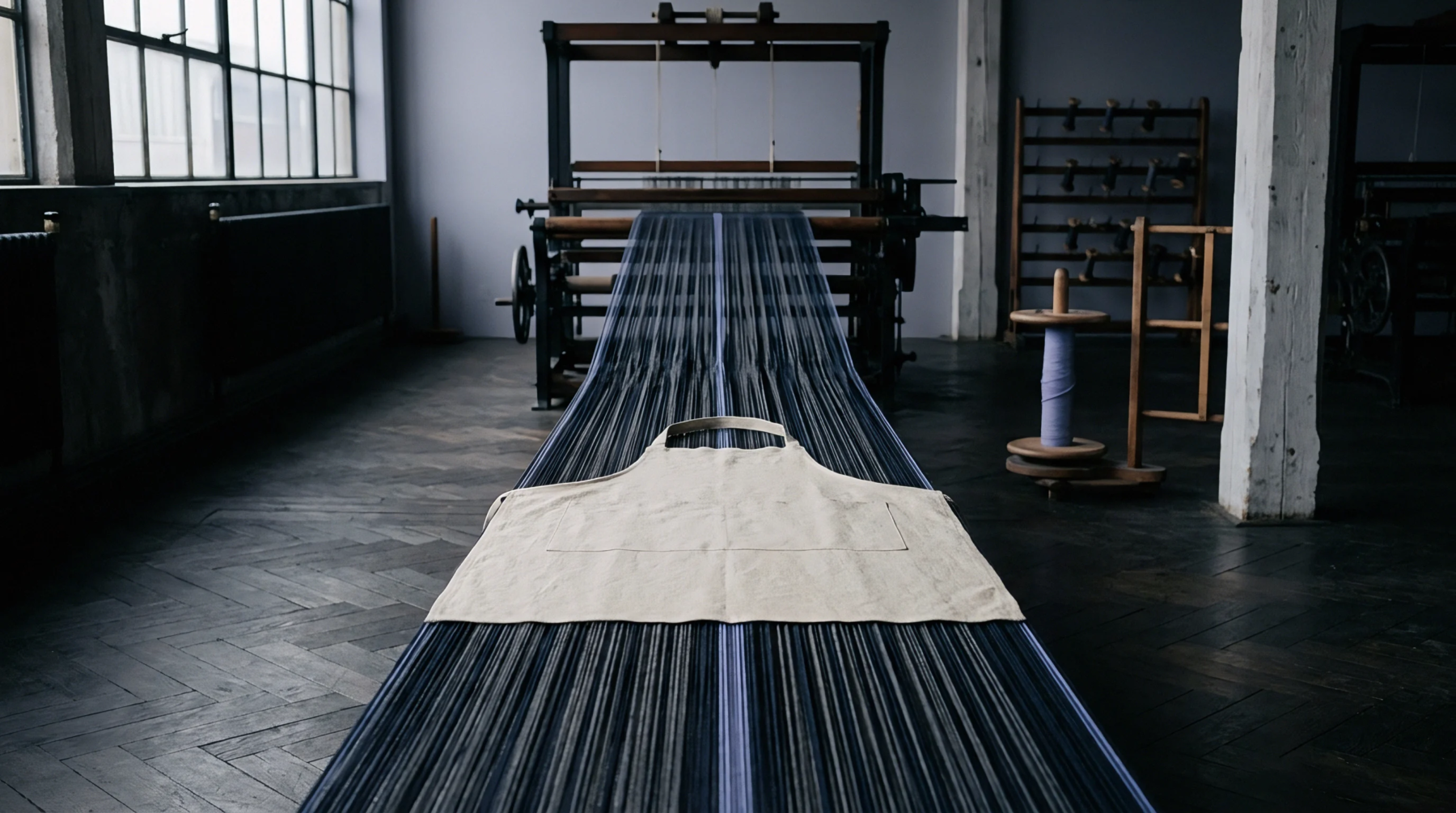
Adjusting rear shed depth and backrest symmetry flattens peak shedding tension spikes below yarn failure limits, drastically improving high-density linen loom efficiency.

Dynamic interference time in dense fine linen weaving escalates exponentially above six-loom allocation sets, demanding dynamic workload modeling to protect loom hour margins.

Reconciling warp crimp and waste factors prevents yarn budget deficits by capturing cumulative process losses across landed fabric cost models.

Greige reed marks and starting marks map directly to reed wire spacing and loom stoppage dynamics, requiring electronic let-off adjustment to eliminate defects.

Calculating multi-machine allocation penalties in high-density flax weaving requires auditing loom sensor response times against interference efficiency formulas to penalize unabsorbed overhead and defect downgrades caused by operator overburden.
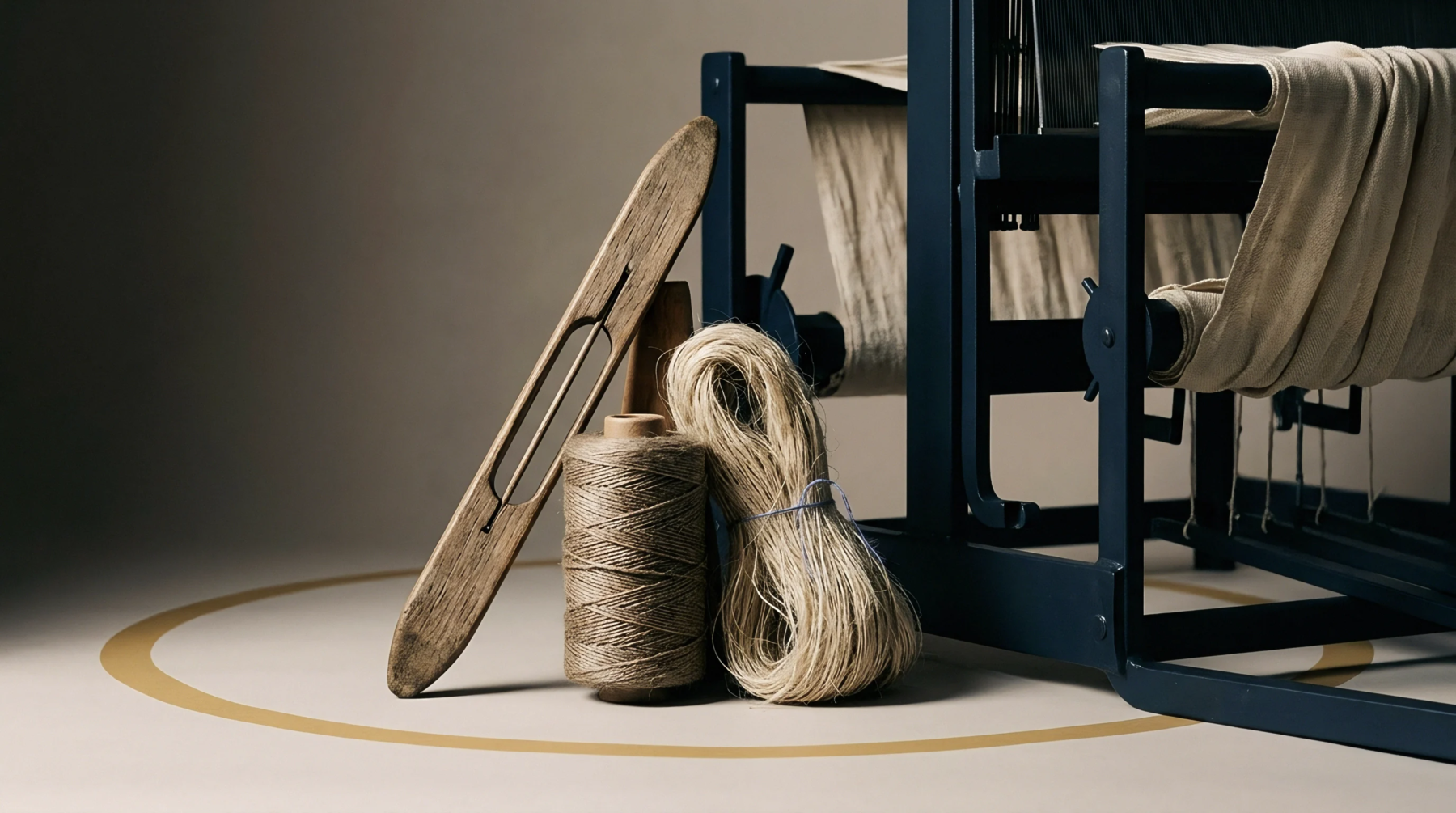
Optimizing modified starch PVA acrylic sizing formulations combined with staggered early shedding suppresses friction spikes and stabilizes fine wet spun linen warps.
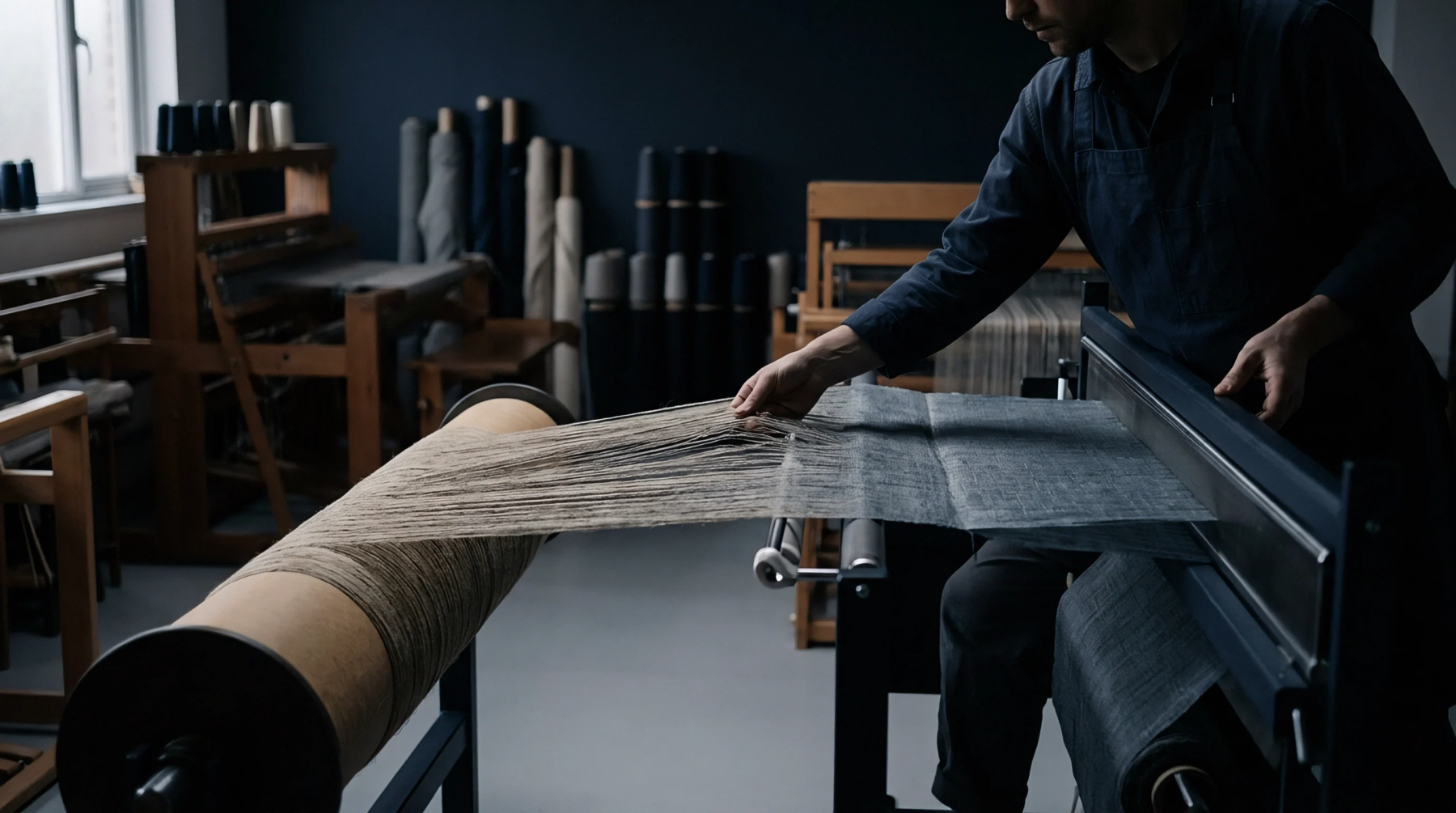
Differentiating spinning and sizing root causes requires cross-sectional microscopy and high-speed tensile testing to map size encapsulation against yarn mass variation.
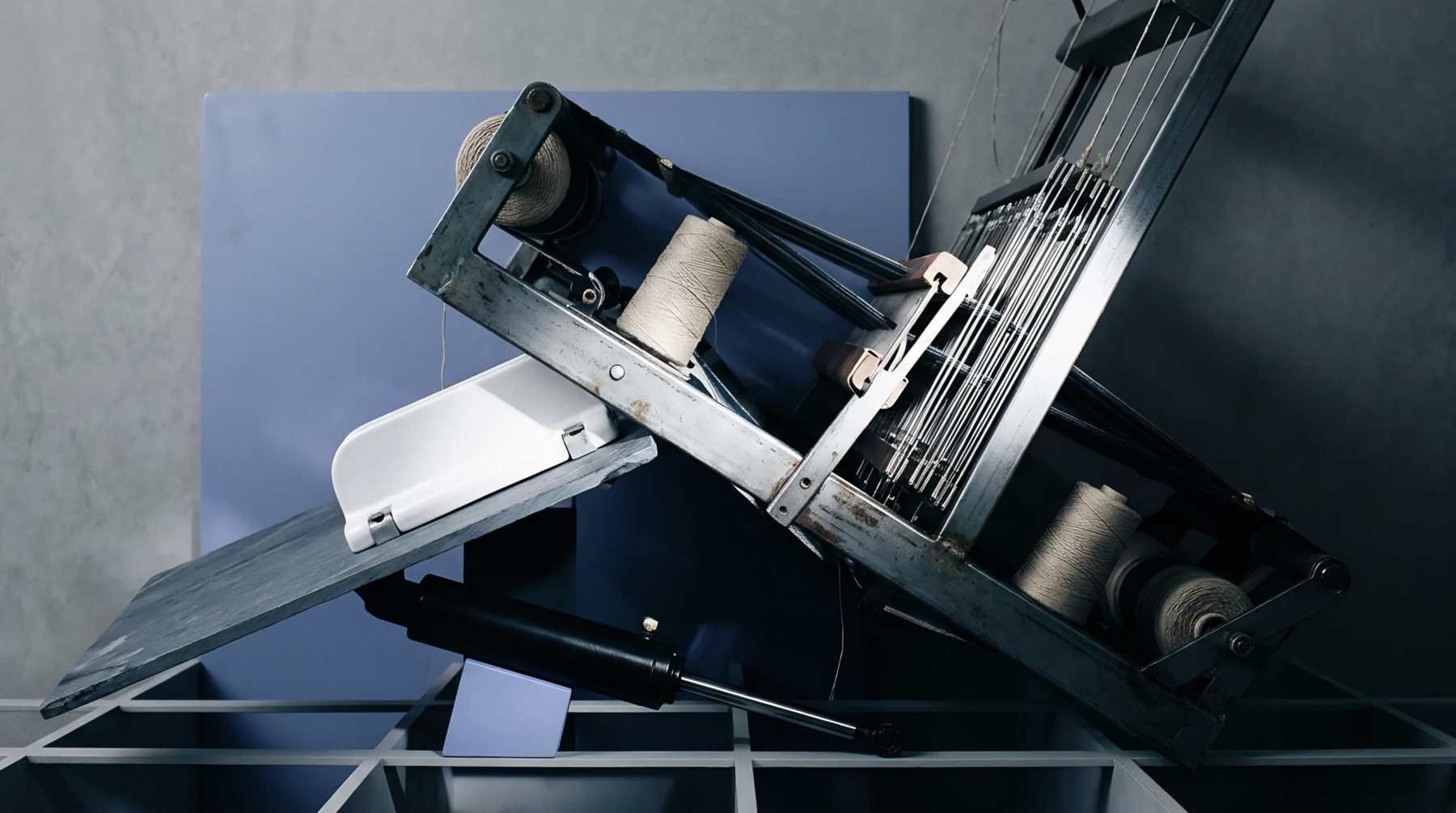
Optimizing warp sizing regain and loom shed humidity prevents brittle size film fracture, suppresses friction dusting, and maximizes high-speed weaving efficiency.

Dynamic tension decay in sized wet spun flax yarns is minimized by controlling size penetration to 25 percent and keeping dynamic strain amplitudes below 1.2 percent.

Converting hand-loom swatches to rapier loom specs requires rebalancing warp crimp, sizing single yarns, and setting weft brakes to hold cover factor at speed.
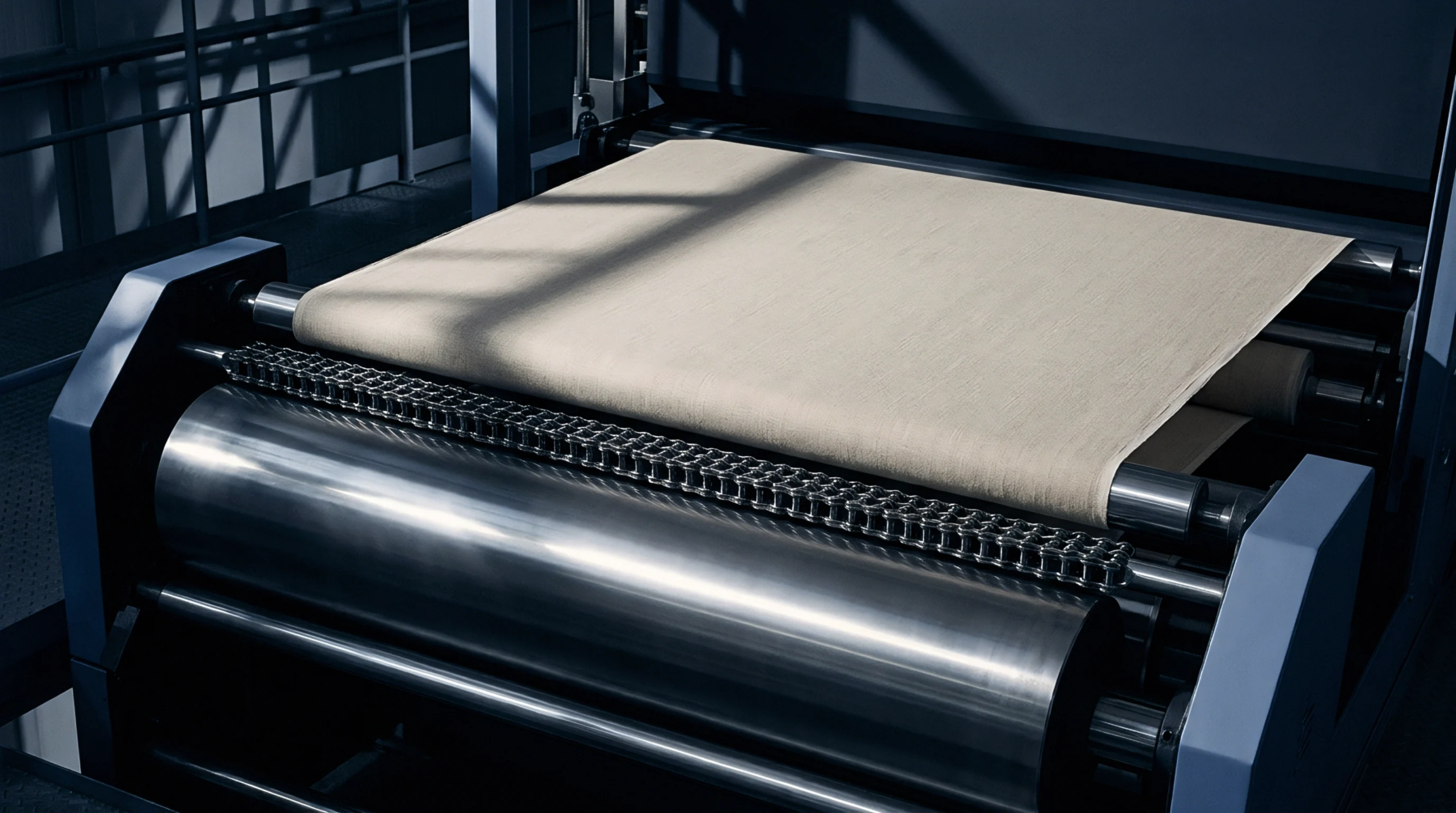
Wide air-jet linen weaving requires synchronized relay nozzle pressures and precise temple pin geometry to stop edge tension drift and edge damage.
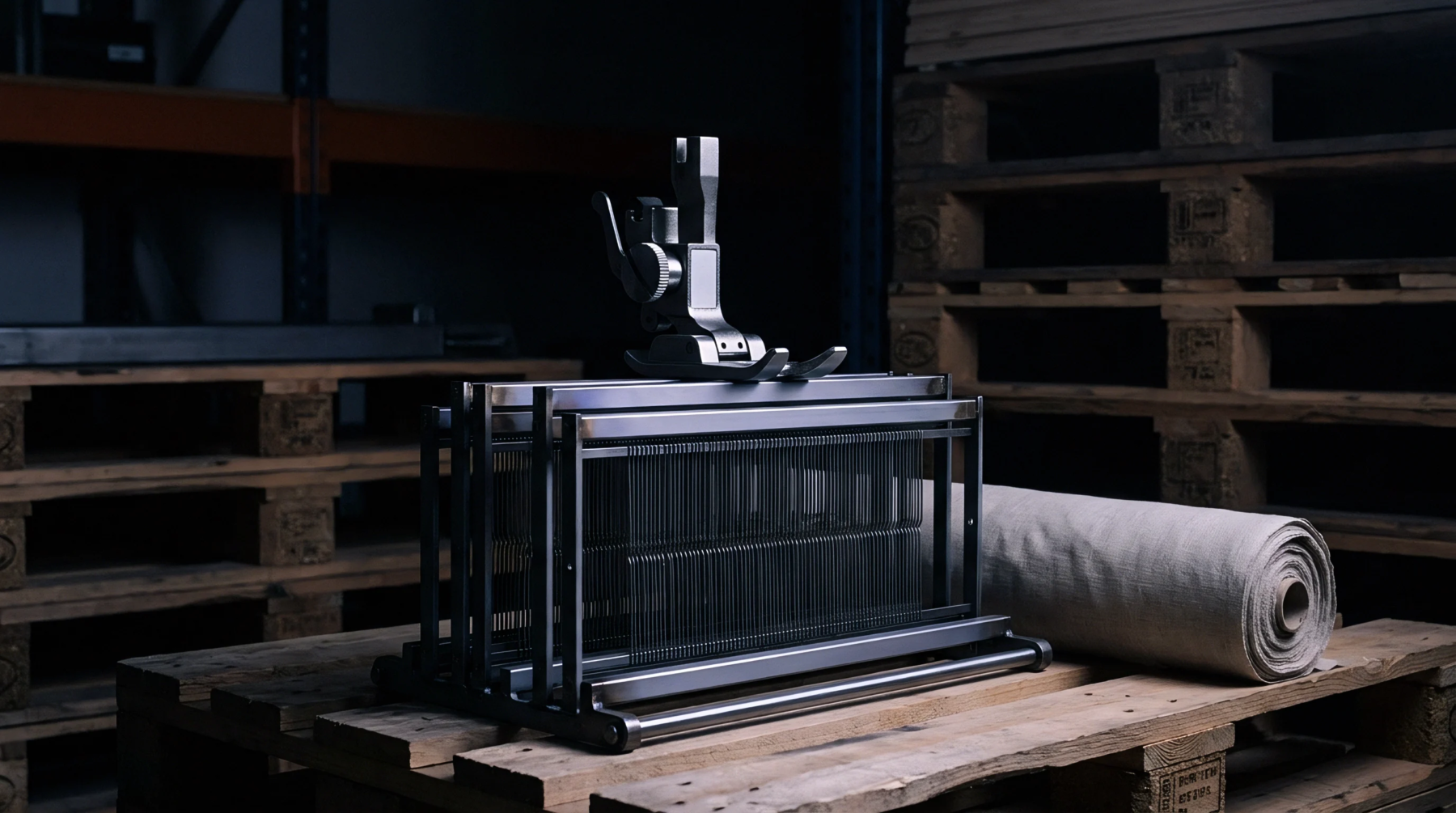
Jacquard repeat limits scale with hook count and warp density, where systematic harness casting-out maintains uniform cord pull angles across the comber board.

Controlled size encapsulation and 10 percent moisture regain suppress linen warp breaks, preserving high loom efficiency and direct landed metre margins.

Width dispute mechanics enforce area deductions and loom-hour penalties based on conditioned usable cuttable width versus contract tolerance limits.

Standardized four-point greige inspection prevents downstream finishing losses by enforcing objective ASTM D5430 defect scoring before cloth conversion.

Insertion reliability in dense wet spun linen depends on size film cohesion and precise unguided rapier trajectory to limit peak tension under 4.5 cN/tex.
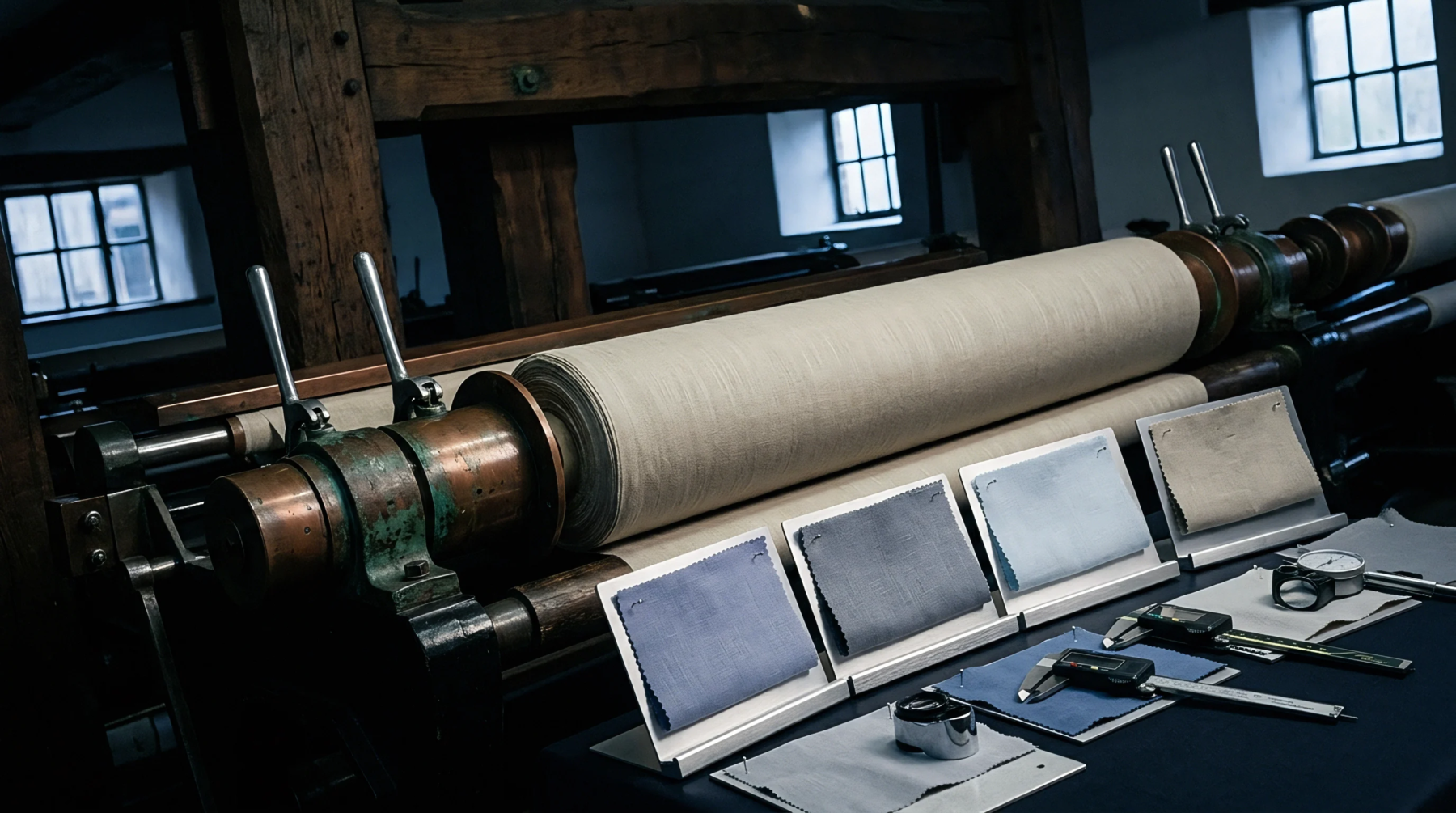
Standard cantilever testing and four-point inspection verify greige cloth stiffness and fault densities to enforce contract specifications before finishing.
Optimal wet spun linen weaving requires low viscosity binder penetration, pneumatic water splices, and eight percent size pickup to maintain loom shed efficiency.

Transitioning linen weaving to mass high-speed looms requires adjusting cover factors for yarn flattening and crimp interchange to prevent weight and width off-spec faults.

Standard four-point greige perches require a 45-60 degree tilt, 1200+ lux D65 lighting, synchronized tension drive, and strict ASTM D5430 demerit point scoring.

ASTM D5430 demerit scores for wide linen twills normalize defect counts per 100 square yards or metres to enforce commercial lot acceptance thresholds.

Dynamic multi-axis loom extension triggers rapid viscoelastic stress relaxation in wet spun flax through pectin matrix slip, requiring tuned backrest dynamics.
Expertise is a utility, not a secret. sentiention™ publishes its working knowledge as open reference: intelligence layer covering the materials it sources, the markets it enters, and the reference that serves both.