Bending Resistance
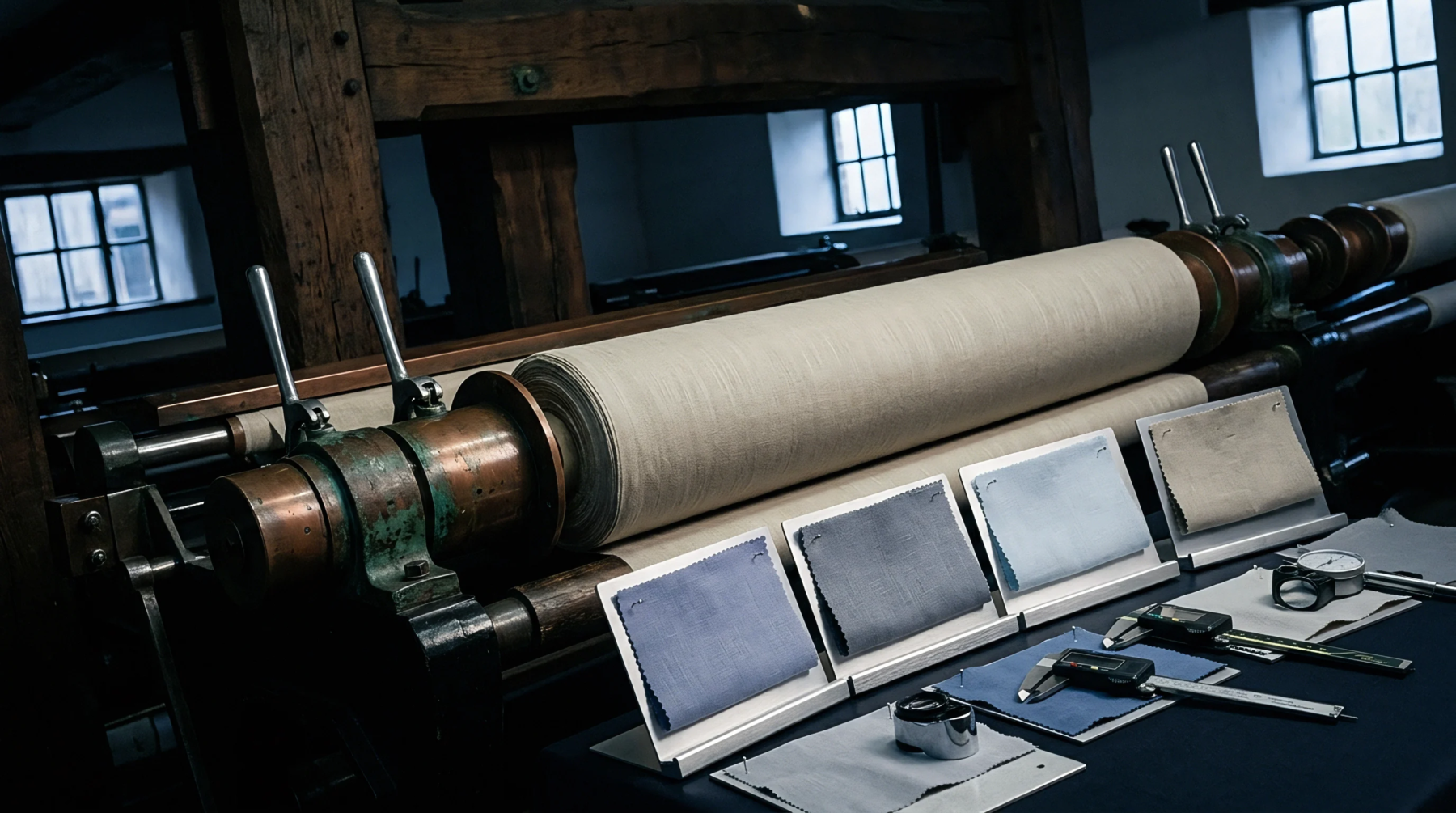
Standardized physical testing procedures evaluate fabric stiffness by sliding a textile strip over a horizontal edge until the tip bends under its own weight to a 41.5 degree slope angle. Modern laboratories apply cantilever testing to measure flexural rigidity and bending length in woven linen fabrics destined for apparel or home furnishings. High stiffness indicates stiff hand feel, whereas low values signify limp drape.
The procedure stops applying when fabric weight per unit area falls below twenty grams per square metre or when non-woven structural instability causes irregular drooping.
Specimen Displacement
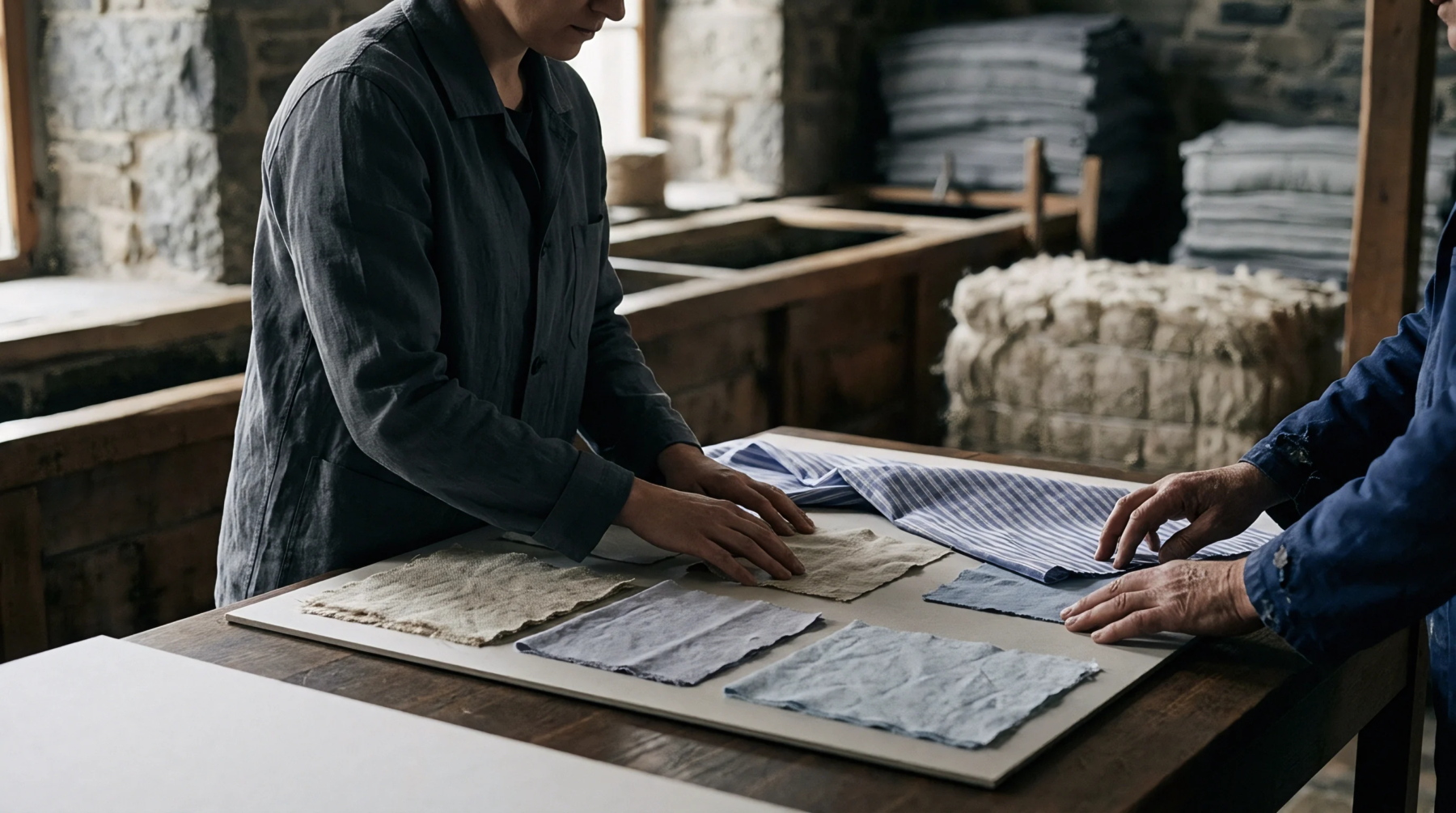
Specimen preparation requires cutting rectangular strips in both warp and weft directions under controlled ambient conditions of sixty-five percent relative humidity. Laboratory operators advance the cloth strip along a polished metal platform at a constant velocity until the leading edge touches an inclined plane. Measuring the overhang length yields the bending length directly.
Short overhang distances reflect pliable yarns, whereas long distances highlight high structural rigidity in dense flax weaves.
Stiffness Boundary
Quality control records log these overhang values to verify compliance with buyer drape specifications prior to commercial shipment. Converting bending length into flexural rigidity involves multiplying the cube of overhang length by cloth weight. Finisher treatments like enzyme washing reduce flexural rigidity dramatically.
Unfinished grey cloth maintains rigid dimensions that hinder garment assembly.