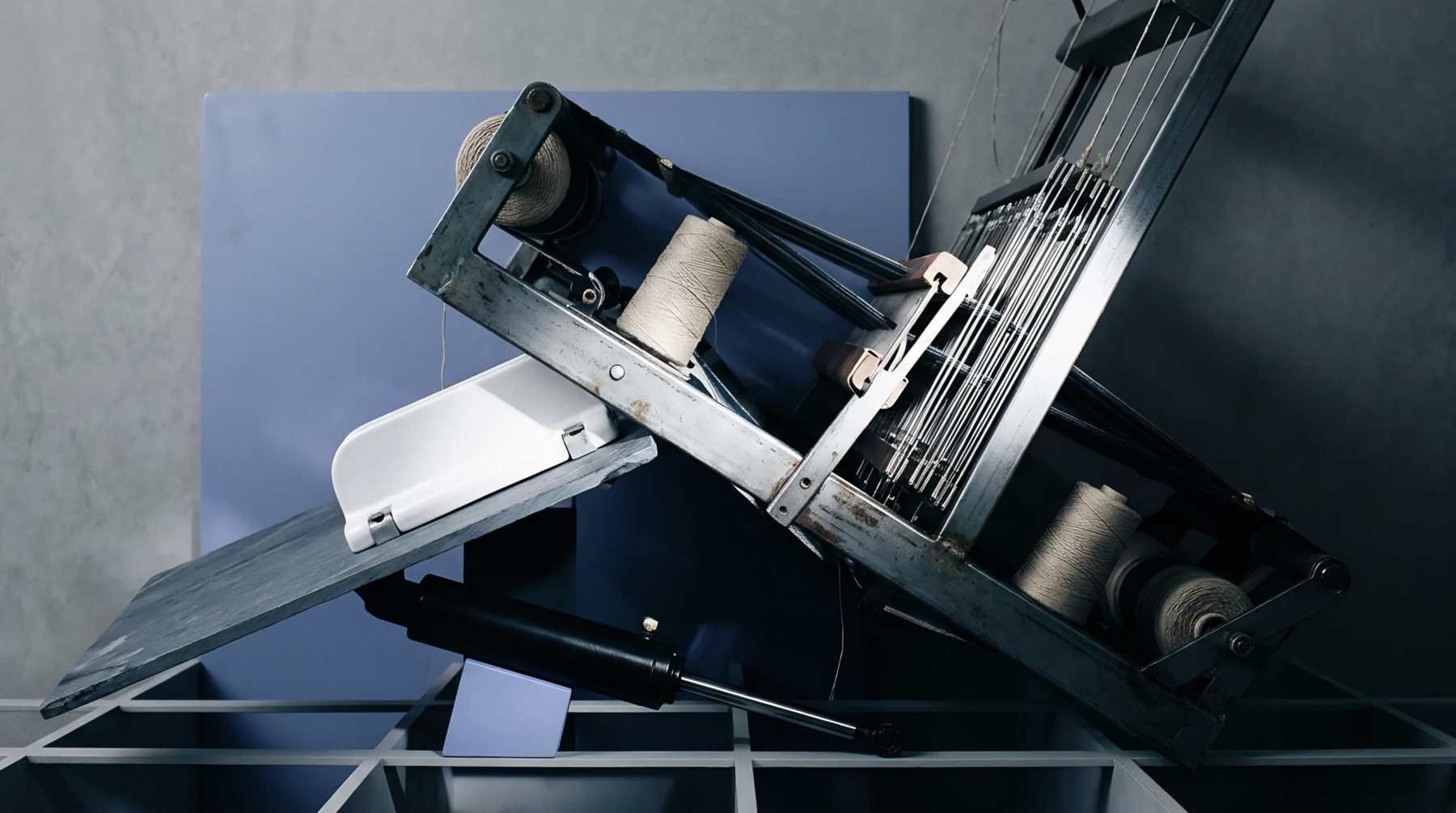
Force Fluctuation
Rhythmic tension changes occur in the longitudinal yarns as the loom’s shed opens and closes during the weaving cycle. Managing warp tension oscillation is required to prevent yarn fatigue and ensure a uniform beat-up of the weft threads. This variation happens because the yarn must stretch to accommodate the shuttle or rapier pass.
Sensors on the back rest of the loom track these changes in real time.
Tension Dynamics
The movement of the heald frames and the reed creates a peak in tension every time the shed reaches its maximum opening. If this warp tension oscillation is too high, it can exceed the breaking strength of the flax yarn. A let-off motion that is too slow will amplify these swings, causing the fabric to have an uneven density.
Modern electronic let-off systems compensate for these changes by adjusting the beam rotation with millisecond precision. This dampening of the tension spikes allows for higher weaving speeds without increasing the risk of breakage. The goal is to keep the average tension high enough for a clean shed but low enough to protect the yarn’s elasticity.
Fabric Uniformity
Stable tension profiles result in a cloth with consistent dimensions and a level appearance. This control is what allows for the production of wide-width linen for the luxury bedding market.