Optimizing Warp Sizing Regain and Loom Shed Humidity Balance
Optimizing warp sizing regain and loom shed humidity prevents brittle size film fracture, suppresses friction dusting, and maximizes high-speed weaving efficiency.
Moisture
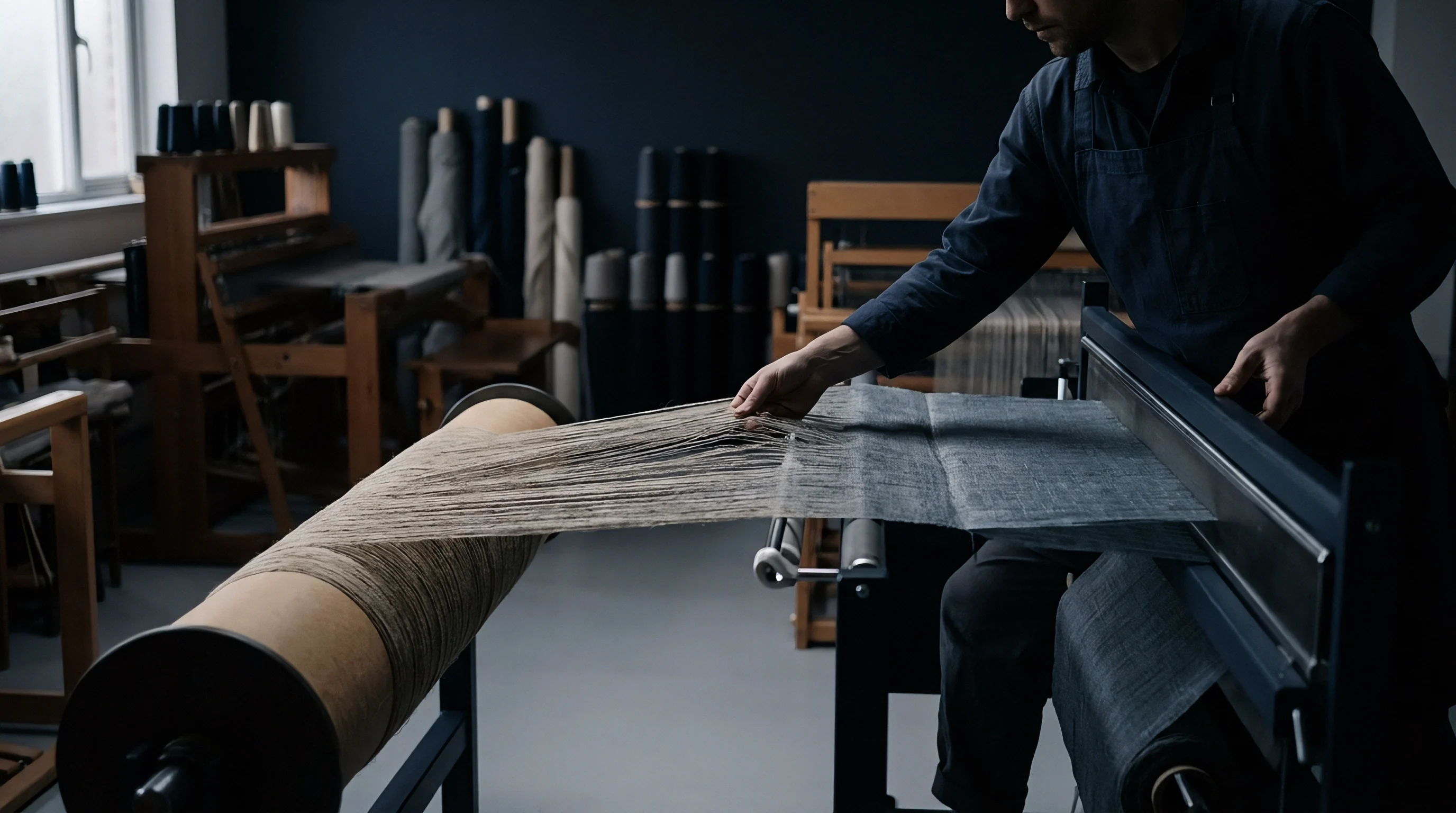
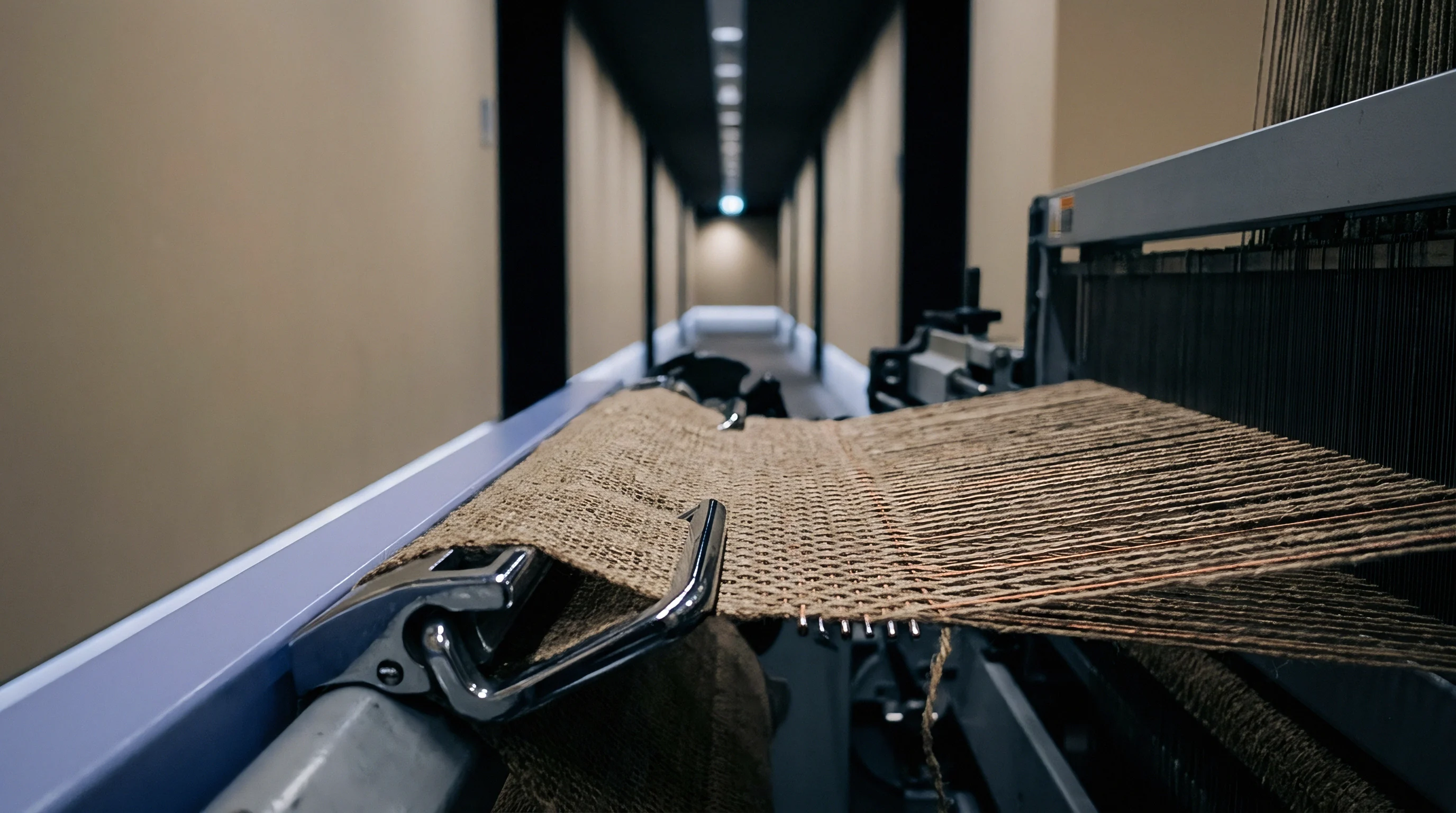
When warp yarn leaves the final drying cylinder of a slasher, it retains a measurable percentage of residual water relative to dry fiber weight. For pure linen and high-count flax blends, this moisture level determines whether the applied size paste cures into a flexible film or a brittle, crystalline shell. Raw flax enters the size box with hollow lumens and amorphous cellulosic regions that take up liquor rapidly.
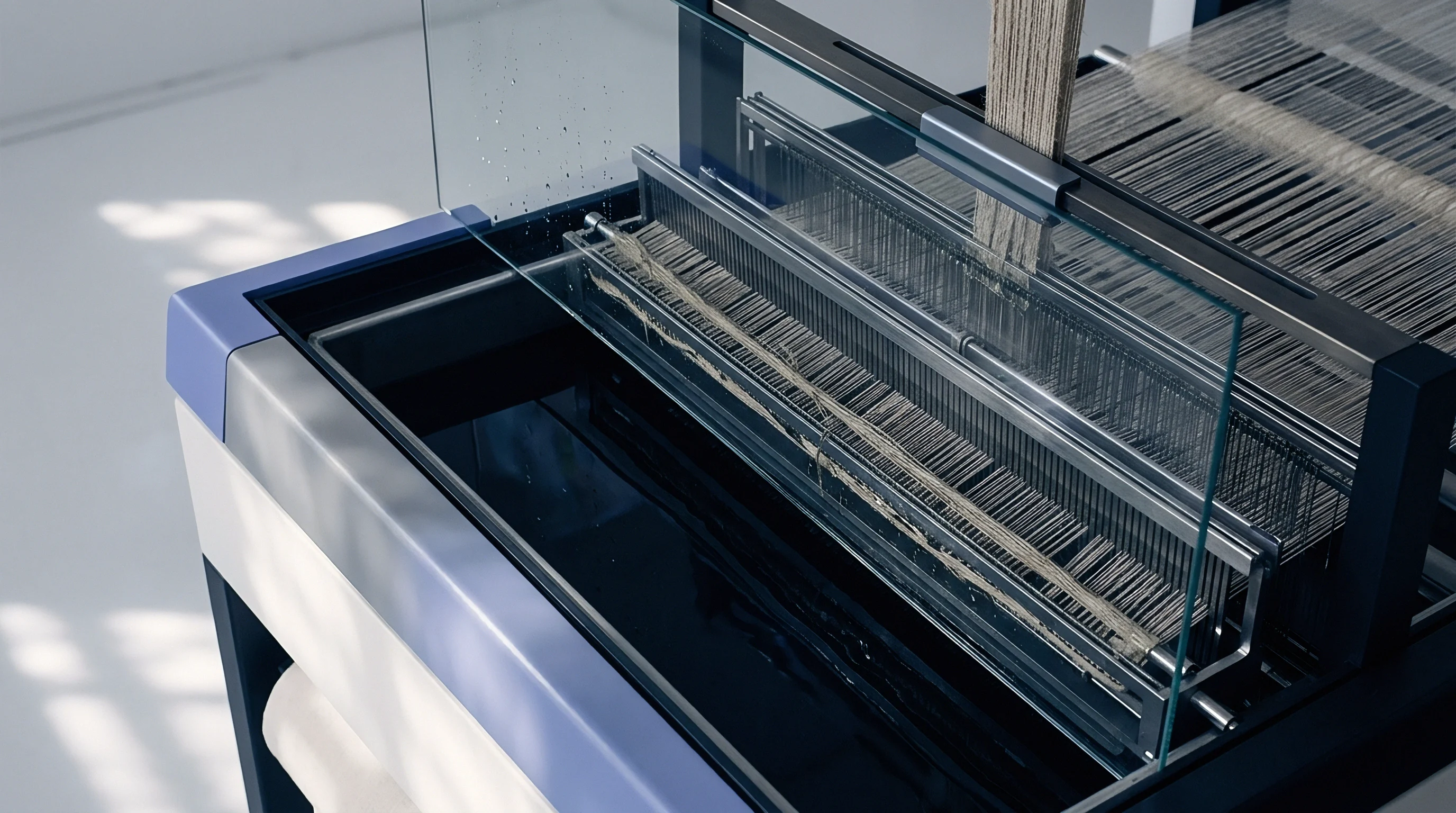
Starches, carboxymethyl cellulose, polyvinyl alcohol blends, and modified potato starches penetrate the yarn core under hydraulic squeeze pressure and capillary draw at 75 to 85 degrees Celsius. If excessive cylinder heat bakes the yarn below 6.5 percent moisture, that protective matrix fractures during beam winding, losing the ductility required to survive cyclical loom tension.
Target regain on flax sits in a narrow operating window: 7.5 to 9.0 percent for wet-spun long flax, and 8.5 to 10.0 percent for dry-spun tow yarns. Cotton warps tolerate drier running conditions (6.5 to 7.5 percent) because of cotton’s distinct fibrillar orientation and inherent fiber flexibility. Over-drying flax collapses the lumen geometry and degrades native pectins ~ the inter-fiber cement holding the bast bundles together.
Stripped of moisture by high cylinder temperatures, these pectin bonds embrittle, leaving the entire fiber bundle vulnerable to shattering under peak tension on the loom.
Wet-spun flax sized to eight percent residual water retains thirty percent greater elastic elongation than over-dried yarn under identical squeeze-roll pressure.
Under-drying causes separate mechanical issues. Exceeding 11.5 percent residual moisture promotes mildew in storage and causes ends to bond together on the weaver’s beam. When the loom pulls these tacky yarns apart at the lease rods or back rest, the size film strips away irregularly, leaving rough spots and raised fibrils that catch neighboring ends in the drop wires and heddle eyes.
Catching regain drift at the delivery roll requires continuous online measurement; contact moisture rollers, microwave absorption sensors, and near-infrared reflectance heads are typically integrated directly into machine drive controls and steam regulator valves.
Temperature profiling across the drying cylinder stack prevents water from flashing off prematurely at the size-yarn interface. In an eight-can slasher, the first two cylinders run at 60 to 70 degrees Celsius to set the surface film without boiling internal water out of the yarn core. Middle cylinders ramp up to 110 to 125 degrees Celsius for bulk drying, before the final stack drops back to 70 to 80 degrees Celsius to prevent thermal shock ahead of the split rods.
This gradient governs starch retrogradation kinetics, allowing polyvinyl alcohol chains to form cohesive crystalline micro-domains rather than voided, porous films.
Target Values across Natural Bast Yarns
Flax is unusually sensitive to moisture because of abundant free hydroxyl groups throughout its non-crystalline cellulose and hemicellulose matrices. In fine linen counts ~ such as 40 Lea, 60 Lea, or wet-spun 80 Lea ~ water acts as the primary plasticizer for both the sizing film and the underlying bast fiber. Slasher operators often conflate size concentration, dry add-on, and residual regain.
Concentration is the dry solids percentage in the size box; add-on is the dry chemical weight deposited on the yarn; regain is the water weight retained after drying.
These three variables jointly determine warp tenacity and elongation at break. A dry-spun tow yarn carrying 12 percent size add-on requires 9.0 percent moisture regain to clear whip rolls and lease rods without dusting. A dense, wet-spun long flax warp with 8 percent add-on performs best around 8.0 percent regain.
When boiler pressure surges and can temperatures spike, yarn moisture drops quickly; the size vitrifies into a brittle glaze with negligible strain tolerance, shedding flakes and lint across the loom bed.
| Yarn Type and Count | Fiber Substrate | Size Formulation Base | Target Add-On (%) | Optimal Sizing Regain (%) | Critical Dry-Out Limit (%) |
|---|---|---|---|---|---|
| Wet-Spun Long Flax 36 Lea (46 Tex) | 100% Linen | Modified Potato Starch / PVA (80/20) | 7.5 – 9.0 | 7.8 – 8.5 | 6.0 |
| Wet-Spun Long Flax 60 Lea (28 Tex) | 100% Linen | Carboxymethyl Cellulose / PVA (70/30) | 8.5 – 10.5 | 8.0 – 8.8 | 6.5 |
| Dry-Spun Flax Tow 18 Lea (92 Tex) | 100% Flax Tow | Native Wheat Starch / Acrylic Wax (90/10) | 10.0 – 12.5 | 8.5 – 9.5 | 7.0 |
| Ring-Spun Combed Cotton 40/1 Ne (15 Tex) | 100% Cotton | Enzyme-Modified Corn Starch / PVA (60/40) | 11.0 – 13.0 | 6.8 – 7.5 | 5.5 |
| Cotton-Linen Blend 24/1 Ne (25 Tex) | 55% Linen / 45% Cotton | Modified Tapioca Starch / CMC (75/25) | 9.0 – 11.0 | 7.2 – 8.0 | 5.8 |
Baking warps past the critical dry-out limit permanently stiffens internal fiber structure. Humidifying the weave room cannot reverse this condition; once starch retrogrades fully and flax lumens collapse under dry heat, only direct liquid re-immersion can rehydrate the core. The warp reaches the loom with a permanently reduced elastic limit.
Synthetic lubricating waxes blended into sizing liquor provide surface lubricity across machine guides, but cannot compensate for brittle, over-dried bast fibers underneath.
Swell
Flax fibers expand substantially across their cross-section as they take up ambient moisture. Individual bast fibers consist of concentric layers of cellulose microfibrils oriented at roughly ten degrees to the fiber axis, embedded in an inter-cellular pectin matrix. As water vapor penetrates these amorphous zones, hydrogen bonds between adjacent cellulose chains separate to accommodate the moisture.
Consequently, flax swells radially by 15 to 25 percent between bone-dry and full saturation, while axial length changes by less than 0.2 percent. This anisotropic expansion places severe outward hoop stress on the surrounding size envelope.
In sized yarn, the applied polymer forms both a surface film and an anchoring matrix within outer fiber layers. When ambient humidity shifts during storage or weaving, the cellulosic core and the dried polymer expand and contract at unequal rates. High humidity swells the flax core radially, stretching the outer starch or PVA sheath.
Conversely, dry conditions cause the core to shrink away, shearing the adhesive bond between fiber and size.
Sorption hysteresis further complicates moisture equilibrium on the machine. Flax conditioned to 65 percent relative humidity along an absorption curve holds less water than yarn reaching 65 percent via desorption. Sizing films exhibit similar hysteresis.
Fully hydrolyzed PVA films soften noticeably above 70 percent RH as water plasticizes the polymer chains; modulus and tensile strength fall while breaking elongation increases. Starch-based films remain rigid by comparison and fracture readily under shock loads if relative humidity drops below 55 percent.
Maintaining yarn bundle integrity requires keeping the size film within its functional viscoelastic range. If the film dries out and hardens, reed friction rubs it away as fine powder. If it absorbs excess moisture, the film softens, becomes tacky, and clings to drop wires and heddle eyes.
Sized flax reaches its maximum work-to-break values when ambient moisture balances fiber swelling against film ductility.

Fiber Axis Mechanics and Moisture Equilibrium
Because cellulose fibrils inside flax lie nearly parallel to the yarn axis, linen exhibits a high tensile modulus and low breaking extension ~ typically 1.5 to 2.5 percent at 20 degrees Celsius and 65 percent relative humidity. As the fiber takes up water, its breaking tenacity rises, a behavior characteristic of bast and seed celluloses. Absorbed water relieves internal shear strains across misaligned microfibrils, distributing tensile loads more evenly across parallel chains.
The sizing film must accommodate these mechanical shifts. Fully hydrolyzed PVA shows dry tensile strengths above 50 megapascals with breaking elongations of 10 to 20 percent. At 80 percent RH, however, tensile strength drops below 20 megapascals while elongation stretches past 150 percent.
When this occurs, the size loses the modulus needed to bind perimeter fibers to the yarn core. Fibrils peel back under harness and reed friction, balling up into lint that obstructs the shed opening.
Sizing failures frequently trace back to moisture mismatches between the bast substrate and the sizing compound. Formulations loaded with hygroscopic plasticizers like glycerol or urea turn gummy during summer humidity spikes. The softened size rubs off on porcelain guides and drop wires, creating sticky deposits that drag on adjacent ends and trip optical stop motions.
Stable moisture content maintains the size film’s anchor to the fiber substrate without flaking or gumming.

Chamber
Weave room air management controls moisture exchange across the moving warp sheet. High-speed looms generate substantial localized heat from drive motors, shedding gearboxes, clutches, and insertion mechanisms. A standard 220-centimeter rapier loom operating at 550 picks per minute releases 3.5 to 5.5 kilowatts of thermal energy directly into the air surrounding the warp line.
Air-jet machines running at 800 to 1000 picks per minute generate even greater heat loads through compressed air exhaust and higher motor draw.
This heat elevates localized temperatures around the heddle frames and back rest by 3 to 6 degrees Celsius above bulk room ambient. Without supplemental moisture, localized heating depresses the microclimate relative humidity by 10 to 18 percent. Even when wall-mounted room sensors read 70 percent RH, conditions at the drop wires and harness frames can fall to 52 percent.
This dry microclimate strips water from the sized yarn, embrittling the film precisely where mechanical flexing and abrasion are most severe.
Measuring temperature directly above the heddle frames exposes localized humidity drops of up to fifteen percent relative to central hall sensors.
Air delivery systems counter these thermal plumes through under-floor extraction or targeted micro-zone atomization. In modern layouts, conditioned supply air enters through overhead ducting above the weave aisles and exhausts through floor trenches situated directly beneath the drop wires and harnesses. This downward flow pulls heat and fly down into basement filter chambers before localized drying can damage the warp sheet.
Psychrometric control in bast weaving requires continuous balancing of dry-bulb temperature and absolute humidity. Linen requires higher humidity levels than cotton, wool, or synthetic fibers. Wet-spun long flax warps run best between 72 and 78 percent RH at 21 to 23 degrees Celsius.
Cotton-linen blends run reliably at 65 to 70 percent RH and 22 to 24 degrees Celsius, while dry-spun tow yarns require 75 to 82 percent RH to soften their coarser bundles and higher pectin content.
Air Exchange Dynamics and Sensor Placement
Maintaining these humidity levels requires rapid air turnover ~ generally 25 to 40 complete air changes per hour, depending on loom density and installed motor wattage. Humidification is supplied by high-pressure direct water atomizers, air-water misting nozzles, or central air-washer plants. Direct atomizers produce droplet sizes between five and ten microns that vaporize almost instantly, cooling the space adiabatically.
When droplet sizes exceed twenty microns, unevaporated mist settles onto the warp line, dissolving size, causing water spots, and inducing end breaks.
Improper sensor placement frequently hides localized humidity deficits. Transmitters mounted on perimeter walls, near access doors, or high in ceiling plenums fail to reflect conditions on the looms. Sensors belong at warp level across three specific zones: over the beam let-off, directly above the harness-and-reed area, and across the cloth take-up.
Mounting sensor arrays directly on loom frames provides air-handling variable frequency drives with the microclimate data needed to track actual thermal loads.
| Cloth Construction and Loom Type | Yarn Structure | Target Shed Temp (°C) | Target Shed RH (%) | Warp-Zone Max Temp Rise (°C) | Warp-Zone Min RH Limit (%) |
|---|---|---|---|---|---|
| Plain Sheeting 180 GSM on Rapier (550 PPM) | 100% Linen Long Flax 40 Lea | 21.5 – 23.0 | 74 – 78 | +3.2 | 68 |
| Damask Tablecloth 240 GSM on Jacquard Rapier (450 PPM) | 100% Linen Long Flax 60 Lea | 21.0 – 22.5 | 75 – 80 | +4.5 | 70 |
| Heavy Upholstery 380 GSM on Rapier (400 PPM) | Flax Tow 14 Lea / Cotton 10/1 Ne | 22.0 – 24.0 | 70 – 75 | +3.8 | 64 |
| Apparel Chambray 140 GSM on Air-Jet (850 PPM) | Cotton 50/1 Ne / Linen 66 Lea | 23.0 – 25.0 | 65 – 70 | +5.5 | 58 |
| Industrial Scrim 120 GSM on Projectile (380 PPM) | Wet-Spun Flax Tow 20 Lea | 22.0 – 23.5 | 76 – 82 | +2.5 | 72 |
Seasonal changes demand constant readjustment of humidification systems. Cold winter make-up air carries little absolute moisture, requiring heavy steam or atomized water injection to sustain 75 percent RH. In humid summer conditions, chillers must remove moisture and internal heat from incoming air before the stream is re-humidified to target shed conditions.
Localized ultrasonic fogging nozzles mounted directly on the loom back rail offer a targeted alternative to maintaining high shed-wide humidity during dry bast yarn processing.

Abrasion
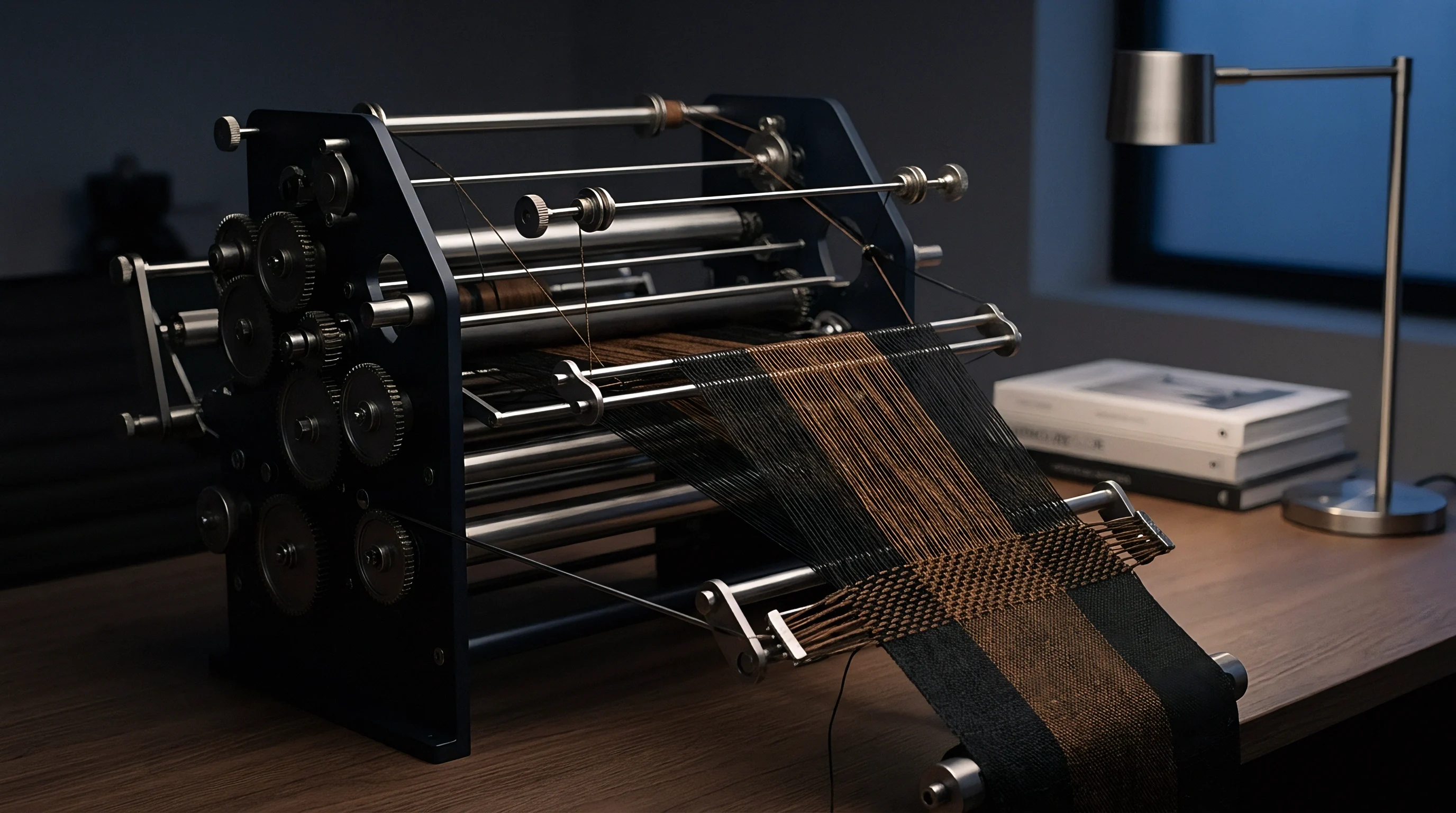
A single warp end passing through a high-speed rapier loom encounters 3,000 to 7,000 tension cycles and rubbing contacts before reaching the cloth fell. From the let-off roll, it travels over the oscillating back rest, through the drop wires, across the heddle eyes, between the reed dents, and into the fell. In linen weaving, each contact point subjects the sizing film to severe cyclic shearing and bending stresses.
Shedding friction steadily abrades the yarn surface. Degradation begins as hairline fissures across the outer size coat. As heddles cycle up and down, these fissures propagate through the polymer matrix until individual flax fibrils break free, forming loops along the yarn body.
These loops snag adjacent ends, creating warp clings. When a rapier or air-jet attempts insertion through a clinging shed, the insertion element collides with crossed ends, causing warp breaks or filling stops.
Heddle geometry and reed dent profiles directly influence this wear rate. Polished riderless heddles with nickel-plated eyes generate far less abrasive damage than standard stamped carbon-steel eyes. Profiled reed dents also help guide ends cleanly into the shed.
But if warp moisture drops too low, even polished steel surfaces scrape brittle size off the yarn, depositing powder beneath the harness frames.
Monitoring shedding waste across production runs provides a clear indicator of size film integrity. Dust collected under the drop wires and harnesses is lost polymer. When accumulation exceeds 0.8 percent of total warp weight, yarn is running stripped through the reed, and breakage rates escalate quickly.
Should Sizing Add-On Increase When Humidity Drops?
When breakage rates spike during dry weather, mills frequently attempt to compensate by increasing size add-on at the slasher. This typically worsens warp performance. Heavy add-on applied to dry bast yarn forms a thick, rigid shell.
Under the rapid flexing of the back rest and harnesses, this crust cannot yield elastically; it fractures into sharp flakes that sever surface fibrils like small blades, driving end breaks up rather than down.
Maintaining moisture through proper shed humidification works far better than applying extra chemical add-on. When the size film carries sufficient moisture, its flexural rigidity drops, allowing yarn to flex cleanly around drop wires and heddle eyes. Sizing recipes should deposit only the minimum continuous film needed to lay down protruding fibrils, relying on ambient humidity to supply elasticity.
Four cyclic forces dominate mechanical wear on the loom:
- Dynamic tensile oscillation generated by the eccentric motion of the loom back rest roller and harness frames, subjecting each end to repetitive tension spikes between 0.3 and 0.8 centinewtons per dtex.
- Lateral abrasive rubbing caused by the vertical passage of heddle eyes over the yarn core at frequencies between 300 and 600 cycles per minute.
- Reed dent impact occurring at the moment of beat-up, where the metallic wire dents strike the yarn flanks and force the weft pick into the cloth fell under heavy lateral compression.
- Drop wire vibration produced by the continuous chattering of metallic warp stop motion blades riding on the taut warp ends, inducing high-frequency surface wear.
When flax warps encounter these four forces in dry air (below 60 percent RH), end breaks rise sharply. Breakage on wet-spun linen jumps from 1.2 stops per 100,000 picks at 75 percent RH to over 8.5 stops per 100,000 picks at 58 percent RH on the same loom running identical settings.
| Shed Relative Humidity (%) | Warp Regain at Loom (%) | Shed Waste Dusting (% Mass) | Warp Breaks / 10^5 Picks | Weaving Efficiency (%) | Loom Stops per Hour |
|---|---|---|---|---|---|
| 55 | 6.1 | 1.45 | 9.8 | 72.4 | 2.94 |
| 62 | 7.0 | 0.92 | 5.4 | 81.8 | 1.62 |
| 70 | 8.1 | 0.48 | 2.1 | 89.6 | 0.63 |
| 76 | 8.9 | 0.28 | 1.1 | 93.8 | 0.33 |
| 83 | 10.2 | 0.39 (Gummy) | 2.8 (Clings) | 87.5 | 0.84 |
Running a shed under dry conditions leads directly to capacity losses, higher defect rates, and recurring loom downtime that erodes operating margins.
Balance
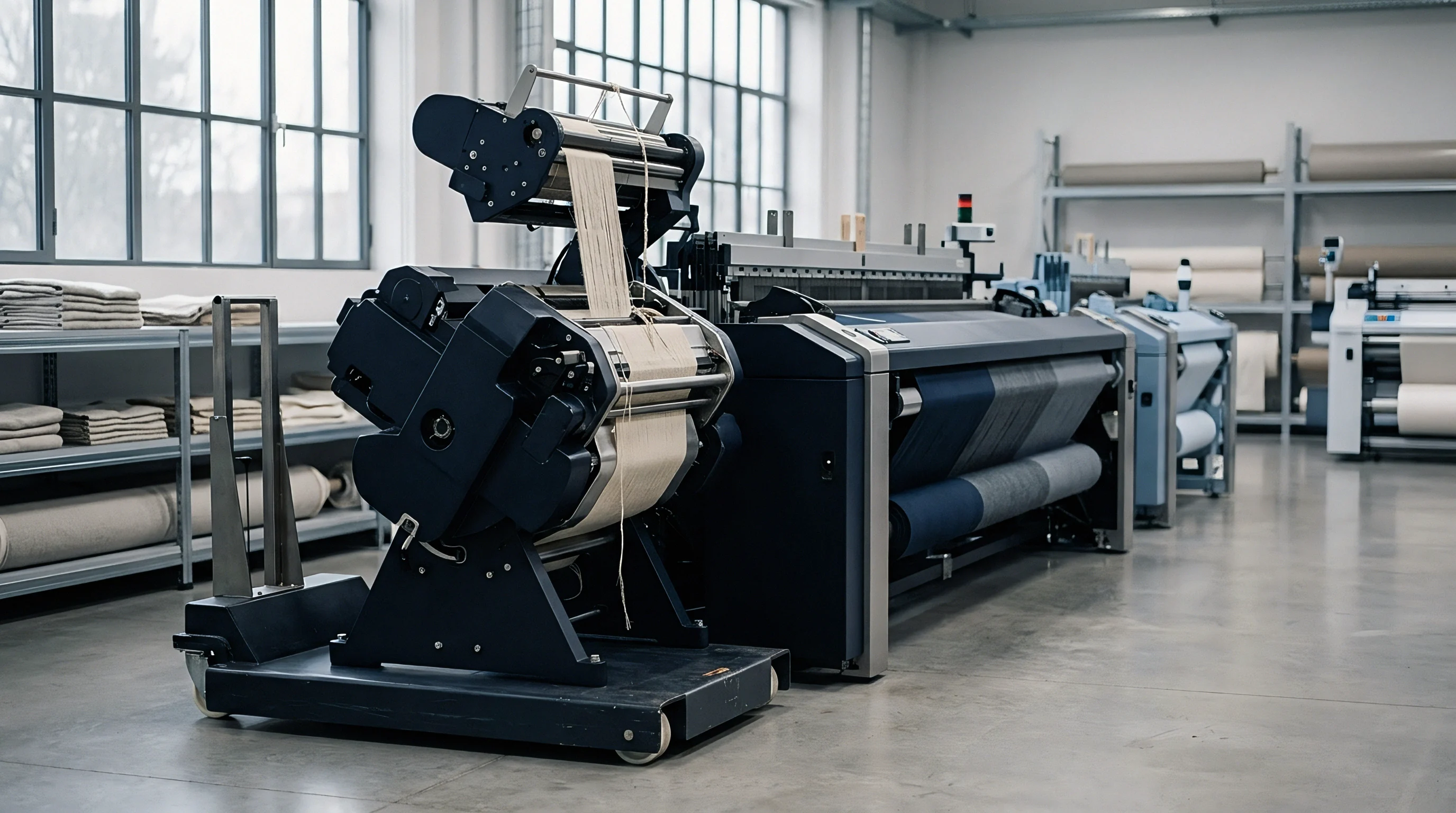
Balancing slasher regain against weave room humidity controls overall weaving efficiency and yardage costs. Regain cannot be treated as an isolated metric during warp preparation; it operates in dynamic equilibrium with the ambient air of the weaving shed. Beams wound at the slasher with optimal moisture (7.8 to 8.8 percent for fine linen) must move directly into conditioned storage or onto looms running at matching vapor pressures.
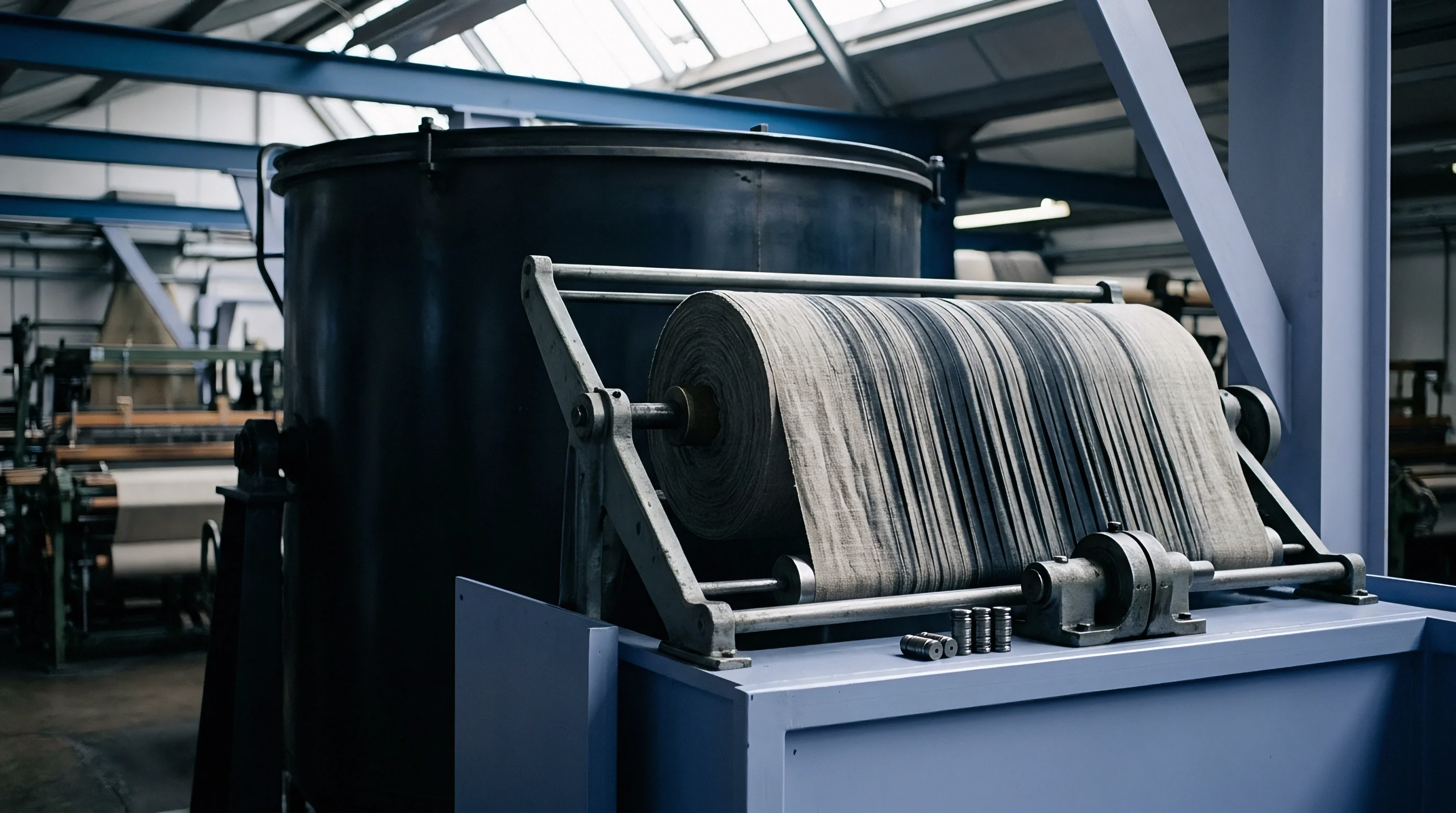
Storing sized beams in unconditioned areas generates steep moisture gradients. If a beam wound at 8.5 percent regain sits in a dry warehouse at 50 percent RH for two weeks, outer wraps dry out while inner layers near the barrel stay moist. On the loom, the first few thousand meters run dry and break frequently, while deeper layers weave without incident.
Sized beams require storage conditioned to 65 to 70 percent RH to keep moisture uniform throughout the package.
Warp beams stored in unconditioned warehouses develop radial moisture gradients that cause erratic stoppage rates across the first three thousand meters of cloth.
Moisture balance directly governs the cost sheet. Real fabric conversion costs depend on realized operational efficiency and first-quality yield rather than theoretical machine speeds. A 100-loom rapier mill weaving fine linen incurs fixed costs of roughly 28 to 36 dollars per loom hour across power, labor, climate systems, and depreciation.
An efficiency drop from 92 percent to 80 percent from poor humidity control increases weaving costs per linear meter by 15 percent, while generating defect penalties from stop marks and repaired ends.
Loom Hour Economics and Capacity Modeling
A production scenario illustrates the financial impact. Consider an order for 50,000 meters of dense linen apparel fabric (160 GSM, 28 ends/cm, 24 picks/cm, 150 cm width) on 220 cm rapier machines running at 500 picks per minute.
Total picks come to 120,000,000 (50,000 meters multiplied by 2,400 picks per meter). At 100 percent theoretical output, one loom inserts 30,000 picks per hour, requiring 4,000 machine hours.
Under balanced moisture (sizing regain at 8.2 percent, shed held at 76 percent RH), the room runs at 92.5 percent average efficiency. Actual machine time totals 4,324.3 loom hours (4,000 divided by 0.925). At 32.00 dollars per loom hour, total conversion cost is 138,378 dollars, or 2.77 dollars per linear meter.
Under dry conditions (regain down to 6.2 percent, shed at 58 percent RH due to unmanaged motor heat), elevated warp breaks drag efficiency down to 78.0 percent. Required machine time climbs to 5,128.2 loom hours, raising conversion cost to 164,102 dollars, or 3.28 dollars per linear meter. That single order carries 25,724 dollars in excess conversion cost, before accounting for yarn waste, mending labor, and second-quality downgrades.
Sustaining proper moisture profiles requires consistent operational discipline across four key stages:
- Slasher moisture verification using calibrated high-frequency core sensors coupled with offline gravimetric oven drying tests (per ISO 6348 standards) to verify continuous digital readouts.
- Climate-controlled beam buffering ensuring all drawn beams reside in dedicated conditioning rooms at 68 to 72 percent relative humidity for a minimum of 24 hours prior to loom mounting.
- Microclimate monitoring at the loom harness via direct-mounted relative humidity transmitters positioned 15 centimeters above the drop wire box to detect localized thermal dry zones.
- Dynamic water atomization balancing that modulates high-pressure misting lines based on real-time loom operating status and motor heat loads rather than ambient room-average sensors.
Sizing formulations must also align with effluent treatment limits. High-PVA recipes generate substantial chemical oxygen demand (COD) in desize wash water. Mills increasingly rely on modified starches and biodegradable carboxymethyl cellulose, keeping PVA below 25 percent of total solids.
Because starch-rich films depend heavily on plasticizing moisture to remain flexible under loom strain, running low-synthetic recipes makes steady weave room humidity even more critical.
Linen purchasing specifications frequently focus solely on finished fabric weight, tensile strength, and colorfastness, ignoring warp preparation controls. Adding process verification clauses protects quality on high-count bast fabrics. Contracts should define allowable size add-on ranges, drying cylinder temperature limits, minimum beam regain at slasher delivery, and certified weaving humidity standards.
When contracts incorporate ISO 139 atmospheric tolerances for both sizing and weaving, mills are required to keep continuous microclimate logs, reducing disputes over friction marks, fuzz balls, and start-up marks before greige rolls reach the inspection perch.