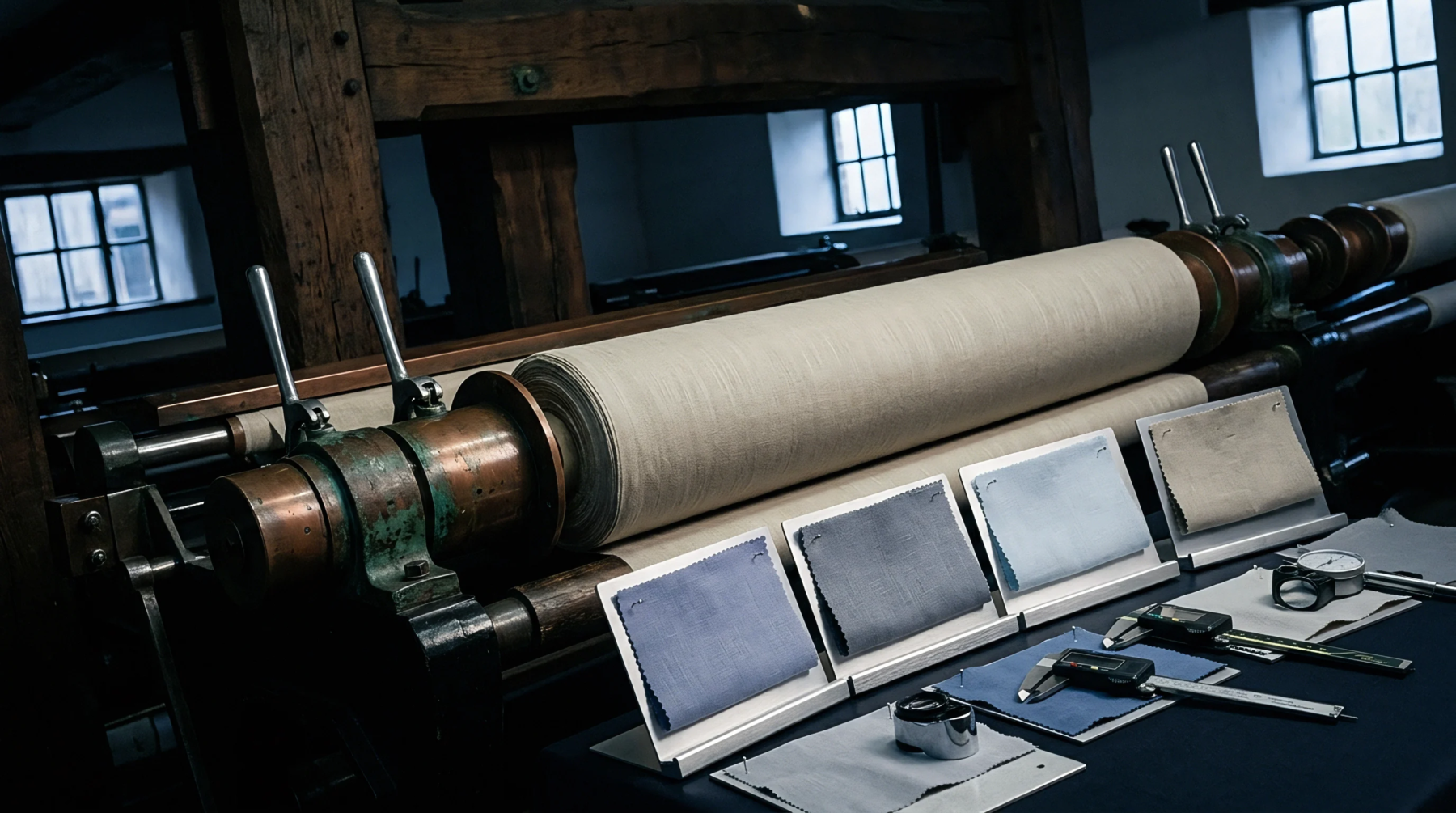
Initial Inspection
Raw flax fibre entering the wet spinning frame receives a specific starting mark on its production batch ticket to record the exact lot origin and retted quality grade from the field. Mill operators record this initial identifier upon weighing each bundle before carding begins on the factory floor in Shandong. Raw material variance demands precise tracking because natural bast fibres change in tensile strength according to the weather during the preceding harvest season.
Inspectors verify that the assigned batch number matches the supplier delivery manifest prior to drafting the sliver.
Batch Variance
Processing parameters adjust automatically once the initial batch identifier links with the computerized drafting rollers on the primary spinning machine. Higher hackling waste percentages from coarse straw require increased twist multiplication factors to maintain yarn uniformity across the bobbin. Mill technicians compare these operational adjustments against the internal quality manual rather than the buyer purchase contract.
Buyer thresholds govern the finished linen fabric after bleaching and mercerization occur downstream, while batch standards control the raw yarn consistency inside the spinning hall. Divergence between internal mill targets and external customer specifications creates immediate tension on the production schedule. Operators halt the frame immediately if the measured twist deviation exceeds five turns per metre from the batch specification.
Acceptance Boundary
Final inspection protocols for export grade textile rolls rely entirely upon the unbroken data chain connecting the finished cloth back to the original batch ticket. Finished linen grading separates commercial upholstery weaves from lightweight garment textiles through standardized breaking load tests performed in a climate controlled laboratory. Customer acceptance criteria demand complete absence of nep clusters and uniform yarn diameter across every linear metre of exported material.
Mill management retains financial liability for any structural defect traced back to improper carding settings applied during the initial spinning run. Documentation of the batch origin remains legally binding for three years following final port shipment.