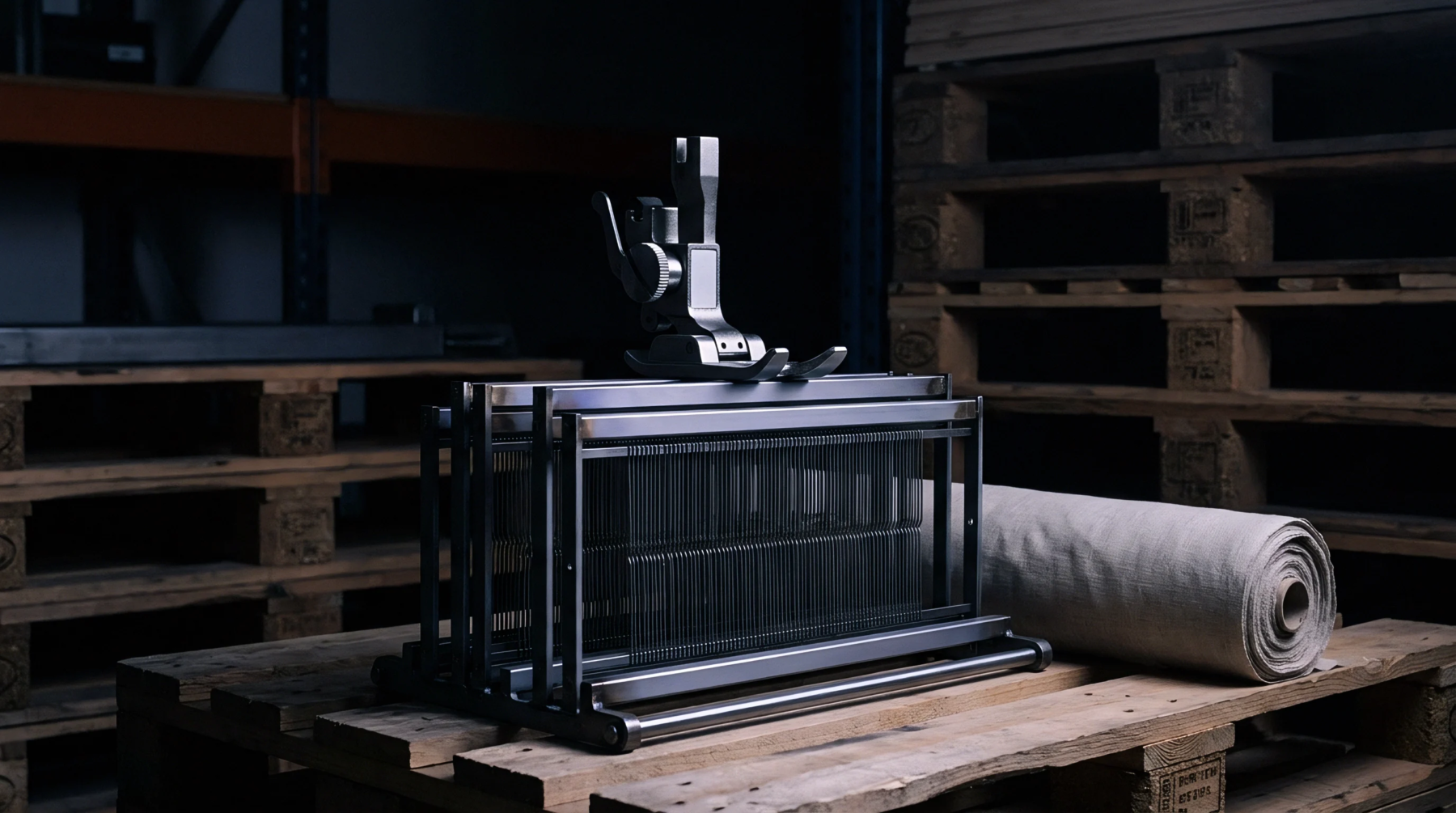
Jacquard Omission
Selective disabling of harness cords during fabric production adapts a high-capacity Jacquard machine to fabrics with lower warp end counts. Executed systematically across the loom width, casting out leaves specific hooks unthreaded so that fabric construction matches specified reed densities without changing the physical harness setup. The procedure establishes the boundary where a fixed machine capacity stops matching high-density damasks and begins accommodating coarser linen textiles.
Density Adjustment
Calculations for drop patterns depend on the total hook count and the targeted warp density of grey linen cloth. When a mill operates a 2400-hook Jacquard head but produces a linen plain structure requiring only 1800 ends per repeat, technicians drop every fourth cord across the entire assembly. Unused harness cords are secured away from moving warp sheets to prevent entanglement with active flax yarns during shedding.
Uneven drop distribution creates visible stripe marks or localized tension variance across the fabric width, causing structural defects during subsequent wet processing.
Fabric Defect
Improper distribution of dropped hooks alters tension profiles across adjacent active warp ends. The resulting variation in yarn take-up leads to differential shrinkage during bleaching and finishing operations. Mill quality auditors measure density uniformity across the reed width to verify that unthreaded hooks do not impair mechanical stability.