Converting Hand-Loom Fabric Samples to High-Speed Automated Rapier Loom Production Specifications
Converting hand-loom swatches to rapier loom specs requires rebalancing warp crimp, sizing single yarns, and setting weft brakes to hold cover factor at speed.


Dissection
Hand-loom swatches carry structural variations from uneven beat-up pressure, un-metered warp tensioning, and inconsistent reed insertion. Translating these samples into industrial production specs for high-speed rapier looms requires tearing down the reference swatch under controlled laboratory conditions to ISO 139 standards. Measuring the physical cloth without first analyzing its mechanics leads directly to severe width loss and filling breakage when the construction hits an automated shed running at six hundred picks per minute.
Cataloging the original weave structure means unraveling threads along both warp and weft directions. A hand-loom weaver offsets irregular yarn counts by adjusting beat-up force on the fly, leaving localized spikes in pick density. Because rapier looms rely on a fixed mechanical beat-up distance driven by conjugated cams, that variable packing density has to be converted into a uniform mean pick density without altering the target cover factor or hand.
Single-end tensile testing under ISO 2062 determines if the hand-spun or low-twist yarn has enough tenacity for the acceleration forces of rapier insertion.

Deconstructing Handloom Geometries and Yarn Mechanics
To determine linear density, warp and weft yarns are stripped from a measured area ~ typically ten centimeters by ten centimeters ~ and weighed on an analytical balance. Fiber identification and yarn construction analysis confirm if the yarn is single, plied, rotor, ring-spun, or core-spun. In hand-loom fabrics, warp yarns usually carry a high twist multiplier to survive manual shedding without size; high-speed rapier looms instead rely on sizing films to shield lower-twist yarns running under continuous dynamic tension.
Thread counts are checked across multiple positions with a travelling thread counter to capture beat-up waves. Pick counts in hand-loom cloth often fluctuate by up to twelve percent across a single linear meter. Table 1 outlines the conversion parameters for re-engineering a hand-loom swatch for an automated rapier frame.
| Structural Metric | Hand-Loom Swatch Value | Rapier Spec Target | Analytical Standard | Conversion Adjustment Factor |
|---|---|---|---|---|
| Warp Linear Density | 29.5 tex (20 Ne) Single Linen | 25.0 tex (23.5 Ne) Plied Cotton-Linen | ISO 1889 | Increase yarn strength for high-speed shed tension |
| Weft Linear Density | 42.0 tex (14 Ne) Hand-Spun Linen | 37.0 tex (16 Ne) Mill-Spun Slub Linen | ISO 1889 | Normalize slub profile to clear rapier accumulators |
| Warp Sett (Greige) | 18.0 ends/cm | 19.5 ends/cm | ISO 7211-2 | Compensate for higher rapier warp crimp stretch |
| Weft Sett (Greige) | 14.0 picks/cm | 15.0 picks/cm | ISO 7211-2 | Offset fixed cam beat-up force relaxation |
| Warp Crimp Ratio | 7.2 percent | 9.4 percent | ISO 7211-3 | Adjust for continuous backrest roller tension |
| Weft Crimp Ratio | 4.1 percent | 3.2 percent | ISO 7211-3 | Account for rigid filling insertion pull |
| Fractional Warp Cover Factor | 0.548 | 0.536 | Walz Formula | Maintain target porosity while increasing speed |
Crimp analysis under ISO 7211-3 highlights the tension gap between manual and automated looms. On a hand loom, weft yarn enters the shed with minimal lateral tension, crimping heavily around the warp. A rapier system pulls weft under active tension through an accumulator, straightening the weft and shifting most of the crimp into the warp system.
Without recalculating warp crimp, the finished cloth runs far too narrow.
A handloom swatch with seven percent warp crimp expands to nine point two percent crimp on a rapier loom running under five hundred grams of warp tension.
Twist multiplier testing is just as critical. Hand-spun filling yarns have uneven twist distribution, leaving soft spots that pull apart in rapier feeder clamps. The draughtsman extracts twenty yarn specimens from warp and weft to measure twists per meter on an electronic tester using the untwist-retwist method.
Specifying minimum single-end tenacity and substituting ring-spun or compact-spun equivalents with tight CV percentage limits eliminates those soft spots on the loom.

Crimp Imbalance and Asymmetric Tension Extraction
Hand-loom swatches show structural asymmetry from crude warp letoff systems. Weight-loaded ropes or pawl ratchets let warp tension drop steadily until the weaver advances the beam, cycling tension and creating periodic density variations. High-speed rapier looms use continuous electronic letoff and takeup systems synchronized to fractions of a pick.
Replicating visual hand-loom character without carrying over mechanical defects requires separating decorative thick-and-thin yarn variations from tension flaws. Linear mass irregularity measured on an electronic evening tester establishes the original yarn’s Uster CV percentage. Recreating the sample then depends on selecting engineered slub yarns that match the hand-spun look while keeping tensile strength uniform through thin spots.
- Sample Conditioning Exposing the reference swatch to a standard atmosphere of twenty degrees Celsius and sixty-five percent relative humidity for twenty-four hours before testing.
- Dimensional Marking Marking a precise one-hundred-millimeter square on the intact cloth to calculate true crimp factors during extraction without distortion from edge fraying.
- Thread Extraction Pulling twenty individual warp and weft threads in sequence, placing each under standard crimp-removal tension to compare straight length against woven length.
- Linear Mass Weighing Drying pulled thread groups for dry mass, then applying commercial moisture regain allowances to determine true yarn count in tex.
- Twist Determination Mounting extracted ends in a motor-driven twist counter to find mean turns per meter and twist direction.
- Cover Factor Calculation Computing warp, weft, and total fabric cover values from measured thread diameters and densities to define structural target limits.
Tension governs crimp, and the ratio of warp to weft cover dictates fabric drape, hand, and air permeability. When converting a hand-loom plain weave into a rapier construction spec, total fabric cover factor has to stay constant, even if individual thread counts and yarn diameters are tweaked for machine performance.
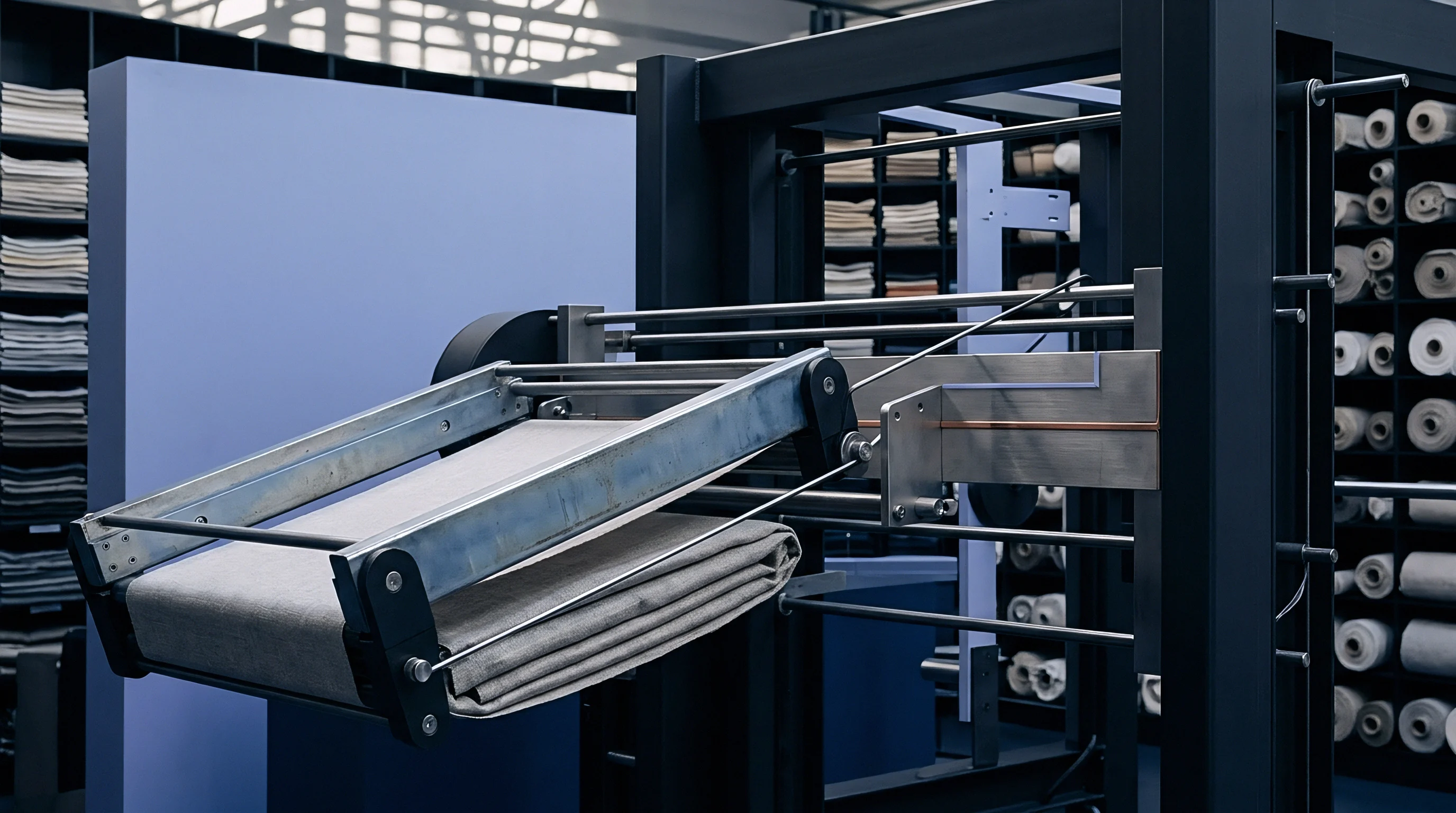
Evaluating Structural Cover and Sett Adjustments
Fabric geometry modeling relies on Pierce’s cover factor equation with Walz’s modifications. The fractional warp cover factor is the warp thread density per centimeter multiplied by the square root of the warp yarn tex divided by ten. The weft cover factor uses the same calculation for weft thread density and tex, while total fabric cover represents the total area covered by both systems without double-counting overlaps.
If a hand-loom swatch has a warp cover factor of 0.55 and a weft cover factor of 0.45, copying those figures directly onto a rapier loom under high warp tension shrinks weft crimp and inflates warp crimp. That makes the fabric stiff along the warp and overly elastic in the filling. Adjusting the reed denting ratio ~ reducing warp ends per centimeter slightly while increasing picks per centimeter ~ rebalances crimp across both systems.
Converted specs with adjusted thread counts often meet objections that altering raw ends and picks per centimeter changes the fabric’s basic construction. Yet high-speed crimp redistribution under electronic tension yields a finished weight and structural cover identical to the original swatch, whereas an unadjusted thread-count copy comes off the loom narrow, out of spec, and stiff.


Beam
High-speed rapier looms exert forces on warp sheets that manual looms never approach. Running at six hundred picks per minute subjects warp threads to cyclic shedding stress, beat-up impacts, and drop-wire friction at frequencies over ten Hertz. Translating hand-loom warps for high-speed automation demands a sizing spec and beam setup that cuts down yarn-on-yarn abrasion to prevent end breaks.
Single spun yarns ~ especially flax, wool, or low-twist cotton ~ cannot survive high-speed shedding without sizing. Hand-loom weavers often weave unsized warps or apply simple cold-starch pastes by hand during beaming. Automated sheds require exact sizing formulations, controlled pick-up rates, elastic size films, and strict moisture regain targets to stop surface hairiness from tangling in the shed.
Warp Preparation and Sizing Formulation
Sectional warping works best for short conversion runs and complex stripes; direct warping onto warper beams followed by slasher sizing suits high-volume production. Tension must remain uniform across the full beam width. Soft edges or uneven thread tension produce slack ends in the shed, causing missed insertions, short picks, and machine stops.
Size formulations depend on fiber chemistry, yarn count, and loom speed. Polyvinyl alcohol mixed with modified starches and synthetic waxes forms the standard protective film for cotton and linen blends. Table 2 outlines operational sizing parameters for converting hand-loom warps to high-speed rapier beams across common yarn types.
| Yarn Type and Count | Primary Size Polymer Base | Target Size Pick-Up Range | Size Box Viscosity (mPa·s) | Squeeze Roller Force (kN) | Target Moisture Regain |
|---|---|---|---|---|---|
| 100% Linen 25 tex Single | High-Viscosity PVA + Modified Starch | 14.0 to 16.0 percent | 120 to 140 | 15.0 | 7.5 to 8.5 percent |
| 100% Cotton 15 tex Single | Carboxymethyl Starch + Acrylic Polymer | 9.0 to 11.0 percent | 80 to 100 | 12.0 | 6.0 to 6.5 percent |
| Wool / Silk 30 tex Plied | Soluble Acrylic + Lubricant Softener | 5.0 to 7.0 percent | 45 to 60 | 8.0 | 9.0 to 10.0 percent |
| Linen / Cotton 20 tex Blended | PVA + Synthetic Wax Emulsion | 11.0 to 13.0 percent | 95 to 110 | 14.0 | 7.0 to 7.5 percent |
Film elasticity has to match yarn elongation. Brittle size films crack during shed opening, shedding size powder into drop wires and healds. That dusting increases friction and causes end breaks.
Adding synthetic softeners and holding size box temperatures at eighty-five degrees Celsius pushes liquor into the yarn core, pinning surface fibers flat against the yarn body.
ISO 7211-3 specifies crimp determination under standard atmosphere, where an uncorrected two percent crimp variance shifts finished fabric weight past commercial contract limits.
Direct warping demands constant checking of creel tensioners. Electronic units hold single-end tension within plus or minus two grams force across thousands of ends. Slack ends formed during warping pass through the sizing machine and create crossed ends on the weaver’s beam, leading to harness drops during shed changes.
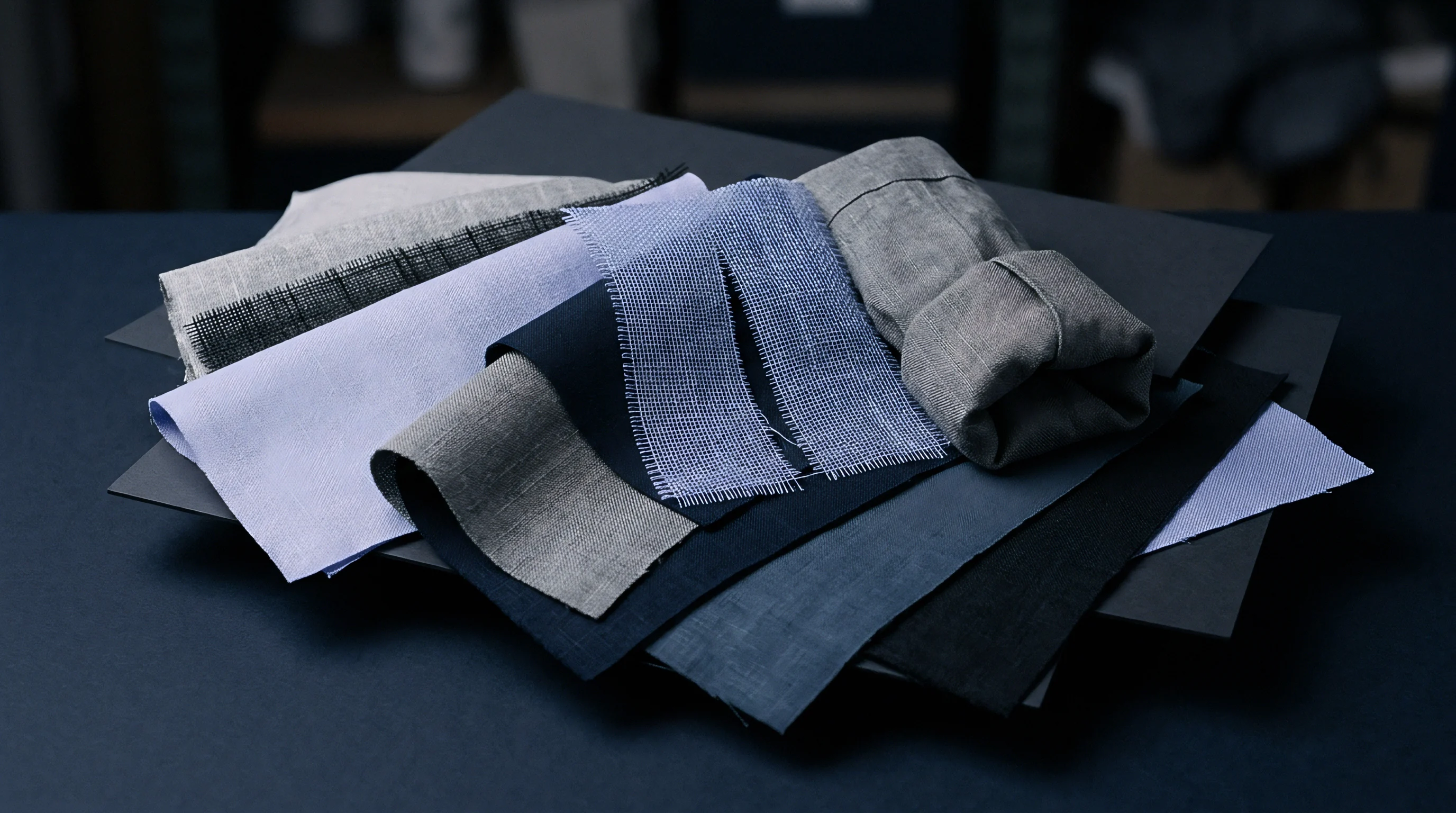
Reed Selection and Denting Geometry
Reed calculation translates finished fabric width to total reed width, factoring in warp contraction, sizing elongation, and selvage drawdown. High-speed rapier reeds use polished stainless steel dents to minimize friction against insertion grippers. The denting plan fixes how many warp ends pass through each split.
High end counts per dent leave reed marks when converting open hand-loom weaves. A hand-loom fabric woven at one end per dent on a coarse reed should be redrafted into a finer reed at two ends per dent on the rapier loom, eliminating mechanical stripes while keeping beat-up force uniform across the fell.
- Yarn Tenacity Rating Minimum single-end breaking tenacity must exceed fourteen centinewtons per tex to withstand shed-opening stress.
- Size Penetration Ratio Size liquor needs to penetrate twenty to thirty percent of the yarn cross-section to anchor core fibers without making the surface brittle.
- Beam Flange True Runout Flange deflection on weaver’s beams must stay under one point five millimeters at maximum winding pressure to stop edge ends from sloughing off.
- Harness Frame Clearance Heald eyes must align within a two-millimeter vertical window so rapier grippers do not clip lower-shed warp sheets during insertion.
- Drop Wire Weight Selection Automatic drop wires must weigh between two point five and four grams to match yarn count and avoid false stops.
To keep broken ends from entangling adjacent yarns, automatic stop motions split precision drop wires across six to eight harness banks. Spreading wires over more banks reduces thread density per bank, letting broken ends drop immediately to trigger the brake before weaving into the fell.
Selvage Engineering for High-Speed Rapiers
Hand-loom fabrics have clean, looped selvages because the weft turns continuously around the outer warp end. Rapier looms cut the weft on every pick, leaving raw tails on both edges. Creating a clean, commercial edge requires dedicated selvage equipment built into the loom spec.
Pneumatic or mechanical tuckers catch cut weft tails and fold them into the next open shed, forming a tucked selvage that mirrors hand-loom edge stability. Alternatively, leno binding uses independent selvage threads crossing between picks to lock cut filling ends in place. Leno uses less yarn but leaves a fringe that has to be trimmed during finishing.
Selvage warp ends need higher tension than the body of the cloth to withstand beat-up friction from tucking needles. Independent selvage spools or tensioning arms prevent edge distortion, while heavier, plied warp yarns in the outer eight to sixteen dents stop edge tears during stenter framing and wet finishing.
As a rule in shed conversion, warp sizing pick-up percentage scales inversely with yarn linear density, giving fine threads enough polymer protection while keeping coarse threads from growing stiff.

Insertion
Rapier filling insertion is the mechanical core of automated conversion. Where a hand-loom shuttle carries a bobbin through the shed at under one meter per second, flexible or rigid rapiers enter from both sides, meet in the middle to transfer yarn tip-to-tip, and retract at speeds over twenty-five meters per second. The mechanical shock on the weft during pick-up and transfer requires precise machine settings to avoid filling breaks.
Soft, slubby, or low-twist hand-loom filling yarns lack the dynamic modulus to survive tension spikes when the feeder arm hands yarn to the rapier head. Electronic filling tensioners (EFT) modulate drag dynamically, dropping tension near zero during peak acceleration and braking right before center transfer to steady the yarn loop.

Rapier Kinematics and Filling Tension Dynamics
Rigid rapiers suit wide, heavy constructions, while flexible rapiers ~ guided by profile teeth or free-flight systems ~ handle fine to medium fabrics. Main shaft timing dictates shed geometry, rapier travel, and beat-up motion. The shed angle needs to open wide enough for rapier heads to clear warp threads without rubbing, but remain narrow enough to cap peak warp stretch.
Fiber debris and slubs from hand-loom style yarns can clog gripper clamps, triggering lost picks or filling stops. Table 3 lists operational settings for running converted hand-loom constructions on high-speed rapier looms.
| Fabric Weight & Type | Loom Speed (PPM) | Filling Insertion Rate (m/min) | Peak Warp Tension (cN/end) | Shed Angle (Degrees) | Weft Braking Force (cN) |
|---|---|---|---|---|---|
| Lightweight Linen Plain (110 gsm) | 550 | 1045 | 35 to 40 | 24.5 | 18 to 22 |
| Medium Weight Cotton Twill (210 gsm) | 650 | 1235 | 45 to 50 | 26.0 | 25 to 30 |
| Heavy Slub Linen/Jute (340 gsm) | 420 | 798 | 65 to 75 | 28.0 | 40 to 45 |
| Textured Wool Drape (180 gsm) | 480 | 912 | 30 to 35 | 25.0 | 15 to 20 |
Just as mechanical play of a few hundredths of a millimeter causes severe flutter in aerospace linkages under load, rapier drive wheels and tape guides running within tight wear tolerances prevent vibration harmonics that miss gripper alignment at center transfer.
Cellulose fibers under millisecond loading cycles exhibit viscoelastic creep, where instant strain causes permanent stretching or rupture. In a rapier insertion cycle, peak strain on a linen yarn lasts under ten milliseconds. Modulating the acceleration profile with non-linear driving cams dampens those strain spikes, keeping yarn stress safely below the fiber’s elastic limit.

What Limits Loom Speed on Hand-Loom Character Translates?
Attempting to run converted hand-loom fabrics at maximum rated loom speeds leads to instant productivity collapse from constant filling breaks. The bottleneck is yarn irregularity: hand-loom style yarns carry slubs, neps, and low-twist tails that snag in high-speed eyelets and tension discs.
Slowing the loom down is mandatory when reproducing thick-and-thin slub effects. Dropping speed from six hundred and fifty picks per minute to four hundred and fifty reduces peak filling acceleration by over fifty percent, letting irregular effect yarns weave cleanly without constant stops. Optimization means balancing machine speed against stop rates to maximize overall shed efficiency.
Uster statistics establish that filling yarns running at six hundred picks per minute need a minimum single-end tenacity of fourteen centinewtons per tex with a tenacity CV under eight percent ~ measured over one hundred single-end tensile tests per lot under ISO 2062 at a hundred percent strain rate per minute. If yarn hairiness climbs past an S3 value of one thousand meters per thousand meters of yarn, fibers interlock in the shed and drop achievable loom speed by twenty percent regardless of tensile strength.
Shed synchronization must be set against beat-up timing. Early shedding ~ closing the shed before the reed hits the beat-up point ~ locks weft tightly at the fell, preventing filling snap-back in crisp linens. Late shedding reduces warp abrasion, but allows elastic weft yarns to recoil into wavy fell lines across the cloth.

Shed Opening and Shedding Dynamics
Dobby motions control harness frame lifting for twills, satins, and small geometric weaves converted from hand-loom dobby or treadle frames. The harness frame dwell angle sets how long the shed stays fully open for rapier passage. A dwell angle of one hundred and twenty degrees gives profile rapiers plenty of clearance, but prolongs peak warp tension.
Trimming dwell angle to one hundred degrees relieves warp stress, but requires exact rapier timing. Even tiny misalignments between rapier entry and shed opening lead to gripper blades clipping outer warp threads, producing fuzz and broken end clusters along selvages.
If rapier clamps lose grip on coarse slub yarns during transfer, weft tension drops to zero and leaves loose loop filling faults on the fabric face. Setting electronic filling detectors to scan yarn arrival within a three-degree rotational window catches short picks immediately before off-spec yardage piles up.
Miscalibrating filling accumulator brake force against weft linear density causes systemic snap-backs that ruin selvage appearance and force expensive manual trimming.


Tolerances
Translating hand-loom swatches into industrial specs requires clear dimensional and structural tolerances for both greige and finished fabric states. Hand-loom buyers accept noticeable batch variations, weight swings, and slightly off-square alignment. Industrial apparel and home textile buyers enforce strict quality limits with direct chargebacks.
Greige relaxes during wet processing. Fabric woven under heavy tension on a rapier loom collapses noticeably in the wash as internal yarn stresses equalize through scouring, bleaching, and dyeing. Establishing exact greige-to-finished conversion factors ensures the loom spec lands at the correct finished width, GSM, and thread count.

Greige to Finished Dimensional Conversion Mechanics
Finished fabric weight in grams per square meter depends on yarn linear density, finished ends and picks per centimeter, and residual shrinkage. The draughtsman calculates dimensional movement using aqueous relaxation formulas checked through laboratory bench washing under ISO 6330.
Warp contraction during finishing boosts finished ends per centimeter while taking length out of the roll. Weft shrinkage increases picks per centimeter while pulling in width. A spec target of one hundred and forty centimeters finished width at two hundred grams per square meter requires a reed width of at least one hundred and fifty-four centimeters to allow for ten percent lateral consolidation in wet finishing and stenter framing.
Shrinkage variance in open-weave linen remains tricky during wet processing. Small lab swatches often underestimate the tension effects of full-scale stenter frames, where shrinkage fluctuates by plus or minus two point five percent based on finish chemistry and dryer speed. To offset this, contracts routinely mandate qualifying a three-hundred-meter pilot roll before running bulk yarn through warping.
Defect Thresholds and Four-Point Inspection Standards
Defect classification translates hand-loom irregularities into clear quality metrics. Commercial grading follows the four-point inspection system under ASTM D5430, assigning points by defect length up to a maximum of four penalty points per linear yard.
Hand-loom swatches naturally show slubs, color specks, and thick picks that give the cloth its visual character. On automated rapier runs, these traits must be logged as intentional design details rather than visual flaws. Specs need to separate structural defects ~ like broken picks, warp streaks, or oil spots ~ from deliberate aesthetic features like random slubs.
- Calculated reed width must cover structural weft crimp contraction and stenter pin-trim margins.
- Initial sizing trials must show single-end hairiness reduction over eighty percent before loading the beam.
- Rapier insertion timing must maintain at least five millimeters of mechanical clearance between gripper housing and lower shed line.
- Finished mass per unit area targets must hold within plus or minus five percent across entire roll lots.
- Visual inspection scores must average under twenty penalty points per one hundred square yards under ASTM D5430.
Table 4 outlines the standard four-point penalty system applied to converted rapier fabrics during inspection passes.
| Defect Size or Length | Assigned Penalty Points | Maximum Penalty Per Yard | Action Threshold |
|---|---|---|---|
| Defects up to 3 inches in length | 1 Point | 4 Points Total | Log defect location on inspection roll map |
| Defects over 3 inches up to 6 inches | 2 Points | 4 Points Total | Flag roll for manual re-inspection if frequent |
| Defects over 6 inches up to 9 inches | 3 Points | 4 Points Total | Slow loom speed or adjust warp tensioning |
| Defects exceeding 9 inches in length | 4 Points | 4 Points Total | Stop loom immediately if defect is continuous |
| Holes, tears, or structural voids (any size) | 4 Points | 4 Points Total | Reject entire roll if count exceeds limit |
Hand-loom character converts successfully only when mechanical settings respect yarn limits. Setting automatic winding clearers too tight strips out decorative slubs and reduces the fabric to plain industrial cloth. Setting clearers too loose lets double-ends and long slubs onto the warp beam, causing heald eye jams and shedding stops.

Aqueous and Thermal Shrinkage Allowances
Thermal processing on stenter frames locks finished width and stabilizes fabric dimensions. Heat-setting synthetic blends or sanforizing pure cotton and linen lowers residual garment washing shrinkage below three percent under ISO 5077 standards.
Mass follows thread density: as fabric shrinks during wet processing, thread density rises, pushing up GSM. Conversion formulas account for mass gain by multiplying greige GSM by warp and weft shrinkage factors. Ignoring wet-processing weight gain yields finished goods that exceed target mass specs, driving up yarn consumption and cost.
Commercial purchase contracts routinely include inspection clauses allowing buyers to reject any lot or claim at least a ten percent price reduction if delivered rolls average over twenty-eight points per one hundred square yards under ASTM D5430.

Audit
Converting a hand-loom swatch into a commercial rapier run ends with costing and capacity modeling. Hand-loom sampling runs on micro-scale economics dominated by labor costs; automated rapier weaving operates on capital-intensive economics where machine efficiency, beam length, and loom-hour allocation determine landed cost per meter.
Cloth is bought in loom hours and sold in meters. Operating a rapier shed incurs a fixed hourly rate covering equipment depreciation, power, overhead, and maintenance. Calculating true unit costs requires converting fabric construction specs, insertion rates, and expected shed efficiency into direct loom-hour consumption.

Capacity Calculation and Shed Allocation Mechanics
Loom capacity depends on rotational speed in picks per minute and overall shed operating efficiency. Efficiency calculations cover planned downtime like beam changes and style re-tooling alongside unplanned stops from warp and weft breaks. High-speed sheds running uniform cotton constructions routinely exceed ninety percent efficiency, whereas sheds weaving converted hand-loom slub fabrics typically average seventy-five to eighty-five percent because of higher stop rates.
Warp length economics set minimum order quantities. Preparing a warp beam involves fixed warping setup labor, size box filling, knotting or drawing-in charges, and beam mounting downtime. Spreading those fixed costs over a short warp inflates cost per meter dramatically.
Finding the minimum viable economic warp length means locating where setup overhead drops below five percent of total production cost.
To demonstrate the conversion accounting workflow, consider a commercial scenario converting a hand-loom linen swatch into a four-thousand-meter rapier run. The original hand-loom sample cost forty-five dollars per linear meter at ninety centimeters wide, produced manually at five meters per weaver per day.
The converted production spec sets a loom speed of five hundred picks per minute on a two-hundred-and-twenty-centimeter nominal reed width frame, running two panels side-by-side with center tucking selvages. Target finished fabric density is eighteen picks per centimeter (forty-five point seven picks per inch), with shed efficiency modeled conservatively at eighty-two percent based on yarn slub profiles.
First, calculate theoretical production output per loom-hour. At five hundred picks per minute, output is five hundred times sixty minutes, or thirty thousand picks per hour. Dividing thirty thousand picks by eighteen picks per centimeter gives sixteen hundred and sixty-six point seven linear centimeters per hour ~ sixteen point six seven linear meters per loom-hour per panel.
Running twin-width panels brings total theoretical output to thirty-three point three four linear meters per loom-hour.
Applying the expected eighty-two percent shed efficiency factor yields an actual output of thirty-three point three four meters multiplied by zero point eight two, landing at twenty-seven point three four finished linear meters per loom-hour across both panels. A four-thousand-meter order therefore requires four thousand divided by twenty-seven point three four: one hundred and forty-six point three loom-hours of machine time.
Loom-Hour Costing and Financial Qualification
Assigning a shed allocation rate of thirty-two dollars per loom-hour ~ covering direct weaver labor, technician support, power, capital depreciation, and facility overhead ~ gives a total direct weaving cost of one hundred and forty-six point three hours multiplied by thirty-two dollars, or four thousand six hundred and eighty-one dollars and sixty cents. Divided by four thousand meters, that comes to a direct weaving labor and machine cost of one dollar and seventeen cents per linear meter.
Yarn calculations complete the landed cost figure. Warp requirements for 25.0 tex linen at nineteen point five ends per centimeter across a two-panel reed width of two hundred and twelve centimeters total four thousand one hundred and thirty-four ends. Adding five percent warp crimp and two percent sizing and warping waste gives a total warp length of four thousand two hundred and eighty meters.
Multiplying four thousand one hundred and thirty-four ends by four thousand two hundred and eighty meters by 25.0 tex divided by one million yields four hundred and forty-two point two kilograms of warp yarn.
Weft requirements for 37.0 tex slub linen at fifteen picks per centimeter across a total insertion width of two hundred and twenty centimeters (including selvage waste) come to fifteen hundred picks per meter. Total weft length per meter woven is fifteen hundred times two point two meters, or thirty-three hundred meters of weft per linear meter of cloth. For a four-thousand-meter run, total weft length equals thirteen point two million meters.
Factoring in three percent rapier tail waste gives thirteen million five hundred and ninety-six thousand meters multiplied by 37.0 tex divided by one million, totaling five hundred and three point linear kilograms of weft yarn.
At twelve dollars and fifty cents per kilogram for warp yarn and nine dollars and eighty cents per kilogram for weft quality, warp yarn expenditure comes to five thousand five hundred and twenty-seven dollars and fifty cents, and weft yarn comes to four thousand nine hundred and thirty-four dollars and08 cents. That puts total raw material cost at ten thousand four hundred and sixty-one dollars and fifty-eight cents, or two dollars and sixty-one cents per linear meter.
Adding sizing chemicals, beam setup labor, warping fees, finishing charges at one dollar and forty cents per meter, and inspection fees yields a total landed manufacturing cost of seven dollars and eighty-two cents per finished linear meter. That conversion drops unit production cost by over eighty percent compared to the hand-loom sample while delivering commercial width, structural uniformity, and consistent color lots.
The primary barrier to replacing artisanal hand-loom runs with high-speed rapier production remains brand marketing built explicitly around small-batch, manual irregularities.