Reconciling Warp Crimp and Waste Factors in Landed Fabric Cost Models
Reconciling warp crimp and waste factors prevents yarn budget deficits by capturing cumulative process losses across landed fabric cost models.


Crimp
Yarn path geometry determines how much raw thread ends up inside a finished meter of woven material. In a loom, warp and weft yarns do not sit flat; they flex around each other at every interlacing point, forming waves that consume extra thread per linear meter. Sourcing models that base yarn purchasing estimates solely on finished fabric dimensions miss this structural elongation, resulting in immediate yarn deficits during warp preparation.
Preventing these shortages requires distinguishing between warp crimp and take-up factor, as each calculation anchors a different stage of landed cost modeling.
Warp crimp measures the percentage increase in original yarn length relative to the length of fabric it occupies. Take-up factor calculates the length lost when raw thread converts into cloth, expressed as a fraction of initial yarn length. Although both describe the same geometric wave, using them interchangeably skews cost modeling.
For instance, when specifying a 2/2 twill linen with eight percent warp crimp, buying yarn based on an eight percent addition to finished cloth length undercalculates the required fiber mass. The mathematical relationship between crimp percentage and take-up factor is non-linear, and as crimp increases in heavy structures or tight setts, the gap between the two widens into substantial financial variances across multi-thousand-meter loom runs.

Geometrical Interlacing and Take-up Physics
As ends and picks interlock, straight raw thread bends into undulating waves. The exact curvature depends on yarn linear density, thread spacing in the reed, and the interlacing pattern. Plain weaves have the highest interlacing frequency per centimeter, forcing warp threads to flex continuously over and under alternate filling picks, creating high warp crimp.
Satin weaves feature long thread floats with low interlacing frequency, allowing warp yarns to lie flatter. Under identical warp tension settings, the warp crimp differential between plain weave and satin weave constructions often ranges from four to twelve percent.
Loom tension settings alter how crimp distributes between warp and weft systems during weaving. High warp tension flattens warp threads and forces weft picks to bend more severely around them, transferring crimp from warp to weft. Lowering warp tension allows weft thread tension to force the warp into deeper flexes, inflating warp yarn consumption per meter.
Weft crimp transfer directly changes the required draw-in width on the loom reed. If a mill adjusts loom tension to eliminate stop marks without updating the cost model, yarn consumption per woven meter shifts instantly.
Yarn structure also governs crimp behavior. Ring-spun, compact, and open-end rotor yarns exhibit distinct flexural rigidities. Open-end yarns have a bulkier structure with lower bending resistance, permitting deeper crimp amplitudes under standard beat-up force.
Fine combed cotton or high-tenacity filament yarns resist bending, driving crimp into the opposing thread system. In linen weaving, wet-spun flax yarns present high flexural stiffness on the creel; as a result, flax warp threads resist crimp until moisture and mechanical beat-up force overcome that stiffness on the loom.
Warp crimp in 2/2 twill linen constructions under 160 ends per decimetre increases yarn consumption by 8.4 percent relative to flat greige length.

Finishing Contraction and Relaxation Shrinkage
Wet processing releases stresses locked into off-loom grey cloth during tensioned insertion. Off-loom grey cloth leaves the loom shed under significant longitudinal tension, holding warp ends in an artificially stretched state. Once released from tension and subjected to scouring, bleaching, or dyeing, the relaxed threads recoil.
This physical relaxation increases warp crimp beyond its initial off-loom measurement. Wet finishing contraction causes the fabric to shorten in length while increasing in weight per square meter. A fabric showing six percent off-loom warp crimp can reach nine or ten percent total crimp after open-width washing and stenter drying.
Sanforizing and mechanical compacting introduce intentional warp contraction to ensure dimensional stability in finished garments. These processes force warp yarns into tighter crimp configurations to eliminate future laundering shrinkage. If a landed cost model calculates raw yarn purchasing requirements based on grey loom-state dimensions without adding mechanical compaction factors, final fabric yield falls short.
Compaction length loss represents an unavoidable yarn mass increase per finished linear meter. Sourcing desks treating greige fabric length as equivalent to finished landed length routinely face three to seven percent mass deficits upon delivery.
Thermal shrinkage further complicates synthetic and blended yarn calculations. Polyester and polyamide warp threads undergo thermal relaxation during stenter heat-setting; if heat setting occurs under insufficient warp tension, thermal contraction increases warp crimp exponentially. Analyzing grey off-loom specs against certified finished swatches isolates the crimp added during loom insertion from contraction induced during thermal and wet finishing.
Both components must enter the landed cost equation as cumulative multipliers rather than flat additive percentages.
| Weave Structure | Yarn Type & Count | Sett (ends/cm × picks/cm) | Warp Crimp (%) | Weft Crimp (%) | Total Contraction (%) |
|---|---|---|---|---|---|
| 1/1 Plain Weave | Linen Nm 26 (38.5 Tex) | 22 × 20 | 7.8 | 5.2 | 10.5 |
| 2/2 Right Twill | Cotton Ne 30/2 (39.4 Tex) | 32 × 28 | 8.4 | 6.1 | 11.2 |
| 5-End Warp Satin | Polyester 150d / 48f (16.6 Tex) | 44 × 30 | 3.5 | 8.9 | 6.8 |
| Jacquard Damask | Linen Nm 39 (25.6 Tex) | 28 × 24 | 9.2 | 7.4 | 13.1 |
Accurate measurement of warp crimp relies on standardized physical dissection procedures. ISO 7211-3 specifies removing warp threads from a conditioned fabric sample, straightening them under calibrated tension without stretching the raw fiber, and measuring the un-crimped length. The applied tension must overcome structural crimp without extending inherent yarn elasticity.
For spun yarns, tension is calculated based on yarn linear density, typically set at 0.5 centinewtons per tex. Misinterpreting this test method by applying excessive tension stretches the yarn, overstating warp crimp and skewing the landed cost calculation upward.
The operational consequence of unreconciled warp crimp lands directly on raw material procurement budgets. Underestimating warp crimp by two percent on a 50,000-meter production run of heavy linen twill creates an unbudgeted yarn shortfall of over 1,000 meters of warp length. This shortage forces emergency yarn spinning orders, delays loom mounting schedules, and incurs premium air freight surcharges.
Modern cost modeling demands that crimp percentages be verified on pilot loom samples before signing volume production contracts.
Dynamic crimp variance also affects fabric handfeel and mechanical strength. Higher warp crimp increases fabric extension along the warp direction, improving tear strength by allowing threads to group together under stress. However, excessive crimp reduces fabric abrasion resistance on high points of the weave structure.
Balancing warp crimp for cost accuracy simultaneously stabilizes the physical performance parameters of the landed fabric.
Calculating true landed yarn requirements demands tracking crimp through every manufacturing transition ~ from the beam creel, through the sizing trough, through the loom reed, and into the wet finishing range. Every step either adds or relieves yarn strain. A complete landed cost model treats crimp as a dynamic physical variable rather than a static datasheet entry.
A supplier who quotes yarn consumption without specifying the tested crimp standard leaves the buyer exposed to unaccounted material inflation.


Waste
Material losses between original fiber spooling and final grey fabric inspection systematically alter true raw yarn demand. Sourcing practices often fall into the trap of applying a single flat waste factor, such as five percent, across the entire weaving schedule. In actual shed operations, yarn waste accumulates across multiple independent processing nodes, each governed by different mechanical limits and fiber characteristics.
A realistic landed cost model separates yarn losses into preparation waste, loom operational scrap, selvedge waste, and post-weaving defective cut-outs. Failing to isolate these loss vectors obscures actual material yield and prevents accurate price reconciliation.
Raw yarn waste divides into two commercial categories: hard waste and soft waste. Soft waste includes unsized yarn residue from packages, creel ends, and unwoven warping tails that can be mechanically garnetted or re-spun into lower-grade yarns. Hard waste consists of sized warp ends, cut selvedges, leno fringes, and defective fabric strips that cannot be reprocessed into primary yarn streams.
Hard waste carries zero commercial scrap credit for the buyer and represents a complete loss of purchasing value. Landed cost models must account for hard waste at full purchase price plus the processing fees incurred prior to disposal.
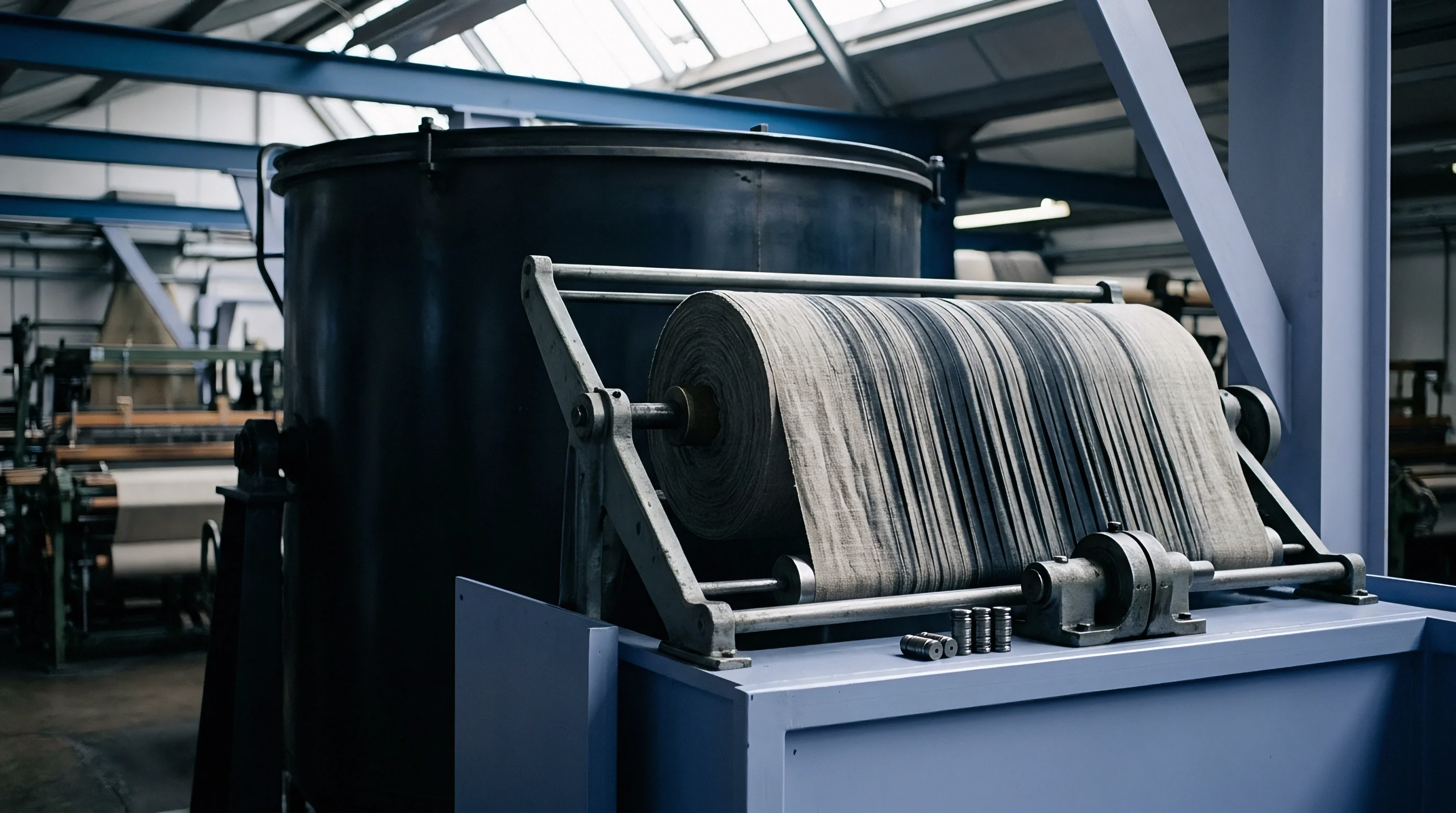
Preparation Losses in Warping and Sizing
Creel tail ends remaining on spools after high-speed winding account for significant unrecoverable yarn mass. During direct or sectional warping, hundreds of yarn packages run simultaneously onto a warp beam. When the shortest package on the creel runs empty, spinning operations stop.
The remaining yarn on all other packages ~ known as bobbin residue or cop waste ~ is stripped and discarded. In carded bast fiber spinning, package mass uniformity is lower than in combed cotton, leading to higher creel tail waste. Warping creel residue frequently consumes 1.5 to 3.0 percent of total purchased warp yarn mass.
Leasing, threading, and tying-in operations generate additional structural warp scrap. When mounting a new warp onto the slashing machine or warp tying machine, several meters of full-width warp sheet are drawn through to ensure proper thread alignment and leasing order. This section is pulled taut, knotted, and cut away as waste once tension is locked.
Slashing head-end scrap occurs at both the start and end of every sizing beam set. For short production runs of 1,000 to 3,000 meters, slashing setup waste represents a disproportionately high percentage of total yarn mass.
Sizing slab-off waste happens when outer layers of sized warp beams are stripped away due to sizing unevenness, moisture variation, or mechanical stops during beam changeovers. If the sizing machine stops while warp ends sit inside the size box or drying cylinders, the yarn suffers thermal degradation or excessive size pickup. Operators strip and discard these damaged beam layers before mounting the beam on the loom.

Shed Scrap and Leno Fringe Loss
Modern rapier and air-jet shuttleless insertion systems sacrifice continuous strands of thread at each selvedge to maintain filling stability. Shuttleless looms do not loop weft yarn continuously back into the shed like traditional shuttle looms. Instead, each pick is cut individually at the insertion side and held by catch selvedges or leno threads on the receiving side.
These auxiliary catch threads, termed leno selvedge scrap, are trimmed off by automatic shears immediately downstream of the temple cutters, falling into scrap collection bins as unrecoverable hard waste.
The width of the waste selvedge directly dictates weft yarn loss percentages. On a narrow loom running a 140-centimeter reed width, a 4-centimeter total leno fringe waste adds 2.8 percent to total weft yarn consumption. Running the same construction on a 340-centimeter double-width loom reduces the relative leno scrap percentage to 1.1 percent because fringe width remains constant while usable fabric width doubles.
Sourcing managers specifying narrow loom production without adjusting weft waste parameters overpay for filling raw materials.
Tuck-in selvedges present an alternative to leno fringes on rapier looms, tucking cut pick tails back into the edge of the fabric shed. While tuck-in selvedges eliminate separate catch thread disposal, they double the density of weft ends along the outer edge, restricting fabric finishing choices and increasing edge thickness. In high-density linen weaves, tuck-in selvedges often cause reed wire wear and selvedge popping, forcing mills back to leno fringe setups with higher hard waste allowances.
- Warping creel residue occurs when package package run-out discrepancies force operators to dump un-wound spool bottoms across high-end creels.
- Slashing head end scrap represents the full-width aligned warp sheets drawn through size boxes and cut away during beam mounting.
- Leno selvedge scrap consists of cut weft fringing trimmed automatically from fabric margins during shuttleless insertion.
- Inspection cut-out loss encompasses physical fabric sections removed during grey grading due to severe warp floats, slubs, or oil contamination.
Loom stop cut-outs represent another shed loss vector. When a warp thread breaks, drop wires fall, triggering automatic loom shutdown. If the break occurs inside the harness drop wires or reed blades, the weaver must pick out several insertion picks to locate the broken thread end and tie a weaver’s knot.
This picking-out process creates broken pick scrap and local fabric distortion. In high-defect yarns, frequent loom stops generate excessive cut-out scrap and lower overall weaving shed efficiency.
| Process Stage | Nominal Allowance (%) | Measured Low Range (%) | Measured High Range (%) | Cost Impact per 1,000 m |
|---|---|---|---|---|
| Warping Creel Scrap | 1.5 | 1.2 | 2.8 | $140.00 |
| Slashing Tie-In & Slab-Off | 1.0 | 0.8 | 2.2 | $110.00 |
| Leno Selvedge Cut-Off | 2.5 | 2.1 | 4.2 | $260.00 |
| Defect Cut-Out Loss | 1.0 | 0.5 | 3.1 | $195.00 |
| Scouring Mass Loss (Linen) | 8.0 | 6.5 | 11.5 | $780.00 |
Grey fabric inspection losses finalize the yarn waste tally prior to wet finishing. Grey cloth rolls pass over illuminated inspection tables where fabric defects are flagged using standard four-point systems under ASTM D5430. If a roll contains dense clusters of slubs, harness misdraws, or oil spots exceeding client acceptance thresholds, the mill cuts out defective fabric sections.
These discarded fabric strips represent full yarn consumption, sizing, and loom-hour expenditure lost entirely to scrap.
Accounting for cumulative process waste requires a cascading formula rather than simple addition. If warping waste is two percent, sizing waste is one percent, weaving scrap is three percent, and finishing loss is eight percent, adding these yields a 14 percent flat reduction. However, because each stage acts on the remaining net yield of the previous operation, the actual raw yarn demand multiplier is calculated sequentially: 1 / ((1 – 0.02) (1 – 0.01) (1 – 0.03) (1 – 0.08)) = 1.168.
This yields a true cumulative waste factor of 16.8 percent. A cost model using flat addition undercalculates required yarn purchases by nearly three percent.
Applying a full leno waste allowance while operating wide-width air-jet looms equipped with tuck-in units introduces up to a five percent overcharge on combed cotton orders. Sourcing professionals must demand itemized waste breakdowns matched to the specific machine configurations booked for their production run.


Beam
Thread arrangement on the loom cylinder establishes both structural density and the physical boundary for continuous weaving runs. The warp beam serves as the primary reservoir of structural threads fed into the loom harness under precise mechanical tension. Designing a cost model without auditing beam capacity, warp sheet geometry, and sizing weight additions leads to distorted unit costs per meter.
Beam parameters dictate minimum order quantities, warping setup amortizations, and the physical limits of continuous fabric production run lengths.
Direct warping machines wind thousands of individual threads from creel packages onto section beams at speeds up to 1,200 meters per minute. These section beams are subsequently combined during slashing onto a single weaver’s beam. Thread alignment, tension uniformity, and flange diameter govern how many linear meters of warp fit onto a standard beam.
If yarn count varies or yarn hairiness creates high friction between adjacent ends, beam packing density drops, reducing total warp length per beam by ten to fifteen percent. Lower beam length increases the frequency of beam changeovers, driving up loom downtime and setup scrap per meter.

Slashing Operations and Size Solid Pickup
Chemical sizing applications deposit protective starch or polyvinyl alcohol coatings onto single-end threads to withstand shuttleless abrasion. This added size mass, known as size pickup, inflates grey off-loom fabric weight, typically adding 6 to 14 percent dry solids mass to spun cotton and linen warp yarns. Sizing solid add-on must be mathematically deducted from grey off-loom roll weights when verifying true raw yarn consumption.
If an auditor measures off-loom grey fabric mass and assumes all weight consists of raw fiber, the calculated yarn cost will be grossly inflated.
Tracking warp tension across the sizing comb verifies uniform stretch. Slicing through sizing calculations requires isolating three mass components: raw fiber net dry weight, sizing solid weight, and moisture regain. Natural fibers absorb ambient moisture based on relative humidity.
Linen has an official moisture regain standard of 12.0 percent under ISO 139, while cotton stands at 8.5 percent. If a mill weighs grey fabric straight off the loom without oven-drying samples to measure dry fiber weight and size content, ambient humidity fluctuations corrupt the cost reconciliation.
Desizing operations during wet finishing wash away all applied size solids. The resulting finished fabric loses size mass entirely while gaining mass density through finishing contraction. A complete landed cost model tracks raw yarn weight into the sizing trough, size solids added, size solids washed out in finishing, and net relaxed fiber mass in the final landed goods.
Skipping size pickup adjustments creates phantom yarn savings in greige audits that vanish during finished fabric inspection.
Short production runs amplify setup yarn losses while long continuous beams dilute warping creel scrap across total volume.

Minimum Length Thresholds and Setup Scrap
Knotting new warp ends onto an expiring foundational thread sheet generates inevitable setup losses. Automatic warp tying machines join thousands of individual warp threads in minutes, leaving a short tail of knotted ends. This knotted region cannot be woven into commercial fabric and must be pulled through drop wires, harness heddles, and reed blades before loom startup.
Warp tying knotter scrap consumes approximately 1.5 to 2.5 meters of full-width warp length per beam changeover.
Amortizing setup scrap across total beam length highlights the cost penalties of small order quantities. On a long continuous warp beam of 6,000 meters, a 3-meter tying scrap loss represents 0.05 percent of total warp length. On a short sampling or pilot beam of 300 meters, that same 3-meter scrap represents 1.0 percent of total warp length.
Sourcing small production lots without applying a length-dependent setup waste surcharge distorts landed cost predictions.
- Verify raw yarn spool weights on incoming creel racks prior to warping thread draw-in.
- Calculate net size solids pickup by performing desizing boil-off tests on grey loom-state swatches.
- Measure warp beam flange width and thread packing volume to confirm maximum continuous run lengths.
- Audit warp tying knotter tails and slashing head-end scrap logs immediately following loom mounting.
Flange alignment and warp sheet density directly affect selvedge tension during weaving. If warp ends near the beam flanges are wound looser or tighter than central ends, selvedge ends break repeatedly during loom operation. High edge breakage forces weavers to drop loom operating speeds, reducing shed efficiency from an optimal 92 percent down to 78 percent.
Lower efficiency increases loom-hour cost charges per linear meter, transforming a structural warp preparation defect into a direct financial penalty.
Calculating raw yarn demand requires conditioned fiber weights. The ultimate yield of usable cloth from a given warp beam remains tied to thread tension stability across the entire weaving cycle. When beam diameter decreases as the warp unwinds, modern loom let-off electronics continuously adjust brake torque to maintain constant warp sheet tension.
If older mechanical let-off systems fail to maintain uniform tension, warp crimp fluctuates from the beginning to the end of the beam, causing fabric weight to drift out of specification across a single production lot.
Shed space availability and beam logistics determine the maximum volume a mill can weave per setup. Large-capacity loom setups utilize 1,000-millimeter flange beams holding twice the yarn volume of standard 800-millimeter beams. Booking capacity on modern sheds equipped with high-capacity beams reduces beam change frequencies by 50 percent, directly lowering amortized warp scrap and machine downtime costs.
A professional landed cost model factors loom shed machine specifications into its baseline yield forecasts.
Changing beam flange dimensions mid-order to accommodate smaller warping equipment reduces continuous warp length per beam ~ for instance, from 4,500 meters to 1,800 meters ~ tripling amortized setup scrap and adding unbudgeted loom downtime charges to the final landed invoice.


Arithmetic
Quantifying raw yarn weight requires linking physical construction variables into a closed linear yield equation. Fabric sourcing models often fail because buyers use simplified approximations of yarn count and fabric density rather than calculating exact mass balances. A precise model translates ends per centimeter, picks per centimeter, yarn linear density in Tex or Nm, warp crimp percentage, weft crimp percentage, and individual process waste factors into absolute raw yarn mass demand per finished linear meter of cloth.
Eliminating mathematical shortcuts isolates structural material costs from mill operational margins.
The foundational equation for warp yarn consumption per linear meter of fabric establishes raw fiber mass before sizing application. For a given fabric width in centimeters, warp end density, warp yarn Tex, and warp crimp percentage, the net dry warp yarn mass per meter (Mw) in grams is defined by:
Mw = fracEnds/cm × Fabric Width (cm) × Warp Tex1000 × left(1 + fracWarp Crimp %100right)
If yarn linear density is specified in indirect metric count (Nm), where Tex = 1000 / Nm, the formula adapts to invert the count value. Applying this formula accurately requires using total thread count across the full drawn reed width rather than just finished fabric width. The drawn reed width includes usable fabric width plus extra reed space occupied by leno scrap fringes.
Ignoring reed width expansion undercalculates raw warp mass by two to four percent.
Weft yarn consumption per linear meter (Mf) relies on pick density, insertion width across the reed, weft yarn Tex, and weft crimp percentage. Because each pick travels across the full reed width including catch selvedges, the formula must incorporate total reed width (Wr) in centimeters:
Mf = fracΠcks/cm × 100 × Wr × Weft Tex1000 × left(1 + fracWeft Crimp %100right)
Combining net warp mass (Mw) and net weft mass (Mf) provides the baseline unsized dry fiber mass of one linear meter of off-loom fabric. However, this figure represents theoretical zero-loss yield. Converting this baseline mass into actual purchased yarn quantities requires applying process waste multipliers to each yarn system independently.

Reconciling Greige Weight and Finished Fabric Yield
Mass measurements taken immediately after loom exit fail to match final invoiced roll weights after wet finishing. Greige loom-state weight contains dry fiber mass, applied size solids, weaving oil residues, and natural moisture. Finished fabric mass reflects cleaned fiber, wet-finishing dimensional contraction, applied mechanical softeners or coatings, and conditioned moisture regain.
Reconciling these states requires a multi-stage mass balance spreadsheet tracking every additive and subtractive component.
Consider a practical worked case: a 100% linen plain weave specified at 150 cm finished width, 18 ends/cm, 16 picks/cm, using warp yarn of Nm 26 (38.46 Tex) and weft yarn of Nm 26 (38.46 Tex). Off-loom warp crimp measures 7.0 percent, weft crimp measures 5.0 percent, and wet-finishing warp contraction adds an extra 3.5 percent crimp relaxation. Drawn width in the reed is 164 cm to achieve 150 cm finished width after selvedge trimming and finishing shrinkage.
Step one calculates total warp ends across the reed. Total ends = 18 ends/cm × 150 cm finished width = 2,700 usable ends. Adding 60 selvedge ends gives 2,760 total warp ends.
Net dry warp mass per linear finished meter, including total crimp (7.0% off-loom + 3.5% finishing contraction = 10.5% total warp crimp):
Mw = frac2760 ends × 38.46 Tex1000 × 1.105 = 117.29 grams/meter
Step two calculates weft yarn mass per linear finished meter. Picks per centimeter in finished state equals 16 picks/cm × (1 + 0.035 finishing contraction) = 16.56 picks/cm. Insertion width across reed is 164 cm.
Weft crimp is 5.0 percent:
Mf = frac16.56 πcks/cm × 100 cm/m × 164 cm reed width × 38.46 Tex1000 × 1.05 = 109.56 grams/meter
Step three applies stage-specific waste factors. Warp yarn incurs 2.0% warping waste and 1.5% slashing waste, yielding a warp waste multiplier of 1 / ((1 – 0.02) × (1 – 0.015)) = 1.0366. Total raw warp yarn purchase required per finished meter = 117.29 g × 1.0366 = 121.58 grams.
Weft yarn incurs 3.0% leno fringe trim scrap and 1.0% loom cut-out scrap, yielding a weft waste multiplier of 1 / ((1 – 0.03) × (1 – 0.01)) = 1.0413. Total raw weft yarn purchase required per finished meter = 109.56 g × 1.0413 = 114.08 grams.
Step four factors in bast fiber scouring mass loss. Grey linen flax contains roughly 8.0 percent natural waxes, pectins, and hemicellulose washed away during caustic wet processing. To deliver 235.66 grams (121.58 g warp + 114.08 g weft) of clean fiber mass in the finished fabric, raw fiber purchase demand must be divided by the net scouring mass yield factor (1 – 0.08 = 0.92):
Total Landed Raw Fiber Demand = frac121.58 + 114.080.92 = 256.15 grams/finished meter
Ignoring finishing contraction, reed selvedge expansion, and scouring mass loss yields a naive raw yarn calculation of only 198.50 grams per meter. The naive model understates raw fiber consumption by 57.65 grams per meter ~ a 22.5 percent financial error. Multiplied across a 20,000-meter production contract at a yarn price of $14.00 per kilogram, the unreconciled cost model creates an unbudgeted material deficit of $16,142.00.

What Variance Triggers Yarn Margin Recalculation?
Discrepancies exceeding two percent between predicted yarn consumption and audited mill delivery receipts warrant direct financial adjustment. Small variations in yarn linear density occur naturally between spinning lots. ISO 2060 permits a ±3.0 percent tolerance on commercial yarn count.
If a mill receives yarn running on the heavy side of the count tolerance (e.g. Nm 25.3 instead of Nm 26.0), fabric mass per square meter increases automatically unless pick density is lowered on the loom.
Lowering pick density to offset heavy yarn count alters fabric cover factor and mechanical strength. Conversely, keeping pick density constant while using heavy yarn consumes more yarn mass per meter, inflating raw material cost. Sourcing models must incorporate yarn count test results from incoming package lots before weaving starts.
If incoming yarn count deviates beyond ±1.5 percent from nominal specification, the landed cost model requires immediate recalibration.
- Yarn linear density verification ensures incoming spinning lot counts match contract nominal values under ISO 2060 testing standards.
- Greige off-loom mass audit isolates dry fiber content from applied size solids and ambient moisture regain.
- Wet process shrinkage tracking quantifies mechanical compaction and thermal relaxation contraction per finished linear meter.
- Waste selvedge width deduction separates usable cloth width from fringe trimming scrap across shuttleless loom reeds.
| Model Scenario | Base Yarn Price ($/kg) | Calculated Raw Yarn Mass (g/m) | Process Waste Factor (%) | Landed Fabric Cost ($/m) |
|---|---|---|---|---|
| Naive Flat Model | $14.00 | 198.5 | 5.0 | $2.92 |
| Unadjusted Crimp Model | $14.00 | 215.2 | 7.5 | $3.24 |
| High-Waste Bast Model | $14.00 | 242.0 | 12.0 | $3.79 |
| Fully Reconciled Landed Model | $14.00 | 256.2 | 16.8 | $4.09 |
Standard ISO 7211 testing for linear density and crimp establishes the baseline thread mass required before applying wet finishing relaxation factors.
Cost sensitivity analysis reveals that yarn price variations impact landed fabric costs non-linearly when cumulative waste factors are high. In linen and worsted wool sourcing, raw fiber represents 55 to 70 percent of total finished fabric cost per meter. A ten percent increase in raw yarn price combined with an unreconciled 16.8 percent cumulative waste factor expands landed fabric cost by nearly double the percentage of a low-waste synthetic filament fabric.
Precision arithmetic insulates the buyer from margin erosion caused by hidden material loss cascades.
The mathematical framework established here connects loom physics directly to commercial invoices. Sourcing desks that embed these formulas into procurement software eliminate disputes over raw material surcharges. Auditing mill cost sheets against these closed-form yield equations reveals whether a supplier’s quoted price reflects true manufacturing physics or padded waste margins.

Disputes
Commercial discrepancies over landed fabric invoices routinely originate from unexamined differences in greige loss accounting. When a buyer receives a final shipment invoice exceeding original proforma estimates by five to eight percent, suppliers typically attribute the increase to unavoidable yarn waste, off-loom shrinkage variations, or unexpected defect cut-outs. Without documented baseline assays establishing verified crimp, sizing pickup, and scouring mass loss, the buyer lacks technical leverage to dispute these surcharges.
Resolving financial conflicts requires converting vague commercial complaints into precise, test-backed engineering claims.
When wet-finishing contraction exceeded the 4.5 percent tolerance set in a 5,000-metre order of fine linen damask, presenting certified ISO 7211 crimp extraction tests performed on greige master swatches alongside finished roll width measurements proved that the mill had operated looms under insufficient warp tension. The resulting yarn mass inflation was caused by loom setup, forcing the mill to absorb the cost difference.

Auditing Four-Point Defect Cut-out Losses
Off-spec section removal during final roll winding creates untracked volumetric deficits for the buyer. Standard commercial contracts allow mills to deduct up to two percent of total roll length for defect cut-outs, provided each cut is clearly flagged and credited on the packing list. However, disputes arise when mills remove defective fabric segments without adjusting raw yarn consumption totals billed to the buyer.
If a mill cuts out twenty meters of fabric due to severe weaving faults, the yarn consumed in those twenty meters was wasted by mill operational errors rather than product design parameters.
Disputing raw material charges on cut-out fabric requires establishing clear contractual definitions of standard operational scrap versus mill fault scrap. Standard operational scrap includes leno fringe trim and normal sizing setup tails. Mill fault scrap encompasses fabric cut out due to oil spots, misdraws, double picks, and tension bar marks.
Landed cost models must mandate that yarn consumed in mill fault scrap is entirely borne by the weaver, regardless of baseline waste allowances.
Acceptance sampling under ISO 2859-1 provides a statistical framework for auditing incoming fabric rolls. If inspection of a sample batch reveals defect counts exceeding the agreed Acceptable Quality Limit (AQL), the buyer holds the right to reject the entire batch or demand a full audit at the supplier’s expense. Standardized inspection procedures prevent subjective arguments over what constitutes a billable fabric fault.
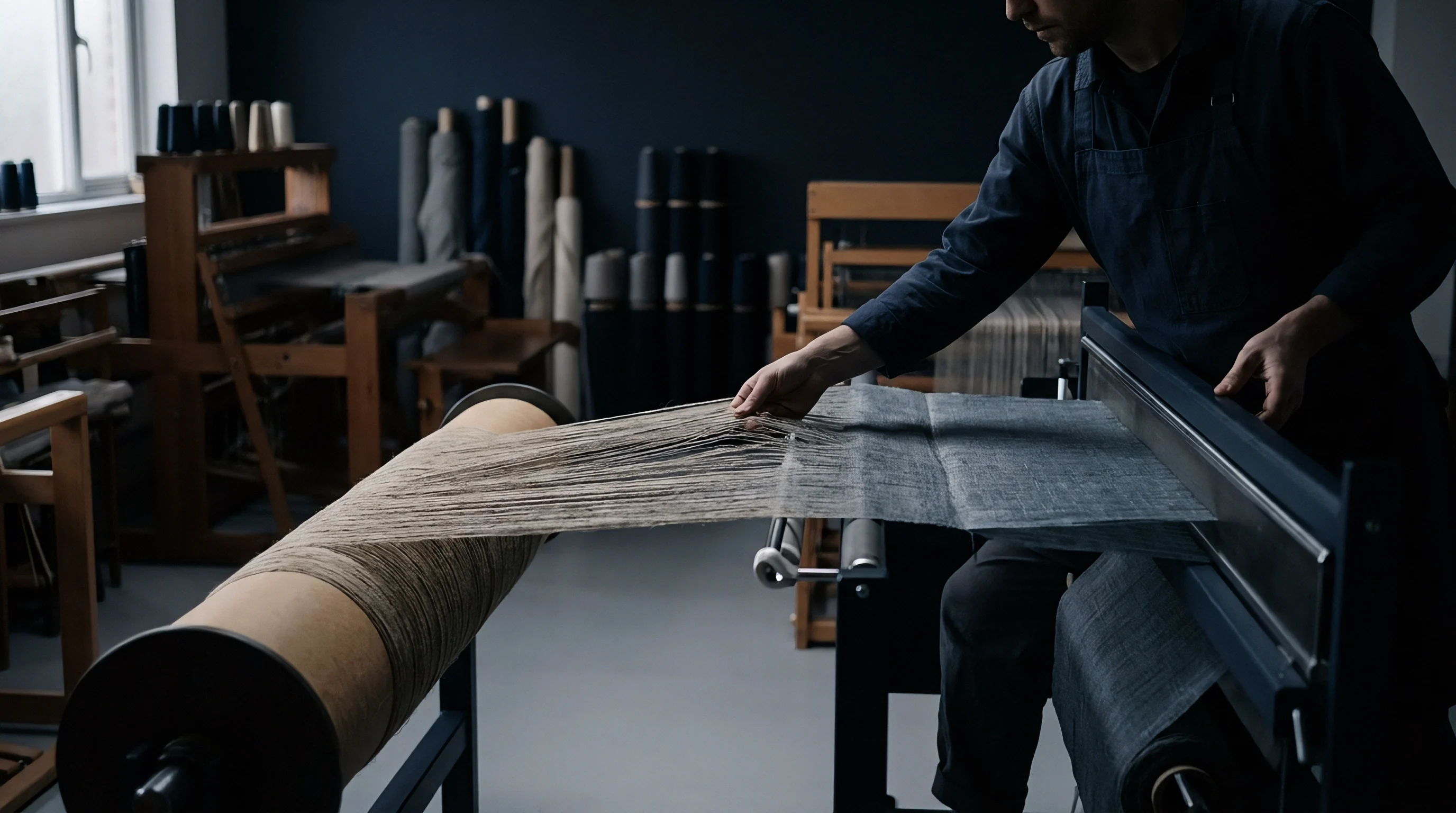
Evaluating Scouring Mass Loss in Linen Sourcing
Bast fibers carry non-cellulosic impurities including pectins and natural waxes that disappear during caustic boils. Linen flax fibers lose between 6 and 12 percent of their dry unbleached mass during scouring, bleaching, and enzyme washing. This mass loss reduces fabric weight per square meter without reducing the number of warp and weft threads present in the cloth.
If a cost model calculates yarn demand based on finished fabric weight without adding back scoured pectin mass, the calculated raw flax requirement will be significantly understated.
Supplier disputes often center on who bears the cost of natural fiber mass loss variation. Flax crops harvested in wet seasons exhibit higher pectin content and higher scouring mass loss than crops harvested under dry conditions. If a mill quotes a landed price based on a standard 7 percent scouring loss, but actual processing reveals an 11 percent loss due to crop variation, the mill may attempt to retroactively increase the billing rate per meter.
Purchasing contracts must explicitly state whether raw material prices are fixed based on nominal yarn count or floating based on actual scoured mass yields.
Unaccounted pectin loss during linen scouring shifts the effective cost per landed kilogram without altering the physical reed density on the loom.
- Warping log review verifies initial yarn package lot allocations, cop residue weights, and creel changeover frequencies.
- Sizing pickup calculation determines exact chemical add-on percentages via chemical desizing extraction under ISO 1833.
- Boil-off mass loss assay measures non-cellulosic pectin and wax removal rates across wet processing ranges.
- Invoice scrap credit validation reconciles hard yarn scrap weight sales against billed raw material overhead surcharges.
Commercial friction frequently arises around moisture regain adjustments on final fabric weight invoices. Fiber shipments weighed under high atmospheric humidity absorb ambient water vapor, increasing gross scale weight without adding structural fiber value. ISO 139 specifies standard atmospheric conditions for testing: 20°C ± 2°C temperature and 65% ± 4% relative humidity.
If a supplier weighs fabric rolls in an unconditioned warehouse during rainy conditions, invoiced fabric weight can be artificially inflated by two to four percent. Demanding moisture-corrected commercial invoice weights calculated from oven-dry fiber mass eliminates humidity-induced cost inflation.
When auditing supplier cost breakdowns, buyers often discover hidden safety margins embedded in both yarn count quotes and waste percentages. A mill might calculate cost using a heavy Nm 24 yarn count while actually weaving with an Nm 26 yarn, claiming the difference covers internal spinning waste. This double-dipping practice inflates landed cost per meter while concealing actual loom efficiency metrics.
Demanding full breakdown transparency forces suppliers to separate true fiber mass from operational scrap factors.
What specific test threshold separates allowable wet-finishing contraction from actionable mill operational error when resolving landed cost variances?


Contract
Precise purchasing agreements insulate sourcing organizations from unvetted yield penalties and arbitrary waste surcharges. In cross-border fabric procurement, oral agreements or simplified purchase orders specifying only finished width, weight, and price per meter leave the buyer vulnerable to cost creep. When technical specifications fail to detail baseline warp crimp tolerances, allowable waste caps, and desizing loss corrections, courts and arbitration panels default to local mill trade customs.
Standard mill trade customs overwhelmingly favor the manufacturer, allowing wide variances in delivered weight and billing lengths. Codifying engineering expectations into legally binding clauses secures landed cost accuracy.
Legal terms governing woven fabric purchases must bridge technical textile parameters with commercial billing remedies. A contract that defines fabric purely by visual appearance and finished GSM allows the mill to substitute cheaper, heavier yarns woven at looser setts to meet target weights while reducing loom-hour costs. The specification sheet annexed to the main purchasing agreement must detail construction variables including warp ends per centimeter, weft picks per centimeter, yarn linear density in Tex or Nm, maximum warp crimp percentage, maximum sizing pickup, and allowed overall waste multipliers.

Structuring Raw Material Consumption Clauses
Purchase order terms explicitly define yarn weight allowances across every stage of processing. The contract must establish that all yarn consumption calculations rest on conditioned dry fiber weights verified under ISO 139 standards. Clause structures must separate raw fiber material costs from weaving conversion fees, ensuring that efficiency losses on the shed floor do not automatically trigger raw material price increases to the buyer.
Incorporate explicit formulas for handling yarn count variations across spinning lots. The contract should state that if delivered yarn linear density deviates by more than ±1.5 percent from nominal specifications, the supplier must adjust the pick density on the loom or recalculate the price per linear meter to match the net change in raw fiber mass. Including this automated price adjustment clause prevents suppliers from billing for excess mass resulting from out-of-spec coarse yarns.
Waste cap clauses set strict contractual upper bounds on billable hard and soft yarn scrap. A robust waste clause reads: “Total billable process waste, encompassing warping creel ends, slashing setup scrap, leno selvedge trimming, and loom operational losses, shall not exceed 6.5 percent of net dry fiber mass for cotton constructions or 11.5 percent for bast fiber constructions. Any yarn loss exceeding these thresholds shall be deemed mill operational scrap and absorbed entirely by the Seller.” This clause stops suppliers from passing machine maintenance problems onto the client’s invoice.
Yield Tolerances and Residual Scrap Ownership
Financial terms governing remaining yarn on expired creels establish clear commercial boundaries between mill and client. When a custom spinning or dyeing yarn lot is purchased specifically for a buyer’s contract, residual yarn remaining on creel bobbins after weaving completion presents an accounting challenge. Suppliers often attempt to bill the buyer for 100 percent of the custom dyed yarn lot while retaining physical residual yarn for use in other commercial programs.
Contractual remedies for residual yarn handling mandate full inventory transparency. The contract must grant the buyer option rights over residual yarn stock: either taking physical delivery of residual spools at net yarn cost, or requiring the mill to credit the buyer for the market value of remaining yarn minus a nominal handling fee. Establishing residual scrap credit terms before placing volume orders prevents mills from accumulating free yarn inventory paid for by the sourcing practice.
Billing length tolerances require strict definition to prevent unwanted inventory buildup or stock shortages. Standard commercial contracts often include a ±5 or ±10 percent quantity delivery allowance. In large orders, a positive 10 percent delivery variance forces the buyer to absorb substantial unbudgeted finished goods inventory.
Sourcing contracts should restrict delivery quantity variances to ±2.5 percent, while stipulating that billing applies strictly to net usable fabric length verified against four-point visual inspection standards.
The contract clause: “Seller warrants that delivered fabric yield shall reflect a maximum total cumulative material loss multiplier of 1.14 relative to dry fiber construction specifications; any invoice adjustments reflecting higher cumulative waste rates require prior written validation via independent certified laboratory testing under ISO 7211 and ISO 3801.”