Mechanical Measurement
Evaluation of nonwoven material geometry relies on iso 9073-7 for the determination of bending length. This methodology provides a standard procedure to calculate the stiffness of a textile structure through the cantilever test principle. A specimen strip slides horizontally over a smooth surface until its tip touches an inclined plane at a fixed angle.
The distance moved by the strip at this point defines the bending length of the fabric.
Physical Testing
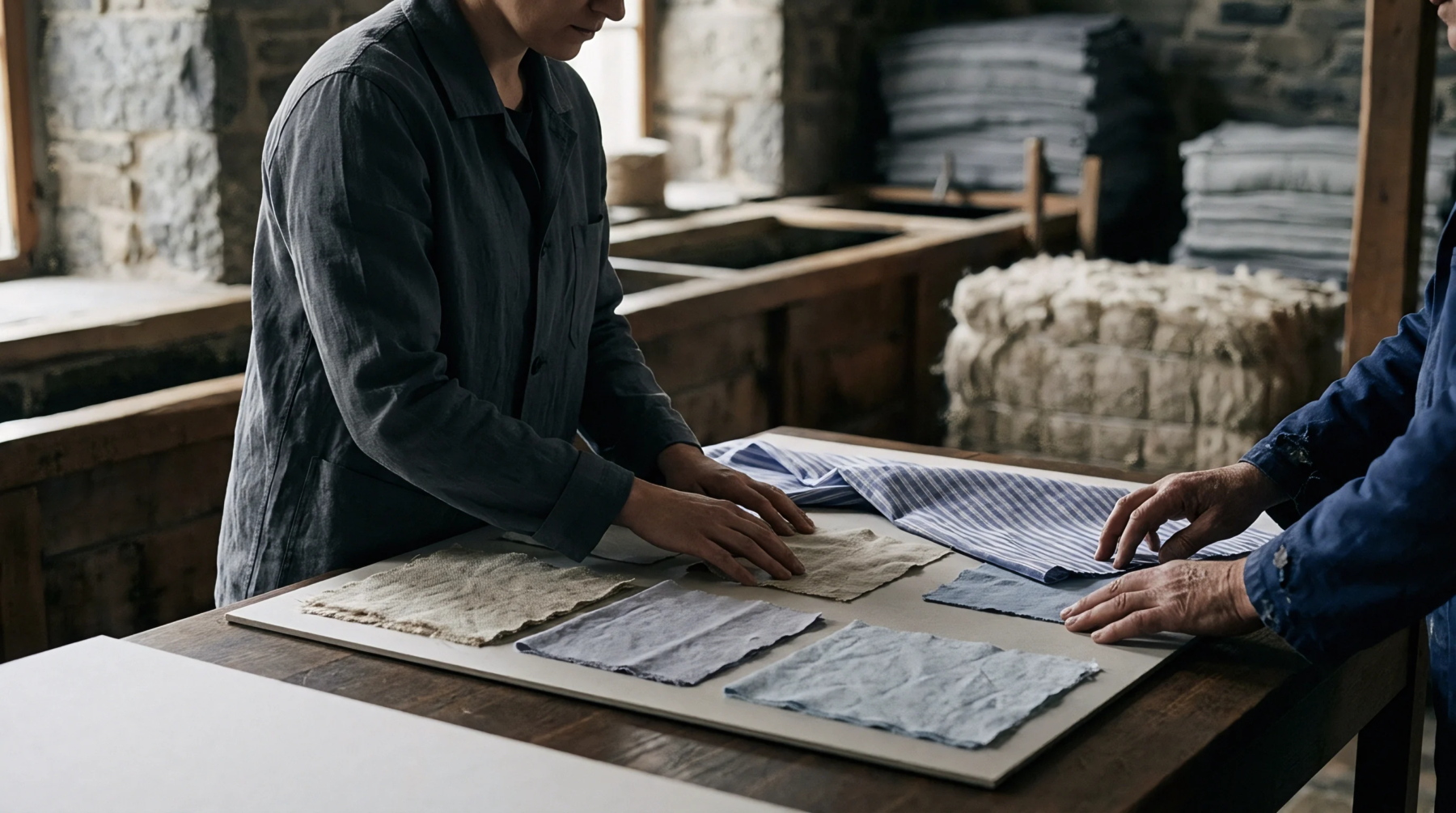
Mill technicians utilize this specific protocol during the finishing stage to ensure consistency across different batches of finished linen or blended nonwovens. Operators cut specimens in both machine and cross directions to account for directional differences in fiber orientation. Proper execution requires a clean, level surface and precise control of the speed at which the fabric advances toward the edge.
Environmental conditions influence the results, so air temperature and humidity must remain stable throughout the assessment. Accurate records of these measurements allow a manufacturer to verify that a production run adheres to the technical specifications agreed upon with the buyer before the product leaves the facility.
Acceptance Criteria
Differences between a mill internal quality target and external contract requirements define the commercial utility of the bending length data. A supplier uses iso 9073-7 to establish a baseline range for a product line while a purchaser applies it as a pass or fail condition during the inspection of incoming shipments. Stiffer fabrics might suit technical applications whereas higher flexibility meets the demands of consumer goods.
Variations in fiber weight or bonding density directly shift the bending length values. Precise control of the production parameters ensures the material stays within the prescribed limits established by the governing document. Consistent adherence to this testing protocol reduces disputes regarding the physical performance of the finished textile.