
Viscoelastic Stress Relaxation Mechanisms in Sized Bast Fibre Warp Sheets
Viscoelastic tension relaxation in sized bast warps creates fell line migration and set marks unless controlled by active electronic let-off compensation.
Viscoelastic tension relaxation in sized bast warps creates fell line migration and set marks unless controlled by active electronic let-off compensation.
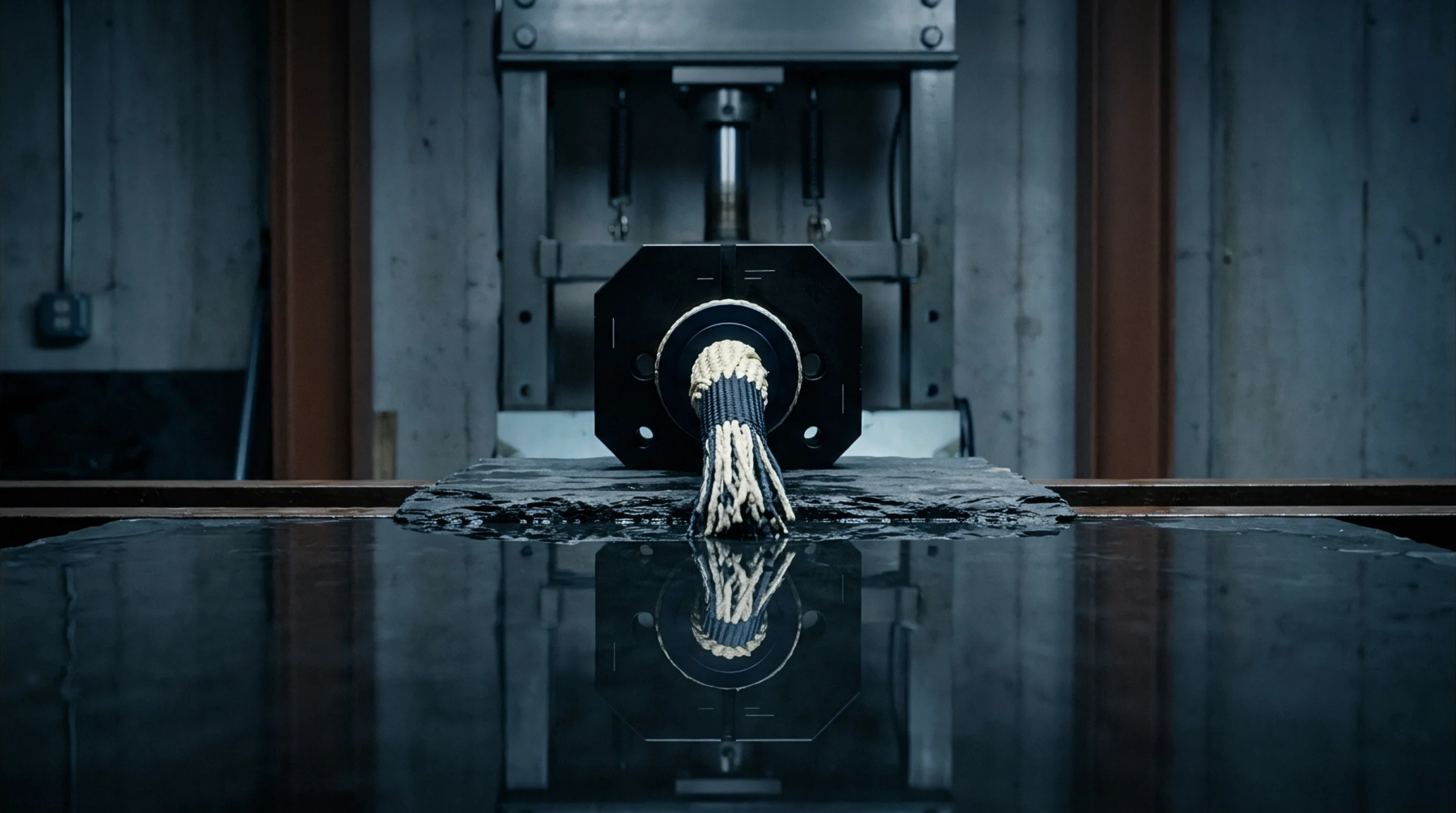
Dynamic tensile fatigue protocols for wet spun flax quantify cyclic inter-fiber pectin shear, predicting high-speed loom warp stops before beam mounting.

Mitigate harness tension spikes and thermal breakdown by tuning cam acceleration profiles, installing active cooling plenums, and specifying aramid hybrid cords.
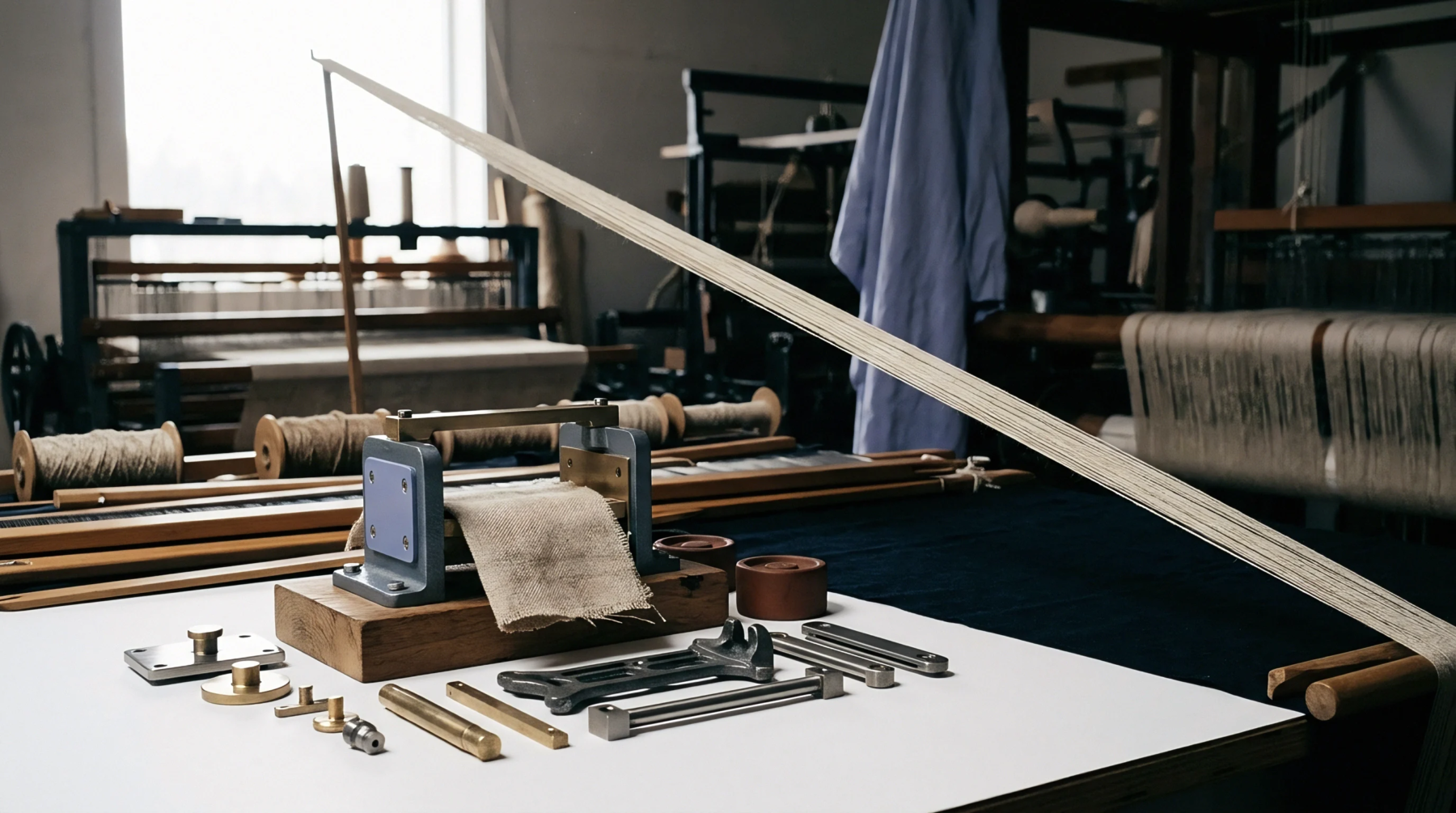
Step gradient shedding equalizes warp strain across deep jacquard harness boards, preventing end breaks and clearing rapier sheds in dense linen damask.
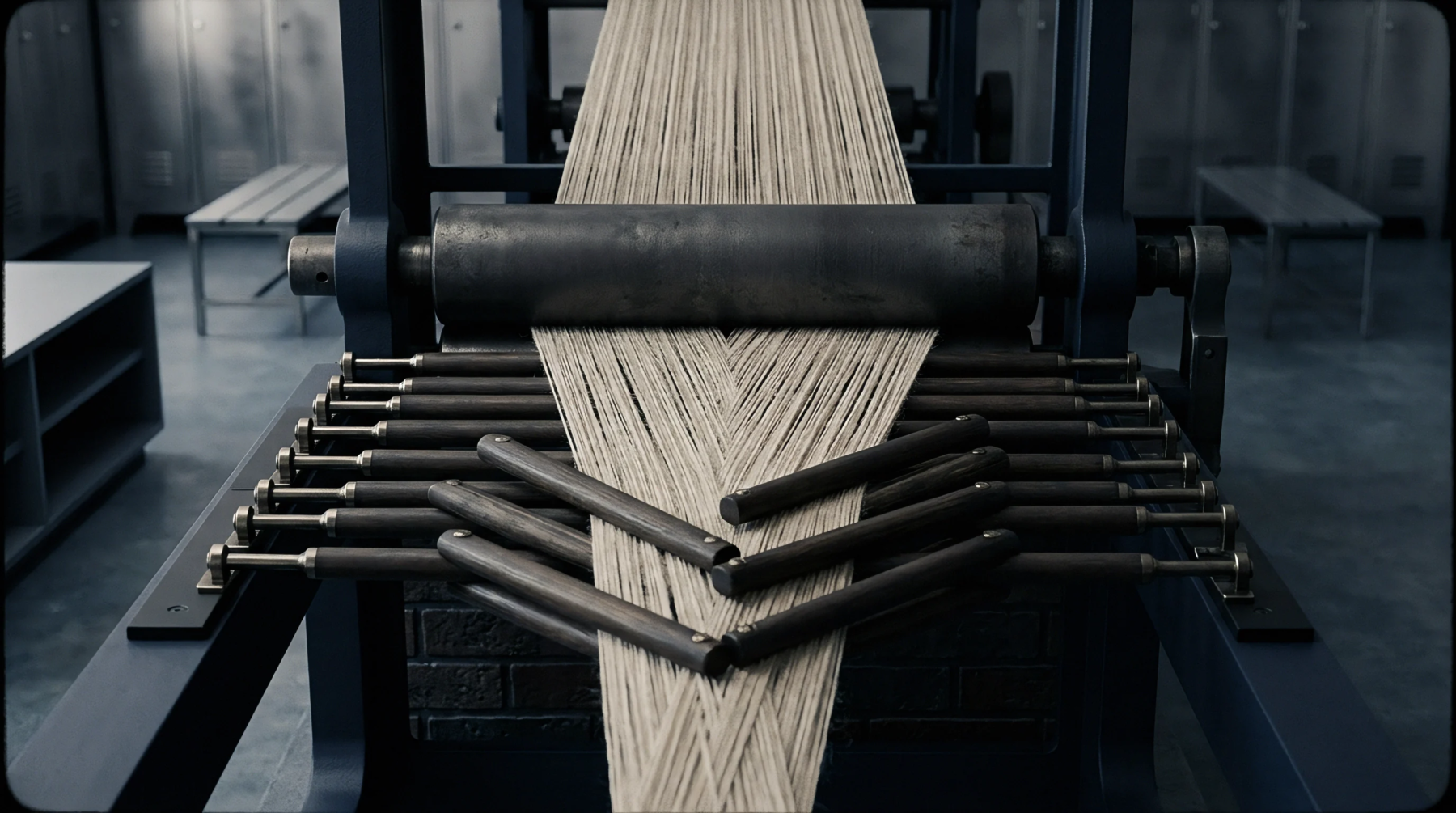
Keeping harness cord splay angles below ten degrees prevents lateral eyelet binding, eliminates asymmetric creep, and protects loom speed in high density sheds.

Asymmetric shed motion curves reduce peak warp acceleration and heddle contact angles, keeping shear stress below middle lamella limits to preserve flax modulus.

Asymmetric loom sheds accelerate flax warp fatigue by shifting cyclic peak tension onto the lower yarn sheet, causing rapid microfibril fracture and stops.

Sustained warp tension forces wet-spun linen yarns into non-recoverable tertiary creep, requiring strict moisture controls to prevent off-quality marks and loom downtime.

Throttling air jet pressure below 0.54 MPa on linen weft cuts compressor load but spikes stoppage rates, raising net weaving cost per metre.

Optimizing profile reed depth and relay nozzle timing reduces air-jet pressure drops and drag stops when weaving high hairiness bast fiber warps.
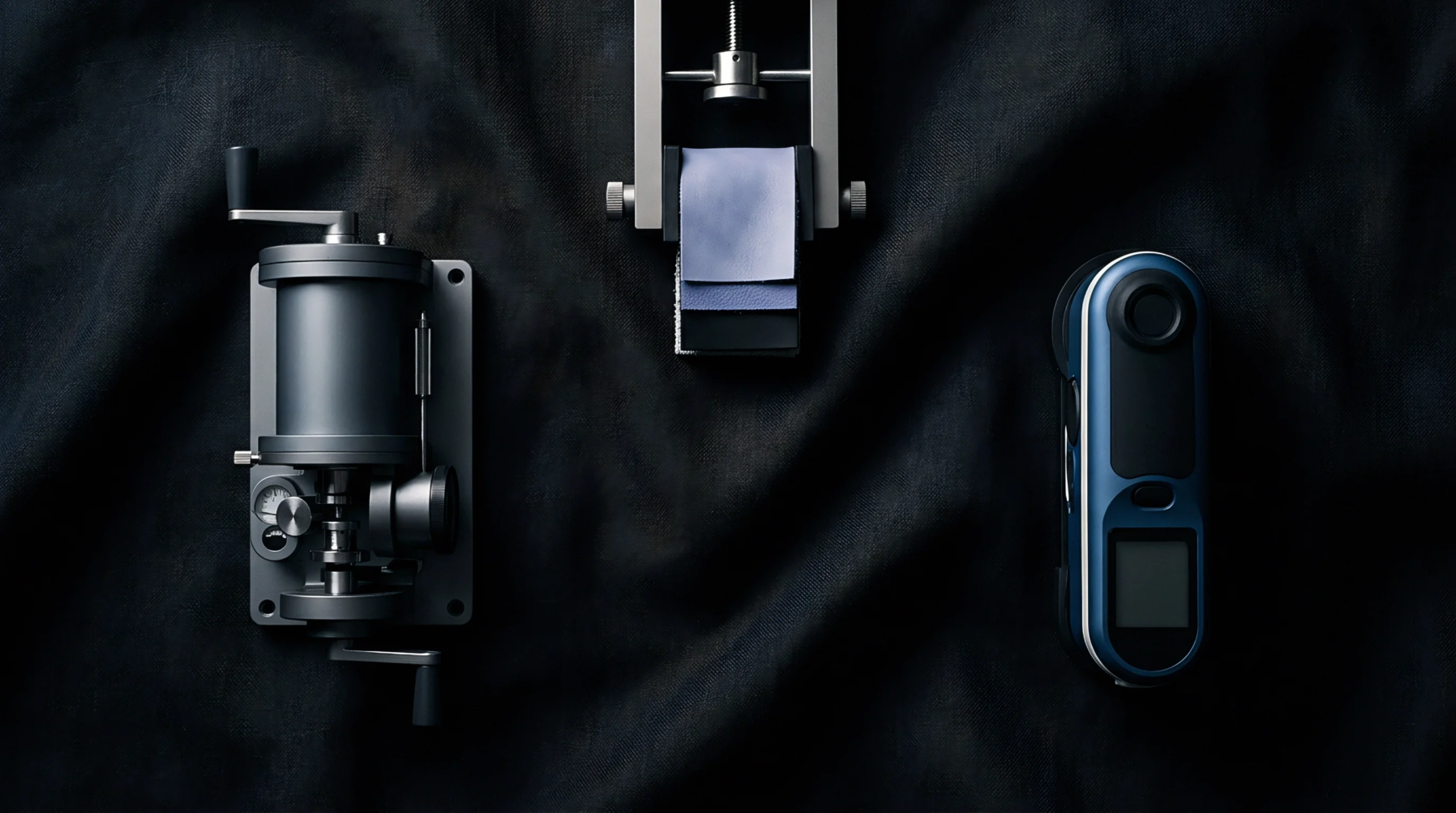
Optimizing relay nozzle angles to 8 degrees toward the reed base stabilizes staple linen yarn flight and prevents tip unraveling during high-speed air-jet weaving.
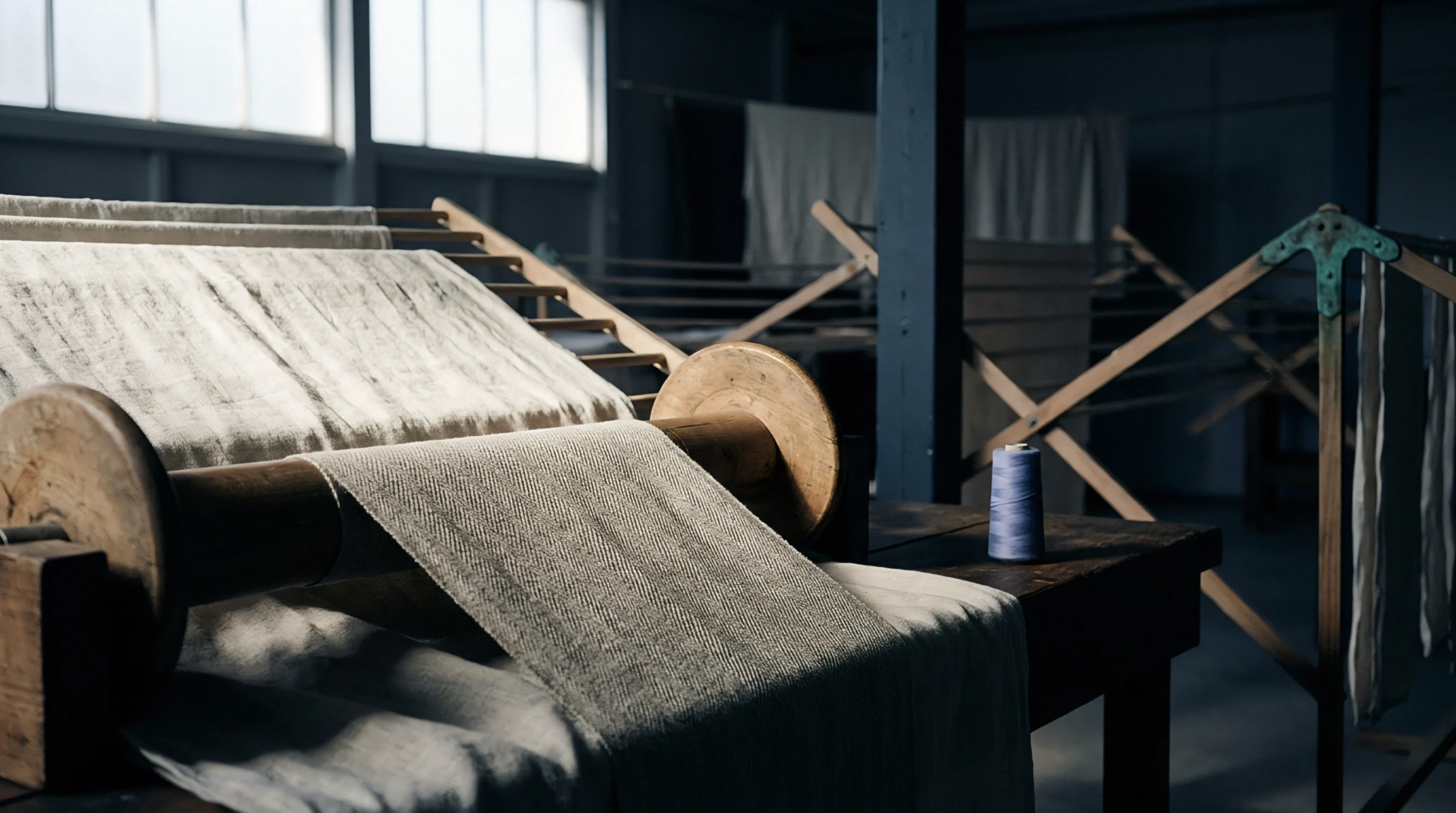
Heavy linen Jacquard damask surcharges compensate for low loom speeds and dual-beam crimp variance required to prevent structural warp defects in stiff flax yarns.

Base loom hour rates for dense jacquard weaving require calculating true capital depreciation, speed derating, and reduced operational efficiency per pick.

Scale raw raster art to the warp-to-weft sett ratio, map hooks directly to the harness tie plan, and calculate cast-outs under 20% to prevent shed instability.
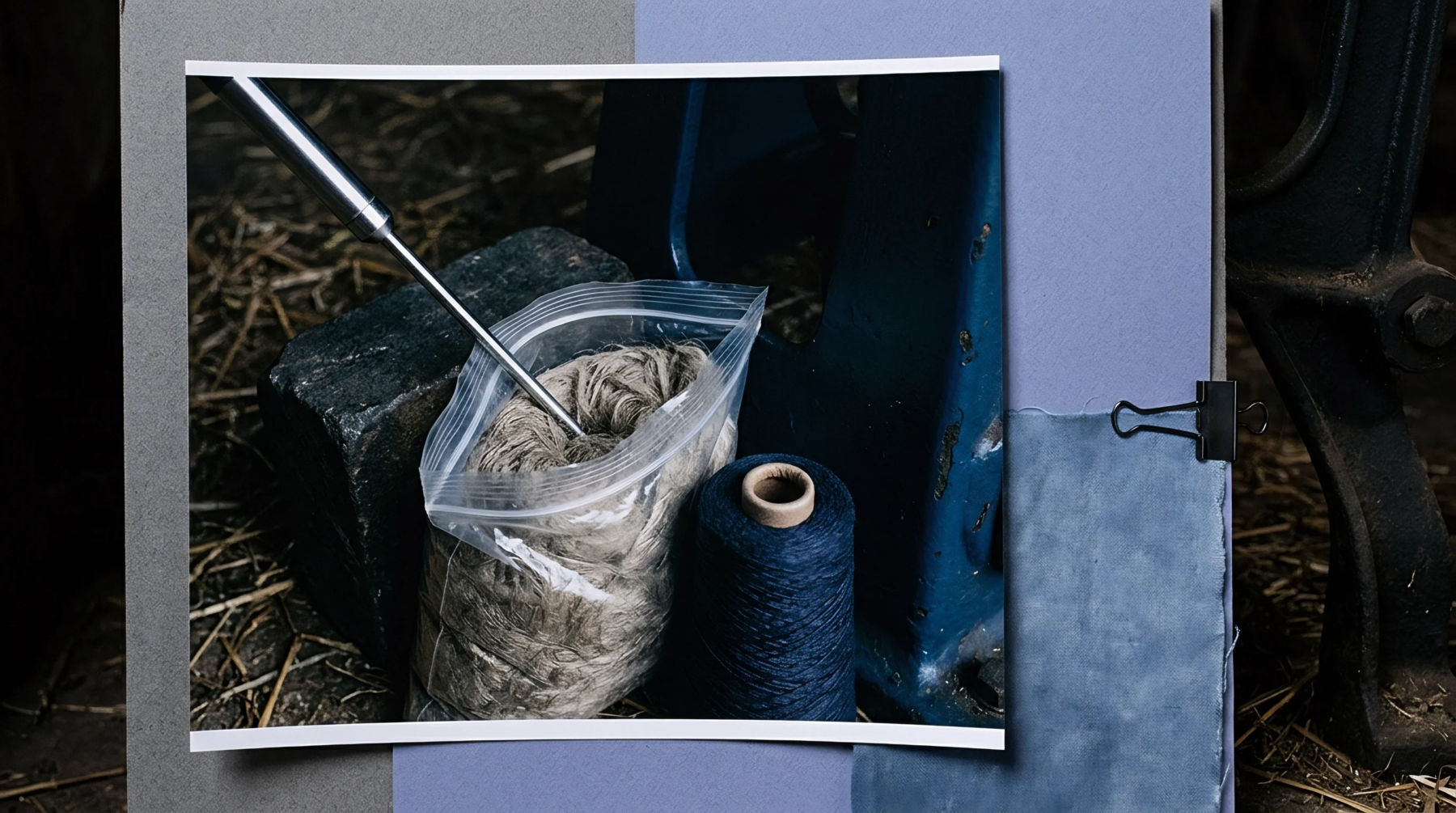
Moisture plasticizes the amorphous pectin matrix in bast bundles, lowering yarn flexural rigidity while elevating cyclic bending energy dissipation.
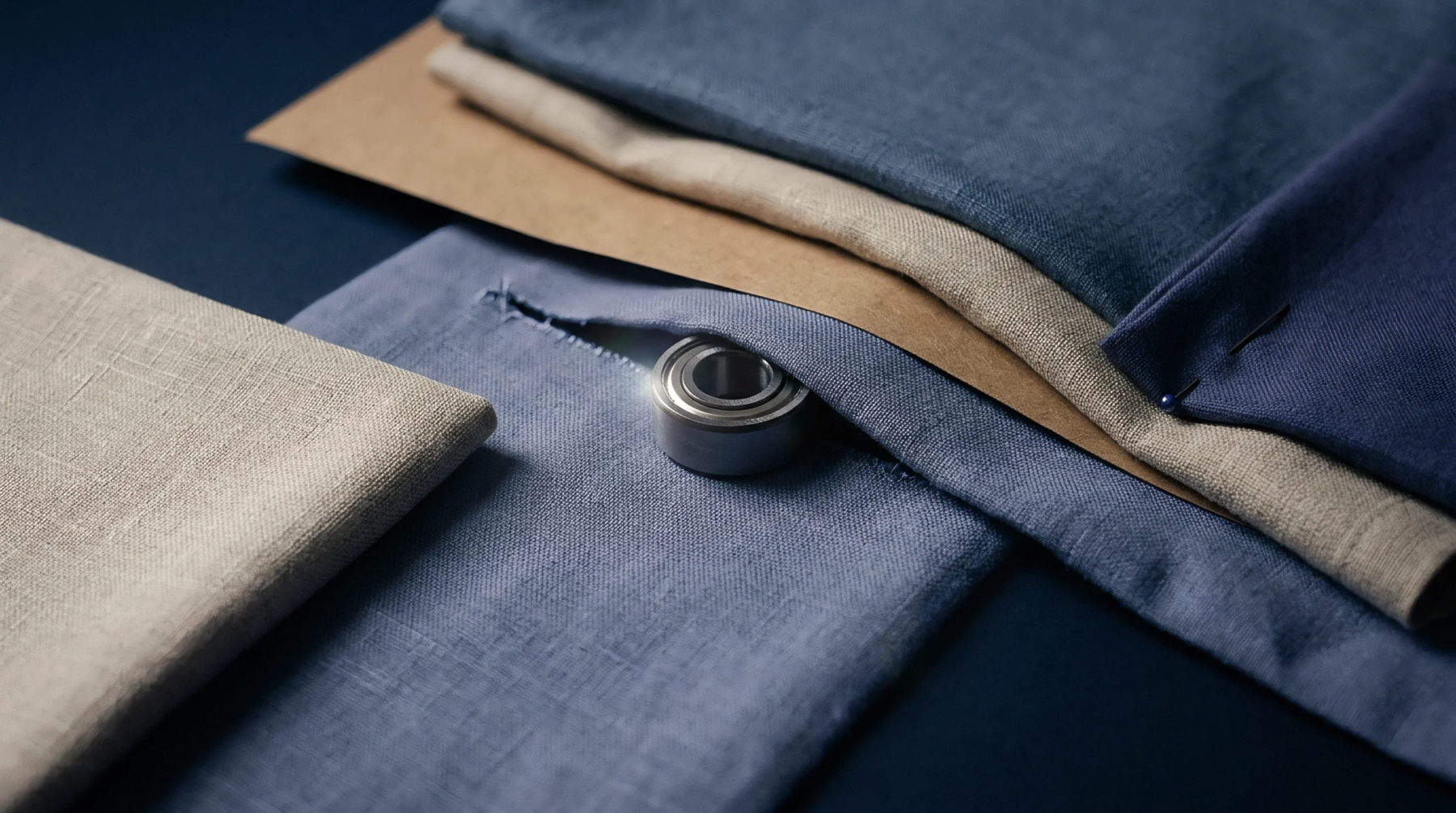
Tuning inter-yarn friction via boundary size lubricants and adjusting backrest elevation shifts crimp to the weft, enabling maximum pick density without loom stops.
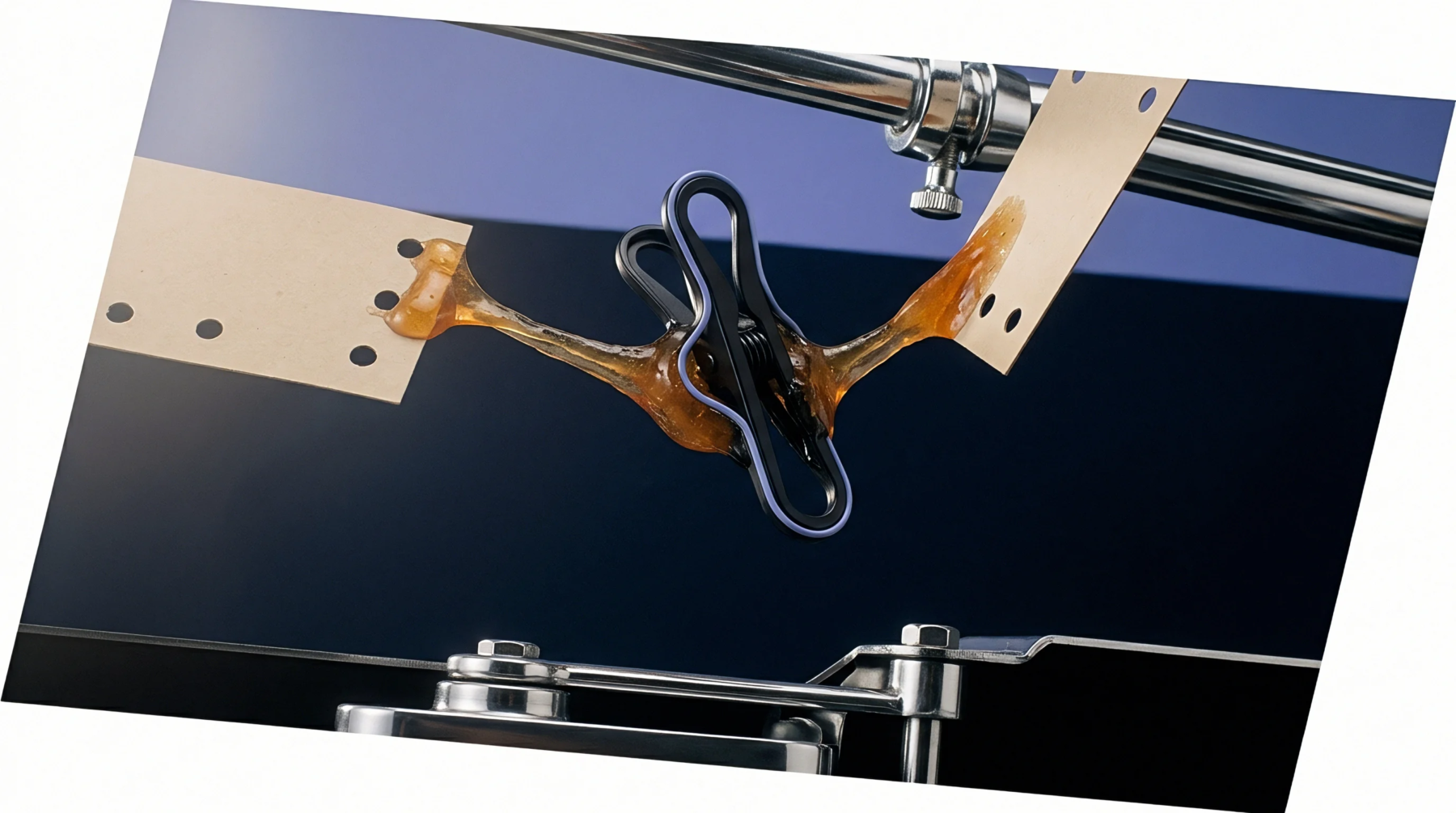
Pure bending laboratory testing isolates fabric bending rigidity and hysteresis width from gravitational shear, yielding precise metrics for cloth tailoring.

Optimal hydromechanical control of ultra-dense flax warps relies on balancing pectin plasticization against radial swelling to minimize shear locking.
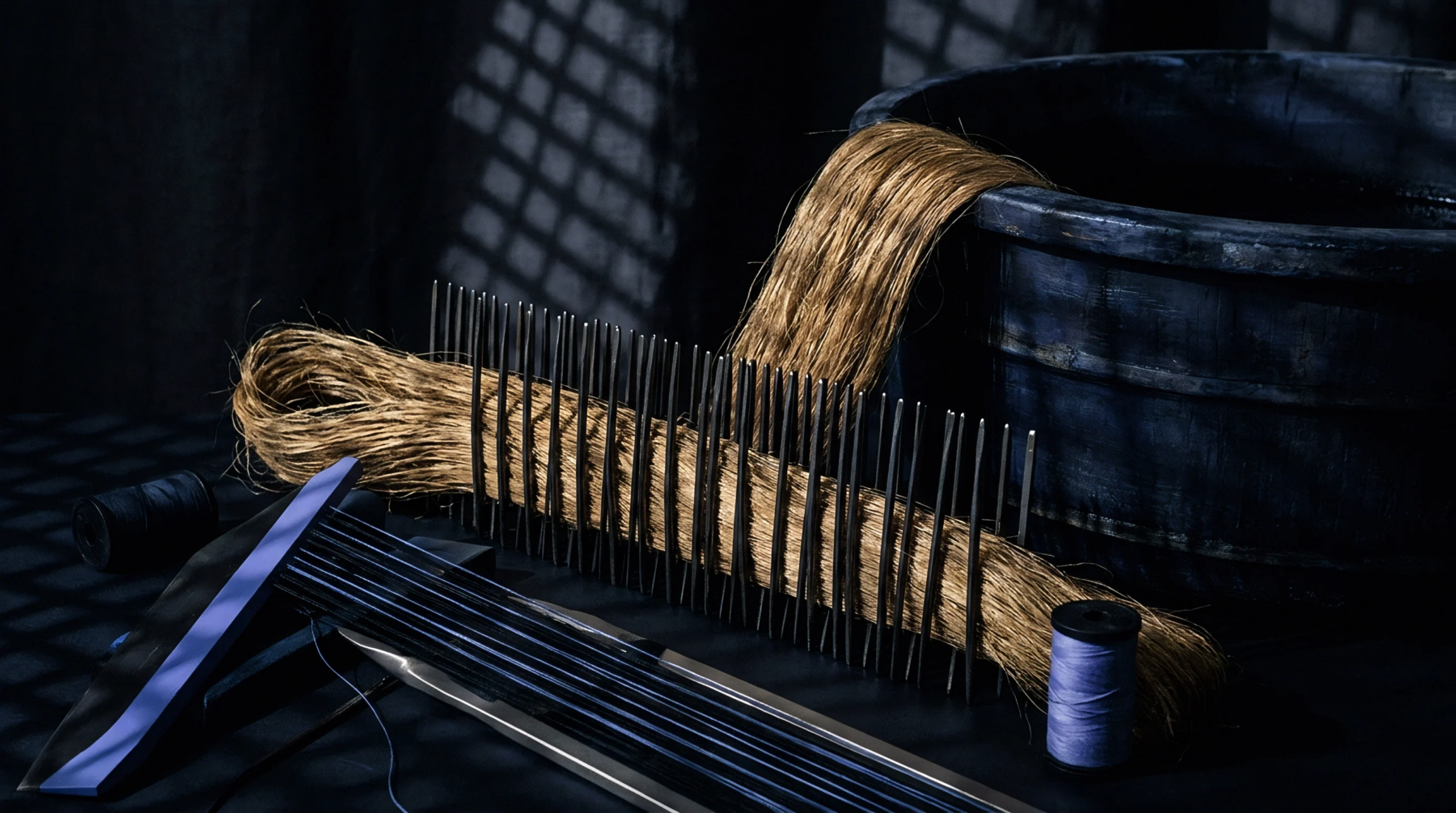
Generalized Maxwell Modeling quantifies speed-dependent warp tension spikes, allowing weavers to set loom parameters that minimize end breaks and starting marks.

Dense flax yarn stress decay stems from matrix shear along cellulose microfibrils, requiring active let-off compensation to prevent restart density defects.

Dynamic localized psychrometric control sustains viscoelastic sizing compliance on bast warps, preventing film fracture and lifting loom speeds past 500 PPM.
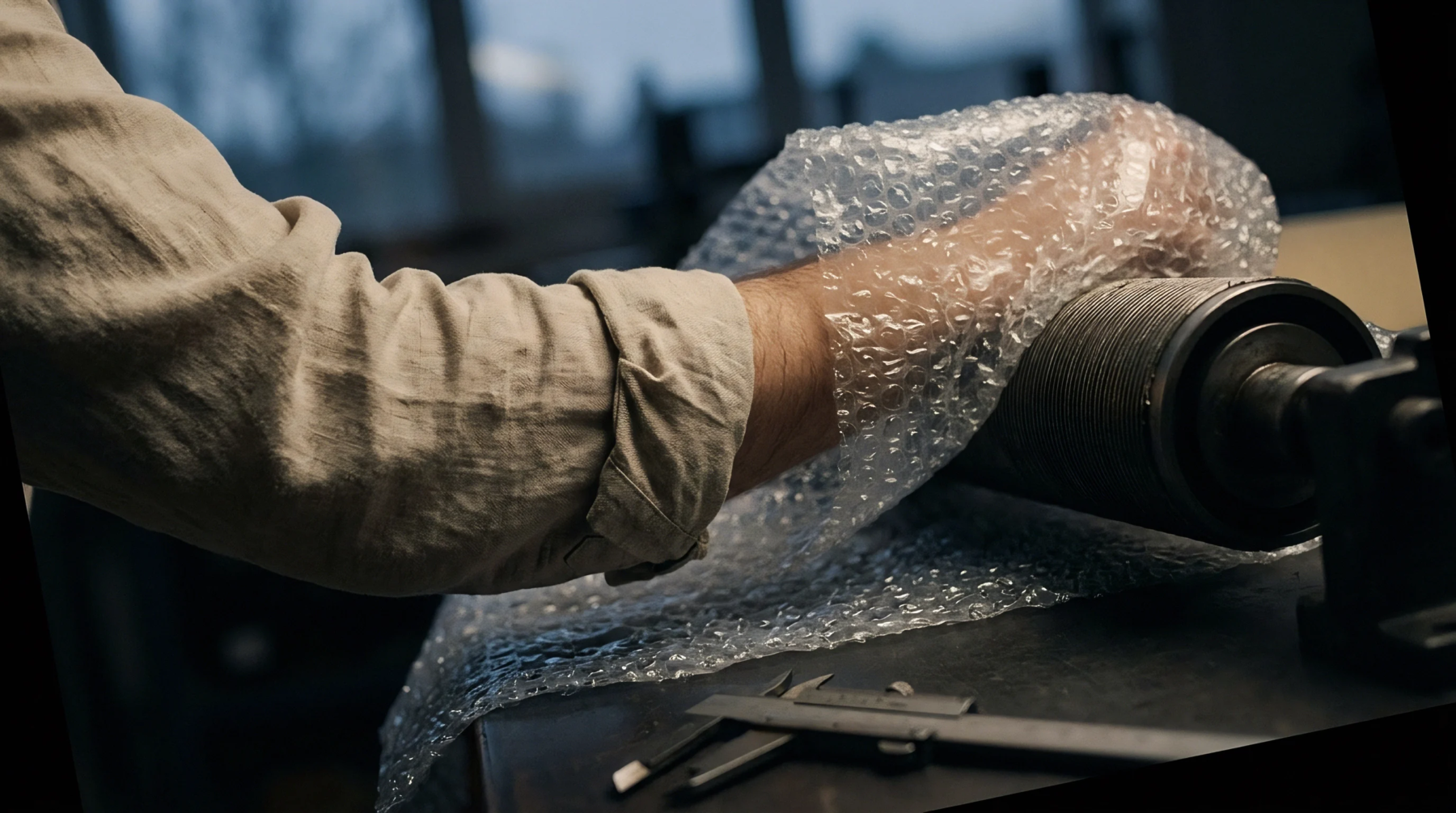
Maintain warp sizing regain within target moisture bands to preserve film elasticity, prevent shed cling, and minimize break rates on high-speed looms.
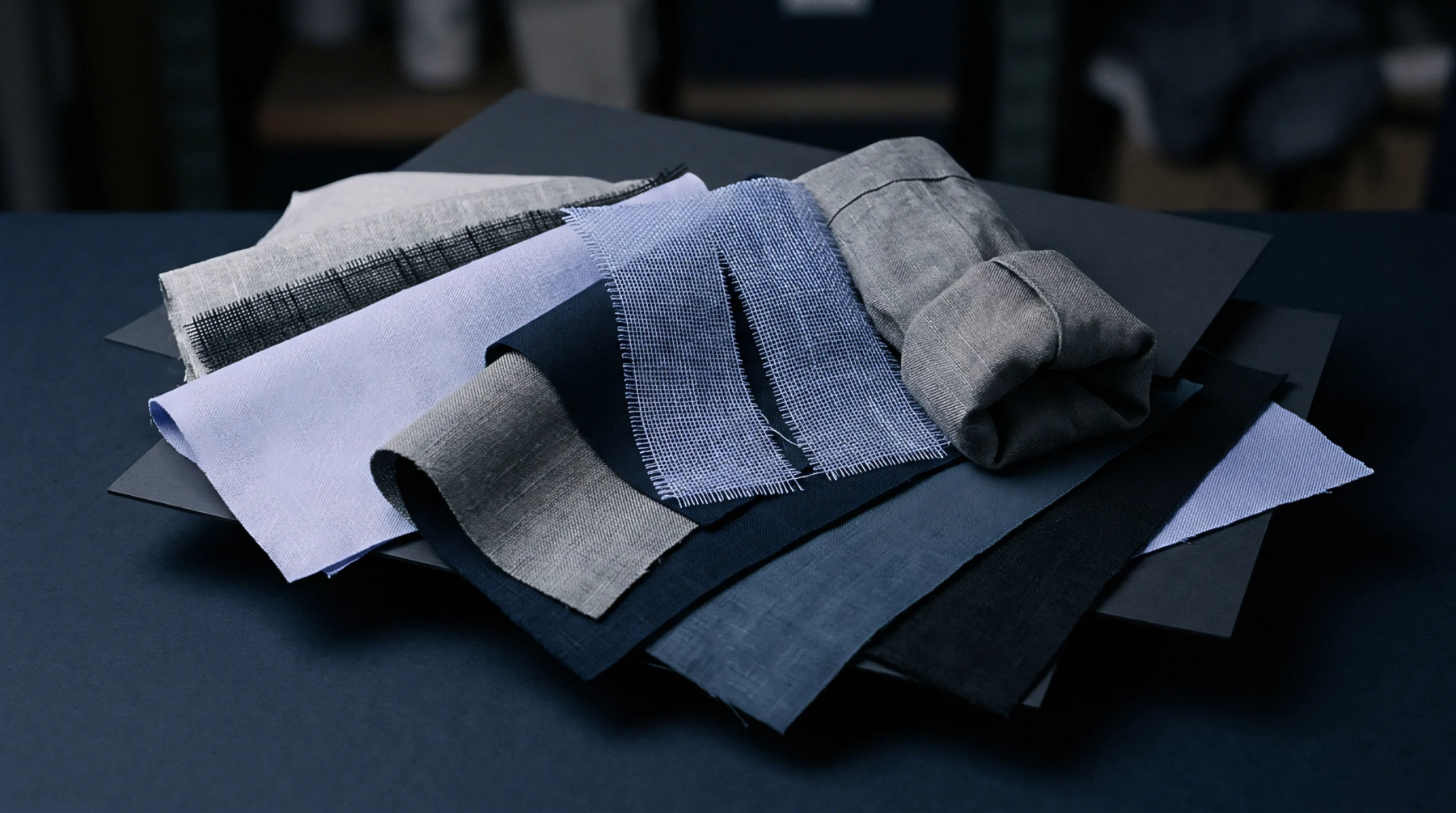
Establishing a minimum 0.45 core-to-sheath spectroscopic absorbance ratio prevents high-density Jacquard linen sizing penetration failure and loom downtime.

Distinguish splice rupture from size film failure by inspecting fiber tail slip length versus parent yarn twist retention under optical magnification.

Warp yarn failure on air-jet looms stems from pneumatic twist disruption and drop-wire abrasion, requiring high-speed tensile screening to protect shed hours.

Polyvinyl alcohol sizing on fine linen warps must maintain elastic strain capacity above dynamic shedding peak strain to prevent brittle coating breakdown.

Optimizing PVA starch sizing rheology suppresses micro-fibrillar friction spikes on fine wet spun flax warps, preventing clingage and raising loom efficiency.
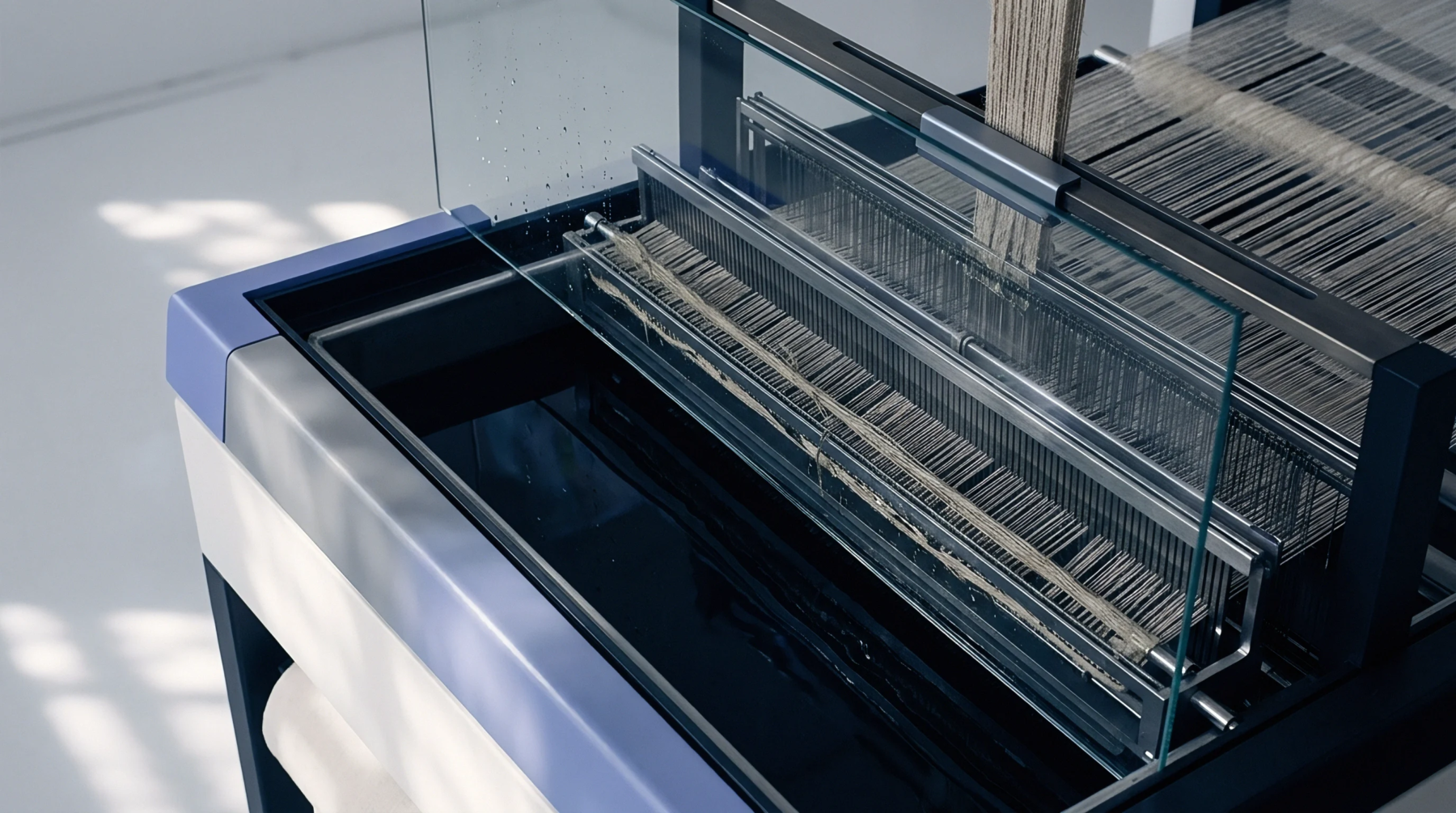
Optimize high-density linen warping via low-drag ceramic creels, 7-degree drum cones, 10% PVA-starch add-on, and 8-tier splitting to keep loom stops below 1.5.
High-density flax weaving contracts require Ashcroft queueing models to adjust loom-hour rates for non-linear machine interference losses.

Flax loom allocation optimization balances yarn hairiness, reed width, and weaver loads across rapier machines to minimize shift changeover costs and late delivery penalties.
Expertise is a utility, not a secret. sentiention™ publishes its working knowledge as open reference: intelligence layer covering the materials it sources, the markets it enters, and the reference that serves both.