Optimizing Warp Sizing Regain and Slasher Moisture Measurement
Maintain warp sizing regain within target moisture bands to preserve film elasticity, prevent shed cling, and minimize break rates on high-speed looms.
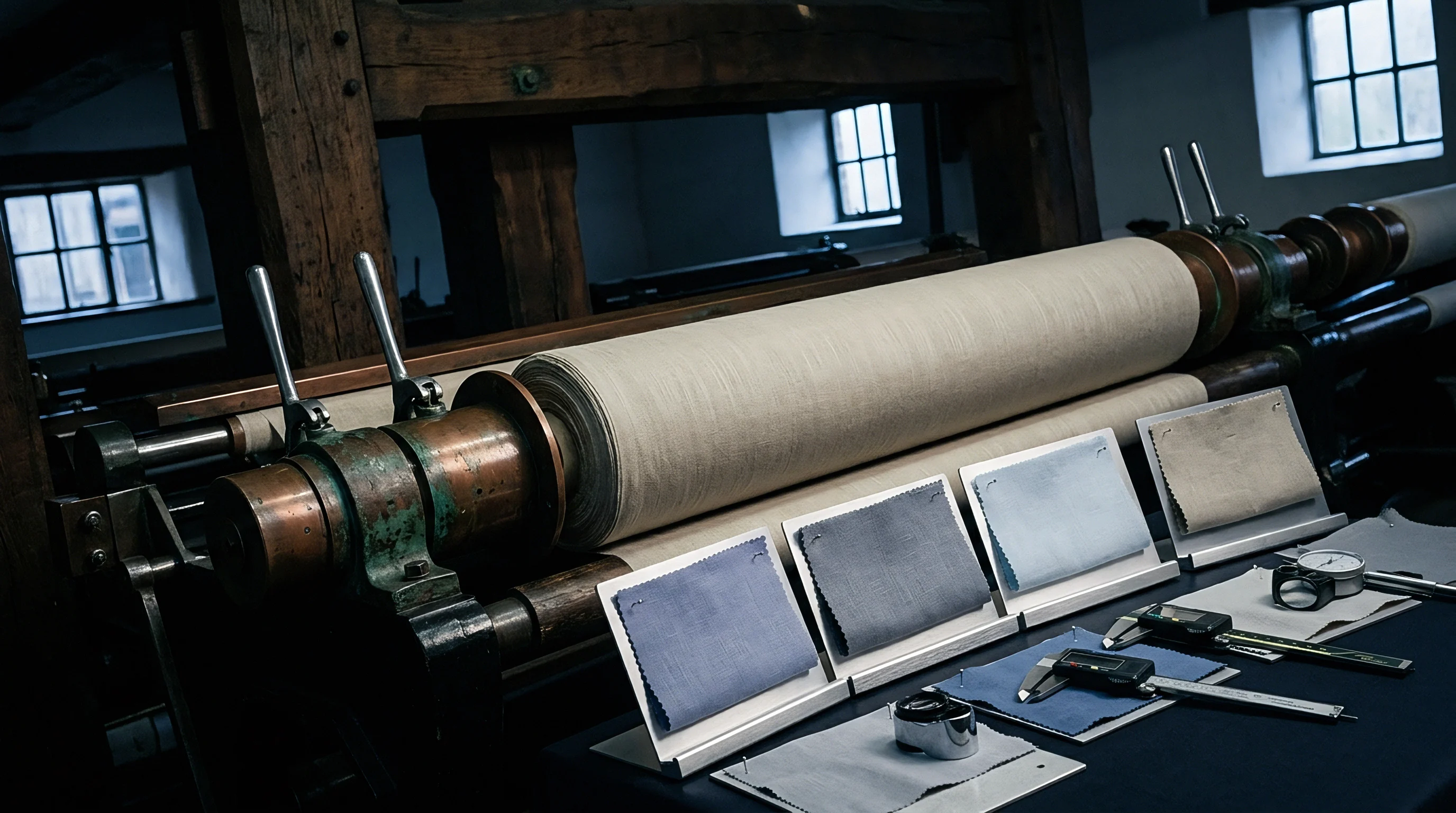

Deposit
Warp sizing deposits a temporary protective sheath over staple yarns to survive the abrasive cycling of shedding and beat-up. Sizing regain ~ dry size solids expressed against the bone-dry weight of the yarn ~ dictates elasticity, abrasion resistance, and fiber lay. Yarns spun from 100 percent flax or carded cotton require tight encapsulation: too little size leaves protruding fibers to cling in the shed and drive up end breaks, while excessive add-on turns the yarn brittle enough to split under the peak tensions of air-jet and rapier looms.
Slasher operations regulate dry pick-up by balancing box concentration, squeeze roll pressure, roll hardness, and line speed. Residual moisture left in the film serves as a plasticizer. High solids combined with poor moisture retention quickly warp the mechanical behavior of starch, polyvinyl alcohol, and carboxymethyl cellulose mixes; let that moisture fall below critical thresholds, and the desiccated film simply fractures over the lease rods.
| Yarn Type | Count Range (Tex) | Primary Size Chemistry | Target Dry Add-On (%) | Target Moisture Regain (%) |
|---|---|---|---|---|
| Carded Cotton Staple | 20 to 60 | Native/Modified Starch + Wax | 10.0 to 14.0 | 7.0 to 8.0 |
| Combed Cotton Fine | 10 to 18 | PVA + Acrylic Binder | 8.0 to 11.0 | 6.5 to 7.5 |
| Flax / Linen Pure | 30 to 100 | Soluble Starch + Softener | 6.0 to 9.0 | 8.5 to 10.0 |
| Polyester / Cotton Blend | 15 to 30 | PVA + Modified Starch | 9.0 to 12.0 | 5.5 to 6.5 |
Formulation behavior varies considerably across chemical families. Native starches build thick surface coatings that require strictly controlled hydration to avoid dusting out, whereas synthetic polymers form cohesive skins at lower add-on rates but react immediately to relative humidity changes in the weave room.
- Modified Maize Starch creates uniform surface encapsulation on cellulosic fibers when cooked to consistent viscosity and kept above eighty degrees Celsius in the size box.
- Polyvinyl Alcohol provides high film strength and abrasion resistance for fine combed counts, requiring exact residual moisture to prevent harsh warp hand.
- Carboxymethyl Cellulose offers cold-water solubility and excellent film flexibility, functioning effectively across wide moisture windows in low-humidity sheds.
- Mutton Tallow Wax reduces yarn-to-yarn friction, though excessive concentrations disrupt moisture pickup during subsequent dyeing operations.
Size film shedding at the lease rods is frequently blamed on improper cooking temperatures or unstable box viscosity, but over-drying on the slasher cylinders ruins film elongation just as quickly regardless of size box stability.

Steam
Evaporating water from wet warp sheets demands heavy thermal transfer across the cylinder set. Exiting the size box, the wet yarn carries a liquid pick-up of 80 to 130 percent of its dry mass. Slasher cans transfer heat conductively through Teflon-coated steel shells directly into the web.
The initial cylinder cluster generates a sudden burst of water vapor, producing a thick boundary layer that stalls drying unless exhaust hoods clear it actively.
A surface evaporation rate exceeding twenty-five kilograms of water per square metre per hour causes rapid film skinning that traps moisture inside the yarn core.
The thermal profile across cylinder sections governs film morphology. Blasting wet sizing with excessive steam pressure on entry boils the liquor, leaving microscopic voids that weaken the outer film. Running graduated temperatures avoids that shock, stepping surface heat from ninety degrees Celsius in the initial contact zone up to one hundred thirty degrees across the main drying cans.
- First Cylinder Zone operates at reduced surface temperatures to prevent size liquor migration to cylinder surfaces and eliminate film blistering.
- Main Drying Zone delivers peak thermal energy to drive off core water content while maintaining uniform warp sheet speed.
- Final Cooling Zone brings warp surface temperatures down to ambient levels prior to lease splitting, minimizing static charge build-up.
Condensate clearing inside the cans must keep pace with heat transfer. If a siphon pipe fails or a steam trap jams, the cylinder waterlogs and develops cold rings across the warp width. Those cold spots leave streaks of damp yarn on the loom beam.
Under winding tension, damp ends transfer wet size paste to adjacent threads, gluing the warp together on the weaver beam.
As a practical rule of thumb, cylinder surface temperature falls roughly five degrees for each millimeter of condensate rimming the inner shell.
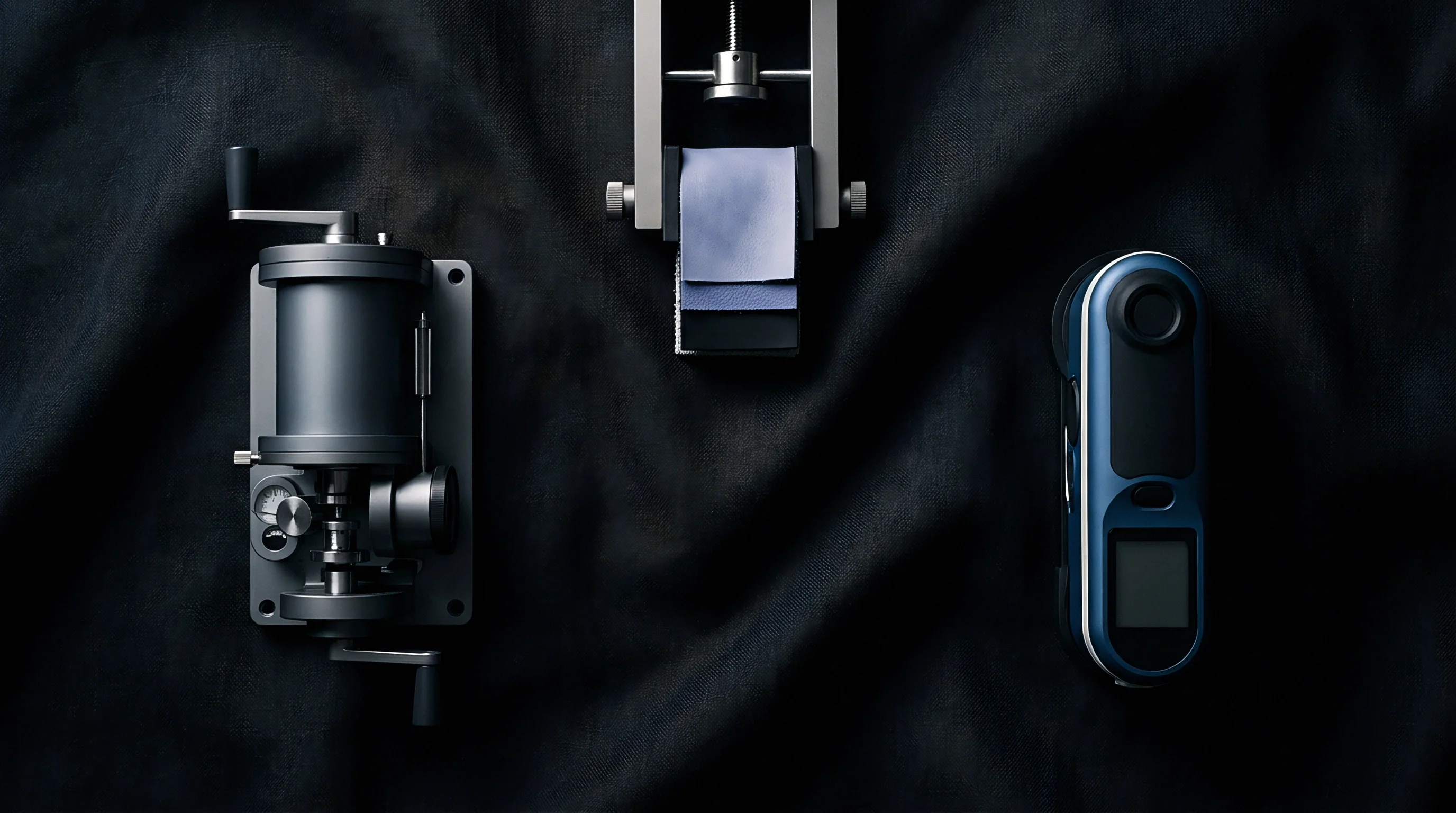

Sensor
Continuous moisture sensing at the slasher delivery head supplies the real-time feedback required for closed-loop speed regulation. Manual checks with handheld pin probes provide only isolated spot checks, completely missing the moisture swings that occur during creep speeds and stop-start cycles. Production slashers rely instead on electrical resistance, high-frequency microwave absorption, or near-infrared reflectance.
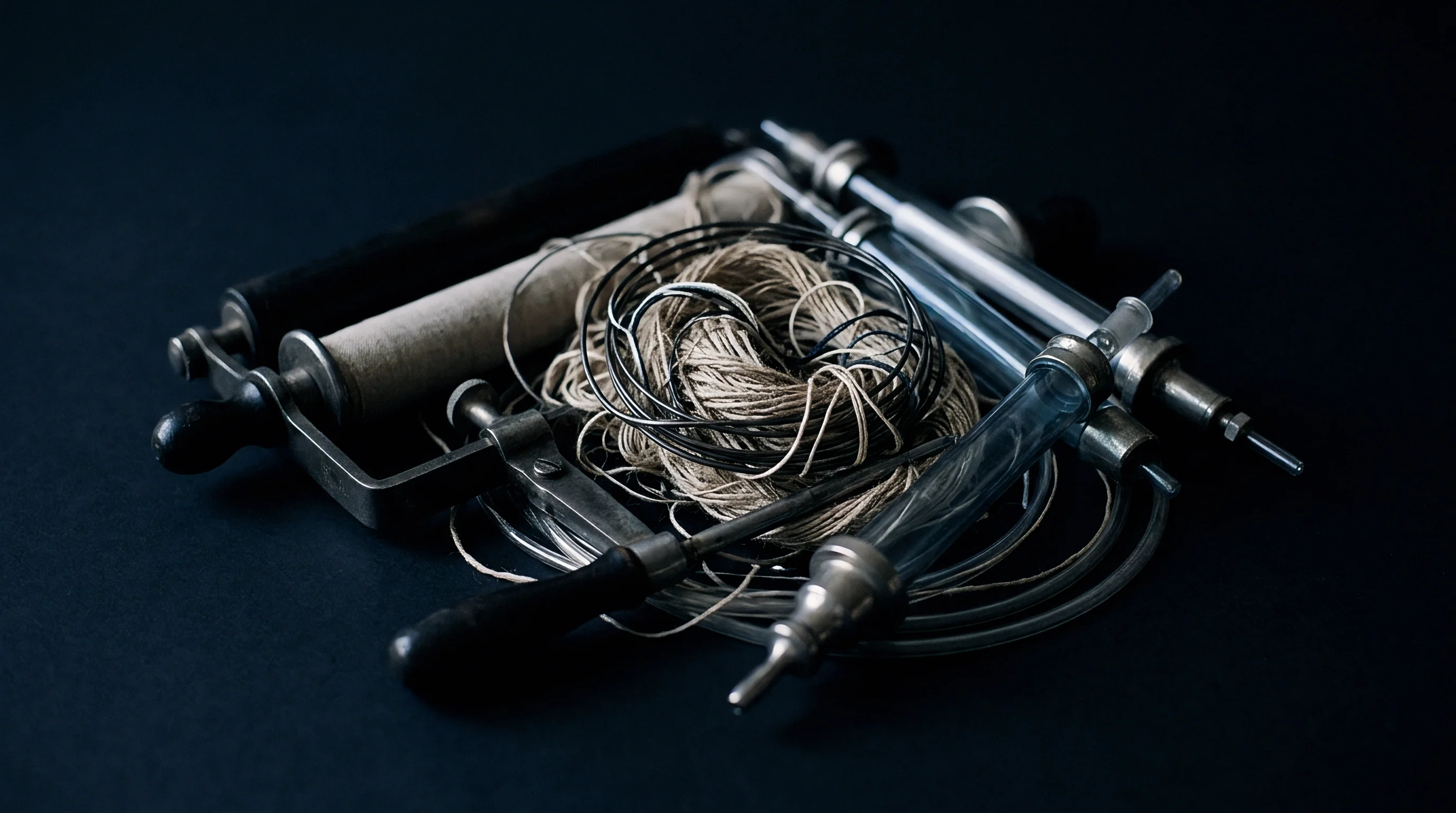
Where Do Online Moisture Sensors Fail on Slashers?
Resistance-based units gauge current passing through contact rollers on the moving warp. Because bone-dry cellulose and pure size solids act as electrical insulators, resistance drops predictably as water increases. The catch is that static buildup, surface lint, and shifts in size liquor conductivity throw off the calibration.
Near-infrared (NIR) heads evaluate reflected absorption bands specific to water molecules; they read surface moisture exceptionally well, but remain essentially blind to moisture trapped in the yarn core.
Microwave absorption sensors operating at twenty-four gigahertz measure total volume water mass across the complete warp profile independent of yarn fiber composition or size formula conductivity.
Microwave resonance systems pass the signal straight through the warp sheet, using attenuation and phase shift to calculate absolute water mass per unit area. Because this is a volumetric measurement, it ignores surface skinning and reads true core moisture even across heavy 4,000-end sets moving at one hundred metres per minute.
- Contact Resistance Probes suffer from surface fiber accumulation and require weekly mechanical polishing to maintain electrical conductivity across moving warp sheets.
- Optical Infrared Emitters require precise focal distances from the running yarn web and show measurement drift when lint coats the sensor lenses.
- Microwave Transmitters demand exact dielectric calibration against bone-dry yarn mass but deliver drift-free volume moisture measurement across long production runs.
Feeding the sensor signal directly into the drive inverter lets automated speed trim hold warp moisture inside a narrow zero-point-five percent band. Creeping the slasher during a doff prevents baking the yarn on stationary cylinders, while ramping back up promptly cuts off wet streaks before they reach the beam.
Whether multi-wavelength NIR heads can differentiate surface film hydration from core regain on coarse flax warps remains an unsettled question among plant engineers.
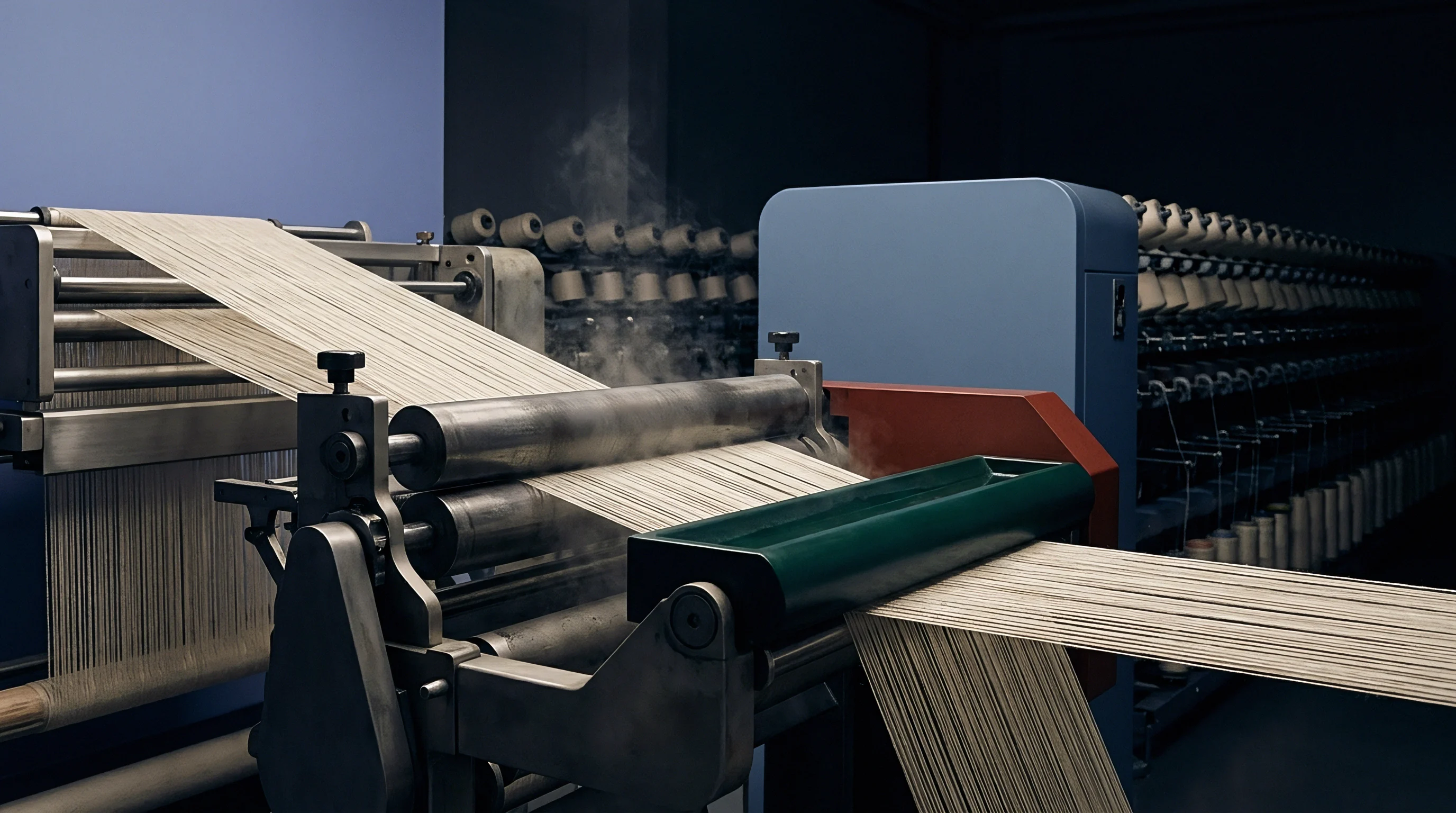
Calculus
Controlling add-on and regain reliably demands a running mass balance. Wet pick-up represents the total liquor weight taken up by the yarn before it hits the first drying can, calculated either from box consumption or yarn mass changes.
Let bone-dry yarn mass per minute be designated as My. Sizing liquor concentration is expressed as dry solids percentage C. Slasher delivery speed determines throughput time. Total wet size liquor absorbed per minute is Mw. Dry size add-on percentage A and final moisture regain percentage R follow strict mathematical relationships.
Equations governing the slasher mass balance operate as follows:
A = left( fracMw × CMy right) × 100
R = left( fracMfinal – (My + Mdrysize)My + Mdrysize right) × 100
Take a representative run: a 100 percent carded cotton warp of 4,800 ends of 30 Tex yarn running at 80 metres per minute through a box with 12 percent dry starch solids. The incoming bone-dry yarn weighs 69.12 kilograms per hour. As the sheet leaves the squeeze rolls, its wet weight is 138.24 kilograms per hour ~ a wet pick-up of exactly 100 percent.
| Running Speed (m/min) | Evaporation Rate (kg/hr) | Delivered Moisture Content (%) | Calculated Dry Add-On (%) | Loom Stop Expectation (Stops/10^5 picks) |
|---|---|---|---|---|
| 60 (Creel Start) | 58.2 | 4.2 (Over-dried) | 12.0 | 3.8 |
| 80 (Target Run) | 62.1 | 7.5 (Optimal) | 12.0 | 1.1 |
| 95 (High Speed) | 64.5 | 9.8 (Under-dried) | 11.8 | 4.5 |
If line speed jumps to 95 metres per minute while steam pressures remain static, can dwell time drops immediately. The drying section falls behind, pushing delivered moisture up to 9.8 percent. That extra water over-plasticizes the starch matrix, stripping away up to thirty percent of the size film’s tensile strength.
Winding beams with moisture just two percentage points above target forces adjacent ends to paste together under tension. When these bonded ends are pulled apart at the loom lease rods, the protective film tears off in chunks, leaving raw fiber that tends to fail within twenty minutes of start-up.

Friction
Weavability hinges on yarn surface smoothness and retained elasticity. Dense plain and twill styles on fast rapier and air-jet looms subject warp threads to harsh cyclic tension spikes, repeated beat-up blows, and constant friction against drop wires, heddle eyes, and reed dents.
Under-dried warp yarn carrying excess moisture creates high yarn-to-yarn friction that prevents clean shed opening on air-jet looms.
Over-drying is equally destructive. Drop warp moisture below four percent and cotton or flax yarns turn brittle, sacrificing as much as twenty-five percent of their elongation at break. The core fibers snap internally during shed opening, producing fuzz balls and micro-slubs that jam in the heddles, obstruct the shed, and trigger immediate loom stops.
To optimize loom efficiency and minimize stops, slasher drying sequences follow strict operational procedures.
- Calibrate steam pressure controllers on all cylinder zones prior to creeling new warp beams.
- Verify online microwave sensor zero-point calibration using standard dried yarn samples of known mass.
- Adjust size box squeeze roll pressure to maintain target wet pick-up rates matching yarn linear density.
- Set main drive speed controls to link directly with delivery-zone moisture sensor output loops.
Under-drying creates the opposite headache: tacky films that refuse to part cleanly in the harness. Sticking ends cause stitch floats, partial shed openings, and weft insertion stalls. Worse, cotton warps stored above nine percent moisture are prone to mildew and rot if left standing in the warehouse before weaving.
Standard purchasing contracts for high-speed weaving routinely penalize wet deliveries: greige cloth testing one percent over commercial regain triggers a two percent invoice deduction to offset downstream drying energy and lost loom efficiency.
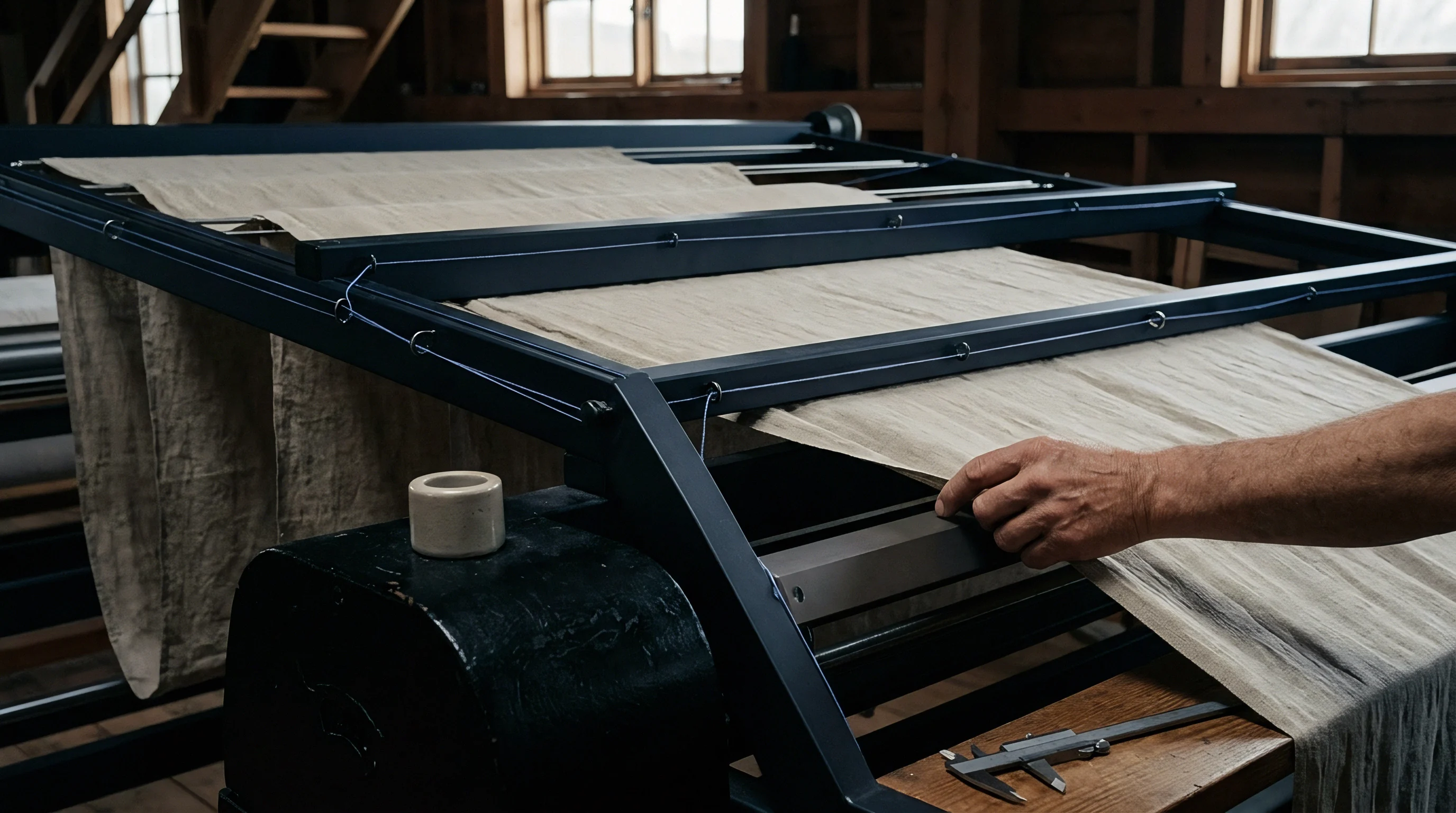
Assay
Bench testing provides the absolute baseline needed to keep online moisture instrumentation honest. Under ISO 139 standard conditions (twenty degrees Celsius at sixty-five percent relative humidity), lab staff check both size add-on and moisture regain through oven drying and chemical extraction.
Measuring dry add-on requires stripping out water-soluble polymers per ASTM D2257. Samples taken directly from the slasher delivery head are weighed at once for their initial mass, then desized using hot water washing or enzyme baths that dissolve the sizing without attacking the cellulose base. Drying the desized core in an oven at one hundred five degrees Celsius to constant mass establishes the true bone-dry yarn weight.
Moisture regain figures express equilibrium water content calculated against bone-dry weight. Pure cotton sits at eight-point-five percent commercial regain, while flax stabilizes around twelve percent under standard atmosphere. Solvent-extractable natural waxes must be factored out of the math to avoid inflating the reported size add-on.
Any discrepancy between online sensor traces and laboratory oven-dry assays signals either electronic drift or shifts in the yarn’s natural wax content. Running bench tests at the start of every beam set keeps the slasher’s online controls pinned to genuine physical values during round-the-clock runs.