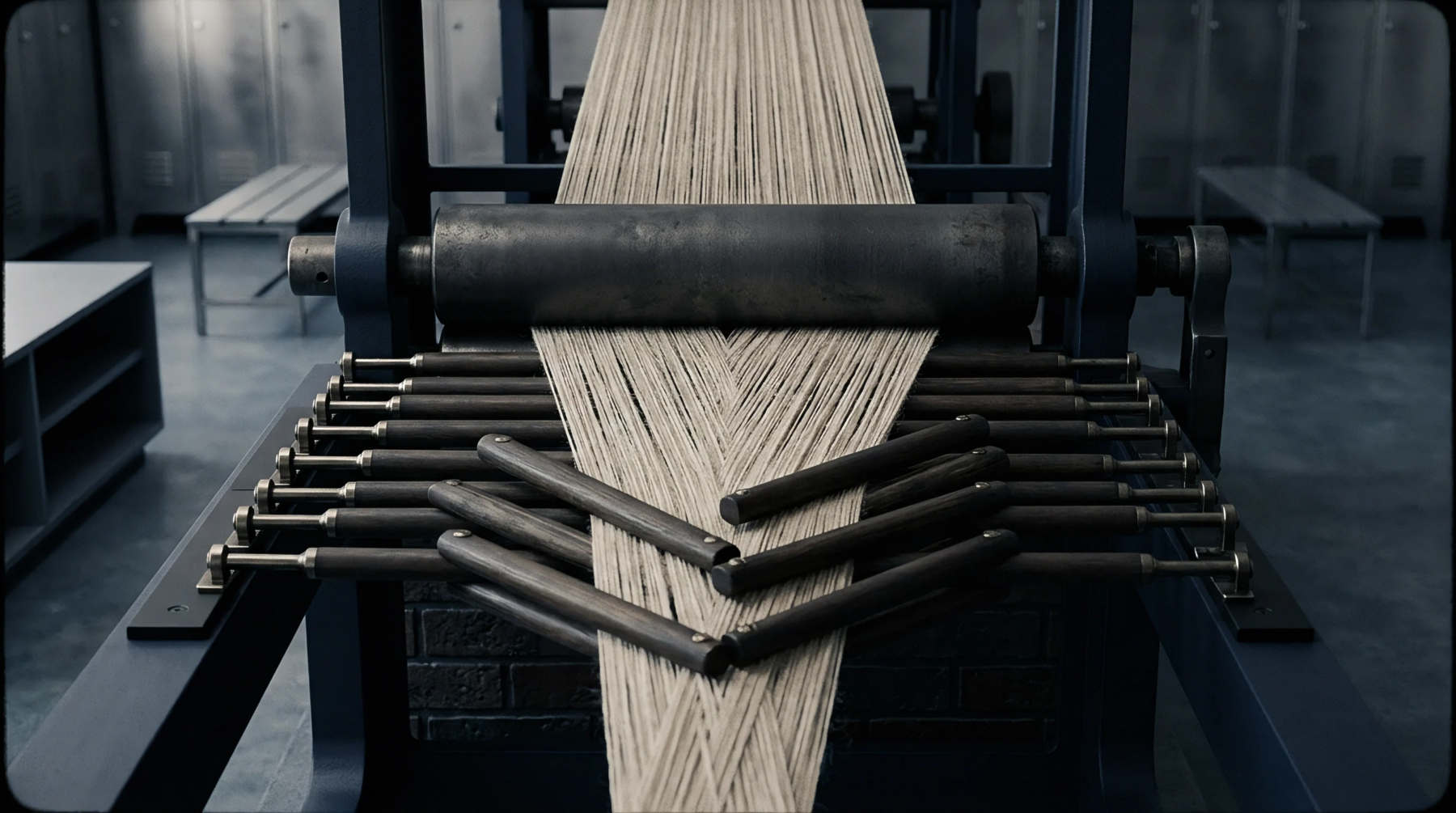
Aperture Distribution
Perforated structural plates positioned directly beneath overhead jacquard heads separate and align flexible harness lines before entry into lower guides. The neck board arranges cords into an orderly grid, routing thousands of individual flexible lines from compact jacquard hooks into broader mechanical groupings. Solid hardwood or laminated composite sheets form the body of this plate, providing high structural rigidity under upward cord tension and cyclic vibration.
Boundary conditions restrict component function to the upper suspension zone of the harness assembly, terminating before cords pass through the lower comber board.
Harness Separation
Geometric spacing across this upper guide grid establishes the divergence pattern of the entire harness array. Tightly packed perforations prevent cords from tangling above the loom arch, preserving clear separation across complex linen jacquard set-ups. When flax processing demands heavy reed densities, precise hole arrangements eliminate cord entanglement and maintain uninterrupted shedding cycles.
Orifice Wear
Precision CNC drilling ensures smooth perforation walls that resist continuous cord abrasion. Mill maintenance personnel inspect neck board apertures during harness refitting, using bore scopes to check for grooving caused by long-term friction from braided cords. Operating dockets record board serial numbers, hole counts, drill patterns, and installed grid dimensions for every jacquard loom in the plant.
Fabric quality teams evaluate finished linen yardage for pattern distortion, which can stem from worn neck board holes that permit cords to wander off true alignment. Worn plates undergo complete replacement rather than local patching, because uneven hole diameters disrupt uniform cord tension across the loom shed.