Multi Machine Allocation Optimization Models for Flax Loom Shed Operations
Flax loom allocation optimization balances yarn hairiness, reed width, and weaver loads across rapier machines to minimize shift changeover costs and late delivery penalties.

Shed
Assigning flax warps across automated looms requires balancing mechanical limitations against production deadlines. Unlike cotton or synthetic filaments, linen yarns present distinct mechanical difficulties during weaving. Low ultimate elongation ~ typically between 1.8% and 2.5% ~ leaves flax warps vulnerable to peak cyclic tension during shed opening and beat-up.
Inherent variations in linear density from wet-spun and dry-spun bast fiber processing create weak spots that increase warp end breakage. Multi-machine allocation models address these physical constraints by converting raw order specifications into practical machine schedules across the mill floor.
Multi Loom Floor Dynamics in Linen Weaving
Picanol and Dornier rapier machines dominate high-density flax manufacturing because positive filling insertion controls the weft yarn throughout the entire stroke, preventing pick loss from slubs or coarse knots. Projectile looms accommodate wide industrial fabrics up to a 360 cm reed width, though lower insertion speeds restrict them mostly to heavy canvas and agricultural textiles. Air-jet insertion is limited to fine, highly uniform ply-spun warps; high air consumption and fiber hairiness that causes nozzle stops generally confine air-jets to specialized apparel lines running above Nm 39 yarn count.
Flax fibers resist high-speed insertion, and while sizing mitigates surface abrasion, operating speed remains the primary driver of warp tension. Running a 100% linen warp at 550 picks per minute on a 220 cm wide rapier frame increases peak warp tension by up to 35% compared to 420 picks per minute. Allocation models apply speed reduction coefficients tied to yarn lea counts to keep warp end breakage within workable limits.
| Flax Yarn Type | Count Range (Nm) | Weave Structure | Optimal Loom Type | Max Target Speed (PPM) | Efficiency Expectation (%) |
|---|---|---|---|---|---|
| Dry Spun Single | Nm 6 – Nm 14 | Tabby / Basket 2/2 | Rigid Rapier / Heavy Projectile | 320 – 380 | 72 – 78 |
| Wet Spun Single | Nm 15 – Nm 36 | 2/1 Twill / Huckaback | Flexible Rapier (Dobby) | 400 – 480 | 80 – 85 |
| Wet Spun Fine Single | Nm 39 – Nm 60 | Plain Weave Apparel | Flexible Rapier / Air-Jet | 480 – 580 | 82 – 87 |
| Plied Linen Yarn | Nm 2/26 – Nm 2/54 | Jacquard Damask | Flexible Rapier (Jacquard) | 420 – 500 | 85 – 90 |
Mismatched loom allocation forces equipment to run outside its effective operational envelope, raising stop rates above four stops per loom hour and driving up fabric defect rates. Assigning heavy Nm 10 dry-spun flax to lightweight, high-speed rapier frames causes severe vibration that degrades reed alignment, increasing greige mend counts and wasting loom hours on unrecoverable stop-mark repairs.
Constraints
Flax yarns possess low tensile elongation compared to cotton or synthetic staple fibers, setting strict operational limits for any scheduling algorithm. An optimization framework that ignores these physical boundary conditions produces theoretical schedules that fail within hours on the weaving floor.

Yarn Properties Governing Loom Selection
Single-spun linen yarns exhibit frequent linear density variations across a single bobbin. Thin spots reduce breaking strength, while thick places or slubs jam in reed dents during beat-up. Sizing formulations for flax rely on starch derivatives and polyvinyl alcohol to bind protruding surface fibers, improving abrasion resistance through the drop wires, heddles, and reed.
Rapier drives tolerate uneven slubs better than fluid systems. Allocation models classify orders using yarn quality indices derived from hairiness values and tenacity measured in centinewtons per tex. Warps with high hairiness require frames equipped with active selvedge tuckers and wider reed dents to avoid shedding interference and adjacent end entanglements.

Weaver Workload Allocation and Machine Ratios
Operators monitoring high-stop linen warps manage fewer frames than weavers on synthetic lines. Standard mill staffing assigns six to eight rapier looms per weaver for coarse flax warps experiencing 4.5 stops per loom hour, whereas fine plied linen warps with stop rates below 1.5 per hour allow assignments of twelve to sixteen looms per weaver.
Weaver availability directly constrains shed throughput, making operator servicing capacity a key shared resource in allocation models. If a schedule clusters high-stop warps within a single weaver’s set, overall shed efficiency falls as looms sit idle waiting for the operator to repair broken ends on neighboring machines.
Flax warp allocations that exceed operator servicing limits create compounded loom idle time across adjacent machine groups.
- Yarn Tensile Deficit triggers excessive warp breakage during beat-up when shed opening angles exceed twenty-four degrees on stiff linen warps.
- Reed Width Mismatch causes unequal warp sheet tension distribution, producing loose selvedges and fill insertion cut-offs on wide frames.
- Humidity Variance Failure occurs when local shed relative humidity drops below 65%, reducing flax fiber moisture content and causing brittle warp snapping.
- Harness Leveling Error creates uneven shed geometry, leading to rapier head collision with warp ends during filling transfer.
Maintaining balanced workload profiles across weaver sets preserves overall floor cadence and prevents localized bottlenecks when running high-break yarn lots.


Knots
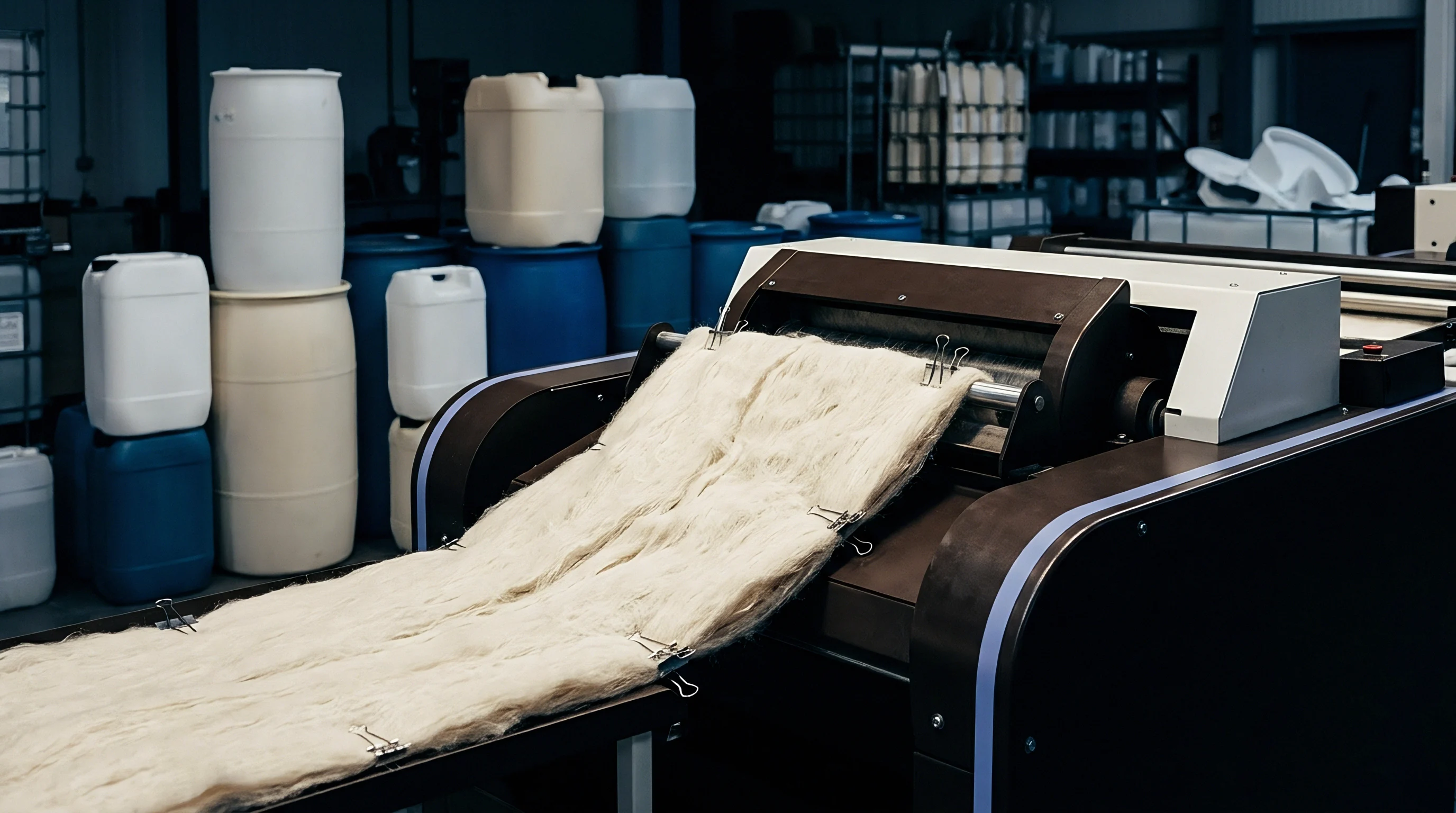
Yarn joins introduced during warp preparation create structural weak points that frequently trigger loom stops. Automated tying machines tie tail knots or fisherman knots across thousands of ends when joining a new beam to an expiring warp sheet. Because linen fibers lack elastic compliance, drawing tight, compact knots is difficult; bulkier knots catch in heddle eyes or reed openings, causing immediate warp stops or excessive strain on adjacent ends.
Which Factors Dictate Rapier Assignment over Air Jet?
Fluid insertion methods struggle with single flax yarns because surface hairiness causes frequent filling stops. Air-jet insertion depends on drag from high-velocity compressed air streams against the yarn surface ~ a force that is predictable on uniform synthetic staples or combed cotton. Flax singles have irregular surface profiles that cause uneven drag, pick buckling, and incomplete insertions inside the profile reed.
Rapier insertion maintains direct mechanical control of the weft tip from feeder to receiving clamp, avoiding fluid dynamics issues altogether.
Because air-jet insertion requires smooth yarn, sizing quality determines whether plied linen can run on these frames. Allocation models restrict air-jet candidate lists strictly to double-wound or smooth-sized flax warps, routing all single dry-spun or low-lea wet-spun lots directly to flexible rapier machinery.

Mathematical Formulation of Downtime Penalty Vectors
Objective functions in scheduling models account for lost pick generation during beam changes. Total downtime cost combines direct machine idle rates, weaver intervention labor, knotting crew setup, and late delivery penalties. The penalty function disincentivizes frequent beam changes on high-speed frames by calculating the net margin lost to interrupted production runs.
Because beam changes typically consume four hours and setup times scale with frame width, allocation models treat changeover penalty time as a dynamic matrix dependent on incoming yarn count and reed width adjustments.
A sequence of steps optimizes the machine selection workflow for incoming flax warp batches:
- Evaluate raw flax yarn tenacity, lea count, and hairiness metrics against machine capability profiles.
- Filter candidate loom sets based on physical reed width, shedding system capability, and jacquard capacity requirements.
- Calculate expected warp end break frequency using historic performance matrices adjusted for sizing formula type.
- Determine maximum allowable machine operating speed to constrain peak warp dynamic tension within 15% of mean tensile strength.
- Compute the weaver workload index across adjacent frames to ensure operator servicing limits remain unbreached.
- Execute mixed-integer linear solver iterations to select the machine assignment minimizing total changeover and operating costs.
Warp Tying Times and Changeover Mechanics
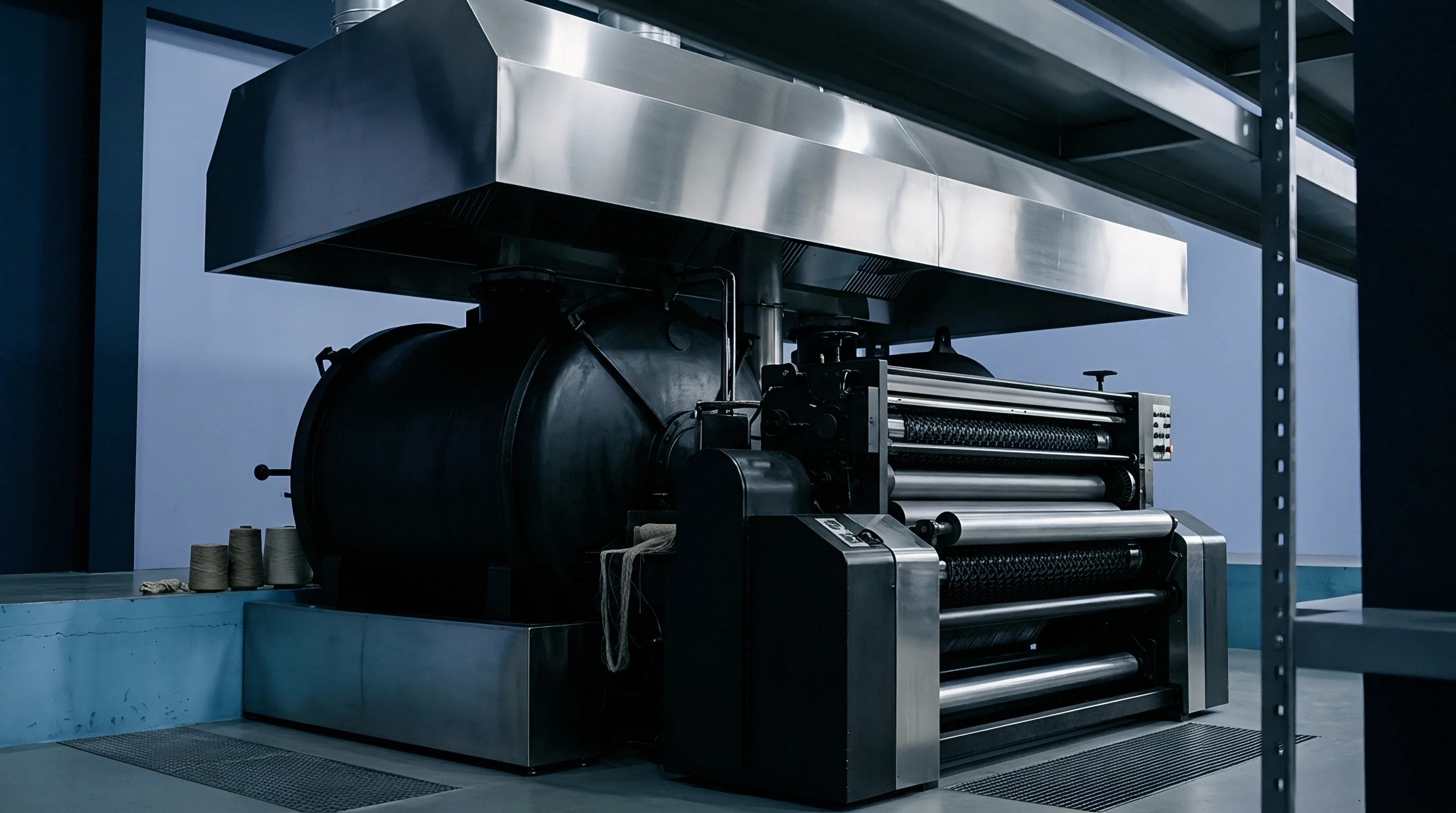
Automated knotting machines process continuous linen ends at speeds up to six hundred joins per minute. However, stiff flax single yarns require precise selector needle calibration to prevent double-end selection or missed knots. Manual lease-rod setting and dropped-end correction during beam tying consume between two and five loom hours, depending on total warp end count.
| Insertion Mechanism | Mean Warp Stop Rate (Stops/Loom Hr) | Mean Weft Stop Rate (Stops/Loom Hr) | Average Setup Time (Hours) | Power Consumption (kW/Loom) | Loom Efficiency Rating (%) |
|---|---|---|---|---|---|
| Flexible Rapier (Positive) | 2.1 | 0.8 | 3.5 | 4.2 | 84.5 |
| Rigid Rapier (Single) | 3.4 | 1.2 | 3.0 | 3.8 | 78.2 |
| Air-Jet (Profile Reed) | 4.8 | 3.1 | 4.5 | 11.5 | 68.0 |
| Projectile (Wide Width) | 1.8 | 0.5 | 5.0 | 5.5 | 81.0 |
Shedding speeds require a fifteen percent reduction when running coarse single flax yarns to prevent excessive warp tension spikes.
Mill feedback indicates that flax warps woven on wide rapier frames develop persistent selvage instability unless positive leno motion devices are assigned alongside main shed adjustments.


Schedule
Facility management systems use mathematical models to assign fabric orders across loom sets. Multi-machine allocation in flax sheds balances competing targets: maximizing output, shortening lead times, reducing energy and sizing waste, and maintaining finished cloth quality under variable yarn properties.

Mixed Integer Optimization for Multi Machine Sheds
Binary decision variables track whether an order runs on a specific machine during a given production shift. Let order index i in 1, dots, I represent required fabric styles, each demanding a specific loom width, weave matrix, yarn type, and total pick count Pi. Let machine index j in 1, dots, J represent individual looms grouped into sheds. Shift period t in 1, dots, T defines discrete planning time steps.
Decision variable xijt in 0, 1 equals 1 if loom j processes order i during period t, and 0 otherwise. Transition variable yi,k,j,t in 0, 1 equals 1 if loom j switches from order i to order k at time t, capturing overhead from beam changeovers and drop-wire re-denting.
The objective function minimizes total shed operating expenditures, setup downtime losses, and late delivery penalties:
min Z = sumi=1Isumj=1Jsumt=1T left( Cijprod · Sij · ηij · xijt right) + sumi=1Isumk=1Isumj=1Jsumt=1T left( Cikjsetup · yikjt right) + sumi=1I Di · maxleft(0, Tifinish – Tidueright)
Where Cijprod represents the direct hourly operating cost of running order i on loom j. Sij denotes maximum rated machine speed in picks per minute. ηij defines the expected loom efficiency factor, calculated from historical stop frequencies for that yarn style.
Cikjsetup specifies transition cost when re-tooling loom j from style i to k. Di represents daily contract delay penalties, Tifinish is completion timestamp, and Tidue is target delivery date.
Beyond ambient humidity control, operational constraints ensure that machine speed limits, weaver capacity bounds, and physical width matching are strictly met:
sumi=1I xijt le 1 quad forall j in 1, dots, J, forall t in 1, dots, T
sumj in Mw sumi=1I rij · xijt le Ww quad forall w in 1, dots, W, forall t in 1, dots, T
Where Mw defines the set of looms assigned to weaver w, rij is the expected stop service load per loom hour for style i on machine j, and Ww represents maximum servicing capacity of weaver w. Width constraints enforce that fabric reed width Wireed does not exceed machine maximum reed width Wjmax, nor fall below 0.70 · Wjmax to prevent asymmetrical temple force distribution.
| Symbol | Domain | Physical / Economic Meaning | Typical Operational Bounds |
|---|---|---|---|
| xijt | Binary 0,1 | Allocation indicator for order i on loom j at shift t | Boolean state |
| yikjt | Binary 0,1 | Style changeover trigger from order i to k on loom j | Boolean transition state |
| Sij | Continuous mathbbR+ | Loom operating speed setting in picks per minute | 300 – 600 PPM |
| ηij | Ratio | Predicted machine efficiency taking flax stops into account | 0.65 – 0.92 |
| rij | Continuous mathbbR+ | Operator intervention workload generated per hour | 0.2 – 1.5 work hours/loom hr |
| Cikjsetup | Monetary mathbbR+ | Total cost of warp beam change, re-denting, and sampling | 150 – 600 EUR per change |
| Parameters apply to industrial mixed-integer solvers running hourly shift schedule adjustments across multi-room sheds. | |||

Sensitivity Analysis on Flax Warp Stop Frequencies
Adjusting expected warp break rates from three to eight stops per loom hour recalculates machine availability. High break rates sharply depress efficiency on high-speed flexible rapiers. When yarn quality degrades, the optimization model shifts work orders from fast, wide frames to slower, narrower machines where reduced dynamic shedding stress keeps end breaks manageable.
Because tension variations cause reed marks, maintaining proper loading balance is critical. Sensitivity runs demonstrate that a 20% increase in warp stop frequency reduces total shed output by 14.2% if weaver allocations remain fixed. Re-allocating weavers dynamically restores output by 6.8%, underscoring the value of integrated weaver-loom optimization models.
A forty-machine loom shed running Nm 26 flax warps at seventy-five percent efficiency incurs a landed cost penalty of 0.42 EUR per metre when reallocated to wider non-optimized frames.

Worked Optimization Case on Four Loom Groups
Consider a weaving facility operating forty rapier frames across three reed width classes. Order A demands 15,000 metres of heavy Nm 10 plain weave linen upholstery fabric at 190 cm finished width. Order B requires 40,000 metres of Nm 36 apparel shirting at 150 cm width.
Order C specifies 8,000 metres of Nm 2/26 Jacquard table linen at 230 cm width. The mill shed contains four distinct machine groups:
- Group Alpha contains ten 190 cm narrow rigid rapier looms optimized for heavy dry-spun yarns.
- Group Beta holds fifteen 220 cm flexible rapier frames equipped with high-speed electronic dobbies.
- Group Gamma comprises ten 280 cm wide flexible rapier frames suited for wide bed sheeting and drapery.
- Group Delta includes five 240 cm flexible rapier looms coupled with 5,120-hook electronic jacquard heads.
Executing an unoptimized first-come, first-served schedule routes Order A to Group Gamma simply because those frames were idle. This ties up wide-loom capacity, forcing Jacquard Order C to split across non-optimal jacquard frames or incur substantial delay penalties. Total setup costs under naive routing reach 8,400 EUR with an average shed efficiency of 74.2%.
Applying the MILP allocation model re-routes Order A strictly to Group Alpha rigid rapiers. Speed scales down to 340 PPM, holding efficiency at 81% despite coarse yarn slubs. Order B distributes across Groups Beta and Gamma at 460 PPM, while Order C routes exclusively to Group Delta.
Setup expenses fall to 3,200 EUR and overall shed efficiency improves to 83.6%, saving 114 loom-hours across the campaign.
Contracts enforce delivery compliance according to ISO 7211 weaving dimensional tolerances, where unauthorized machine re-assignments causing width variations beyond plus or minus 1.5% entitle buyers to reject delivered cloth lots.

Yield
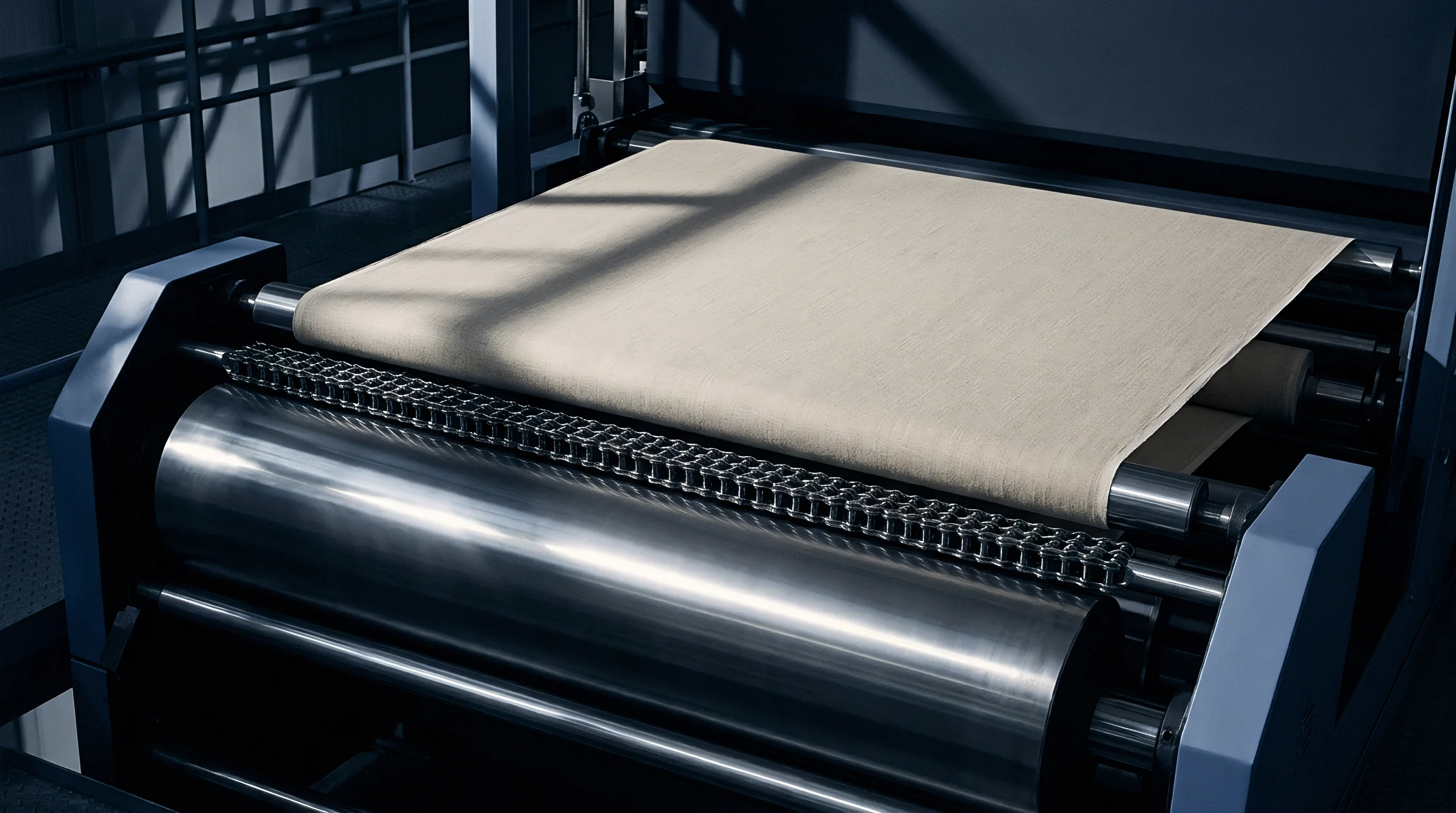
Maximizing output efficiency while meeting strict quality thresholds drives mill profit margins. In flax weaving, high raw fiber costs make precise machine allocation essential; waste generated during beam changes, warp tying, and loom startup directly erodes operating returns.

Commercial Cost Impact per Finished Metre
Loom hour rates reflect capital amortization, electricity, compressed air, and direct labor overheads. Running a flexible rapier loom in a European mill costs between 18.50 EUR and 26.00 EUR per operating hour. When coarse linen orders drag loom efficiency down to 70%, fixed hourly costs are spread over fewer metres, raising the landed manufacturing cost per metre.
For example, processing a 100% flax plain weave fabric on an unoptimized 280 cm frame running at 65% efficiency yields a manufacturing cost of 3.85 EUR per metre. Re-allocating that same order to a dedicated 200 cm frame operating at 84% efficiency drops manufacturing cost to 2.62 EUR per metre. Over a 20,000 metre production run, this shift secures 24,600 EUR in direct operating margin.
ISO 7211 construction compliance audits reject fabric lots woven on uncalibrated wide looms where pick density varies by more than two percent across the usable width.

Order Assignment Auditing for Sourcing Contracts
Technical audits verify whether mill assignment software balances capacity against order requirements. Sourcing teams auditing flax production facilities examine loom loading logs, warp break records, and changeover histories to confirm that quoted lead times reflect actual floor mechanics. Frequent unplanned machine swaps often signal underlying yarn quality issues or unmanaged bottlenecks.
Supply contracts specify target loom parameters, speed limits, and acceptable efficiency bands, requiring mills to record individual loom histories alongside greige inspection reports. Detailed allocation modeling provides concrete proof of operational discipline, ensuring flax orders complete on time, within budget, and to physical specification.
Machine allocation algorithms form the computational core of modern linen weaving sheds. By integrating yarn properties, machine mechanics, and weaver constraints into a unified optimization framework, mills bridge the gap between commercial quotes and factory floor reality. Managers rely on these mathematical models to balance frame capacity, preserve warp integrity, control labor overhead, and deliver consistent fabric quality across complex production environments.