Resolving Dynamic Tension Spikes and Thermal Cord Degradation in Ultra High Hook Capacity Shed Geometry Architecture
Mitigate harness tension spikes and thermal breakdown by tuning cam acceleration profiles, installing active cooling plenums, and specifying aramid hybrid cords.
Mechanics
High-capacity electronic jacquard machines operating between 12,288 and 24,576 hooks generate severe kinetic loads across the harness array. When shed opening speeds reach 600 to 750 picks per minute on wide air-jet or rapier looms, accelerating thousands of individual warp ends creates extreme dynamic load fluctuations. Spreading the harness from the central driver out to the margins of the comber board forces outer cords to run at steep angles.
When these fanning angles exceed 20 degrees off vertical, vertical lifting force shifts into heavy vector forces against the comber board guide holes.
When the knife grid lifts the hook assembly, the initial velocity transition creates a sharp impact load on the harness cord. Static tension calculations based solely on warp yarn weight and spring return stiffness miss these kinetic peak events entirely. Dynamic peaks often exceed nominal static load figures by three hundred percent during the first fifteen degrees of loom rotation.
The accumulation of these impact forces distorts the shed clearance line, causing mispicks and warp float faults in dense linen and filament structures.
Peak dynamic warp tension during high-speed shed opening exceeds static load by up to 280 percent at outer selvedge boundaries.
Shed Geometry Variables and Hook Capacity Strain
Calculations for total harness tension must incorporate shed clearance height, loom reed width, and overall drop distance from the harness board to the warp line. Increasing hook capacity within a fixed gantry footprint widens the fanning angle for cords near the selvedges. As that angle opens, lateral friction against the comber board insert rises non-linearly, driving the harness cord hard into the interior wall of the ceramic or glass guide tube.
- Initial Accelerative Phase creates the baseline tension spike as the knife grid contacts the resting hooks at bottom dead center, imparting instantaneous impulse kinetic energy to the harness cord assembly.
- Maximum Shed Lift Phase forces the cord to stretch to its maximum mechanical strain limit while passing through the acute angle of the comber board, compounding bending stresses with tensile overload.
- Deceleration Peak Phase occurs as the knife grid reaches top dead center, causing brief harness cord slackness followed immediately by a sharp snapback dynamic load as the spring undermotion recovers the tension.
- Shed Closure Impact Phase returns the system to bottom dead center where vibration harmonics propagate horizontally across the comber board layout, causing inter-cord collisions.
The dynamic forces generated at maximum operational speed vary across the harness array based on hook placement and shed clearance requirements.
| Hook Capacity | Shed Speed (RPM) | Max Fanning Angle (Deg) | Nominal Static Tension (N) | Peak Dynamic Spike (N) |
|---|---|---|---|---|
| 6,144 Hooks | 700 | 12.5 | 0.35 | 0.98 |
| 12,288 Hooks | 650 | 17.0 | 0.38 | 1.25 |
| 18,432 Hooks | 600 | 20.5 | 0.42 | 1.58 |
| 24,576 Hooks | 550 | 23.5 | 0.45 | 1.82 |
Kinematic Acceleration Curves in High Speed Shedding
Modifying the lifting cam profile within the jacquard drive gearbox provides a direct method for altering the kinematic profile. Standard symmetrical sinusoidal motion profiles generate high acceleration peaks at the start and end of the stroke. Replacing sinusoidal profiles with modified trapezoidal or cycloidal acceleration curves spreads velocity changes over a larger portion of the loom cycle, suppressing peak acceleration spikes and softening the dynamic impulse on the harness cords.
When shed geometry parameters are miscalculated or driven beyond physical limits, harness cord elongation accelerates, warp yarn chafing increases, and premature mechanical failure occurs throughout the comber board layout.


Heat
Frictional energy converted during rapid harness movement generates substantial energy accumulation within high-density comber boards. As thousands of synthetic harness cords rub against ceramic or vulcanized fiber guide sleeves six hundred times per minute, surface temperatures inside the comber board core rise rapidly. In unventilated shed enclosures housing over 14,000 active cords, localized temperatures inside the dense central harness neck exceed 120 degrees Celsius.
This concentrated thermal mass cannot dissipate efficiently through passive radiant cooling alone.
The generated thermal energy transfers directly into the core polymer matrix of the harness cords. Under elevated temperature, technical synthetic fibers exhibit thermal softening, molecular chain uncoiling, and drastic reductions in tensile yield strength. The combination of sustained peak dynamic tension spikes and localized thermal degradation leads directly to rapid creep, permanent extension, and ultimate tensile failure of the harness cord braid.

Thermal Generation Mechanisms at the Comber Board
Internal friction between individual multifilament yarns within the harness cord braid contributes as much to heat build-up as external rubbing against guide inserts. As the cord flexes sharply through the comber board eyelet under load, internal fibers slide against one another, converting mechanical work directly into heat inside the cord diameter.
- Thermal Creep Elongation occurs when sustained operational temperatures soften the polymer matrix, causing irreversible plastic deformation and loss of shed line accuracy.
- Surface Fibrillation Failure manifests as individual filament rupture caused by the combined action of sliding friction abrasion and reduced melt point surface softening.
- Core Sheath Separation results from differential thermal expansion rates between high-modulus inner core fibers and abrasion-resistant outer protective braided sheathing.
- Inter-Cord Fusion develops inside tightly packed harness necks when localized resin coatings soften and fuse adjacent cords together during sustained downtime after high-speed runs.
The physical degradation process follows a non-linear decay curve as operating temperatures approach the glass transition threshold of the constituent synthetic materials.
Frictional heating inside high-density comber board passages degrades synthetic fiber crystalline structures above 110 degrees Celsius.

Frictional Hysteresis and Fiber Structural Degradation
Ultra-high-molecular-weight polyethylene and standard polyester fibers experience dramatic mechanical yield degradation when thermal boundaries are exceeded. Polyester cords lose up to thirty percent of their nominal tensile strength when maintained at operating temperatures above 90 degrees Celsius. High-modulus aramid cords maintain structural tenacity at higher temperatures but suffer accelerated axial fatigue when cyclic bending coincides with localized frictional heating.
Machinery manufacturers frequently attribute harness cord thermal degradation to improper shed floor climate controls or excessive loom speeds rather than addressing the structural heat accumulation caused by acute comber board geometry.

Cordage
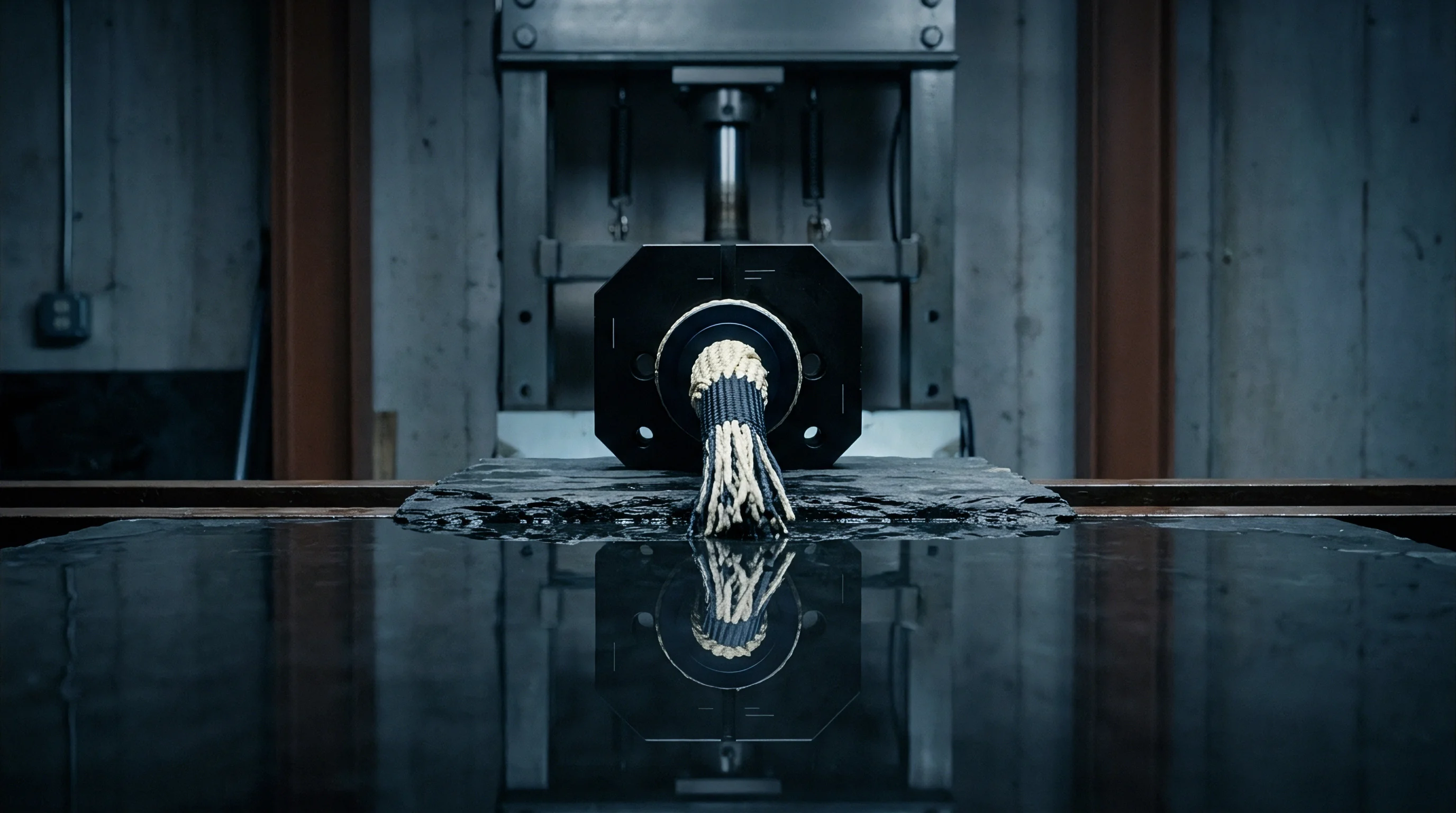
Selecting harness cord structural materials requires balancing tensile modulus, thermal resistance, flexural fatigue life, and frictional surface properties. Standard high-tenacity polyester cords offer high flexibility and cost efficiency, but their low thermal dissipation limit makes them unsuitable for ultra-high hook capacity applications running at high operational speeds. Advanced technical cordage relies on hybrid fiber construction architectures to split functional requirements between a load-bearing core and an abrasion-resistant outer sheath.
Technora, Twaron, and Kevlar paracrystalline aramids exhibit negligible thermal contraction and preserve structural tenacity beyond 200 degrees Celsius. Combining an aramid core with a braided fluoropolymer or specialized polyester jacket yields a dimensionally stable cord capable of resisting continuous friction inside dense comber boards.
| Material Architecture | Tensile Modulus (GPa) | Glass Transition Temp (°C) | Friction Coeff (vs Ceramic) | Creep Rate (% at 100 hrs) |
|---|---|---|---|---|
| High-Tenacity Polyester (PET) | 14.0 | 75 | 0.28 | 1.85 |
| UHMWPE (Dyneema SK78) | 120.0 | -120 (Melts at 145) | 0.12 | 0.42 |
| Para-Aramid (Technora Core) | 73.0 | 250+ | 0.22 | 0.05 |
| Hybrid Aramid / PTFE Braid | 65.0 | 240+ | 0.15 | 0.08 |
Material Selection for High Frequency Reciprocation
Determining the optimal cord specification involves auditing both the mechanical tension profile and the thermal enclosure variables of the loom shed. The following selection checklist defines the operational requirements for qualifying technical harness cordage for ultra-high hook installations.
- Core Tensile Retainability must exceed eighty percent of nominal dry strength after five hundred hours of continuous cyclic exposure at 110 degrees Celsius.
- Outer Sheath Abrasion Resistance requires a minimum threshold of two million continuous cycles against high-density alumina ceramic inserts under 2.0 Newtons of applied tension.
- Thermal Dissipation Capacity should maintain an internal thermal conductivity coefficient sufficient to prevent heat trapped inside the core braid assembly.
- Axial Construction Stability mandates an overall structural braid elongation of less than 0.5 percent under continuous dynamic load spikes up to 2.5 Newtons.
Compliance with ISO 13934 strength retention thresholds requires test protocols executed under sustained elevated temperatures.

Which Braiding Architectures Limit Cord Extension?
Braid geometry governs how tensile forces translate into axial stretch and lateral compression. Loose braiding angles allow the cord to elongate under load like a mechanical spring, creating shed level variation as temperatures rise. Tight braid structures with crossing angles between 15 and 20 degrees relative to the longitudinal axis convert tensile force into rigid axial displacement with minimal cross-sectional compression.
A round, dense 16-carrier outer braid featuring a high pick density per centimeter resists flattening as it passes over the comber board hole edge. Flattening increases surface contact area, accelerating heat generation. Maintaining a rigid, circular cord cross-section preserves a point-contact friction profile, reducing heat generation.
Purchase specifications must include explicit clauses defining maximum permissible elongation limits under ISO 13934 test conditions following elevated thermal conditioning cycles.
Damping
Suppressing dynamic tension spikes and controlling thermal accumulation requires structural geometry interventions and mechanical damping modifications. Reducing the stroke length of the jacquard knife grid directly lowers the peak velocity and acceleration of the harness cords. A reduction of shed opening height by merely five millimeters reduces peak dynamic acceleration forces by up to eighteen percent at seven hundred picks per minute, significantly dropping both dynamic tension spikes and frictional heat generation.
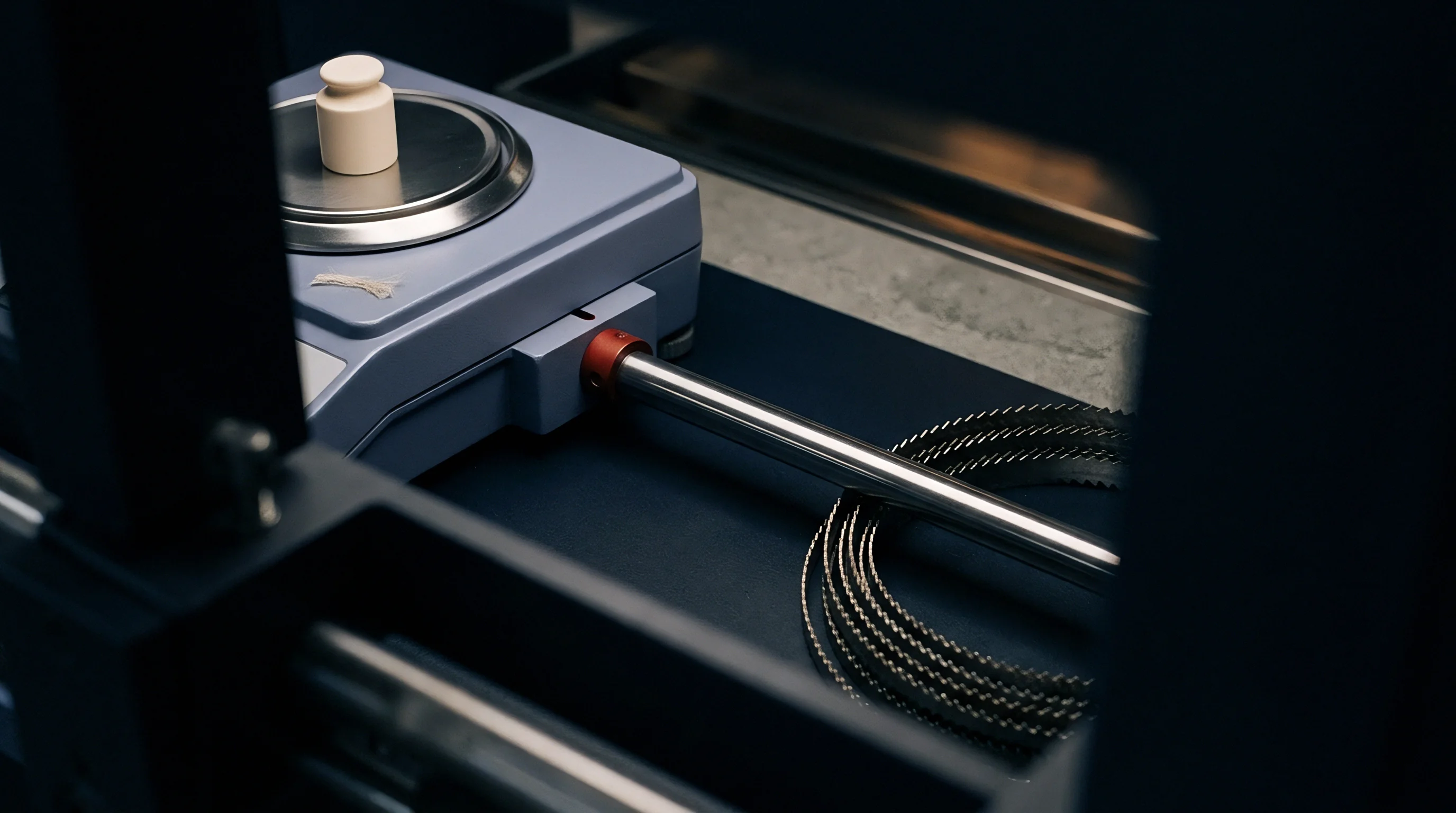
Active air displacement systems installed beneath the comber board provide forced cooling through the harness cord bundle. High-volume, low-pressure air manifolds direct continuous laminar air streams across the lower harness neck, sweeping away heat before thermal saturation reaches the core polymer fibers.
Properly balanced spring return rates prevent harness cord slackness without adding unnecessary peak tension load.
Active Cooling and Air Displacement Strategies
Integrating forced-air plenum chambers directly into the comber board structural framing lowers core harness temperatures by up to 35 degrees Celsius during continuous operation. Pressurized air forced downward through the guide holes creates an air-bearing effect between the harness cord and the ceramic insert, reducing both direct surface friction coefficients and thermal build-up.
Spring Undermotion Mechanical Tuning
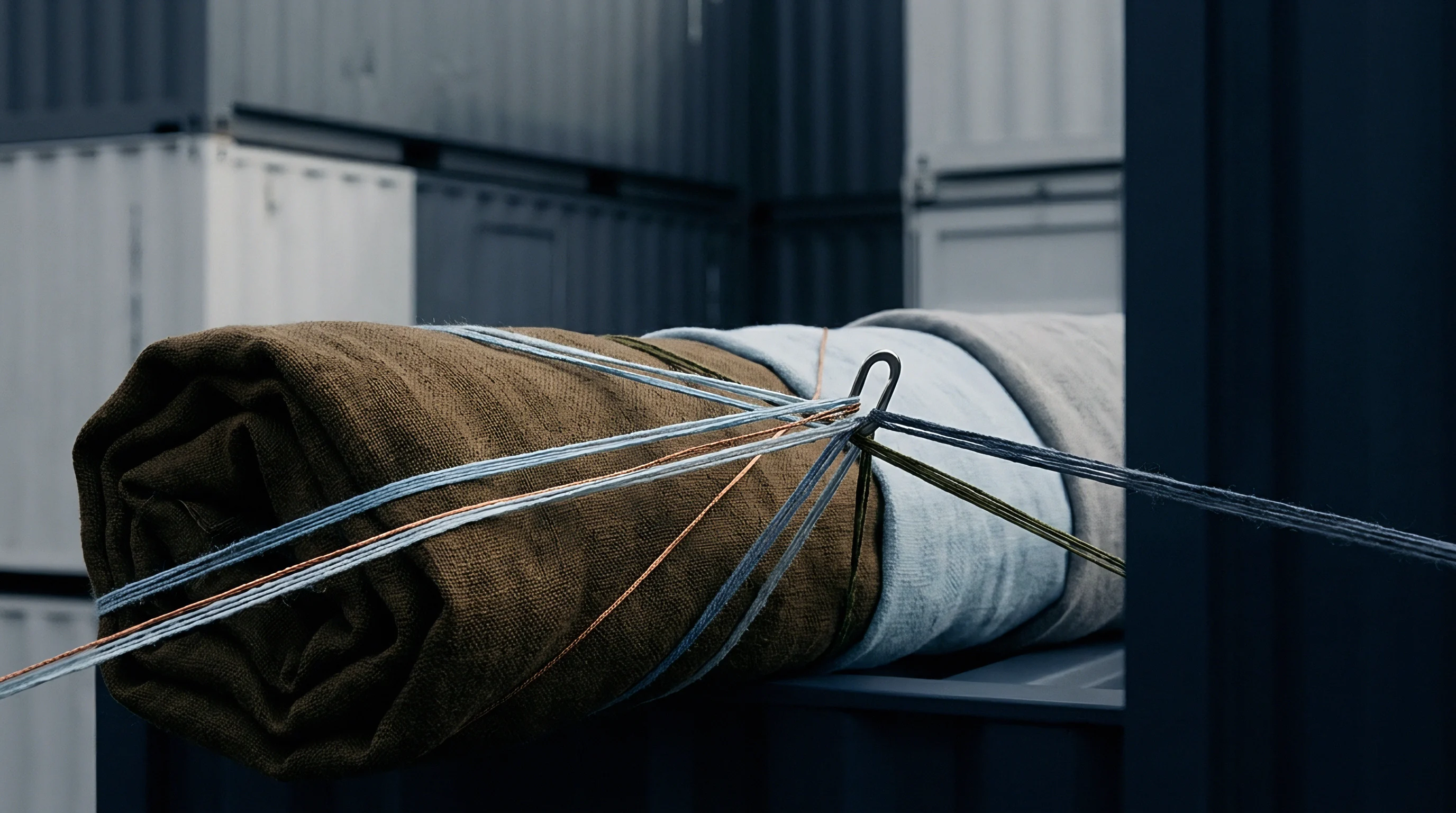
Balancing the spring undermotion return mechanism is vital for maintaining lower tension thresholds. Over-tensioned return springs pull harness cords downward with excessive force, needlessly elevating baseline static tension and compounding dynamic peak loads at top dead center. Conversely, under-tensioned springs allow cord slackness, causing destructive shock loads when the knife grid re-engages the harness on the upward stroke.
Executing a systematic balancing procedure eliminates harness dynamic instability while maintaining temperature control across high-capacity sheds.
- Measure baseline static tension across the harness array using a calibrated digital tension meter attached to selected warp ends at bottom dead center.
- Adjust the spring undermotion base plate height to equalize return forces across central and outer harness zones, accounting for geometry angle variations.
- Install pressurized cooling air plenums targeting the high-density comber board core, setting airflow velocities to maintain enclosure temperatures below 60 degrees Celsius.
- Fine-tune the electronic jacquard lifting cam profile to introduce progressive deceleration curves near top dead center, smoothing out stroke reversals.
- Verify dynamic tension profiles during high-speed operation using high-speed optical motion capture or telemetry load cells mounted on active harness cords.
Aligning spring return stiffness with the natural resonant frequency of the harness assembly prevents destructive harmonic amplification across the loom speed spectrum.
Loom speed adjustments must be made in stepped increments while monitoring harness thermal stability rather than running at maximum rated mechanical capacity from initial startup.


Tariff
Operating ultra-high hook capacity jacquard looms involves balancing output volume against harness maintenance costs and shed downtime penalties. High-capacity shedding systems represent significant capital investments where unscheduled stoppages quickly erode operating margins. Harness cord degradation caused by thermal breakdown and dynamic shock leads directly to premature complete harness replacement cycles, costing tens of thousands of dollars per loom in materials, specialized labor, and lost loom hours.
Replacing a damaged harness set on an 18,432-hook jacquard installation requires up to 120 technical labor hours for re-smail, re-rigging, levelling, and drop-wire setting. During this maintenance window, the loom generates zero revenue while absorbing plant overhead allocations.
| Parameter / Operational Cost Category | Standard Polyester Harness | Optimized Technical Hybrid Harness |
|---|---|---|
| Expected Harness Service Life (Operating Hours) | 8,000 | 24,000 |
| Harness Replacement Material Cost ($) | $9,500 | $16,800 |
| Technical Installation Labor Cost ($) | $4,800 | $4,800 |
| Unscheduled Downtime Loss (72 Hours at $65/hr) | $4,680 | $4,680 |
| Amortized Harness Cost per 1,000 Loom-Hours ($) | $2,372.50 | $1,111.66 |
Loom Hour Cost Impacts of Harness Degradation
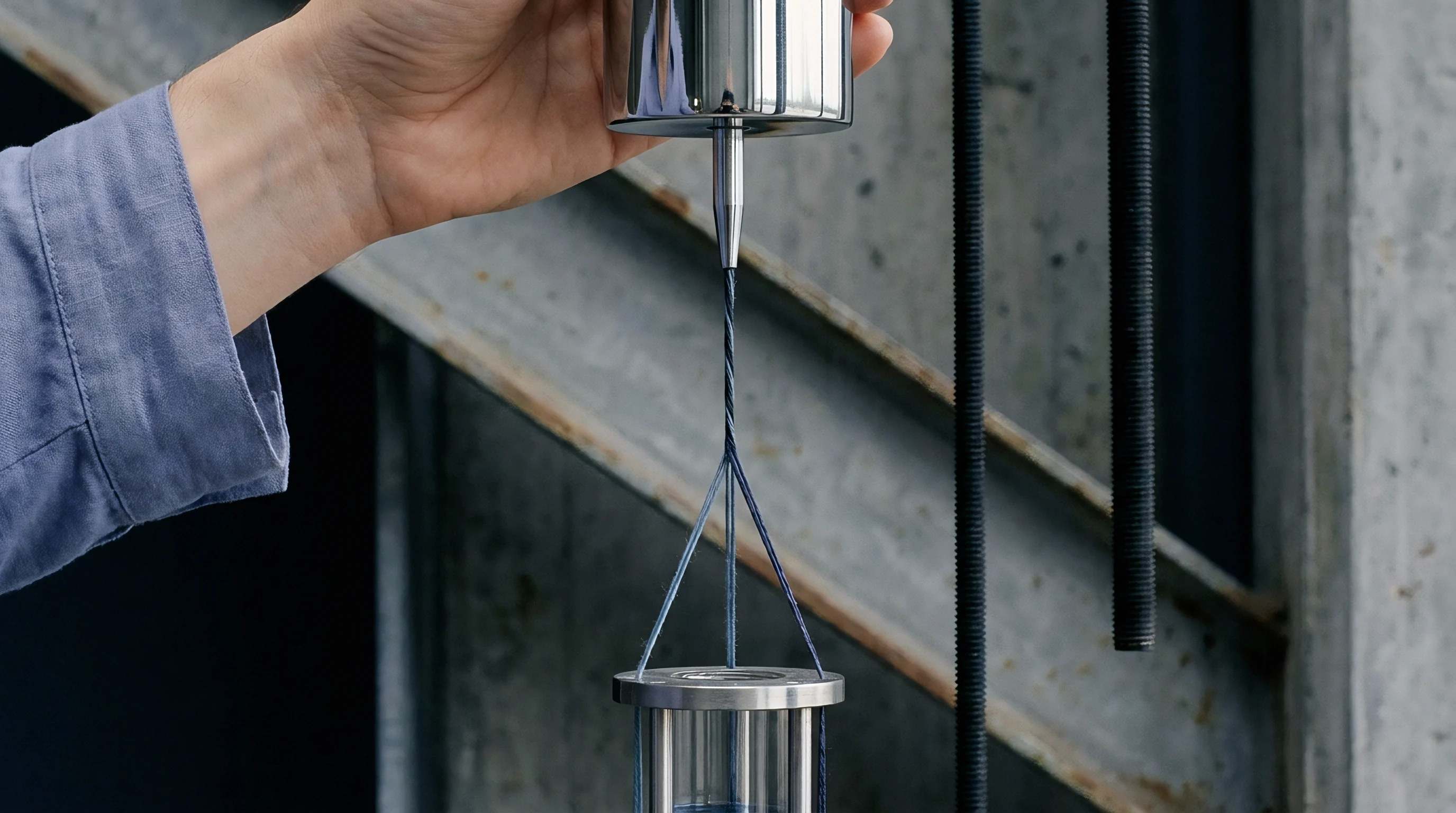
Accounting for harness wear as a direct line-item operating expense reveals the economic advantage of high-specification technical cordage and thermal mitigation infrastructure. Lower-grade harness cords require frequent replacement and cause secondary fabric defects such as uneven shed lines, mispicks, and warp end breakages. Eliminating one unscheduled harness breakdown per year covers the capital cost of installing active cooling plenums and advanced aramid-core cordage across an entire weaving shed line.

Maintenance Capital Allocation for High Hook Sheds
Planning capital expenditure schedules for high-density jacquard weaving sheds demands rigorous tracking of component lifecycle limits. High hook capacity equipment must be managed with preventative maintenance intervals aligned precisely with known mechanical and thermal fatigue thresholds.
How do varying regional climate norms and seasonal humidity fluctuations inside the mill affect the absolute thermal degradation threshold of synthetic harness cords running under maximum dynamic tension loads?