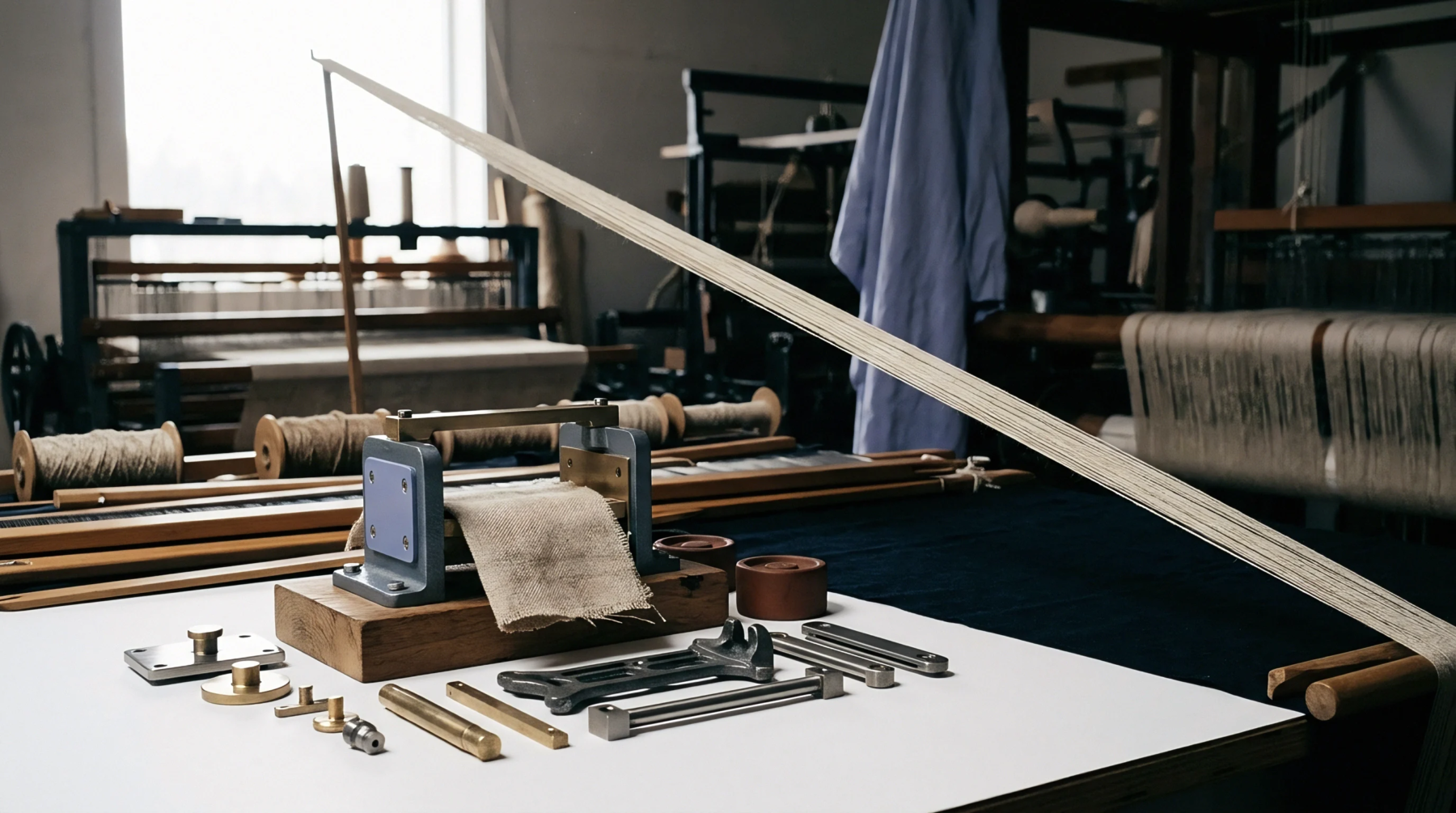
Warp Tension Dynamics and High Density Flax Weaving Mechanics
High-density flax weaving requires precise active warp tension control, asymmetric shedding, and 10 percent size add-on to prevent peak load breaks.
High-density flax weaving requires precise active warp tension control, asymmetric shedding, and 10 percent size add-on to prevent peak load breaks.
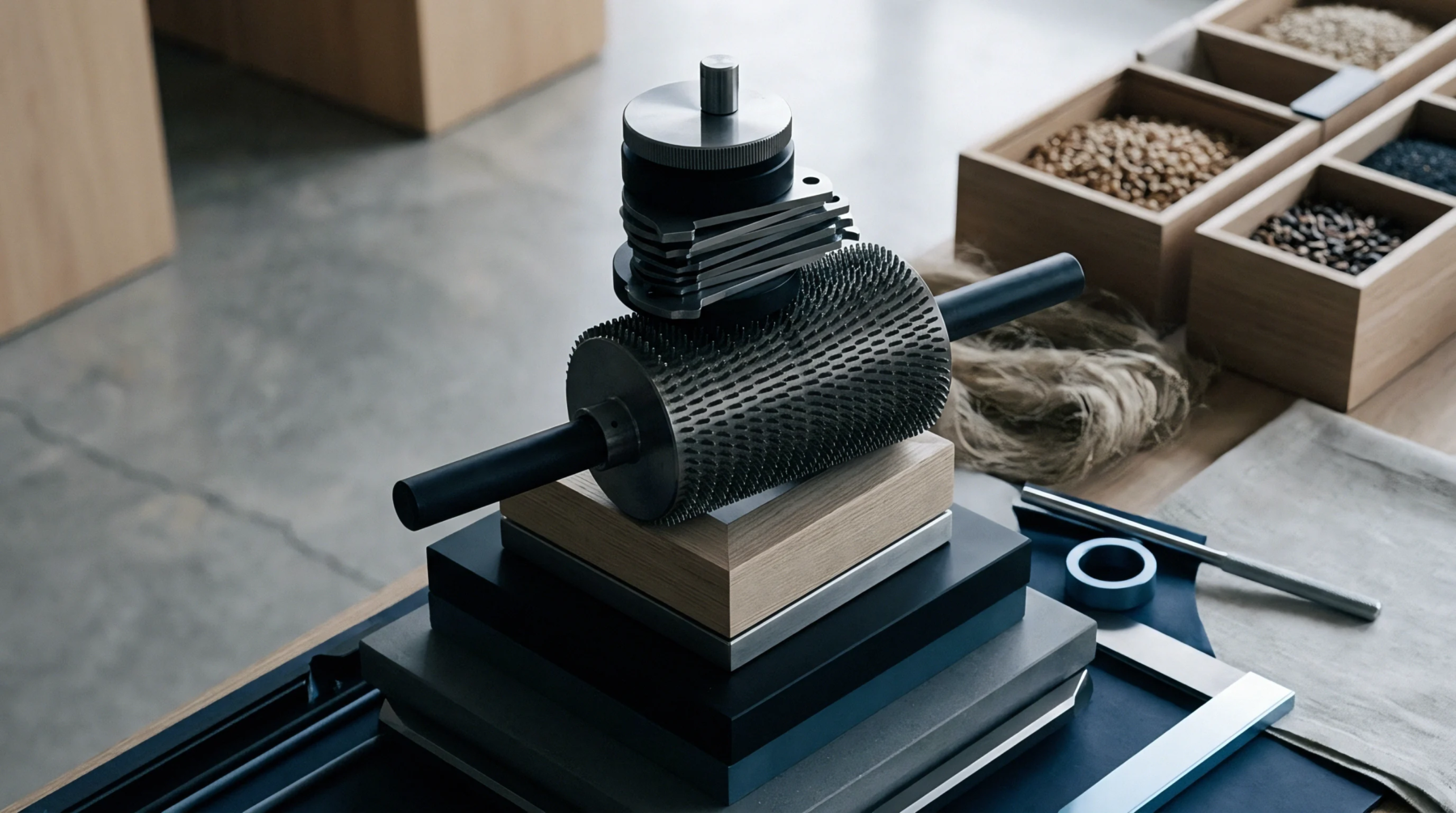
Controlled pectin extraction and asymmetric shed tuning enable stable air-jet linen weaving at 700 picks per minute while reducing landed fabric cost.
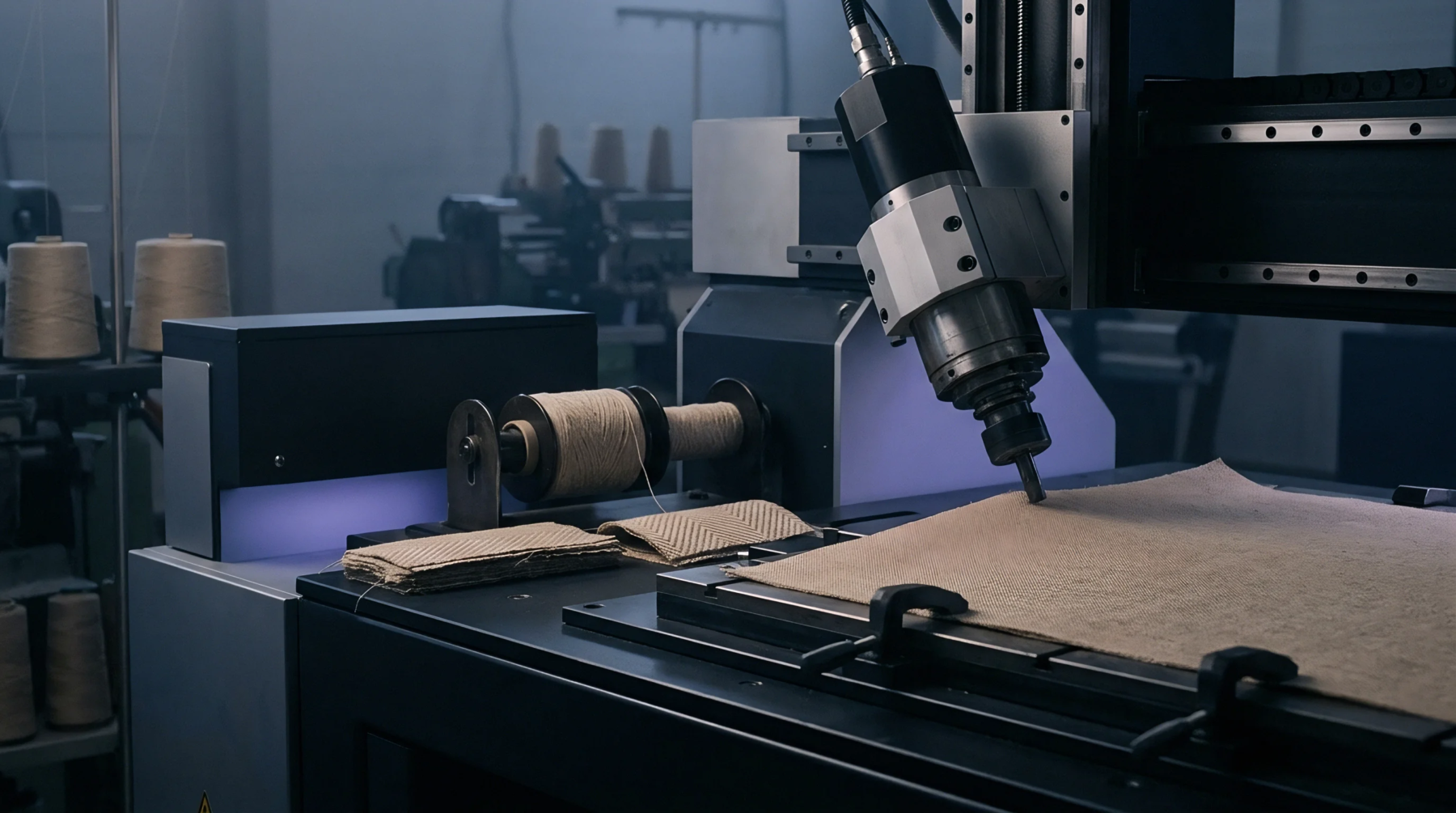
Non-linear crimp dynamics in heavy linen require modeling fiber swelling and non-linear interchange to control width loss, loom hours, and landed cost.
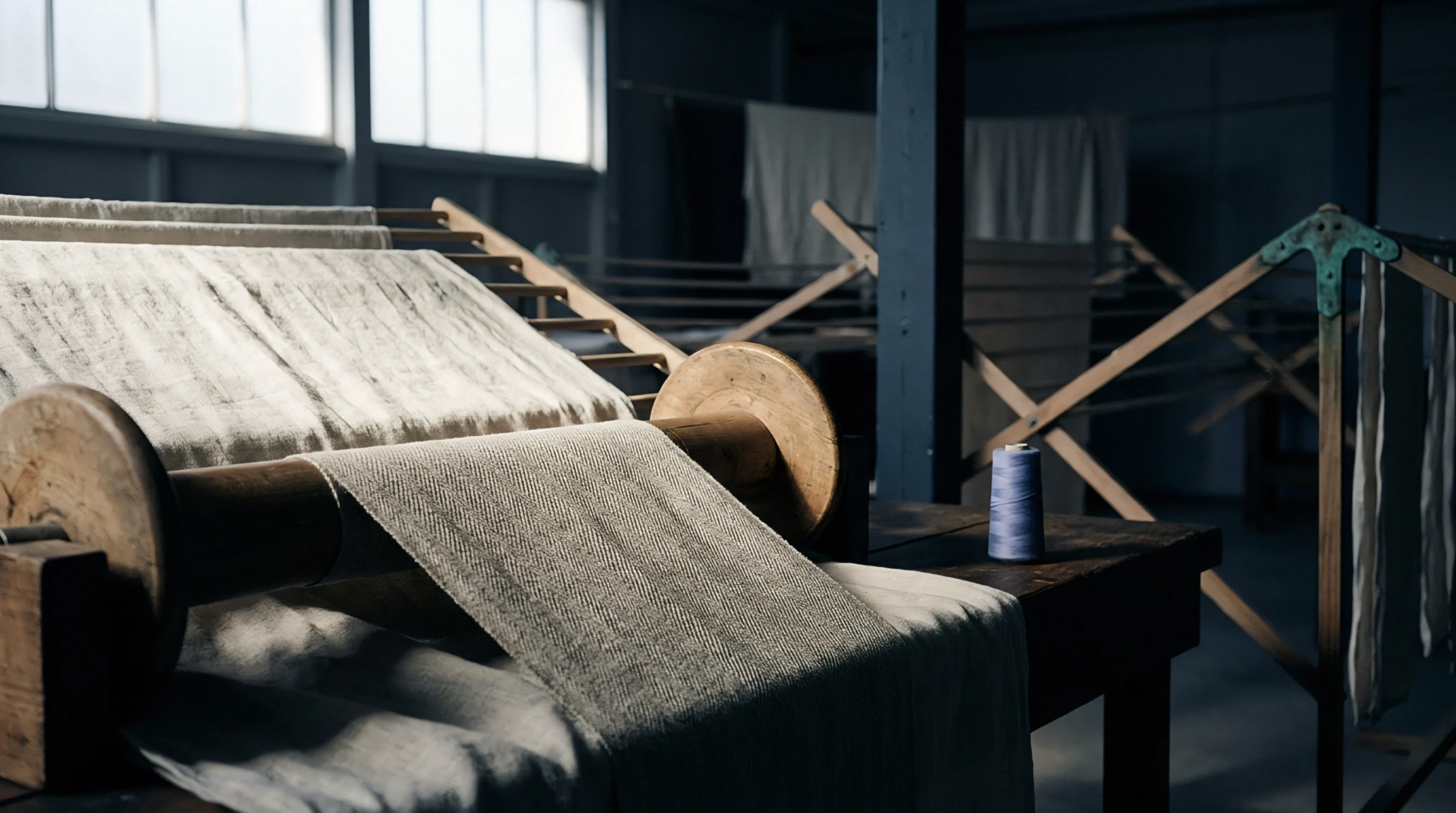
Warp take up ratio in grey plain weave determines true yarn length from cloth length, calculated via thread density, diameter, and crimp geometry.

Multi cycle linen contraction is resolved by increasing reed width and lowering loom pick density to allow structural crimp equilibrium before compaction.

Anisotropic hydration swelling and crimp interchange drive linen contraction, requiring accurate warp allowances to guarantee finished dimensions and cost.
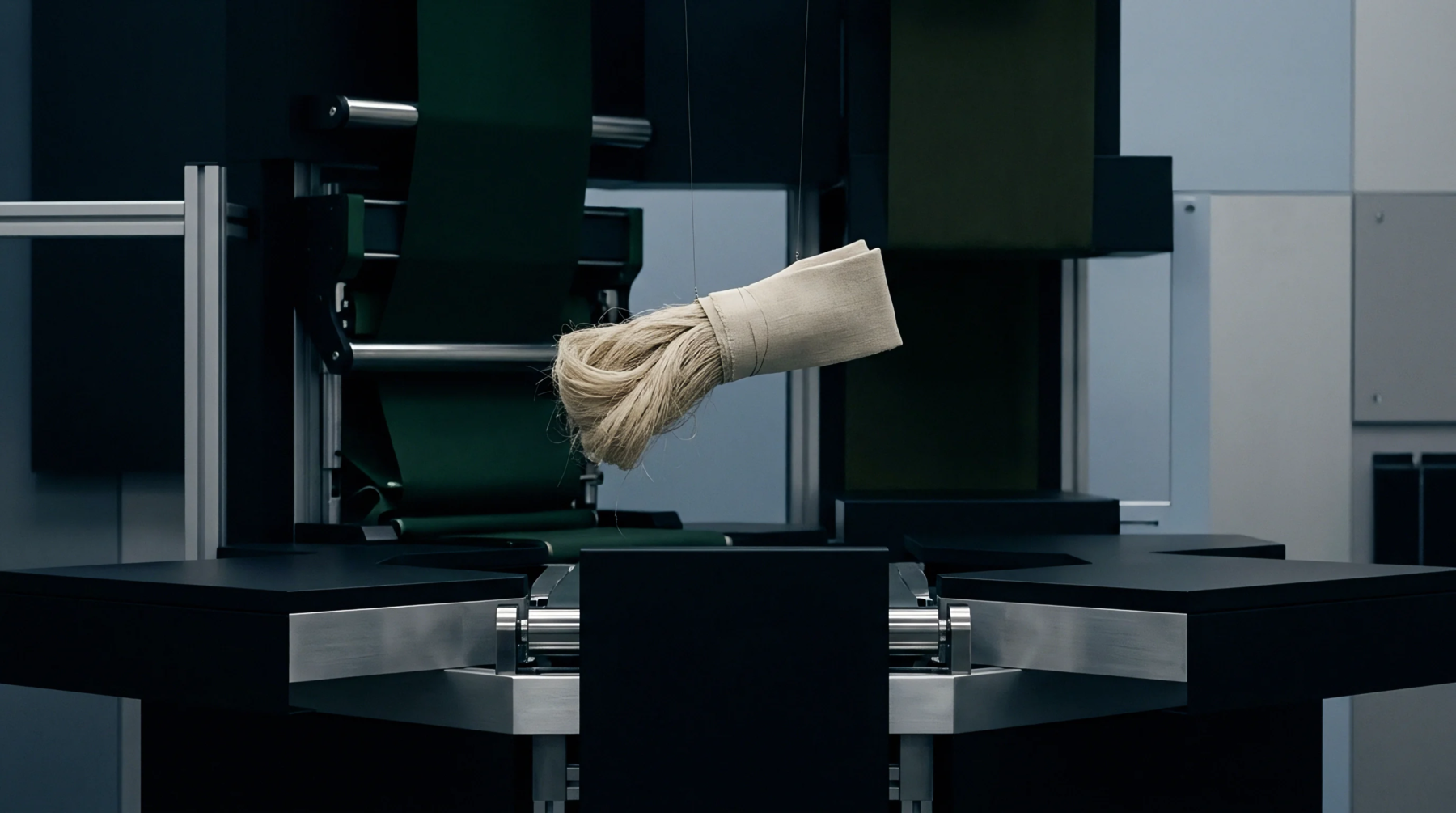
Controlling peak dynamic warp strain in fine linen weaving requires balancing backrest roller damping, shed geometry, and moisture to prevent yarn fatigue.
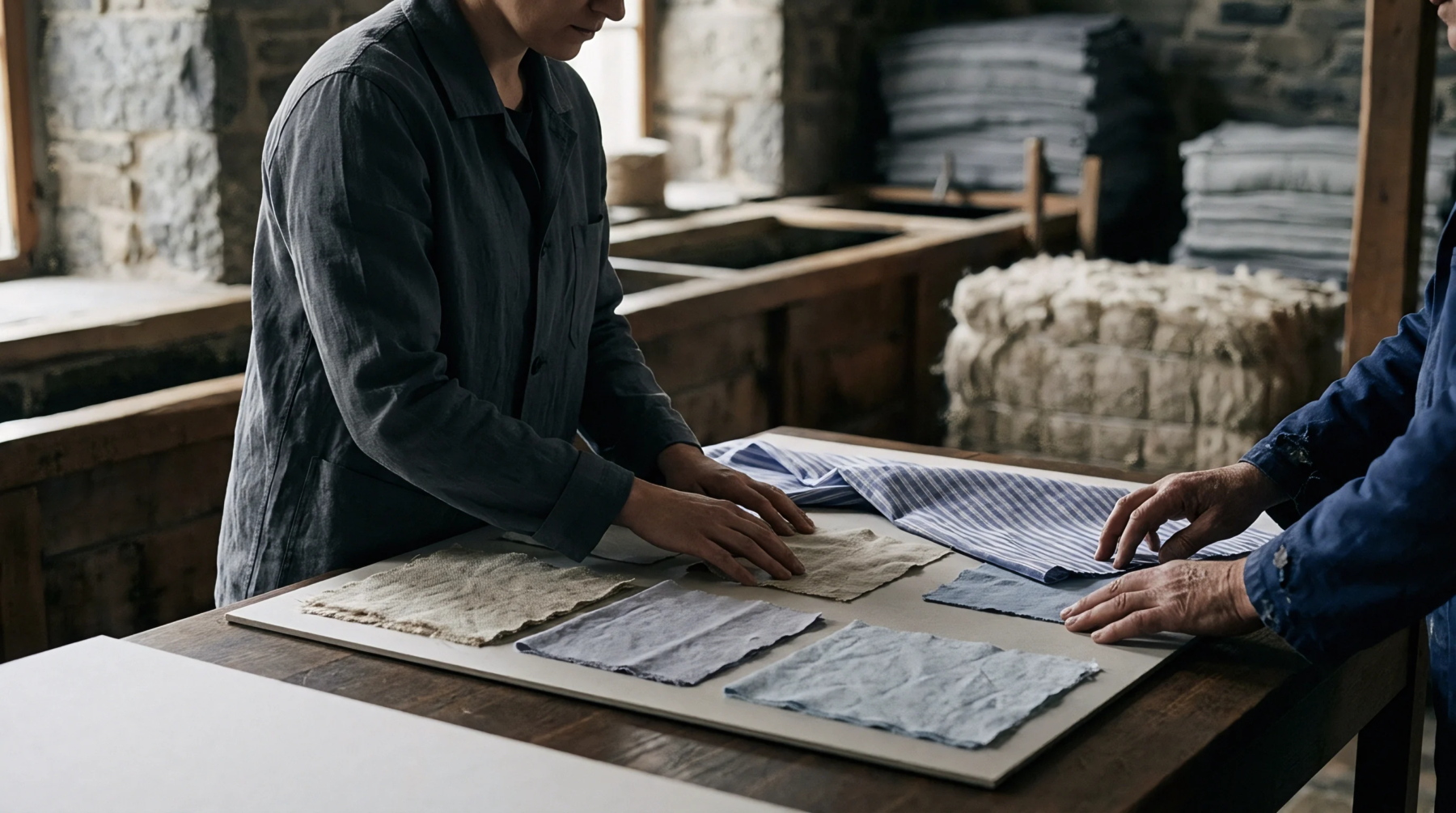
Equal weight plain weave stands rigid while twill drapes because maximum yarn crossover frequency locks crimp and restricts lattice shear mobility.
Expertise is a utility, not a secret. sentiention™ publishes its working knowledge as open reference: intelligence layer covering the materials it sources, the markets it enters, and the reference that serves both.