Wet Spun Flax Yarn Dynamic Tensile Fatigue Testing Protocols
Dynamic tensile fatigue protocols for wet spun flax quantify cyclic inter-fiber pectin shear, predicting high-speed loom warp stops before beam mounting.
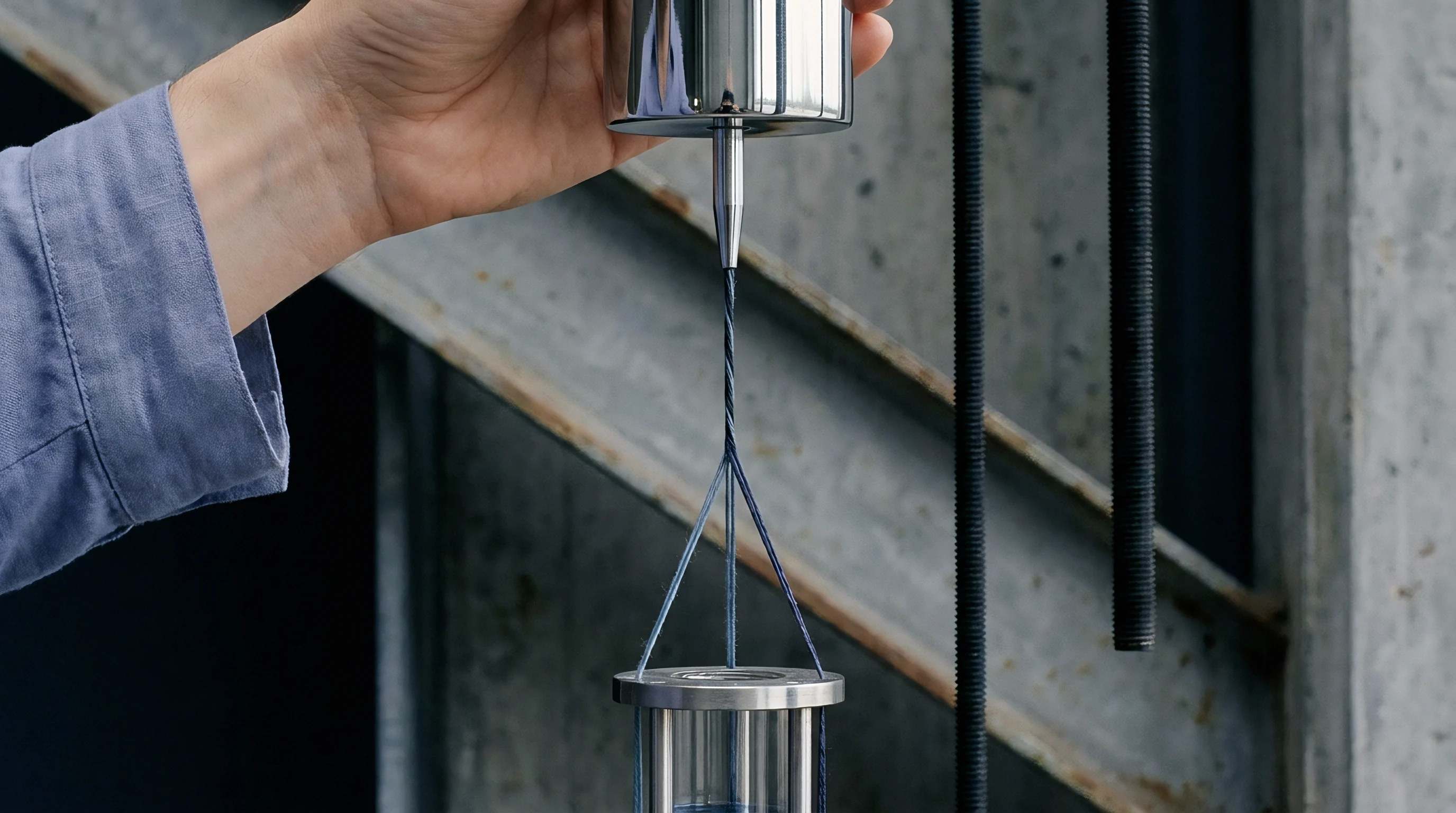

Grip
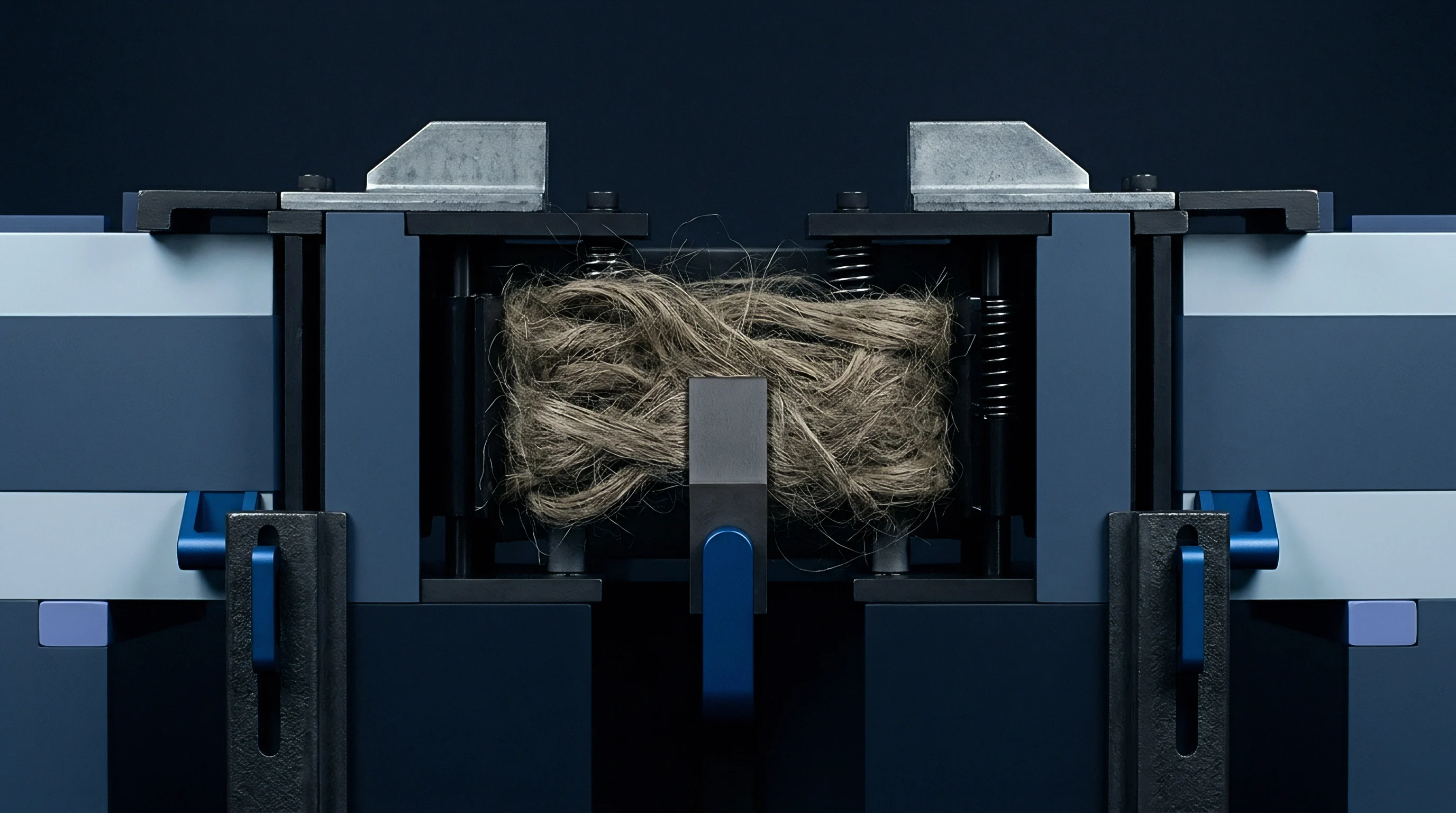
Pinched against bare steel, elementary bast fibrils fracture almost immediately, ruining dynamic fatigue runs before the third cycle finishes. Wet spun flax is assembled from discontinuous elementary fibers held together in technical bundles by a pectin-lignin middle lamella. Standard serrated pneumatic jaws pinch those bundles unevenly, concentrating transverse load across the outer annulus.
Under cyclic tension, these dry outer filaments shear right at the clamp line while the core stays slack. Gathering reliable data requires smooth capstan grips or polyurethane-coated pneumatic faces set to a clamping pressure matched strictly to yarn linear density.
Capstan jaws take the yarn through a 180-degree wrap around a curved mandrel before pinning the tail end. That contact dissipates ninety percent of the cyclic tensile peak along the circumference, so the yarn enters the static pinch point only after load amplitude drops well below the transverse crush threshold. If flat pneumatic faces are used instead, sixty-durometer polyurethane jaw inserts spread the clamping force across the whole yarn perimeter.
Jaw pressure settings depend directly on yarn metric count (Nm).
Pneumatic jaw pressure exceeding 0.45 MPa on Nm 39 wet spun flax crushes the inter-fiber pectin matrix before dynamic cycling begins.
Gauge length dictates whether the test captures progressive fatigue or merely weak-link statistics. Individual elementary fibers in wet spun flax carry structural nodal dislocations ~ kink bands ~ every 150 to 350 micrometers. Over a 500-millimeter test span, the sample contains hundreds of these flaws, and the yarn predictably snaps from weakest-link rupture within the first hundred cycles.
Shortening the gauge length to 100 millimeters suppresses random flaw breaks and isolates progressive viscoelastic creep and inter-fiber bundle decapping.
- Capstan pneumatic grips snub cyclic shock across a fifteen-millimeter radius before the mechanical clamp grips the tail end.
- Polyurethane flat faces cushion transverse clamping forces to keep brittle outer bast bundles from fracturing.
- Specimen alignment guides keep yarn tracking straight, preventing off-axis loading that skews tension across the bundle cross-section.
- Optical rupture sensors capture the exact millisecond of bundle parting without mechanical trigger lag.
Tension calibration establishes the baseline for every recorded stress-strain loop, which makes initial alignment critical. The yarn lead must run dead parallel to the load cell axis; an offset of just two degrees introduces a bending moment that peels surface fibrils early. Operators calibrate initial pretension with a deadweight clip rather than motorized crosshead positioning, which often delivers a brief, unlogged tensile spike sharp enough to crack pectin bonds before cycling starts.
If clamping pressure crushes the yarn core or permits cyclic slip past 0.05 millimeters, premature failures will distort the dataset and lead buyers to reject viable spinning lots.

Modulus
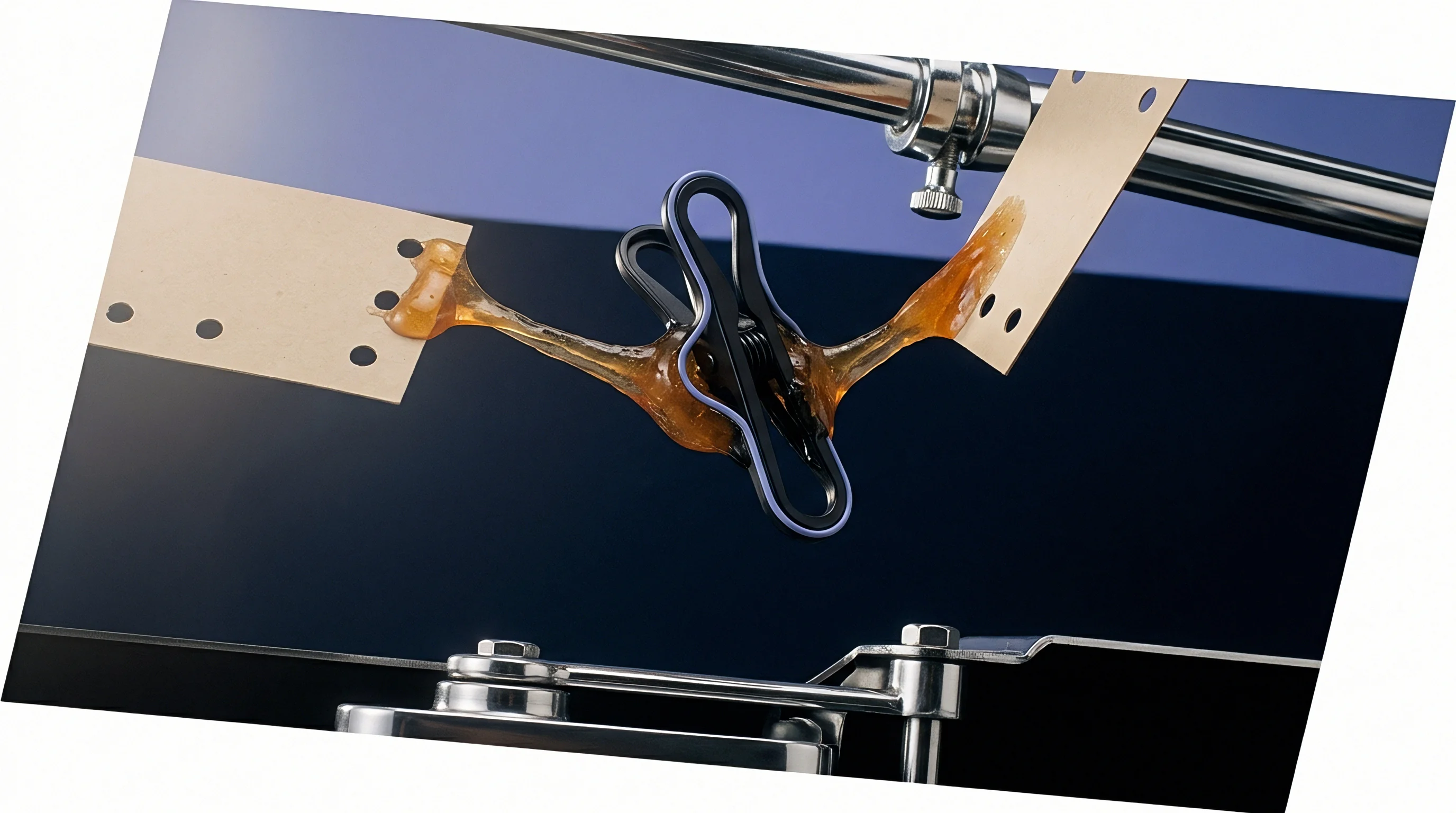
Dynamic cycling uncovers viscoelastic behavior that conventional pull tests miss entirely. Standard static load-to-break curves under ISO 2062 portray flax simply as a rigid cellulosic yarn with ultimate elongation between 1.5 and 2.5 percent. Under dynamic fatigue between fixed strain limits, however, wet spun flax shows sharp primary strain hardening followed by prolonged micro-relaxation.
Apparent dynamic modulus stiffens over the first 500 cycles as crystalline microfibrils, initially oriented at a spiral angle of 8 to 11 degrees to the fiber axis, pull toward parallel alignment with the applied vector.
What Governs Inter-Fiber Slippage inside the Pectin?
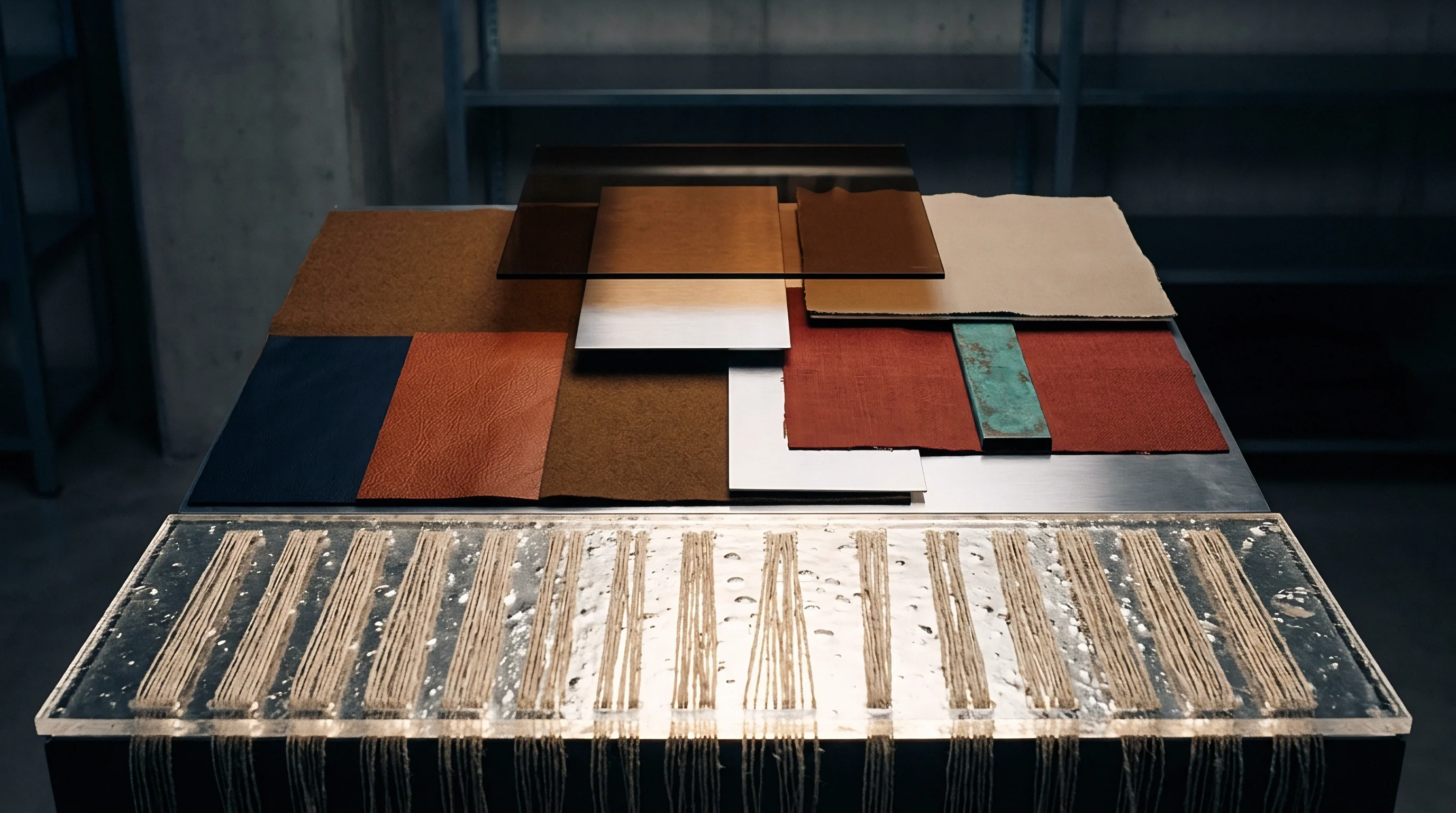
Individual flax fibers are short, ranging from ten to forty millimeters. Because no single fiber spans the full length of a test specimen, cyclic tensile fatigue primarily tests the shear resistance of the pectin middle lamella binding adjacent elementary fibers. As cyclic tension cycles between minimum and maximum stress limits, that matrix undergoes continuous cyclic shearing.
Below its critical yield point, deformation remains largely elastic. Once shear stress exceeds the matrix yield boundary, fibers slip past each other by fractions of a micrometer on every stroke, accumulating plastic strain until bundle cohesion vanishes.
A wet spun flax yarn subjected to cyclic loading progressively stiffens as its cellulose microfibrils align with the tensile axis.
Hysteresis loop analysis provides the mathematical foundation for tracking this breakdown. Plotting cyclic force against instantaneous extension generates closed hysteresis loops where the enclosed area corresponds to energy lost per cycle. In high-grade wet spun flax, that area contracts sharply after cycle ten to form a narrow, highly repeatable viscoelastic track.
In yarn spun from poorly retted or over-retted straw, the hysteresis loop area remains broad across thousands of cycles, indicating ongoing internal friction, progressive fibril debonding, and thermal dissipation.
| Yarn Count (Nm / tex) | Mean Tenacity (cN/tex) | Initial Modulus (cN/tex) | Dynamic Modulus at Cycle 1000 (cN/tex) | Hysteresis Energy Loss at Cycle 100 (mJ) | Failure Cycle at 60 Percent Peak Load |
|---|---|---|---|---|---|
| Nm 26 / 38.5 tex | 34.2 | 840 | 985 | 0.38 | 42,500 |
| Nm 39 / 25.6 tex | 36.8 | 890 | 1,060 | 0.29 | 38,100 |
| Nm 50 / 20.0 tex | 38.5 | 920 | 1,140 | 0.24 | 29,400 |
| Nm 60 / 16.7 tex | 41.2 | 960 | 1,210 | 0.19 | 18,200 |
The transition from steady-state fatigue into catastrophic tertiary creep happens fast. Where synthetic multifilament yarns exhibit steady, predictable necking, wet spun flax holds its consolidated structure until the outer bonding sheath shears completely. The core fibers then pull apart in a ragged, brush-like failure morphology.
Spinners routinely dismiss this failure mechanism as an unpreventable consequence of natural bast fiber geometry.


Amplitude
Dynamic fatigue protocols must replicate the mechanical reality of the loom shed rather than an arbitrary laboratory sinusoid. A rapier loom running at 450 picks per minute exposes warp yarn to static pretension punctuated by cyclic tensile peaks each time the shed opens. The reed beat-up adds a violent, instantaneous pulse.
Mimicking these exact stress vectors on a laboratory bench requires separating and controlling two independent variables: mean tension level and cyclic amplitude.

Where Does High Loom Speed Alter Fatigue Life?
Testing frequency influences fatigue life through localized adiabatic heating and strain-rate hardening. Bast fibers have high damping capacities, and when cycled at frequencies above 10 Hz, internal molecular friction within the amorphous hemicellulose zones generates heat that dries and embrittles the inter-fiber pectin. The test rig must operate between 2 Hz and 5 Hz to mirror the mechanical strain rate of modern high-speed looms while permitting thermal equilibrium with ambient air.
- Mounting the conditioned specimen at an established gauge length of one hundred millimeters prevents baseline sample distortion.
- Applying a static pretension of 0.5 cN/tex removes yarn slack without initiating structural deformation.
- Ramping the cyclic amplitude to ten percent of predetermined single-yarn breaking force establishes the operational baseline.
- Actuating the dynamic stroke at a sinusoidal frequency of 3.0 Hz simulates shed opening geometry.
- Recording stress-strain hysteresis loops continuously through an automated data bus captures modulus evolution.
- Terminating the run at total yarn rupture or upon reaching a run-out limit of 100,000 cycles confirms yarn durability.
Dynamic stress amplitude drives failure far more aggressively than base pretension. An increase of mean tension from 2.0 cN/tex to 3.0 cN/tex at a fixed amplitude of 1.0 cN/tex reduces average cycle life by thirty percent. In contrast, raising the cyclic amplitude from 1.0 cN/tex to 2.0 cN/tex at a constant mean tension of 2.0 cN/tex crushes fatigue life by more than eighty percent.
The yarn structure tolerates continuous static stress through cellulose chain extension, but oscillating cyclic strain unseats and reseats the pectin interfaces until they fracture.
Under severe cyclic amplitude, failure occurs through inter-fiber bonding disintegration rather than individual elementary fibril rupture.
A rigorous mill purchase order codifies this operational vulnerability. A warp yarn purchasing clause mandates that every spinning lot delivered under the contract survive a minimum of 30,000 cycles at a cyclic amplitude of 2.5 cN/tex superimposed on a 2.0 cN/tex static load under ISO 139 atmosphere before the container departs the spinning mill.
Moisture
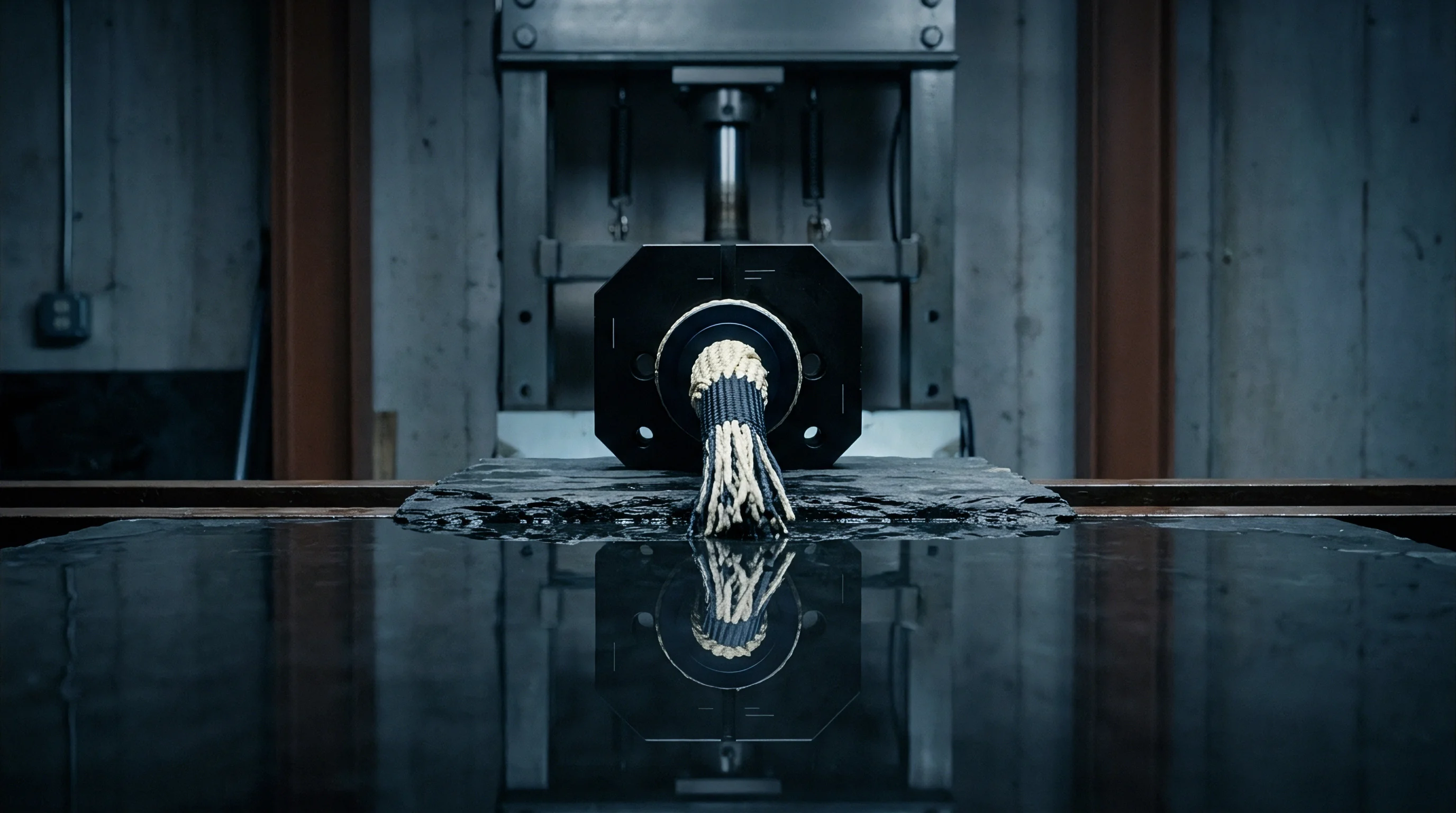
Cellulose responds to ambient moisture by swelling, and wet spun flax exhibits extreme hygroscopic sensitivity during dynamic loading. Elementary flax fibers contain a high proportion of crystalline cellulose I, surrounded by amorphous cellulose, hemicellulose, and pectin. Water molecules enter the amorphous matrix, forming hydrogen bonds with free hydroxyl groups to plasticize the pectinaceous middle lamella.
At low moisture regain, the pectin matrix is brittle and glassy, transferring cyclic shear shocks directly to elementary fiber flaws. At optimal moisture regain, the hydrated pectin flows viscoelastically, distributing stress evenly across all elementary filaments in the bundle.
Atmospheric conditioning protocols govern the reproducibility of dynamic tensile fatigue measurements. ISO 139 specifies standard conditioning at 20 degrees Celsius and 65 percent relative humidity. Wet spun flax achieves equilibrium only through a complete sorption cycle: bone-dry flax brought to standard atmospheric conditions achieves lower equilibrium regain than flax conditioned downward from a saturated state.
This hysteresis loop in moisture regain alters dynamic fatigue life by a factor of two.
- Equilibrium moisture regain alters inter-fiber friction coefficients and dictates whether bundles shear or slip during cycle peaks.
- Relative humidity fluctuations inside the test cabinet shift the dynamic elastic modulus within minutes of exposure.
- Pectin glass transition temperature falls toward ambient room conditions as the internal water content of the technical bundle rises.
- Twist migration stability depends upon moisture-assisted internal stress relief throughout cyclic stretching.
Dynamic fatigue tests conducted across different relative humidity setpoints reveal a non-linear endurance curve. Below 50 percent relative humidity, the fatigue life of wet spun Nm 39 flax drops below 10,000 cycles under shed-simulation parameters. Between 65 percent and 70 percent relative humidity, fatigue endurance peaks, frequently exceeding 45,000 cycles as uniform internal stress distribution boosts elementary fiber strength.
When ambient humidity exceeds 85 percent, fatigue life drops once more. Excessive water plasticizes the pectin so heavily that fibers slide apart under low cyclic amplitudes without transferring load to the high-strength cellulose cores.
| Relative Humidity (%) | Yarn Moisture Regain (%) | Mean Cycles to Rupture | Weibull Shape Parameter (β) | Dominant Failure Morphology |
|---|---|---|---|---|
| 45 | 7.2 | 8,400 | 1.8 | Brittle transverse fracture at elementary fiber kink bands |
| 55 | 9.1 | 21,200 | 2.4 | Mixed shear and elementary fiber fracture |
| 65 | 11.8 | 38,100 | 3.2 | Viscoelastic bundle decapping with localized fibril pullout |
| 75 | 13.6 | 44,800 | 3.1 | Progressive inter-fiber slip with extensive axial debonding |
| 85 | 16.2 | 19,500 | 2.1 | Extensive matrix plasticization and premature core pullout |
A testing laboratory that fails to verify the equilibrium history of flax yarn before initiating dynamic fatigue runs measures random fluctuations in ambient humidity rather than yarn quality. Whether the chemical composition of sizing agents permanently modifies this moisture-dependent dynamic fatigue threshold by sealing the pectin lamella against atmospheric water exchange remains a central open question.
Yardage
Dynamic tensile fatigue parameters determine the operational yield of the loom shed and the final cost of woven greige cloth. A technical sheet specifying a 24 ends per centimeter warp in a 140-centimeter reed width commits 3,360 individual yarn ends to the loom. If that warp runs on an air-jet or rapier loom operating at 500 picks per minute, the warp system experiences 30,000 cyclic shedding motions every hour.
Static tensile strength testing does not indicate whether a warp will weave this yardage without failure. A lot displaying high static breaking tenacity frequently generates intolerable loom stops if its dynamic fatigue endurance is poor.
Loom efficiency falls steeply when dynamic fatigue resistance drops. Every warp break stops the machine for an average of 2.5 minutes while the weaver draws the broken end through the correct heddle eye and reed dent. If a yarn lot exhibits a fatigue threshold that allows five warp breaks per 100,000 picks, efficiency drops by six percent.
On an industrial installation running forty looms, this loss translates into hundreds of lost machine hours per week. Sizing with modified starches or polyvinyl alcohol reinforces the outer perimeter of wet spun flax yarns, raising the cyclic fatigue threshold by encasing loose surface bast fibrils within a consolidated protective sheath.
Translating test cycle counts into weavability forecasts enables the loom-hour accountant to price capacity accurately before warping begins. A yarn lot that averages fewer than 25,000 cycles to failure on a 3.0 Hz dynamic fatigue rig operating at 60 percent of yield tension cannot run as unplied singles warp without sizing. The buyer either adds sizing costs of 0.35 dollars per kilogram or reassigns the yarn to the weft accumulator.
In weft insertion, the yarn experiences only one rapid tension peak during flight rather than thousands of cyclic shed movements. Setting up a warp on a high-speed loom with unproven dynamic fatigue metrics risks catastrophic shed fouling that destroys profit margins.
Warp yarn that survives 40,000 cycles under simulated shedding parameters runs clean from beam to cloth roller.