Dynamic Tensile Fatigue Decay Mechanics under Asymmetric Loom Shed Geometry
Asymmetric loom sheds accelerate flax warp fatigue by shifting cyclic peak tension onto the lower yarn sheet, causing rapid microfibril fracture and stops.


Lift
Asymmetric shed formations split warp yarn sheets into unequal geometric paths between the back-rest roller and the cloth fell. When the loom reed beats up at six hundred picks per minute, the lower shed line undergoes greater path deflection than the upper shed line. This differential displacement imposes unequal cyclic peak extensions across the warp array during every machine revolution.
A thirty-millimeter upward displacement of the back-rest roller raises peak bottom-shed dynamic tension by forty-two percent at three hundred picks per minute.
Each rotation of the main shaft forces the yarn through three distinct mechanical zones: the drop wire bank, the heddle eye, and the reed dent. In an asymmetric setup, the path length from the whip roll through the heddle eye to the fell line changes continuously as the harness shaft rises and falls. The bottom sheet traverses a sharper angular trajectory than the horizontal centerline, generating localized friction along the steel eyelet perimeter and intensifying contact pressure on the lower yarn flank.
Yarn elements undergo compound stresses during this phase, with axial elongation combining with localized flexural bending. Sizing film fractures under repeated sharp-angle deflections, exposing unsized fiber cores directly to abrasive metal surfaces.

Displacement Mechanics across Unequal Shed Sheets
Setting the back-rest above the cloth plane alters the kinematic geometry of harness movement. When heddles separate to clear the insertion path for the rapier or air-jet payload, the lower yarn sheet must travel a longer physical distance than the upper sheet to reach full shed opening. This distance variance forces instantaneous elongation surges into the lower warp ends.
- Geometric path differential creates an uncompensated length variance of up to twelve millimeters per shed cycle on high-speed rapier machinery.
- Localized eyelet abrasion strips surface sizing polymers from the bast yarn core during shed changeover.
- Contact force spikes concentrate shear stresses across outer fiber bundles as the yarn passes the lower heddle eye radius.
- Tension cycle imbalance accelerates molecular bond slippage inside individual cellulosic microfibrils under rapid cyclic loading.
The upper shed sheet experiences reduced tension, occasionally slacking enough to cause yarn rolling or entanglement behind the reed. Meanwhile, the lower sheet carries the main burden of dynamic resistance. Sizing formulations calculated for symmetric sheds breakdown prematurely under this uneven mechanical load.

Attrition
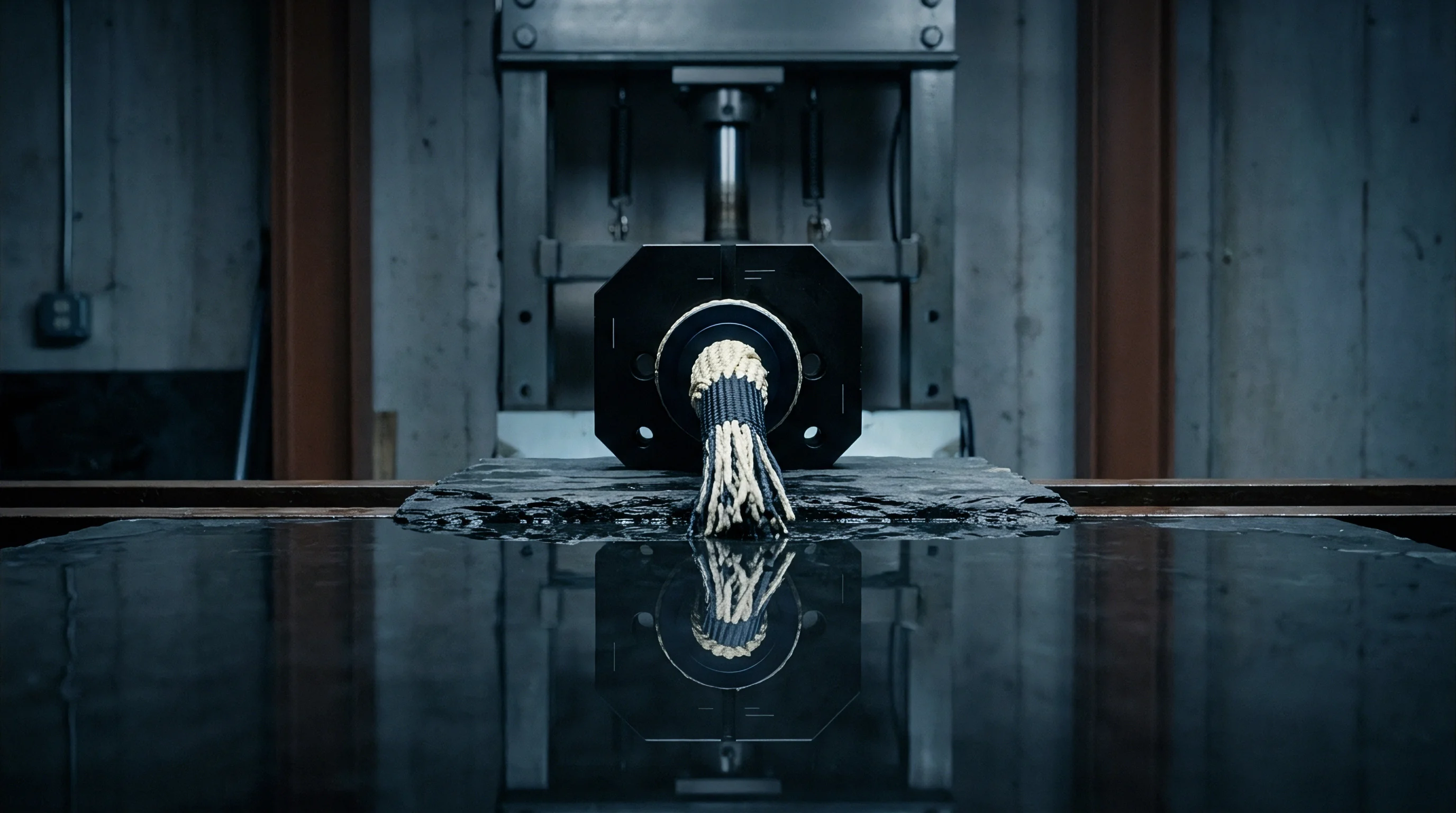
Bast fibers feature a crystalline structure bound by non-cellulosic pectin and lignin matrices. When flax yarns absorb cyclic tensile pulses in an asymmetric shed, mechanical energy dissipates through internal friction between elementary fibers. This repeated micro-slip degrades inter-fiber cohesion well before the yarn reaches its tensile limit.
Dry bast fibers shed cohesion through internal matrix shear when cyclic extension exceeds elastic recovery thresholds.
Flexural fatigue compounds this internal degradation. As yarn oscillates across the edge of the heddle eye, transverse compressive forces flatten its cross-section and break the protective sizing shell. Individual elementary fibers begin to buckle on the inside of the bend while enduring extreme tension along the outer radius.

Fibrillar Dislocation in Cellulosic Flax Bundles
Microscopic inspection of failed flax warp ends shows distinctive structural defects along the fiber axis. Dislocation zones, or kink bands, multiply under alternating tensile-compressive cycles. These slip planes act as stress concentrators where moisture ingress and mechanical friction accelerate crack propagation across the cellulose fibrils.
- Primary matrix breakdown begins with microscopic shearing of the inter-cellular pectin layer within the first five thousand loom revolutions.
- Secondary fibril detachment follows as individual cellulose microfibrils pull away from the fiber axis under asymmetric cyclical peaks.
- Tertiary structural rupture occurs when outer elementary fibers sever, transferring the full dynamic load to the weakened yarn core.
Wet-spun flax demonstrates higher initial fatigue tolerance than dry-spun variants thanks to denser fiber alignment and superior natural pectin distribution. Dry-spun linen yarns suffer rapid fatigue decay under asymmetric geometries, shedding large quantities of lint and dust that foul drop wires and heddle eyes within hours of beam mounting.

Strain
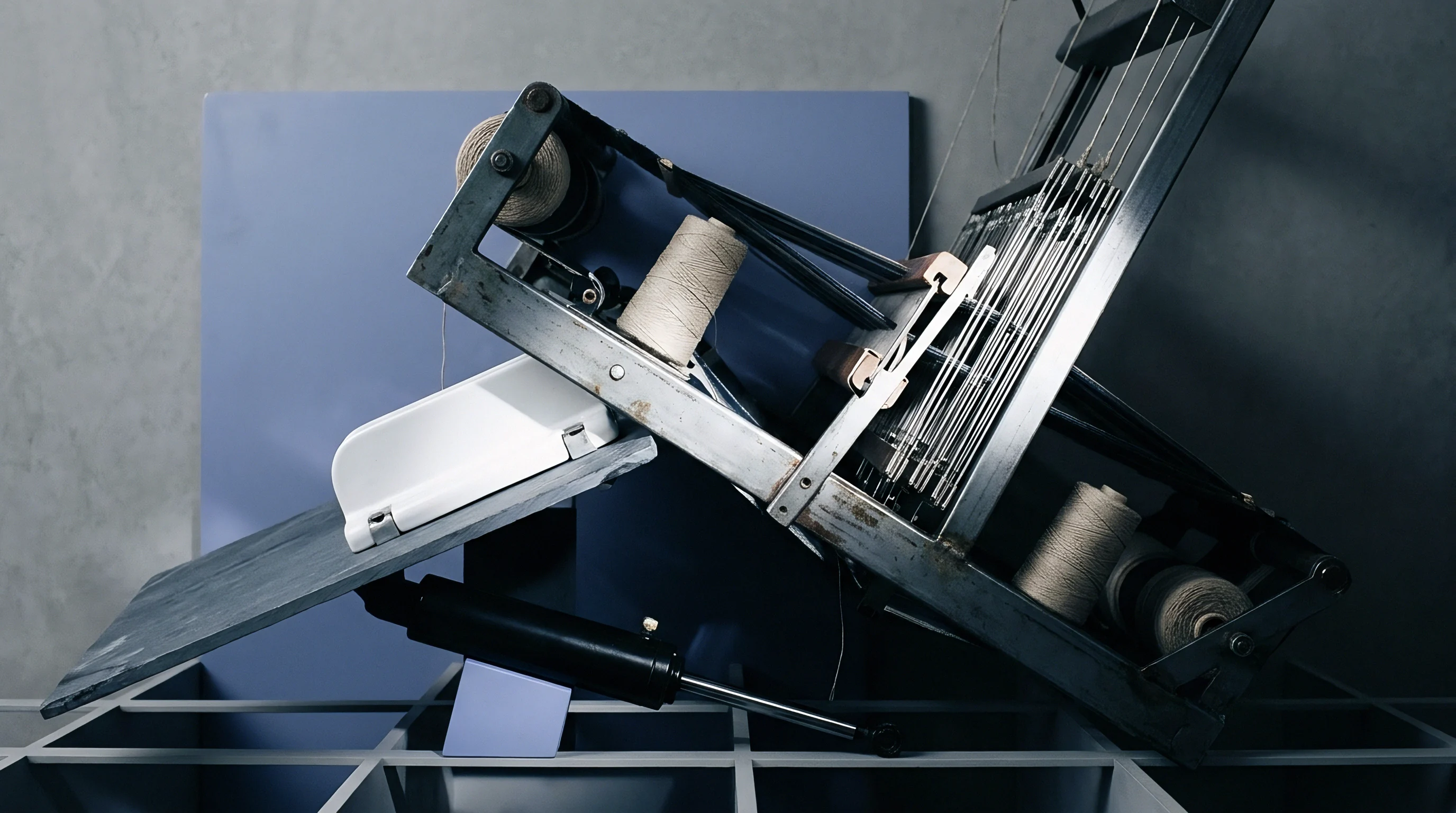
Dynamic elongation on a weaving loom differs significantly from static tensile test results. Under standard ISO 13934-1 strip testing methods, flax yarn exhibits a low elongation at break, typically between two and three percent. In an asymmetric shed, instantaneous peak extension on the bottom shed line frequently reaches one point eight percent of total yarn length during harness crossing.
| Back-Rest Offset (mm) | Top Shed Peak Tension (cN/tex) | Bottom Shed Peak Tension (cN/tex) | Mean Cycles to Failure | Shed Opening Angle (deg) |
|---|---|---|---|---|
| 0 (Symmetric) | 14.2 | 14.5 | 82,000 | 26.5 |
| +15 | 11.8 | 17.6 | 54,000 | 28.0 |
| +30 | 9.4 | 21.8 | 29,000 | 30.5 |
| +45 | 7.1 | 26.4 | 11,500 | 33.0 |
Operating near ninety percent of the elastic recovery limit produces cumulative plastic deformation. Because flax lacks the high molecular resilience of synthetic polymers, every loom cycle adds an unrecovered strain increment that causes permanent elongation and gradual loss of tensile strength.
ISO 13934-1 breaking force ratings drop by thirty percent on loom beams subjected to sustained shed asymmetry above twenty-five millimeters.
Wöhler-type fatigue curves for bast yarns show a steep negative slope once dynamic tension exceeds twelve centinewtons per tex. Cycles to failure drop exponentially as back-rest elevation increases shed asymmetry, with the bottom shed line reaching fatigue rupture points well before completing a standard five-hundred-meter greige run.
Can Peak Shed Angle Exceed Thirty Degrees?
Exceeding thirty degrees of total shed opening angle drives yarn-to-metal friction past the tolerance threshold of standard starch and PVA sizing matrices. The heddle eye exerts severe lateral shearing against the yarn body during shed inversion, sending peak tension on the bottom line upward and accelerating fibrillar micro-cracking.
The mathematical relationship between shed geometry, machine speed, and cyclic strain dictates the maximum allowable asymmetry for any yarn sett. Whether dynamic tension dampening systems can counteract this structural decay without sacrificing fabric cover factor remains an unresolved challenge on high-speed machinery.

Rig
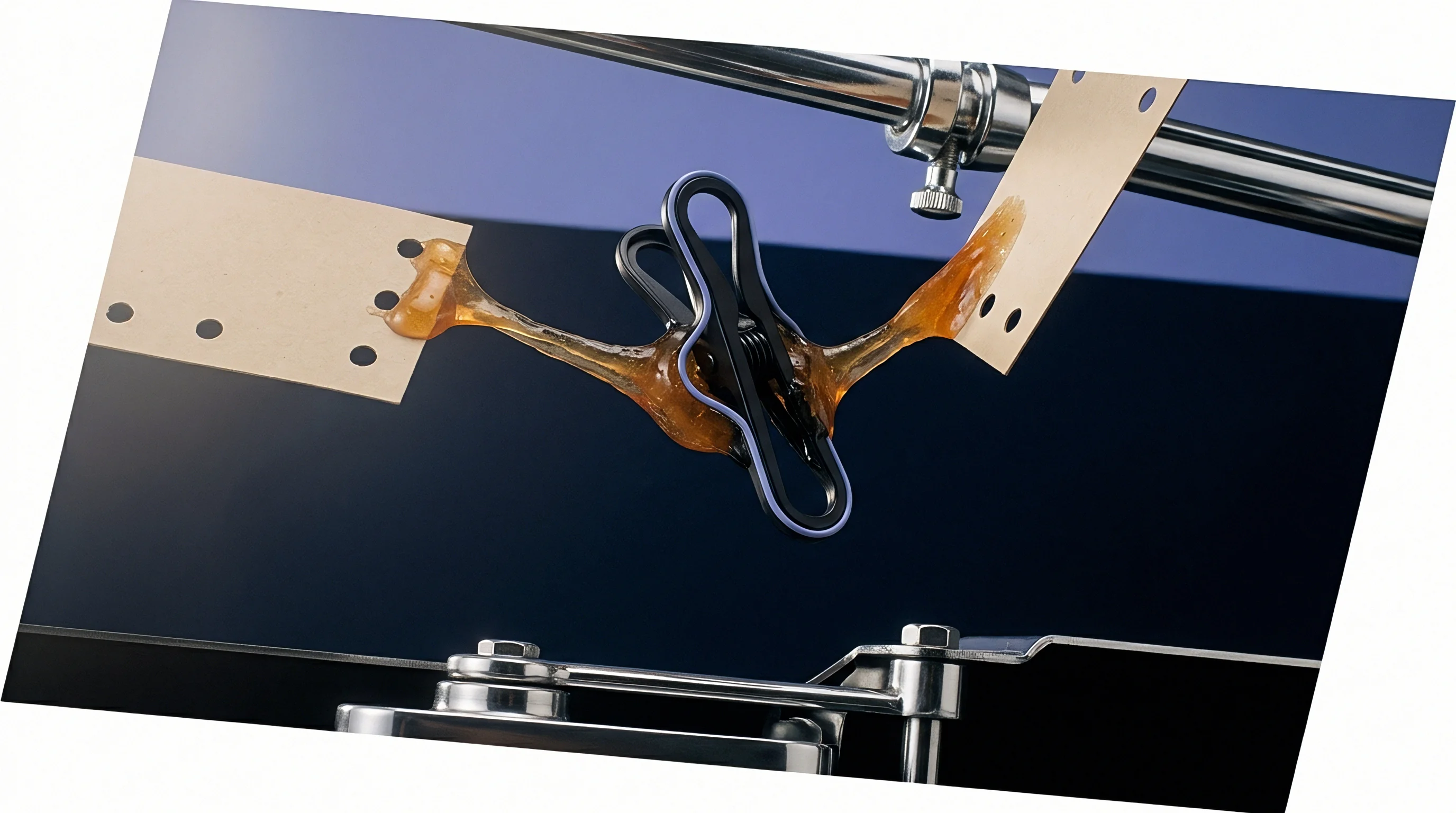
Mechanical loom adjustments offer direct control over how cyclic stresses are distributed across the warp sheet. Lowering the back-rest roller brings the geometric path of top and bottom shed lines closer to parity. Symmetrical shed configurations distribute cyclic strain equally across all harness frames, doubling the fatigue life of individual ends.

Will Symmetrical Shedding Eliminate Inter-Fibril Shearing?
Leveling the warp path minimizes external tension differentials between upper and lower sheets. While inter-fiber shearing continues inside the yarn core due to cyclic elongation and reed beat-up impacts, structural decay rates drop noticeably and sizing breakdown slows, preserving yarn integrity through longer weaving runs.
Drop wire placement also influences fatigue accumulation. Positioning the drop wire box closer to the back-rest reduces the angular deflection of yarn entering the heddles, dampening the mechanical shockwave reflected back from the harness frame during shed crossing.
Attributing excessive warp yarn breaks solely to inconsistent raw flax quality or improper sizing application ignores how machine geometry multiplies the mechanical severity of physical defects in the beam.
Loss
Warp yarn failures directly erode weaving efficiency and drive up production costs. Every warp stop halts the loom, requiring operator intervention to locate the broken end, draw it through the drop wire and heddle eye, and re-tie it at the fell line. In high-speed weaving sheds, excessive warp fatigue generates severe downtime.
| Shed Geometry Profile | Warp Stops / 100k Picks | Weaving Efficiency (%) | Loom Hours / 1,000m | Added Cost / Metre ($) |
|---|---|---|---|---|
| Symmetric Profile | 1.8 | 91.5 | 36.4 | 0.00 |
| Moderate Asymmetry (+20mm) | 4.6 | 84.2 | 39.6 | 0.48 |
| Severe Asymmetry (+45mm) | 12.4 | 68.0 | 49.0 | 1.82 |
Beyond direct machine stoppages, structural fatigue compromises finished fabric quality. Yarns damaged by excessive dynamic strain show diminished abrasion resistance and lower tensile strength in laboratory testing. Fabric rejected for low tensile values or starting marks cannot be sold at contract prices.
Loom efficiency falls steeply when cyclic warp end breaks exceed four stops per one hundred thousand picks.
Production scheduling breaks down when asymmetric shedding drops loom efficiency from ninety percent to under seventy percent, leaving mill operators with delayed deliveries, lost loom capacity, and expensive fabric downgrades at inspection.