
Relay Nozzle Timing and Pressure Profiles in Linen Weaving
Air-jet linen weaving requires stepped relay nozzle pressures and precise crank timing to handle variable flax yarn hairiness and prevent filling stops.
Air-jet linen weaving requires stepped relay nozzle pressures and precise crank timing to handle variable flax yarn hairiness and prevent filling stops.

Air-jet insertion of coarse bast yarns utilizes main pressures up to 0.65 MPa and 25-degree relay pulses to sustain velocity against high linear density.

Integrating cross-sectional area dispersion parameters into yarn tenacity prediction equations corrects strength overestimation in wet-spun linen specifications.

Integrating real-time finite element Maxwell models into loom let-off controls mitigates dynamic tension spikes and cuts warp breaks during high-speed shedding.
HS Chapter 53 linen classification requires strict lab verification of fibre state, 85 percent blend mass thresholds, and audited mill transaction records.
Online moisture sensing on high-speed rapier warps maintains flax elasticity, cuts cyclic break rates by sixty percent, and protects loom shed efficiency.
Microscopic cross-sectioning and pectin analysis detect caustic processing damage, preventing high-tenacity yarn failure before commercial shipment.
Scutched flax hackling yield derives from mass exceeding clamp retention length minus bundle fracture losses calculated across pinned comb stages.
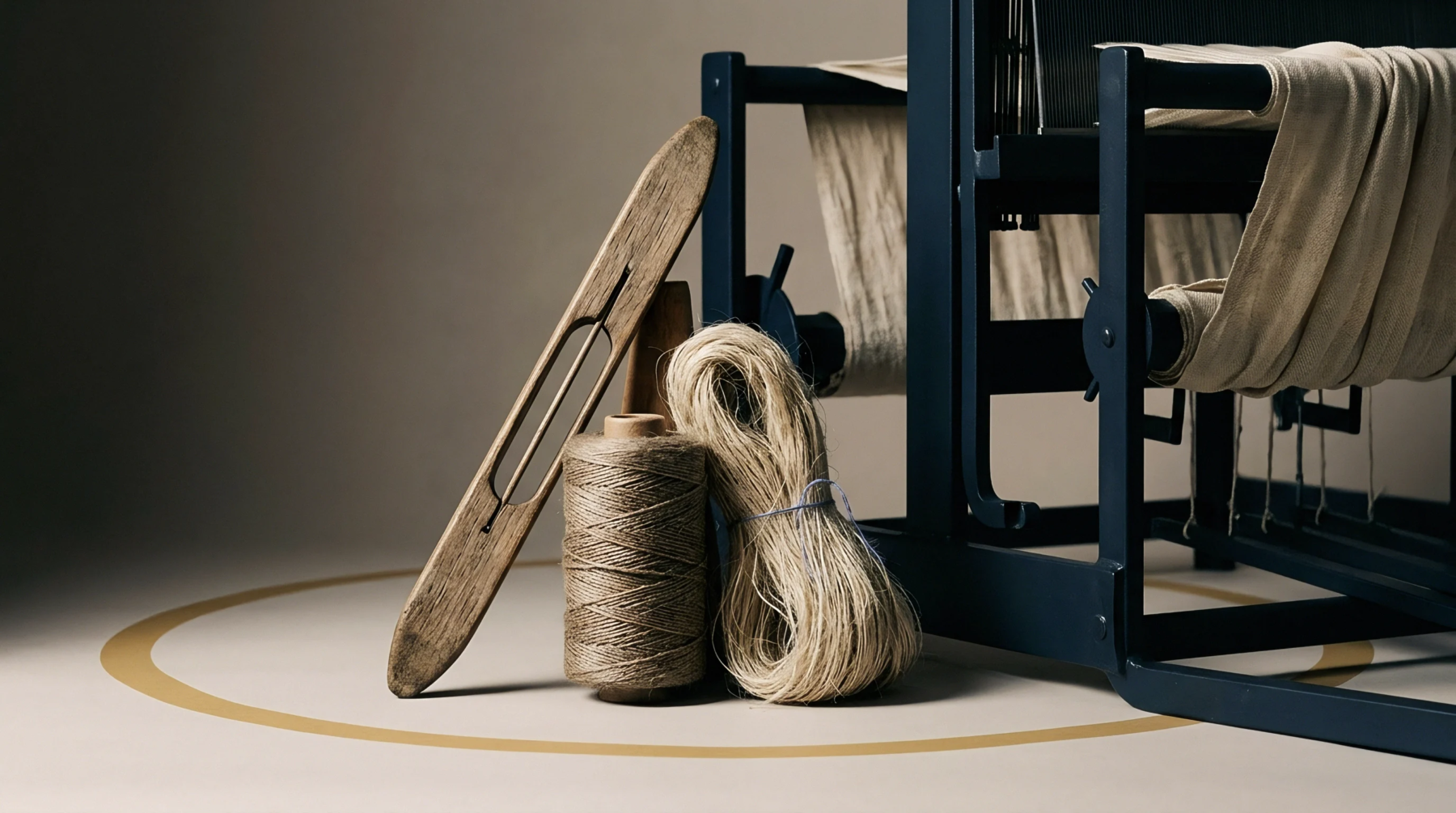
Optimizing sizing film encapsulation requires balancing viscosity and polymer chemistry to coat wet spun linen warps, cutting loom stops and lowering meter costs.
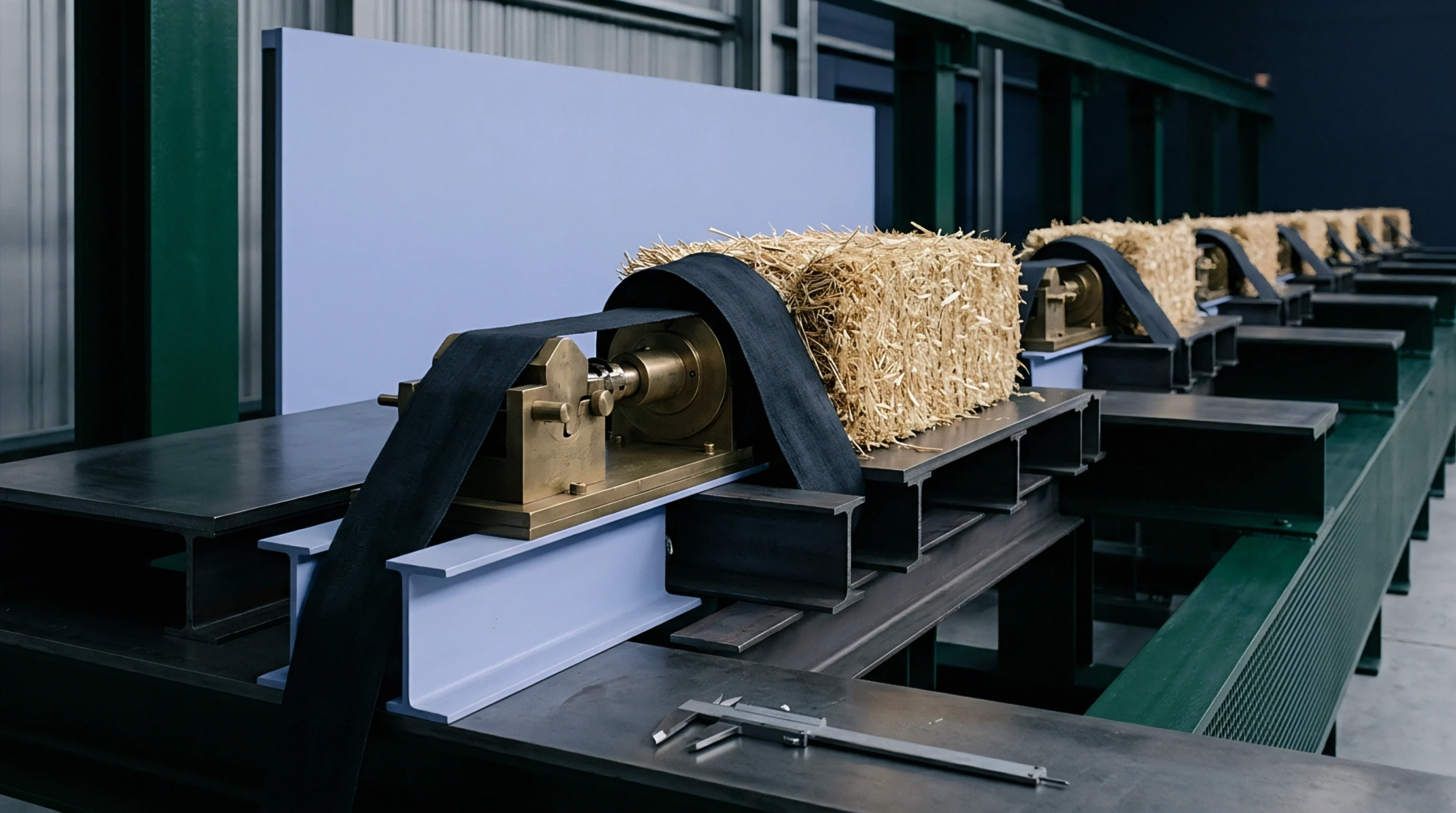
High sett linen demands flexible PVA-modified starch sizing at 8.5 percent add-on and uniform 24 cN beaming tension to prevent brittle warp breaks on high-speed looms.
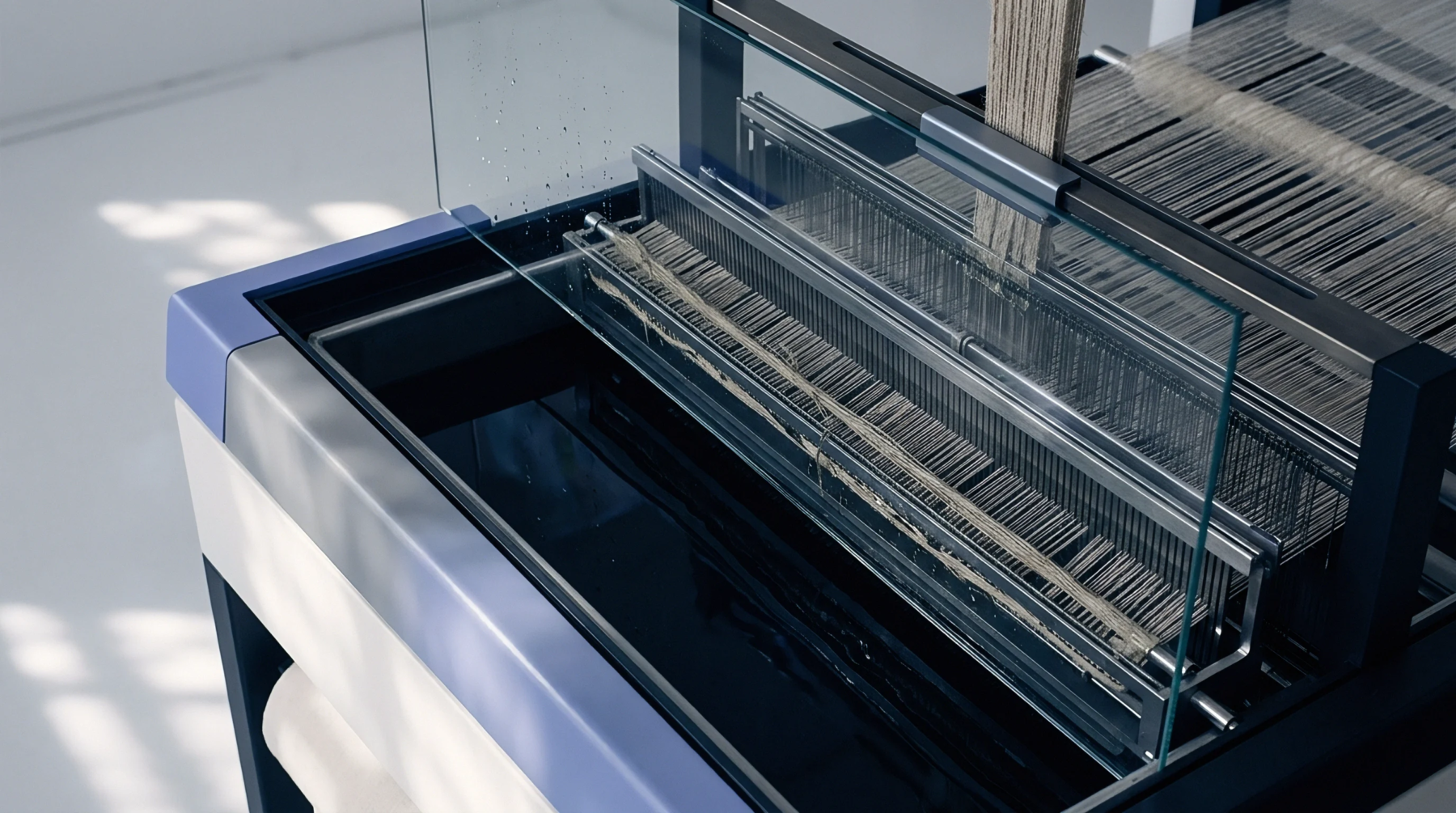
Mixed integer programming prevents fractional loom errors in multi-loom linen sheds by resolving sequence-dependent changeovers against inelastic yarn limits.
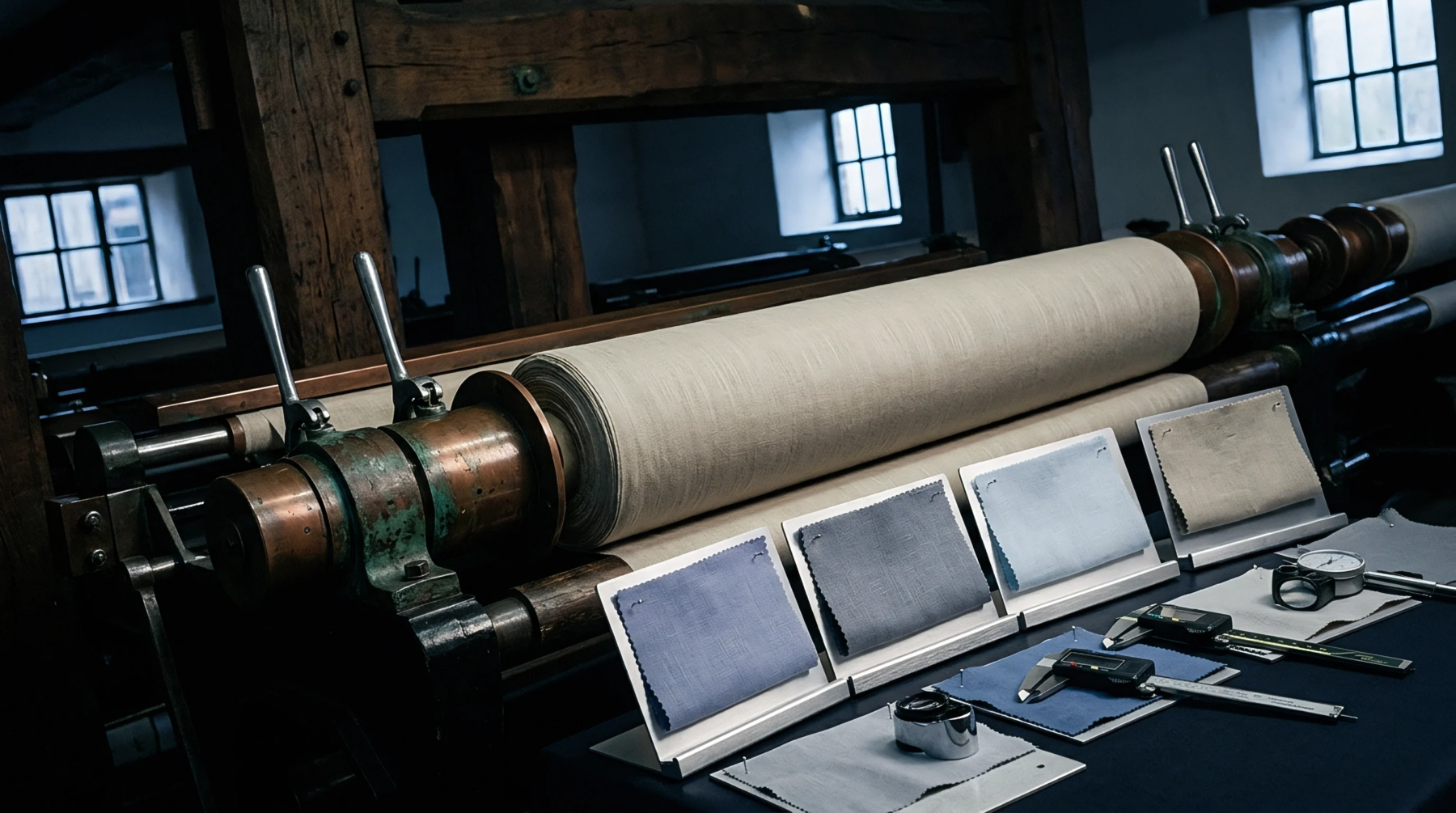
Optimize flax fabric loom allocation by matching yarn elongation and cover factor to rapier or projectile loom mechanics, minimizing beam changeovers and trim waste.

Asymmetric shedding in high-density wet spun linen warps concentrates peak tension on lower shed ends, driving premature yarn fatigue and loom stoppages.

Optimize high-density flax by offsetting shed geometry and setting early heddle crossing to stagger beat-up force before cover limits induce fiber rupture.
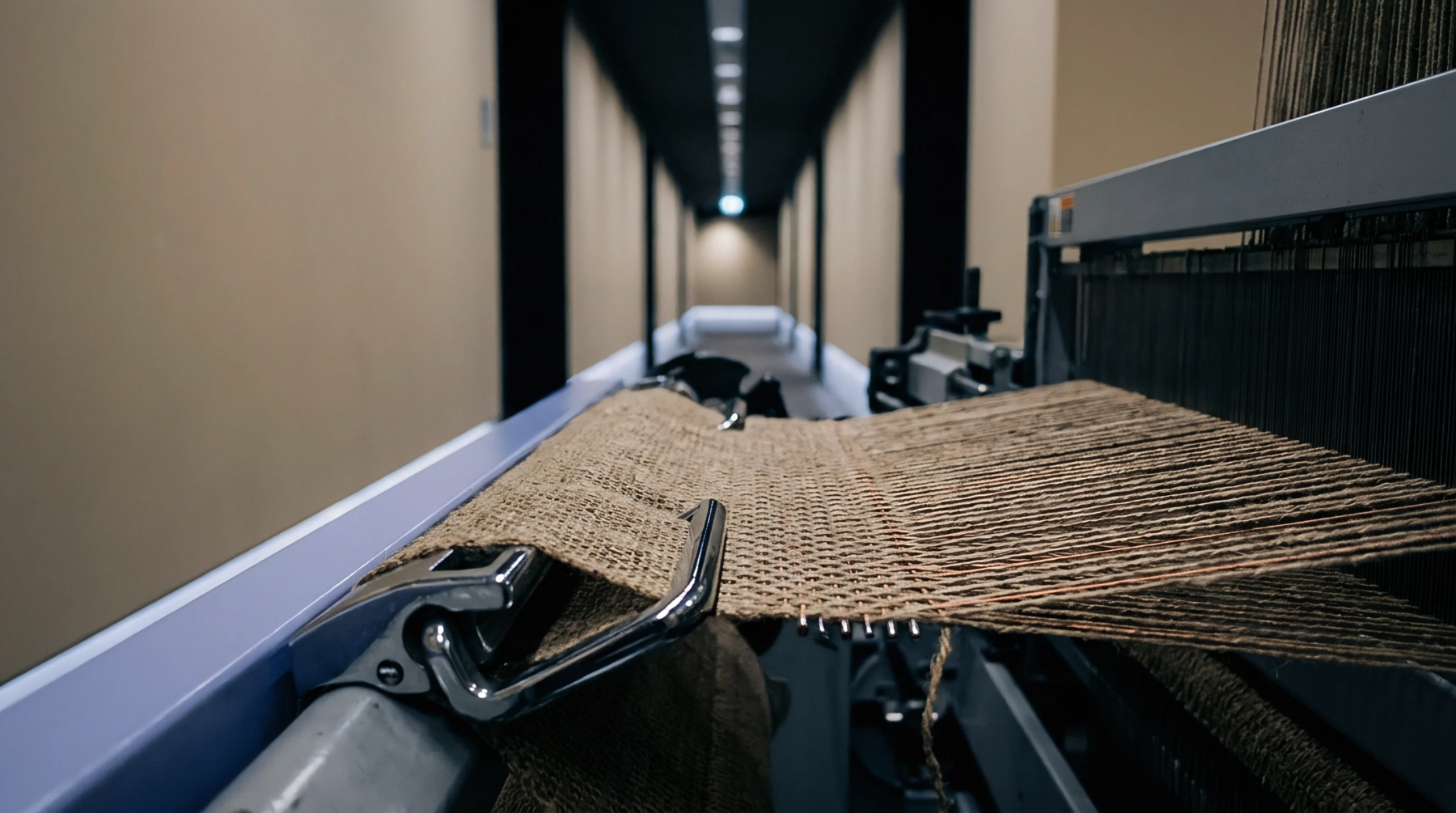
Linen warp survival hinges on low-penetration size encapsulation and dynamic back-rest tension dampening to prevent brittle end breaks under peak beat-up loads.
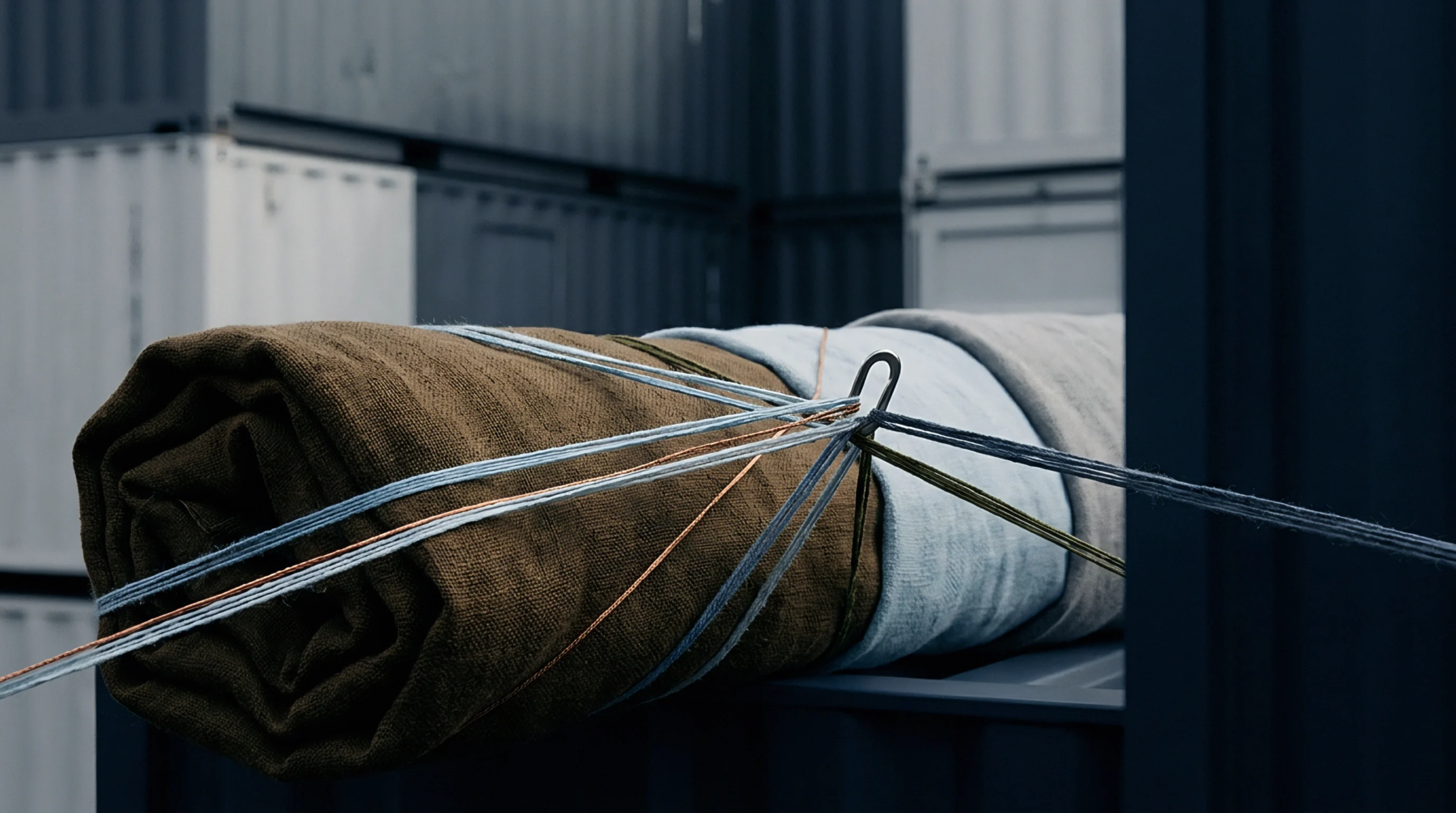
Calculated reed width compensates for linen weft crimp and lateral contraction by matching localized float floatation to edge temple holding capacity.

Active closed-loop warp tension control suppresses shedding strain spikes in wet-spun linen, lowering warp breaks and driving loom speed from 320 to 480 PPM.

Variable reed density in natural cellulosic warps requires dynamic tension damping to prevent high-speed shedding breaks and loom efficiency losses.
Determining warp cover factor and crimp allowance in linen weaving requires adjusting yarn packing metrics for flax fiber flattening under loom tension.
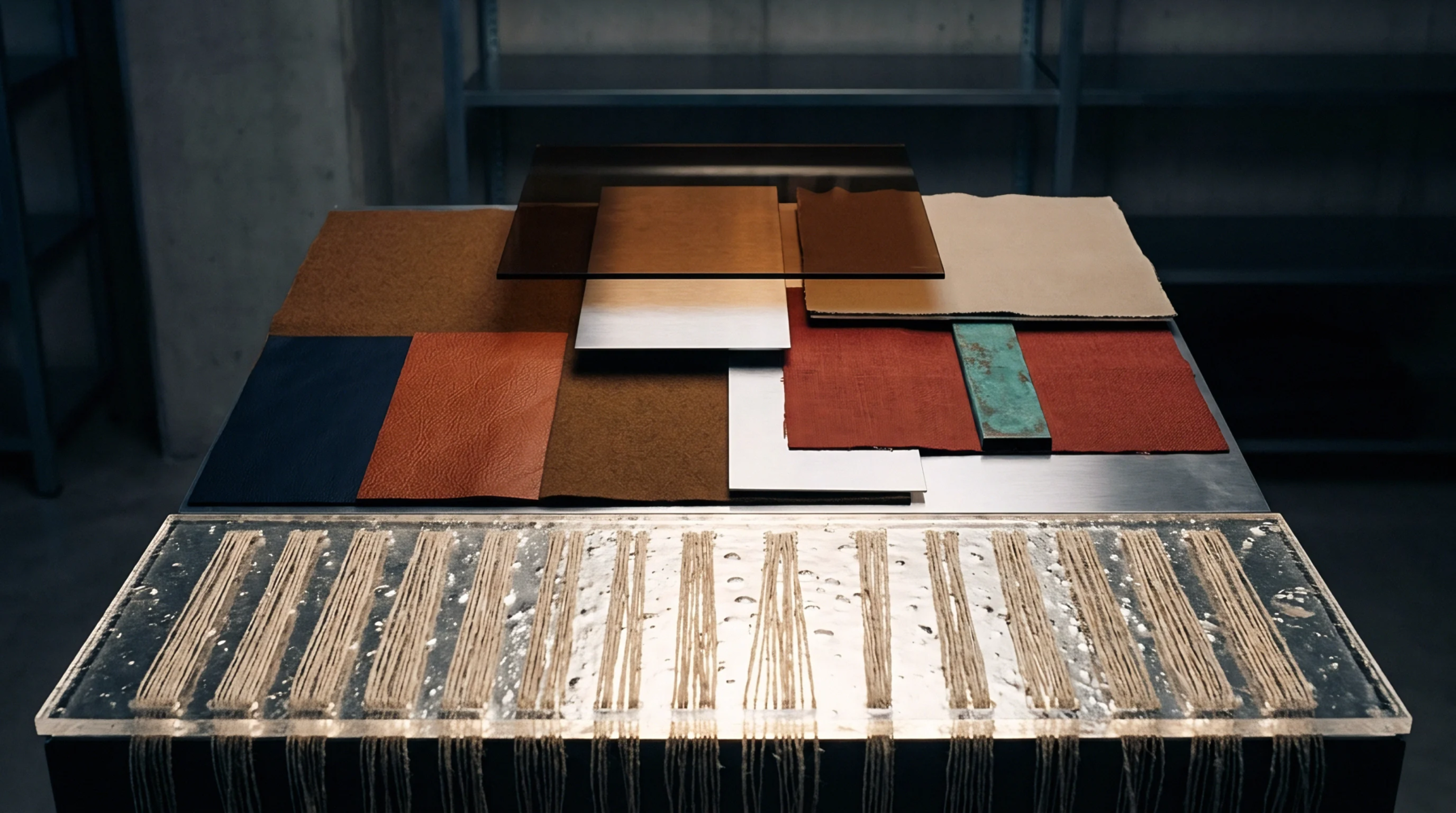
Linen yarn count conversions and theoretical maximum sett calculations require adjustments for fiber packing fraction, weave structure, and loom beat-up limits.

Dynamic tension peaks during linen shedding exceed static tension by 240 percent, demanding asymmetrical dwell timing to prevent costly single end breaks.

Converting linen lea to direct tex requires dividing 1653.52 by the lea count to yield accurate greige mass calculations under standard moisture regain.
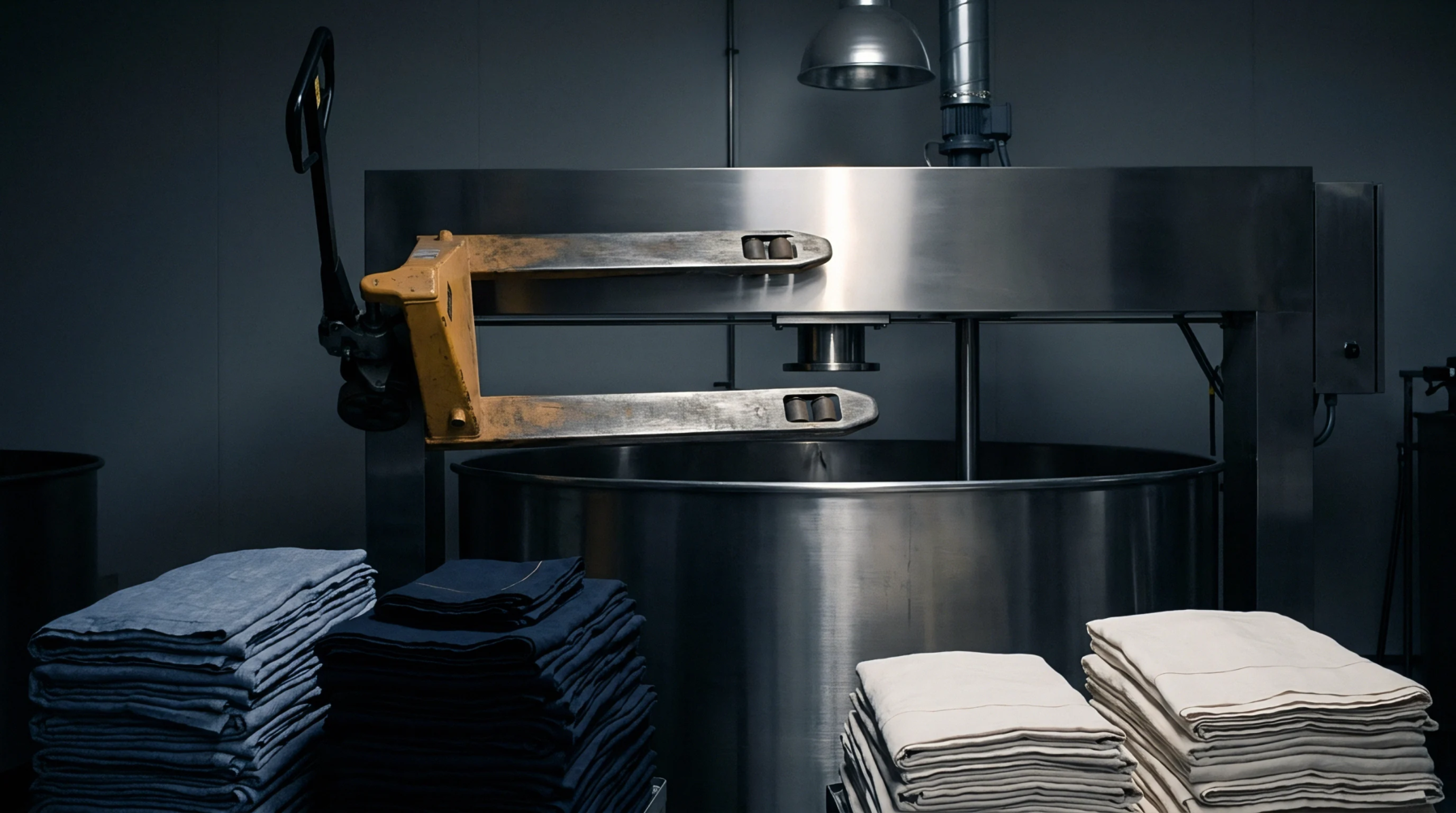
Optimizing sizing formulation, humidity, and shed geometry reduces flax warp breaks to achieve 86 percent efficiency on high-speed looms.
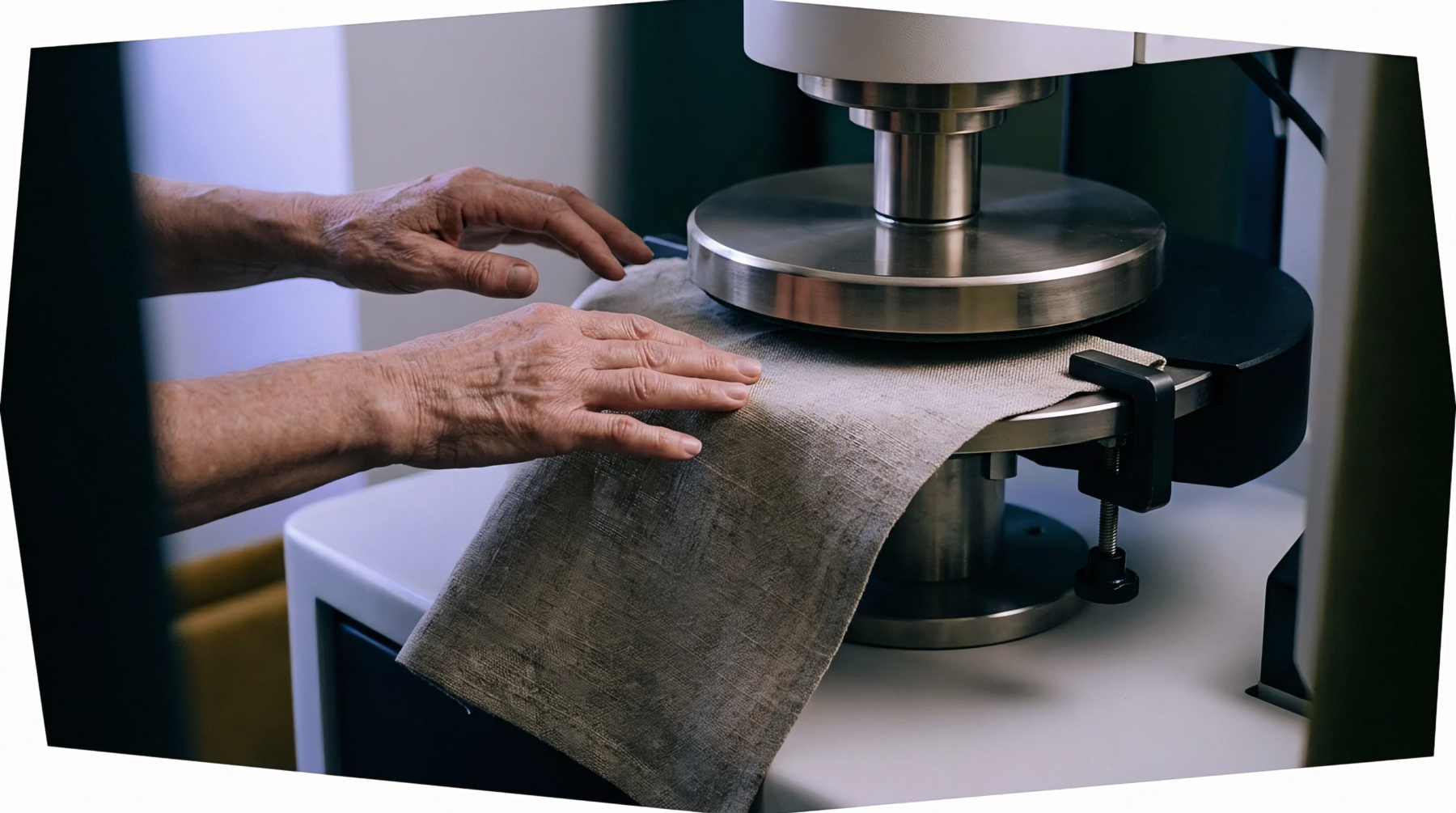
Wet spun linen tensile testing requires pneumatic horn capstan clamps, strict regain control, and Weibull span corrections to predict warp breakage rates.
Active servomotor letoff advance combined with synchronized takeup backstep eliminates start marks by rebuilding flax warp tension before the initial reed beat.
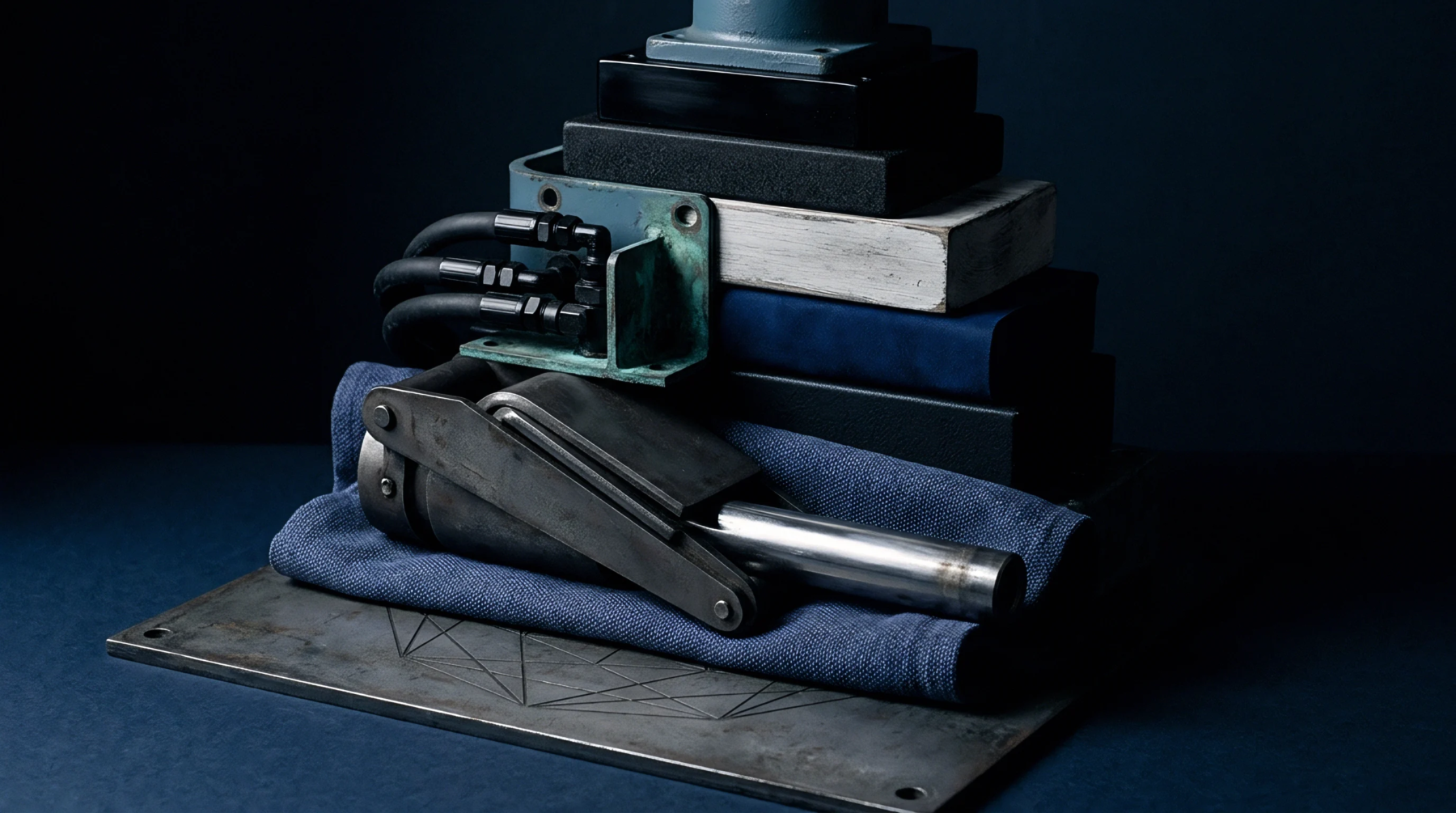
Calibrating let-off PID loops eliminates linen stop marks by pairing load-cell dampening with millisecond take-up reverse steps to arrest cloth fell migration.
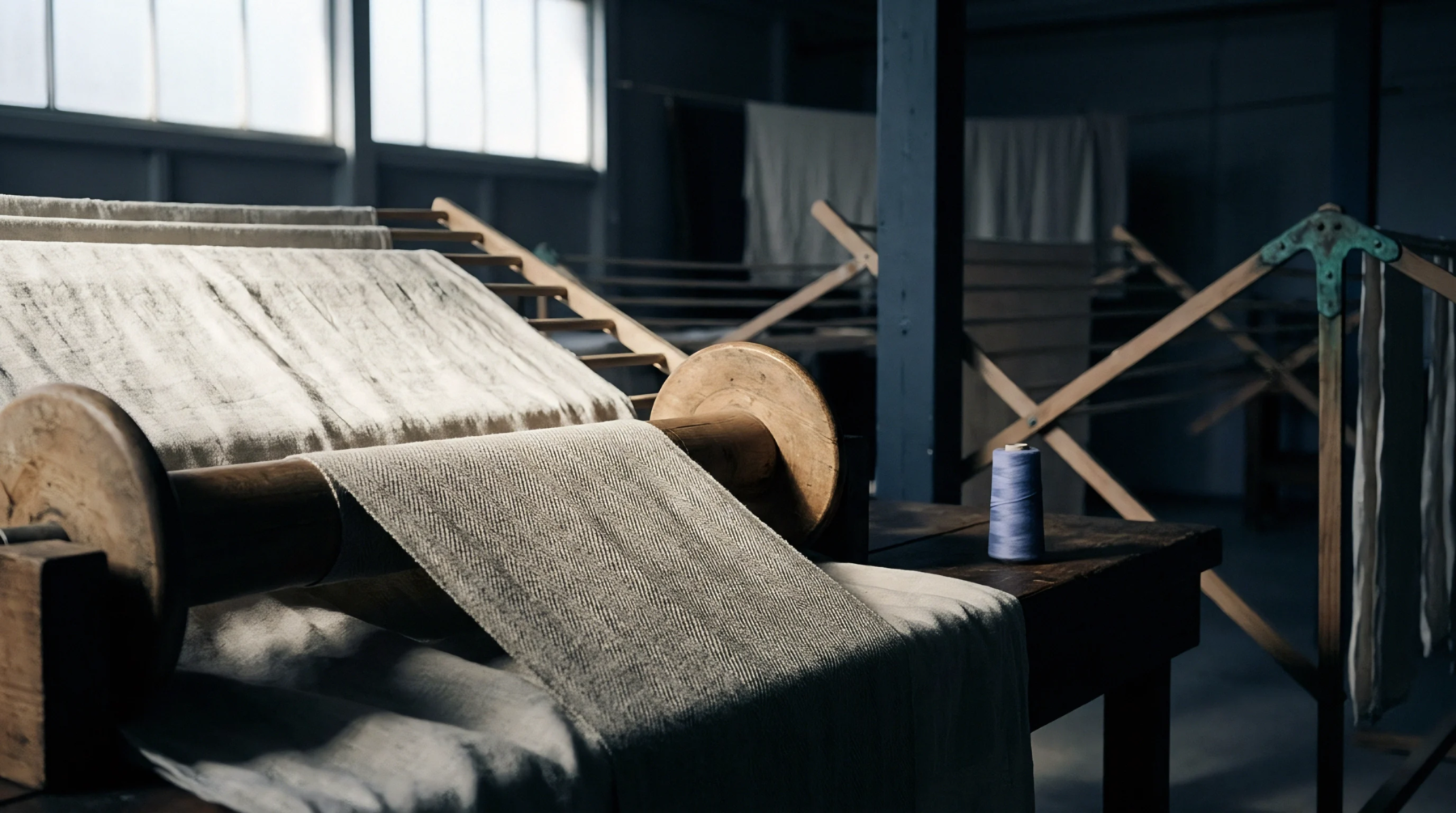
Target static warp tension for wet spun linen must stay between 0.12 and 0.18 cN/tex to prevent end breaks while maintaining shed clearance.

Calculating high-speed weft tension profiles stabilizes pre-winder braking, controls peak deceleration forces, and prevents costly shed stoppage rate spikes.
Partially hydrolyzed PVA (87-89 mol%) delivers superior film flexibility and bast adhesion, cutting linen warp breaks by 85% compared to fully hydrolyzed grades.
Dynamic operator workload reallocation prevents machine interference losses during wet spun linen warp breakage spikes when calculated workload crosses 75 percent.
Expertise is a utility, not a secret. sentiention™ publishes its working knowledge as open reference: intelligence layer covering the materials it sources, the markets it enters, and the reference that serves both.