Evaluating Dynamic Friction Limits in Fine Wet Spun Linen Warps
Dynamic friction in fine wet spun linen warps limits loom speed, demanding tailored size films, optimized shedding angles, and ambient humidity control.

Shear
Fine wet spun linen yarns present a distinct tribological challenge on modern looms. Flax fibers consist of highly oriented crystalline cellulose bundles bound together by interlamellar pectin matrices. Wet spinning draws these ultimate bundles into dense, smooth strands with very little surface hairiness compared to dry spun yarns.
That smooth exterior creates a large contact surface area as yarn passes across steel drop wires, nickel-plated heddle eyes, and stainless steel reed dents. This expanded contact area drives up the boundary friction coefficient, aggravating warp tension fluctuations during shed formation.
Dynamic friction along the warp path determines how fast insertion can run before strands break down. In fine wet spun counts from NeL 40 (37.5 Nm or 26.6 tex) to NeL 80 (75 Nm or 13.3 tex), tensile strength stays relatively high, but elongation at break often drops below 1.8 percent. Under continuous sliding contact, localized shear stresses strip surface pectin residues and dislodge elementary fiber tips, creating micro-abrasions.
These small surface faults eventually catch in the heddle eyes, triggering tension spikes and snapping warp ends.
Sliding contact alternates between static adhesion and kinetic displacement, generating stick-slip motion at higher weaving speeds. As the heddle frame moves up to open the shed, the contact angle between warp thread and heddle eye peaks. Frictional drag scales exponentially under the classical Capstan model, with tension rising relative to wrap angle and dynamic friction coefficient.
Running at 500 picks per minute on a high-speed rapier loom, yarn velocity during shed change exceeds 3.5 metres per second. High velocity paired with sharp wrap angles generates localized frictional heating that breaks down soft lubricant coatings applied during warping.
The dynamic friction coefficient between wet spun flax yarn and polished stainless steel rises by 28 percent when ambient shed humidity drops from 72 percent to 58 percent relative humidity.
Surface profiling shows that fiber bundle orientation strongly dictates directional friction in fine wet spun linen. Flax fibers have a natural lay formed when ultimate fibers align longitudinally during wet drafting in hot water baths. Dragging yarn against this lay raises surface roughness and accelerates micro-fibrillation.
When warp threads run backward relative to their drafting direction, shedding actions strip short elemental fibers right out of the core. This loose fiber debris collects inside heddle eyes and reed dints, steadily increasing sliding resistance over successive cycles.
| Yarn Count (NeL / Nm) | Contact Surface Material | Surface Finish (Ra micrometres) | Static Friction (µs) | Dynamic Friction (µd) | Hairiness Index (H) |
|---|---|---|---|---|---|
| NeL 40 / 37.5 Nm | Polished Stainless Steel 304 | 0.15 | 0.28 | 0.22 | 2.10 |
| NeL 40 / 37.5 Nm | Electro-Plated Heddle Nickel | 0.30 | 0.34 | 0.27 | 2.10 |
| NeL 60 / 56.0 Nm | Polished Stainless Steel 304 | 0.15 | 0.31 | 0.25 | 1.75 |
| NeL 60 / 56.0 Nm | Titanium Nitride Coated Steel | 0.08 | 0.24 | 0.19 | 1.75 |
| NeL 80 / 75.0 Nm | Polished Stainless Steel 304 | 0.15 | 0.35 | 0.29 | 1.40 |
| NeL 80 / 75.0 Nm | Titanium Nitride Coated Steel | 0.08 | 0.27 | 0.21 | 1.40 |
Under dynamic sliding, surface breakdown turns single fiber strands into multi-body abrasion systems. When fine wet spun linen warps exceed critical shear thresholds, damage typically progresses through several stages:
- Pectin Layer Shear Stripping residual outer pectins exposes unbonded elementary cellulosic fibrils directly to metallic contact.
- Micro-Fibril Peeling High kinetic drag pulls fiber ends out from the core, forming a fuzzy surface crown.
- Fibril Entanglement Crowned micro-fibrils on adjacent warp threads mesh during shed crossover, causing inter-warp mechanical cling.
- Slub Accumulation Shedding action rolls entangled micro-fibrils back along the thread, forming dense fiber knots ahead of drop wires.
- Cleavage Fracture Accumulated fiber knots jam in the heddle eyes, creating immediate tension peaks that exceed low yarn strain capacity.
Managing yarn-to-yarn dynamic friction matters just as much as controlling yarn-to-metal drag. Fine linen warps run at high end densities, often 28 to 42 ends per centimetre in dense plain weaves and fine damasks. As adjacent warp threads cross during shedding, they rub laterally along a continuous line of contact.
Lacking the surface elasticity of crimped synthetics or wool, wet spun linen offers little give under inter-yarn abrasion. If the dynamic friction coefficient between yarns exceeds 0.32, ends bind during crossover, setting off false stops on electronic warp stop motions and fraying the strand surface.
Hot-water drafting washes away loose surface impurities, but the resulting clean surface leaves raw cellulosic micro-fibrils completely exposed to harsh scuffing. Without protective barrier films and boundary lubricants applied during sizing, raw wet spun linen warps degrade within the first thousand picks on any modern rapier loom.
Film
Protecting fine wet spun linen warps against destructive shear forces requires engineered size film applications. Sizing raw linen demands a careful balance between film strength, elasticity, surface smoothness, and core yarn penetration. Native flax fibers absorb starch molecules less readily than open-structure cotton because dense crystalline cellulose regions limit liquor intake.
Standard native starch solutions sit largely on the exterior surface of wet spun flax, forming brittle coatings that flake off under dynamic friction. Modified starches with low viscosity and high film flexibility bond far better to the flax structure.
Formulating an effective warp size relies on carboxymethyl cellulose, hydrolyzed polyvinyl alcohol, and oxidized potato starches combined with specialized boundary lubricants. Penetration depth should reach 15 to 20 percent of the yarn cross-sectional radius, anchoring the size film into outer fiber channels without stiffening the yarn core. Excessive core penetration leaves the strand brittle, pushing elongation at break below critical weaving limits.
Insufficient penetration lets the size film peel away under heddle eye friction like a hollow sleeve, exposing raw fiber.
Boundary lubricants in the liquid size lower the kinetic dynamic coefficient of friction. Hydrogenated vegetable fats, synthetic ester waxes, and emulsified polyethylene waxes decrease yarn-to-metal drag once dried into the protective film matrix. Adding tallow or wax at rates between 3 and 5 percent by weight of dry starch solids keeps dynamic friction coefficients below 0.20 on polished steel.
Going past 5 percent wax content weakens the structural cohesion of the starch film, causing size dusting and undercutting tensile strength gains.
Standard supply contracts for fine linen weaving demand size film solubility over 95 percent in 60-degree Celsius water baths without aggressive enzymatic desizing additives.
Moisture inside the size film dictates mechanical performance on the loom floor. Dried flax fibers are extremely hygroscopic, pulling ambient moisture rapidly until reaching equilibrium. A size film operating at 60 percent relative humidity holds about 8 to 10 percent moisture by weight, maintaining optimal film toughness and flexibility.
If shed humidity drops below 55 percent, the size film loses plasticizing water molecules, turns brittle, and sheds white dust onto the race board. Shed humidity above 75 percent softens the film too much, increasing surface tackiness and causing warp ends to stick during shed separation.
| Size Base Formulation | Lubricant Additive (3% wt) | Size Add-On Rate (%) | Tensile Strength Gain (%) | Dynamic Friction (µd) | Loom Dusting Rate (g/10k picks) |
|---|---|---|---|---|---|
| Native Corn Starch | Refined Tallow | 10.5 | 12.0 | 0.31 | 4.85 |
| Oxidized Potato Starch | Synthetic Ester Wax | 8.5 | 18.5 | 0.22 | 1.90 |
| CMC / PVA Blend (50/50) | Polyethylene Wax Emulsion | 6.0 | 22.0 | 0.17 | 0.65 |
| Modified Tapioca Starch | Hydrogenated Flake Wax | 9.0 | 16.0 | 0.24 | 2.40 |
Applying sizing liquor to fine wet spun linen requires strict tension control through warping and sizing zones. Fine flax yarns yield under continuous high tension, suffering permanent elongation that destroys remaining strain capacity. Sizing box rollers must apply uniform nip pressures between 15 and 22 kilonewtons per metre to squeeze out excess liquor and force the film into outer yarn grooves.
Wet tension between squeeze rolls and pre-drying cylinders must stay under 1.2 cN/tex to keep from pre-stretching the wet strand.
Dry splitting of the sized warp sheet at the headstock demands sharp, highly polished lease rods. Fine wet spun linen threads tend to stick together as drying cylinders evaporate water from the paste. Heavy mechanical split forces at the lease rods rupture newly formed surface films, leaving jagged edges along the yarn.
These jagged spots form microscopic ridges that bump against drop wire apertures during weaving, driving up dynamic friction readings. Smooth, low-angle splitting preserves film integrity, delivering a polished strand to the loom beam.
A thick size film increases strand diameter without boosting tensile strength proportional to mass, so film thickness must match reed dent spacing precisely.
Wear
Loom kinematics determine how severely dynamic stress hits fine wet spun linen warps. Shed opening geometry, heddle frame motion profiles, drop wire weight, and reed insertion angles dictate peak friction loads directly. Modern high-speed rapier looms use conjugated cams or electronic dobbies to drive heddle frames.
A dwell angle of 120 degrees provides enough time for rapier insertion, but forces fast harness acceleration through the rest of the shedding phase. That acceleration speeds up warp movement through the heddle eyes, escalating peak dynamic friction.
Shortening harness stroke height lowers friction by reducing total warp displacement and maximum wrap angles at the heddle eye. A traditional cotton warp weaves with a shed height opening of 28 to 32 millimetres at the first harness frame. Fine wet spun linen warps require shed heights brought down to 22 or 24 millimetres, assuming rapier heads clear bottom warp threads without clipping.
Tight shed openings reduce angular deflection of individual ends from 14 degrees down to 9 degrees, cutting Capstan friction multipliers significantly.
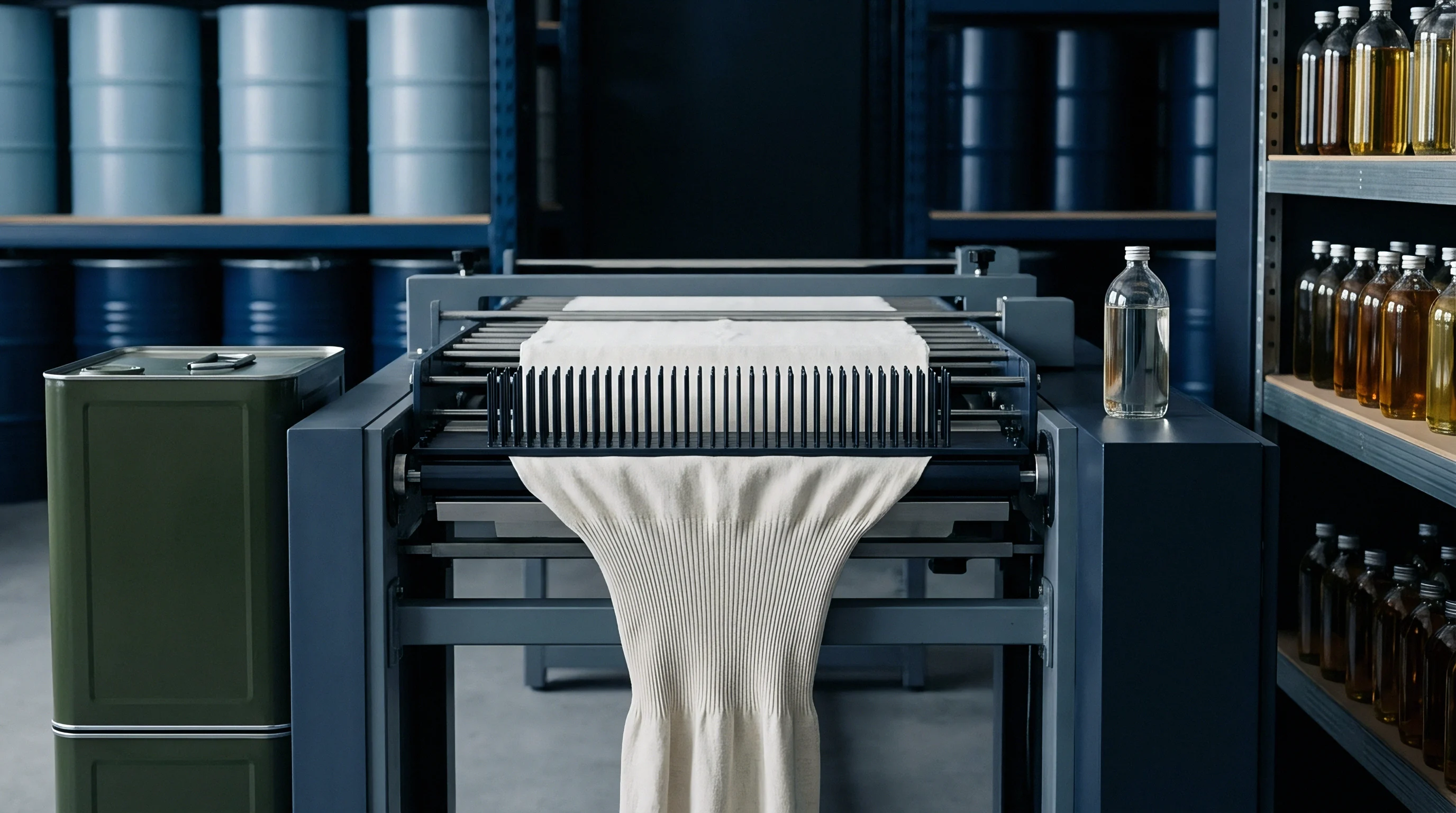
When Does Peak Dynamic Tension Force Micro-Fibrillation?
Dynamic friction peaks are not spread evenly across the weaving cycle. The maximum tension spike strikes when heddle frames reach full shed opening right at reed beat-up, or when crossing warps rub under peak lateral pressure. At that exact moment, yarn velocity relative to the heddle eye drops to zero before reversing, causing a brief shift from dynamic back to static friction.
Static friction coefficients (μs) exceed dynamic values (μd) by 20 to 35 percent. This sudden jump in resistance shears delicate size films if warp tension controls fail to absorb the shock.
Active warp let-off systems must sync real-time tension sensing with main shaft rotation angles. Load cells mounted under back-rest rollers capture instantaneous tension changes across every revolution. Electronic control loops adjust warp beam rotation speeds to continuously feed warp material during shed opening, damping peak tension spikes.
Standard mechanical spring back-rests react too slowly for fine linen running above 350 picks per minute, causing uncontrolled tension surges that snap weakened yarn sections.
Heddle eye design is critical to limiting mechanical wear on fine flax strands. Traditional flat steel heddles with stamped, deburred thread eyes cause micro-scraping along fine linen surfaces. High-grade mail-eye heddles equipped with insert rings made from polished ceramic or nickel-titanium alloys reduce localized friction.
Curved ceramic surfaces offer smooth contact profiles that spread lateral pressure across a larger area, lowering stress concentration on delicate wet spun fibers.
- Align harness frames perfectly perpendicular to the warp line to eliminate lateral rubbing against heddle eye side walls.
- Install lightweight drop wires weighing no more than 0.7 grams for NeL 60 to NeL 80 counts to minimize static drag on rear warp sheets.
- Set back-rest roller height precisely level with the breast beam to equalize tension between top and bottom shed sheets during shed opening.
- Adjust shedding motion timing to complete warp cross 10 to 15 degrees before beat-up, locking picks into place without grinding fibers at front center.
- Select reed dent wires manufactured from duplex polished stainless steel with rounded entry edges to eliminate lateral edge-scraping.
Warp fraying is often attributed to defective yarn spinning lots. In one damask run, three consecutive production shifts were lost to broken warp ends before laser telemetry proved heddle frame alignment had drifted 1.8 millimetres off-center.
Selecting drop wires requires precise calculation of drag forces. Automatic warp stop motions use steel drop wires riding directly on individual warp threads. As thousands of warps slide through drop wire slots each cycle, cumulative friction adds substantial drag behind the harness frames.
For fine linen counts, drop wire surface finishes must maintain roughness values (Ra) below 0.10 micrometres. Using 1.2-gram drop wires designed for heavy cotton on fine NeL 70 linen warps adds 40 percent more rear-zone tension, pushing yarn break rates past acceptable limits.
Reed dent friction shows up aggressively during beat-up as the reed drives inserted picks into the fabric fell. Denser constructions press warp ends hard against dent wires. If reed dent density matches warp end density too closely ~ without accounting for yarn diameter and beat-up displacement ~ dent wires pinch the warp threads.
Fine wet spun linen requires high-precision reeds with dent wire thickness tolerances within plus or minus 0.003 millimetres. Air-jet looms exacerbate this issue through high-velocity air blast currents that dry out surface lubricants right at the reed entry zone.
Accumulated dynamic wear gradually alters fabric structural geometry across long production runs. As sizing films strip off under relentless heddle friction, yarn diameter shrinks slightly while hairiness spikes. Increased hairiness raises warp-to-weft friction during pick insertion, restricting weft yarn straightness.
The finished cloth shows uneven pick spacing, reduced tensile strength along warp lines, and higher susceptibility to pilling in downstream wet processing.
Proof
Quantifying dynamic friction limits requires targeted laboratory testing before committing high-value fine linen warp beams to loom sheds. Standard static tensile tests cannot predict weaving performance because they evaluate single strand breaking force under static loads rather than cyclic sliding friction under fluctuating tension. Dynamic friction evaluations measure real-time resistance while drawing yarn samples around standardized contact pins at controlled speed, wrap angle, and tension.
The modified Capstan method serves as the standard laboratory protocol for measuring the dynamic friction coefficient (μd). A continuous strand of fine wet spun linen feeds from a package at a constant speed, typically 100 metres per minute. The yarn wraps around a stationary, polished stainless steel pin at a fixed angle of 180 degrees (pi radians).
Entry tension (T1) is held at a precise baseline by an electronic tensioner, while exit tension (T2) is recorded continuously through a high-frequency load cell transducer. The dynamic coefficient of friction is calculated directly from the logarithmic ratio of exit tension to entry tension divided by the wrap angle.
Dynamic yarn-on-yarn friction testing relies on twisted strand configurations. Two parallel threads of the same linen lot wrap around each other for three full turns (6-pi radians total contact angle). Drawing one thread past the other at set speeds measures inter-yarn kinetic sliding resistance.
High variance or sudden spikes in recorded exit tension point to irregular surface sizing, localized fiber slubs, or uneven wax lubricant distribution along the yarn.
| Linen Count (NeL) | Tested Dynamic Friction (µd) | Cyclic Abrasion Resistance (Cycles to Failure) | Shed RH (%) | Actual Shed Stops (Stops/10k picks) | Recorded Shed Efficiency (%) |
|---|---|---|---|---|---|
| NeL 40 | 0.19 | 1,450 | 68 | 0.42 | 93.5 |
| NeL 40 | 0.28 | 620 | 68 | 2.85 | 84.0 |
| NeL 60 | 0.21 | 1,100 | 65 | 0.75 | 91.2 |
| NeL 60 | 0.31 | 410 | 65 | 4.20 | 78.5 |
| NeL 80 | 0.22 | 850 | 65 | 1.10 | 89.0 |
| NeL 80 | 0.34 | 230 | 65 | 6.50 | 71.0 |
Cyclic abrasion testers simulate loom shedding by subjecting stressed yarn samples to combined friction, bending, and reciprocal tension cycles. Steel pins or fine wire grids rub repeatedly against tensioned yarn specimens until the strand breaks. The recorded number of cycles to failure correlates directly with warp endurance inside the loom shed.
Fine wet spun linen warps lasting fewer than 800 cycles under standard test loads of 0.5 cN/dtex suffer elevated breakage rates on high-speed weaving machinery.
Evaluation protocols must incorporate environmental simulation chambers. Testing apparatuses housed inside climate-controlled enclosures expose yarn samples to relative humidity levels ranging from 45 to 80 percent. This testing pinpoints the exact humidity threshold where size film breakdown or surface tackiness accelerates friction spikes, letting shed managers set clear climate boundaries for specific yarn lots.
Qualifying fine linen warps requires strict adherence to standardized acceptance criteria before signing beam delivery dockets:
- Dynamic Friction Threshold Dynamic coefficient of friction (μd) against stainless steel must not exceed 0.23 at 65 percent relative humidity.
- Abrasion Endurance Minimum Sample strands must survive a minimum of 900 reciprocal abrasion cycles under standard 0.5 cN/dtex pretension.
- Size Add-On Uniformity Sizing add-on variation across the warp sheet width must stay within plus or minus 0.5 percent of nominal target mass.
- Residual Hairiness Limit Zweigle hairiness index S3 (number of fibers longer than 3 millimetres per 100 metres) must measure under 12.
- Cold Water Solubility Size film desizing removal rate must exceed 90 percent within 15 minutes in neutral 40-degree Celsius water bath.
Standard purchase contracts incorporating ISO 105 and ASTM textile test methods must stipulate that warp lots failing dynamic friction thresholds below 0.24 μd allow the buyer to reject the beam set without paying warp preparation cancellation fees.

Slot
Dynamic friction limits feed directly into loom shed productivity, loom-hour allocations, and landed cloth costs. Every warp break caused by surface shear or heddle friction brings an expensive weaving machine to a halt. When fine wet spun linen warps run near their dynamic friction boundary, stop frequencies climb rapidly from an acceptable 0.5 stops per 10,000 picks to an unsustainable rate above 5.0 stops per 10,000 picks.
Unscheduled stops cause localized fabric faults known as starting marks, reduce shed capacity, and demand more weaver labor.
Loom-hour costing depends on maintaining strong machine efficiency across scheduled production slots. A modern rapier loom running fine linen at 450 picks per minute produces 27,000 picks per hour. At 100 percent efficiency, a plain weave cloth with 30 picks per centimetre yields 9.0 metres of greige cloth per hour.
If high dynamic friction drives warp break rates to 4 stops per 10,000 picks, overall loom efficiency drops from a target of 88 percent down to 72 percent due to downtime and knotting interventions. Production falls to 6.48 metres per hour, driving up machine-hour overhead for every finished metre.
Calculating the landed financial impact of friction-induced efficiency loss requires analyzing full shed cost structures. Standard loom-hour rates for high-speed rapier equipment in European mills average around 28.50 Euros per hour, covering capital depreciation, power, labor, and climate management. When loom output drops from 7.92 metres per hour (at 88 percent efficiency) to 6.48 metres per hour (at 72 percent efficiency), machine operational cost rises from 3.60 Euros per metre to 4.40 Euros per metre.
That 0.80 Euro per metre penalty wipes out profit margins on competitive commercial contracts.
A 15 percent drop in weaving shed efficiency caused by excessive warp friction increases landed greige fabric production cost by 0.80 Euros per metre on standard NeL 60 linen warps.
Managing loom capacity requires establishing practical speed limits based on qualified yarn friction profiles. Lower loom speeds reduce warp sliding velocity through heddle eyes, cutting kinetic energy input and smoothing tension spikes. Running a fine wet spun linen warp at 380 picks per minute instead of 450 picks per minute eases dynamic friction stress, often lifting loom efficiency from 70 percent up to 91 percent.
Net production at the lower speed reaches 6.91 metres per hour ~ outperforming the faster, constantly stopped machine while minimizing starting marks in the greige fabric.
Shed booking allocations depend heavily on optimizing warp beam lengths. Fine linen warps require long beam lengths, typically 3,000 to 5,000 metres per beam, to amortize complex warping, sizing, and gaiting labor costs. Gaiting a new fine linen warp onto a dobby loom takes up to 8 hours of setup and manual thread drawing.
If high surface friction causes excessive warp wear, forcing the shed to cut short a degraded beam at 1,500 metres, fixed setup costs double per finished metre.
Buyers who enter production agreements without specifying maximum dynamic friction parameters expose themselves to unexpected surcharges or lead-time delays when mills slow looms down to manage poor warp quality. Sourcing dossier specifications must tie unit pricing directly to verified dynamic friction caps and clear efficiency guarantees. Establishing these physical engineering boundaries in supply contracts keeps shed capacity predictable, lead times firm, and landed fabric costs aligned with original financial estimates.
Whether future chemical developments in nano-emulsion boundary lubricants will enable fine wet spun linen warps to run continuously on ultra-high-speed air-jet machinery operating above 800 picks per minute without structural strand disintegration remains an open operational question.