Wet Spun Flax Tenacity Correlation with Pectin Solubilization Parameters
Optimal wet-spun flax tenacity demands controlling trough temperature and water hardness to dissolve 3.2-4.1% pectin mass without degrading cellulose strands.
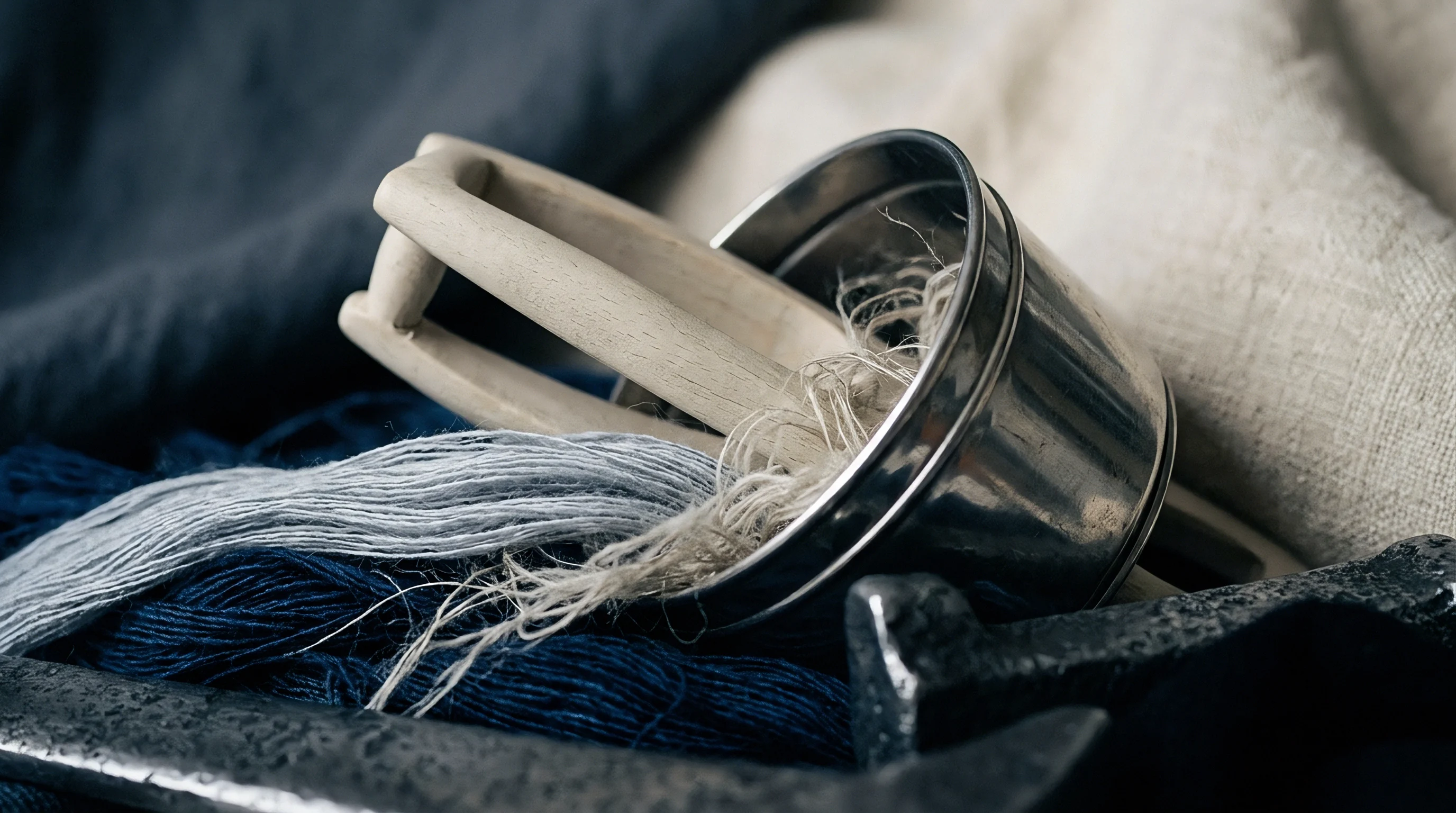

Lamella
In the intercellular boundaries of Linum usitatissimum, complex polysaccharides act as the structural binder that holds individual elementary fibres into commercial technical strands. The matrix consists of methyl-esterified homogalacturonan regions interspersed with complex rhamnogalacturonan-I structures, where divalent calcium cations form ionic cross-links between unesterified carboxyl groups on adjacent galacturonan chains. These calcium-pectate complexes form a rigid lattice that resists mechanical shear during dry hackling, holding fibre bundles at coarse linear densities from 15 to 30 tex.
Wet spinning modifies this cellular architecture by heating the roving in water before drafting.

Homogalacturonan Methoxylation Ratios
The degree of methoxylation controls how stable the pectin polymer chain remains within bast tissue. High-methoxyl pectins ~ where over 50 percent of carboxyl groups carry methyl esters ~ rely mainly on hydrogen bonding and hydrophobic interactions. Low-methoxyl pectins instead depend on divalent calcium bridges that resist thermal dissolution below 60 degrees Celsius.
As temperatures rise in an aqueous bath, methyl esters slowly hydrolyze, exposing free carboxylic acid sites to the liquor.
Controlled demethoxylation increases galacturonic acid solubility while preserving structural cellulose integrity.
Fibre classers evaluate this state by measuring residual galacturonic acid in scutching slivers before releasing a lot. High residual galacturonic acid leaves fibre bundles stiff and coarse, resisting slip in the drafting zone, whereas higher methoxylation levels accelerate hydration as water penetrates the middle cell wall.

Calcium Bridge Dissociation Thermodynamics
Thermal agitation inside the aqueous matrix breaks the weak secondary bonds surrounding calcium carboxylate nodes, shifting the dissociation constant of calcium-pectate complexes. Below 50 degrees Celsius, ionic bonds remain intact, restricting water absorption and keeping the roving flexurally rigid. Once thermal energy passes the activation threshold for ionic exchange, water hydrates the hydrophilic polysaccharide backbone, swelling intercellular spacing from 0.8 nanometres to over 2.4 nanometres.
Chelating agents or mild acidic conditions speed up ionic exchange by replacing divalent calcium ions with monovalent sodium or hydrogen. Because monovalent pectates lack the structural cross-linking capacity of calcium salts, the pectin gel swells rapidly and disperses into the bath. The rate of this dissociation determines how well technical fibre bundles maintain cohesion during drafting.
Commercial flax laboratories still debate the exact threshold under variable pH where middle wall solubilization shifts from beneficial bundle attenuation to catastrophic cell wall stripping.
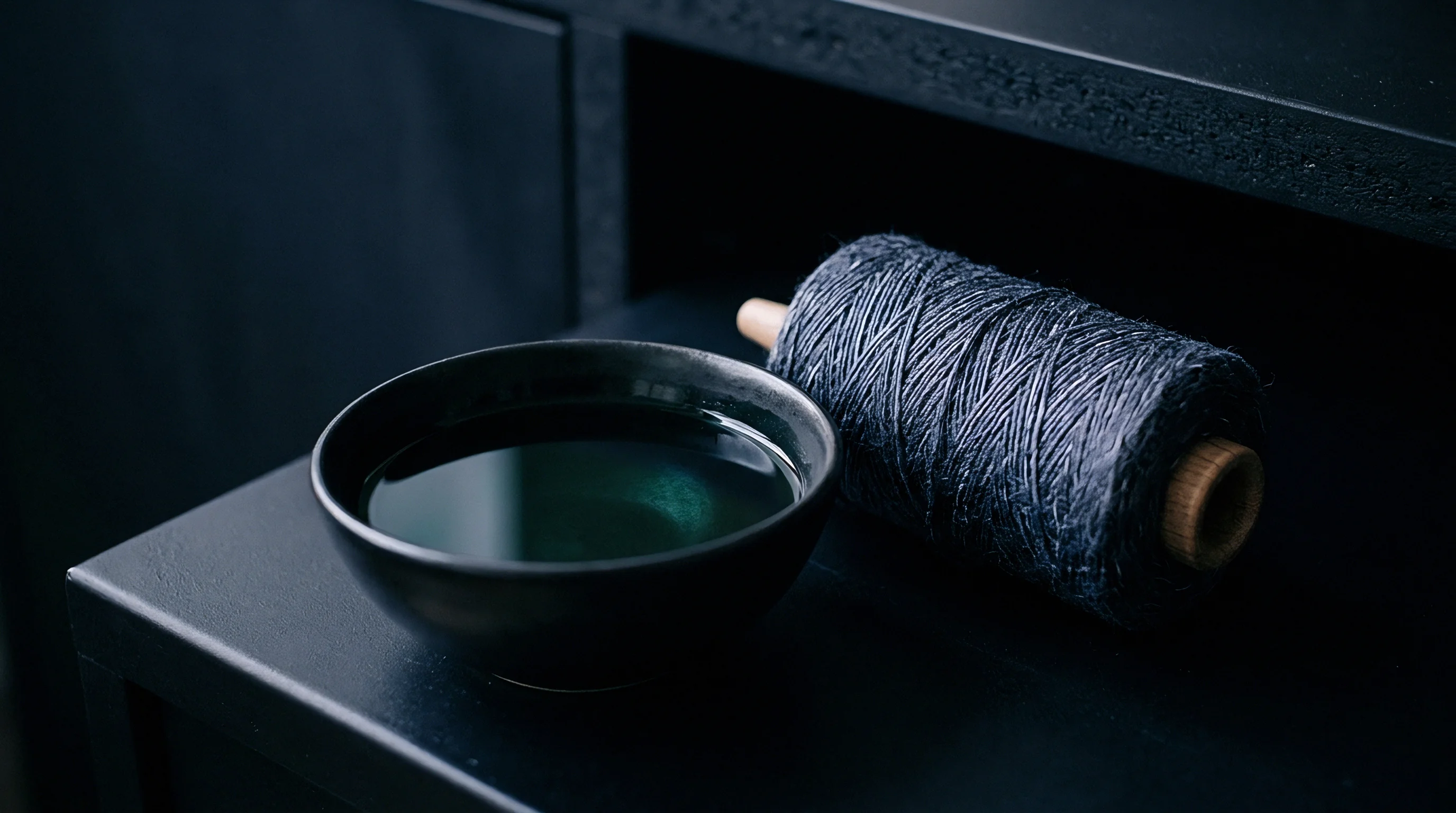

Trough
Aqueous conditioning chambers on wet-spinning frames pass roving strands through circulating hot liquor right before drafting. Bath temperatures between 65 and 80 degrees Celsius soften intercellular pectins quickly without damaging crystalline cellulose domains. Residence time ranges from 25 to 90 seconds depending on machine speed and creel package density; incomplete immersion leaves pectin cores intact, causing uneven drafting tension along the strand.
Liquor Temperature and Thermal Degradation Kinetics
Pectin extraction kinetics follow first-order reactions driven by bath temperature and flow dynamics. Mass loss from the fibre matrix consists mostly of water-soluble homogalacturonan and low molecular weight hemicelluloses. Extraction accelerates sharply above 70 degrees Celsius, removing up to 4.5 percent of total fibre mass within 60 seconds.
Exceeding 85 degrees Celsius triggers thermal degradation of structural hemicelluloses, weakening the elementary cell wall and reducing final yarn strength.
Proper bath turnover maintains chemical equilibrium so saturated pectins do not redeposit onto the roving surface. Insufficient liquor exchange leaves dissolved galacturonic acid polymers in the bath, forming a viscous gel that adds dragging resistance through thread guides.
| Liquor Temperature (°C) | Immersion Duration (s) | Bath Hardness (°dH) | Pectin Mass Loss (%) | Dry Fibre Tenacity (cN/tex) |
|---|---|---|---|---|
| 60 | 30 | 14.0 | 1.12 | 24.5 |
| 70 | 45 | 8.0 | 2.45 | 31.2 |
| 75 | 60 | 2.0 | 3.88 | 38.6 |
| 82 | 60 | 1.0 | 4.62 | 33.1 |
| 85 | 90 | 0.5 | 5.21 | 27.4 |
Water Hardness and Chelating Bath Additives
Water quality in the spinning trough directly affects extraction efficiency. Hard water with dissolved calcium and magnesium suppresses pectin solubilization, shifting chemical equilibrium toward insoluble pectate precipitation. Hardness levels above 10 German degrees require extra thermal energy to achieve equivalent softening.
A trough water hardness exceeding 12 German degrees of hardness at 75°C reduces pectin solubilization rates by 34 percent compared to demineralized bath conditions.
Spinning mills inject polyphosphates or organic chelating agents into the water feed to sequester free divalent ions, preventing calcium from re-binding to galacturonan chains during high-temperature passage. Clean extraction reduces drafting force variation, which prevents thin spots in fine-count line yarns.
- Excessive Pectin Hydrolysis strips intercellular cement entirely, allowing elementary fibres to separate prematurely and causing drafting slubs inside the delivery nip.
- Calcium Re-precipitation deposits hard mineral-pectate crusts on rubber drafting rollers, accelerating wear and introducing cyclic thickness variations.
- Thermal Softening Deficit leaves bundle cores dry and unhydrated, forcing the drafting zone to snap technical fibres rather than slide them smoothly.
- Liquor Saturation Deadlocks occur when bath circulation stalls, raising dissolved pectin concentration above 0.8 percent by weight and gumming roving guides.
Ignoring water hardness dynamics in the trough causes severe end-breakage, halting high-speed spinning frames and inflating labor costs.


Tenacity
Breaking force per unit linear density defines the ultimate utility of spun linen yarns. Producing high-tenacity line yarn requires separating technical fibre bundles into fine elementary units with minimal residual pectin glue. As wet roving enters the drafting zone, aprons clamp the softened strand while the speed difference between back and front rollers pulls adjacent elementary fibres past one another.
Smooth inter-fibre sliding creates a uniform strand before twist is inserted.
Does Bath Calcium Concentration Limit Yarn Tenacity Gain?
Divalent calcium ions left in the middle lamella act as anchors that resist fibre slip during drafting. High calcium levels force rollers to exert excessive tension to reach target attenuation, rupturing individual elementary cell walls instead of shearing the pectin matrix. These broken elementary fibres generate short fuzzy lint, dropping yarn tenacity by up to 30 percent compared to cleanly separated strands.
Feeding soft water to reduce calcium concentration lowers internal friction during drawing. This allows elementary fibres ~ which average 20 to 30 millimetres in length ~ to align parallel along the yarn axis. That alignment maximizes contact area between cellulose filaments, improving twist efficiency and final tensile strength.

Inter-Fibre Friction Coefficients during Attenuation
Hydrothermal extraction converts brittle pectin into a viscous film along the outer cell wall. This thin hydrogel layer drops the dynamic friction coefficient between overlapping flax filaments during drafting, preventing localized stress concentrations and spreading attenuation forces evenly across the bundle cross-section.
- Wet roving enters the drafting zone under controlled speed and tension.
- Trough liquor dissolves the soluble pectin matrix between technical bundle strands.
- Rubber aprons apply nip pressure to stabilize fibre alignment across the draft zone.
- The continuous filament strand enters the spindle twister to set high-tenacity yarn structure.
Sufficient pectin extraction softens the roving matrix without stripping the intercellular cement that holds elementary fibres into cohesive technical strands.
Balancing extracted pectin against residual insoluble protopectin preserves bundle continuity while permitting fine count formation. Stripping pectin completely destroys bundle cohesion, leaving the strand too weak to survive the twist triangle.
Proper extraction retains just enough insoluble gel to lock elementary fibres in parallel alignment as inserted twist binds the final yarn structure together.


Dossier
Verifying incoming fibre lots requires quantitative laboratory testing rather than subjective hand assessment. Spectrophotometric analysis using the m-hydroxydiphenyl method measures total galacturonic acid content following acid hydrolysis. Standardized dry bundle tensile testing per ISO 2370 establishes baseline tenacity before wet processing, while automated single-yarn strength testing per ISO 2062 confirms whether target spinning performance yields the expected yarn tenacity.

Galacturonic Acid Calibration Curves
Analytical testing links chemical composition to spinning performance. Light absorption at 520 nanometres reveals galacturonic acid concentration in hydrolyzed fibre extracts, and plotting galacturonic acid mass fraction against wet-spun yarn tenacity yields a parabolic response curve across standard metric counts.
Insufficient galacturonic acid removal indicates under-retted or poorly conditioned fibre, causing low yarn tenacity from bundle coarseness. Conversely, excessive loss signals cell wall damage that degrades ultimate strength. Peak yarn tenacity occurs within an extraction window between 3.2 and 4.1 percent soluble galacturonic acid equivalent mass loss.
| Yarn Count (Nm) | Soluble Galacturonic Acid (%) | Fiber Fineness (dtex) | Yarn Tenacity (cN/tex) | Elongation at Break (%) |
|---|---|---|---|---|
| 26 | 2.8 | 28.5 | 26.4 | 2.1 |
| 40 | 3.4 | 21.0 | 34.8 | 2.8 |
| 60 | 3.9 | 16.2 | 39.2 | 3.2 |
| 80 | 4.2 | 12.8 | 36.5 | 2.9 |
| 100 | 4.6 | 10.5 | 29.1 | 2.3 |

Quality Audit Protocols for Fiber Procurement
Technical managers require standardized lab dossiers before releasing delivery payments for high-value long flax parcels. This documentation confirms that retting uniformity meets the strict chemical benchmarks needed for fine-count wet spinning.
Contractual stipulations mandating ISO 2062 single-yarn break testing at 20°C and 65 percent relative humidity prevent disputes over moisture-induced tenacity variance in wet-spun linen lots.
Testing teams cross-check linear density against chemical extraction reports. A parcel with fine fibres but unusually low pectin extraction potential typically indicates mechanical damage from aggressive scutcher turbine blades.
- Galacturonic Acid Assay Boundary sets a maximum permissible residual pectin limit of 4.5 percent total mass for Nm 60 grade fibre parcels.
- Residual Calcium Mass Fraction must not exceed 0.12 percent dry weight following standard trough immersion simulation trials.
- Drafting Slippage Index measures dynamic draft force variation, flagging lots prone to slub formation before they reach creel stands.
- Tenacity Variance Coefficient caps single-strand breaking strength variation at 11.5 percent across twenty test skeins.
Contracts that tie ISO 2062 strength tolerances directly to verified pectin solubilization bounds give buyers legal standing to reject substandard raw parcels before bale wires are cut.
Spread
Raw fibre price per kilogram is only the starting point in calculating final cloth cost per metre. Extracting pectin in the spinning trough removes weight from the roving strand, where even a 4 percent soluble pectin loss directly alters yarn yield. Spinners have to account for this mass reduction alongside standard hackling and drafting waste allowances.

Commercial Yield Loss at the Drafting Zone
Consider a 10,000 kilogram parcel of dew-retted water-retted long flax bought at 4.80 Euros per kilogram. Hackling yields 68 percent long line sliver and 28 percent comb tow, alongside 4 percent unrecoverable dust and shive waste. After deducting tow credits, long line sliver enters the roving frame at an effective raw material cost of 6.85 Euros per kilogram.
When wet spinning Nm 40 line yarn, hot trough immersion extracts 3.8 percent of soluble pectin and hemicellulose mass into the wastewater. Machine draft waste and end-breakage sweepings lose another 2.5 percent of fibre. This brings total wet-spinning mass loss to 6.3 percent, pushing net raw material cost in the final yarn package to 7.31 Euros per kilogram before energy and labor overheads.
Landed Cost Impact across Fine Linen Metric Counts
Finer metric counts require thorough elementary fibre separation, forcing higher trough extraction levels that increase mass loss. Spinning Nm 80 yarn, for instance, requires bath settings that dissolve up to 4.5 percent pectin mass to achieve necessary inter-fibre slip. Higher extraction losses, coupled with increased frame end-breakage rates, widen the price gap between coarse and fine linen yarns.
Unextracted galacturonic acid residues increase inter-fibre frictional drag during high-draft drawing.
For a 140 gram per square metre plain weave linen fabric woven from Nm 40 wet-spun line yarn at 150 centimetre width, raw material runs 1.02 Euros per linear metre. Cutting back on trough water conditioning to save thermal energy reduces pectin extraction, causing yarn tenacity to drop from 34.8 cN/tex to 28.2 cN/tex. That drop pushes loom stoppage from 1.2 to 4.8 stops per hundred thousand picks, adding 0.22 Euros per metre in lost weaving efficiency and wiping out any heating savings.
The economics are straightforward: paying a premium for flax lots with consistent pectin solubilization guarantees high spinning tenacity, minimal loom downtime, and predictable landed costs per finished metre.