Online Moisture Sensor Integration for High Speed Rapier Loom Warps
Online moisture sensing on high-speed rapier warps maintains flax elasticity, cuts cyclic break rates by sixty percent, and protects loom shed efficiency.

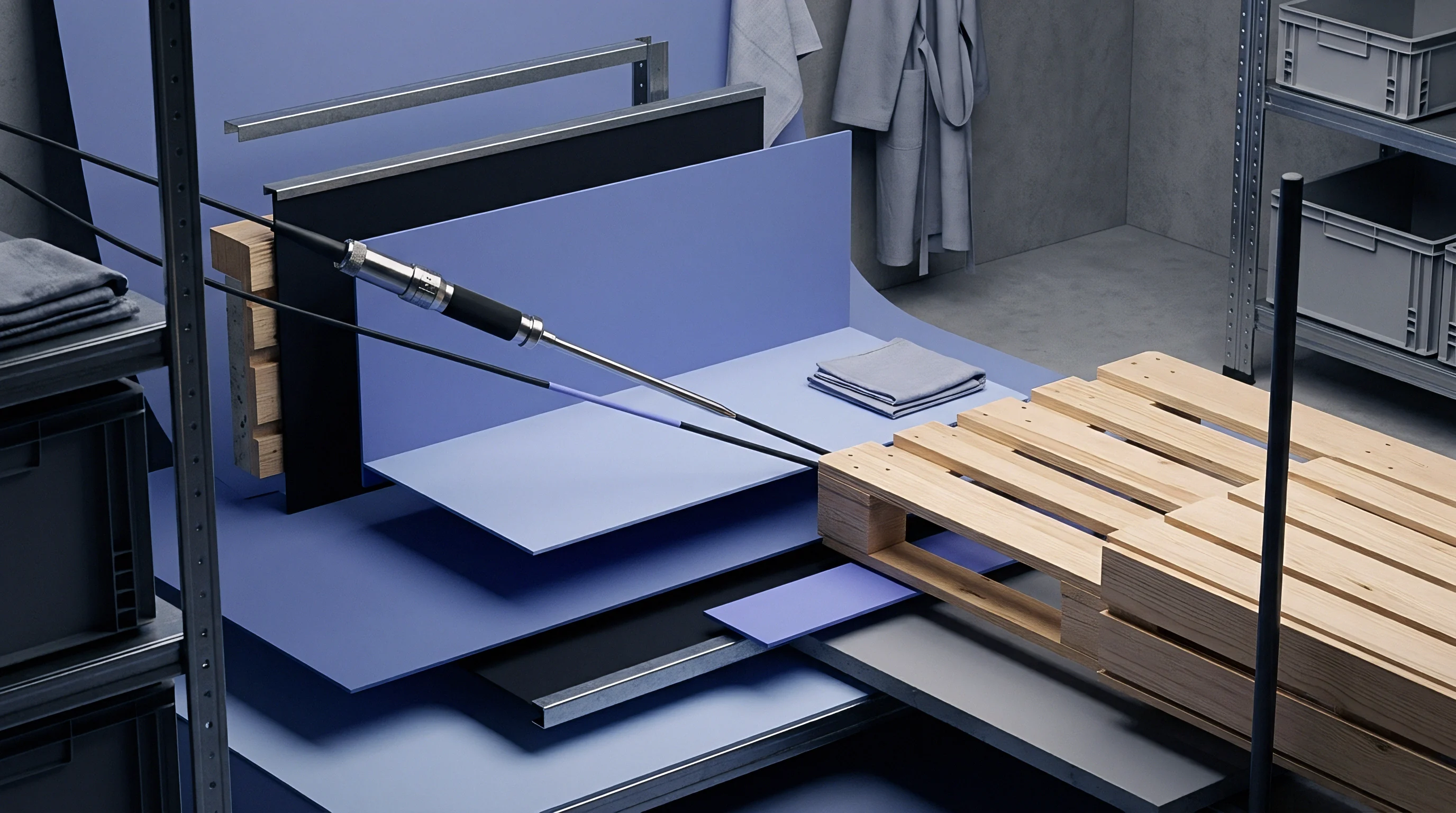
Coupling
Positive rapier looms operating across a 220-centimetre reed width at 620 picks per minute impose cyclic peak tensions exceeding 1.8 centinewtons per tex on dry linen warp ends. Natural bast fibres lose elastic recovery rapidly when moisture levels drop below standard regain values during continuous shedding, causing dry yarns to snap at beat-up. Air displacement generated around the heald frames accelerates moisture evaporation from the running sheet, drying the yarn surface within seconds of leaving the back-rest beam.
This rapid desiccation increases yarn-to-yarn friction in the lease rods and drop wires, producing shedding debris, filamentation, and frequent end breaks that drag down machine efficiency.
Tracking moisture directly on the loom eliminates the lag inherent in off-line laboratory conditioning ovens. Contactless and low-friction evaluation across moving yarn sheets relies on two main principles: high-frequency stray-field capacitance and microwave cavity resonance. Water has a static relative permittivity near 80 at 20 degrees Celsius, compared to values between 3.0 and 5.5 for dry native cellulose and polyvinyl alcohol size films.
This sharp dielectric contrast produces clear shifts in signal output as yarn moisture varies. As the warp sheet travels between the whip roll and the healds, electrostatic fields penetrate the yarns and convert impedance variations into continuous regain readings.
A linen warp sheet running at 650 picks per minute drops 1.4 percent moisture regain between the back-rest roller and the drop wires when shed relative humidity sits below 58 percent.
At high loom speeds, signal acquisition faces mechanical turbulence from warp sheet oscillation. Cyclical shedding alternately tightens and slackens the ends, altering yarn spatial density over the sensor head and skewing effective capacitance independently of actual moisture content. Contactless microwave strip-line sensors counter this error by projecting an electromagnetic field across a wider volumetric window, averaging density variations over several centimetres of sheet width.
Differential capacitance systems use paired transmitter and receiver plates on opposite sides of the warp sheet to balance air gap changes using comparative impedance bridges.
Automated baseline recalibration offsets environmental humidity swings without manual intervention.
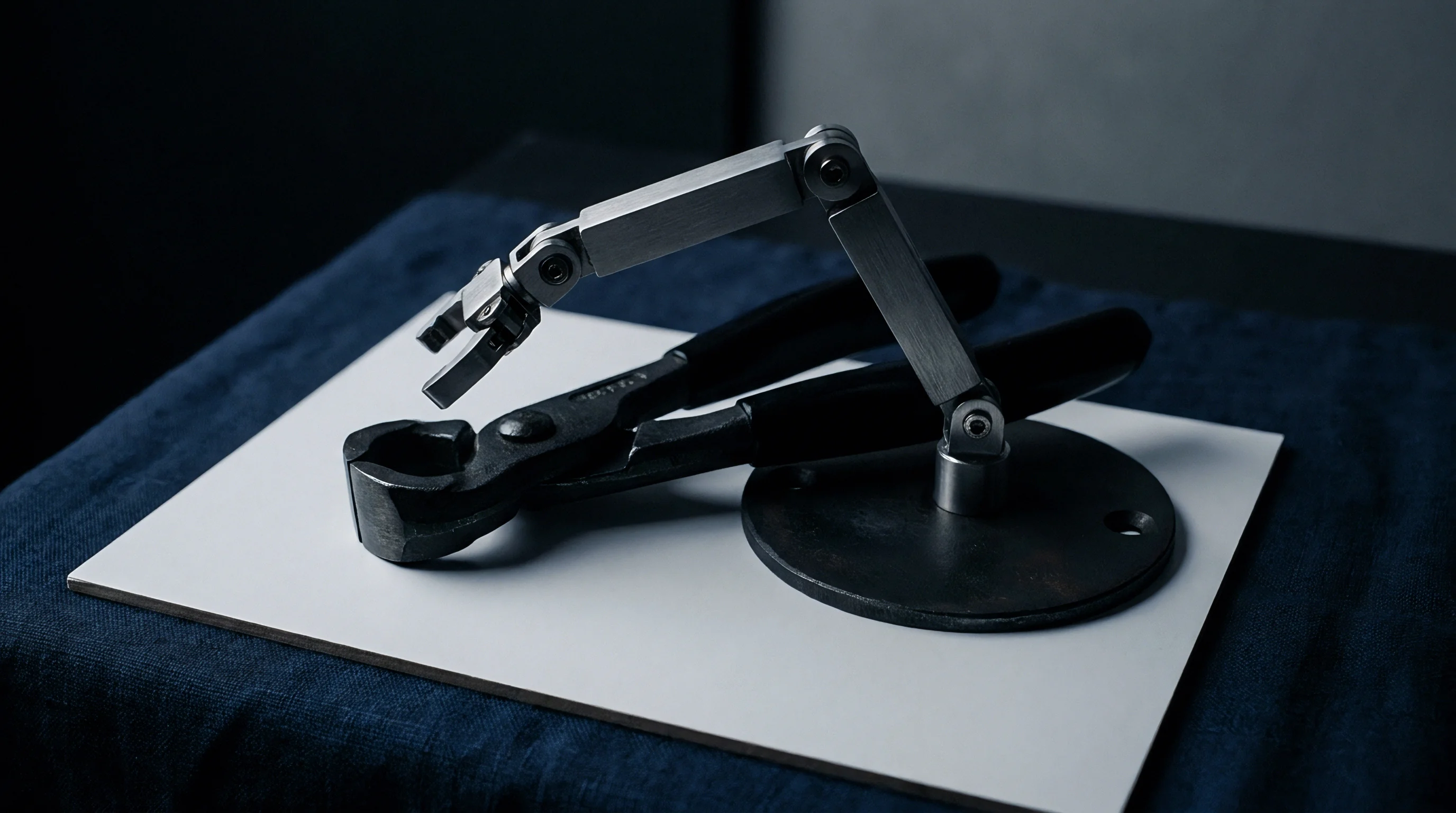
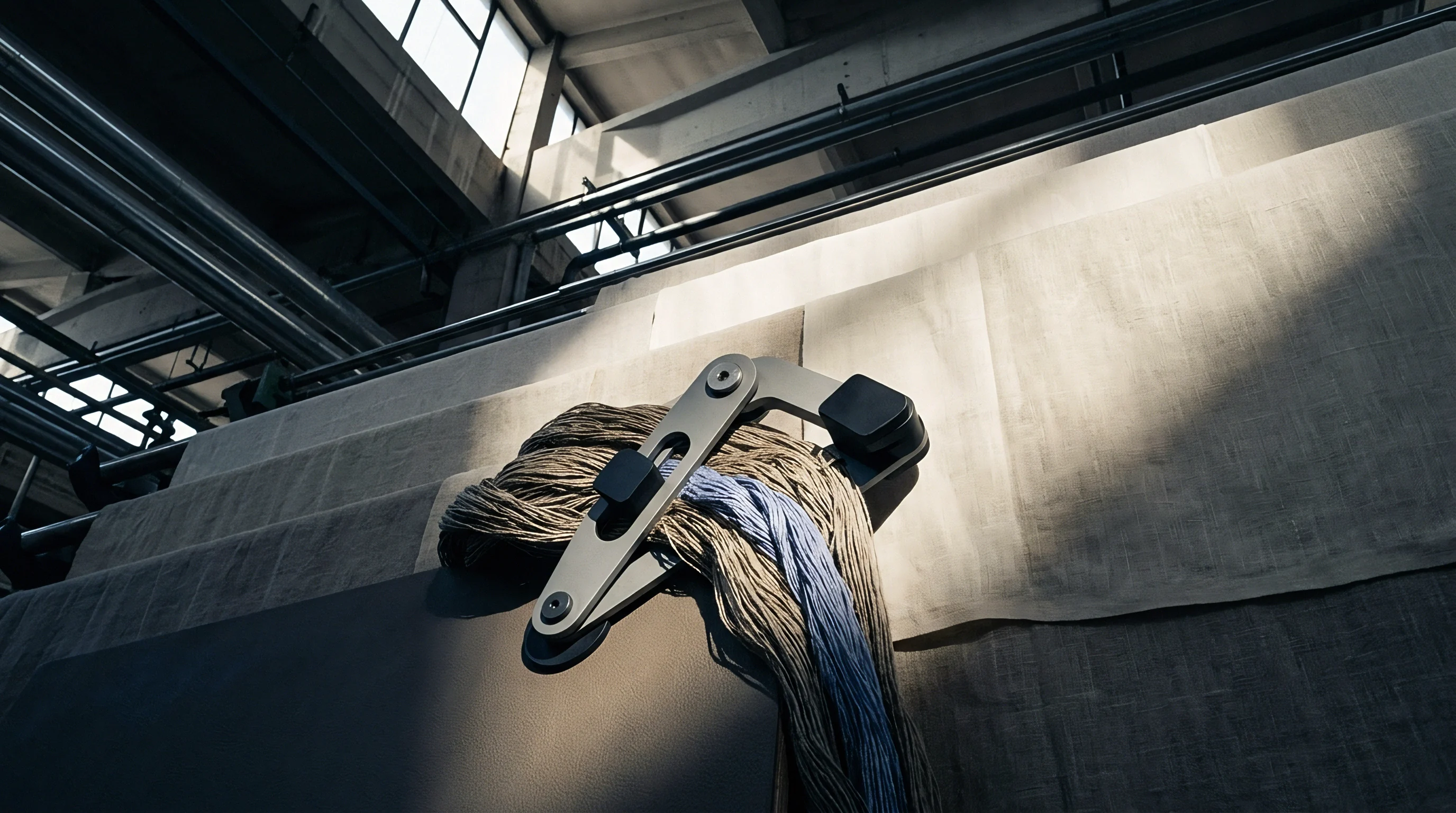
Bar
Mounting location on the loom frame dictates both measurement fidelity and sensor longevity. The space between the whip roll and dropper box provides the only unobstructed linear run for placing the sensor head. Placing the sensor bar too close to the heald frames exposes delicate electrode faces to airborne lint, sizing dust, and turbulent air from the harness frames.
Positioning the assembly immediately downstream of the back-rest roller stabilizes the yarn path and minimizes transverse vibration, maintaining steady contact across the sensor shoe for an unbroken measurement plane.
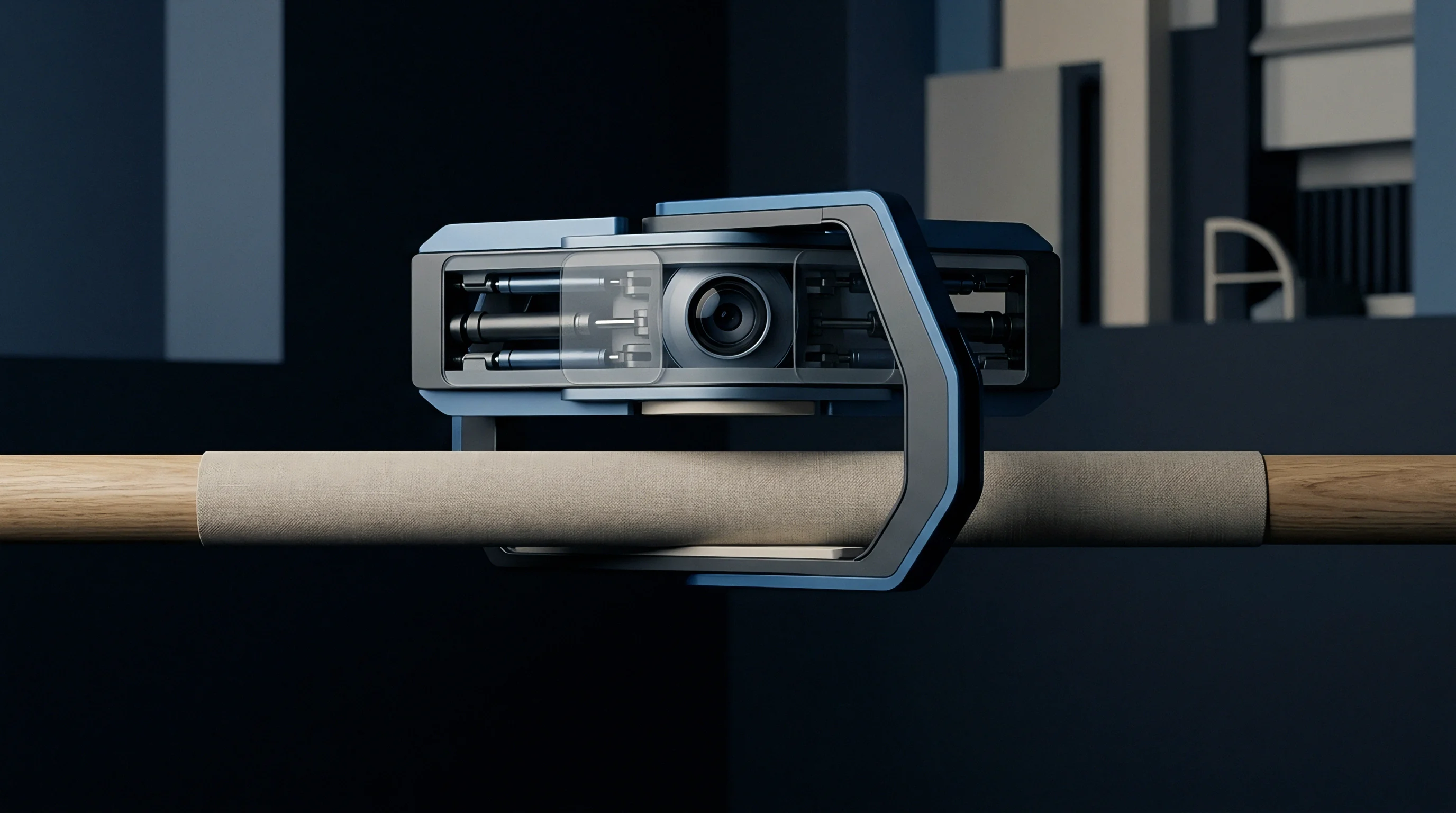
Will Microwave Resonators Outperform Capacitive Plates?
Choosing a sensing architecture depends on warp density, yarn count, and conductive chemical additives. Microwave resonance units track shifts in resonance frequency and quality factor as the moist dielectric medium passes through an electromagnetic cavity, measuring total water mass. High-frequency stray-field capacitive plates measure complex admittance changes across parallel or interdigital copper tracks to monitor surface hydration.
Because dense linen warps treated with conductive hygroscopic lubricants distort capacitive fringe fields, microwave resonance is more dependable for heavy structural fabrics. Light shirting warps with uniform starch-PVA sizing run cleanly over hardened ceramic capacitive wear plates without significant signal saturation.
| Sensor Modality | Operating Frequency | Measurement Window | Yarn Deflection Angle | Signal Resolution | Wear Plate Material |
|---|---|---|---|---|---|
| Stray-Field Capacitive Array | 20 MHz to 50 MHz | 40 mm x 120 mm | 3 degrees to 5 degrees | 0.1 percent regain | Polished Alumina Ceramic |
| Microwave Split-Cylinder Resonator | 2.4 GHz to 5.8 GHz | 15 mm x 80 mm | Zero (contactless) | 0.05 percent regain | PTFE Composite Window |
| Near-Infrared Reflectance Head | 1450 nm and 1940 nm | 25 mm circular spot | Zero (contactless) | 0.15 percent regain | Sapphire Crystal Face |
| Differential Impedance Grid | 100 kHz to 1 MHz | 50 mm x 200 mm | 4 degrees to 6 degrees | 0.2 percent regain | Silicon Nitride Ceramic |
Mechanical installation requires rigid isolation from the rapier frame, as loom vibrations at 600 picks per minute produce acceleration forces that destabilize cantilevered brackets. Structural mounting bars should anchor directly to the main cast-iron side frames through elastomeric damping bushings. For contact-type sensors, uniform wrap tension prevents air layer fluctuations; a fixed entry angle between three and five degrees across the alumina wear plate eliminates chatter without adding measurable tension to fragile flax ends.
To prevent static charges from distorting capacitive voltage outputs, grounded copper strips beside the wear surfaces bleed electrostatic potentials to machine earth before yarns reach the sensing gap.
- Back-rest roller clearance maintains laminar yarn entry and isolates the sensor body from cyclical whip roll displacement.
- Electrostatic grounding bus bleeds triboelectric charges off synthetic sizing compounds before warp ends cross the electrode face.
- Ceramic guide shoes maintain stable wrap geometry without slicing running filaments under high beat-up tensions.
- Pneumatic blow-off manifold sweeps sizing chaff and loose fibre dust off the measurement window at programmed pick intervals.
Steady physical contact between running ends and electrode plates governs signal stability far more than electronic filtering algorithms.
Regain
Commercial moisture regain values under ISO 139 govern trade weights, but weaving performance relies on active water distribution within the yarn structure. Dry flax fibre has an equilibrium moisture regain of 12.0 percent at standard atmospheric conditions of 20 degrees Celsius and 65 percent relative humidity. Wet-spun linen warp yarns require a working regain between 8.5 percent and 10.5 percent on the beam to stay flexible through the droppers and heald eyes.
Parched flax fibres become brittle as moisture loss stiffens the natural pectin; when local moisture falls below 7.5 percent, yarn work-to-break values drop by 35 percent, triggering rapid warp breaks in the shed.

Which Calibration Routines Prevent Signal Drift?
Sensor signal drift stems from temperature shifts, size residue build-up, and chemical batch variations. Thermal fluctuations alter impedance readings, as the dielectric constant of water decreases by roughly 0.4 percent for every 1-degree Celsius rise in shed temperature. Online measurement processors must run continuous real-time temperature compensation using embedded platinum resistance detectors directly beneath the ceramic contact plate.
Standard calibration curves derived for pure water and raw yarn fail on sized warps because starch binders alter dielectric permittivity. Native potato starch, carboxymethyl cellulose, and polyvinyl alcohol exhibit different moisture absorption isotherms and polar group densities, requiring size-specific calibration lookup tables in the processing unit.
- Off-loom gravimetric sampling establishes the initial baseline moisture by weighing and drying yarn cut-outs per ISO 6741 standards.
- Dielectric baseline zeroing matches the sensor voltage response to the oven-tested sample values while the loom idles at operating temperature.
- Thermal coefficient correction adjusts the active measurement curve against temperature swings recorded by the sensor head thermocouple.
- Dynamic verification run validates sensor stability across two hundred continuous metres of cloth production at full rapier velocity.
Sized linen yarns lose elastic recovery rapidly when dried past their equilibrium moisture content.
| Yarn Type and Count | Sizing Additive | Regain Level | Warp Tenacity | Elongation at Break | Stop Rate per 100k Picks |
|---|---|---|---|---|---|
| 100 percent Wet-Spun Flax, Nm 39 | Modified Potato Starch (8 percent add-on) | 6.5 percent | 14.2 cN/tex | 1.4 percent | 4.8 stops |
| 100 percent Wet-Spun Flax, Nm 39 | Modified Potato Starch (8 percent add-on) | 9.2 percent | 17.8 cN/tex | 2.3 percent | 1.2 stops |
| 100 percent Wet-Spun Flax, Nm 39 | PVA and Starch Blend (7 percent add-on) | 11.0 percent | 16.9 cN/tex | 2.5 percent | 1.4 stops |
| Flax and Cotton 60/40 Intimate, Ne 20 | Carboxymethyl Cellulose (6 percent add-on) | 7.0 percent | 18.1 cN/tex | 3.8 percent | 3.1 stops |
| Flax and Cotton 60/40 Intimate, Ne 20 | Carboxymethyl Cellulose (6 percent add-on) | 8.8 percent | 21.4 cN/tex | 4.9 percent | 0.8 stops |
| Methods Note: Data recorded on 220 cm positive rapier looms running plain weave shirting at 620 picks per minute under 62 percent shed relative humidity. Stop rates reflect warp-related interruptions logged automatically by loom monitoring systems over 500,000 picks per test trial. | |||||
Flax fibres contain residual waxes and hemicellulose that create hysteresis between sorption and desorption cycles. Warps entering the shed from a cool preparation cellar follow an absorption path as they acclimate to shed heat, while dry warps sprayed with misting nozzles follow a desorption path as surface moisture evaporates. Calibration models must account for this loop to prevent signal drift from compromising predictive loom control.
Technicians need to perform weekly gravimetric cross-checks using rapid halogen moisture analyzers to verify sensor accuracy against chemical variations in sizing recipes.
Inaccurate regain calibration leads to premature warp end failure, elevated fluff accumulation in drop wires, and chronic loom downtime.

Feedback
Dynamic sensor readings achieve maximum utility when integrated directly into the machine control architecture. Rapier loom microprocessors manage let-off, take-up, and motor speed decisions through industrial fieldbus interfaces. Real-time moisture data delivered via CANopen or Modbus TCP protocols enables closed-loop control over environmental conditioning and weaving parameters.
When warp moisture falls below the critical 8.0 percent threshold on a high-speed linen line, the automated control unit initiates sequential corrective actions to protect the warp sheet before failure occurs.
Consider a practical shed scenario running a fine linen shirting fabric on a 220-centimetre rapier loom with 100 percent wet-spun flax warp of count Nm 44 (22.7 tex) and a warp sett of 30 ends per centimetre, totaling 6,600 warp ends. The loom operates at 640 picks per minute with a weft density of 28 picks per centimetre, using modified wheat starch sizing at an 8.5 percent dry add-on. Ambient shed conditions fluctuate between 52 percent and 64 percent relative humidity over a twenty-four-hour cycle due to outside air intake variations.
At 52 percent relative humidity, moisture sensors mounted 100 millimetres downstream of the whip roll detect a regain decline from 9.2 percent to 7.4 percent across forty metres of warp feed. Sized flax ends lose critical strain tolerance at this hydration level. Without closed-loop intervention, cyclic rapier shed openings pull dry ends past their breaking elongation, spiking warp break rates from 1.1 to 4.6 stops per 100,000 picks and causing visible starting marks that drop overall shed efficiency below eighty percent.
Loom control units modify motor speed before micro-misting arrays restore ambient moisture around the warp sheet.
Automated integration executes a graded three-tier response sequence to prevent shed collapse. The local programmable logic controller processes rolling five-second moisture averages to filter out transient shedding noise. When regain drops below 8.2 percent, the processor triggers ultrasonic micro-misting arrays above the warp sheet between the beam and whip roll, spraying atomized demineralized water droplets under 10 micrometres in diameter.
Surface evaporation rehydrates the moving sheet without forming droplets that dissolve size films. If regain continues descending past 7.6 percent, the loom controller throttles drive motor velocity from 640 down to 520 picks per minute, reducing cyclic strain acceleration and friction heat to protect yarn elongation.
- Zone misting valve actuation delivers localized humectant mist across dry warp sections when moisture drops 0.5 percent below target.
- Automatic speed reduction slows loom drive revolutions by fifteen percent to lower peak shed opening strain on parched ends.
- Alarm threshold trigger flags the supervising technician when moisture values stay out of range for three consecutive minutes.
Tension control via the electronic let-off unit provides supplementary mitigation. Because damp warp sheets stretch more under tension than parched ones, when the moisture sensor signals dehydration, the electronic let-off system relaxes nominal warp tension from 1.9 centinewtons per tex to 1.6 centinewtons per tex. This preserves the remaining elongation margin of the flax fibres, while simultaneous speed throttling and localized humidification maintain continuity across fragile warp beams.
The main technical challenge remains whether real-time yarn tension data can isolate the dielectric contribution of chemical sizing formulations under fluctuating ambient temperatures.

Outlay
Procuring and retrofitting online moisture measurement systems requires balance-sheet justification based on recoverable loom hours and fabric quality gains. Capital expenditure per rapier loom averages between 4,200 and 6,800 euros for multi-channel microwave resonance systems, including ceramic mounting hardware, cabling, and PLC interface cards. Capacitive stray-field arrays require lower commitments, averaging 1,800 to 2,900 euros per machine position, with costs amortized across overall yardage.
Sourcing directors evaluate these expenditures against avoided production losses and eliminated stop-mark defects.
Break rates directly determine available loom hours. Every warp stop on a modern rapier loom consumes an average of 2.5 minutes of downtime for weaver reaction, broken end identification, mending, draw-in through the drop wire and heald eye, and machine restart. On a 220-centimetre loom running at 620 picks per minute, each stop wastes 1,550 potential pick insertions.
Eliminating 3.0 stops per 100,000 picks recovers substantial operational capacity across high-volume runs.
| Performance Metric | Standard Unmonitored Loom | Online Capacitive System | Online Microwave System |
|---|---|---|---|
| Warp Stop Rate (per 100k picks) | 4.4 stops | 1.8 stops | 1.1 stops |
| Machine Efficiency Percentage | 78.5 percent | 86.2 percent | 89.4 percent |
| Daily Output per Loom (metres at 28 picks/cm) | 258 metres | 283 metres | 294 metres |
| Loom Hour Cost Basis | 38.50 euros | 38.50 euros | 38.50 euros |
| Cost per Finished Metre (Greige Weaving) | 1.43 euros | 1.30 euros | 1.25 euros |
| Starting Mark Defect Rate | 3.8 percent | 1.2 percent | 0.6 percent |
Financial recovery accelerates when weaving high-sett linen fabrics, where four-point inspection downgrades penalize mill margins. Starting marks and distorted picks from warp repair stops convert first-grade upholstery and apparel fabrics into discounted seconds. A 3 percent reduction in four-point penalty rates across a 100,000-metre production contract yields direct savings exceeding the initial hardware acquisition expense, amortizing sensor installations within seven to eleven months of continuous operation on premium bast fibre runs.
Purchase contracts specifying delivery moisture tolerances per ASTM D2495 bind suppliers to certified continuous sensor logs rather than post-winding gravimetric spot checks.