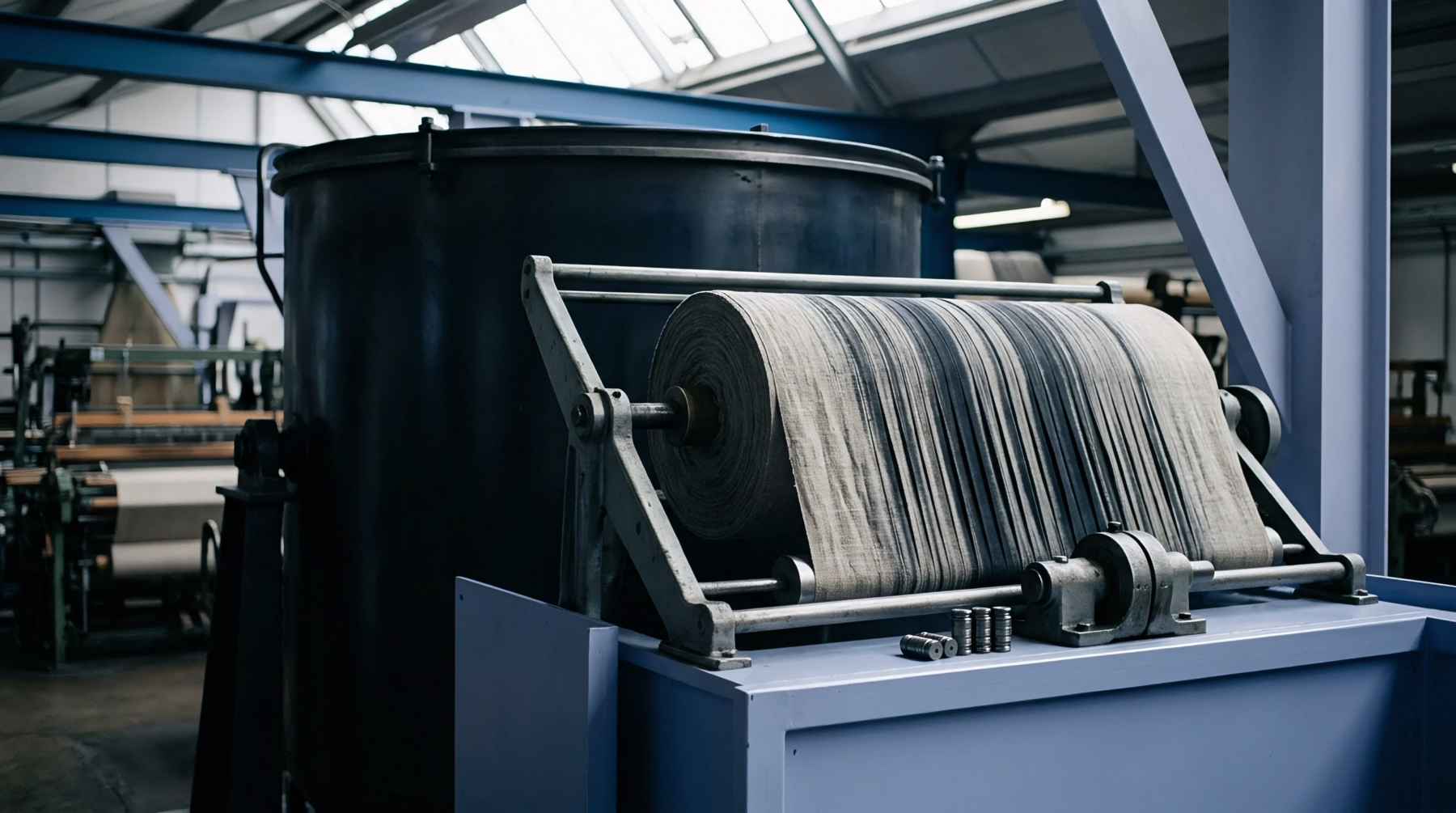
Calculating Warp Crimp and Reed Width in Linen Weaving
Calculating reed width requires multiplying target greige width by weft crimp and finish shrinkage allowances tailored to flax yarn modulus.
Calculating reed width requires multiplying target greige width by weft crimp and finish shrinkage allowances tailored to flax yarn modulus.

Single strand tensile performance in wet spun linen dictates loom stops, dynamic failure rates, and landed cloth cost through gauge-length sensitivity and tenacity CV.
Statutory non-preferential origin depends on substantial processing steps, whereas voluntary chain-of-custody certificates track raw material identity.

Fine linen warp break frequencies depend on single-end tenuity, size film flexibility, and shed opening geometry, directly governing loom efficiency and meter cost.

Dynamic interference time in dense fine linen weaving escalates exponentially above six-loom allocation sets, demanding dynamic workload modeling to protect loom hour margins.

Cottonised short flax inside long-staple lots destroys wet-spinning stability; verify comb-sorter distributions under ISO 6989 before processing.

Target linen weight depends on yarn tex, ends, picks, and crimp contraction; calculating raw count without finishing shrinkage overshoots mass targets.

Evaluating raw flax yarn bundle morphology, pectin chemistry, and tensile metrics prevents high-speed warping breaks and protects loom hour efficiency.
Expertise is a utility, not a secret. sentiention™ publishes its working knowledge as open reference: intelligence layer covering the materials it sources, the markets it enters, and the reference that serves both.