
Isotopic Soil Analysis for European Flax Origin Tracking
Strontium isotope mass spectrometry isolates bioavailable soil ratios in flax cellulose, enabling direct verification of European origin against mill declarations.
Strontium isotope mass spectrometry isolates bioavailable soil ratios in flax cellulose, enabling direct verification of European origin against mill declarations.

Fine linen conversion baselines require dry-weight mass balance tracking across hackling, boiling, and wet spinning to verify certified fiber origin.

Reconciling mass balance in Asian flax wet spinning demands strict dry-mass tare auditing, tow yield accounting, and certified credit ledger validation.

Mass balance credit pools manage voluntary inventory claims administratively, while statutory customs origin depends exclusively on physical transformational processing.

Asian spinning transforms certified European flax into local yarn for customs while retaining material pedigree through transaction dockets.

Micro-spectroscopic FTIR peak ratios isolate unauthorized alkaline boiling by measuring carbonyl suppression and cell wall crystallinity loss.

Spectroscopic residue mapping identifies non-European linen by detecting chemical degumming traces and lignin ratios that contradict European dew-retting standards.

Cross-border linen audits require converting all gross transit weights to commercial dry mass under ISO 6741 and applying stage-specific chemical solubilization factors to prevent false yield variance flags.

Reconcile unretted flax straw weighbridge anomalies by converting gross incoming weight to a twelve percent ISO 6741 dry basis before mass balance auditing.

Intake moisture adjustment formulas normalize raw flax straw weights to twelve percent commercial regain to maintain mass balance integrity across scutching audits.
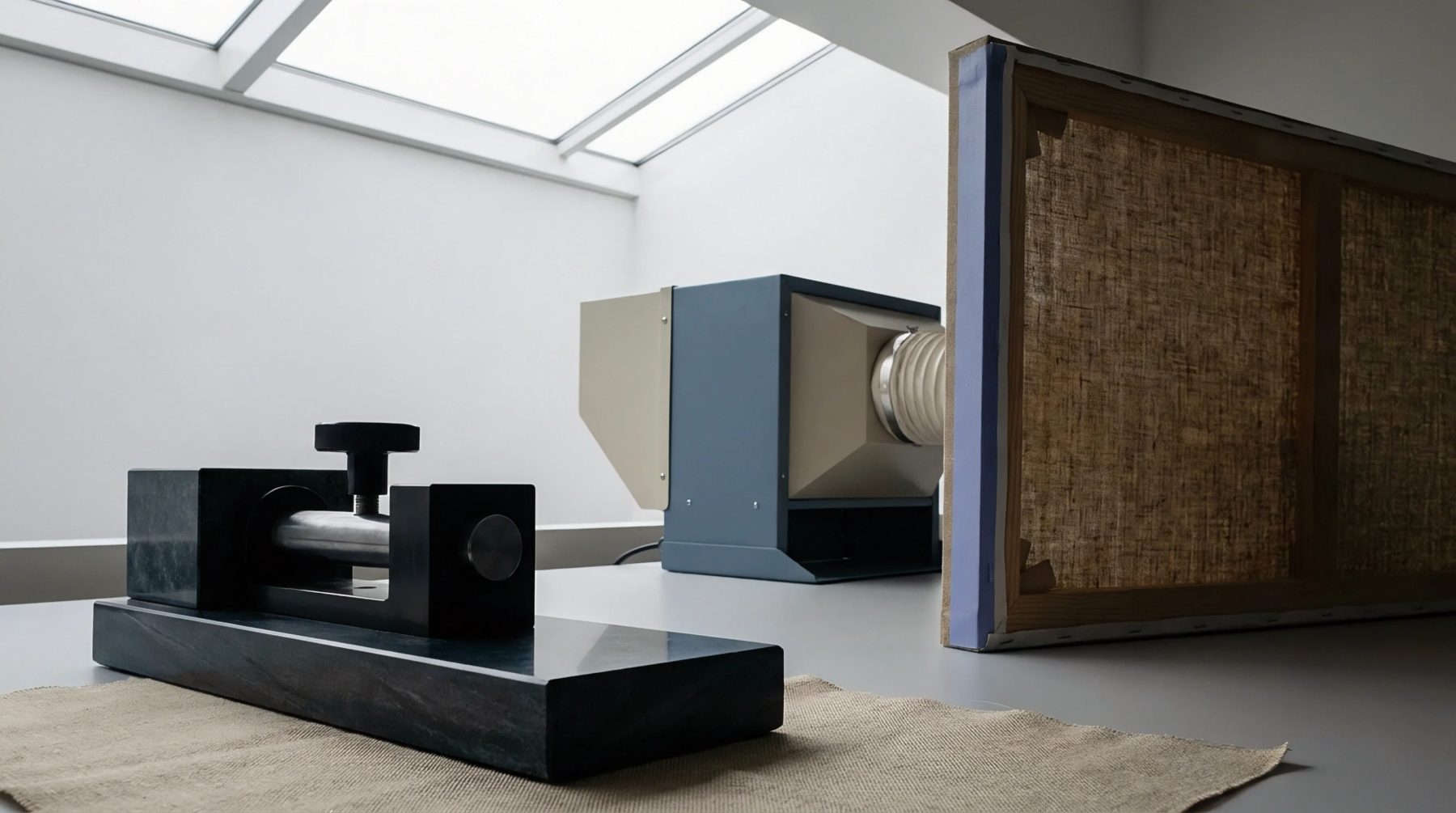
Verifying dual-country greige fabric weaving claims relies on matching loom telemetry and sizing mass balance against customs entry documents.

Physical segregation of certified Western European flax at high-speed drawframes demands dedicated creel tracks, line flushes, and mass balance audits.

Isotopic testing exposes flax origin by comparing carbon, oxygen, and strontium isotopes against mass balance records to prevent Asian spinning mill blending.

Controlling pectin dissolution kinetics via balanced chelation and temperature protects fiber tenacity while enabling smooth slip draft in fine flax spinning.
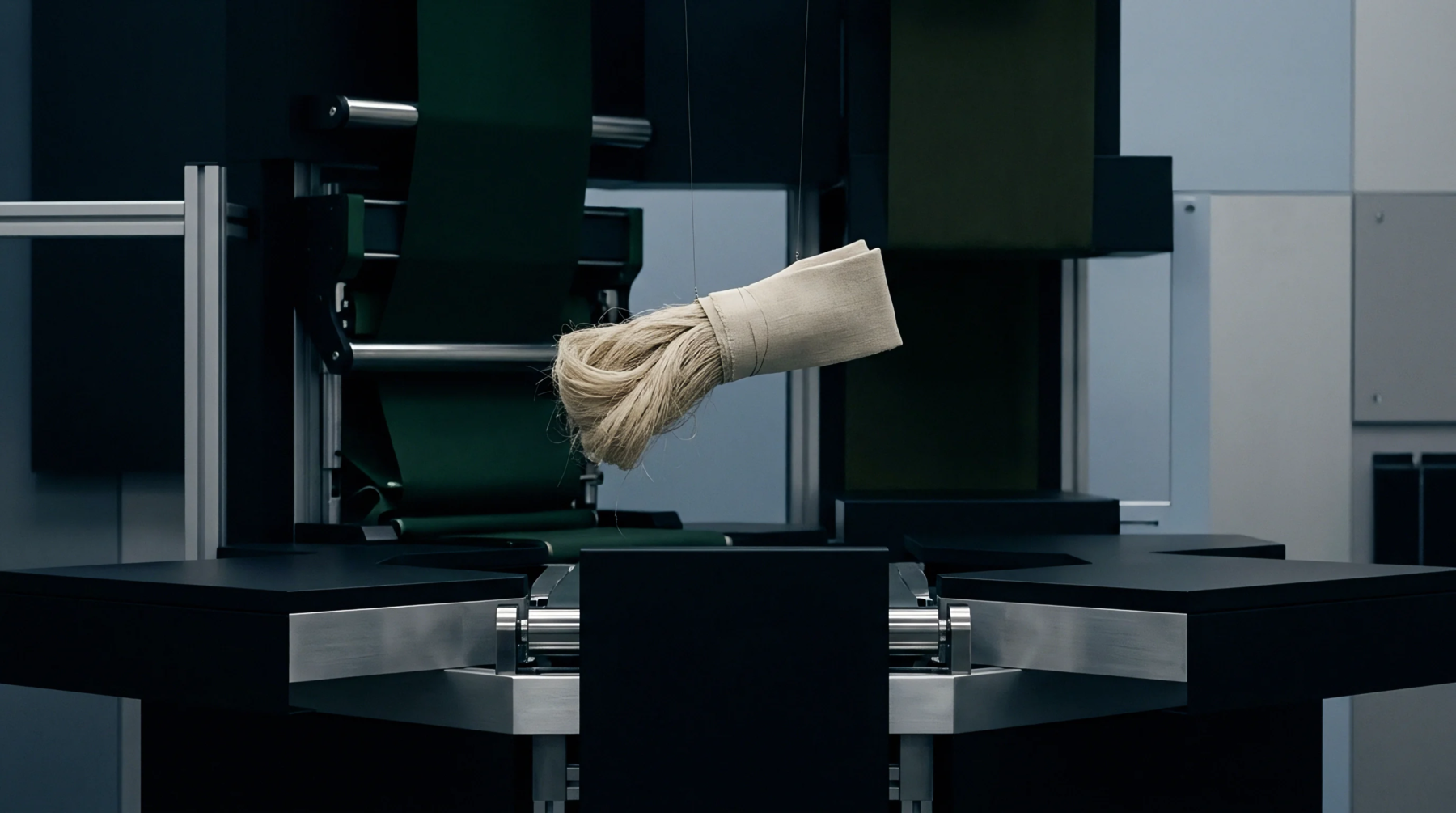
Standardizing dry mass calculations and auditing liquor COD reconciles industrial scouring loss variances between raw hackled flax and finished packages.

Verifying flax scutching yield requires dry-mass normalization of input straw against output long fibre, tow, and shive fractions across batch records.

Stable isotope ratio mass spectrometry validates European flax origin by measuring precipitation carbon and soil strontium signatures directly from fabric cellulose.
Expertise is a utility, not a secret. sentiention™ publishes its working knowledge as open reference: intelligence layer covering the materials it sources, the markets it enters, and the reference that serves both.