Calculating Weft Tension Profiles in High Speed Insertion Machinery
Calculating high-speed weft tension profiles stabilizes pre-winder braking, controls peak deceleration forces, and prevents costly shed stoppage rate spikes.
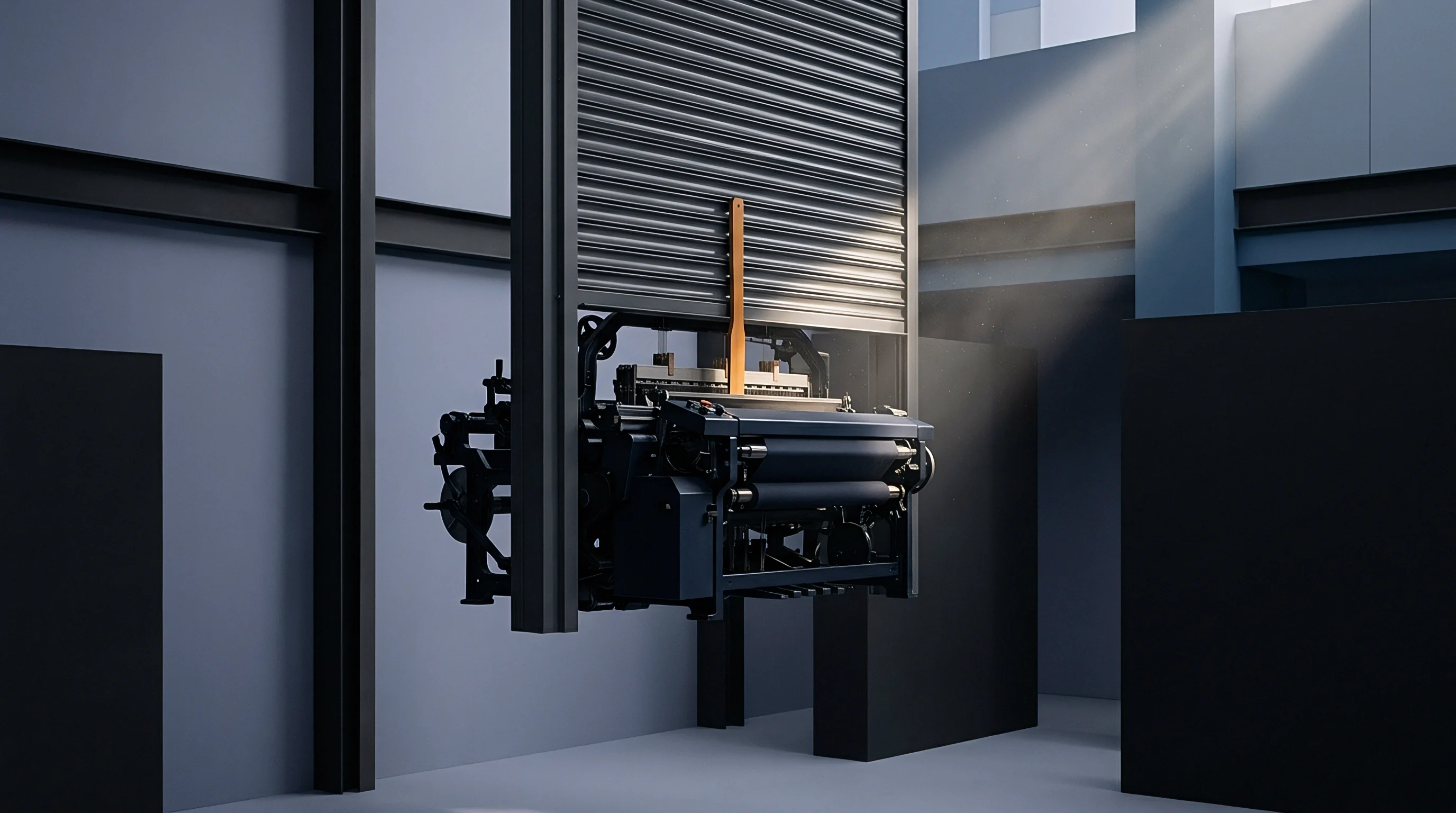
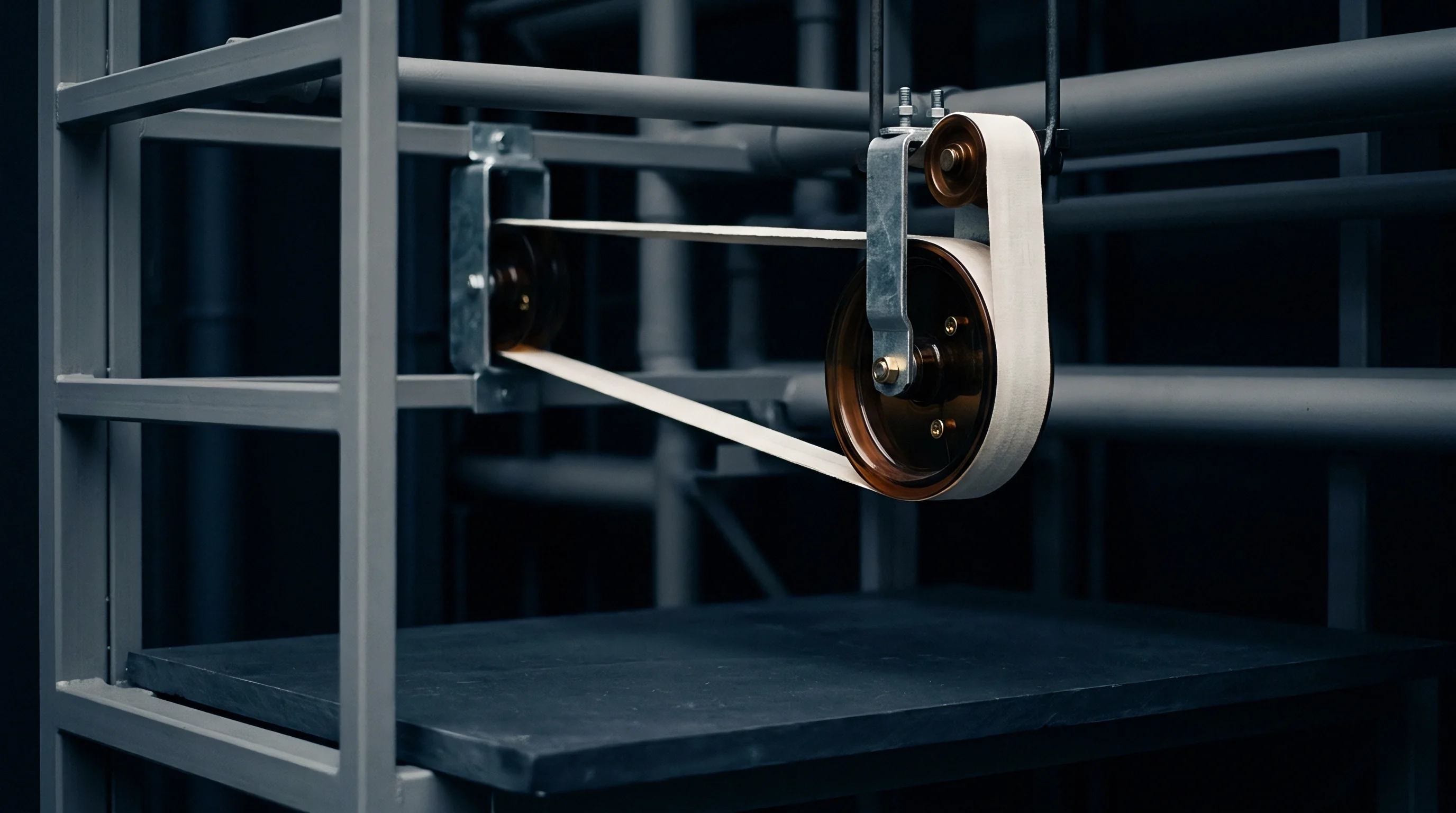
Spool
In modern air-jet installations, the unwinding package feeds yarn to the pre-winder drum at speeds exceeding 2,000 metres per minute. Delivery at these rates generates mechanical tension through centrifugal ballooning, surface contact with the package, and friction across guide eyelets. As the package runs down from full diameter to the cardboard tube, continuous shifts in yarn linear density and package density alter the unwinding force profile.
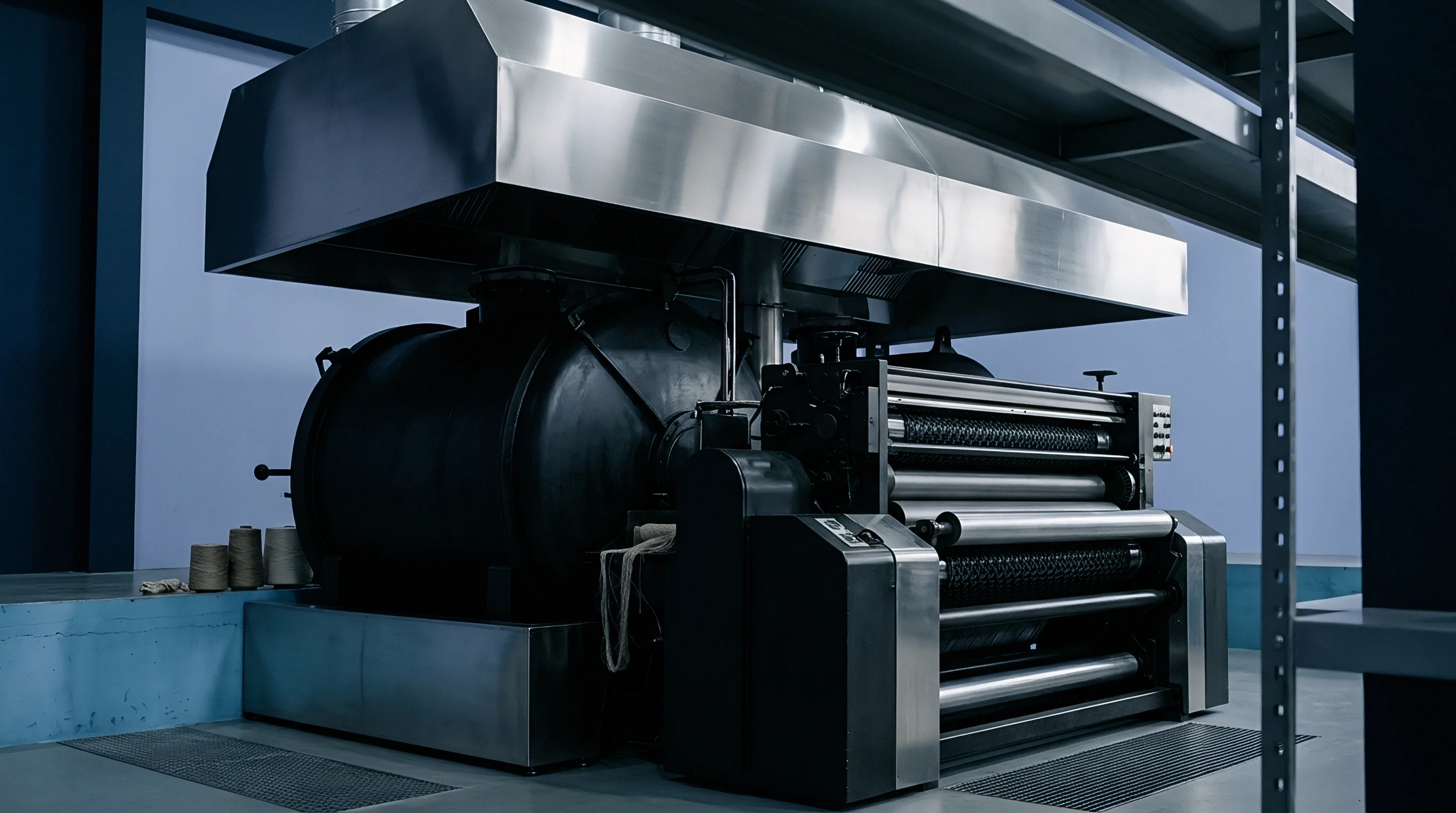
Package Geometry and Unwinding Friction
Cone angles ranging from three degrees thirty minutes to five degrees fifty-seven minutes change the take-off radius during high-speed delivery. When yarn pulls over the end of a stationary cone, its departure point spins around the package circumference at rotational frequencies above 30,000 revolutions per minute. This rotation creates a standing wave ~ the unwinding balloon ~ whose peak diameter dictates atmospheric drag on the running strand.
Frictional drag along the yarn path grows exponentially with the total contact angle across ceramic eyelets and pre-winder sensors. Tension exiting a static guide pin follows the standard capstan formula: output tension equals input tension multiplied by the exponential of the friction coefficient and contact angle. Air drag along the rotating balloon adds a velocity-squared component to baseline unwinding force.
Coarse yarns like 28 Lea flax or 100 Tex spun cotton form larger balloon diameters than fine 80 Ne combed cotton. The greater surface area increases atmospheric drag, requiring higher initial tension levels to keep the balloon from collapsing into adjacent package rims or creel framing.
| Yarn Type and Count | Delivery Velocity (m/min) | Full Package Tension (cN) | Empty Package Tension (cN) | Peak Balloon Radius (mm) |
|---|---|---|---|---|
| 28 Lea Wet-Spun Linen (59 Tex) | 1,200 | 14.2 | 28.6 | 62 |
| 40 Ne Combed Cotton (14.8 Tex) | 1,800 | 6.1 | 11.8 | 44 |
| 150 Denier Textured Polyester (16.7 Tex) | 2,200 | 4.8 | 8.9 | 38 |
| 10 Ne Coarse Open-End Cotton (59 Tex) | 1,500 | 12.5 | 24.1 | 58 |

Over-End Withdrawal Force Behavior
Centrifugal force throws yarn outward into a ballooning trajectory between the supply package and the first guide eyelet. This balloon expands until air drag balances centrifugal tension. Near the package base, yarn rubs against lower winding layers, generating high-frequency tension spikes that pass directly into the pre-winder reserve coils.
Pre-winder drums buffer insertion cycles from tension swings at the package. A winding arm places a precise number of coils onto a stationary storage drum under controlled tension. During insertion, thread draws off axially with minimal resistance, leaving final line tension to the pre-winder braking system.
- Over-ballooning contact creates severe abrasion against adjacent creel hardware when unwinding distance drops below minimum clearance limits.
- Snarl propagation occurs when low unwinding tension allows twist liveliness to form kinks before reaching the pre-winder stop element.
- Package tail sloughing happens when loose winding density lets multiple coils strip off together near the bobbin tube base.
- Base ring drag spikes pulling tension during the final ten percent of package volume as sliding contact angles steepen.
Unwinding tension surges result from non-uniform package winding density rather than improper pre-winder distance alignment.
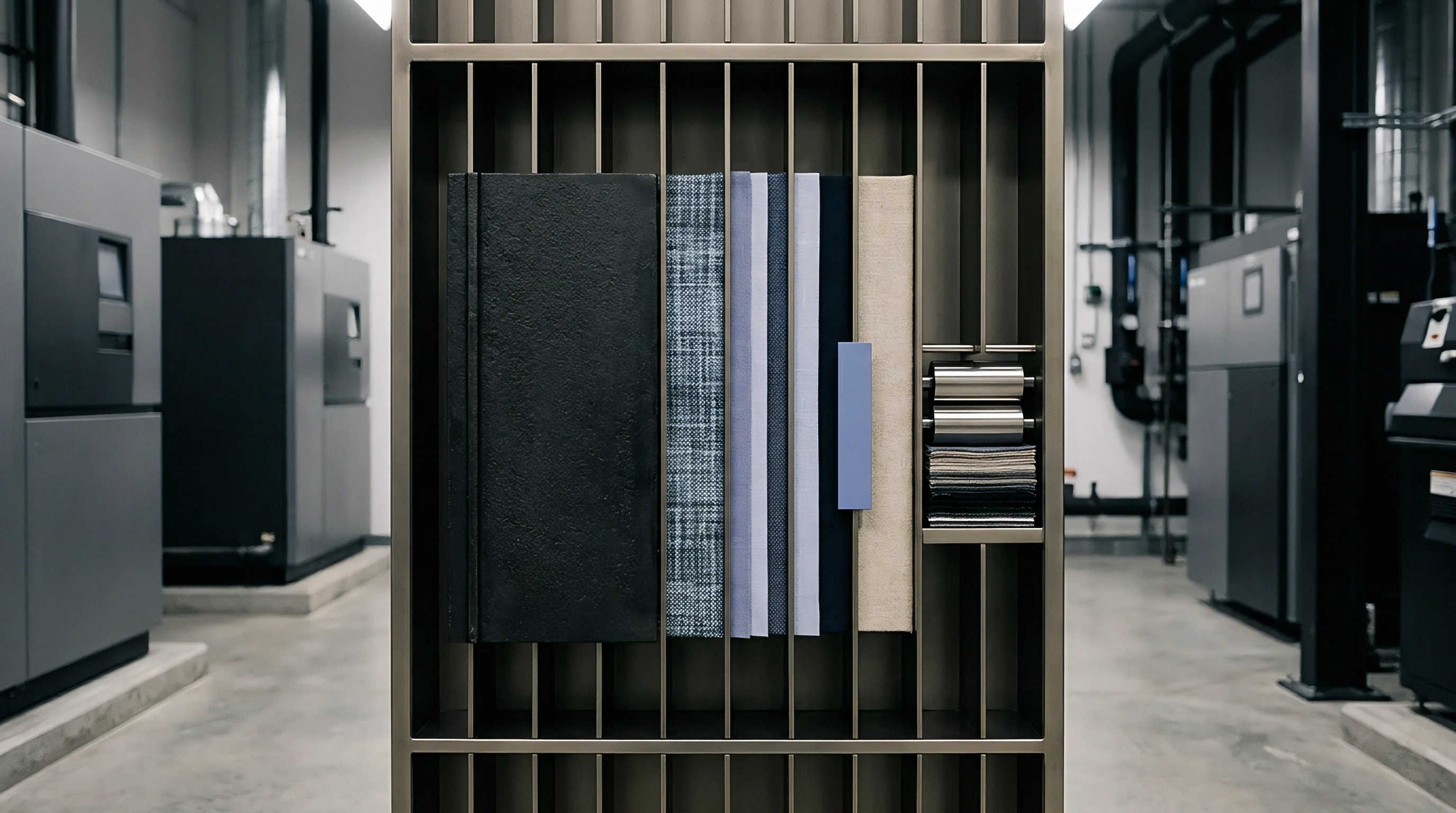

Brake
Active line-tension control relies on electromechanical solenoids and piezoelectric ceramic leaves operating within five-millisecond response windows. These devices apply mechanical retarding force directly to the running filling strand at precise points in the insertion cycle, preventing rebounds, cutting tail breaks, and stabilizing arrival tension before selvage clamping.

Capstan Equations in Active Retardation
Yarn sliding across fixed contact surfaces follows exponential friction growth set by wrap angles and friction coefficients. In an active leaf tensioner, exiting tension depends on entering tension, the normal load applied by the piezo-actuated leaf, and the ceramic-to-yarn friction coefficient ~ exit force equals entering force plus normal clamping load multiplied by sliding friction.
When processing high-modulus linen yarns, sliding friction coefficients shift rapidly as surface pectin migrates and micro-shives pass through the brake blades. Ceramic leaves must adjust clamp pressure dynamically to keep exit force steady against continuous changes in yarn surface topography.
Maintaining minimal wrap angles across static guide pins prevents localized thermal degradation of yarn sizing materials.
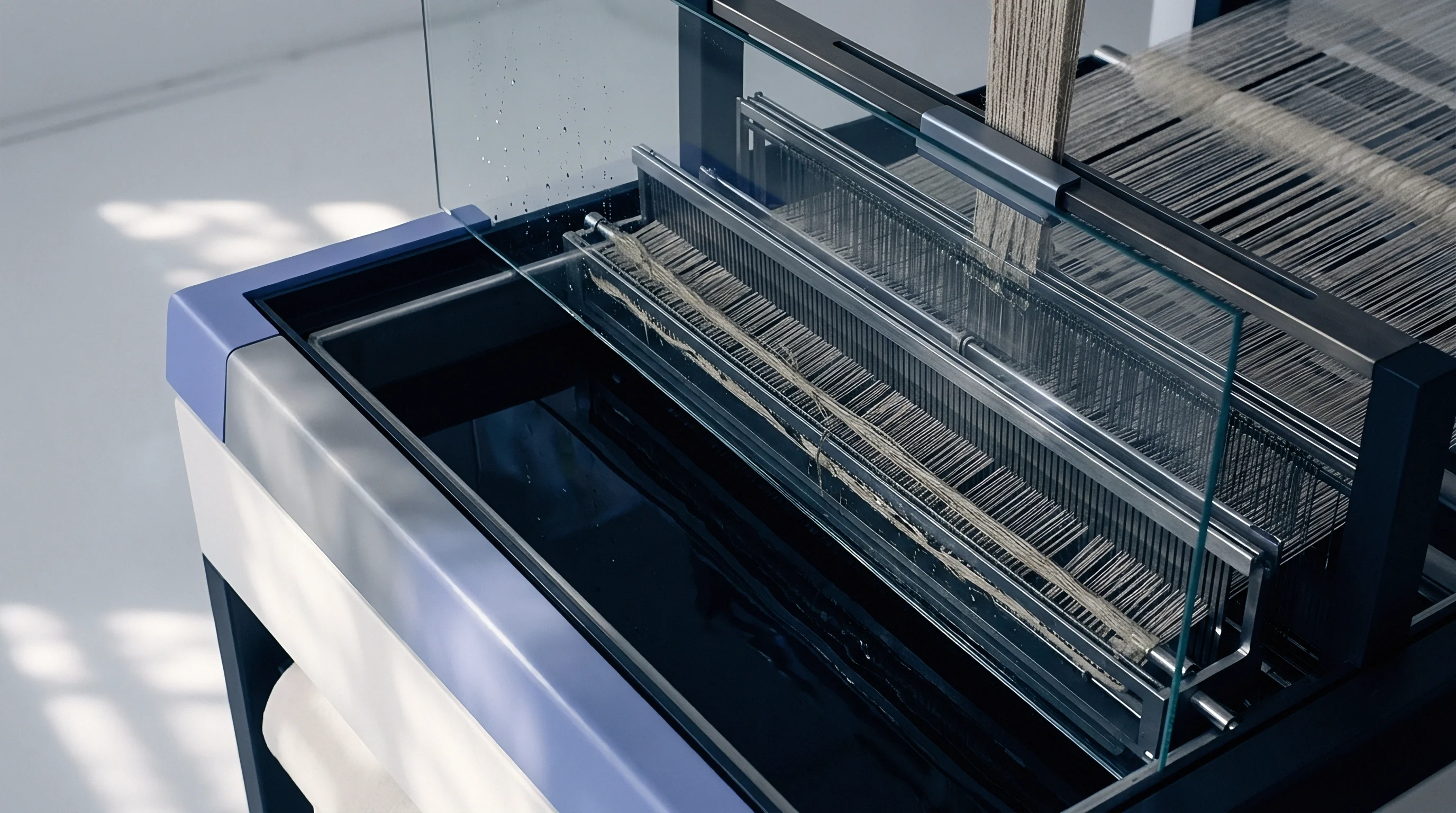
Piezoelectric Leaf Response Times
Signal processing units trigger clamping actions during pre-selected millisecond windows within the crank cycle. Upon receiving a pulse from the main loom controller, piezoelectric leaf tensioners actuate within 1.5 milliseconds, applying precise mechanical pressure to arrest yarn movement at the end of insertion without damaging delicate spun yarns.
Flex-brakes utilize flexible steel strips pulled against fixed braking drums by magnetic solenoids. These systems yield smooth deceleration profiles, though response times lag piezoelectric tensioners by approximately three to four milliseconds, requiring earlier actuation angles in high-speed loom sheds.
Timing the retarding force relative to main nozzle air release keeps peak tension down while holding consistent arrival angles across all weaving widths.

Nozzle
Main and relay fluid channels produce the aerodynamic drag needed to carry filling yarn across reed spaces exceeding three metres. Pressurized air expanding through conical nozzles creates high-velocity jet streams that transfer momentum to the yarn surface through shear stress. This propulsive force depends on jet air density, relative velocity differences between air stream and yarn strand, and the surface friction coefficient of the textile material.
Which Insertion System Controls Heavy Weft Profiles?
Coarse flax and heavy spun filaments present high inertial resistance that pneumatic forces struggle to propel uniformly without high tank pressures. Rapier systems use positive mechanical grippers mounted on flexible tapes or rigid rods, decoupling yarn transport from fluid dynamic drag. Conjugate cams drive the rapier heads through precise acceleration and deceleration profiles regardless of yarn structural irregularities.
Rapier tape kinematics determine filling velocity. Dual flexible rapier machines accelerate yarn from rest to peak velocity over the first half of the insertion angle, handing the tip from left to right rapier head at shed center. Controlled mechanical transfer avoids transient tension drops and maintains positive control through the handoff.
ISO 10380 clause 4.2 mandates maximum permissible filling tension variation within three standard deviations of the mean setting during certified fabric runs.

Relay Valve Timing across Reed Space
Compressed air pulses discharge sequentially along the profile channel to sustain velocity as filling tip kinetic energy decays. Relay nozzles arranged in groups of four or six fire at staggered crank angle intervals, forming a moving wave of high-velocity air that carries the yarn leading tip across the shed width. Proper valve overlap angles prevent thread sagging and trailing-end buckling inside the profile reed track.
| Insertion System Type | Reed Space (cm) | Main Tank Pressure (MPa) | Relay Valve Duration (deg) | Air Consumption (Nm3/min) |
|---|---|---|---|---|
| Single-Jet Air-Jet | 190 | 0.35 | 45 | 0.42 |
| Multi-Jet Profile Reed Air-Jet | 340 | 0.50 | 60 | 0.88 |
| Negative Rapier Mechanical | 220 | Not Applicable | Not Applicable | 0.05 |
| Positive High-Speed Rapier | 380 | Not Applicable | Not Applicable | 0.08 |
Optimizing pneumatic timing requires measuring filling arrival times across multiple relay groups using optical sensors embedded in the reed profile. The following procedure establishes standard calibration for air-jet insertion setups:
- Set main tank pressure to 0.45 megapascals for 28 Lea flax yarn.
- Adjust relay valve opening times in 15-degree crankshaft increments across the reed space.
- Align profile reed channels to eliminate wall contact during shuttleless insertion.
- Measure tip velocity at the arrival side using optical sensors.
- Calibrate retarding force timing to initiate 10 degrees prior to insertion completion.
Incorrect relay timing increases air consumption, generates turbulence inside the shed channel, and induces cyclic tension oscillations that damage spun yarn structures.
Peak
Transient tension spikes reaching four times nominal running force occur during the final ten milliseconds of insertion as kinetic energy dissipates. When the pre-winder stopper pin drops into position to halt yarn payoff, the moving filling strand carries kinetic energy proportional to its mass and the square of its insertion velocity. The resulting impact sends a high-frequency tension wave backward along the yarn line, often exceeding the ultimate tensile strength of low-elongation fibers like linen.

Kinetic Energy Dissipation at Arrival
Terminal yarn velocity drops to zero immediately before the right-hand selvage cutters engage the inserted strand. Kinetic energy contained within the flying strand converts into strain energy, stretching the thread until internal elastic resistance balances momentum. High-modulus fibers extend very little under load, creating sharp, narrow tension peaks that concentrate mechanical stress over tiny spatial distances.
Gradually retarding yarn speed prior to stopper pin engagement drops kinetic energy exponentially and flattens the terminal tension spike. Mechanical profile brakes applied five to ten crank degrees before arrival bleed off momentum smoothly, preventing structural yield in delicate carded yarns.
Peak arrival tension on a 340 centimetre air-jet loom operating at 750 picks per minute reaches 185 cN for 28 Lea linen when retarding brakes are disengaged.

Worked Calculation of Retarding Loads
Assuming a 28 Lea flax yarn with a linear density of 59 Tex running at 750 picks per minute across a 340 centimetre reed width, insertion velocity averages 42.5 metres per second. The insertion phase occupies 160 degrees of crankshaft rotation, meaning total insertion time equals 0.0355 seconds, with peak yarn tip velocity reaching roughly 68 metres per second mid-flight.
The mass of the 3.4 metre inserted strand equals 0.0002006 kilograms. At an arrival velocity of 45 metres per second, kinetic energy equals 0.5 multiplied by 0.0002006 kg multiplied by the square of 45 m/s, yielding 0.203 Joules. If stopping action occurs over a braking distance of 0.05 metres, average braking force equals kinetic energy divided by distance, giving 4.06 Newtons (414 cN) ~ exceeding the average 320 cN break load of 28 Lea single linen yarn.
Because stiff flax fibers offer minimal stretch to dissipate energy during unretarded arrival, the thread breaks under peak shock loads. Applying a controlled electromechanical retarding brake extends the stopping distance to 0.20 metres, dropping average peak force down to 1.01 Newtons (103 cN), well within the safe operational elasticity margin of the yarn.
| Yarn Count and Type | Insertion Speed (m/s) | Unretarded Peak Load (cN) | Retarded Peak Load (cN) | Break Probability (%) |
|---|---|---|---|---|
| 28 Lea Linen (59 Tex) | 45 | 414 | 103 | 12.40 |
| 28 Lea Linen (59 Tex) | 35 | 250 | 62 | 0.08 |
| 40 Ne Combed Cotton (14.8 Tex) | 55 | 157 | 39 | 0.02 |
| 10 Ne OE Cotton (59 Tex) | 45 | 380 | 95 | 1.15 |
Engineers evaluate four parameters when adjusting insertion line profiles for high-density cloth runs:
- Mass per unit length determines total kinetic energy stored within the moving filling strand at any peak velocity.
- Terminal arrival velocity dictates the deceleration rate required to stop yarn motion before selvage tucking or cutting.
- Braking deceleration distance expands or compresses the spatial interval over which retarding devices absorb motion energy.
- Yarn elastic modulus establishes how much force builds up per unit of linear extension during rapid deceleration phases.
Setting arrival retarding force above yarn tensile yield limits produces catastrophic filling break frequencies that erode shed efficiency below commercial viability thresholds.


Margin
Loom capacity pricing reflects the direct conversion of insertion cycle efficiency into billable machine operating hours. Every filling break caused by improper tension settings halts the weaving machine, requiring either automatic cycle repair or manual operator intervention to clear the shed. Unplanned loom stops convert profitable shed running time into unrecoverable capacity losses, shifting landed metre costs past targeted budget thresholds.

Efficiency Losses from Unresolved Tension Spikes
Machine stoppages triggered by filling breaks force automated or manual repair interventions that deduct billable minutes from shed schedules, while excessive tension causes warp stops that leave stop marks and reduce cloth value. A shed running at 92 percent efficiency achieves 55.2 running minutes per loom hour. If excessive arrival tension increases filling breaks from 1.2 to 4.5 stops per 100,000 picks, overall loom efficiency drops to 84 percent, subtracting nearly five running minutes from every billable hour.
On an order of 50,000 metres of 220 gsm linen cloth woven at 550 picks per minute, an eight percent drop in efficiency extends total loom occupancy time by 48 machine hours.
Operating high-speed shuttleless looms below 88 percent net shed efficiency converts targeted profit margins into net operating losses.

Metre Cost Impact of Filling Break Stops
Fixed overhead charges, including energy consumption and labor allocation, continue accumulating regardless of loom running status. Mill accounting models allocate fixed facility costs per active loom hour, so when filling stops extend the hours required to fulfill a fabric contract, fixed cost allocations per metre rise proportionally.
Calculating unit insertion metrics allows production planners to establish precise cost allocations per woven metre before committing warp beams to high-speed weaving sheds.