Pneumatic Weft Insertion Mechanics for Coarse Bast Yarns
Air-jet insertion of coarse bast yarns utilizes main pressures up to 0.65 MPa and 25-degree relay pulses to sustain velocity against high linear density.


Airflow
Linear momentum transfer in high-mass textile insertion relies on aerodynamic force across the yarn profile. Coarse bast yarns, including wet-spun flax and hemp strands from 6 Nm to 26 Nm (166 tex to 38.5 tex), present fundamental physical barriers to pneumatic transport. Unlike continuous synthetic filaments or fine combed cottons, bast fibers exhibit extreme linear density, high flexural rigidity, and irregular cross-sectional geometries.
Accelerating a 14 Nm flax yarn to an insertion speed of 45 metres per second requires substantial kinetic energy transfer from expanding compressed air.
Because bast fibers resist rapid acceleration, overcoming their initial static mass requires dedicated pneumatic energy.
The aerodynamic drag force governing pneumatic insertion scales with air density, relative velocity between fluid and yarn, projected surface area, and the boundary skin friction coefficient. While the node-rich surface structure of flax elevates skin friction relative to smooth synthetics, the high mass per unit length suppresses acceleration. Mechanical energy delivered by the main nozzle dissipates rapidly as the trailing mass creates continuous inertia drag behind the pick head.
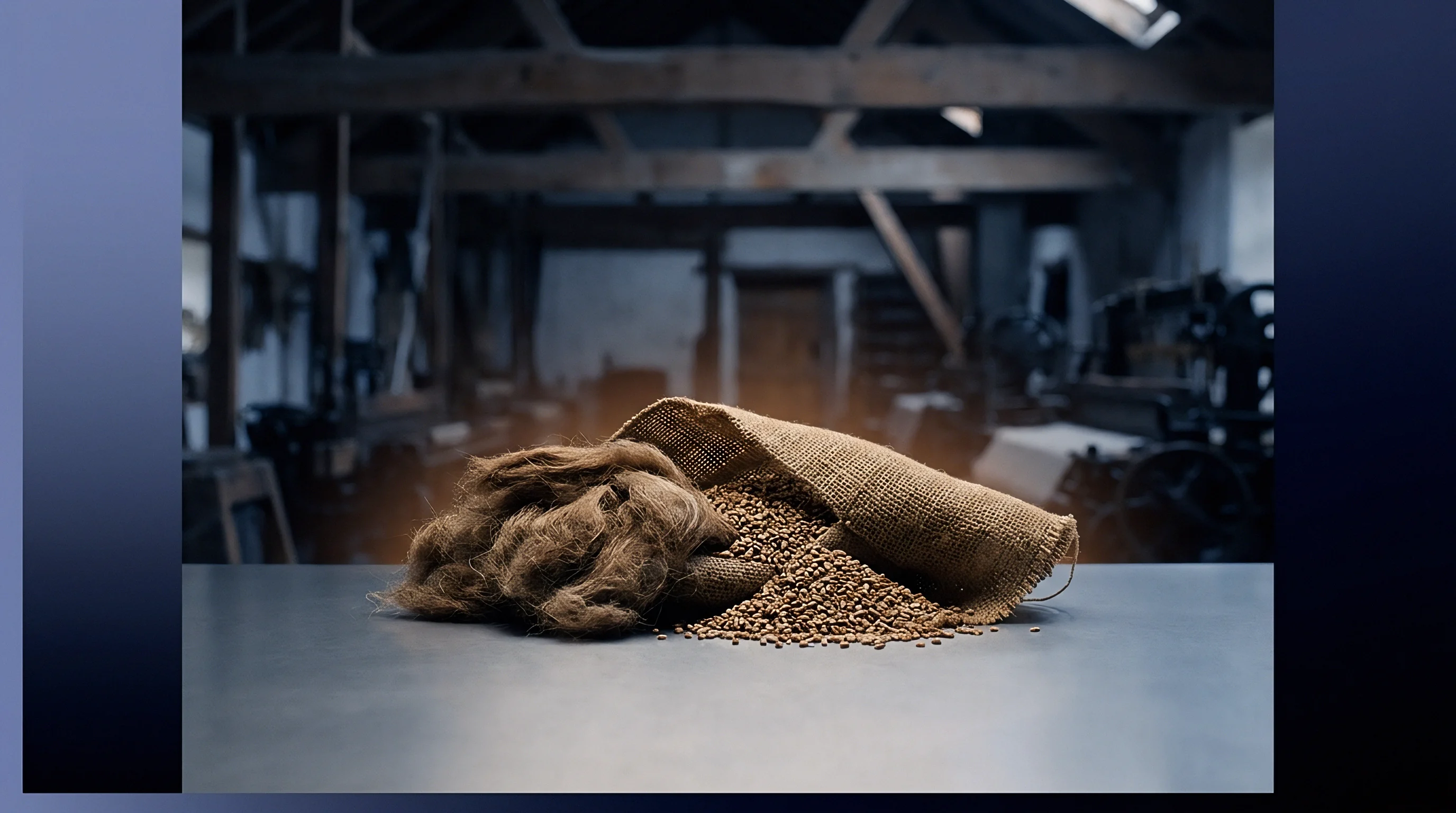
Kinetic Momentum Transferred to Heavy Linear Masses
Coarse bast strands derived from flax or hemp display linear densities from 38.5 tex to 166 tex. During the initial insertion phase, compressed air exiting the main orifice at 0.55 MPa must overcome static inertia within a time window of less than 40 milliseconds. The ratio of projected surface area to yarn mass drops sharply as yarn thickness increases, making air-jet acceleration inefficient for heavy counts compared to fine yarns.
Bending stiffness further complicates pneumatic flight dynamics. Flexural rigidity in wet-spun flax ranges between 15 and 28 mN·mm², whereas equivalent fine cotton measures below 2.5 mN·mm². This structural stiffness causes the leading pick head to resist axial alignment within the pneumatic transport channel.
Instead of following the air stream linearly, the stiff leading tip deflects off channel walls, causing energy loss through mechanical contact.
High flexural rigidity forces pneumatic systems to transfer propulsion force through surface friction rather than filament axial tension.

Boundary Layer Shear across Irregular Fiber Skins
Surface roughness along a spun bast strand alters skin friction coefficients during rapid acceleration. Pectins and technical fiber bundles produce surface nodes spaced at irregular intervals along the yarn axis, where boundary disruptions induce localized turbulent eddies within the reed profile channel. Micro-turbulence increases total drag, yet uneven surface friction generates velocity fluctuations along the pick length.
Variable skin drag creates tension spikes that propagate toward the yarn package. When peak drag forces exceed the low tensile elongation limit of coarse flax (1.5% to 2.2% elongation at break), yarn structural failure occurs at the main nozzle entry. Lowering supply pressure mitigates yarn breakage but drops insertion velocity below the threshold required to clear the open shed before shed closure.
| Fiber Type and Count | Linear Density (tex) | Flexural Rigidity (mN·mm²) | Drag Friction Coefficient | Peak Insertion Velocity (m/s) |
|---|---|---|---|---|
| Wet-Spun Flax 10 Nm | 100.0 | 24.5 | 0.058 | 38.0 |
| Wet-Spun Flax 14 Nm | 71.4 | 16.8 | 0.052 | 44.0 |
| Dry-Spun Hemp 18 Nm | 55.5 | 12.1 | 0.046 | 48.0 |
| Carded Cotton 20 Nm | 50.0 | 3.2 | 0.034 | 62.0 |
| Polyester Filament 167 dtex | 16.7 | 0.8 | 0.021 | 75.0 |
Propulsion efficiency in air-jet channels depends on sustaining fluid momentum along the full reed width. Coarse bast yarns exhaust fluid energy quickly because their large cross-sectional profiles absorb volume from the constrained jet zone. Insertion issues often trace to incoming yarn moisture variance rather than peak main nozzle supply pressure drops.


Nozzle
Primary and secondary propulsion jets channel compressed air through targeted orifice profiles to propel heavy filaments. In pneumatic systems optimized for coarse bast yarns, single main nozzles lack the acceleration capability required to launch heavy yarns without exceeding fiber tension limits. Dual-stage tandem main nozzles split the acceleration phase into an initial gentle pull followed by a high-pressure pulse inside a specialized acceleration tube.
The substantial mass of coarse yarn retards forward motion during initial entry.
Auxiliary relay nozzles positioned along the reed profile reinforce air velocity across the weaving width. For coarse flax and hemp, standard relay configuration patterns fail due to rapid deceleration of the heavy pick tip. Mill technicians adjust relay nozzle spacing, orifice angles, and blowing durations to create a continuous traveling wave of high-velocity air matched to the specific mass of the yarn.

Valve Response and Solenoid Timing Bands
Fast switching electromagnetic actuators control the pneumatic pulse sequence relative to the crank position. High mass yarns demand longer pulse durations to sustain forward momentum. On standard fine fabrics, relay valves open for 12 to 15 degrees of main shaft rotation.
Coarse bast yarns require valve blowing angles extended to 24 to 28 degrees, significantly increasing total volumetric air consumption per pick.
Valve timing stays tied to solenoid temperature and supply pressure stability. Pressure drops below 0.50 MPa cause solenoid actuation delays, shifting the blowing profile out of synchronization with the advancing pick head, while slubs can choke nozzle throats. When blowing action lags behind yarn position, the pick decelerates, buckles against the lower warp sheet, and causes loom stops.
A main nozzle operating at 0.55 MPa air pressure delivers 42 m/s initial insertion velocity for 14 Nm linen yarn.

Auxiliary Relay Spacing for Heavy Filament Propulsion
Positioning secondary blowing points along the insertion path compensates for momentum dissipation. Standard air-jet setups space relay nozzles at 65 mm intervals. For coarse bast yarns exceeding 70 tex, spacing narrows to 40 mm or 50 mm.
Pitch reduction keeps air velocity above yarn velocity, maintaining positive aerodynamic drag force throughout the shed traversal.
Nozzle orientation angles direct fluid streams toward the interior of the reed profile channel. Standard relay nozzle pitch angles of 8 to 10 degrees fail to keep heavy bast yarns contained. Technicians adjust blowing angles to 12 or 14 degrees relative to the reed line, forcing the yarn toward the center of the guide tunnel.
Misaligning relay nozzle fire angles against coarse bast yarns destroys reed channel walls through localized abrasive strike while leaving the pick short of the right-hand selvedge.
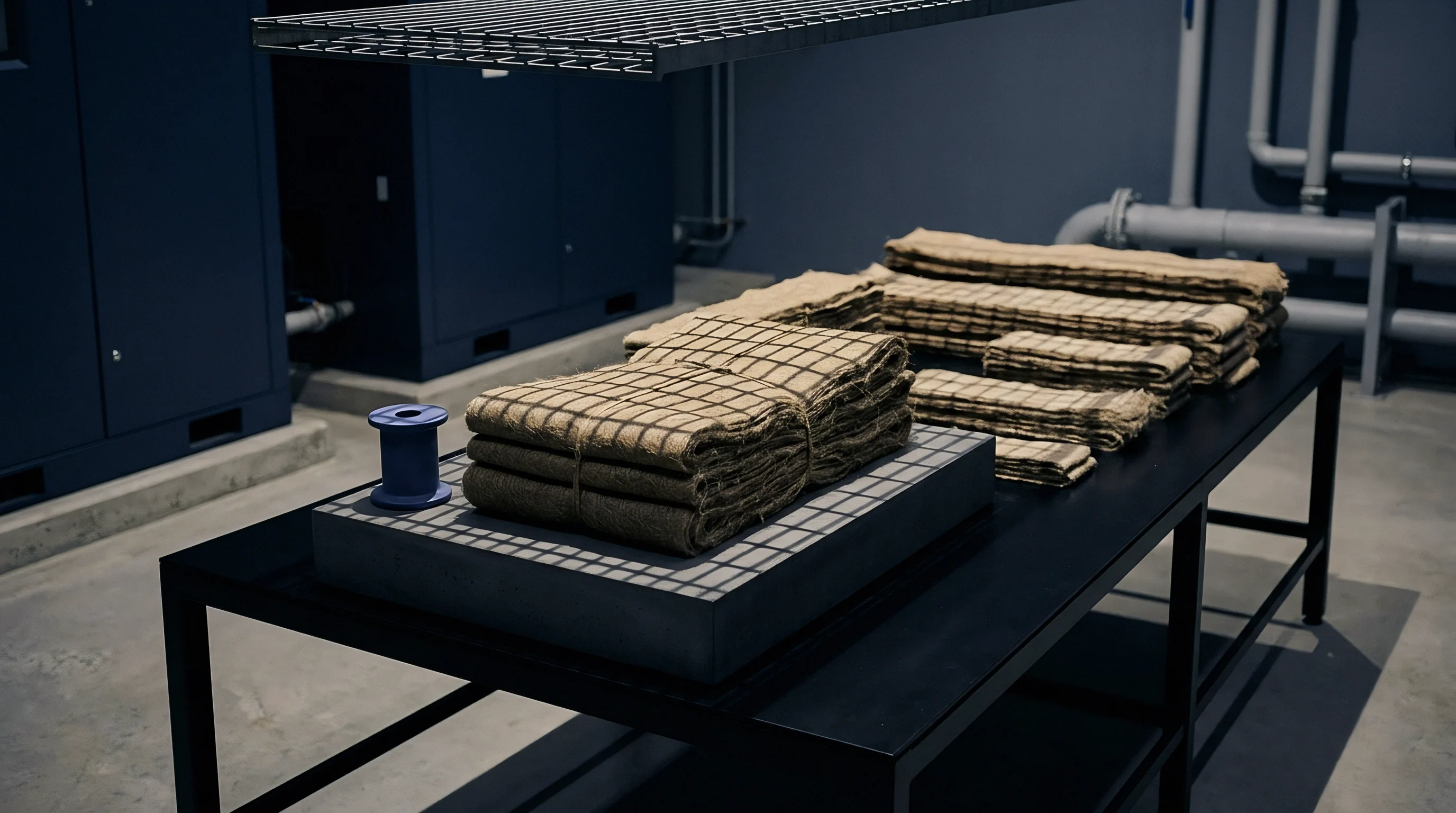

Reed
Channel containment structures installed on the sley guide high-velocity air jets across the shed width. Profile reeds designed for coarse bast processing feature deeper and wider guide tunnels than standard hardware. Deep profile geometries (12.0 mm channel depth by 5.5 mm height) accommodate the wider dispersion envelope of thick yarns while trapping expanding air streams from the relay nozzles.
Airflow stability within the shed depends directly on the geometry of the reed profile.
Fiber shedding from coarse bast yarns poses a severe operational barrier in profiled channels. Flax and hemp contain high fractions of short surface fibers and residual cortical tissue. High-velocity air currents strip loose material from the yarn body during transit, depositing fiber dust into the reed dents and channel grooves.

How Does High Linear Density Limit Air Jet Speed?
Heavy yarn mass increases total inertia, requiring greater aerodynamic force to reach steady-state velocity. Pneumatic acceleration scales inversely with linear density, forcing air-jet looms running 10 Nm to 14 Nm bast yarns to operate at lower crank speeds (450 to 550 rpm) than when processing cotton or filament synthetics (800 to 1200 rpm). Velocity loss across the shed width escalates rapidly if compressed air pressure drops below minimum threshold limits.
High compressed air costs effectively constrain maximum weaving speeds.
Lowering operating speed provides longer insertion timing windows, expanding the allowable crank angle for pick flight from 140 degrees to 165 degrees. Extended insertion time prevents pick arrival failure but lowers total machine production. Increasing loom speed without altering pressure profiles causes late pick arrival, resulting in warp shed closure on the un-inserted pick tail.

Profiling Dimensions for Coarse Filament Guide Channels
Cross-sectional channel geometry contains expanding compressed gas while preventing yarn exit during insertion. Open profile designs allow heavy yarns with high flexural rigidity to escape the air stream, resulting in floating picks across the top warp sheet. Closed profile designs contain air streams efficiently but accumulate fiber lint at an accelerated rate, requiring continuous automated air-jet cleaning systems.
- Align the main nozzle tandem assembly to center the yarn trajectory within the first 15 millimetres of the profile reed entrance.
- Set the profile reed height using dial gauges to align the channel floor 1.5 millimetres below the bottom warp shed line.
- Adjust initial relay nozzle group pressure to 0.45 MPa and space units at 45 millimetre centers across the first third of the reed length.
- Extend relay solenoid valve pulse duration to 26 degrees crank angle for the middle insertion zone.
- Synchronize shedding motion timing so that warp shed clearance reaches 12 millimetres minimum depth prior to yarn entry.
- Verify right-hand stretch nozzle timing to apply arrival tension before beat-up occurs.
Standard ASTM D5430 inspection limits double-pick defects on coarse linen to two major points per one hundred linear metres before commercial downgrading applies.
As lint builds inside the channels, accumulated fiber dust alters internal reed dimensions and distorts velocity profiles along the channel line. A reed channel free of packed bast lint maintains uniform air velocity, whereas compacted fiber dust creates local pressure drops that drop the pick mid-shed.


Distortion
Uncontrolled pick velocity gradients produce structural anomalies in greige cloth. Pneumatic insertion mechanics directly influence fabric defects, warp-weft interlacing uniformity, and edge stability. Coarse bast yarns are vulnerable to structural deformation during insertion due to low flexural elasticity and irregular linear weight distribution.
Abrupt drops in pick tension frequently introduce fabric defects.
When high drag forces act on heavy bast filaments, non-uniform tension distribution causes physical defects. Tip buckling, short picks, trailing loops, and edge binding represent primary greige failure modes in air-jet linen weaving. Mill inspection frames catch these faults during preliminary quality grading against international trade standards.
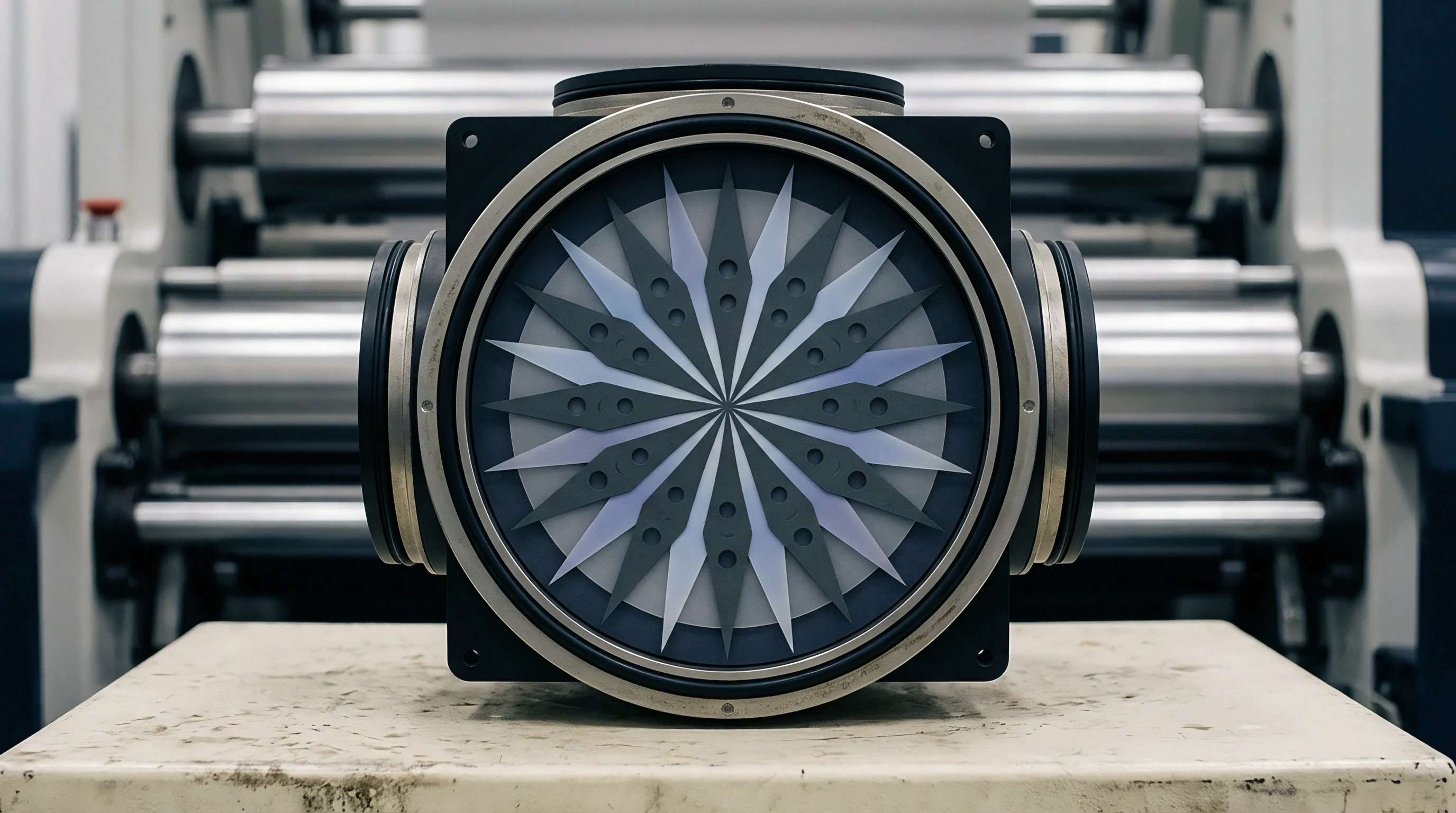
Buckling Behavior at the Pick Tip
Compressive fluid forces acting on the leading end of a stiff bast fiber induce lateral deflection. As air streams push the yarn from behind, axial compression causes the tip to fold over, forming a doubled lead tip. Flexural rigidity in coarse flax prevents the folded tip from straightening under normal flight tension, leaving permanent loop defects in the woven structure.
Buckling frequency increases when relay nozzle pressure near the right-hand selvedge exceeds main nozzle acceleration pressure. Differential airflow forces the leading end backward while the trailing body advances forward. Correcting tip buckling demands precise decay calibration of relay pressures along the final 300 millimetres of insertion width.

Arrival Tension Control and Catch Selvedge Securing
Mechanical stretch elements at the right-hand selvedge maintain pick straightness prior to beat-up. Pneumatic stretch nozzles utilize short, high-pressure air bursts to pull the pick tip taut upon arrival. Coarse bast yarns require stretch pressures up to 0.60 MPa to overcome yarn bending resistance and fully remove insertion slack.
| Defect Mode | Structural Root Cause | Mechanical Adjustment Parameter | Inspection Threshold (ASTM D5430) |
|---|---|---|---|
| Buckled Pick Tip | Axial fluid compression on leading end | Reduce end-zone relay nozzle pressure by 0.08 MPa | Max 3 minor defects per 100 metres |
| Short Pick | Insufficient kinetic propulsion momentum | Increase main nozzle pulse duration by 3 degrees angle | Zero tolerance (causes loom stop) |
| Nozzle Shear Break | Abrasive stress inside acceleration tube | Lower main supply pressure; polish nozzle throat | Max 1 occurrence per loom-operating hour |
| Trailing Loop Formation | Inadequate stretch nozzle arrival tension | Increase stretch nozzle pressure to 0.60 MPa | Max 2 major defects per 100 metres |
Securing the inserted pick requires specialized catch selvedge devices. Mechanical tuck-in units or leno binder threads clamp the heavy pick before reed beat-up occurs. Improper binding allows stiff bast tails to spring back into the open shed, creating trailing wild picks along fabric edges.
- Slub Deceleration Arrest occurs when local diameter variations bind inside main nozzle acceleration tubes, halting insertion mid-flight.
- Tip Loop Folding results from excess relay nozzle pressure collapsing the leading yarn end into a doubled structural fault.
- Nozzle Throat Shear emerges when high pressure forces stiff bast fibers against abrasive nozzle orifices, severing single filaments.
- Trailing End Relaxation develops when right-hand catch selvedges release weft tension prior to full reed beat-up positioning.
Compressed air humidity over 65 percent relative humidity causes bast fiber swelling inside the main nozzle tube, raising friction and causing pick stall.
As nozzle erosion advances, greige inspection specifications governing export fabric shipments set strict limits on insertion defects per linear bolt. Incorporating ISO 7211 pick count verification tolerances directly into greige purchasing contracts prevents disputes over width shrinkage resulting from uneven insertion tension.


Valuation
Operational expenditure for compressed utility air directly determines the financial viability of high-speed bast fabric production. Air-jet insertion demands substantial electrical power to drive multi-stage screw compressors, creating utility costs far exceeding those of rapier or projectile looms. Pricing weaving capacity requires calculating air consumption per metre of finished fabric based on yarn count, loom speed, and pressure requirements.
Unlike air jets, rapier insertion avoids compressed air requirements entirely.
Evaluating loom selection for coarse bast yarns requires balancing capital cost, speed capability, utility overhead, and shed efficiency percentage. While air-jet looms yield higher picks per minute than rapier machines on medium-weight cottons, the gap narrows when processing coarse bast yarns due to required speed reductions and high air consumption rates.
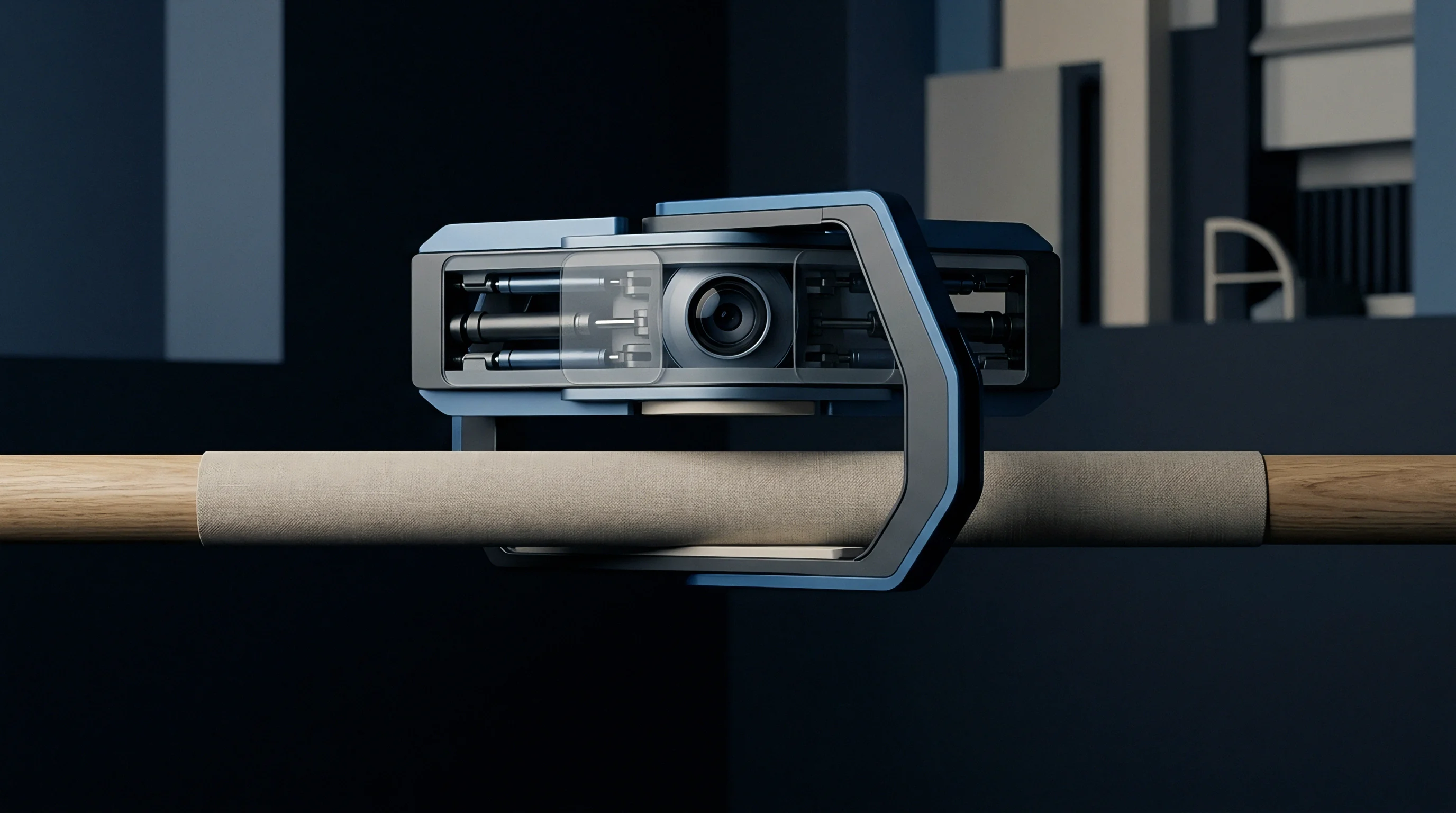
Energy Consumption per Metre of Woven Goods
Electrical demand for air generation scales linearly with volumetric consumption and mill system pressure. Operating an air-jet loom on 14 Nm flax at 520 rpm requires 32 cubic metres of compressed air per hour at 0.60 MPa pressure. Generating this air volume consumes approximately 3.8 kW of continuous electrical power per active loom.
In a production run of 100,000 linear metres of 14 Nm flax fabric at 180 cm finished width, using 14 picks per centimetre on an air-jet loom operating at 520 rpm and 82 percent efficiency, output reaches 22.2 metres per loom-hour. Total utility energy cost, based on an industrial electricity tariff of 0.18 USD per kilowatt-hour, calculates to 0.031 USD per metre for loom drive power plus 0.0308 USD per metre for compressed air generation, bringing total energy cost to 0.0618 USD per finished metre.

Comparative Capacity Economics across Insertion Systems
Selecting insertion technology involves analyzing total landed production costs rather than machine operating speed alone. Flexible rapier looms running the same 14 Nm flax construction operate at 380 rpm and 88 percent efficiency, producing 17.4 metres per loom-hour. Rapier drive motors consume 2.4 kW with zero compressed air utility expense, yielding an energy cost of 0.0248 USD per finished metre.
| Insertion Technology | Loom Speed (rpm) | Shed Efficiency (%) | Air Demand (Nm³/hr) | Utility Energy (kWh/m) | Landed Weaving Cost (USD/m) |
|---|---|---|---|---|---|
| Air-Jet (Optimized Profile) | 520 | 82.0 | 32.0 | 0.343 | 0.485 |
| Air-Jet (Standard Profile) | 460 | 74.0 | 36.5 | 0.448 | 0.572 |
| Flexible Rapier (Double Rigid) | 380 | 88.0 | 0.0 | 0.138 | 0.422 |
| Projectile Loom | 320 | 91.0 | 0.0 | 0.106 | 0.408 |
- Air Utility Capacity Verification requires auditing mill compressor generation volume and line pressure stability before committing coarse bast yarn orders to pneumatic sheds.
- Linear Density Boundary Mapping sets firm maximum yarn count thresholds for air-jet allocation to prevent excessive pick failure rates on coarse counts.
- Yarn Preparation Sizing Audit checks application rates of lubricants and binder starches that reduce fiber shedding inside profile reed channels.
- Weave Structure Shed Opening Limits evaluates harness frame lift timing to ensure clear pneumatic transit paths for heavy picks.
Landed cost calculations must weigh air utility expense against rapier component wear costs. Rapier tape replacement and gripper jaw maintenance on abrasive flax yarns add 0.035 USD per metre in spare parts consumption. Whether sub-10 Nm coarse bast yarns can reach sixty percent air-jet loom efficiency without chemical yarn sizing treatments remains an open question for mill engineering teams.