Correlation between PVA Hydrolysis Levels and Weaving Efficiency in Linen Warps
Partially hydrolyzed PVA (87-89 mol%) delivers superior film flexibility and bast adhesion, cutting linen warp breaks by 85% compared to fully hydrolyzed grades.
Film
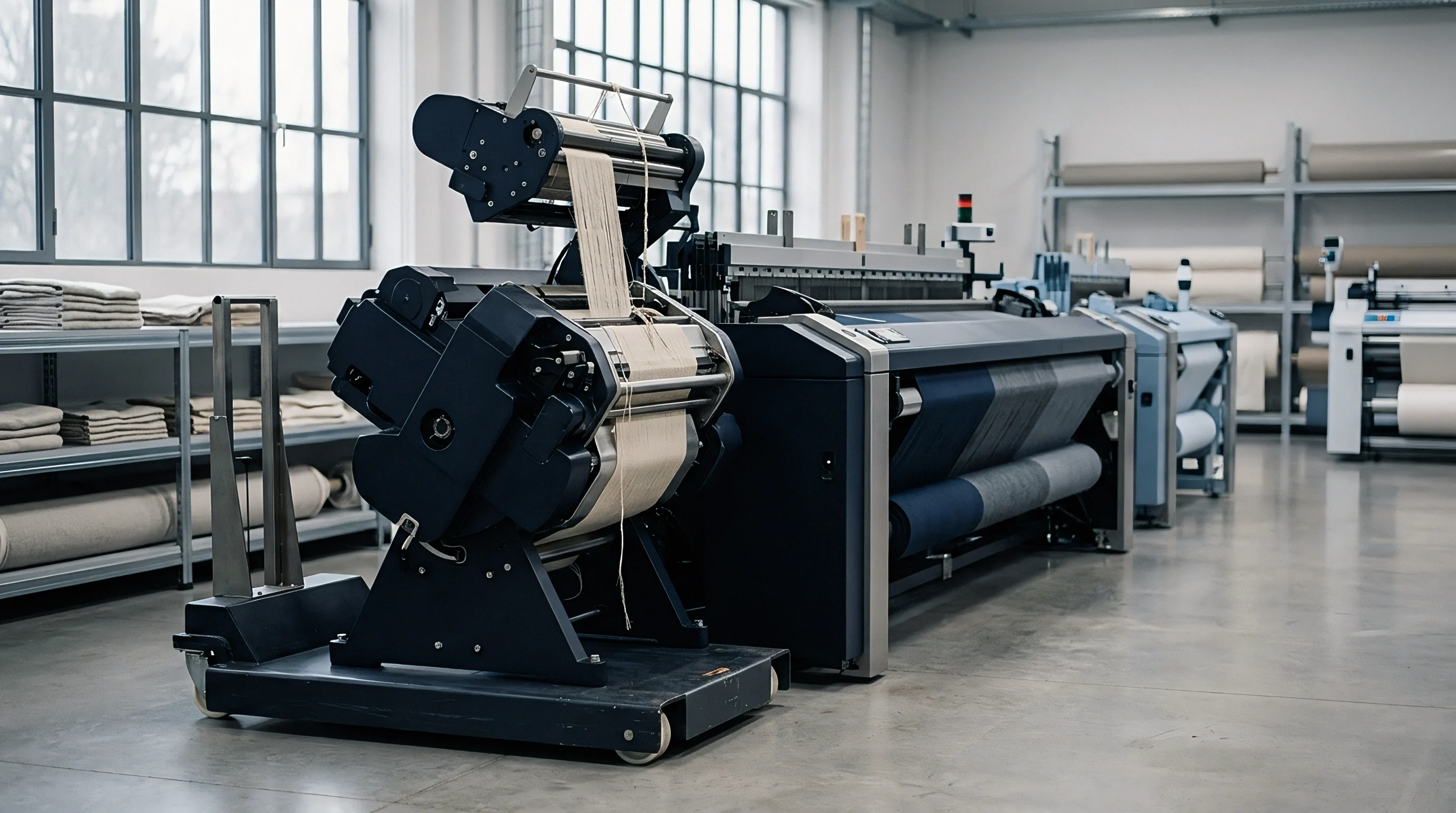
Flax offers very little stretch. A wet-spun 26 Nm linen yarn reaches its breaking strain at just two to three percent elongation, meaning any polyvinyl alcohol film applied to the exterior has to bend, stretch, and recover within that tight window without shattering under shed tension. The performance of the size comes down to its degree of saponification ~ the molar percentage of vinyl acetate groups converted into vinyl alcohol units during alkaline alcoholysis.
Fully hydrolyzed grades, produced above ninety-eight mole percent hydrolysis, form a compact, stereoregular molecular structure. Strong hydrogen bonding between adjacent hydroxyl groups creates tight crystalline domains across the dried coating. Under standard lab conditions of twenty degrees Celsius and sixty-five percent relative humidity, these crystalline sheets reach dry tensile strengths over seventy-five megapascals.
In drier mill sheds, where relative humidity drops below fifty percent, the films turn rigid and brittle.
A twenty-six count wet-spun flax yarn sized with ninety-nine mole percent hydrolyzed alcohol loses thirty percent of its coating mass within forty metres of rapier shedding.
Partially hydrolyzed grades retain eleven to thirteen mole percent of residual acetate side chains along their carbon backbone. These bulky pendant groups disrupt structural linearity, preventing the formation of tightly ordered crystalline zones. The resulting amorphous regions give the polymer chains room to rotate under mechanical loading, letting the size film stretch past one hundred fifty percent elongation at break while keeping tensile strength between forty and fifty-five megapascals.
Film flexibility largely determines whether the warp survives weaving. As warp yarns deflect across heald eyes and reed dents, flexible coatings yield elastically with the flax bundle. Fully hydrolyzed films, with their high elastic modulus and minimal ductility, tend to crack under repeated shedding tension; the shattered coating sheds as fine white dust and leaves the underlying bast fibrils exposed to abrasion.
Partially hydrolyzed chains, by contrast, flex with the yarn, keeping the protective shell intact.
| Hydrolysis Grade (mol%) | Residual Acetate (wt%) | Film Tensile Strength (MPa) | Ultimate Elongation (%) | Elastic Modulus (GPa) |
|---|---|---|---|---|
| 99.0 to 99.8 | 0.5 to 1.5 | 78.5 | 12 | 3.4 |
| 94.0 to 96.0 | 4.5 to 6.5 | 62.0 | 48 | 2.1 |
| 87.0 to 89.0 | 10.5 to 12.5 | 46.2 | 165 | 0.9 |
| 80.0 to 82.0 | 18.0 to 20.0 | 31.0 | 220 | 0.4 |
Higher molecular weight raises liquor viscosity, so sizing technicians have to balance the degree of polymerization against solids concentration to manage pick-up. Low molecular weight variants sink deep into inner yarn voids, while higher molecular weight grades stay on the outer periphery to form a protective shell. Medium-viscosity polymers hydrolyzed to eighty-eight mole percent strike an effective balance between capillary wicking and surface film thickness.
Sizing cylinder temperatures are typically held at eighty degrees Celsius to maintain this specific chain arrangement.

Adhesion
Good sizing depends on solid interfacial contact between the aqueous liquor and the lignified cell wall. Flax fibers consist of crystalline cellulose embedded in a matrix of pectin, hemicellulose, and natural waxes. These non-cellulosic components lower surface energy and hinder chemical bonding with sizing compounds, making the adhesive strength of polyvinyl alcohol largely dependent on how its molecules orient at the fiber boundary.
Do Partially Hydrolyzed Films Shed Less Lint?
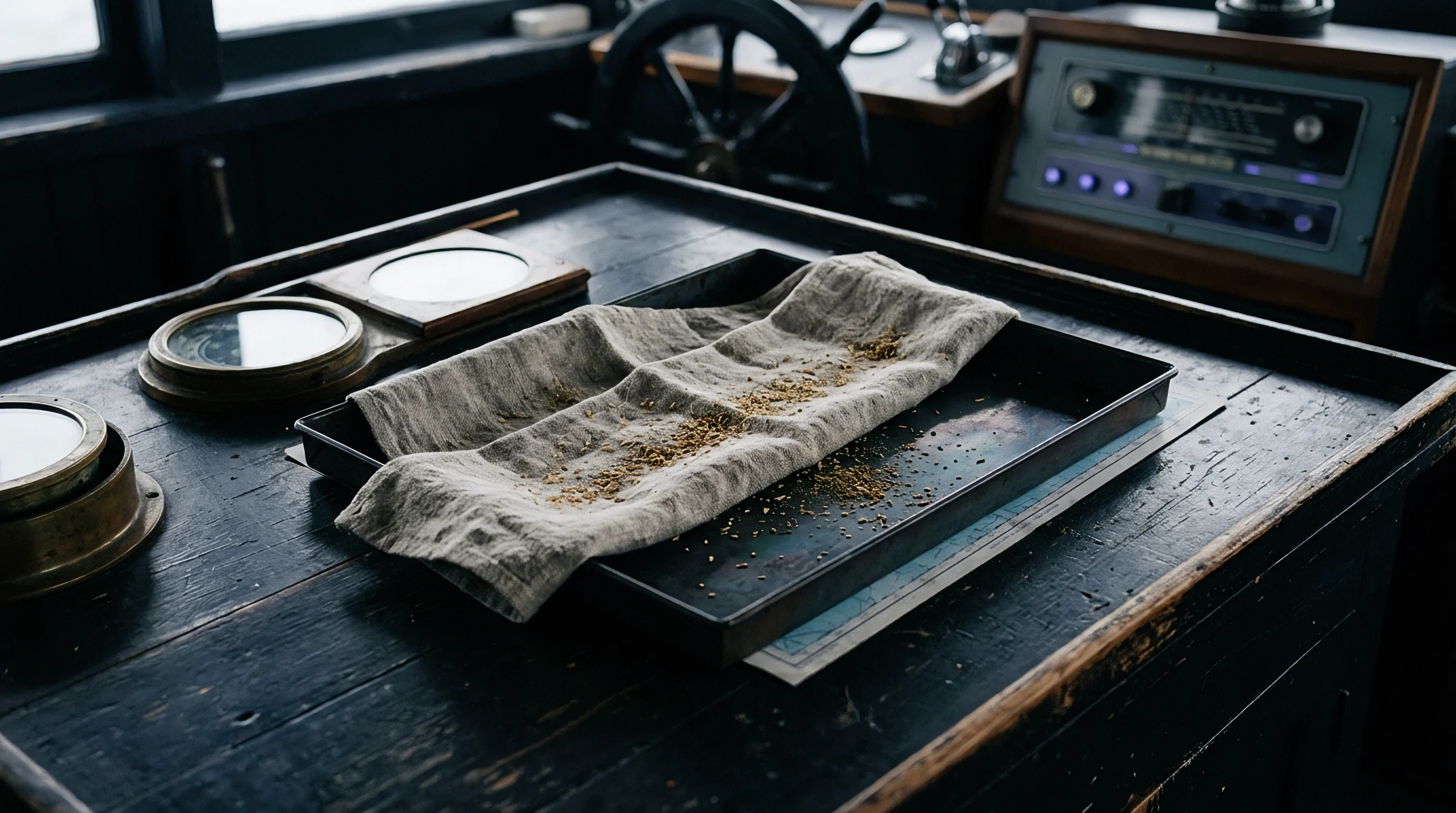
Dust collected beneath loom sheds shows how quickly size coatings disintegrate under cyclic reed strikes. Fully hydrolyzed polymer chains orient their hydroxyl groups internally toward neighboring chains rather than outward toward the cellulose substrate. This self-association weakens interfacial wetting, leaving the coating sitting on the yarn bundle as an unanchored shell.
Rapier shedding then strips this shell off, generating heavy lint and airborne dust.
Partially hydrolyzed chains present both polar hydroxyl and non-polar acetate groups at the surface. The hydroxyl units form hydrogen bonds with cellulose, while the acetate groups interact with hydrophobic wax deposits on the bast. On raw flax strands, eighty-eight mole percent hydrolyzed solutions produce contact angles below thirty-five degrees, compared to over sixty degrees for ninety-nine mole percent solutions.
This lower contact angle speeds up liquor spreading and improves interfacial shear resistance.
- Adhesive Anchorage Failure manifests when unbonded polymer shells detach from lignified cell walls during shed separation.
- Drop Wire Stoppages multiply as accumulated loose lint fouls electrical contact bars and trips mechanical stop motions.
- Harness Eye Snagging develops when stripped bast fibrils expand across adjacent warp ends to create persistent yarn clinging.
- Reed Chaffing Marks occur where denuded flax bundles rub directly against steel dent wires during pick beat-up.
Mechanical Anchorage in Irregular Bast Fibers
Flax yarns are uneven, marked by nodes, transverse cracks, and surface impurities like pectin and wax. When size penetrates these surface fissures, it dries into microscopic mechanical rivets. Highly hydrolyzed polymers have high surface tension in solution, which hinders capillary penetration into narrow spaces between fibrils.
Partially hydrolyzed formulas have lower surface tension, letting them flow easily into crevices to anchor loose fiber ends into the yarn core.
ASTM D5430 inspection protocols categorize yarn clinging and loose fuzz balls as four-point major defects whenever warp stops exceed three per hundred square metres of finished cloth.
Cross-sections show that eighty-eight mole percent solutions penetrate twenty to twenty-five percent into wet-spun flax bundles. That depth binds loose surface fibrils without saturating the core ~ which would make the warp overly stiff and reduce compliance during shed formation. Yarn hairiness might seem less critical when loom speeds drop below three hundred picks per minute, but the resulting clinging stops the harness regardless of machine tempo.

Friction
Drop wires, heald eyes, and reed dents subject passing warp yarns to severe shear. Without the natural crimp and elasticity of wool or cotton, linen converts mechanical friction straight into localized tension spikes. Unsized flax frays quickly under this repeated abrasion, forming fuzz balls that bridge the shed and block clean weft insertion.
Polyvinyl alcohol functions as a sacrificial lubricating barrier across those metal contact surfaces.
Abrasion resistance depends more on film toughness than raw tensile strength. Toughness ~ the total area under the stress-strain curve ~ combines tensile capacity with ultimate elongation. While fully hydrolyzed films show high tensile resistance, their brittleness causes them to crack under repeated transverse friction.
Partially hydrolyzed films absorb that frictional energy through viscoelastic relaxation, sliding cleanly against steel reed wires without cracking.
| PVA Hydrolysis (mol%) | Size Add-On (%) | Warp Stops per 100,000 Picks | Loom Efficiency (%) | Dusting Index (g/kg cloth) |
|---|---|---|---|---|
| 99.0 to 99.8 | 8.5 | 5.8 | 76.4 | 14.8 |
| 94.0 to 96.0 | 8.5 | 2.4 | 86.1 | 6.2 |
| 87.0 to 89.0 | 8.5 | 0.8 | 93.8 | 1.9 |
| 87.0 to 89.0 | 6.0 | 1.3 | 91.2 | 2.5 |
| Data recorded across twenty Dornier rapier looms running continuous forty-eight-hour shifts on 18 ends/cm by 16 picks/cm construction at 180 cm reed width. | ||||
As the reed beats each pick into the cloth fell, adjacent warp ends rub against dent surfaces under peak cyclic tension. Size flaking leaves naked cellulose microfibrils vulnerable to shear breakdown. Controlled trials verify that lowering hydrolysis from ninety-nine to eighty-eight mole percent reduces warp yarn friction coefficients against polished chrome steel from 0.38 to 0.22.
- Measure Liquor Refractometer Solids directly at the sizing box every sixty minutes to maintain exact chemical concentration.
- Verify Squeeze Roller Pressure across both beam flanks to prevent uneven size distribution between selvedge and body ends.
- Monitor Drying Cylinder Surface Temperatures to ensure progressive moisture evaporation without scorching the polymer film.
- Inspect Dry Split Rods for yarn tearing to confirm that dried size bridges break cleanly without splitting primary yarn filaments.
Loom cleanliness reflects sizing stability. Dust collected under harness frames running fully hydrolyzed recipes consists of hard, crystalline flakes mixed with broken bast fibers. Partially hydrolyzed formulations generate very little debris, keeping shedding components clean across extended shifts.

Stoppage
Loom pricing relies on continuous operation. Every warp break halts the machine, forcing an operator to find the severed end, thread it back through the drop wires and heald eye, and tie it into the reed dent. At high operating speeds, the frequency of these breaks determines whether a line turns a profit or runs at a loss.

Will Size Hydrolysis Determine Shed Efficiency?
On heavy linen plain weaves, harness-zone yarn breaks directly drive machine utilization metrics. Warps sized with fully hydrolyzed polyvinyl alcohol average 5.8 stops per one hundred thousand picks on high-speed rapier equipment, holding gross shed efficiency to 76.4 percent and requiring one operator for every six looms. Frequent stops also introduce starting marks, reed striping, and poor greige surface finish.
Switching to an eighty-eight mole percent hydrolyzed grade drops the stop rate to 0.8 per one hundred thousand picks on the same construction. Efficiency rises to 93.8 percent, allowing one operator to run eighteen looms at once. Drop wires still fall immediately if a yarn breaks, but flexible size coatings prevent the loose microfibrils that cause false electrical trips.
Running linen warps below ninety percent loom efficiency adds eighteen cents per linear metre to basic conversion costs on standard rapier machinery.
Every stop eats into booked machine time. Weaving ten thousand metres of linen sheeting at eighteen picks per centimetre requires eighteen million picks. At four hundred eighty picks per minute, theoretical continuous run time is six hundred twenty-five loom hours.
At 76.4 percent efficiency, however, actual running time stretches to eight hundred eighteen hours ~ consuming one hundred ninety-three extra hours of plant capacity.
| Performance Metric | Fully Hydrolyzed (99 mol%) | Partially Hydrolyzed (88 mol%) | Operational Variance |
|---|---|---|---|
| Warp Stop Rate (per 100k picks) | 5.8 | 0.8 | -86.2% |
| Actual Loom Efficiency (%) | 76.4 | 93.8 | +17.4% |
| Total Loom Hours Booked | 818.1 | 666.3 | -151.8 hrs |
| Weaver Machine Allocation | 6 looms/operator | 18 looms/operator | +200% capacity |
| Shed Conversion Cost ($/metre) | $1.42 | $1.16 | -$0.26/metre |
| First-Quality Yield (%) | 88.5 | 97.2 | +8.7% |
Downtime directly inflates weaving costs. Fixed shed overhead ~ electricity, climate control, labor, and depreciation ~ averages thirty-eight dollars per booked loom hour. Extending a run by one hundred fifty-two hours adds five thousand seven hundred seventy-six dollars to the cost of a single warp set.
Sizing beams with fully hydrolyzed films effectively locks a mill into high stoppage allowances, extra weaving surcharges, and missed delivery slots.
Recovery
Finishing ranges run greige fabric through hot wash boxes to prepare the cellulose for dyeing or bleaching. Any size applied during warp preparation must come off completely; residual polymer acts as a resist, blocking reactive dye molecules from cellulose bonding sites and causing patchy, cloudy color in piece-dyed fabric.
Solubility varies sharply by hydrolysis grade. Fully hydrolyzed polyvinyl alcohol crystallizes readily as stored greige rolls cool and age. Strong hydrogen bonding inside the crystalline matrix prevents water penetration below eighty-five degrees Celsius, so removing ninety-nine mole percent size requires harsh scouring baths with sodium hydroxide at ninety-five degrees Celsius ~ a process that strips natural flax oils and degrades primary bast fibers.
Partially hydrolyzed grades dissolve quickly in warm water at sixty degrees Celsius without chemical additives. Residual acetate side chains keep the polymer from re-crystallizing in storage, allowing immediate hydration. This faster washout cuts water and thermal energy use while protecting the fiber from chemical damage during finishing.
Size removal is verified at the desizing exit nip rolls using iodine potassium iodide spot tests on damp swatches. Fully hydrolyzed residues stain dark blue, whereas partially hydrolyzed polymers produce brown or red complexes. The optical density of the reaction measures residual polymer concentration, confirming whether fabric can move on to open-width dyeing.
Desizing wash formulations create distinct chemical oxygen demand profiles in wastewater treatment. Polyvinyl alcohol breaks down slowly in municipal biological systems, requiring acclimatized bacteria for full degradation. Mills with ultrafiltration systems can concentrate partially hydrolyzed wash liquor to recover polymer for re-use, reducing chemical costs.
Whether ultrafiltration can economically separate partially hydrolyzed PVA from carboxylated potato starches in mixed effluent remains an open question in the industry.