Optimizing Static Warp Tension Parameters for Wet Spun Linen Weaving
Target static warp tension for wet spun linen must stay between 0.12 and 0.18 cN/tex to prevent end breaks while maintaining shed clearance.

Beam
Wet Spun Flax Yarn Rheology and Tension Limits
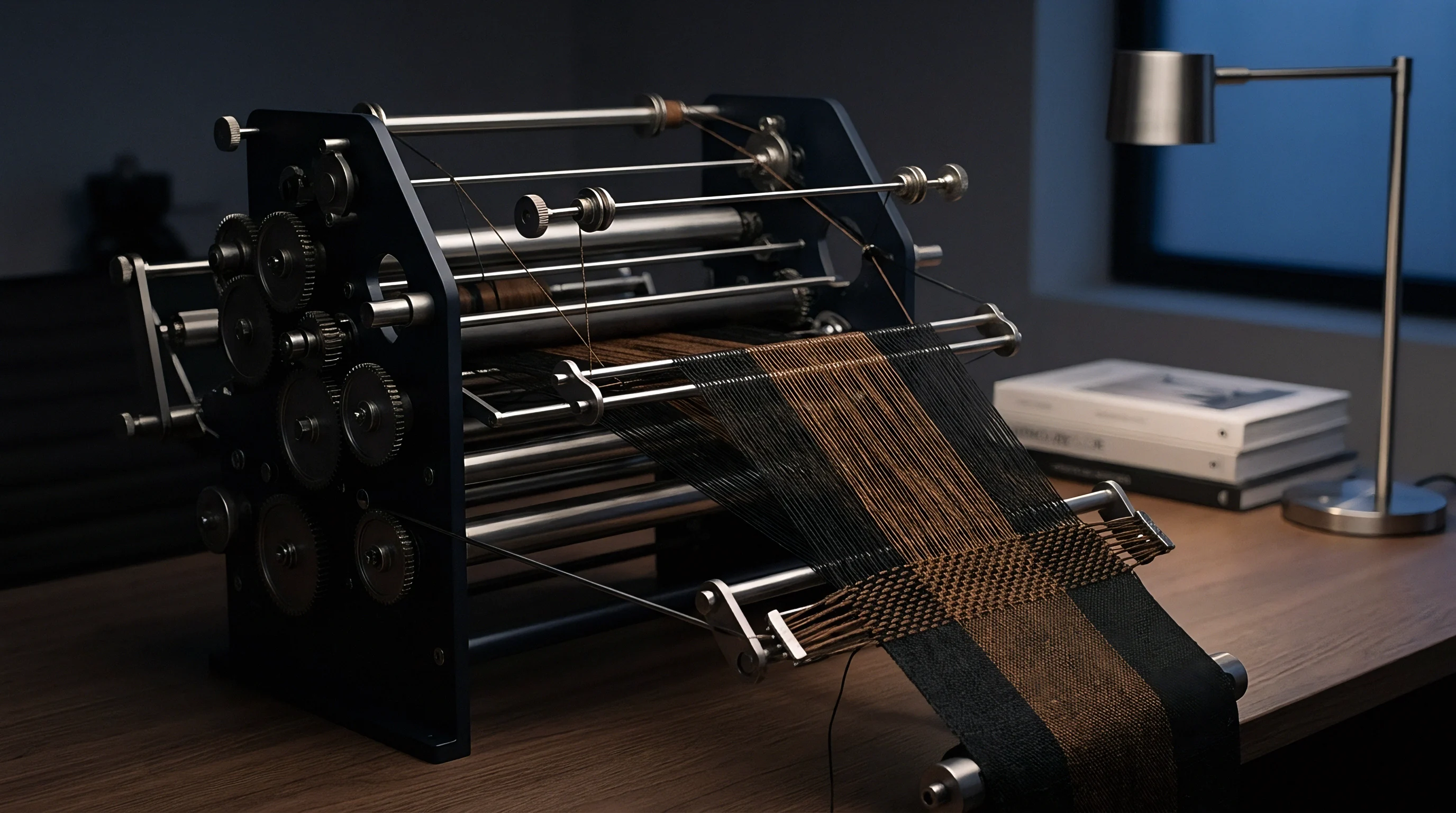
Wet spun flax fibers align tightly along the fiber axis, giving the yarn a high Young’s modulus but an ultimate elongation at break of only 1.8 percent to 2.4 percent. Single-end breaking tenacity for NeL 25 (36 Tex) linen averages 28 cN/tex under ISO 2062 test conditions, though elastic recovery falls off sharply past 0.8 percent extension. Lacking the crimp of cotton or synthetic filaments, flax cannot stretch to absorb uneven package winding.
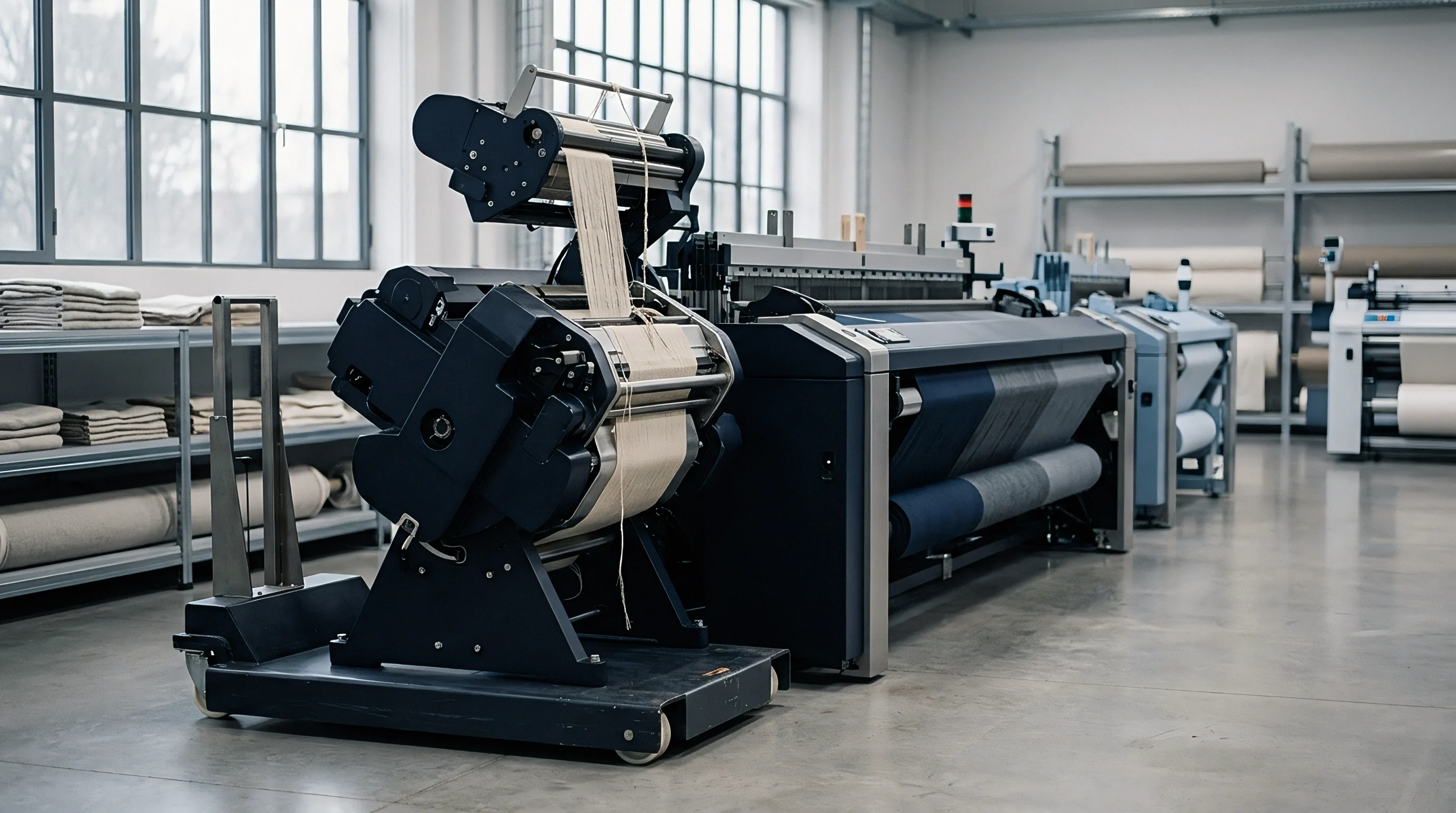
When warp threads on a weavers beam carry micro-slackness or irregular density, shedding concentrates total strain onto individual rigid ends. Setting static warp tension requires keeping baseline force in a narrow window: high enough for clean shed separation without yarn cling, but low enough that peak dynamic loads at beat-up stay below 50 percent of single-thread yield strength.
Target static tension for wet spun linen sits between 0.12 cN/tex and 0.18 cN/tex per end. For a 36 Tex yarn, that translates to a baseline resting tension of 4.3 cN to 6.5 cN per end. Raising static tension to 0.22 cN/tex improves shed clearance on dense plain weaves, but end breaks rise past 1.4 breaks per 100,000 picks as yarn slubs and splices fatigue.
Dropping below 0.10 cN/tex lets loose fibrils entangle in the shed clearing zone, causing false drop-wire stops and warp floats. Electronic let-off motions must maintain load-cell feedback loops within a 2 percent tolerance throughout beam exhaustion, accounting for the shrinking radius from full 800 millimeter flange down to core diameter.
0.14 cN/tex static tension maintains shed clearance while limiting beat-up peak strain to half of wet spun flax tensile strength.
Warp beam preparation directly governs tension uniformity across the sheet width. Sectional warping of wet spun linen requires strict control over ambient relative humidity, held between 65 percent and 70 percent at 21 degrees Celsius. Dry linen fibers lose plasticizer moisture, which elevates stiffness and causes snatching as threads unwind from creel bobbins.
Sizing formulations with modified potato starch and PVA binder should add 4.5 percent to 6.0 percent dry pick-up weight. This film encapsulates surface hairiness without penetrating the core, preserving internal fiber mobility over the whip roll.
| Yarn Count (NeL / Tex) | Weave Structure | Ends per cm (Sett) | Target Tension (cN/end) | Peak Shed Strain (%) | Loom Speed Limit (RPM) |
|---|---|---|---|---|---|
| NeL 14 / 64 Tex | 1/1 Plain Weave | 18 | 9.0 – 11.5 | 1.45 | 420 |
| NeL 25 / 36 Tex | 1/1 Plain Weave | 24 | 4.3 – 6.5 | 1.25 | 520 |
| NeL 25 / 36 Tex | 2/2 Twill | 28 | 3.8 – 5.4 | 1.10 | 580 |
| NeL 40 / 22.5 Tex | 5-End Satin | 36 | 2.7 – 3.8 | 0.95 | 620 |
| NeL 50 / 18 Tex | Damask Figure | 42 | 2.0 – 2.8 | 0.85 | 540 |
Excessive static beam tension packs yarn package layers tight on the loom beam. Lower layers sink into micro-gaps between threads, creating sudden tension spikes during unwinding that snap ends at the backrest roller.

Gauge
Static Load Measurement and Load-Cell Calibration
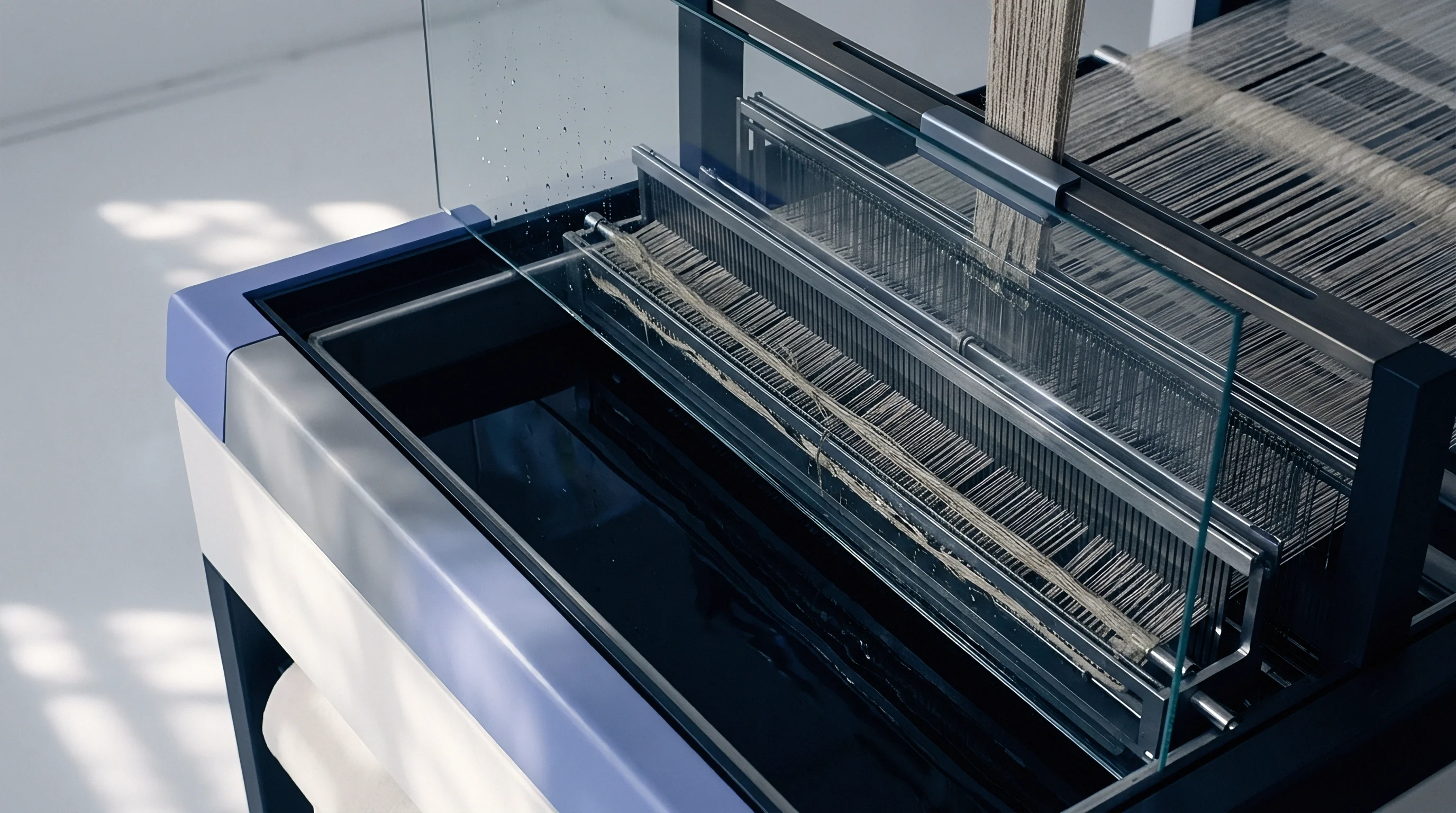
Checking static tension across wide weaving widths requires handheld digital tensiometers calibrated for high-modulus natural fibers. Standard broad-wheel sensors designed for textured polyester bend linen threads out of line, introducing friction errors that inflate readings by up to 15 percent. Technicians place three-roller measurement heads across three designated zones of the warp sheet: drive side, center, and off-side.
Checks take place with the loom stopped and harness frames leveled at dead center. Taking ten discrete end readings per zone highlights sheet variation caused by uneven reed denting or beam flange distortion.
Shedding geometry alters tension levels as harness frames move from flat line to full shed opening. Static baseline settings establish the lower strain bound, while peak shed opening adds geometric stretch dependent on backrest roller height, harness lift depth, and distance from backrest to cloth fell. An asymmetrical shed setting ~ where the upper shed line carries lower tension than the lower line ~ helps hide reed marks in heavy plain weaves.
Lower line tension rises roughly 20 percent at peak shed lift, letting the reed pack fill picks tightly against the fell without snapping threads.
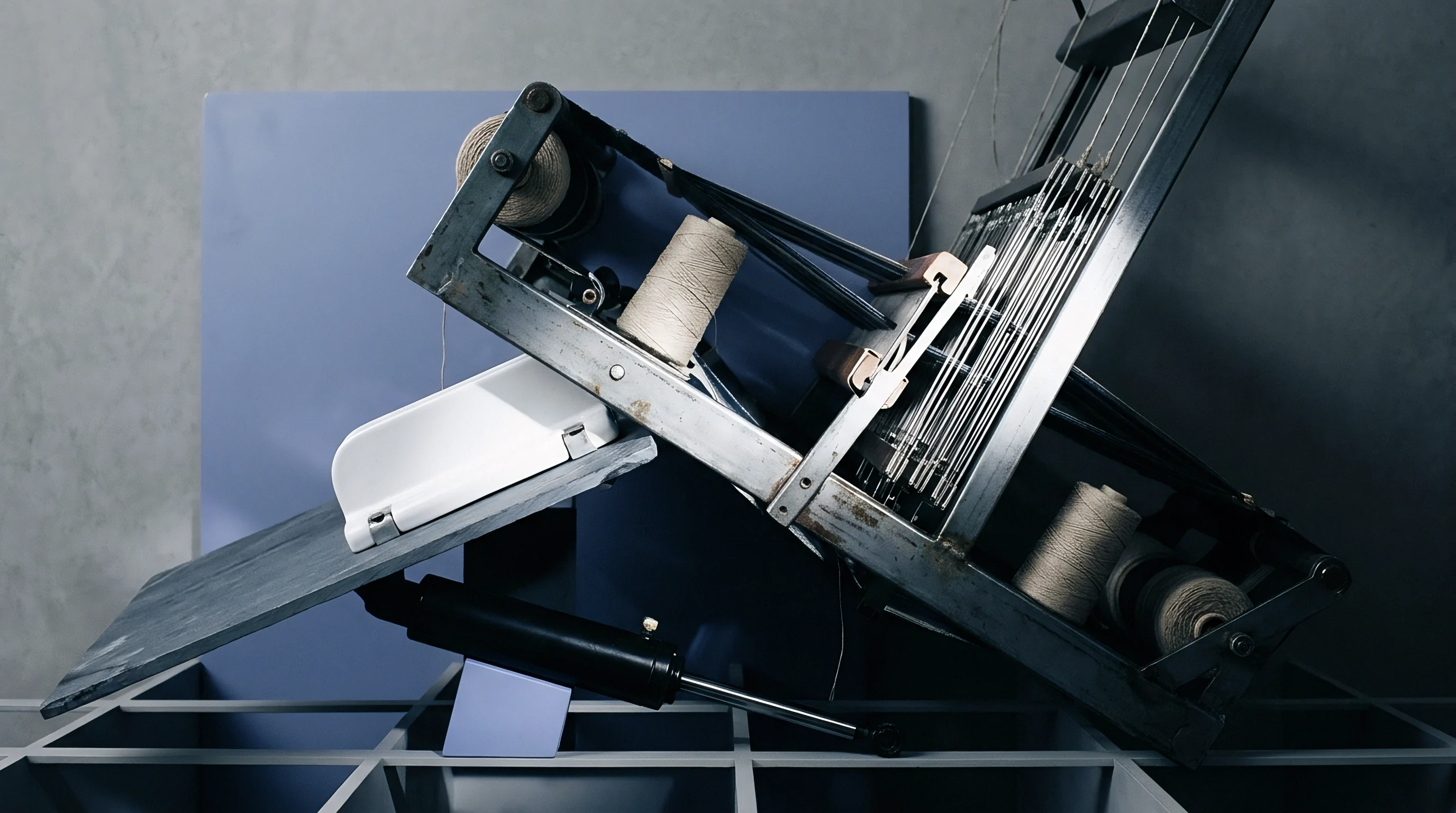
Electronic load-cell beams under the whip roll provide continuous monitoring during operation. Calibrating load-cell signals against manual static readings involves zeroing the system with yarn removed, then suspending certified dead weights (50 kilograms to 200 kilograms) across a calibration bridle. Voltage response must remain linear across the full operating spectrum.
Drift in load-cell signal amplifiers manifests as gradual warp tightening over long production runs, steadily raising warp end break frequency over a twelve-hour shift.
- Frame Leveling Locks the shedding mechanism at true zero lift to isolate baseline mechanical tension from harness lift forces.
- Tensiometer Placement Applies handheld measurement probes to individual ends at a uniform 15-degree wrap angle behind the drop wire box.
- Zone Sampling Records twenty individual thread tension points across left, center, and right sections to identify beam crown defects.
- Load Cell Alignment Adjusts electronic let-off sensor gain until control unit readout matches physical tension averages within a zero point five gram margin.
Static balance is optimal when individual end tension across the full sheet width varies by less than seven percent from targeted nominal values.

Harness

Backrest Roller Dynamics and Mechanical Shed Modulation
Positioning the whip roll relative to the breast beam changes how harness motion expands the warp length. Elevating the backrest roller 15 millimeters above the breast beam line increases top-shed slackness while pulling the bottom shed line tight. This split-level configuration lets wet spun linen ends pass each other with minimal fibril entanglement during harness crossover.
Excessive backrest elevation, however, amplifies cyclic tension spikes at beat-up, accelerating fatigue in eyelet wire zones where friction heat builds up fast.

How Does Backrest Roller Height Alter Dynamic Strain Peaks?
Moving the backrest assembly away from the harness frames lengthens the working warp line, lowering the percentage strain imposed on ends during shed opening. A short warp line from backrest to cloth fell concentrates stretch over fewer meters of yarn, pushing local elongation past wet spun linen’s low plastic limit. Extending the warp line length by 200 millimeters reduces peak shed strain by 0.35 percent, cutting thread breakage rates on dense damask constructions.
The trade-off is reduced shed opening clarity, demanding precise drop-wire timing to prevent mispicks.
Whip roll spring damping units absorb the shock load generated when the reed drives the pick into the cloth fell. Spring stiffness ratings must match total warp end count and yarn count. Soft damping springs permit excessive whip roll movement, causing tension oscillations that produce horizontal bands of varying pick density across the fabric.
Rigid springs transfer full beat-up impact into the warp sheet, fracturing micro-splices in wet spun flax yarns.
Spring stiffness tuned to match total yarn count prevents structural vibration bands across heavy linen weaves.
Shedding breakage often attributed to fiber slub variations stems instead from loom tension exceeding the elastic threshold of wet spun flax.

Friction
Reed Resistance, Heald Eye Wear, and Fault Prevention
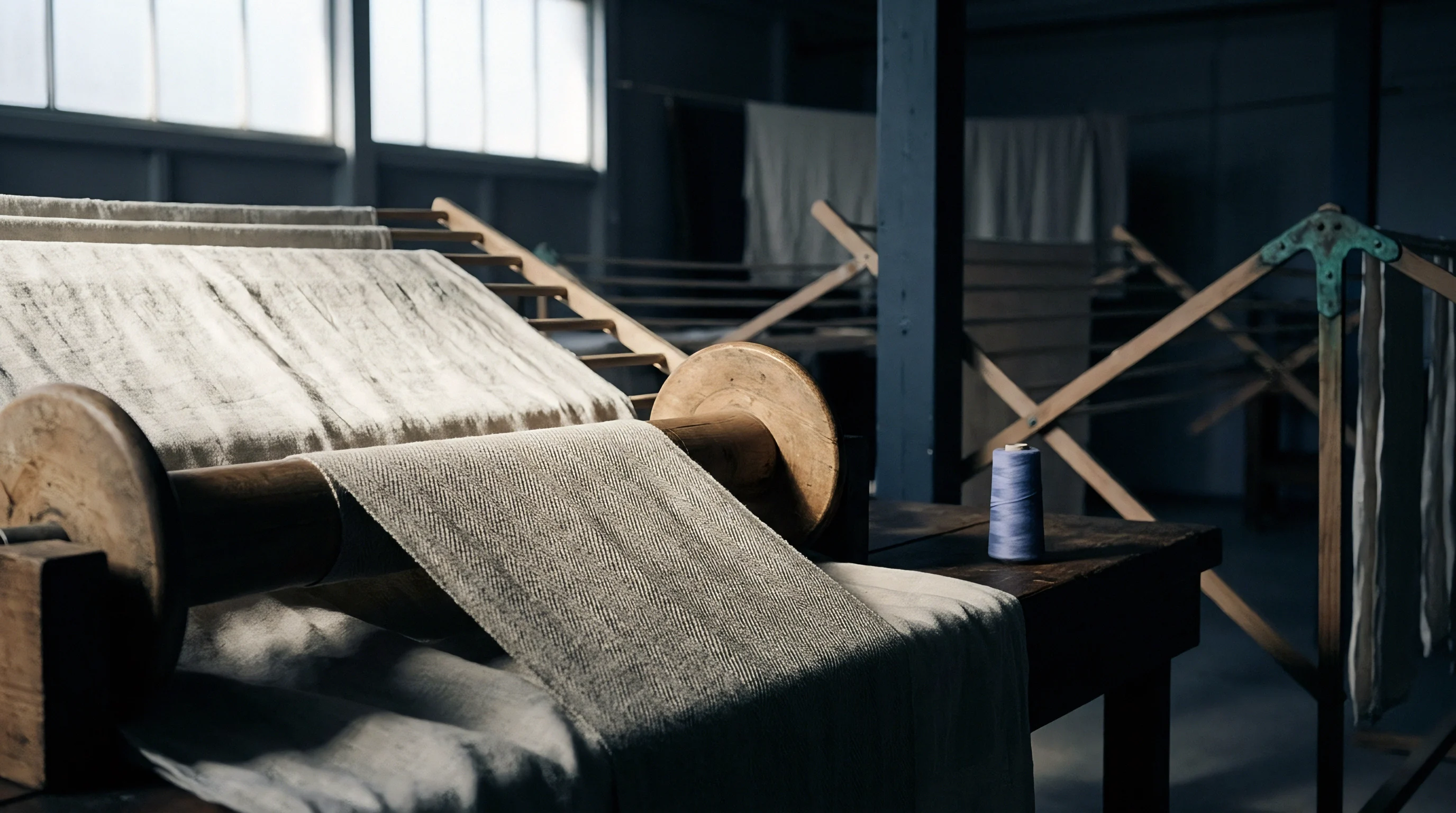
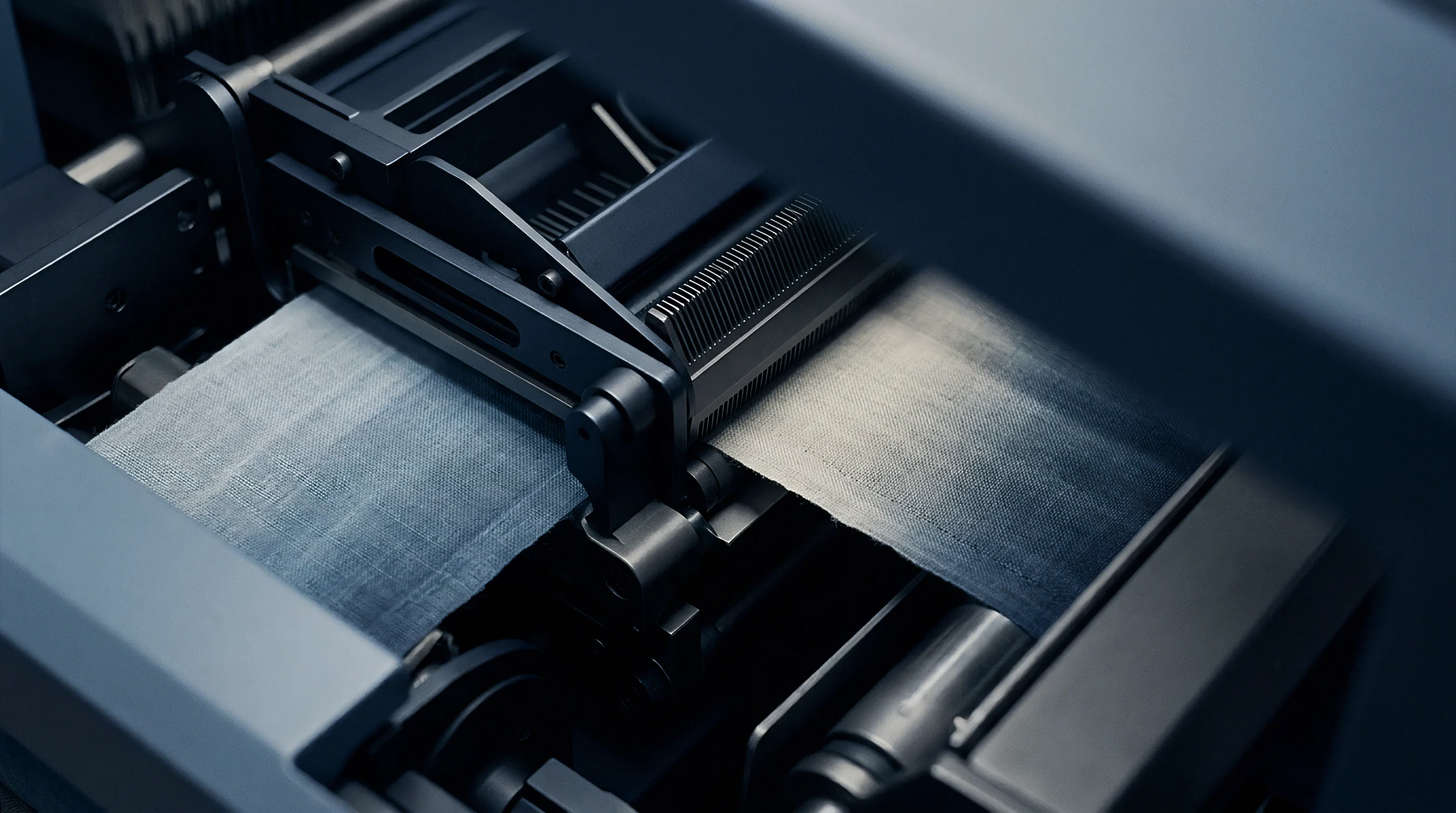
Frictional drag on wet spun linen warps accumulates across three primary contact points: drop wires, heald eyes, and reed dents. Wet spun linen carries a rougher surface profile than combed cotton, generating higher friction against metal components. Nickel-plated steel heald eyes with polished inner radii prevent surface abrasion that strips size film off yarn.
When size protection wears off, micro-fibrils peel back along the thread core, forming fuzz balls that catch in the reed and trigger false drop-wire knock-offs.
Drop-wire weight selection depends directly on target static warp tension. Lightweight drop wires (0.7 grams) suit fine linen counts but fail to drop quickly when an end slackens under low static tension, leaving uncorrected warp floats. Heavy drop wires (1.5 grams) pin fine threads down, introducing extra friction points that abrade wet spun fibers.
Technicians select drop wires based on single-end tension values, ensuring the wire weight represents no more than 15 percent to 20 percent of individual end static tension force.
- Reed Dent Polishing Eliminates burrs and micro-grooves that scrape linen yarn size coatings during beat-up cycles.
- Heald Eye Radius Selection Utilizes oval-shaped eyelets to reduce flexural stress concentrations as warp ends rise and fall.
- Static Eliminator Bars Prevents electrostatic charge accumulation that causes fiber hairiness to splay outward in low-humidity environments.
- Lease Rod Pitch Tuning Sets precise cross-rod spacing behind heald frames to prevent adjacent warp threads from rolling over each other.
Standard quality agreements specify that warp-wise tensile strength losses due to loom component abrasion cannot exceed five percent between the weaver beam and the grey cloth roll.
| Component Type | Material / Coating | Critical Specification | Failure Mode Under High Tension |
|---|---|---|---|
| Heald Wires | Nickel-Plated Steel | 1.5 mm x 3.0 mm Oval Eye | Size film stripping, core fiber splaying |
| Drop Wires | Stainless Steel | 0.9 to 1.2 Grams per wire | False stops or unrecorded warp floats |
| Weaving Reed | DLC Polished Stainless | Air-jet entry angle 12 degrees | Reed marks, localized thread fraying |
| Whip Roll Surface | Hard Chrome Ceramic Matte | Surface roughness Ra 0.4 um | Yarn chatter marks, static tension drift |


Output
Loom Efficiency, Weave Density, and Capacity Costing
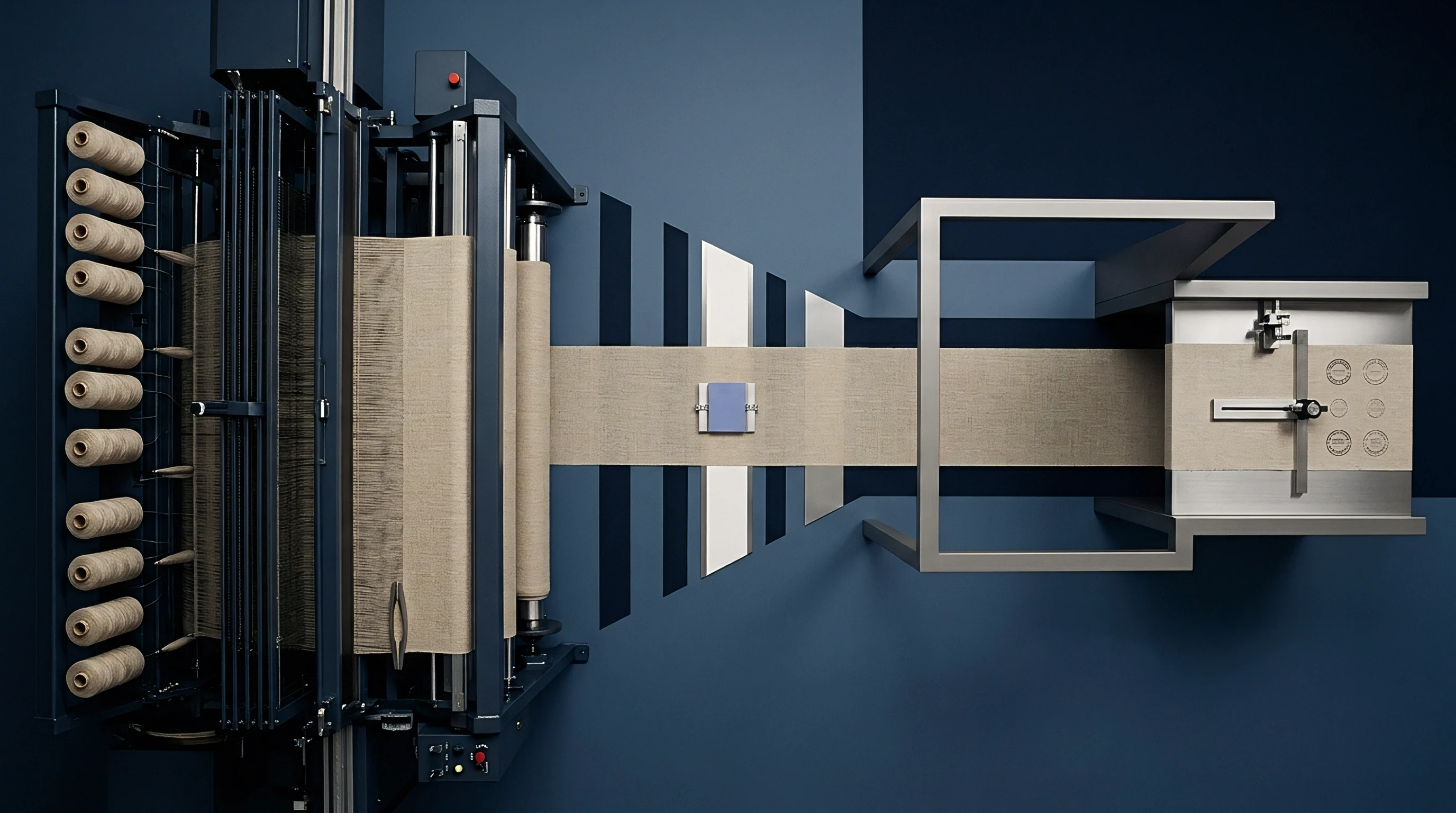
Optimizing static warp tension directly affects shed efficiency and fabric production costs. A loom running at 500 picks per minute on a 240-centimeter width linen fabric produces 30 meters of cloth per hour at 100 percent efficiency with a pick density of 20 picks per centimeter. Unscheduled warp stops erode running efficiency.
If improper static tension causes 2.5 warp breaks per loom hour, efficiency drops to 84 percent, production loss reaches 4.8 meters per loom hour, and cost per meter increases proportionally under fixed shed overhead charges.
Consider a 10,000-meter order of 230 gsm wet spun linen plain weave produced across eight high-speed rapier looms. Assuming a fixed loom-hour shop rate of 28.50 USD, improving weaving efficiency from 82 percent to 92 percent reduces overall machine allocation time by 40 loom hours. This shift cuts direct conversion costs by 1,140 USD across the production batch while preventing heat-set storage lines in grey rolls caused by prolonged machine stops under high static tension loads.
Improving weaving efficiency from 82 to 92 percent saves 40 loom hours on a 10,000-meter production run.
Calculations for total landed fabric cost must account for second-quality yield losses driven by tension defects. Structural faults like slack warp lines, tight ends, and reed marks reduce fabric value under ASTM D5430 four-point grading systems. Setting static tension to an absolute minimum reduces break rates but risks generating soft-edged selvedges and uneven cover factors that cause width shrinkage during post-weave finishing.
What threshold of continuous dynamic tension logging provides sufficient predictive control to prevent yarn fatigue failure before microscopic size film degradation occurs across a 50,000-meter weaving run?