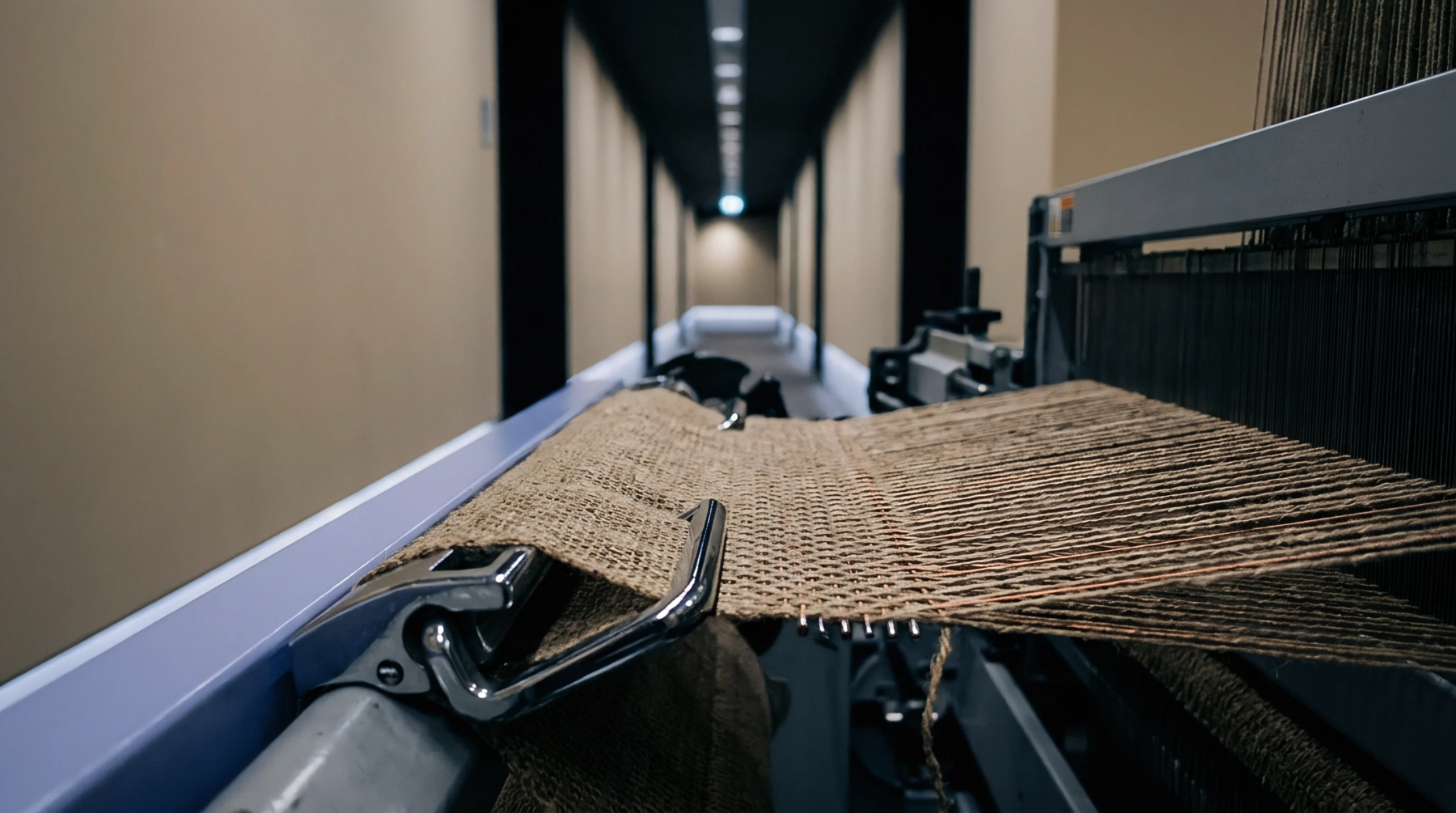
Insertion Mechanism
Weft insertion mechanisms in modern weaving machines employ mechanically driven carriers to transport yarn across the warp shed without direct grip control during the transfer. This style of insertion, known as negative rapier, utilizes spring-loaded clamps that hold the weft yarn at one end before releasing it to a receiving hook at the center of the loom. It provides a reliable and cost-effective method for weaving a wide range of standard textile fabrics.
Mechanical Operation
Mechanical action during the yarn handover relies on the precise alignment of the donor and receiver rapiers as they meet in the middle of the warp sheet. The negative rapier system relies on the physical tension of the yarn and spring tension to execute the transfer. If the warp shed is not clear or if there is excessive lint build-up, the transfer may fail, causing weft insertion errors and loom stops.
Because the yarn is not actively clamped during the entire traverse, high-speed operation requires careful calibration of the spring tension to prevent the yarn from slipping. This mechanism is simpler than active systems but requires more frequent adjustment when yarn counts are changed.
Yarn Selection
Mill technicians record these mechanical settings in the weaving room log to maintain consistency across looms. When weaving flax yarn, the surface hairiness of the fibres can interfere with the spring clamp of the negative rapier, requiring specific cleaning intervals. The choice of this insertion method is documented in the manufacturing plan, where the yarn specifications must align with the mechanical limits of the loom.
Buyers check these records to confirm that the production method is suited to the required fabric density and yarn properties.