Warp Tension Dynamics in Air-Jet Linen Fabric Weaving
Active whip roll damping combined with lower shed crossover prevents bast yarn rupture while maintaining insertion speed on air-jet looms.
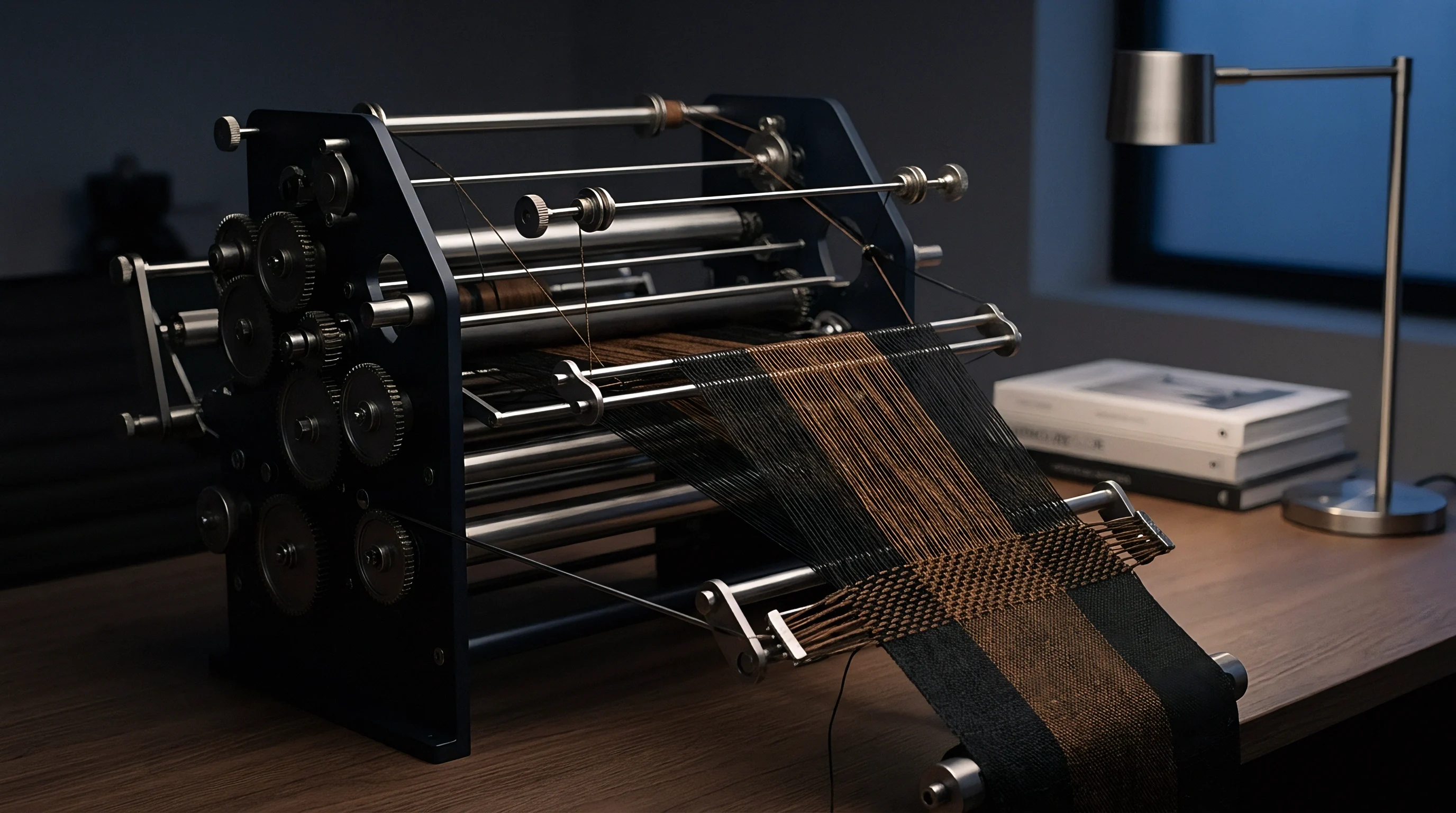
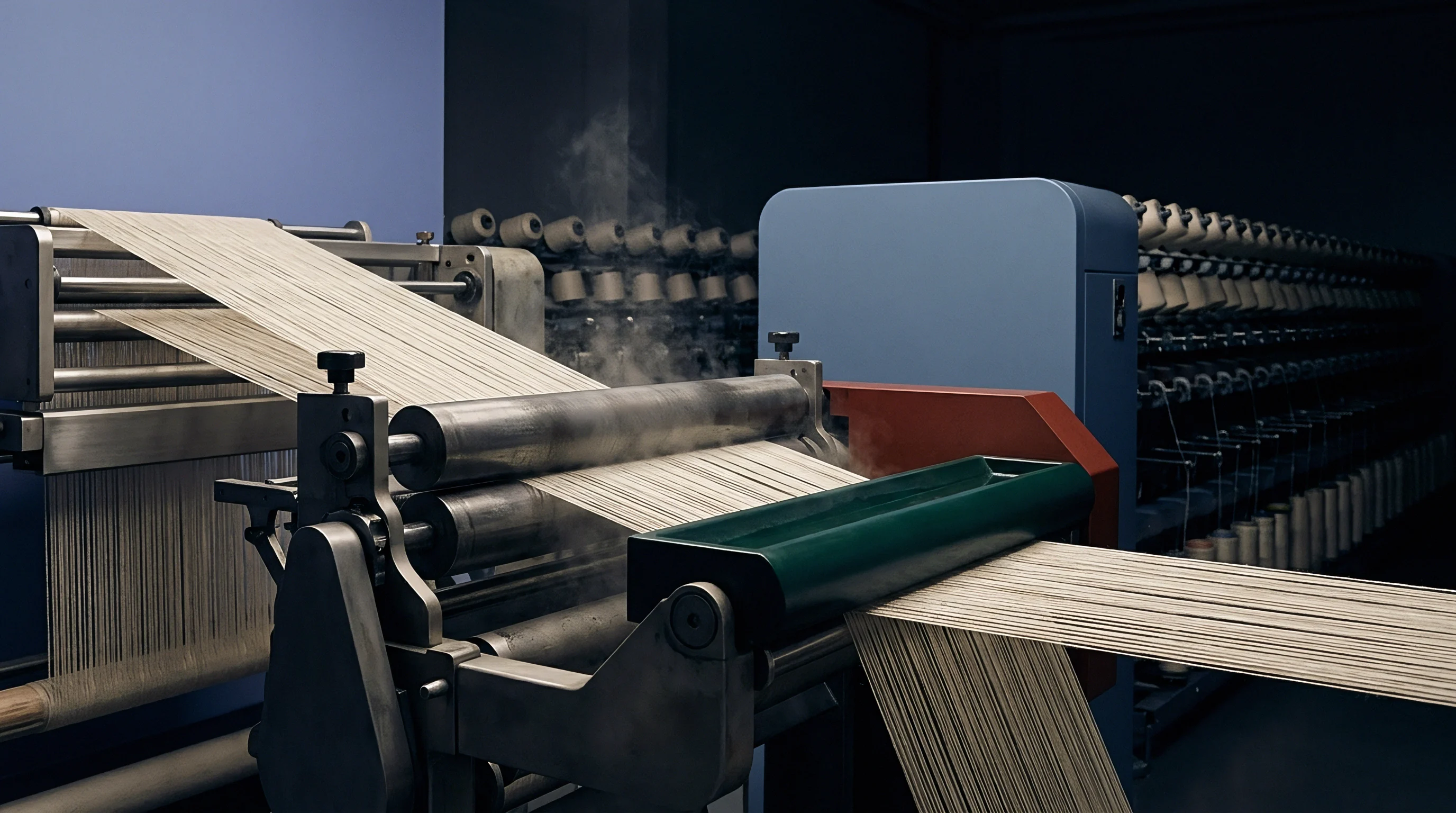
Deflection
Air-jet insertion of bast yarns exposes the running line to severe cyclical strain during shed opening and beat-up. High-modulus fibers like flax possess an exceptionally rigid crystalline structure, where cellulose polymers align parallel to the fiber axis with minimal amorphous regions. Flax yields under two percent stretch.
Because of this mechanical rigidity, any mechanical movement of the heddle shafts or the sley transmits instantaneous force spikes directly into the warp sheet. Standard synthetic or cotton warps absorb shedding motion through viscoelastic elongation; linen absorbs none. The entire mechanical load concentrates across the yarn span between the whip roll and the cloth fell, causing rapid yarn breakdown unless shed geometry accounts for the material limit.
Beat-up force spikes at crossover. When the reed drives the pick into the cloth fell at five hundred picks per minute, the instantaneous resistance creates a shock wave that travels backward toward the warp beam. In traditional rapier looms, flexible whip rolls and lower running speeds dampen this impulse over a broader timing window.
Air-jet machines run at velocities exceeding six hundred picks per minute, compressing the beat-up duration into a fraction of a millisecond. If the warp path cannot absorb this impulse, individual flax fibrils split longitudinal bonds. Wet spinning increases single yarn strength.
It leaves the exterior hair fibers glued down by pectin, forming a smooth yet brittle strand. When cyclic tension exceeds forty percent of single-end break force, these pectin bonds crack, producing shedding debris that quickly fouls the profile reed.
Peak cycle tension exceeding forty-two centinewtons per yarn end at five hundred picks per minute generates immediate micro-fibril splits across dry wet-spun flax.
Shed height adjustment determines the baseline strain across the yarn line. A tall shed provides a wide flight path for the air-driven pick, reducing insertion stops caused by yarn cling. Conversely, excessive heddle lift stretches the warp sheet past its safe elastic limit during every crank rotation.
The solution balances nozzle clearance against tensile stress. Lowering the shed opening by four millimeters reduces cyclic peak force by twelve percent while maintaining adequate air velocity across the reed tunnel. Sizing application reinforces this balance by forming a protective shell over the yarn core, though sizing formulas containing high starch ratios increase fiber stiffness and worsen deflection stress.
| Yarn Count (Nm) | Warp Sett (Ends/cm) | Shed Geometry Angle (Deg) | Static Tension per End (cN) | Peak Beat-Up Force (cN) | Running Elongation (%) |
|---|---|---|---|---|---|
| Nm 26 | 18.0 | 28.5 | 38.0 | 64.5 | 1.45 |
| Nm 39 | 22.5 | 27.0 | 29.0 | 51.0 | 1.25 |
| Nm 50 | 26.0 | 26.0 | 22.0 | 42.5 | 1.15 |
| Nm 60 | 30.0 | 24.5 | 17.5 | 35.0 | 1.05 |
Improper compensation across the shed cycle leaves deep horizontal start bars across the cloth face that strip twenty-five percent off the finished roll invoice value at delivery.
Bar
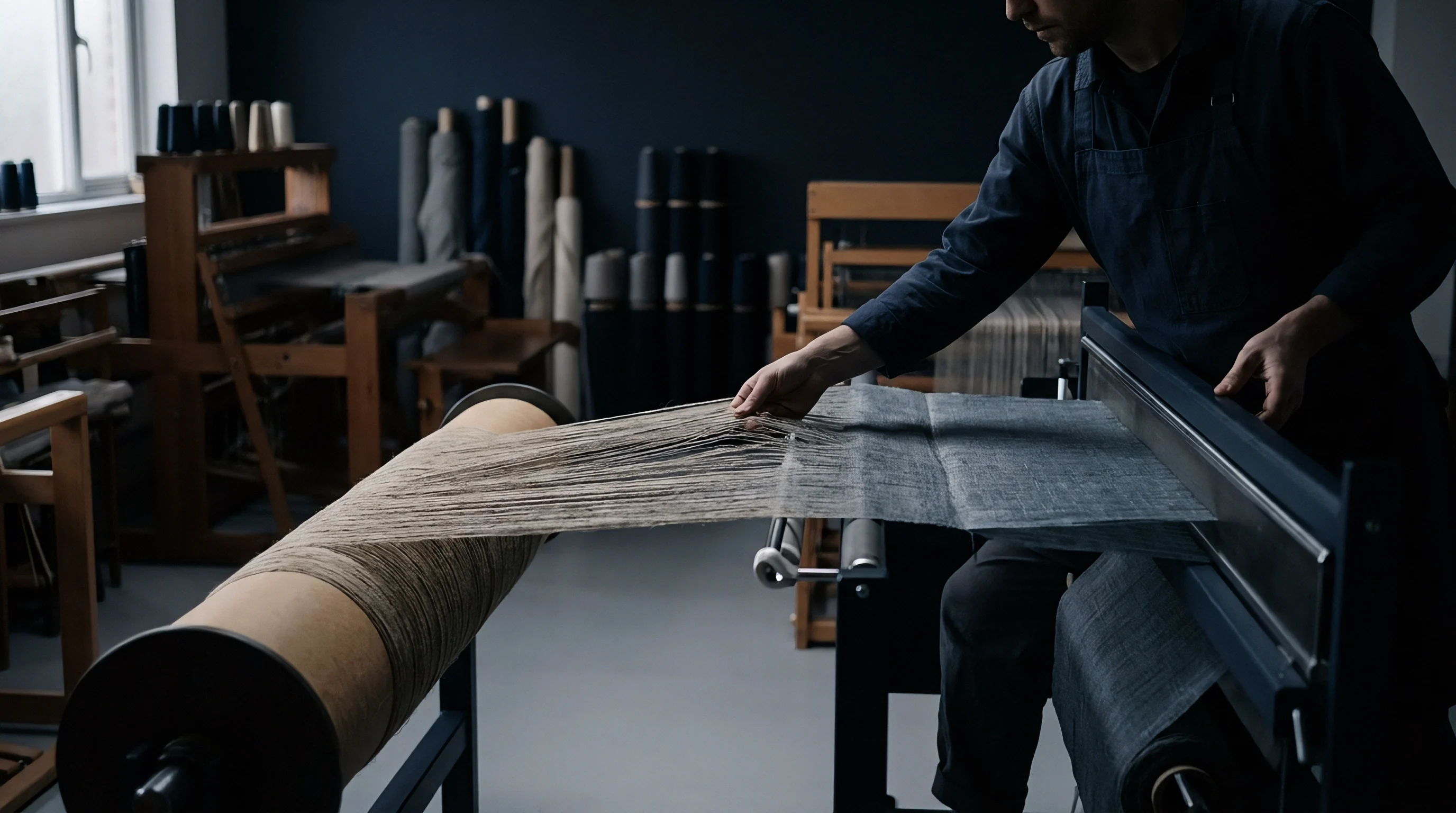
Continuous regulation of running yarn line geometry depends on active feedback from the oscillating whip roller. The whip roller acts as the mechanical buffer between the continuous let-off motor and the intermittent demands of the shedding harness. High-inertia steel rollers cannot track the rapid displacement cycles demanded by high-speed air-jet looms.
Instead, lightweight carbon-fiber rods mounted on torsion springs absorb the sudden peak when the heddles open to full lift. When the heddle frames reverse direction, the torsion rod releases stored energy back into the yarn sheet, maintaining sufficient tightness to prevent pick looping inside the reed channel. The whip roll balances dynamic shock.
Which Mechanical Linkages Mitigate Peak Shed Strain?
Torsion springs attached to the whip stand dissipate sudden peaks as heddle frames divide the yarn sheets. Modern high-speed machines fit double-bar configurations to separate upper and lower warp sheets. In plain interlacing of bast fibers, the upper sheet experiences lower elongation than the lower sheet due to the geometry of the backrest relative to the breast beam.
An asymmetrical whip system introduces differential travel for the two sheds. By raising the rear whip bar twelve millimeters above the breast beam horizontal line, the path length of the tighter shed shortens, balancing the tension between odd and even ends during crossover. Torsion bars dampen high-speed vibration.
- Eccentric whip roll deflection introduces periodic loose picks across the cloth width when bearing wear exceeds seventy micrometers.
- Heddle eye abrasive grooving cuts deep scratches into bast yarn bundles, triggering yarn hairiness and pneumatic insertion failures.
- Drop wire chatter causes false loom stoppages whenever mechanical vibrations exceed the electrical damping circuit threshold.
- Beam brake slippage allows sudden overfeeding of warp yarns during rapid deceleration cycles.
A sluggish whip roll always amplifies yarn abrasion long before the shed reaches maximum opening.
Rupture
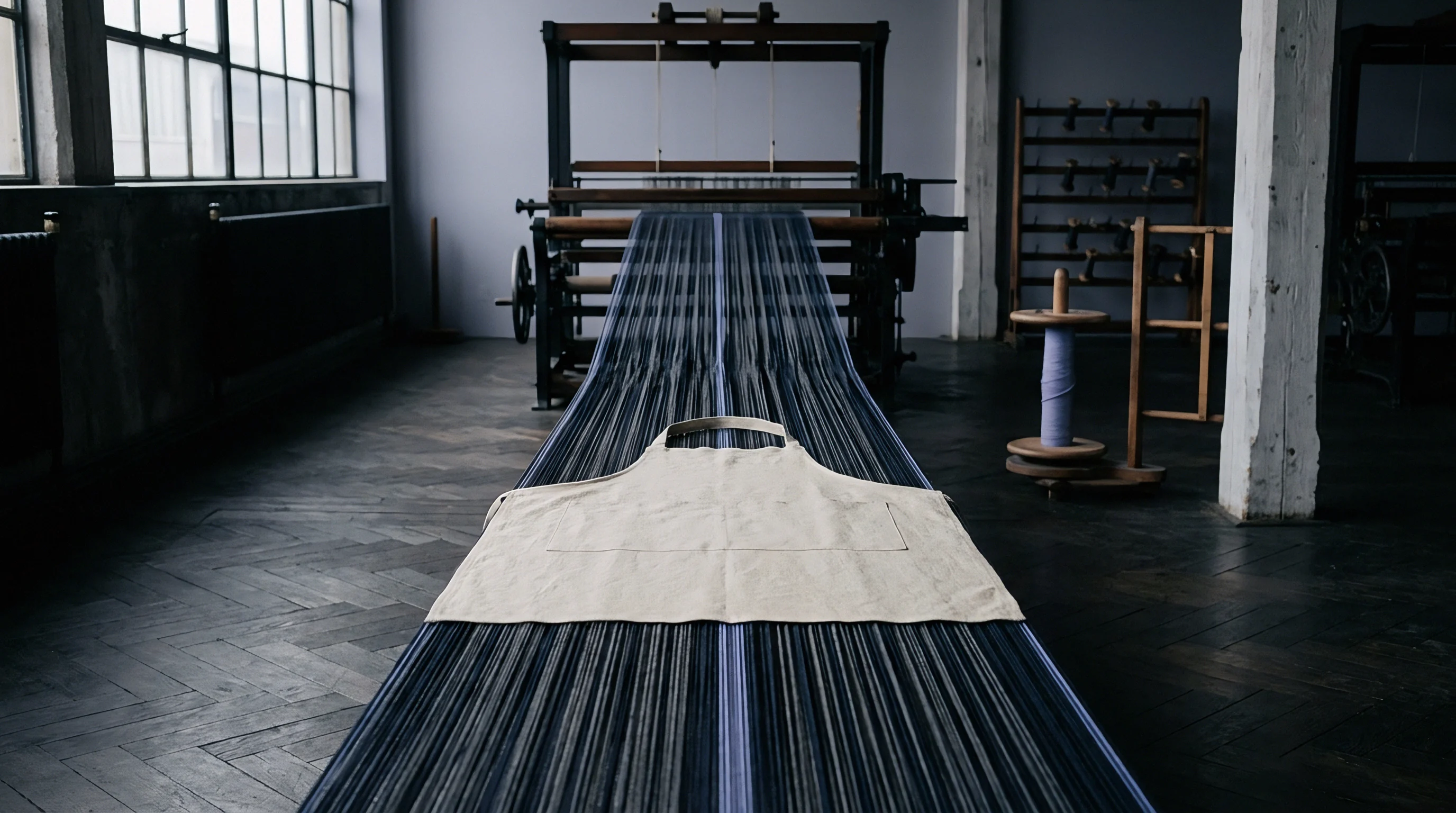
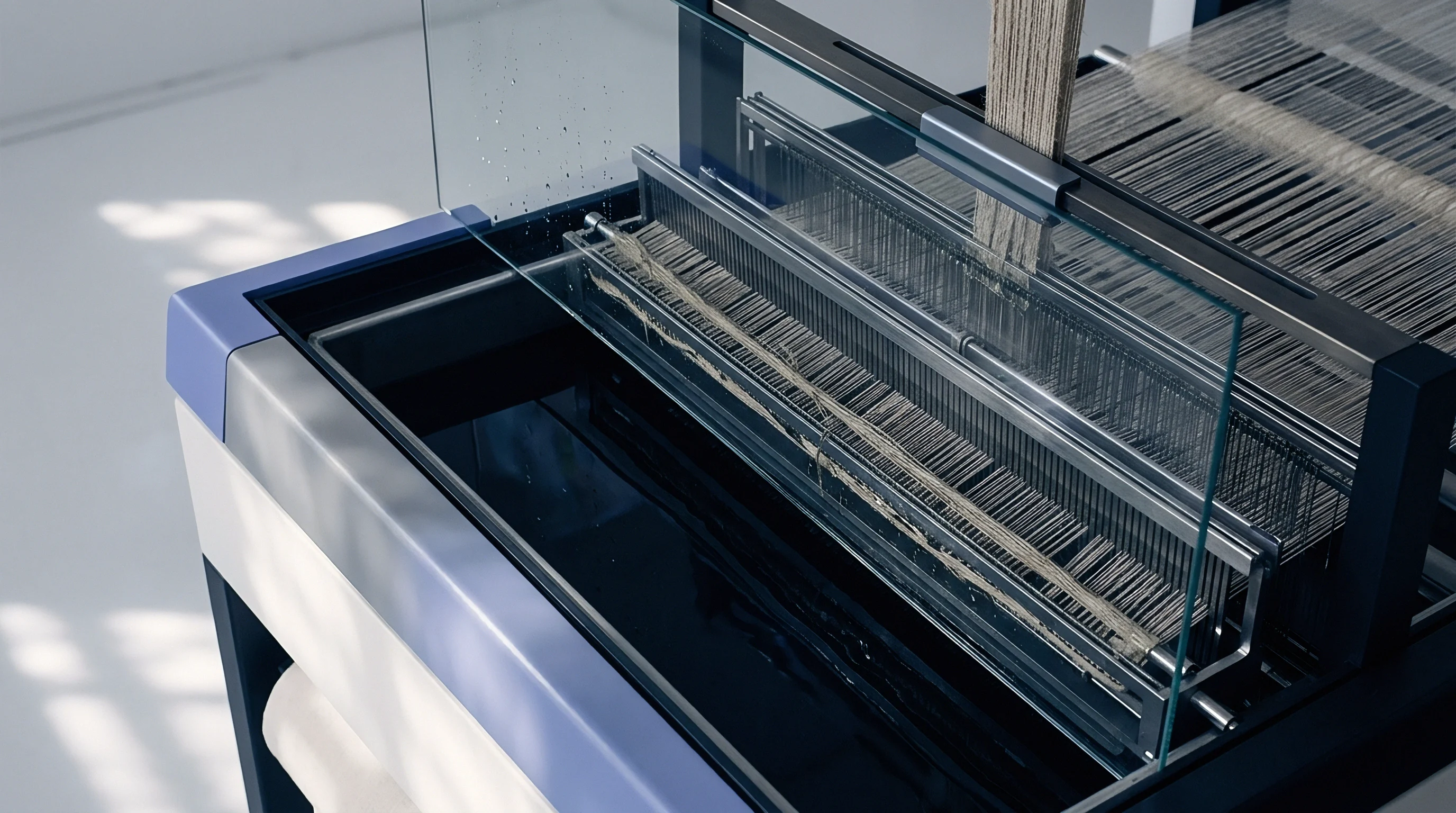
Tensile breaks in wet-spun linen occur with minimal advance necking during the shed change. Flax fiber bundles separate along middle lamella pectins when mechanical stress exceeds cohesion limits. Unlike synthetic yarns that generate warning fuzz balls before total failure, a linen end snaps cleanly and snaps back through the drop wires.
The loose end enters adjacent sheds, entangling neighboring strands and triggering multi-end cluster breaks. Broken ends trigger automated loom stops. Each stop requires manual re-drawing through drop wires, heddles, and reed dents, directly burning operator capacity and reducing loom shed efficiency below acceptable commercial targets.
Does Asymmetric Shedding Prevent Snarls?
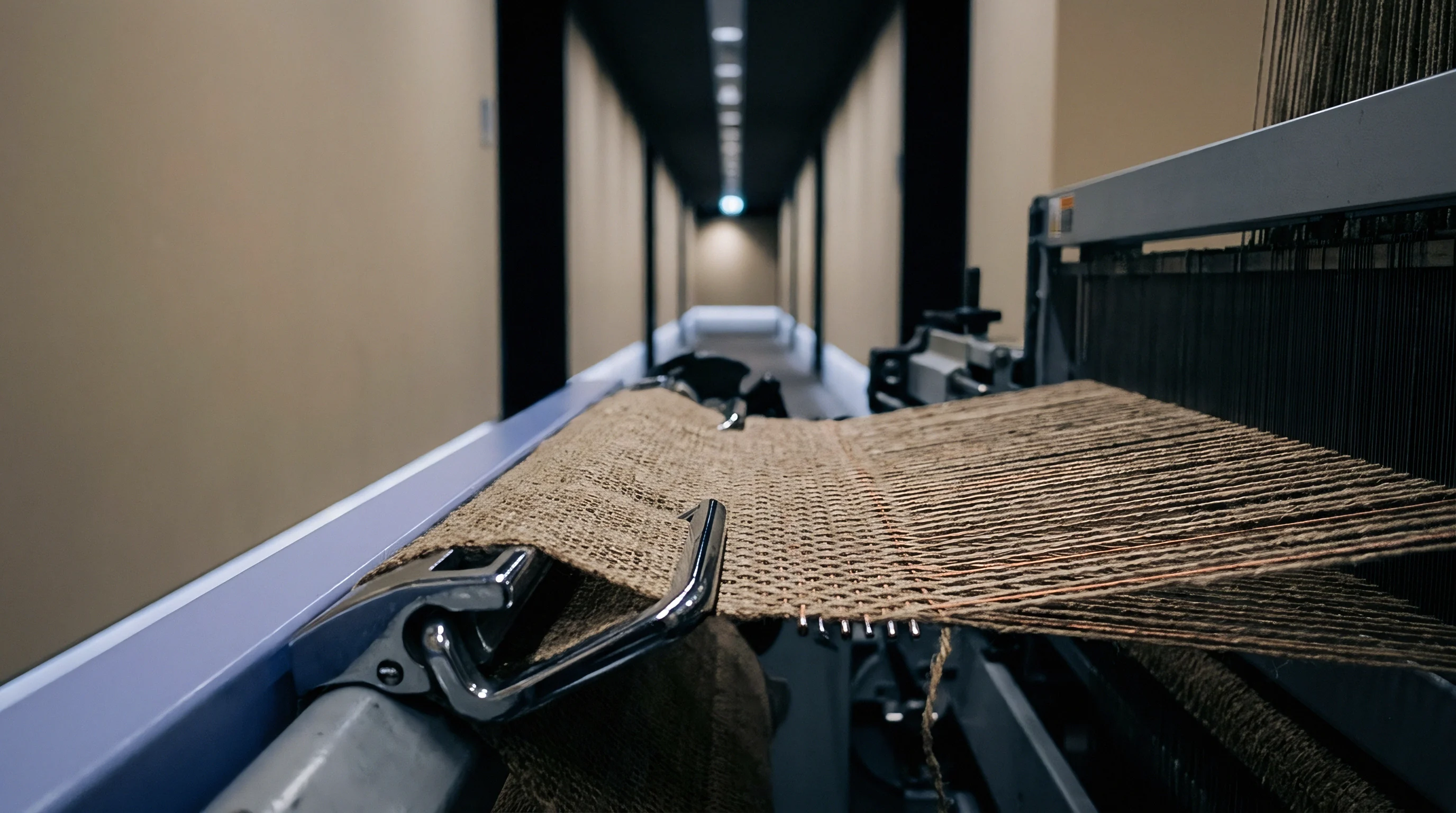
Lowering the heddle crossover timing below the cloth fell stabilizes the loose picks during main jet blast. Air-jet insertion requires a clear, stable reed tunnel free from obstructing fibers. Snarls occur when trailing flax hair catches on neighboring ends, deflecting the inserted pick into the upper shed before reaching the catcher selvedge.
By closing the shed early, specifically at two hundred ninety degrees of crank rotation rather than three hundred twenty degrees, the incoming pick encounters a stabilizing boundary. Loose picks generate immediate yarn loops. The main nozzle uses dry air.
Regulating the nozzle blast duration to under sixty milliseconds prevents air turbulence from disturbing adjacent warp ends while pushing the pick through the shed opening.
Excessive warp slackness inside the lower shed creates jet stagnation and short pick stops faster than elevated yarn friction.
Managing rupture risks across production runs requires systematic mechanical resetting whenever changing beam lots. Mill technicians follow a rigid sequence to realign mechanical components after clearing yarn splits:
- Stop the loom cycle at thirty degrees past back-shed crossover.
- Measure physical displacement between the whip roller center and breast beam edge using a Vernier gauge.
- Loosen rear clamping collars on the torsion suspension rod to release residual mechanical wind-up.
- Reset digital encoder zero reference on the beam drive control console.
- Cycle the main motor by hand through two complete beat-up strokes to verify clearance.
The yarn broker claims excessive slub accumulation stems entirely from seasonal field retting rather than improper sizing liquor temperature in the beam room.
Calibration
Setting the base line load demands precision load cells positioned directly below the whip roll bearing blocks. These transducers measure the resultant downward vector of yarn tension across the entire machine width. Signal conditioners amplify millivolt-level piezoelectric outputs, feeding real-time data to the main processor controlling the electronic let-off drive.
If the sensor registers a decline in warp resistance, the servomotor decelerates beam rotation to maintain the target setpoint. Load cells register vertical bearing force. Tension spikes shear delicate flax fibers.
A response delay exceeding twenty milliseconds allows excessive tension spikes during acceleration, breaking yarn ends before the let-off reacts.
Setting the Load Cell Thresholds
Digital amplifiers read force variations fifty times per second to trigger step-motor adjustments at the beam letoff. Calibration must reflect both dry yarn strength and humidity variations within the weaving shed. Flax is hygroscopic; an increase in ambient relative humidity from fifty-five to sixty-five percent increases flax yarn tensile strength by twenty percent while decreasing flexibility.
Static sheds cause localized yarn cling. Technicians balance electronic damping against control loop responsiveness to avoid resonance oscillations between the beam inertia and the whip roll springs.
| Target Cloth Construction | Warp Density (Ends/cm) | Load Cell Baseline (daN) | Backrest Spring Constant (N/mm) | Main Nozzle Pressure (bar) | Relay Nozzle Interval (ms) |
|---|---|---|---|---|---|
| Plain Cambric 140 gsm | 24.0 | 145 | 18.5 | 3.2 | 14 |
| Heavy Shirting 190 gsm | 21.0 | 170 | 22.0 | 3.8 | 16 |
| Suiting Twill 260 gsm | 28.0 | 210 | 26.5 | 4.5 | 18 |
| Coarse Upholstery 380 gsm | 16.0 | 250 | 31.0 | 5.2 | 22 |
| Measurements recorded on 190 cm nominal reed width weaving 100% wet-spun flax yarn under standard shed conditioning at 65% RH. | |||||
Relay nozzles pulse in rapid succession. Air pressure must correspond with dynamic yarn tension. Over-pressurization blows broken yarn fibers across the profile reed, while under-pressurization fails to carry the pick across wide looms.
The following adjustments align the air-jet delivery system with the physical limits of linen yarns:
- Static pre-tension adjustment aligns baseline load with single-end rupture parameters determined through tensile testing.
- Shed crossover angle alignment synchronizes heddle motion with main air burst initiation.
- Relay nozzle pulse duration limits air consumption while maintaining pick tip trajectory inside the reed channel.
- Electronic brake timing stops the warp beam within three milliseconds of drop wire contact.
Engineers still dispute whether electronic backrest compensation can fully isolate high-modulus bast fibers from shed resonance during sustained six-hundred-pick operations.

Clearance
Final grading of grey flax rolls verifies that cyclic yarn stress stayed within commercial limits. Irregular tension profiles manifest as distinctive defects during lighted perch inspection. Tight warp ends produce shiny longitudinal streaks across the face, while intermittent slackness generates waviness and distorted selvedges.
Beam let-off feeds the running yarn. Slugs lodge inside reed dent spaces. Grey cloth faults lower finished yield.
When these faults exceed buyer tolerances, the economic return of high-speed air-jet weaving evaporates beneath off-quality penalties.
Clause sixteen of the mill acceptance agreement shifts warp-stop downtime penalties directly to the yarn spinner whenever roving twist variance surpasses four percent.
Tight sheds increase warp break rates. Auditing greige goods against standard defect grading protocols ensures objective settlement between weaving mills and sourcing desks. Fabric rolls undergo evaluation on automated inspection tables where optical sensors detect density shifts caused by uneven let-off feed.
Because bast fibers contain natural count variations, inspectors separate acceptable slubs from structural tension faults using illuminated magnification. The cost of running high-speed machinery depends directly on achieving clean roll clearance without structural stop marks.
ASTM D5430 four-point inspection thresholds dictate that any single continuous tension streak exceeding two hundred millimeters incurs a four-point penalty and shifts final finishing liability back to the weaving shed.