Adjusting Reed Sett and Cover Factors for Modified Linen Yarn Linear Density
Modified linen yarns expand effective diameter, requiring open reed setts and lower cover targets to prevent shed jamming and maintain loom efficiency.


Calibre
Delignified flax roving spun on modified cotton ring or rotor machinery yields a yarn structure distinct from wet-spun line flax. Wet-spun line linen relies on residual pectins softening under warm water troughs to consolidate bast fiber bundles into a dense, cylindrical cross-section. Chemically delignified or enzyme-scoured flax staple, spun dry into modified singles, carries an open arrangement marked by high volumetric bulk and uneven packing geometry.
The actual diameter of these modified singles regularly exceeds the diameter predicted by traditional flax lea calculations. Textile buyers specifying cloth based on standard linen count tables discover that modified flax singles jam in the shed long before reaching expected end densities.
Yarn linear density in tex measures mass per unit length, yet cloth geometry responds to physical cross-sectional dimensions. When flax fibers undergo caustic extraction or bio-polishing to enable spinning on short-staple equipment, the fiber density of the cellulose remains near 1.52 grams per cubic centimetre, but the yarn packing factor drops from 0.72 down to 0.52. This structural loft causes a nominal 35 tex modified flax single to occupy the physical cross-section typical of a 48 tex wet-spun linen yarn.
Treating both yarns as dimensionally equivalent on the loom leads to excessive reed friction, warp abrasion, and premature jamming at beat-up.
Delignified flax singles pack loosely on the package but expand rapidly when tension drops behind the drop wires.
Evaluating the cross-sectional geometry of modified linen demands adjustments to standard Peirce diameter formulas. Standard empirical models estimate yarn diameter in centimetres as the square root of tex divided by a constant derived from fiber density and packing fraction. For conventional wet-spun linen, the specific volume sits near 0.98 cubic centimetres per gram, yielding a compact yarn diameter factor.
Modified flax singles present an expanded specific volume ranging between 1.25 and 1.45 cubic centimetres per gram. Calculating the effective diameter requires inserting this measured volumetric expansion directly into the geometric equations.
Density figures tell lies.
Warp preparation lines face significant variations when modified singles arrive from spinners with unstable delignification levels. If enzyme treatment removes too much binder lignin, the staple bundles break into elementary fibrils, increasing yarn diameter variance across the lot. Conversely, insufficient processing leaves coarse technical bundles that create localized slubs, creating high-friction contact points within the reed dents.
Both extremes distort the effective yarn diameter, altering the space available between adjacent warp ends during shed opening.
- Packing fraction collapse generates unpredictable cross-sectional spreading under beat-up pressure, forcing adjacent warp ends to collide before completing the interlacing point.
- Pectin depletion variance leaves irregular fibrous tags projecting from the yarn body, which snag within the reed dents during harness changeovers.
- Twist multiplier inflation increases yarn stiffness and torsional liveliness, causing the strand to resist lateral displacement during reed contact.
- Hydrophilic core expansion alters the yarn diameter dynamically inside high-humidity loom sheds, expanding the yarn volume prior to crossing the beat-up line.
Coarser singles drift faster.
| Yarn Designation | Nominal Lea Count | Nominal Metric Tex | Packing Fraction | Specific Volume (cm³/g) | Effective Diameter (mm) |
|---|---|---|---|---|---|
| Wet-Spun Line Linen | 40 | 41.3 | 0.74 | 0.89 | 0.216 |
| Wet-Spun Tow Linen | 25 | 66.1 | 0.68 | 0.97 | 0.285 |
| Dry-Spun Line Linen | 25 | 66.1 | 0.58 | 1.13 | 0.308 |
| Cottonized Modified Flax | 40 | 41.3 | 0.51 | 1.29 | 0.260 |
| Enzyme-Modified Rotor Flax | 25 | 66.1 | 0.47 | 1.40 | 0.343 |
Spinners routinely argue that nominal lea counts balance out over a thousand-metre cone, dismissing cross-sectional bloating as a minor finishing variable that wet scouring readily flattens.

Dent
Reed calculation begins with the selection of the open air space between the reed wires. When running conventional line flax yarns, technicians maintain an air space ratio of 50 to 55 percent to accommodate the rigid, smooth profile of wet-spun singles. Modified linen yarns, carrying loose surface fibrils and a bulkier cross-section, require an air space ratio of at least 60 to 65 percent.
If the open space between reed wires drops below this threshold, individual fiber tags rub continuously against the stainless steel dents, creating lint rings that slide down the yarn until forming a catastrophic knot behind the drop wires.
Air spaces close down.
Denting plans determine the distribution of warp ends across each opening in the reed. Running modified linen yarns at two ends per dent in a fine reed often pinches the bulked cross-sections together, generating warp streaks and localized chafing. Moving to a coarser reed count with three ends per dent can relieve lateral wire friction, but risks producing grouped ends that pair together in the greige cloth.
For dense constructions using modified flax, spreading ends across an ultra-low wire profile reed with polished oval-wire dents provides clearance while preventing grouping defects.
Narrowing the reed air space to force higher pick densities ruins the warp before the first piece reaches the cloth roller.
Selection of the reed number relies directly on the calculated effective yarn diameter and the desired ends per centimetre in the greige state. The formula for reed width includes warp contraction during shedding and chemical contraction during wet processing. Because modified flax exhibits higher wet contraction than line linen due to the relaxation of internal stresses from dry spinning, the reed sett must be drawn wider in the reed.
The loom technician calculates the reed count by dividing the target ends per centimetre by the number of ends drawn through each dent, adjusting for off-loom relaxation contraction.
The calculation breaks down.
Warp sleying and drawing-in protocols demand strict mechanical checks to protect modified flax strands from excessive friction. Technicians evaluate the entry taper depth of the reed to confirm that warp ends enter the wire openings at a gradual angle from the harness frames. Abrupt entry angles pinch bulked bast singles against the edge of the steel wires, abrading the outer fibers and causing filamentation.
Selecting reed wires with a hardened, mirror-finish chrome or specialized carbide coating prevents bast fibers from scoring micro-grooves into the metal during hundreds of thousands of beat-up cycles.
- Air space ratio dictates the clearance envelope around the yarn core, preventing fibril buildup during prolonged high-speed running.
- Dents per centimetre governs the spatial distribution of ends, eliminating grouping marks while avoiding excessive wire congestion.
- Wire profile geometry reduces the contact perimeter between steel and yarn, keeping frictional temperature spikes under control.
- Entry taper depth prevents sudden mechanical deviation of the warp path, dampening lateral stress concentrations at the reed back.
Retaining standard reed wire spacing while inserting expanded singles produces irreversible chafing bands, broken selvedge ends, and severe downgrading at the final inspection perch.
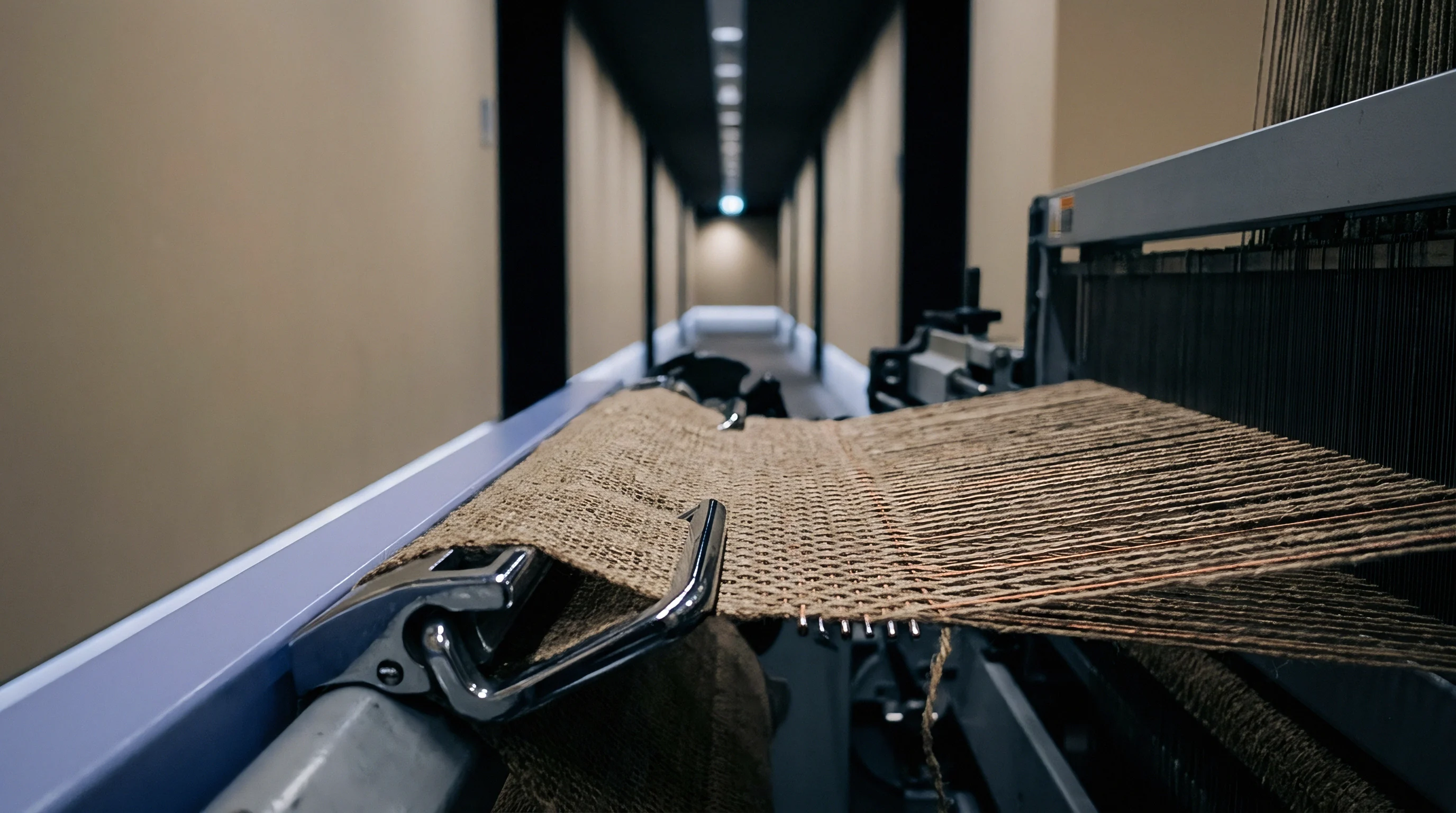

Jam
Cloth geometry dictates the absolute limit at which a warp and weft system can accept additional picks before mechanical lockup occurs. Peirce defined the jammed state as the structural condition where the sum of warp and weft yarn diameters equals the pick spacing or end spacing within the interlacing matrix. For traditional linen goods, structural tables rely on compact wet-spun diameters to establish maximum achievable density.
When modified linen singles replace wet-spun yarns, their bulkier diameters push the structure into the jammed regime at substantially lower thread densities than traditional reference charts indicate.
Flax fibers resist uniform compression.
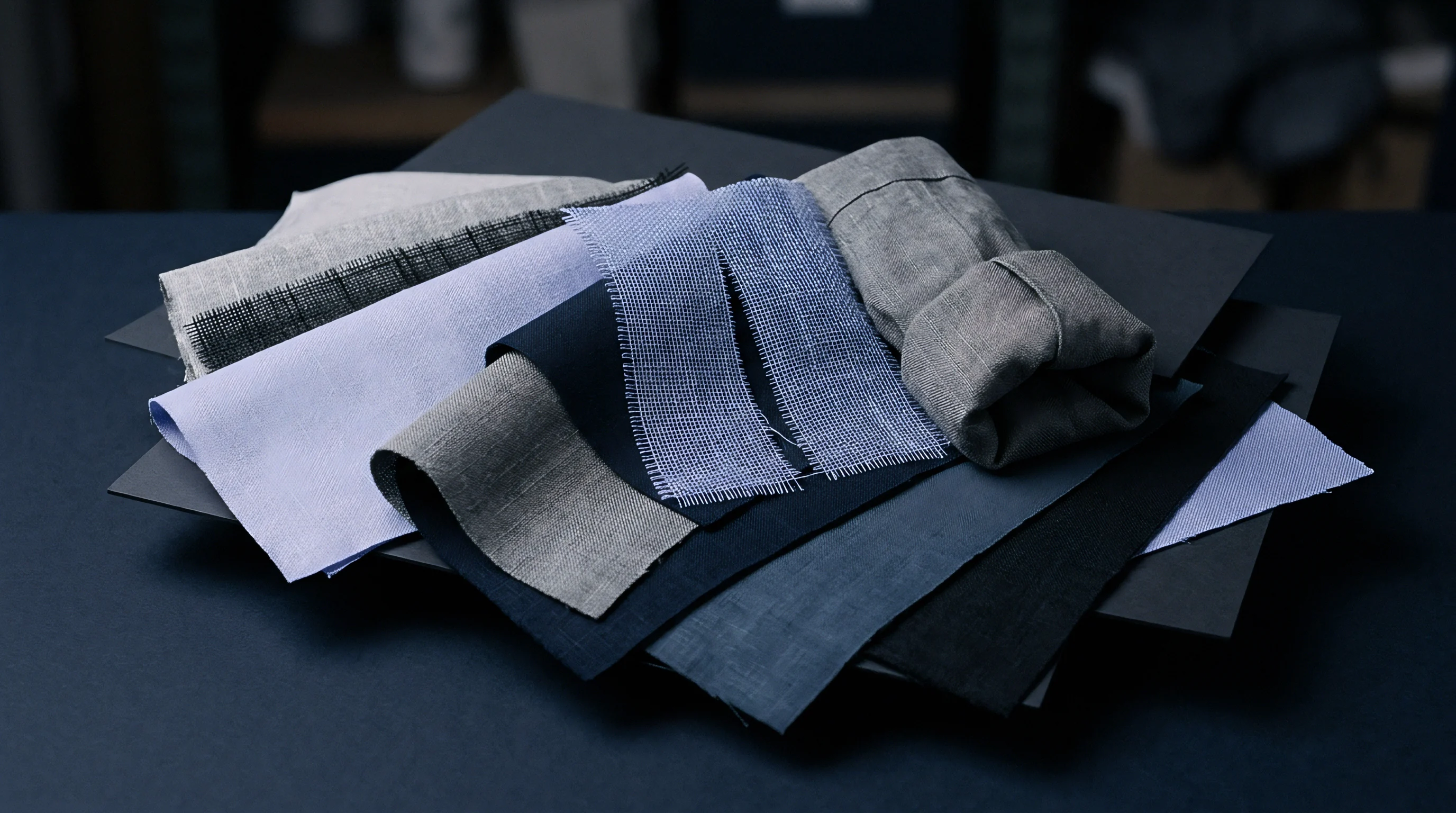
How Does Modified Flax Linear Density Alter Jamming?
Interlacing resistance increases non-linearly as the yarn cross-section expands. When warp ends and weft picks attempt to bend around each other in a plain 1/1 weave, the higher specific volume of modified linen requires greater wave deflection per repeat. The yarn core contains air voids rather than cemented microfibrils, allowing moderate initial flattening under beat-up pressure, followed by sudden resistance once internal fiber compaction reaches maximum packing density.
This non-linear compressibility causes the cloth to reject weft insertion abruptly when approaching the jammed boundary, pushing the cloth fell forward and throwing beat-up forces back into the loom motion.
Fell positions shift unexpectedly.
Calculating the fractional cover factor requires measuring the projected area covered by the warp and weft yarns per unit area of cloth. In metric terms, fractional warp cover equals ends per centimetre multiplied by the effective yarn diameter in centimetres. Fractional weft cover equals picks per centimetre multiplied by the weft diameter.
Total cloth cover factor represents the combined sum minus the overlapping product of both systems. In wet-spun linen plain weaves, fractional cover values frequently operate between 0.70 and 0.78 without mechanical interference. With modified linen yarns, attempting to reach a fractional cover of 0.78 on a plain weave causes severe over-packing, loom motor stalls, and broken warp ends.
A ten percent expansion in yarn cross-section drives the warp cover factor beyond the Peirce jamming threshold at thirty-two picks per centimetre.
Worked construction analysis reveals the exact point where mathematical models diverge from shed reality. Take an example construction targeting a plain weave linen shirting using a nominal 35 tex modified flax single in both warp and weft, run at 165 centimetres reed width on a high-speed negative rapier loom. If the cloth designer applies the conventional linen packing fraction of 0.72, the predicted effective yarn diameter is 0.205 millimetres.
The planned sett calls for 24 ends per centimetre and 22 picks per centimetre. Under conventional calculations, the warp fractional cover calculates as 0.492 and the weft fractional cover calculates as 0.451, giving a combined cover factor of 0.721, well inside acceptable weaving parameters.
Actual bench measurements of the modified 35 tex yarn disclose a real packing fraction of 0.50, expanding the true effective yarn diameter to 0.245 millimetres. Recalculating the construction with this verified physical dimension yields a warp fractional cover of 0.588 and a weft fractional cover of 0.539. The true combined cover factor reaches 0.810.
For a plain weave structure, a cover factor of 0.810 surpasses the maximum geometric jamming threshold for incompressible bast fibers, rendering the cloth impossible to beat up cleanly. The loom shed superintendent experiences severe reed bumping, weft rebound, and heavy starting marks across every stoppage.
The fell shifts backward.
| Model Assumption | Assumed Packing Factor | Effective Diameter (mm) | Warp Cover (24 ends/cm) | Weft Cover (22 picks/cm) | Total Cover Factor | Jamming Status |
|---|---|---|---|---|---|---|
| Datasheet Wet-Spun Line Model | 0.72 | 0.205 | 0.492 | 0.451 | 0.721 | Clear / Free Running |
| Datasheet Dry-Spun Model | 0.60 | 0.224 | 0.538 | 0.493 | 0.766 | Marginal Beat-Up |
| Modified Flax Real Single | 0.50 | 0.245 | 0.588 | 0.539 | 0.810 | Severely Jammed |
| Compensated Sett Plan (1/1 Weave) | 0.50 | 0.245 | 0.502 (20.5 ends/cm) | 0.466 (19 picks/cm) | 0.734 | Stable / Production Ready |
| Converted Twill Plan (2/1 Twill) | 0.50 | 0.245 | 0.588 (24 ends/cm) | 0.539 (22 picks/cm) | 0.810 | Clear (Float Accommodated) |
| Calculations execute using Peirce rigid circular cross-section assumptions modified by measured yarn packing fractions at 65 percent relative humidity. Jamming boundary sits at 0.785 for plain weave and 0.840 for 2/1 twill. | ||||||
To eliminate jamming without reducing the finished square-metre weight, the cloth draughtsman executes two mechanical adjustments. First, the reed sett is opened from 24 ends per centimetre down to 20.5 ends per centimetre in the reed, while weft density is set at 19 picks per centimetre on the loom. This adjustment restores the true greige cover factor to 0.734, permitting the sley to complete beat-up without excessive motor torque.
Second, if the client rejects a lower end count, the draughtsman shifts the interlacing draft from a 1/1 plain weave to a 2/1 or 2/2 twill. The longer yarn floats reduce the number of yarn crossover points per unit area, raising the geometric jamming limit from 0.785 up to 0.840 and enabling the bulked 35 tex modified flax to interlace smoothly.
When singles carry chemical softening treatments, cloth tightens faster under the reed than dry calculations predict.

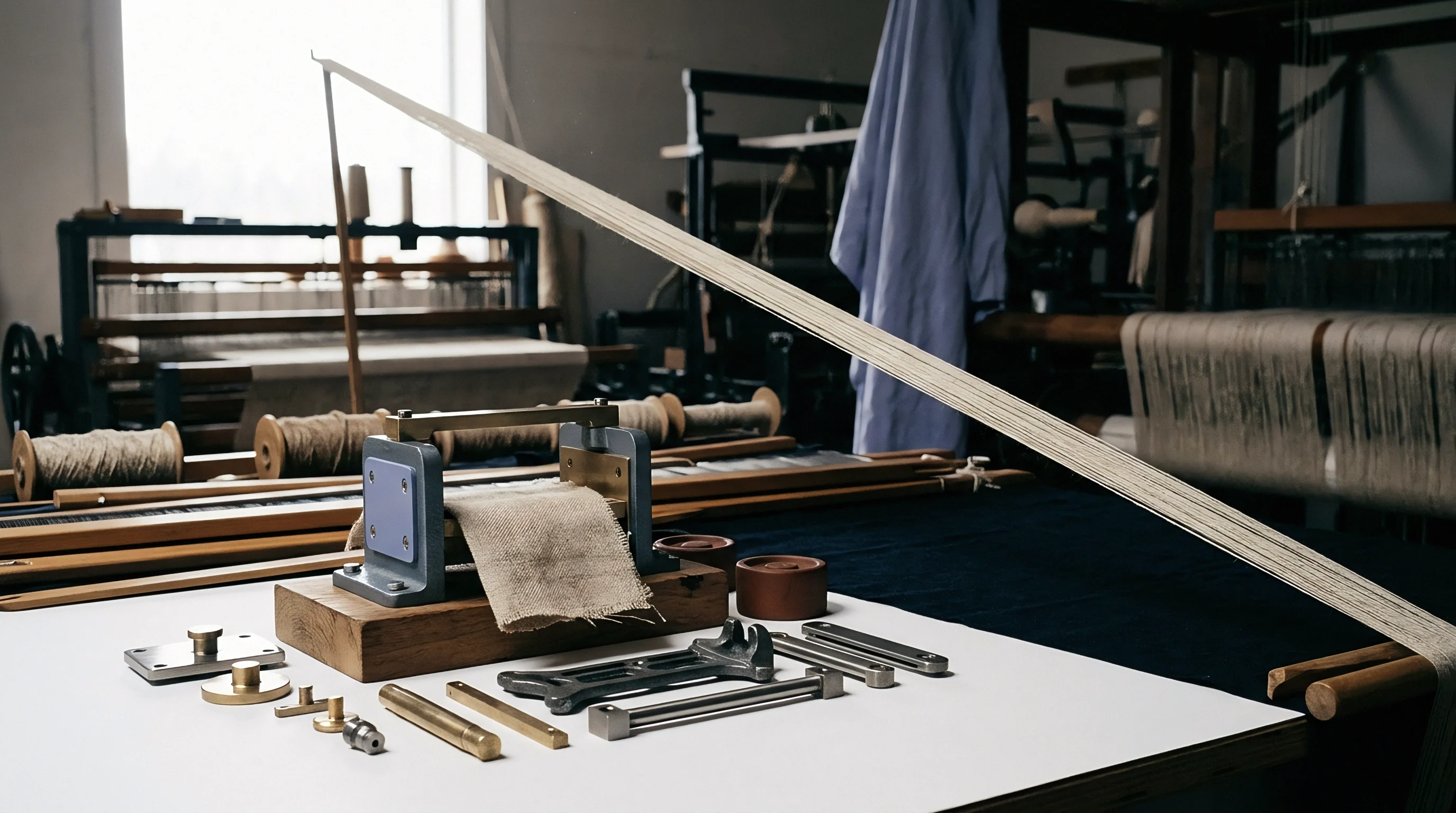
Shed
Loom kinematics directly amplify or suppress the mechanical stresses imposed on modified linen yarns during shed formation. In conventional flax operations, shedding cams or dobby profiles maintain early shed timing, closing the shed before the reed contacts the cloth fell to lock the weft securely in place. Modified linen singles, lacking natural pectins and containing discontinuous staple bundles, shear rapidly under this crossing configuration.
When the shed closes prematurely, warp ends grind against the face of the reed wires while bearing the full peak of beat-up force, generating lint clouds and fiber sloughing.
The warp binds.
Which Sley Settings Eliminate Reed Abrasion?
Adjusting the shed timing toward a late shed position resolves contact stresses across the reed face. Setting harness crossing at or slightly after the mechanical front center position ensures that warp ends remain in an open, parallel alignment while the reed wires push the weft pick to the fell. The reed wire contacts the yarn along a clean, uncrossed pathway, lowering friction.
Loom tuners complement this adjustment by minimizing shed height to the smallest opening capable of clearing the rapier heads or air-jet profile reed. A smaller shedding angle reduces warp elongation and decreases tension cycles on delicate delignified singles.
Tension spikes break singles.
Loom speed drops.
Warp tension control requires constant monitoring across the full beam diameter. Modern electronic let-off and take-up mechanisms maintain target warp tension within narrow tolerances, but modified flax yarns display a low elastic recovery limit. If beam tension exceeds 0.25 centinewtons per tex, plastic deformation occurs, narrowing the yarn diameter permanently and destroying cloth uniformity.
Lowering baseline warp tension prevents strand elongation, though it increases the risk of shed slackness, where hairy singles cling together during shedding. Installing an oscillating back-rest roller with adjustable damping absorbs peak beat-up shock while maintaining uniform tension across the harness cycle.
Friction builds across dents.
The sley dwells momentarily.
Mill managers still dispute whether asymmetric shed timing or specialized chemical lubricants offer the superior economic defense against lint generation during high-speed insertion.

Settlement
Cloth pricing reflects shed capacity, and shed capacity is bought in loom hours. When modified linen yarns enter a mill with unadjusted reed specifications, the operational impact lands directly on the cost sheet. An unadjusted reed sett causes warp stops to rise from an acceptable 1.5 stops per 100,000 picks up to 8.2 stops per 100,000 picks.
Loom running efficiency on modern rapier equipment collapses from 91 percent down to 68 percent, increasing the loom hours required to complete a standard five-thousand-metre warp beam.
Beat-up force rises sharply.
Fixed mill overhead, power consumption, weaver staffing, and capital depreciation are billed against loom operating hours. A rapier loom running at 450 picks per minute produces approximately 14.5 metres per hour at 19 picks per centimetre under 91 percent efficiency. If the shed efficiency drops to 68 percent due to yarn clinging and reed abrasion, output drops to 10.8 metres per hour.
On an order of 20,000 metres, this loss of productivity represents an additional 472 loom hours. The landed cost per finished metre increases by twenty to thirty percent, wiping out any initial savings achieved by purchasing cheaper modified flax singles instead of premium wet-spun yarn.
Enforcing ISO 7211 construction tolerances in the purchase agreement shifts the financial burden of reed readjustment directly onto the yarn spinner.
Commercial contracts must address linear density drift before the yarn lot leaves the spinning mill. Modified linen yarns regularly display a count coefficient of variation exceeding 4.5 percent, alongside delivery count tolerances that swing by five to eight percent from nominal lea designations. If the spinner delivers yarn at the coarse end of the tolerance window, the effective yarn diameter expands, forcing the weaving shed to either accept high loom stoppage rates or strip the warp and re-reed the entire pattern at significant labor expense.
Inspectors reject the roll.
| Operating Scenario | Loom Speed (ppm) | Pick Density (picks/cm) | Shed Efficiency (%) | Output (metres/loom hour) | Loom Hours per 5,000m | Relative Weaving Cost |
|---|---|---|---|---|---|---|
| Unadjusted Reed / Jammed State | 380 | 22.0 | 68.0 | 7.05 | 709 | 142% |
| Standard Wet-Spun Line Benchmark | 450 | 22.0 | 91.0 | 11.17 | 448 | 100% |
| Modified Flax / Compensated Sett | 450 | 19.0 | 89.5 | 12.72 | 393 | 94% |
| Modified Flax / 2/1 Twill Re-Draft | 480 | 22.0 | 88.0 | 11.52 | 434 | 102% |
A rigorous specification protects both the buyer and the mill from capacity losses by defining clear physical count boundaries and reed adjustment provisions in the purchase agreement. Sourcing managers mandate incoming yarn testing under ISO 2060 to determine conditioned linear density, paired with micro-projection or optical diameter verification under standard testing atmospheres. When delivered yarn diameters exceed specified thresholds, commercial clauses mandate that the spinner absorb the cost of reed re-drawing, sizing re-formulation, and documented efficiency deficits.
- Linear density tolerance band restricts allowable count drift to plus or minus three percent of nominal metric tex, preventing unnoticed diameter expansion.
- Loom efficiency floor establishes an automatic price recalculation clause if validated yarn hairiness drops shed efficiency below eighty-five percent.
- Greige inspection deduction penalizes deliveries displaying starting marks, reed scuffs, or uneven warp striping stemming from uncompensated sett geometry.
- Warp preparation charge fixes financial liability for extra re-beaming and sleying labor when yarn count coarsening forces an emergency change of reed number.
Incorporating standard commercial allowances under BISFA rules for bast fibers converts disputes over yarn count coarsening into mandatory invoice debits before the beam reaches the loom.