Integrating Crimp and Finishing Shrinkage into Linen Fabric Specifications
Engineering accurate linen fabric specifications requires coupling loom crimp take-up equations with wet process shrinkage factors to fix finished GSM and width.

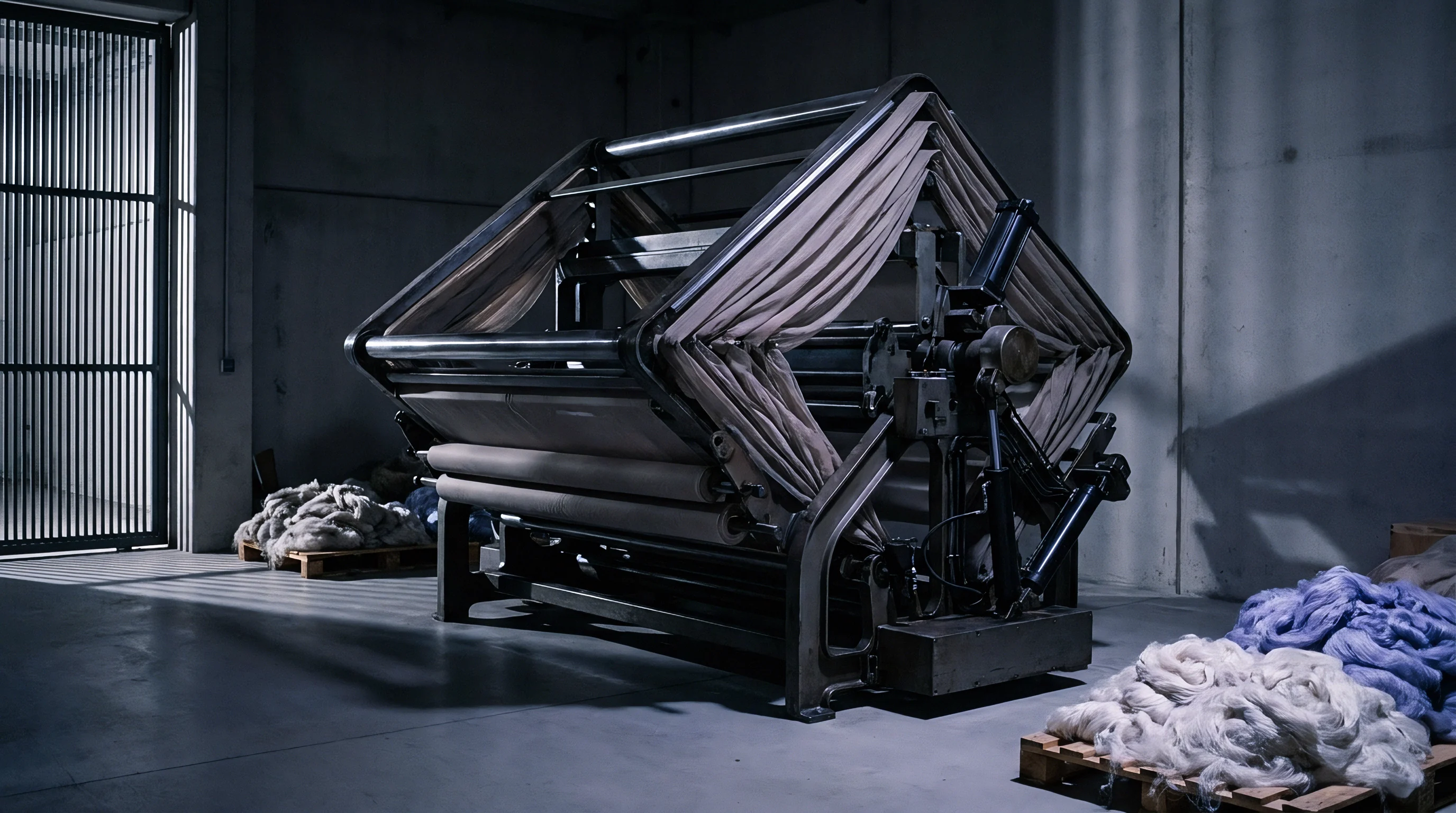
Reed
Woven flax yarns sit under heavy mechanical tension during insertion. This force stretches the warp along the loom bed, holding the threads straight while the rapier or air-jet carries the weft across the reed. Once the woven greige releases from the take-up motion and drops off the loom, that stored strain releases at once.
Warp ends pull back in length, and weft picks spring in from their maximum insertion width. This sudden relaxation creates the first dimensional drop between nominal reed width and off-loom cloth dimensions. Sourcing engineers who ignore this initial contraction base their calculations on an unstable geometry, throwing off every later estimate for sizing, scouring, and finishing.
On-loom contraction comes down to weave structure, yarn linear density, and reed denting density. In a plain weave, warp ends cross over and under every weft pick in a one-to-one ratio. That frequent interlacing forces warp threads to bend constantly around the stiffer weft picks.
As thread density per centimeter goes up, the path length of the warp grows relative to the flat length of the fabric. Dividing yarn path length by nominal fabric length gives the warp crimp take-up. Tension on the loom bed suppresses this warp crimp through heavy beam let-off loads.
But as soon as the cloth passes the fell and wraps around the sand roller, tension drops and that suppressing force disappears. Warp threads pull back into their natural wave, drawing weft picks closer together and shortening off-loom length by three to eight percent before any wet process touches the bolt.
Weft contraction across the reed width happens through a similar mechanical mechanism. When the reed beats up each pick into the cloth fell, crossing warp ends clamp down on the inserted fill thread. Held under hundreds of kilograms of beam tension, these warp ends apply vertical compression at every interlace point, forcing the flexible weft yarn to wave around them.
That straight fill line curves, shortening its effective width. A fabric woven through a two-hundred-centimeter reed space drops to an off-loom greige width of one hundred ninety-two centimeters when weft crimp take-up hits four percent. Shuttleless looms running at high insertion speeds amplify this drop, holding extreme peak insertion tensions that snap back once selvedges are trimmed or tucked.
Selvedge design directly dictates how transverse contraction spreads across the width. Standard leno or tucked selvedges face stronger lateral pull than the fabric body because edge warp threads take the brunt of the beat-up force. If selvedge denting isn’t adjusted for yarn density, edge ends suffer excessive friction, creating tight selvedges that pucker or cup.
Loose selvedges allow edge picks to collapse inward without control, introducing width fluctuations across the beam run. Precise reed design requires a dedicated selvedge denting draft that eases thread spacing smoothly from the dense body weave out to the raw edge. Tracking thread movement across four commercial finishing routes isolates mechanical draw from wet relaxation.
Warp contraction exceeds calculations when the wet-spun yarn lea lot varies beyond normal spinning tolerances.
Flax fiber bundles lack the predictable elasticity of synthetic filaments or fine combed cotton. Long-line wet-spun linen yarns combine a high tensile modulus with very little elongation before breaking. Under shedding forces, flax fibers do not stretch elastically; individual technical fibers within the bundle slide past each other under friction.
This irreversible slippage alters yarn diameter and permanently locks part of the insertion tension into structural crimp. Under beat-up pressure, a low-twist wet-spun yarn flattens at crossover points, widening its contact patch with neighboring threads. A high-twist dry-spun tow yarn keeps a rounder profile, forcing higher crimp waves and driving a sharper width drop off the loom.

Calculating off Loom Contraction Factors
Thread distribution through the steel wire teeth sets the initial warp density across the cloth width. Finding the reed width needed for a target off-loom width requires calculating both warp take-up and transverse weft contraction. The formula is:
Reed Width = Target Greige Width / (1 – Weft Crimp Take Up Factor)
Where the weft crimp take-up factor represents the fractional width reduction caused by weft interlacing. For a target greige width of 160 centimeters using a 2/1 twill weave with a measured weft take-up factor of 0.045, the required reed width equals 160 divided by 0.955, giving 167.5 centimeters. Specifying a standard 165-centimeter reed starves the cloth of width, forcing finishing plants to pull the fabric laterally under high stenter tension to meet commercial spec.
That forced lateral stretch locks in mechanical strain that later causes massive shrinkage during garment laundering.
Reed selection dictates denting capacity and reed mark formation. Denting specifies how many warp ends pass through each wire gap or dent in the reed. A reed count of 100 dents per 10 centimeters with two ends per dent yields a warp thread density of 20 ends per centimeter in the reed.
Passing four ends per dent through a 50-dent reed produces the same thread count but drastically alters warp friction during shedding. High dent density reduces yarn-to-yarn abrasion inside the gap, maintaining clean warp sheds on hairy tow yarns. Low dent density with high ends-per-dent pairing increases yarn grouping, creating vertical stripes or reed marks that persist through finishing if the weave structure fails to redistribute threads evenly during off-loom relaxation.
Denting Drafts and Selvedge Draw Parameters
Uneven warp tension across the reed width creates asymmetrical crimp distribution. Edge warp threads next to the selvedge absorb higher lateral friction from shuttleless catch threads, building up more warp crimp at the margins than in the center bolt. To counteract edge draw-in, draughting plans use graduated denting.
The outer three centimeters of reed space drop from three ends per dent to two ends per dent, easing local thread density so crimp amplitude can equalize across the transition zone.
Loom speed directly affects dynamic crimp formation. High insertion speeds on rapier looms apply sudden peak loads to the weft yarn during beat-up. This impact forces warp ends to yield instantly, increasing warp crimp while locking the weft yarn under elevated straight-line tension.
When the loom stops, these high-speed sections relax differently than sections woven during low-speed crawling or startup. Starting marks and pick-density bands emerge as physical manifestations of variable crimp take-up caused by speed fluctuations across a shift.
- Beam Mounting and Alignment Mount the warped beam into the let-off position, aligning the mechanical center mark with the loom reed centerline to ensure equal warp tension across all selvedges.
- Heddle Wire Threading Sequence Draw individual warp ends through heddle eyes following the draft plan, verifying harness alignment to eliminate thread crossing inside the shed.
- Reed Denting Pattern Verification Pull warp ends through the reed wires using calibrated hook blades, enforcing the precise ends-per-dent schedule across the body and selvedge transitions.
- Off-Loom Tension Calibration Set the let-off motor torque and take-up sand roller gear ratio to deliver target picks per centimeter under active weaving load, checking off-loom relaxation metrics within ten minutes of cut-off.
Denting draft layouts must explicitly document the ends per dent across every structural zone of the reed width. The setup protocol above prevents warp end crossing and establishes uniform tension before beat-up forces hit the fell.
Mechanical tension logs recorded at the let-off show that wet-spun flax warp beams demand constant torque control throughout the beam run. As the warp beam diameter decreases from eight hundred millimeters down to two hundred millimeters, brake torque must drop proportionally. Failure to modulate torque increases warp tension on the final two hundred meters of the beam, flattening warp crimp, increasing off-loom fabric width, and throwing finished cloth weight completely out of specified contract tolerances.
Shedding geometry settings further alter the crimp equilibrium on the loom bed. Asymmetrical shed openings, where the upper shed line carries less tension than the lower line, push weft picks toward the upper warp sheet during beat-up. This uneven interlace forces higher crimp take-up into the top warp ends while keeping bottom warp ends relatively straight.
The resulting greige cloth exhibits differential face-to-back shrinkage during wet processing, leading to edge curling and skewing during open-width scouring cycles.
Weave structure selection interacts directly with reed mechanics. Plain weave maximizes thread crossover points, resisting mechanical compaction while multiplying total crimp take-up. A 4/4 basket weave reduces crossover frequency by seventy-five percent, letting threads pack closely together under beat-up forces.
The basket weave shows minimal off-loom warp crimp take-up, but shrinks heavily during wet finishing as loose float structures collapse once liquid breaks internal friction. Designing specifications for linen requires mapping both mechanical off-loom contraction and wet finishing collapse as two distinct, coupled vectors.
Contractual disputes frequently trace back to misaligned reed specs between raw cloth suppliers and garment assembly plants. Weavers calculate delivered meters based on off-loom greige state, whereas buyers measure usable meters after full finishing relaxation. When a weaver quotes a fabric based on a 150-centimeter off-loom width without factoring in twelve percent wet finishing shrinkage, the converter receives a 132-centimeter finished bolt.
The resulting yield loss destroys cutting marker efficiency, inflating apparel production unit costs across the order volume.
Loom reed maintenance directly affects crimp consistency across multi-loom weaving shed installations. Bent or corroded reed wires increase localized friction on warp threads, restricting natural thread movement during beat-up. Warp ends passing through damaged reed gaps develop lower crimp take-up than adjacent ends, creating linear continuous streaks of light density along the warp axis.
These density variations become permanently fixed during finishing, producing split-dye streaks in piece-dyed linen runs that cannot be leveled by re-dyeing or hot stenter framing.
The weaver pays for yarn lost through improper crimp take-up planning.

Geometry
Structural mechanics in woven flax dictate how linear yarn length turns into two-dimensional surface area. Fabric geometry models describe the spatial arrangement of warp and weft yarns as intersecting wave forms. Peirce’s classical geometric model treats yarns as flexible, circular cylinders that bend around one another in continuous circular arcs and straight tangent segments.
In flax fabrics, this ideal model requires modification due to yarn cross-sectional flattening, high bending stiffness, and non-uniform yarn linear density along the fiber length. Understanding the geometric transformations between loom reed, greige off-loom state, and fully relaxed finished cloth allows precise calculation of yarn requirements and target GSM performance.
Crimp defines the percentage increase in yarn length compared to the length of the woven fabric containing that yarn. Mathematically, warp crimp percentage (cp) and weft crimp percentage (cw) are expressed as:
cp = ((Lp – Lf) / Lf) × 100
cw = ((Lw – Wf) / Wf) × 100
Where Lp represents the unraveled straight length of warp yarn removed from fabric length Lf, and Lw represents the unraveled straight length of weft yarn removed from fabric width Wf. Crimp take-up (Tp and Tw) provides the alternative perspective, expressing yarn contraction as a percentage of the unraveled yarn length:
Tp = ((Lp – Lf) / Lp) × 100 = cp / (1 + cp)
This distinction between crimp percentage and crimp take-up percentage is mathematically absolute. Sourcing documents that mix these two parameters miscalculate yarn raw material requirements by three to six percent, introducing massive inventory discrepancies across large-scale spinning and weaving programs.
Finishing shrinkage operates on a separate geometric axis. While crimp take-up measures structural yarn bending within the cloth matrix, finishing shrinkage (Sp for warp, Sw for weft) measures the dimensional reduction in fabric length or width from the greige off-loom state (Lg, Wg) to the finished, fully relaxed state (Lfin, Wfin):
Sp = ((Lg – Lfin) / Lg) × 100
Sw = ((Wg – Wfin) / Wg) × 100
When greige fabric undergoes wet finishing, two distinct physical phenomena occur simultaneously. Yarns absorb water and swell transversely, forcing thread spacing to expand and driving crimp wave heights higher. Concurrently, internal stress locked into fibers during high-tension spinning and weaving releases, causing intrinsic fiber relaxation shrinkage.
Total finished crimp (cfin) represents the compound result of initial loom crimp plus finishing shrinkage, mathematically coupled through the thread density multiplication factor.
Finished thread density increases directly as a consequence of dimensional shrinkage. If a greige linen fabric carries 18 ends per centimeter and experiences eight percent weft finishing shrinkage, finished warp thread density (Efin) rises according to the formula:
Efin = Eg / (1 – (Sw / 100))
Evaluating this calculation yields 18 / (1 – 0.08) = 19.56 ends per centimeter. Similarly, finished pick density (Pfin) increases based on warp finishing shrinkage (Sp):
Pfin = Pg / (1 – (Sp / 100))
A greige cloth with 15 picks per centimeter subjected to twelve percent warp shrinkage arrives at a finished pick density of 15 / (1 – 0.12) = 17.05 picks per centimeter. Ignoring this density amplification results in under-specifying greige construction, producing lightweight, translucent finished fabrics that fail minimum tensile strength and mass-per-unit-area specifications.
Higher weft pick density increases warp crimp by forcing warp threads along a steeper wavy path around the stiff fill.
Fabric cover factor provides the physical metric governing cloth opacity, air permeability, and structural stability. Fractional cover factor for warp (Kp) and weft (Kw) in the metric system equals:
Kp = dp × E
Kw = dw × P
Where dp and dw represent yarn diameters in millimeters, and E and P represent ends and picks per centimeter. The yarn diameter for wet-spun flax yarn can be calculated using the empirical relationship based on yarn linear density in tex:
d = 0.037 × sqrttex quad (in mm)
For flax yarns measured in lea (NeL), the linear density conversion to tex follows the exact relation: tex = 1653.5 / Lea. Total fabric cover factor (Kt) combining warp and weft cover components is calculated using the standard geometrical interaction model:
Kt = Kp + Kw – (Kp × Kw)
Maintaining total cover factor between 0.65 and 0.75 is required for stable apparel linen plain weaves. Falling below 0.60 results in seam slippage, thread gapping, and structural instability. Exceeding 0.82 creates an over-constructed jammed fabric where yarns crush each other during beat-up, causing severe warp end breakage on the loom and harsh handfeel after finishing.
Mathematical Coupling of Crimp and Finishing Shrinkage
Linear thread take-up during weaving operates independently from dimensional changes induced during wet processing. The mathematical bridge connecting yarn count, thread density, crimp, wet shrinkage, and final fabric weight (GSM) governs all structural engineering for linen specifications. The dry weight per square meter of finished fabric (GSMdry) integrates warp mass, weft mass, and non-cellulosic mass loss or finishing chemical add-on:
GSM = left × 1000 × (1 – Losswet)
Where Efin and Pfin are finished ends and picks per centimeter, cp,fin and cw,fin are fractional finished crimp values, Nmp and Nmw are yarn metric counts (Nm = Lea × 1.6535), and Losswet represents fractional weight loss from scouring and boiling (typically 0.05 to 0.08 for flax). Calculating fabric weight without incorporating finished crimp underestimates finished GSM by 10 to 18 percent, leading to wrong yarn procurement allocations and contract rejections.
The comparative structural matrix below details the geometric parameters across four standard commercial linen constructions, showing the progression from reed parameters through greige metrics to final finished cloth performance.
| Construction Parameter | Plain Dress Shirting | Plain Medium Suitings | Twill 2/1 Heavy Jacket | Huckaback Toweling |
|---|---|---|---|---|
| Yarn Count Warp (Lea / tex) | 40 Lea / 41.3 tex | 25 Lea / 66.1 tex | 18 Lea / 91.8 tex | 14 Lea / 118.1 tex |
| Yarn Count Weft (Lea / tex) | 40 Lea / 41.3 tex | 25 Lea / 66.1 tex | 18 Lea / 91.8 tex | 10 Lea / 165.3 tex |
| Reed Count (dents/10cm) | 110 | 80 | 70 | 50 |
| Denting Draft (ends/dent) | 2 | 2 | 2 | 3 |
| Reed Width (cm) | 172.0 | 168.0 | 165.0 | 175.0 |
| Loom Ends/cm / Picks/cm | 22.0 / 20.0 | 16.0 / 15.0 | 14.0 / 13.0 | 15.0 / 12.0 |
| Off-Loom Greige Ends/cm / Picks/cm | 23.1 / 20.8 | 16.8 / 15.6 | 14.6 / 13.5 | 16.0 / 12.5 |
| Loom Warp Crimp / Weft Crimp (%) | 7.5 / 4.5 | 8.2 / 5.0 | 6.0 / 4.0 | 11.5 / 6.5 |
| Wet Processing Warp / Weft Shrinkage (%) | 8.0 / 5.0 | 9.5 / 6.0 | 7.0 / 4.5 | 14.0 / 9.0 |
| Finished Ends/cm / Picks/cm | 24.3 / 22.6 | 17.9 / 17.2 | 15.3 / 14.5 | 17.6 / 14.5 |
| Finished Warp Crimp / Weft Crimp (%) | 15.2 / 9.2 | 17.5 / 10.8 | 12.8 / 8.2 | 25.8 / 15.2 |
| Finished Total Cover Factor (Kt) | 0.72 | 0.74 | 0.71 | 0.81 |
| Target Finished Mass (GSM) | 145 | 235 | 310 | 420 |
Predicting Greige Construction from Finished Density
Target mass per unit area in the final bolt determines yarn count and thread counts at every intermediate phase. Reverse-engineering a target specification requires systematically unwinding finishing shrinkage and crimp expansion factors back to loom setup parameters. Consider a target specification calling for a 235 GSM plain weave suiting at 150 centimeters finished width, using 25 Lea wet-spun flax yarn in both warp and weft.
First, calculate target finished thread counts. Assuming finished warp crimp of 17.5 percent, finished weft crimp of 10.8 percent, and a wet boil-off weight loss of 6.0 percent, the required finished ends and picks per centimeter to hit 235 GSM are established at 17.9 ends/cm and 17.2 picks/cm. Step backward through wet finishing shrinkage (9.5 percent warp shrinkage, 6.0 percent weft shrinkage) to calculate greige off-loom density:
Greige Ends/cm = 17.9 × (1 – 0.060) = 16.83 ends/cm
Greige Picks/cm = 17.2 × (1 – 0.095) = 15.57 πcks/cm
Next, account for off-loom mechanical relaxation from loom state (4.8 percent warp relaxation, 4.9 percent weft width draw-in). Active loom thread density parameters become:
Loom Ends/cm = 16.83 × (1 – 0.049) = 16.00 ends/cm
Loom Picks/cm = 15.57 × (1 – 0.038) = 14.98 πcks/cm
Calculate required total warp ends and reed width. For a target finished width of 150 cm:
Greige Width = 150 / (1 – 0.060) = 159.6 cm
Reed Width = 159.6 / (1 – 0.050) = 168.0 cm
Total Warp Ends = Reed Width × Loom Ends/cm = 168.0 × 16.0 = 2688 ends (plus selvedge ends).
This backward calculation establishes exact loom setup values. Deviating from these derived metrics leads directly to weight or width non-conformance during final factory inspection.
Yarn count variations impact geometric modeling predictions. Commercially delivered linen yarns carry count tolerances of plus or minus five percent under standard spinning agreements. If a yarn shipment arrives five percent coarse (for example, 23.7 Lea instead of 25 Lea), linear density rises from 66.1 tex to 69.8 tex.
If thread counts remain unadjusted on the loom, finished cloth weight shoots up from 235 GSM to 248 GSM, exceeding standard commercial tolerance bands and increasing yarn raw material cost per meter.
Conversely, if delivered yarn runs five percent fine (26.2 Lea / 63.1 tex), finished fabric weight drops to 223 GSM. The cloth loses body, cover factor drops below acceptable opacity thresholds, and tear strength degrades. Sourcing practices must test incoming yarn lea per shipment, adjusting pick density on the loom gear box or electronic let-off control to maintain consistent finished GSM performance.
Crimp distribution shifts under mechanical tension during finishing operations. Pulling cloth longitudinally through stenter frames or continuous drying ranges reduces warp crimp while simultaneously forcing weft crimp to increase through transverse compaction. This inverse crimp coupling obeys energy conservation principles within the woven geometry: reducing warp crimp wave height flattens warp path loops, allowing weft threads to bend further around the straightened warp ends.
Specifications must define crimp parameters in both directions simultaneously rather than treating warp and weft take-up as isolated values.
Fabric structural geometry dictates handfeel, drape stiffness, and crease recovery. High warp crimp produces flexible longitudinal behavior, allowing cloth to drape smoothly along the body axis. High weft crimp increases transverse elasticity, improving seam resilience and garment movement comfort.
Balanced crimp architectures yield stable, square fabrics suitable for tailored apparel, whereas skewed crimp distributions generate bias instability, driving garment panels to twist after laundering.
Heavy plain weave linen requires greater yarn allowance in the warp than in the weft due to the unyielding nature of wet-spun flax fibres during shedding.

Liquor
Aqueous processing alters the molecular balance within bast fiber structures by swelling cell walls and dissolving non-cellulosic impurities. Raw flax fibers consist of crystalline cellulose microfibrils embedded in an amorphous matrix of hemicellulose, pectins, lignin, and natural waxes. Non-cellulosic components constitute 15 to 30 percent of raw fiber mass.
When raw woven linen greige enters hot aqueous baths containing sodium hydroxide, soda ash, or chelating agents, these inter-fiber binding substances dissolve. Pectin extraction frees individual technical fibers inside the yarn matrix, permitting them to slide, rotate, and re-orient under liquid turbulence. This internal fiber re-organization triggers deep dimensional relaxation, shifting thread crimp and causing substantial fabric shrinkage.
Fiber swelling dynamics drive initial dimensional contraction during wet processing. Cellulose fibers absorb moisture rapidly, expanding radially up to 20 percent while increasing in length by less than 1 percent. This extreme anisotropic swell widens yarn diameter significantly without increasing yarn length.
As warp and weft yarn diameters expand within the tightly woven greige matrix, threads crowd against one another at every interlace point. To accommodate this sudden diameter expansion within fixed thread spacing, warp and weft yarns are forced to bend further around each other. Crimp wave heights surge, forcing overall length and width to collapse.
This liquid-induced contraction constitutes relaxation shrinkage.
Boiling-off and bleaching treatments accelerate shrinkage through thermal and chemical relaxation. Scouring at temperatures between 95 and 120 degrees Celsius under alkaline conditions removes hydrophobic natural waxes that previously restricted water penetration into the yarn core. Once waxes leach out, water penetrates deep into crystalline microfibril amorphous zones, breaking inter-molecular hydrogen bonds.
Stored mechanical strains locked into flax fibers during high-tension spinning, winding, warping, and weaving release simultaneously. This released strain allows stiff flax fibers to retract toward their unstressed equilibrium state, driving maximum longitudinal fabric contraction during the first fifteen minutes of wet processing.
Mass loss occurring during wet scouring directly alters fabric physical metrics. Pectin extraction, wax saponification, and removal of fugitive dirt reduce total fiber dry mass by 5 to 10 percent depending on raw fiber grade and scouring severity. This mass loss works against the density amplification caused by dimensional shrinkage.
While shrinkage concentrates threads per unit area, increasing weight, wet boil-off mass loss reduces yarn weight per meter. Sourcing calculations must decouple dry fiber mass loss from geometric thread compaction to predict finished GSM accurately.
Progressive wash contraction occurs over repeated commercial laundering cycles following initial finishing. Unlike synthetic fabrics that reach dimensional equilibrium after one thermal cycle, linen continues to contract incrementally through four to six wash cycles. This progressive action stems from gradual release of residual mechanical strain held within high-twist fiber bundles and continuous re-orientation of internal hydrogen bonds during wetting and drying.
Standard specifications that measure shrinkage after a single laundry cycle underestimate total lifetime garment contraction, leading to fit failures after repeated wash cycles.

Fiber Swelling Mechanics and Pectin Extraction
Cellulose crystallites absorb moisture rapidly during open-width scouring cycles. The transition from hydrophobic raw fiber state to hydrophilic scoured fiber state occurs rapidly inside high-temperature liquid liquor baths. The table below quantifies mass loss, dimensional shrinkage, crimp modification, and GSM shifts across four common industrial wet finishing routes applied to a standard 25 Lea plain weave linen suiting fabric.
| Wet Finishing Process Route | Dry Mass Loss (%) | Warp Shrinkage (%) | Weft Shrinkage (%) | Warp Finished Crimp (%) | Net GSM Shift (%) |
|---|---|---|---|---|---|
| Open-Width Continuous Alkaline Scour | 5.5 | 7.5 | 4.5 | 15.8 | +7.2 |
| Rope-Form Jet Scour & Bleach | 7.2 | 12.0 | 8.5 | 19.5 | +14.8 |
| Enzymatic Pectinase Bio-Scour | 3.8 | 6.0 | 3.5 | 14.2 | +5.1 |
| Caustic Mercerization (Slack Swell) | 6.0 | 14.5 | 10.5 | 22.0 | +18.5 |
Process machinery selection governs liquid-induced crimp changes. Processing linen in rope form inside jet dyeing machines or winches subjects the fabric to continuous flexing, tumbling, and longitudinal liquor impact. Rope processing releases fiber friction completely, permitting maximum warp and weft crimp formation.
However, rope processing risks creating permanent longitudinal running creases on heavy linen fabrics. Once set under hot alkaline conditions, these rope marks cannot be removed by subsequent stenter ironing. Processing wide linen open-width on continuous range plants prevents creasing, but limits relaxation shrinkage due to continuous longitudinal roll tension, leaving high residual shrinkage in delivered fabric.
Continuous open-width scouring of raw 100 percent flax fabric at 95 degrees Celsius yields a 6.2 percent weight loss alongside an 8.5 percent warp compaction.
Caustic soda concentration dictates swelling mechanics during mercerization or causticization treatments. Treating linen with sodium hydroxide solutions between 18 and 24 degrees Baumé induces severe intra-crystalline swelling of cellulose. Individual flax fibers transform from flat, ribbon-like structures with small irregular lumens into smooth, untwisted circular cylinders.
Slack mercerization, where cloth undergoes chemical treatment without tension, generates extreme dimensional shrinkage reaching up to 15 percent in warp and 11 percent in weft. This contraction produces dense, elastic linen fabrics with elevated stretch properties and rich luster, but demands massive initial yarn allowances to achieve target finished width yield.

Relaxation Shrinkage versus Progressive Wash Contraction
Initial exposure to hot aqueous baths relieves internal mechanical strain trapped during high-speed insertion. Disentangling relaxation shrinkage from progressive wash contraction requires tracking thread structural changes across successive laundry processing stages. The decision checklist below highlights key operational failure modes that occur when wet processing shrinkage parameters are improperly integrated into production specifications.
- Warp Thread Jamming and Reed Drag Marks High wet warp contraction coupled with high pick density forces warp ends to touch and crush together inside the wet processor, producing irreversible abraded warp lines along the fabric length.
- Uncontrolled Width Skew and Bowing Asymmetrical liquor impact or uneven squeeze roller pressure in continuous padder troughs causes weft picks to arc into curves or skew diagonally across the width, destabilizing panel geometry during garment cutting.
- Differential Shrinkage Buckling in Plied Fabrics Combining yarns with varying lea counts or mixing wet-spun and tow yarns in adjacent warp stripes triggers uneven longitudinal contraction during boiling, causing thin stripes to pucker and buckle across the bolt.
- Crease Setting During High-Tension Boiling Allowing flat-folded or bunched open-width cloth to remain static inside hot alkaline baths locks mechanical creases into the flax fiber matrix through localized hydrogen bond re-alignment.
Enzyme treatments modify surface fiber friction, directly impacting wet crimp stabilization. Cellulase enzyme biopolishing consumes protruding surface microfibrils, smoothing yarn cross-sections and reducing inter-yarn friction. Lower inter-thread friction allows warp and weft yarns to slip easily into deeper crimp waves during subsequent tumbling and laundering operations.
Biopolished linen fabrics exhibit smooth surface handfeel alongside stable, repeatable dimensional performance across commercial laundering cycles.
Drying methods following wet processing lock in or release shrinkage states. Rapid drying on hot cylinder stacks under tension fixes fabric dimensions artificially by drying fibers while locked under high longitudinal stretch. This tension-dried state holds high latent mechanical strain.
The moment the consumer washes the finished garment, water releases these dry-set bonds, causing sudden severe dimensional collapse. Unrestricted relaxation drying inside steam-heated aero-tumblers permits natural crimp formation, delivering thermally stabilized fabrics with low residual wash shrinkage metrics.
Water quality and pH levels impact bast fiber physical swelling. Hard water containing elevated calcium and magnesium ions forms insoluble pectate precipitates that stiffen flax fibers, hindering natural crimp movement during wash cycles. Processing in softened water with pH adjusted between 6.5 and 7.5 optimizes fiber flexibility, enabling full structural relaxation during scouring and dyeing passes.
Sourcing practices must require mills to monitor water hardness metrics continuously to prevent lot-to-lot crimp variance across seasonal production runs.
Warp density shifts by three percent when wet processing bypasses tensionless scabbing.
Unpredicted warp compaction on a three-thousand-meter run caused the finished width to fall two centimeters short of contract, forcing a discount that eliminated the trading margin.

Stenter
Mechanical drying frames control fabric dimensions under precise longitudinal and transverse pin tension. Stenter frames utilize driven chain pin tracks to grab fabric selvedges at the entrance field, carrying open-width wet cloth through heated drying zones. By controlling the feed speed of fabric entering the chain relative to the speed of the pin chain itself, finishing plants introduce overfeed.
Overfeed feeds excess fabric length onto the pins, allowing warp threads to relax longitudinally inside the drying chamber. This controlled longitudinal slack permits warp yarns to pull into deep crimp waves, effectively pre-shrinking fabric mechanically during dry setting operations.
Transverse width control on stenter frames regulates weft crimp and final finished width. Entrance tracks branch outward to widen fabric to target width, stretching weft picks laterally. This lateral stretching reduces weft crimp wave amplitude, straightening fill threads while simultaneously forcing warp crimp to increase through mechanical interaction.
If the stenter operator stretches width beyond the natural mechanical geometry of the weave, weft threads suffer high elastic strain. Upon exiting the pin chain and cooling, fabric contracts transversely, creating selvedge curling and unstable width variance across the master roll batch.
Heat setting parameters on stenter ranges must align with flax thermal response limits. While synthetic fibers heat-set through molecular crystalline melting and re-solidification, cellulose flax fibers do not melt. Thermal stabilization in linen relies on drying fiber cell walls below four percent moisture content under relaxed mechanical geometry, locking hydrogen bonds into the relaxed crimp shape.
Operating stenter zones between 140 and 160 degrees Celsius optimizes drying throughput without embrittling natural flax lignins. Exceeding 175 degrees Celsius turns residual lignins yellow and scorches cellulose microfibrils, degrading tensile strength and making yarns stiff and brittle.
Aero-tumbling finishing machinery applies intense air turbulence to mechanical drying processes. Continuous aero-dryers utilize high-velocity air nozzles to drive open-width fabric at speeds up to 150 meters per minute against sinusoidal baffle plates inside a heated chamber. High-energy air impacts break stiff hydrogen bonds formed during wet processing, flexing warp and weft thread interlace points repeatedly.
This mechanical flexing eliminates harsh dry handfeel, pushing warp and weft yarns into their maximum physical crimp configuration without applying destructive surface abrasion.
Sanforizing or rubber-belt compaction processes apply mechanical pre-shrinkage through longitudinal compression forces. Wet fabric passes between a heated drying cylinder and a thick rubber belt held under high tension. As the rubber belt flexes around the curve of the cylinder, its outer surface stretches, grips the fabric, and then contracts as it straightens.
This elastic contraction forces warp threads physically together, crushing warp crimp into dense, locked waves. Proper Sanforizing reduces residual wet laundering shrinkage from twelve percent down to below three percent, producing garment-ready dimensional stability without chemical additives.

Can Mechanical Compaction Eliminate Residual Wet Shrinkage Completely?
Rubber-belt pre-shrinkage units force wet yarn loops together along the warp direction prior to final heat drying. Mechanical compaction achieves remarkable dimensional stabilization, but cannot fully eliminate progressive fiber relaxation inherent to natural bast structures. The interaction between mechanical compaction limit thresholds and physical fiber properties establishes a hard boundary for dimensional control.
The table below outlines achievable dimensional stability and physical performance across five distinct dry mechanical finishing configurations on 100 percent linen suiting.
| Mechanical Finishing Configuration | Stenter Overfeed (%) | Rubber Belt Compaction (%) | Residual Warp Shrinkage ISO 5077 (%) | Residual Weft Shrinkage ISO 5077 (%) | Finished Fabric Width (cm) |
|---|---|---|---|---|---|
| Standard Stenter Pin Dry (Zero Overfeed) | 0.0 | 0.0 | 9.8 | 2.5 | 154.0 |
| Stenter Pin Dry with High Overfeed | +12.0 | 0.0 | 5.2 | 3.0 | 151.5 |
| Continuous Aero-Tumbler Relaxation Dry | +18.0 | 0.0 | 3.5 | 3.8 | 148.0 |
| Standard Sanforized Compaction Range | +5.0 | +8.5 | 1.8 | 2.2 | 149.0 |
| Combined Aero-Tumble + Sanforize Double Pass | +15.0 | +6.0 | 1.2 | 1.5 | 147.5 |
Overfeed capacity limits depend on fabric weight and structural cover factor. Attempting to feed 20 percent excess fabric onto stenter pins on a tightly constructed high-cover plain weave causes fabric buckling and pinning failures. Excess fabric ripples along the pin chain, resulting in un-pinned edge segments, crooked selvedges, and uneven drying across the bolt.
Lightweight low-cover weaves accept higher overfeed percentages easily because open thread spacing permits yarns to shift and absorb excess longitudinal feed without surface buckling.
ISO 5077 testing dictates five washing cycles at 40 degrees Celsius to confirm residual dimensional stability remains within two percent.
Calendering applies heat and vertical roller pressure to dry-finished cloth to smooth surface topography. Friction calenders operate with unequal roll surface speeds, buffing surface flax fibers to produce high luster. Soft calenders flatten round yarns into oval cross-sections, closing fabric pores and increasing apparent cover factor.
However, heavy calender pressure artificially flattens warp crimp wave heights, increasing fabric length while stretching threads. The first washing cycle reverses calender compaction, causing immediate fabric bounce-back shrinkage as flattened crimp loops return to natural round geometry.
Tumbling Mechanics and Aero-Finishing Relaxation
High-velocity air streams inside continuous tumbling chambers break stiff intermolecular hydrogen bonds without applying mechanical stretch. Air velocity, chamber moisture levels, and temperature dictate relaxation efficiency inside aero-finishing systems. Injecting steam into the air impact zone softens dry flax fibers, lowering their bending modulus and allowing air turbulence to push threads into dense crimp geometries.
Operating tumblers in a dry environment without steam humidification generates static electricity and surface friction, abrading protruding technical fibers and forming pill balls on low-lea tow linen fabrics.
Moisture content management at the stenter exit determines dimensional stability retention during roll storage. Delivering linen from the stenter pin chain at zero percent moisture content causes severe fiber dehydration. Over-dried flax fibers become brittle, lose natural elastic recovery, and absorb ambient atmospheric moisture rapidly upon storage on batching rollers.
This rapid, uneven atmospheric moisture regain causes roll expansion, generating severe pressure ridges and width fluctuations across stored cloth batches. Target exit moisture content for linen should be calibrated between 6.5 and 8.0 percent to match natural ambient moisture regain equilibrium.
Raw lea shipments require explicit yarn count tolerances before warping commences.
Whether mechanical aero-finishing can permanently stabilize high-lea plain weaves against progressive shrinkage across thirty commercial laundry cycles remains disputed between mills and garment cutters.
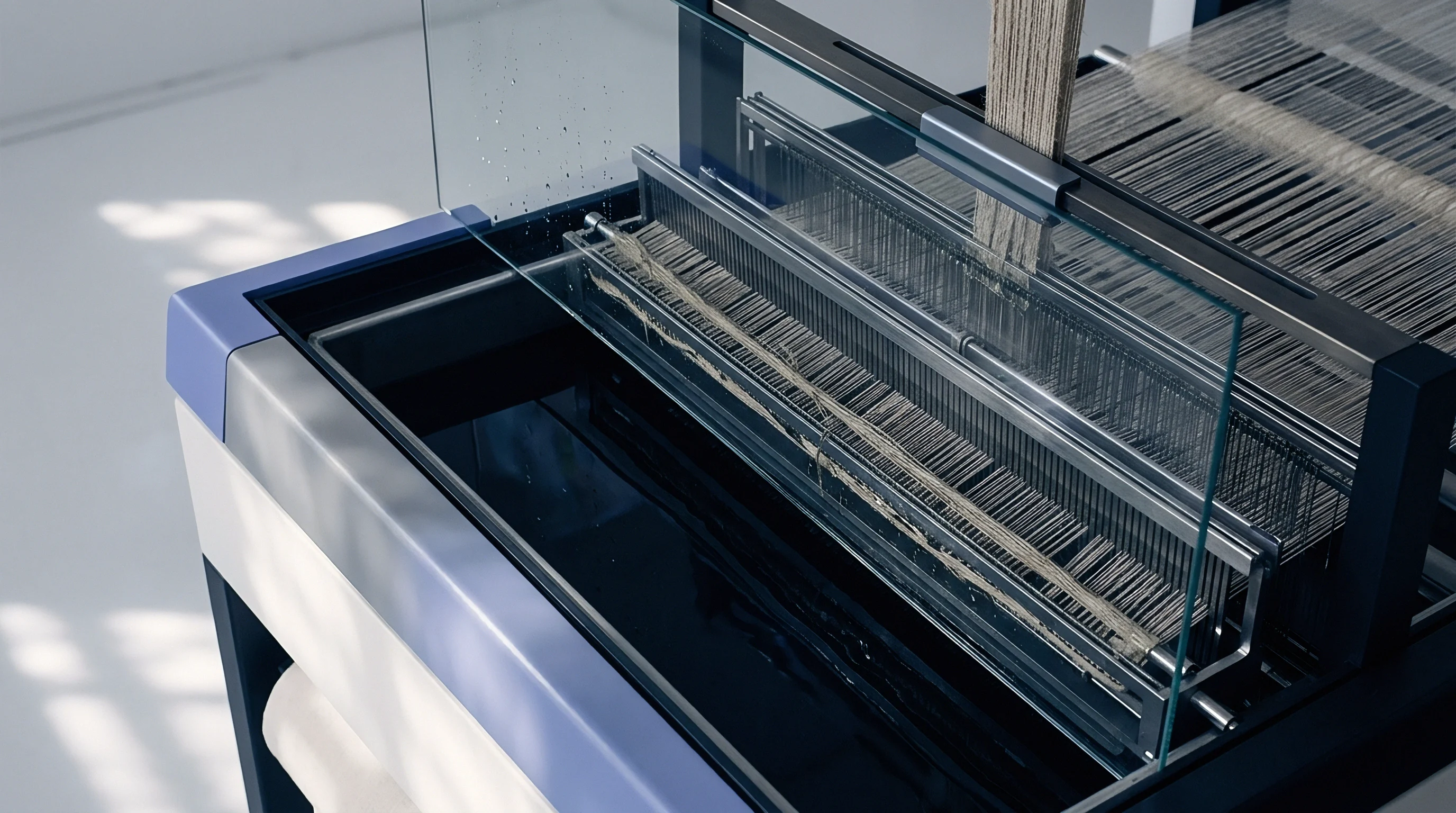

Specification
Technical procurement dossiers translate physical cloth properties into enforceable commercial tolerances. Specifying linen fabric without explicitly defining finished crimp targets, off-loom greige dimensions, and standardized shrinkage testing methods exposes buyers to substantial commercial risk. A complete technical specification sheet governs every physical metric across transformation stages, binding weaver, finisher, and garment manufacturer to shared quantitative baselines.
Clear specifications eliminate subjective arguments regarding handfeel, opacity, and dimensional stability by anchoring quality verification in standardized ISO and ASTM test protocols.
Test method selection dictates dispute resolution authority. Warp and weft crimp measurement must specify ISO 7211-3 (Determination of Crimp of Yarn in Fabric). This standard dictates unwinding threads from a conditioned cloth sample, applying calibrated straightening force based on yarn linear density (typically 0.5 cN/tex for flax yarns), and measuring unraveled straight thread length against original fabric sample length.
Applying arbitrary hand tension to unraveled threads yields inconsistent crimp measurements, invalidating quality audits during contract disputes.
Thread count verification must adhere to ISO 7211-2 (Determination of Number of Threads per Unit Length). Thread density counting requires minimum sample dimensions and multiple measurement sites across fabric width, excluding selvedge zones within five centimeters of the edge. Counting threads under magnification at five distinct positions across the bolt yields a reliable statistical mean.
Tolerances for thread density in linen production are standardized at plus or minus 3 percent for warp ends and plus or minus 4 percent for weft picks to accommodate natural flax yarn unevenness.
Mass per unit area determination relies on ISO 3801 (Determination of Mass per Unit Length and Mass per Unit Area). Testing requires cut circular swatches of 100 square centimeters conditioned in standard atmospheres (20 degrees Celsius, 65 percent relative humidity) for 24 hours prior to weighing on calibrated analytical balances. Mass metrics must declare whether values represent dry scoured mass, fully finished mass with moisture regain, or finished mass including chemical softening add-ons.
Standard commercial mass tolerances for finished linen fabrics are locked at plus or minus 5 percent of nominal target GSM.
Dimensional change during washing must be evaluated under ISO 5077 (Determination of Dimensional Change in Washing and Drying) coupled with washing procedures defined in ISO 6330. Specifications must mandate exact wash temperatures (typically 40 degrees Celsius or 60 degrees Celsius), detergent type (non-phosphate reference detergent without optical brighteners), drying method (line dry, flat dry, or tumble dry), and the number of complete wash-dry cycles (minimum three cycles required for natural bast fabrics). Specifying single-cycle shrinkage targets allows progressive shrinkage failures to slip into garment production lines unmonitored.
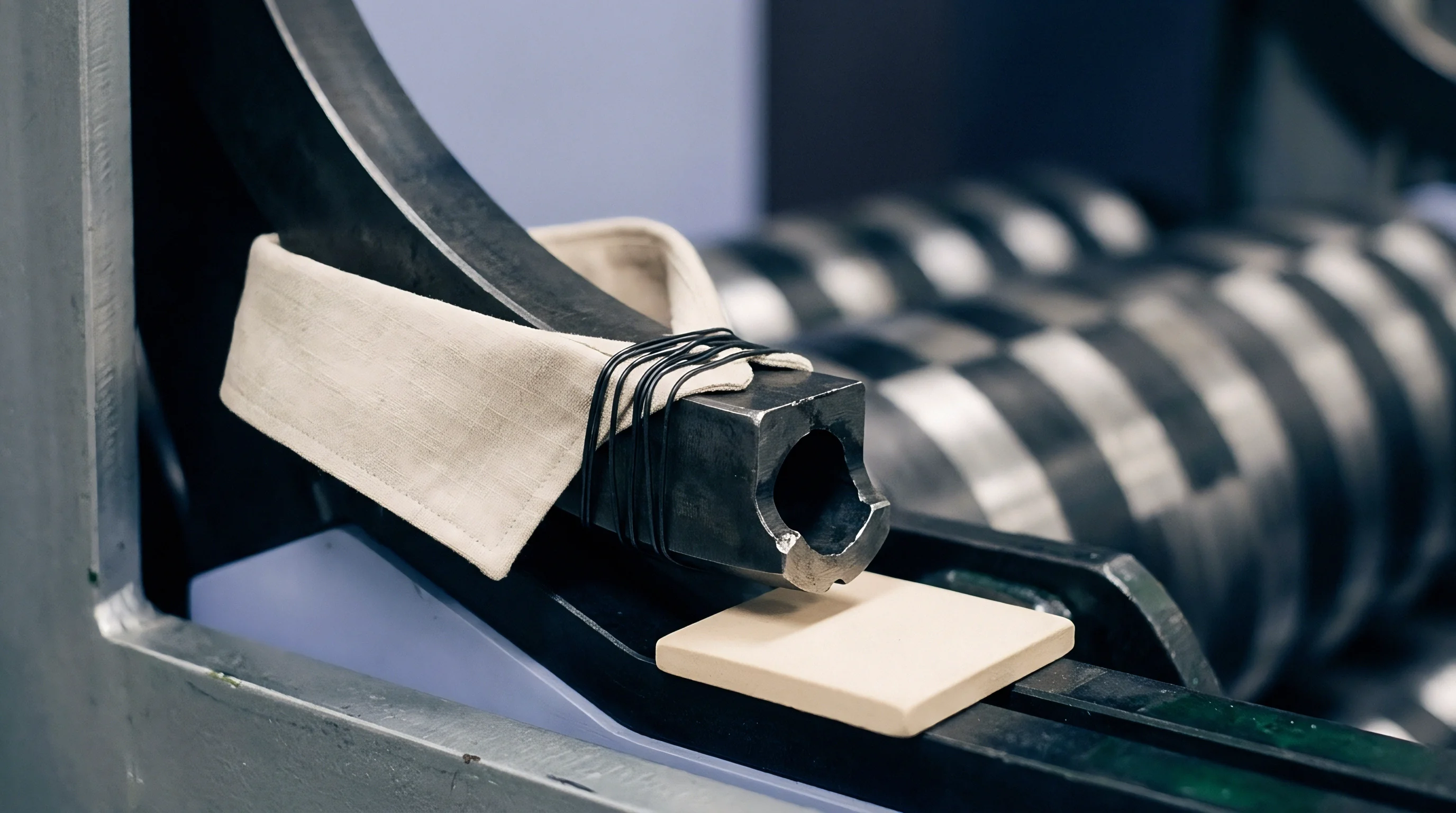
Standard Test Methods for Linen Construction Verification
Laboratory analysis of unraveled warp and weft yarns establishes exact crimp percentages according to international protocols. The matrix below defines required standard test methods, parameter targets, permissible tolerance bands, and commercial remedies for an industrial 235 GSM linen suiting specification contract.
| Physical Metric | Standard Test Method | Nominal Target Spec | Permissible Tolerance | Commercial Dispute Remedy |
|---|---|---|---|---|
| Finished Mass (GSM) | ISO 3801 | 235 GSM | ± 5.0% (223 – 247 GSM) | Pro-rata price discount below -5%; rejection above +7% |
| Usable Finished Width | ISO 22198 | 150 cm | -0.5 cm / +2.0 cm | Supplier absorbs marker yield loss cost below 149.5 cm |
| Finished Warp Thread Count | ISO 7211-2 | 17.9 ends/cm | ± 3.0% (17.4 – 18.4 ends/cm) | Re-inspection; reject if combined cover factor drops below 0.70 |
| Finished Weft Thread Count | ISO 7211-2 | 17.2 picks/cm | ± 4.0% (16.5 – 17.9 picks/cm) | Price adjustment based on missing loom insertion hours |
| Finished Warp Crimp | ISO 7211-3 | 17.5% | ± 2.0% absolute (15.5% – 19.5%) | Mandatory re-stenter finishing if warp crimp drops below 15.5% |
| Finished Weft Crimp | ISO 7211-3 | 10.8% | ± 1.5% absolute (9.3% – 12.3%) | Width re-calibration required at finisher expense |
| Wash Shrinkage (3×40°C) | ISO 5077 / ISO 6330 | Warp -3.0% / Weft -2.0% | Maximum -3.5% Warp / -2.5% Weft | Full lot return or mandatory Sanforizing re-pass at mill cost |

Establishing Commercial Tolerance Bands for RFQ Contracts
Variations in natural flax fibers demand structured allowance limits across physical density metrics. Writing Request For Quotations (RFQs) without explicit tolerance bands invites mills to quote against low-density baseline constructions, planning to meet target weight through heavy temporary chemical sizing or calendering. The operational decision checklist below outlines essential document requirements when issuing technical specification dossiers for commercial linen cloth manufacturing.
- Explicit Target Specification for Finished Width and Weight State usable cuttable width excluding selvedges alongside conditioned dry finished mass per square meter with strict plus-or-minus tolerance limits.
- Mandatory Crimp Distribution Limits Between Warp and Weft Define exact unraveled yarn crimp percentage targets for both directions to lock in drape geometry, preventing mills from over-stretching warp ends to inflate roll length metrics.
- Boundaries for Residual Wash Shrinkage Under ISO 5077 Cap permissible dimensional collapse across three 40 degrees Celsius laundry cycles, forcing the finishing plant to execute full aero-tumbling or rubber-belt compaction prior to batching.
- Sampling Protocols for Incoming Greige Lot Inspection Mandate cut-swatch testing from ten percent of delivered rolls per dye lot, requiring laboratory verification of thread count, yarn count, and cover factor before authorizing cutting room spreaders.
Tolerances must distinguish between functional apparel specifications and heavy industrial decorative specifications. Apparel linens require tight warp shrinkage controls (maximum 3 percent) to protect garment pattern sizing consistency. Upholstery or curtain linens permit wider shrinkage bands (up to 5 percent) but demand strict lightfastness (ISO 105-B02 minimum grade 6) and rub fastness metrics.
Blanket specifications that apply uniform tolerances across all linen categories generate unnecessary production surcharges on coarse goods while leaving fine apparel lines exposed to sizing failures.
A specification that omits finished crimp tolerances allows mills to deliver stiff cloth under tension that shrinks drastically upon first wash.
Defect grading integration protects physical metric compliance. Standard fabric grading systems, such as ASTM D5430 (Standard Test Methods for Visually Inspecting and Grading Fabrics, commonly known as the Four-Point System), assign penalty points to physical defects like slack warp ends, dense picks, reed marks, and width bow. A specification must stipulate that any roll exceeding 28 penalty points per 100 square meters triggers automatic rejection, regardless of whether fabric meets mass and thread count metrics.
Physical defects like tight warp ends create localized crimp distortion, causing panel puckering that cannot be ironed flat during garment pressing.
Dispute resolution clauses must specify an independent accredited laboratory as binding arbitrator for metric testing. When factory quality control tests conflict with buyer incoming inspection reports, identical swatches cut from sealed reference rolls must undergo testing at a third-party laboratory under ISO 17025 accredited conditions. Defining test protocols, sample conditioning times, and arbitration costs within the initial purchase contract prevents prolonged legal negotiations when shipment lots fail physical performance boundaries.
Incorporating standard clause ISO 7211-3 section 6 into purchase orders obligates the weaver to verify unraveled yarn length under a calibrated ten-millinewton tension pre-load.

Outlay
Financial modeling of woven linen orders depends directly on yarn mass consumed per finished meter produced. Raw flax yarn costs account for 50 to 70 percent of total finished fabric manufacturing cost, dwarfing weaving shed electricity, labor, and finishing chemical surcharges. Crimp take-up and wet finishing shrinkage convert straight yarn meters into shortened fabric meters.
A sourcing manager who calculates raw material procurement based on finished fabric length without factoring in compound structural take-up underbuys yarn inventory, halting weaving production or forcing emergency purchases of high-cost spot-market yarn lots.
Calculating total warp yarn requirement (Mp in kilograms) per 1,000 meters of finished fabric utilizes the structural formula:
Mp = fracTotal Warp Ends × Lfin × (1 + cp,fin)1000 × Nmp × (1 – Warp Waste Factor)
Where Total Warp Ends includes body and selvedge threads, Lfin equals target finished meters (1,000 m), cp,fin represents finished warp crimp fraction, Nmp is metric yarn count, and Warp Waste Factor accounts for spooling, warping, creel, and loom tie-in yarn waste (typically 0.03 to 0.05). If finished warp crimp reaches 17.5 percent (0.175) on a 2,688-end warp using 25 Lea (41.34 Nm) yarn, total warp yarn consumed per 1,000 finished meters equals:
Mp = frac2688 × 1000 × 1.1751000 × 41.34 × 0.96 = frac3,158,40039,686.4 = 79.58 kg of warp yarn
Omitting warp crimp take-up from this formula estimates warp yarn mass at only 67.73 kg, leaving an 11.85 kg deficit per 1,000 meters produced. Across a 50,000-meter production run, this math error leaves the mill short by nearly 600 kilograms of yarn, shutting down high-speed weaving sheds and delaying shipments.
Weft yarn requirement calculations (Mw in kilograms) follow an allied mass conservation equation based on finished pick density and finished width:
Mw = fracPfin × 100 × Wfin × (1 + cw,fin) × Lfin1000 × Nmw × (1 – Weft Waste Factor)
Where Pfin is picks/cm, Wfin is finished width in meters, cw,fin is finished weft crimp fraction, and Weft Waste Factor accounts for shuttleless insertion waste and edge trimming (typically 0.04 to 0.06 on rapier looms). For a finished fabric running 17.2 picks/cm at 1.50 meters width with 10.8 percent finished weft crimp using 25 Lea yarn, weft yarn consumed per 1,000 finished meters equals:
Mw = frac17.2 × 100 × 1.50 × 1.108 × 10001000 × 41.34 × 0.95 = frac2,858,64039,273 = 72.79 kg of weft yarn
Loom capacity allocation and loom-hour costing translate pick density into shed financial expenditure. Weaving costs are quoted per loom hour or per 100,000 inserted picks. The time (H) in hours required to weave 1,000 greige meters on a loom running at a target mechanical speed (N) in picks per minute (RPM) at an average shed efficiency (η) is expressed as:
H = fracPg × 100 × 1000N × 60 × (η / 100)
Where Pg is off-loom greige pick density per centimeter. Consider a rapier loom weaving greige linen at 15.57 picks/cm (Pg) at a speed of 380 RPM with a shed efficiency of 82 percent on stiff bast yarn runs. The weaving hours required per 1,000 greige meters calculate to:
H = frac15.57 × 100,000380 × 60 × 0.82 = frac1,557,00018,696 = 83.28 loom hours
Connecting greige output length to final finished yield requires incorporating warp finishing shrinkage. If warp finishing shrinkage reaches 9.5 percent, producing 1,000 finished meters requires weaving 1,105 greige meters (1000 / (1 – 0.095)). The required loom run time per 1,000 finished meters expands from 83.28 hours to 92.02 hours.
At a standard weaving shed rate of $18.50 per loom hour, this shrinkage factor adds $161.67 in weaving cost per 1,000 finished meters, an expense that must be baked directly into the landed meter price quote.

Yarn Consumption Math and Warp Lengthening Allowance
Raw material cost accounting multiplies single yarn price by total thread length including all crimp take-up factors. The financial allocation model below steps through yarn purchasing expenses, shed operational surcharges, and wet-dry finishing fees for manufacturing 10,000 finished meters of 235 GSM suiting linen fabric.
Loom speed must be balanced against pick insertion force on wide, heavy-weight linen runs.
Base raw material parameters for the financial calculation assign 25 Lea wet-spun flax yarn a purchase price of $11.50 per kilogram. Total yarn required per finished meter equals 0.1524 kg (0.0796 kg warp + 0.0728 kg weft), resulting in a baseline raw fiber cost of $1.75 per finished meter. Adding 5 percent unrecoverable spinning waste and spooling loss elevates raw fiber expense to $1.84 per meter.
Weaving shed machine running charges at $18.50 per hour across 920.2 total loom hours add $1.70 per meter. Open-width scouring, aero-tumbling, and Sanforizing finishing passes add $0.95 per meter. Summing these operational components yields a direct mill manufacturing cost of $4.49 per finished meter, prior to administrative overhead, freight, and margin markup.

Loom Capacity Allocation and Pick Speed Economics
Machine run time per hundred meters of finished fabric scales non-linearly with inserted weft density. Increasing pick density by 10 percent to improve fabric cover factor does not merely add 10 percent to yarn weight; it slows loom shedding speeds due to elevated beat-up resistance and increases warp end breakage frequency, dropping shed efficiency from 82 percent down to 74 percent. The resulting loom time per 1,000 finished meters surges by 21.8 percent, driving weaving cost up from $1.70 to $2.07 per meter.
Small construction tweaks on the draughting sheet trigger substantial cost surges in the weaving shed.
Minimum warp beam economics dictate initial procurement volume thresholds. Mounting a fresh warp beam on an industrial rapier loom requires tying in thousands of individual warp ends, knotting selvedges, adjusting let-off let-down gearing, and running test strips to align pick density. This loom setup process consumes 6 to 10 setup hours, costing up to $350 in dead machine time, plus 15 to 20 meters of warp beam waste during tie-in.
On a short 1,000-meter production run, this setup cost adds $0.40 per meter. Spreading that same setup surcharge across a 10,000-meter multi-beam warp run reduces setup overhead to $0.04 per meter, illustrating the extreme economic penalty imposed on short custom linen runs.
Landed cost calculations must combine structural yarn loss, wet finishing weight loss, machine shed allocation, and freight tariffs into a single unit price sheet. Sourcing practices that analyze linen procurement solely through greige fabric prices expose buyers to unexpected landed price adjustments when wet processing yield losses and crimp compaction factors hit the final invoice. Precise calculations of yarn take-up and wet shrinkage convert unpredictable raw fiber purchases into stable cost per finished meter quotes.