
Imported Scutched Flax Landed against Domestic Chinese Fibre
Imported French scutched long line delivers higher hackling yield and lower yarn break rates, outperforming domestic Chinese flax on landed metre fabric cost.
Imported French scutched long line delivers higher hackling yield and lower yarn break rates, outperforming domestic Chinese flax on landed metre fabric cost.

Verify flax linear density using ISO 2370 cut length gravimetry on conditioned 50 mm bundles to prevent spinning end breaks and landed metre yield loss.
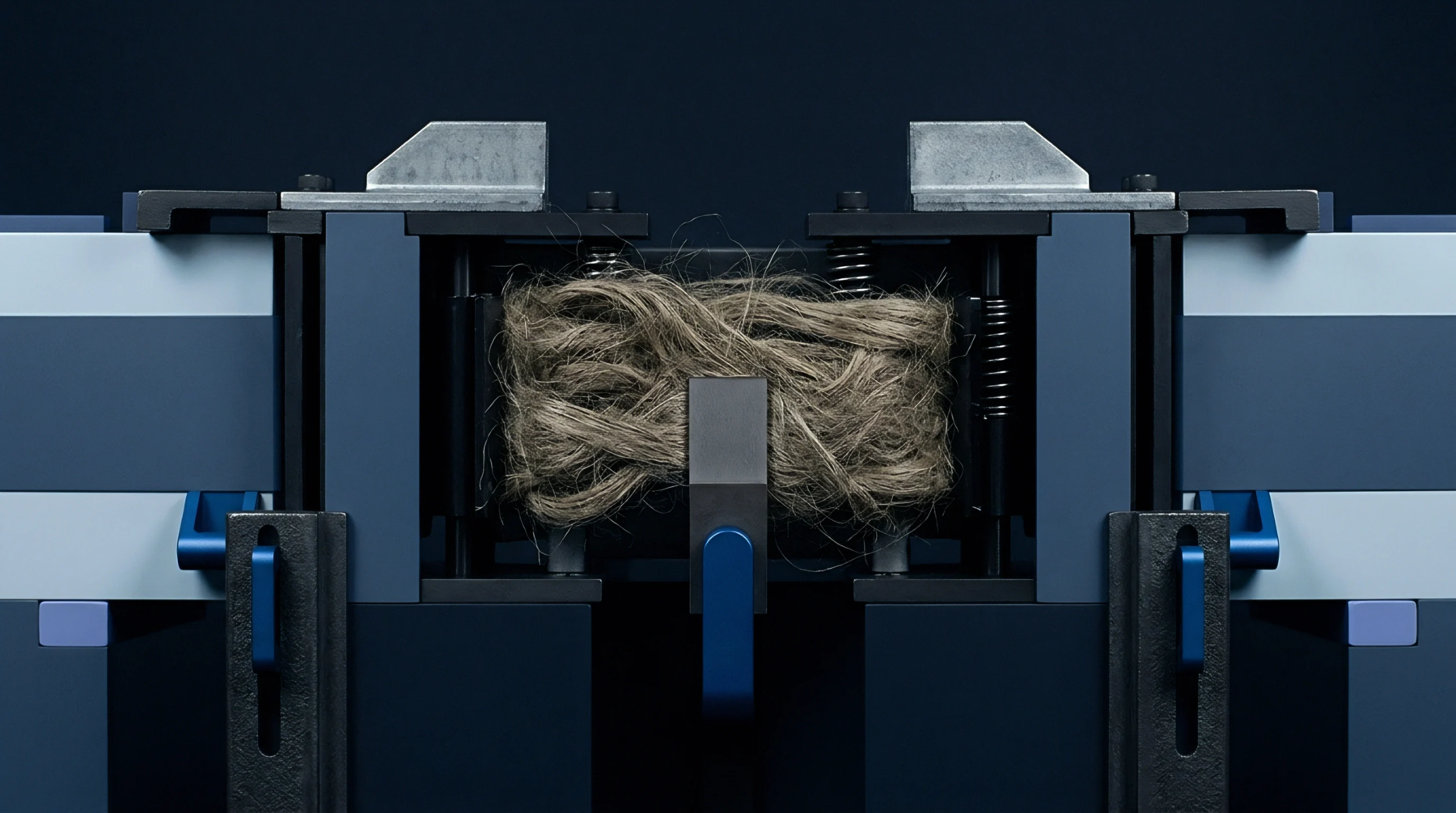
Detect short-staple flax blends in combed line sliver using comb sorter mass arrays and ISO 2370 air permeability tests to stop drafting breaks.
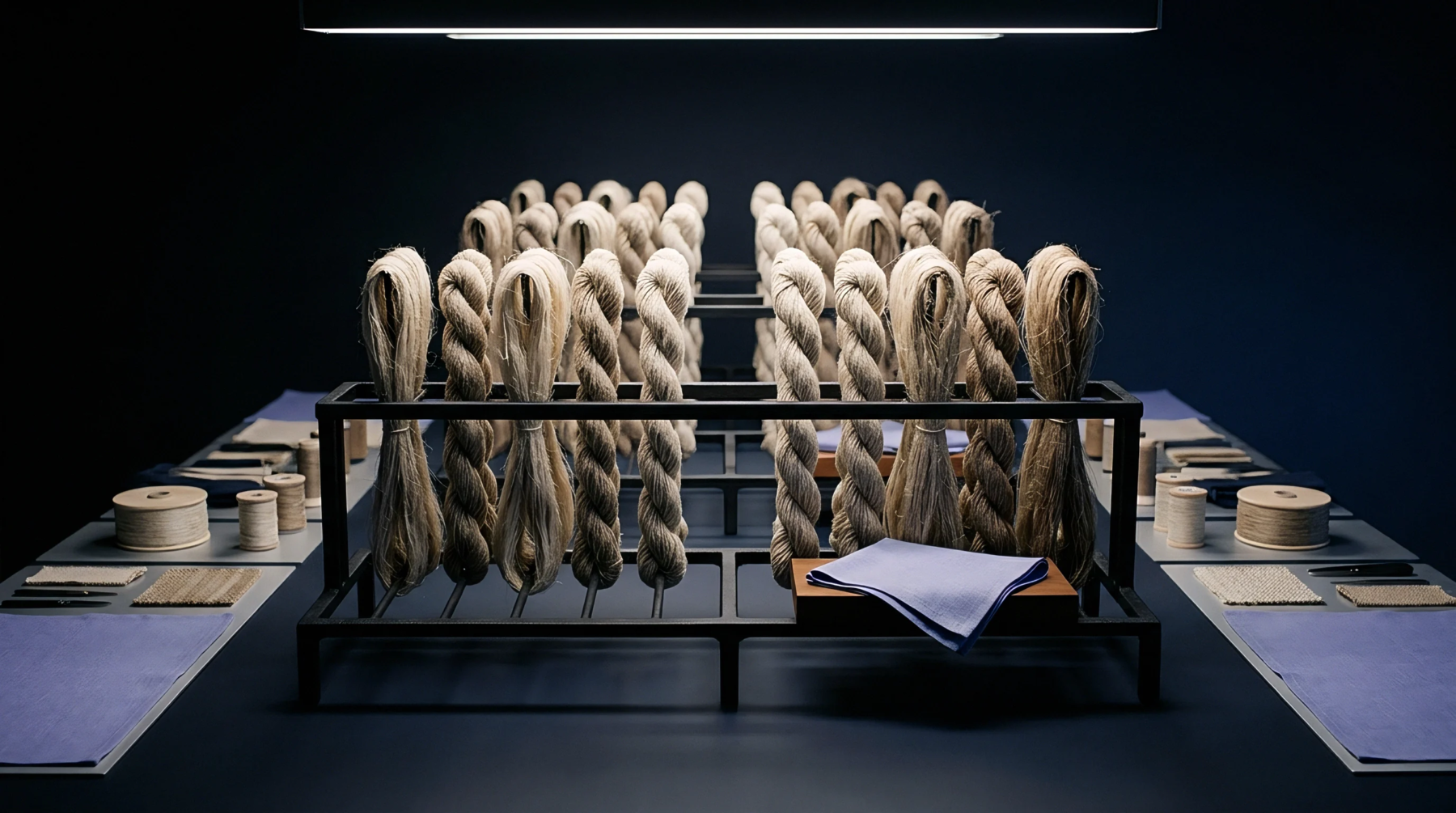
Isothermal thermogravimetry decouples non-cellulosic thermal degradation from moisture desorption, eliminating dry-mass underestimation and regain inflation in bast fibre trade.

Harmonized System bast fiber classification relies on physical shive percentage, pectin degradation depth, and mechanical hackling status.

Selective pectin degradation paired with tuned hackling pin density maximizes fibre bundle separation while retaining staple length for fine wet spinning.

Optical microscopy of resin-embedded cross sections determines true technical flax bundle widths, separating spinnable fine line from coarse drafting defects.

Spectrophotometric galacturonic acid assays overestimate retting degree unless corrected for neutral sugar and phenolic background interference.

Quantifying epicuticular wax mass fractions in dew-retted line flax bales isolates true fiber yield and optimizes wet-spinning boundary lubrication parameters.
Continuous accumulation of pectin degradation products in closed-loop wet spinning troughs alters fluid rheology, impairing strand drafting and dropping yarn tenacity.

Non-cellulosic thermogravimetric kinetic analysis quantifies binder levels to prevent hackling yield losses and wet-spinning breakage.

Isothermal volatilization modeling isolates water desorption from organic loss, preventing dry flax mass overestimation during gravimetric regain testing.

Widened microfibril angles reduce single fiber tenacity by increasing matrix shear stress, requiring X-ray diffraction checks to prevent yarn breakage.

Mechanical scutching parameters govern flax fiber separation efficiency, yield ratios, customs origin transformation, and commercial batch verification.
Micro-spectroscopic FTIR peak ratios isolate unauthorized alkaline boiling by measuring carbonyl suppression and cell wall crystallinity loss.

Maintain combing halls at 70% RH and control pectin esterification below 58% to maximize high count line flax hackling yields and lower metre costs.

Container thermal swings drive flax moisture desorption, requiring oven-dry mass reconciliation against the twelve percent standard regain to verify true fiber volume.

Gravimetric oven drying at 105 degrees Celsius strips volatile organic degradation products alongside moisture, systematically skewing flax fiber dry weight.

Scutched flax splitting efficiency directly dictates wet-spinning count limits by controlling the distribution of technical bundle diameters prior to roving draft.

Residual pectins in wet spun flax undergo thermal mass loss at 105 degrees Celsius, creating up to 1.8 percent dry weight errors in commercial mass verification.

Optimal pectin degradation (1.8-2.4%) balances middle lamella splitting and cell integrity, maximising hackling line yield and wet-spun yarn tenacity.
Dew retting pectin breakdown determines hackling yield by reducing middle lamella pin resistance to yield fine line flax while preventing cellulolytic tow waste.

Ultrafine linen requires sufficient inter-fiber shear cohesion to resist cyclic shed tension and prevent drafting slip during high-speed cloth production.

Scutched flax line yarn suitability requires bundle fineness below 1.8 tex, shive under two percent, and uniform retting to prevent comb tow losses.

Linear density offsets in long line flax contracts require progressive financial adjustment schedules to offset downstream wet-spinning waste and tenacity losses.
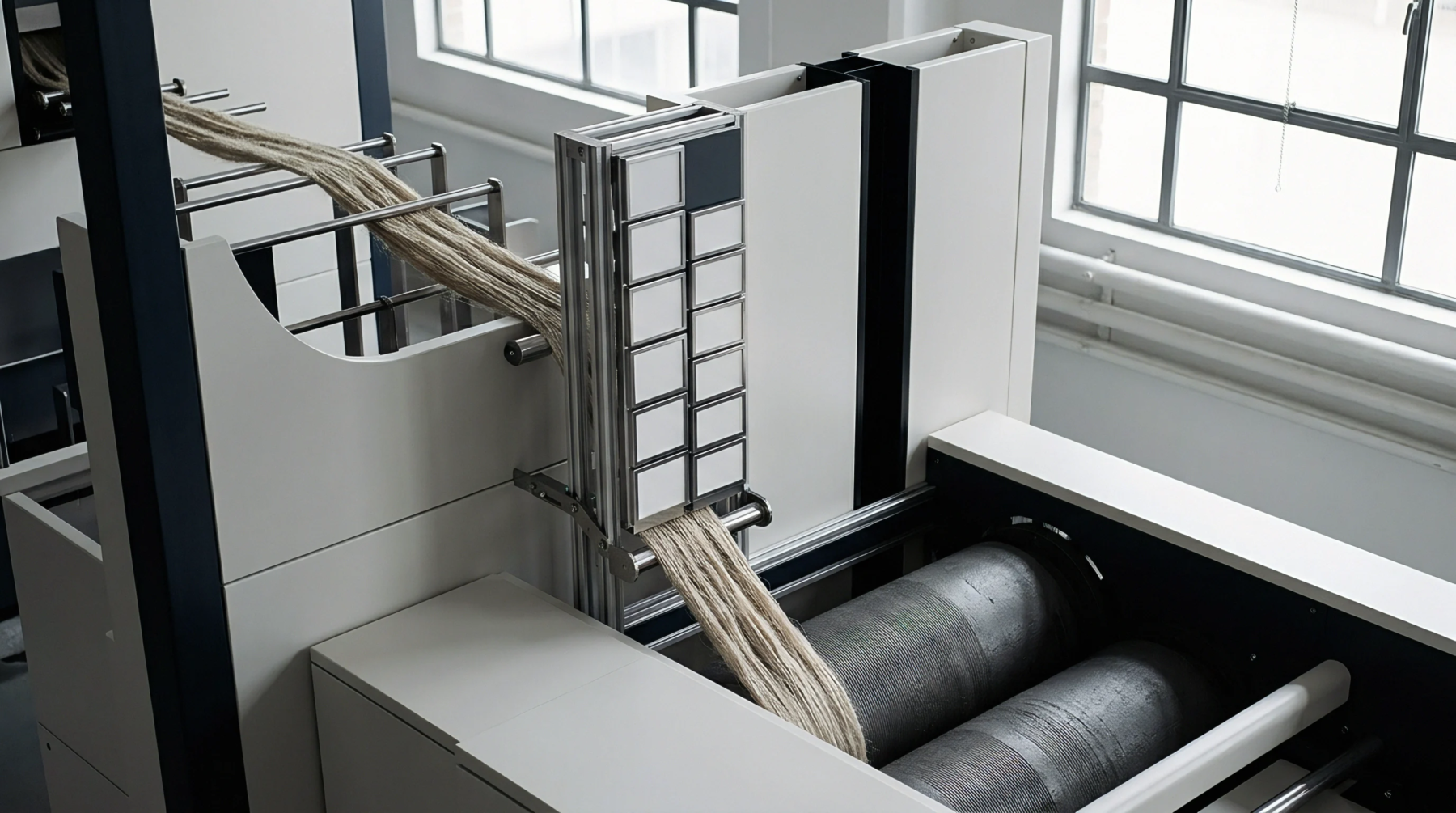
Discrete length distribution transformations control drafting breakage, wet trough bundle dissociation, and finished spinning margins in flax yarn production.
Gravimetric determination measures flax metric fibre number by weighing cut bundle segments to establish length per mass for accurate wet spinning yield calculation.

High processing speeds generate microstructural kink bands that drop flax tenacity by thirty percent, requiring strict mechanical speed limits in supply contracts.

True dry mass in flax roving requires oven drying at 105°C with calibrated tare baselines to deduct noncellulosic volatiles and apply BISFA regain allowances.
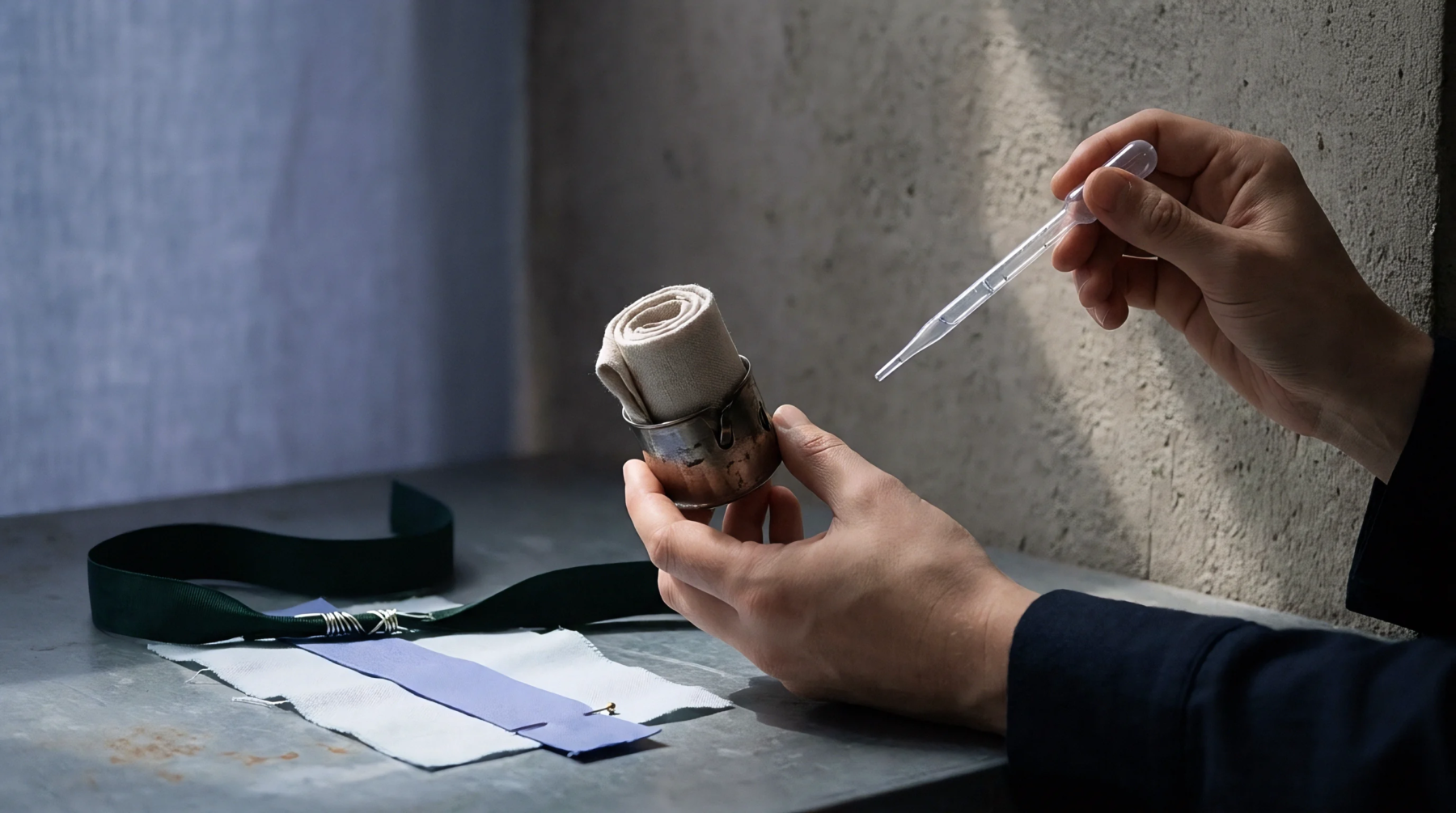
Gravimetric flax regain testing requires forced convection drying at 105 degrees Celsius with sealed container cooling to prevent ambient moisture errors.
Expertise is a utility, not a secret. sentiention™ publishes its working knowledge as open reference: intelligence layer covering the materials it sources, the markets it enters, and the reference that serves both.