Quantifying Air-Jet Nozzle Pressure Stresses on Fine Linen Filling Yarn Degradation Rates
Excessive air-jet nozzle pressure degrades fine linen filling yarns through surface shear and pectin cleavage, requiring strict pressure thresholds to avoid loom stops.

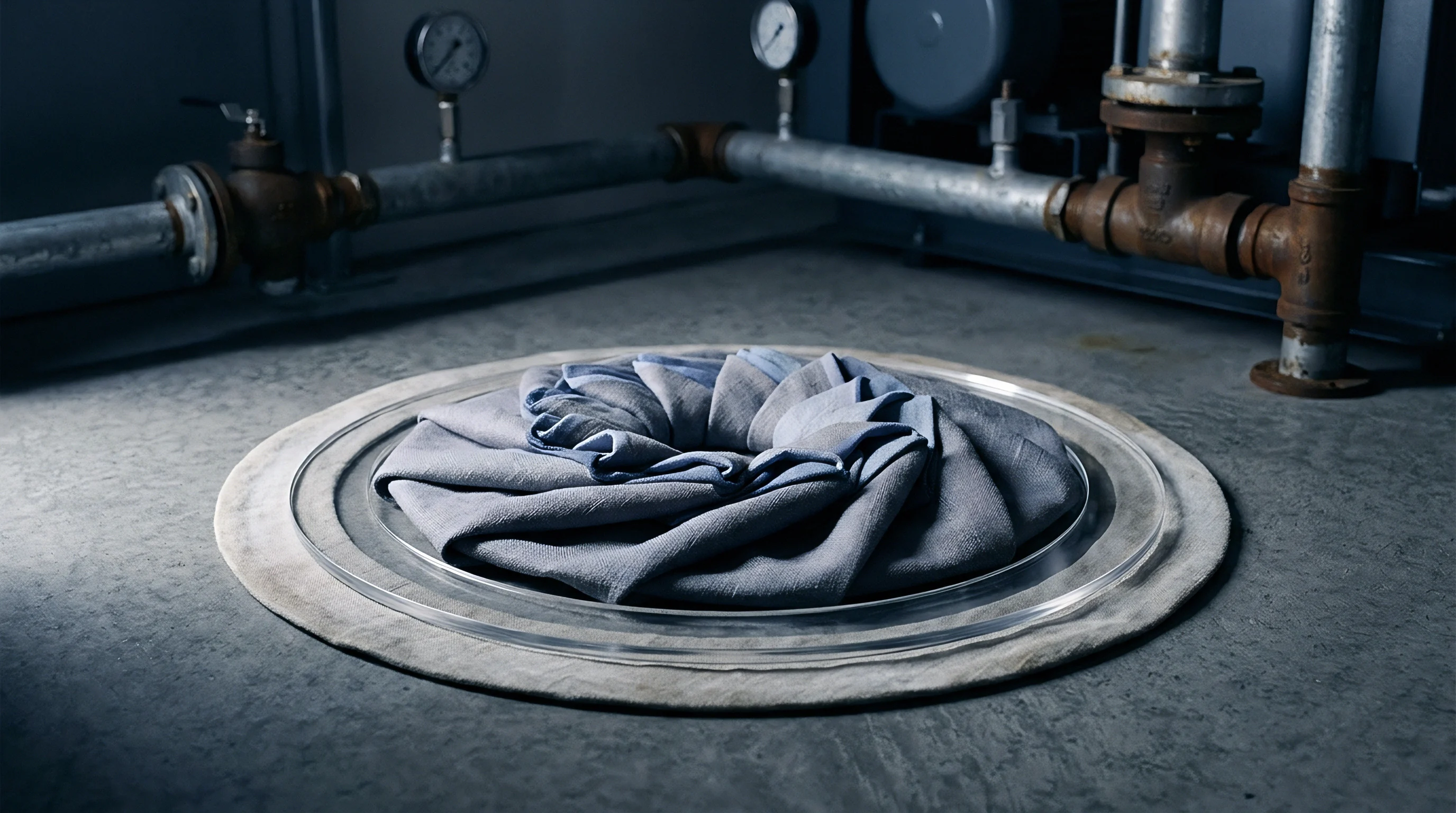
Blast
Air-jet insertion propels fine bast filling threads across profiled reeds using focused kinetic energy. Compressed air enters the main nozzle, creating a high-velocity fluid stream that drags the yarn from the measuring winder through the open shed. Fine linen yarn, spun from flax fibers bonded by natural pectins, exhibits limited structural compliance under initial shock loads.
When compressed air accelerates through the main injector nozzle, static pressure converts to dynamic fluid velocity, generating intense friction against the surface of the yarn. The resulting drag force pulls the thread head, while the body of the yarn experiences axial shock waves that travel back toward the drum accumulator.
The Young’s modulus of wet-spun linen ranges between 18 and 30 gigapascals, while ultimate strain at break rarely exceeds 2.2 percent. When the main nozzle solenoid valve opens, air pressure accelerates from atmospheric ambient to operating line pressure within two milliseconds. This rapid pressure rise generates a sharp mechanical tension spike along the thread axis.
If supply line pressure exceeds the tensile yield threshold of the fine linen yarn, micro-fractures develop along the fiber bundle before the thread enters the shed channel.
Main nozzle pressures exceeding 0.35 MPa elevate fine flax filling yarn break rates by 310 percent at 600 picks per minute.
Pneumatic propulsion efficiency depends on the aerodynamic friction coefficient of the yarn surface. Fine linen yarns possess a hairier, less uniform surface profile than combed cotton or continuous filament synthetics. This roughness increases momentum transfer from the air stream to the thread, generating elevated drag force at lower air velocities.
Excessively high pressure settings strip surface fibers from the core, converting kinetic energy into destructive shear stress.

Pneumatic Drag and Axial Launch Forces
Total drag on a filling yarn moving through a profiled reed channel scales with air density, relative velocity between air and thread, yarn diameter, and skin friction. Aerodynamic modeling indicates that launching an Nm 39 wet-spun linen yarn (25.6 tex) requires at least 0.22 megapascals of main nozzle pressure to clear a 190-centimetre reed width at 500 picks per minute. Increasing that pressure to 0.38 megapascals improves launch velocity, but drives peak axial tension past the elastic limit of the yarn.
Kinetic energy scales with the square of velocity. When the yarn brake engages at the end of insertion, sudden deceleration turns residual kinetic energy into a violent terminal shock. The combined impact of initial pneumatic acceleration and terminal mechanical braking causes cumulative structural degradation across the single yarn structure.
- Initial acceleration shear generates localized fiber sliding along the outer sheath of the yarn before the core bundles accept the axial load.
- Boundary layer air friction strips unfixed short flax fibers from the yarn surface, generating airborne lint that clogs profile reed dents.
- Axial shock reflection sends compressive stress waves back through the thread, causing micro-buckling in low-twist zones.
- Terminal impact deceleration snaps weakened fibrillar bridges when the yarn stopper clamps the trailing end at full insertion speed.

Compressible Flow Dynamics inside Main Injectors
Air flow inside the main nozzle transitions from subsonic to supersonic velocity within the expansion cone when supply pressure exceeds 0.28 megapascals. The sonic velocity shock boundary creates localized pressure oscillations that vibrate the unconstrained yarn end. For fine linen yarns, which possess low torsional resistance, these high-frequency pressure waves untwist the thread head, causing yarn split faults at the shed entrance.
Clean air prevents oil contamination, but entrained moisture creates its own problems by altering fluid density and softening the flax pectins. When lines carry aerosolized water droplets, liquid particles striking the yarn at high velocity displace local fibers and cause immediate filling breaks.
| Main Pressure (MPa) | Initial Velocity (m/s) | Flight Time (ms) | Peak Tension (cN) | Fibrillation Index (S3) |
|---|---|---|---|---|
| 0.20 | 38.2 | 49.7 | 14.2 | 120 |
| 0.25 | 46.5 | 40.8 | 21.8 | 185 |
| 0.30 | 54.1 | 35.1 | 31.5 | 310 |
| 0.35 | 61.0 | 31.1 | 44.2 | 540 |
| 0.40 | 66.8 | 28.4 | 59.8 | 890 |
Operating fine linen insertion above 0.35 megapascals main pressure destroys yarn cohesion, causing catastrophic filling break rates that drop loom shed efficiency below commercial viability thresholds.


Fatigue
Linen yarns possess limited elasticity, making flax bundles vulnerable to rapid cyclic stresses during pneumatic propulsion. Flax fiber structure consists of elementary ultimate fibers bonded together by a complex matrix of hemicellulose and pectins. Each ultimate fiber is a crystalline cellulosic tube with thick cell walls.
Under high-velocity air impact, mechanical energy targets the inter-fibrillar pectin middle lamella rather than the high-strength crystalline cellulose cores, driving degradation down microscopic boundary lines.
Micro-structural damage accumulates progressively across the insertion cycle. When high-pressure air impacts the yarn surface, localized shear stresses shear the soft pectin matrix, causing single ultimate fibers to detach from the main bundle. The thread core retains axial continuity, but the protective outer layer collapses.
This structural breakdown reduces yarn tenacity and increases hairiness prior to beat-up.
ISO 2062 strength testing executed on post-insertion yarns reveals an 18 percent drop in tenacity when jet pressure exceeds 0.30 MPa.
Unsized or poorly sized wet-spun linen decays quickly under pneumatic pressure. Applying sizing agents with high film strength, such as modified starches blended with polyvinyl alcohol, binds surface ultimates to the core and provides a sacrificial layer to absorb aerodynamic friction.
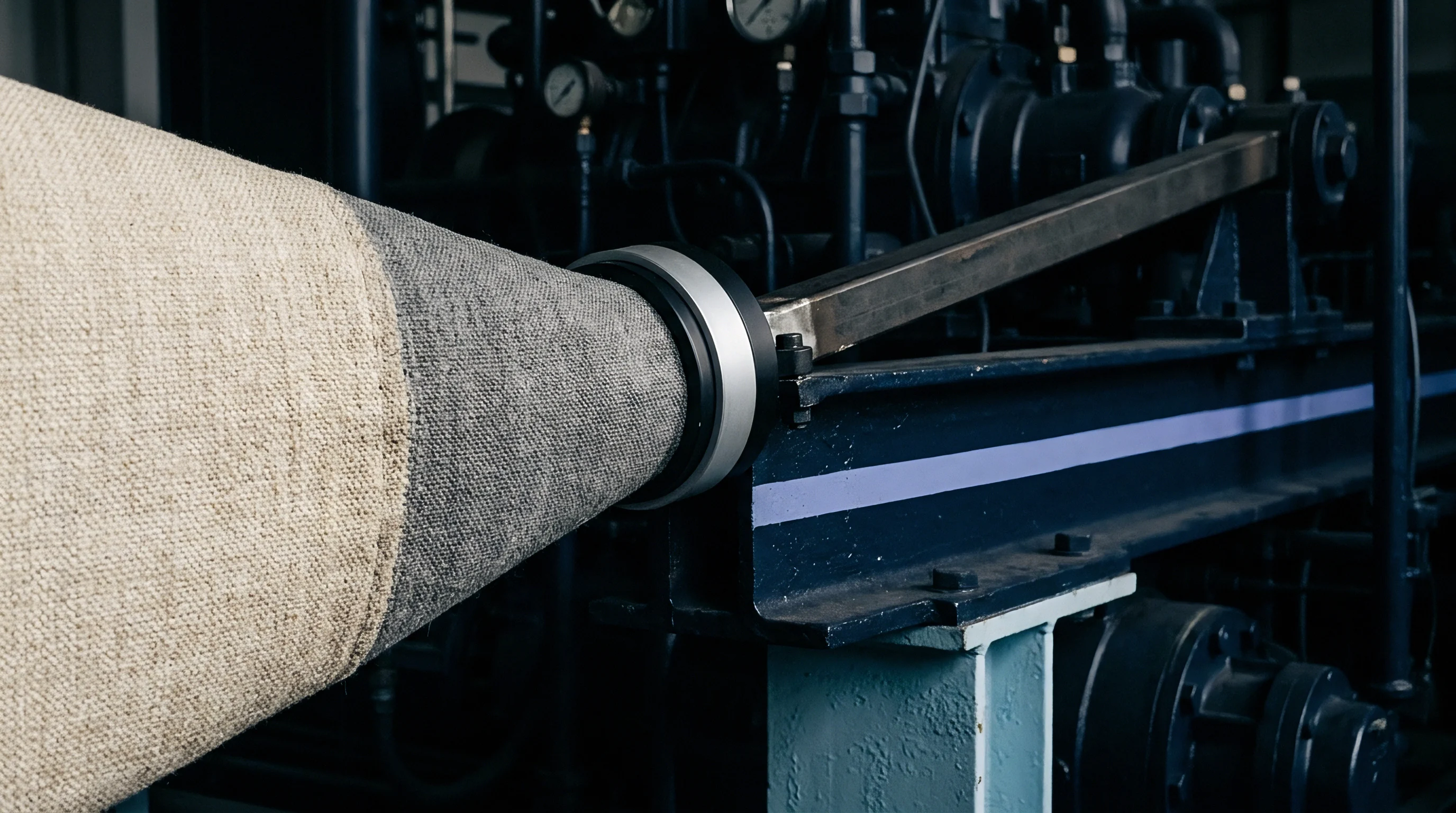
Cellulosic Cleavage under Repeated Impact Shock
Flax ultimate fibers measure between 10 and 40 millimetres in length with diameters ranging from 12 to 30 micrometres. The pectin matrix holding these ultimates together exhibits viscoelastic relaxation properties under slow loading conditions. During air-jet weaving, where stress application occurs within millisecond timeframes, the pectin matrix behaves as a brittle solid, fracturing under low strain amplitudes.
Air pressure peaks generate shear fields that cleave the inter-fiber pectin layer. Scanning electron microscopy of fine linen yarns retrieved after air-jet insertion shows longitudinal fiber splitting, micro-fibril delamination, and partial peeling of the primary cell wall. This physical degradation weakens yarn structural integrity, causing downstream breaks during cloth finishing and bleaching processes.
Quantifying mechanical degradation requires systematic measurement of yarn parameters before and after nozzle exposure. The evaluation protocol tracks physical properties across distinct mechanical stages:
- Mount package of fine linen filling yarn (Nm 50 / 20.0 tex) on the yarn testing frame to measure baseline tensile strength and hairiness.
- Pass yarn sample through a calibrated main nozzle test stand at controlled pressure settings from 0.15 to 0.40 megapascals in 0.05 megapascal increments.
- Collect post-nozzle yarn samples using an automated tension-controlled suction collector to prevent mechanical abrasion during recovery.
- Condition samples for 24 hours at 20 degrees Celsius and 65 percent relative humidity per ISO 139 standard conditions.
- Perform single-strand tensile testing according to ISO 2062 at a constant rate of extension of 500 millimetres per minute.
- Measure yarn hairiness index using photo-electronic laser count systems, recording the distribution of surface fibers exceeding three millimetres in length.

Micro-Fibrillation and Surface Fiber Stripping
Surface fiber stripping generates loose flax dust that accumulates within the relay nozzle orifices and profile reed dents. As fine fibers peel away from the main yarn axis, surface hairiness metrics change dramatically. The Uster hairiness index S3, which tracks the number of fibers longer than three millimetres per hundred metres of yarn, serves as a sensitive indicator of pneumatic structural degradation.
When relative humidity in the weave room falls below 60 percent, flax fibers shed bound moisture and the pectin matrix turns brittle. Running dry flax yarns through high-pressure main nozzles accelerates hairiness growth and triggers sharp drops in elongation at break.
| Nozzle Pressure (MPa) | Tenacity Before Jet (cN/tex) | Tenacity After Jet (cN/tex) | Tenacity Loss (%) | Initial S3 Hairiness | Post-Jet S3 Hairiness |
|---|---|---|---|---|---|
| 0.20 | 19.5 | 19.1 | 2.05 | 85 | 140 |
| 0.25 | 19.5 | 18.6 | 4.61 | 90 | 220 |
| 0.30 | 19.5 | 17.8 | 8.71 | 88 | 410 |
| 0.35 | 19.5 | 16.2 | 16.92 | 92 | 780 |
| 0.40 | 19.5 | 14.1 | 27.69 | 87 | 1350 |
The transition between manageable surface friction wear and permanent pectin matrix rupture in wet-spun bast fiber bundles is governed by this micro-structural stress threshold.


Shedding
Synchronizing relay valve opening times prevents flight path instability along the profile reed channel. Air-jet looms utilize a series of secondary relay nozzles spaced at regular intervals across the weaving width to maintain filling thread velocity. These relay nozzles blow compressed air pulses in a stepped wave sequence that matches the trajectory of the yarn tip.
Fine linen yarn requires precise pressure balance across these auxiliary jets because excessive relay pressure causes lateral whipping, driving the brittle thread into contact with abrasive reed wires.
If relay nozzle pressure drops too low, air velocity decays and the yarn head droops into warp ends, provoking a buckle stop. Excessive relay pressure scours the yarn body, stripping protective size film and leaving weak, hairy patches along the pick.
Reducing relay nozzle pulse duration by five milliseconds preserves yarn surface integrity without compromising flight stability across wide reed widths.
Fine linen filling yarns produced via wet spinning feature tightly packed surface fibers compared to dry-spun alternatives. However, the pneumatic drag requirements of air-jet insertion subject these wet-spun structures to bending fatigue as the thread head negotiates turbulent air vortices inside the profile channel.
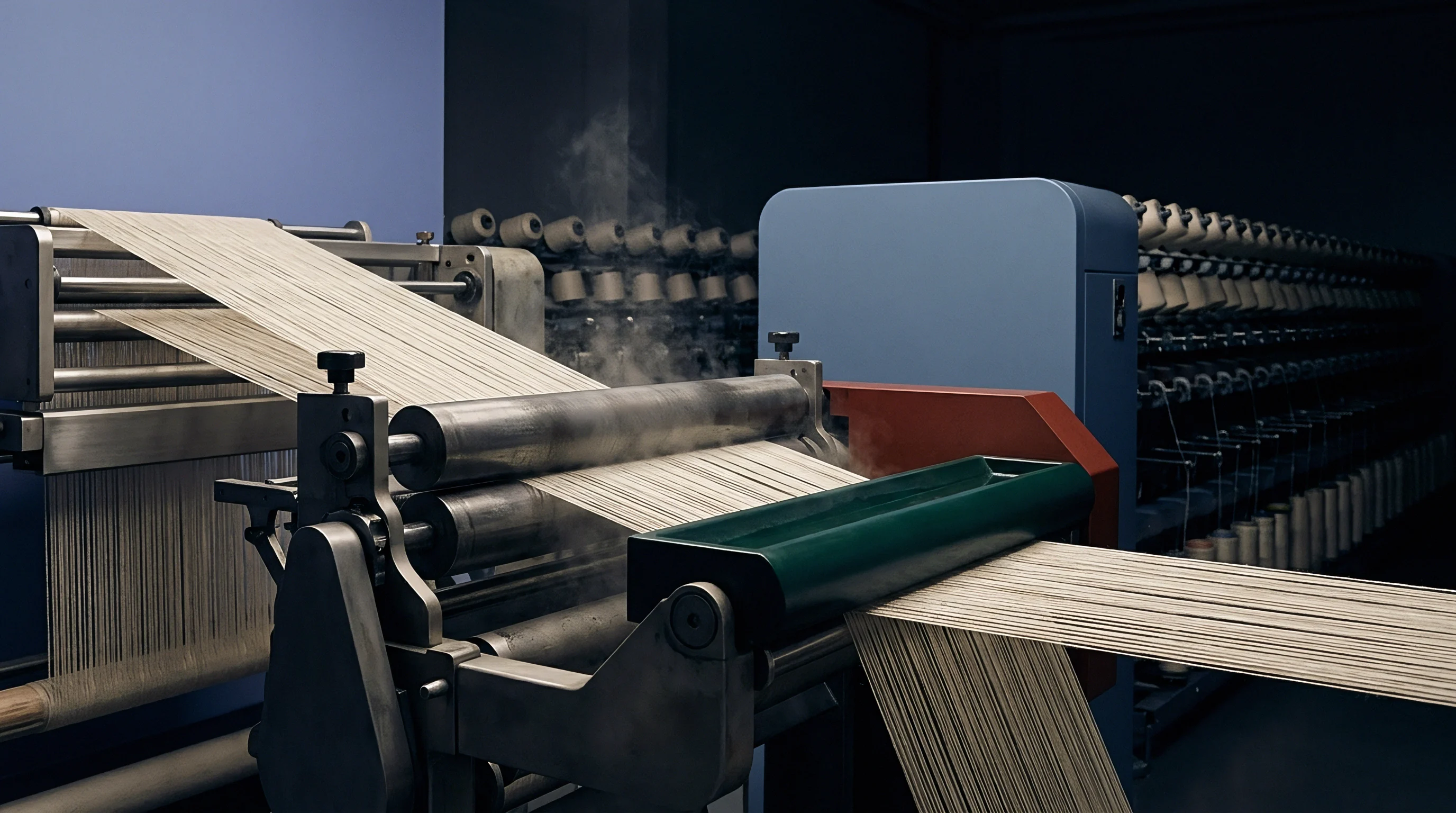
Relay Nozzle Pulse Timing and Trajectory Control
Relay nozzle valves operate using fast-acting electromagnetic solenoids triggered by the loom main shaft encoder. Pulse timing defines when each valve opens and closes relative to the crank angle. On a loom running at 600 picks per minute, one degree of crank angle corresponds to 0.278 milliseconds.
Fine linen yarn flight requires early relay valve firing to establish a stable air corridor before the yarn tip reaches the nozzle zone.
Overlapping relay nozzle discharge profiles creates a continuous high-velocity air wall. Extended pulse durations waste compressed air and expose the yarn body to prolonged air shear forces. Optimizing the valve blow angle down to 35 degrees of crank rotation minimizes kinetic shear stress while sustaining yarn flight speed.
- Staggered nozzle pressure control applies higher pressure near the main nozzle launch zone and lower pressure across the receiving side to minimize total stress.
- Profile reed channel cleaning prevents lint accumulation that distorts air flow distribution and destabilizes fine yarn trajectories.
- Yarn tip sensor integration adjusts relay timing dynamically based on real-time arrival time measurements, avoiding unnecessary high-pressure blowing.
- Multi-hole relay orifice geometries disperse air impact over a wider surface area, reducing localized mechanical force on the flax fibers.

How Does Relay Pressure Impact Lint Generation?
Relay nozzles discharge focused air streams directly against the side of the moving filling thread at angles between 10 and 15 degrees relative to the flight axis. This angular impact forces air into the yarn structure, lifting loose fiber ends and stripping sizing film. Elevated relay pressure increases lint shedding rates geometrically, loading the shed channel with particulate contamination.
Accumulations of short flax fibers inside the profile reed disrupt air velocity distribution, producing localized turbulence that causes subsequent filling picks to stall. Systematically blowing compressed air through specialized reed cleaning bars during loom operation maintains channel geometry without increasing filling yarn stress.
Higher loom speeds reduce available insertion time, leading operators to compensate by raising main and relay nozzle pressures to keep pick arrival on schedule. That adjustments drives pneumatic stress past the mechanical limits of fine bast yarns.
Optimized relay valve geometries improve air distribution, yet modified nozzle profiles alone cannot prevent fiber degradation once operating pressures exceed yarn mechanical limits.


Calculus
Translating nozzle pressure curves into financial outcomes defines the practical limit of air-jet weaving for wet-spun flax. The total cost per metre of woven linen fabric depends on loom speed, machine stop frequency, compressed air energy consumption, and raw material waste. While raising air pressure permits higher insertion speeds, the resulting spike in filling yarn degradation increases stop rates, destroying shed efficiency and inflating unit manufacturing costs.
When a filling stop occurs, the air-jet loom halts automatically, requiring mechanical intervention or repair by automated pick finders. Every loom stop creates a potential cloth mark defect, reducing the commercial grade of the fabric roll. Operating at pressure levels that induce yarn degradation sacrifices cloth quality for marginal speed increases.
Wet-spun linen yarns require double the sizing film coat thickness of cotton to survive air-jet insertion shear forces.
Compressed air generation represents up to 35 percent of the electrical energy consumed by an air-jet weaving plant. Running high line pressures inflates that power draw, making pressure calibration as critical for operating margins as it is for yarn survival.
Worked Economic Model of Pneumatic Stress
To quantify the economic trade-offs of air-jet nozzle pressure settings, consider a weaving shed operating 100 air-jet looms running a 180-centimetre width plain weave linen cloth using Nm 50 (20 tex) wet-spun filling yarn. The plant target is 550 picks per minute at 22 picks per centimetre. The baseline main nozzle pressure is set at 0.25 megapascals, with relay nozzles set at 0.22 megapascals.
Assume an electricity cost of 0.12 Euros per kilowatt-hour, compressed air energy efficiency of 0.11 kilowatt-hours per normal cubic metre of air at 0.6 megapascals line supply, and a filling yarn cost of 18.50 Euros per kilogram. A stop repair cycle consumes 45 seconds of loom downtime. Operator labor is fixed at 24.00 Euros per hour, with one operator managing a set of 12 looms.
Case A operates at conservative air pressure (0.22 MPa main, 0.20 MPa relay). Loom speed is held at 480 picks per minute. Filling stop frequency sits at 1.2 stops per 100,000 picks.
Loom efficiency reaches 91.5 percent. Air consumption averages 18.2 normal cubic metres per hour per loom.
Case B operates at aggressive air pressure (0.35 MPa main, 0.30 MPa relay) to boost speed. Loom speed increases to 580 picks per minute. High pneumatic stress degrades the fine linen yarn, elevating filling stop frequency to 6.8 stops per 100,000 picks.
Loom efficiency falls to 78.2 percent due to constant downtime and pick-finding cycles. Air consumption jumps to 28.5 normal cubic metres per hour per loom.
Calculating output over a 24-hour shift yields the net landed cost comparison per finished metre:
- Case A production output equals 287.4 metres per loom shift at a compressed air energy cost of 0.016 Euros per metre and a defect repair labor cost of 0.008 Euros per metre. Net landed cost equals 2.14 Euros per metre.
- Case B production output reaches 296.1 metres per loom shift, but elevated compressed air energy cost rises to 0.026 Euros per metre, while filling stop repair labor and yarn waste elevate costs by 0.062 Euros per metre. Net landed cost equals 2.28 Euros per metre.
- Efficiency loss differential reveals that Case B sacrifices 13.3 percent in machine efficiency to gain only 3.0 percent in net daily fabric production.
- Yarn waste costs increase by 4.2 percent under Case B due to partial pick removals and frayed yarn tails generated by nozzle shear breaks.

Pressure Thresholds against Loom Efficiency
Plotting nozzle pressure against shed performance defines a narrow operational window for fine flax yarns. Pushing main nozzle pressure beyond 0.28 megapascals generates diminishing returns in flight time reduction while accelerating yarn damage exponentially.
| Main Nozzle Pressure (MPa) | Loom Speed (PPM) | Stops per 10^5 Picks | Shed Efficiency (%) | Air Power (kW/loom) | Metre Cost (EUR) |
|---|---|---|---|---|---|
| 0.20 | 440 | 0.8 | 93.2 | 1.62 | 2.11 |
| 0.25 | 500 | 1.4 | 90.8 | 2.10 | 2.12 |
| 0.28 | 540 | 2.1 | 88.1 | 2.45 | 2.15 |
| 0.32 | 580 | 4.5 | 82.4 | 2.98 | 2.22 |
| 0.38 | 620 | 8.9 | 71.5 | 3.85 | 2.41 |
Operating fine linen filling yarns on air-jet machinery remains commercially viable only when pressure settings sit strictly below the threshold where pneumatic shear stress exceeds yarn inter-fiber cohesion.
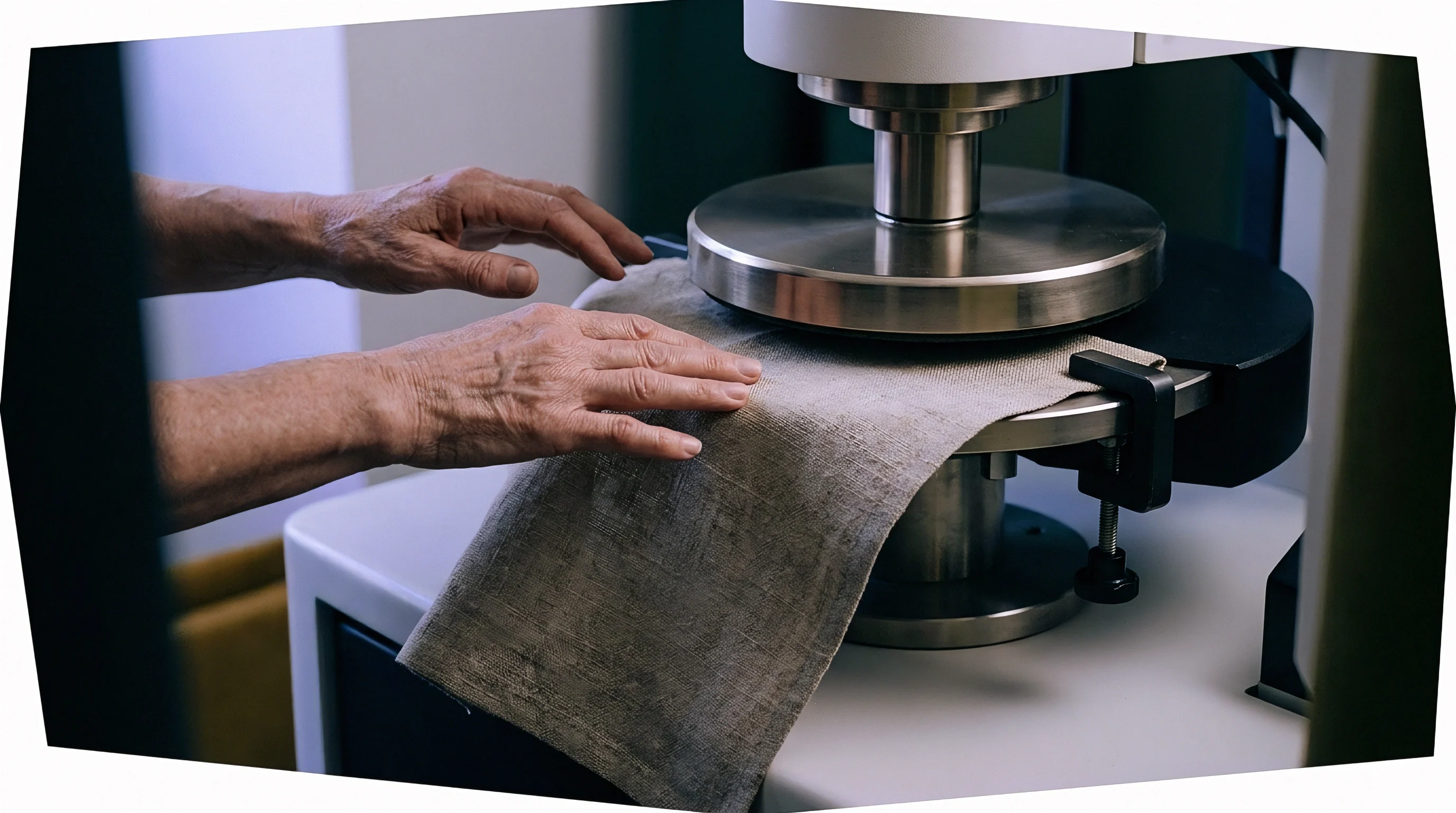
Dossier
Technical procurement specifications establish verifiable thresholds for residual tenacity following high-velocity insertion. Quality assurance protocols must mandate post-nozzle mechanical property verification rather than relying on package-level yarn certificates. Sourcing managers buying fine linen woven fabrics specify maximum allowable hairiness deltas and minimum post-insertion single-strand strength retention limits inside supply agreements.
Standard cone certificates fail to capture pneumatic stress. A yarn that meets baseline tensile numbers on the package can split under nozzle acceleration if the size film is uneven or the pectin cohesion weak. Incoming qualification testing prevents unexpected stop rates and structural losses in the finished cloth.
A complete yarn qualification dossier provides the technical evidence required to approve or reject filling yarn lots intended for air-jet sheds:
- Single-strand tenacity standard defines minimum breaking force at 18.0 cN/tex with a coefficient of variation in breaking tenacity below 9.0 percent per ISO 2062.
- Pneumatic stress resistance index measures post-nozzle strength loss, setting a maximum limit of 6.0 percent strength reduction after exposure to a 0.25 MPa air blast test stand.
- Sizing film coat uniformity mandates continuous size encapsulation with total film solubility in hot water per ISO 5077 standards.
- Hairiness increase threshold caps the Uster S3 hairiness growth rate at a maximum 100 percent increase over baseline cone values following simulated nozzle insertion.
Acceptance testing requires systematic sampling from incoming yarn lots before committing warps to high-speed sheds. Mills that bypass post-nozzle stress qualification risk high downtime costs and customer claims for low tensile fabric performance.
Standard delivery contracts incorporate specific limits on yarn defect rates: “If the delivered fine linen yarn lot demonstrates a post-nozzle tensile tenacity loss exceeding 8.0 percent when tested at 0.25 MPa nozzle pressure under ISO 2062 conditions, the buyer reserves the right to reject the lot or apply a 12 percent price penalty against the invoiced weight.”