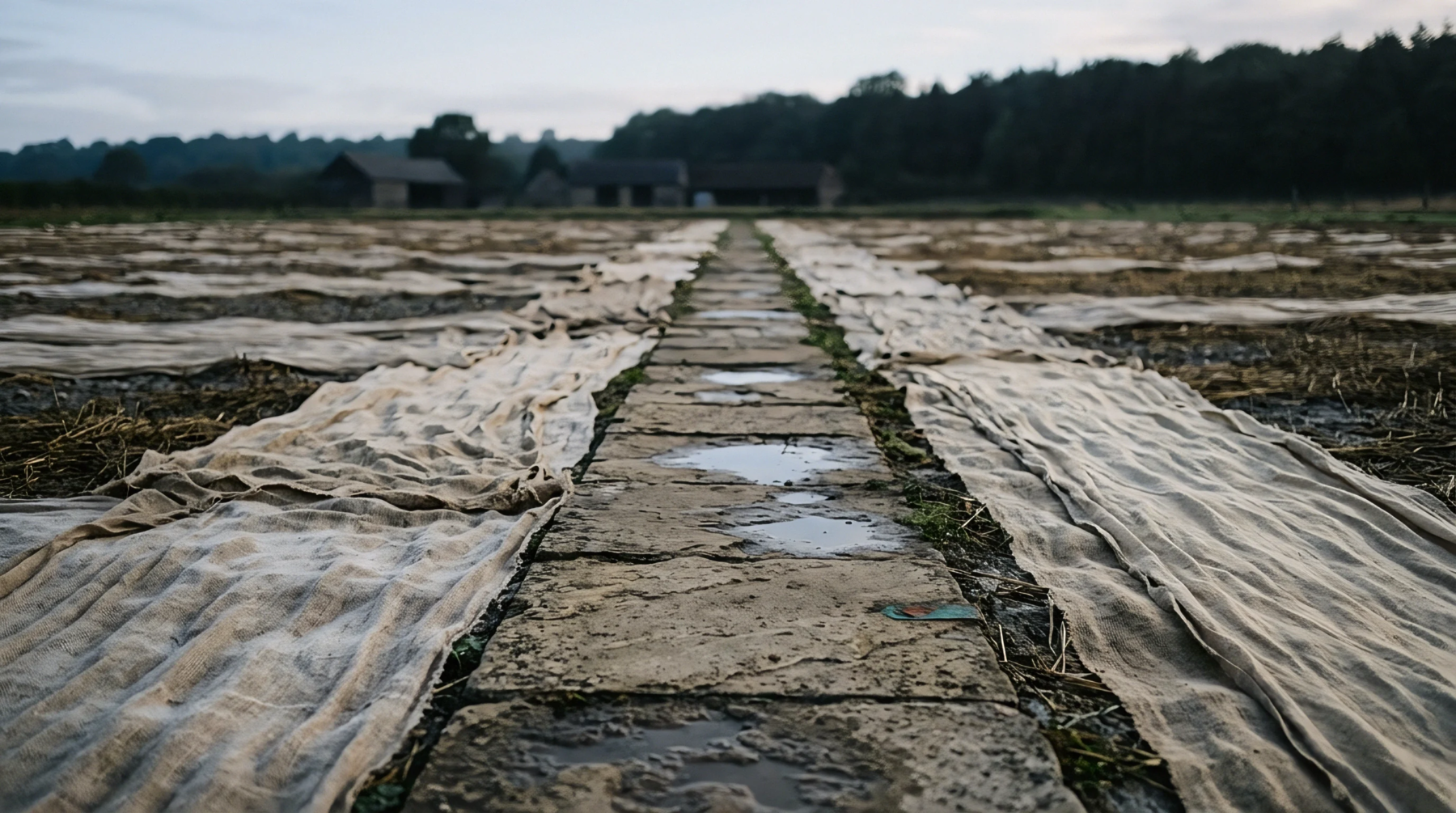
Surface Trimming
Mechanical cutting of surface fibers protruding perpendicular to the fabric plane smooths linen cloth during dry finishing. Finishing plants perform transverse shearing to eliminate surface fuzz and protruding fiber ends left after singeing and scouring operations. The operation is logged on the finishing batch route sheet prior to fabric calendering and final inspection.
This mechanical process applies strictly to loomed gray goods or dyed linen fabrics, having no application during raw yarn preparation or wet spinning processes.
Cutting Action
High-speed helical blade cylinders rotate across the fabric width, clipping vertical fiber ends against a fixed ledger blade while vacuum systems draw cut fiber debris away from the cloth surface. Precise blade gap settings prevent structural cutting of warp or weft yarns while removing loose fiber ends that cause surface pilling. Incorrect blade clearance leads to uneven fabric appearance or local thread damage, which reduces fabric tear strength.
Mill operators monitor cloth tension and blade sharpness throughout the process cycle to ensure uniform surface clearance.
Finishing Boundary
Inspection standards set clear limits on allowable surface fuzz density following shearing operations. Fabrics failing surface uniformity checks undergo a second shearing pass or are re-routed to brushed finish production.