Resolving Discrepancies between Customs Substantial Transformation Rules and Private Scope Certification Boundaries in Global Linen Supply Chains
Private fibre scope certificates confirm material lineage but do not satisfy legal customs standards for substantial transformation and tariff origin.


Divergence
Private voluntary schemes and statutory customs regimes judge textile shipments by incompatible criteria, yet importers routinely mistake chain-of-custody certificates for legal proof of origin. Programs like European Flax, Masters of Linen, the Global Organic Textile Standard, and OEKO-TEX verify environmental criteria, farm-level provenance, or processing methods. Customs agencies ~ including United States Customs and Border Protection and European Union customs administrations under the Union Customs Code ~ determine origin strictly through non-preferential substantial transformation rules or negotiated preferential terms in specific trade agreements.
A parcel of raw flax grown in France and certified under the European Flax standard holds that status across downstream manufacturing tiers. If a Chinese mill wet-spins those fibres into yarn, the scope certificate continues to confirm the Western European origin of the raw material. Under non-preferential customs rules, specifically 19 CFR Section 102.21 in the United States or Article 60 of the Union Customs Code in the European Union, spinning flax tow or line fibre into yarn constitutes a substantial transformation.
That mechanical operation confers Chinese origin on the resulting yarn for entry summaries, duty schedules, and mandatory origin labelling, irrespective of raw fibre provenance.
A scope certificate covering 100 percent Western European flax fibre retains validity when spun into yarn in Jiangsu, yet that yarn enters destination ports as Chinese origin under non-preferential tariff rules.
Confusing voluntary certification scopes with statutory customs standards creates severe legal and commercial compliance liabilities. Importers claiming preferential tariff treatment or labelling finished goods as European-made based on European Flax certificates risk regulatory enforcement actions. Voluntary standard certificates verify that a material batch meets an association’s audit criteria at a given tier of the supply chain, but hold no legal standing in statutory origin determinations.
Customs inspectors disregard private scope documents when determining duty rates, Section 301 tariffs, or antidumping duties, relying instead on physical manufacturing logs, entry summaries, and standardized Harmonized System tariff shifts.
| Framework Category | Primary Regulatory Authority | Governing Mechanism | Origin Determination Method | Legal Scope Limits |
|---|---|---|---|---|
| European Flax Scope | Alliance for European Flax-Linen & Hemp | Chain of custody transaction certificates | Field location of scutched fibre harvest | Verifies raw material lineage, not process origin |
| Masters of Linen | Alliance for European Flax-Linen & Hemp | 100% European production tracing | All processing steps inside European territory | Restricted to European territorial processing |
| US Customs Origin | US Customs and Border Protection | 19 CFR Section 102.21 rules of origin | Tariff shift via substantial transformation | Determines import duties and mandatory marking |
| EU Customs Origin | European Commission Directorate-General for Taxation | Union Customs Code Article 60 | Last substantial economic processing step | Governs non-preferential trade controls |
Supply chain buyers auditing foreign mills must evaluate transaction certificates alongside production records to establish legal origin. A mill operating in a third country that imports European flax fibre, spins the yarn, weaves the fabric, and exports finished linen goods produces an article whose customs origin derives from the location of spinning or weaving, depending on the destination market’s statutory rules. Relying on raw material scope certificates to claim customs tariff exemptions generates immediate import violations, leading to redelivery notices, retroactive duty assessments, and monetary penalties under commercial fraud statutes.
Certified raw fibre certificates establish agricultural provenance, but they confer no preferential tariff status on finished yarns shipped to North American buyers under customs law.


Loom
Mechanical processing reshapes both the physical flax fibre and its classification under customs law. Industrial linen manufacturing transitions from raw flax straw through retting, scutching, hackling, wet or dry spinning, warping, sizing, weaving, and wet finishing. Each mechanical stage changes the tariff heading within Chapter 53 of the Harmonized System.
Customs legal frameworks evaluate these specific tariff shifts to assign origin, whereas private voluntary certifications trace material input-output volumes across manufacturing facilities regardless of physical state changes.
Scutching separates flax fibre from the woody shive, producing long line flax and short tow fibre under Harmonized System heading 5301. Hackling aligns these fibres into continuous slivers, which wet spinning draws and twists into wet-spun linen yarn under Harmonized System heading 5306. Under the rules of origin enforced by major importing jurisdictions, spinning raw fibre into yarn represents a fundamental shift in material character that assigns the yarn’s legal country of origin to the mill location.
While private scope certificates issued at the scutching stage continue tracking raw material volume, the paper trail bifurcates: certified fibre origin remains European while legal yarn origin becomes Asian.
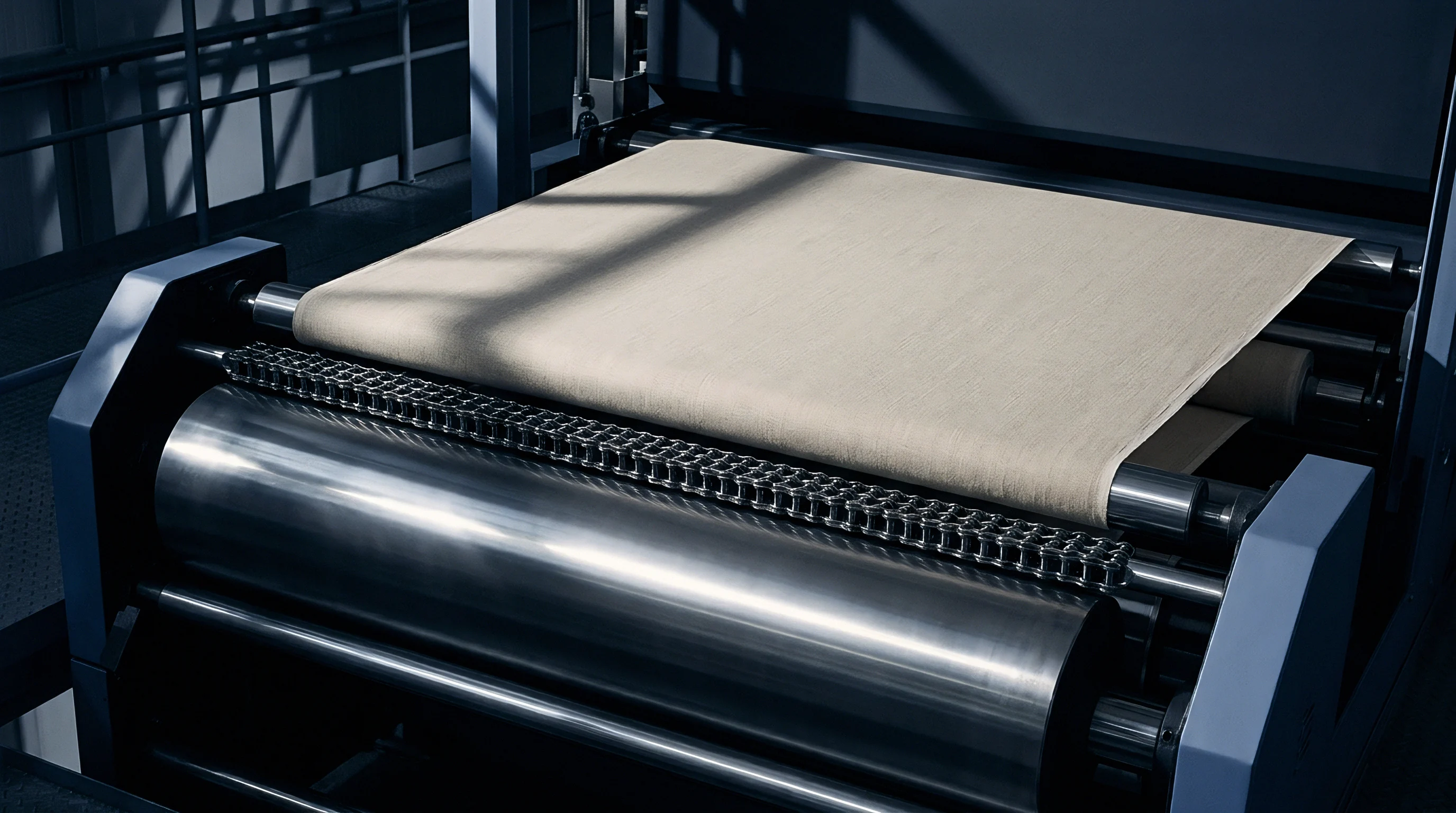
Why Does Private Scope Certification Fail to Establish Preferential Customs Origin?
Private certifications operate as voluntary mass-balance or physical segregation accounting systems. Certified trade bodies verify that an entity purchased a specific quantity of certified raw fibre and produced an equivalent quantity of yarn or fabric, tracking material custody rather than jurisdictional transformation rules. Preferential trade agreements require specific industrial steps to occur within partner territories.
Yarn-forward or fabric-forward rules in trade agreements mandate that spinning, weaving, or finishing occur inside eligible Member States to qualify for zero-duty tariffs; private scope certifications allow processing in non-member nations while maintaining certified material claims.
In accordance with 19 CFR Section 102.21, weaving flax yarn into fabric confers origin where the weaving occurs, invalidating claims that raw European fibre origin dictates finished fabric nationality.
Weaving flax yarn into grey fabric under Harmonized System heading 5309 introduces a second major transformation threshold. In many tariff schedules, weaving yarn into fabric creates a discrete country of origin determination for the woven cloth. When a weaver in Vietnam purchases wet-spun linen yarn spun in China from French scutched flax, three separate origin claims exist simultaneously: raw fibre origin is France, yarn customs origin is China, and finished fabric customs origin is Vietnam.
An importer declaring this fabric at a port of entry must declare Vietnam as the country of origin, despite marketing collateral emphasizing French flax heritage.
Declaring fabric origin based solely on raw fibre certification yields immediate cargo holds, retroactive duty assessments, and statutory fines under national customs enforcement acts.

Reconciliation
Audit teams verify physical mass balance by tracing raw fibre mass through industrial processing yields. Reconciling input bale weights against output fabric roll weights requires applying standard moisture regain values and processing yield factors. Flax fibre exhibits strong hygroscopic behavior, absorbing and releasing atmospheric moisture based on ambient humidity.
Standard moisture regain for linen yarn is set at 12 percent under ISO 6741 standards. Scutched flax inputs arrive at varying moisture levels, making dry-weight conversions essential for accurate material balance calculations.
Mechanical processes generate measurable material losses that must be accounted for during mill audits. Hackling long line flax produces hackling tow and comb waste, typically resulting in a 14 to 18 percent weight loss from raw scutched fibre. Wet spinning introduces further yield reductions through combing, drafting, and slub removal: line yarn wet spinning yields range between 68 percent and 76 percent relative to hackled sliver input, while tow yarn spinning yields drop to 52 to 62 percent due to higher short-fibre extraction.
Auditing mass balance without accounting for these physical waste rates allows mills to blend uncertified fibre into production runs while matching output weights to raw scope certificates.
Weaving and finishing stages modify fabric weight through sizing addition, scouring loss, and dimensional shrinkage. Sizing applications add 3 to 6 percent starch or polyvinyl alcohol weight to warp yarns before weaving. Subsequent wet finishing, including scouring, bleaching, and bio-polishing, removes sizing agents, natural waxes, and pectins, reducing fabric weight by 4 to 8 percent.
Dimensional shrinkage during dying and washing contracts fabric length by 3 to 6 percent while increasing areal density. Auditors calculate true mass balance using standardized mathematical yield models.
| Processing Phase | Input Material State | Output Material State | Typical Yield Range (%) | Allowable Process Loss (%) |
|---|---|---|---|---|
| Hackling | Scutched Long Line Flax | Hackled Sliver | 82.0 – 86.0 | 14.0 – 18.0 (Tow Waste) |
| Wet Spinning (Line) | Hackled Sliver | Wet-Spun Line Yarn | 68.0 – 76.0 | 24.0 – 32.0 (Noils & Slubs) |
| Wet Spinning (Tow) | Scutched Tow Fibre | Wet-Spun Tow Yarn | 52.0 – 62.0 | 38.0 – 48.0 (Short Fibre Loss) |
| Weaving Preparation | Spun Linen Yarn | Sized Warp & Weft Beam | 103.0 – 106.0 | +3.0 to +6.0 (Sizing Mass Addition) |
| Scouring & Bleaching | Grey Woven Fabric | Finished Linen Fabric | 92.0 – 96.0 | 4.0 – 8.0 (Wax & Size Removal) |
A mass-balance calculation illustrates the reconciliation method. Take an initial allocation of 10,000 kilograms of European Flax certified scutched long line flax delivered to a wet spinning facility at 12 percent standard moisture regain. Applying an average 84 percent hackling yield produces 8,400 kilograms of hackled sliver.
Processing this sliver through wet spinning at a 72 percent line yarn yield produces 6,048 kilograms of certified wet-spun linen yarn. If the mill issues transaction certificates for 7,500 kilograms of certified yarn from that 10,000-kilogram fibre batch, the auditor detects an uncertified yarn volume substitution of 1,452 kilograms.
Sourcing teams perform step-by-step document trace audits across four distinct transformation records to validate private scope continuity alongside statutory customs documentation.
- Reconcile raw material delivery weight from scutcher weighbridge tickets against scope certificate volume balance ledgers.
- Audit spinning mill batch lot cards to confirm allocation of specific certified fibre lot numbers into designated spinning frames.
- Compare spun yarn output weight against loom-shed creel input logs, verifying matching yarn lot codes on warp beam cards.
- Validate finished woven fabric roll tags against dye-house batch weight sheets and corresponding customs commercial invoices.
Mass balance verification fails whenever yarn delivery weights exceed scutching bale inputs adjusted for standard moisture regain and mechanical processing loss.
The exact loss allowance for chemical scouring and enzymatic bio-polishing across variable yarn densities remains open to interpretation across auditing bodies.

Tariff
Customs classification dictates applicable duty rates, country of origin marking mandates, and import entitlement. Importing linen products into major consumer markets requires navigating complex tariff schedules under Chapter 53 for raw materials, yarns, and woven fabrics, alongside Chapter 63 for finished textile articles like bed linen and table linen. Statutory duty rates vary significantly based on physical product classification and declared origin.
Non-preferential rules of origin determine whether a product bears base duty rates, special trade preference discounts, or punitive retaliatory tariffs.
Under United States trade law, Section 301 tariffs applied to Chinese-origin goods impose additional ad valorem duties on various linen classifications. If an importer brings in linen fabric woven in China from French flax yarn, US Customs marks the country of origin as China based on the fabric-weaving transformation rule under 19 CFR Section 102.21. That entry incurs standard Chapter 53 duties plus the applicable Section 301 ad valorem surcharge.
If the importer mistakenly declares France as the country of origin based on European Flax scope certificates, customs inspectors treat the entry as an incorrect origin declaration, triggering administrative penalties under 19 U.S.C. Section 1592.
Labelling laws enforce separate statutory origin standards for retail products. The United States Federal Trade Commission enforces the Textile Fiber Products Identification Act under 16 CFR Part 303, mandating that textile products state the country where the article was processed or manufactured. EU Regulation 1007/2011 governs textile fibre names and related labelling across European markets.
Retail labels claiming Made in Western Europe based solely on raw flax harvest origin violate federal and regional labelling laws when spinning or weaving occurred in non-European countries.
Supply chain compliance teams identify four recurring failure modes when matching private certification scopes against customs entry documents.
- Incorrect Tariff Shift Reliance occurs when importers assume raw fibre scope origin automatically overrides statutory Harmonized System substantial transformation rules at port clearance.
- Scope Certificate Misapplication happens when buyers present scope certificates covering unspun raw fibre as origin proof for finished yarn or woven fabric.
- Omission of Intermediate Processing Locations occurs when documentation fails to list third-country spinning or weaving steps, creating inaccurate origin declarations.
- Non-Compliant Country of Origin Labeling arises when retail garments or home textiles feature raw material origin marks that contradict legal customs origin designations.
Establishing robust compliance requires implementing structured verification steps before placing purchase orders with overseas textile mills.
- Verification Scope Validation confirms that private scope certificates specifically cover the exact transformation stage executed by the issuing mill.
- Substantial Transformation Evaluation determines the legal statutory origin generated by the mill’s mechanical processes under destination country customs laws.
- Blended Fibre Allowance Checks audit the precise percentages of certified versus non-certified flax fibres mixed during yarn blending operations.
Duty savings achieve stability only when customs entry files match physical processing records rather than voluntary marketing marks.

Dossier
Importers establish defensible import positions by constructing dual-verification compliance records prior to vessel discharge. Dual verification requires maintaining two parallel documentation streams for every linen shipment. One stream satisfies voluntary certification body audits by proving material chain of custody.
The second stream satisfies national customs authorities by documenting substantial transformation steps, raw material purchases, mill machinery utilization, and direct transportation routes. Assembling these files prevents costly customs holds and audit penalties.
The customs compliance stream contains primary commercial records generated during physical production. Customs inspectors auditing origin declarations request mill logs showing exact processing locations, machinery usage, and labor logs. A complete entry file includes mill purchase invoices for raw fibre, bills of lading for raw material transit to the spinning mill, wet spinning production sheets detailing yarn lot numbers, loom-shed weave logs linking yarn lots to fabric rolls, and commercial invoices reflecting each transaction step.
These documents prove where physical transformation occurred regardless of private certification status.
A complete customs import file contains physical mill processing records alongside private chain of custody transaction certificates.
Commercial supply agreements must include specific origin indemnity clauses and documentation warranties. Sourcing purchase orders should specify that suppliers provide mill-level production logs, yarn lot traceability records, and accurate country of origin certificates matching statutory import destination rules. Contracts that explicitly separate private voluntary certification scope compliance from statutory customs origin compliance protect buyers from supplier misrepresentations.
Buyers enforce commercial compliance by demanding full documentation packages before releasing final letter of credit payments or approving export shipments.
The standard procurement warranty clause mandates that the seller warrants all origin declarations comply with the destination country customs authority standards for substantial transformation, requiring the seller to reimburse the buyer for all assessed duty differentials, legal fees, and statutory fines caused by invalid origin claims.