Determining Line Flax Linear Density through Standard Bundle Cut Gravimetry
Standard bundle cut gravimetry determines line flax linear density by sectioning combed parallel strands to fixed length and weighing conditioned mass per ISO 2370.
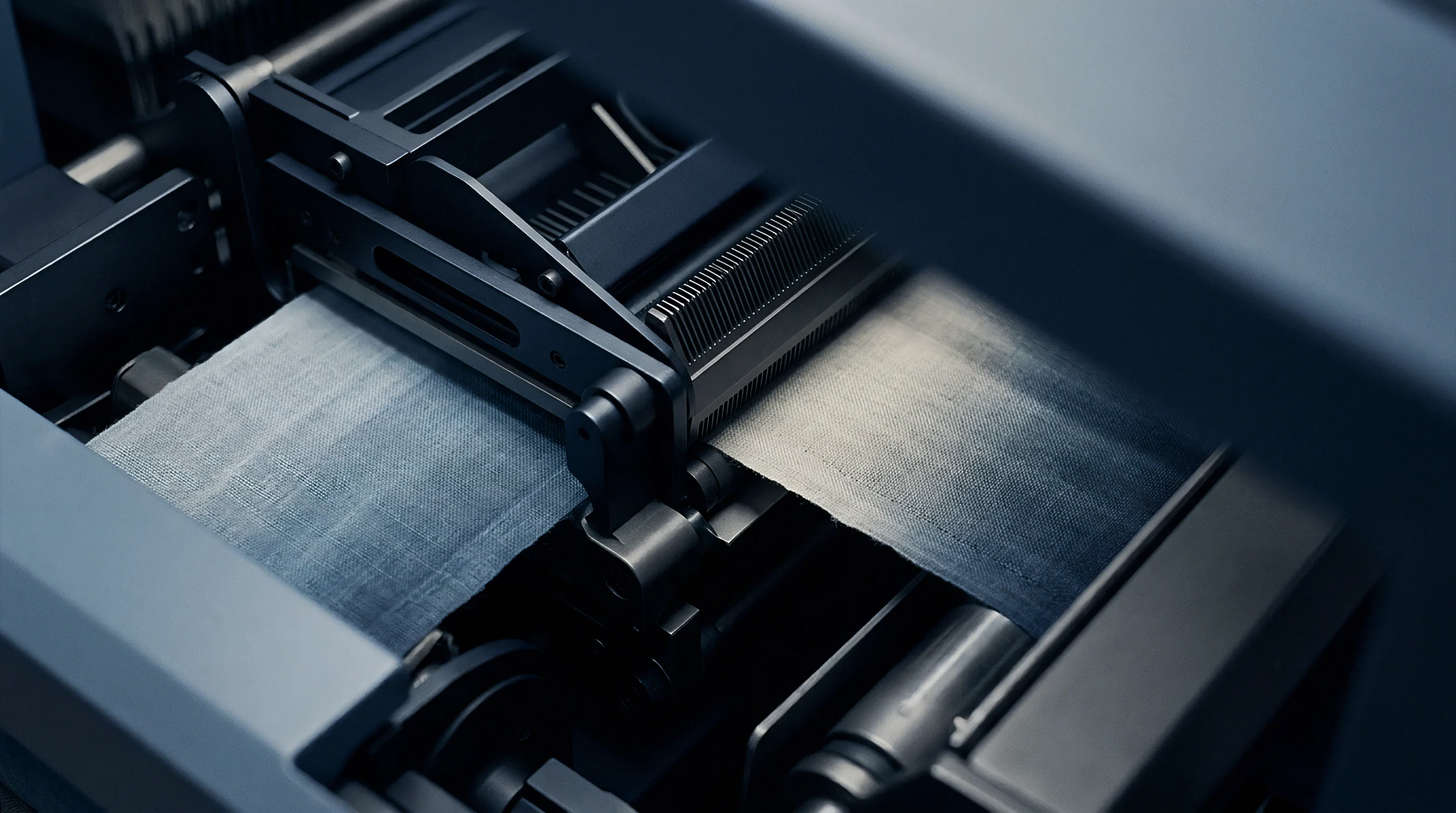
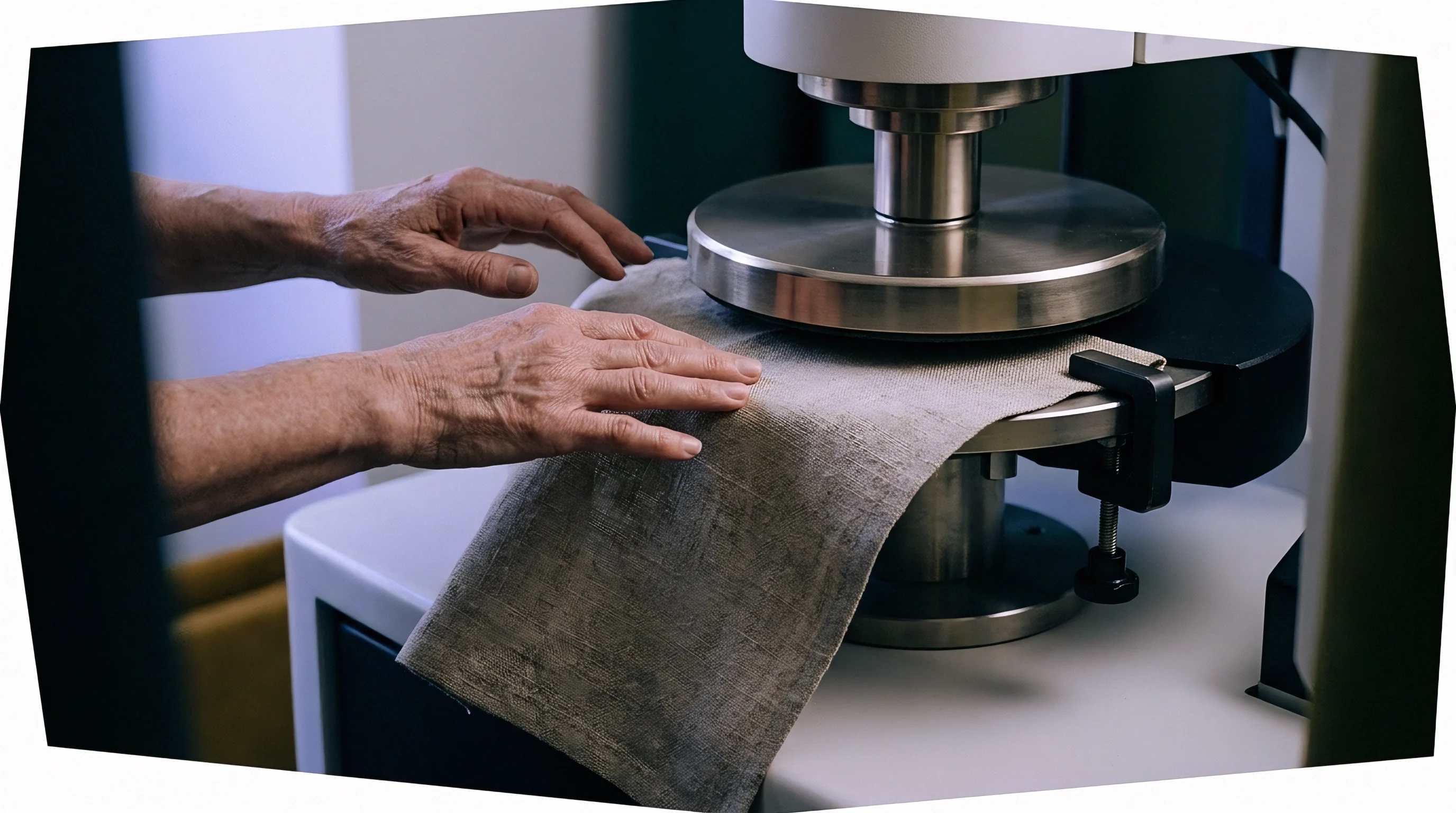
Bundle
A hackled flax strick pulled from a fresh bale shows fifty to ninety centimetres of aligned bast ribbons. In the mill laboratory, the technician opens the strick, separates root ends from top ends, and isolates the central zone for gravimetric assessment. Line flax arrives at the spinning shed as scutched, hackled long fibre rather than disoriented tow.
Commercial grading turns on the thickness of the technical bundles surviving dressing: coarse bundles produce heavy yarn and break frequently on the spinning frame, whereas finer bundles draft cleanly through the wet-spinning trough to yield lustrous, high-tenacity yarns.
The standard bundle cut gravimetric method determines mean linear density by cutting a parallelised group of fibres to a defined length and weighing their conditioned mass on an analytical balance. Bast fibres are composite structures rather than uniform single filaments. Pectin, hemicellulose, and lignin cement elementary ultimates into long technical bundles down the stem of the plant.
An individual elementary ultimate measures ten to thirty millimetres in length and twelve to twenty-five micrometres across, representing a single-fibre linear density of 0.15 to 0.35 tex. Commercial line flax consists of composite bundles containing ten to forty such ultimates bound together by middle lamellae.
A technical line flax bundle measuring 2.4 tex yields forty-two elementary fibres per cross-section when wet-spun to metric count sixty under standard drafting roll pressures.

Anatomy of Line Bast Strands
Flax fibres originate in the phloem of Linum usitatissimum, where individual cell ultimates aggregate into elongated technical strands. Retting breaks down the pectinaceous glues binding these bast bundles to the surrounding woody shive and epidermis. Over-retted straw releases weakened, degraded fibres that shatter during hackling.
Under-retted straw retains stiff pectin deposits that resist bundle division, leaving coarse strands that drive up linear density readings during gravimetric cut tests. Subsequent hackling draws these strands across progressively finer pin beds, dividing broad ribbons into narrower filaments while combing out tangled tow.
The resulting line strick presents a distribution of bundle cross-sections rather than a monofilament population. When a laboratory measures linear density through bundle cut gravimetry, the reading expresses the average mass per unit length of these composite bundles. The measurement reflects the industrial bundle unit entering the drawing frames rather than single cell dimensions.
In European line flax from Normandy or Courtrai, standard hackled line shows mean technical bundle linear densities between 1.8 and 3.2 tex. Dew-retted Heilongjiang flax frequently tests between 3.0 and 4.5 tex because harsh winter field conditions leave inconsistent pectin residues across the middle lamellae.
| Flax Grade and Origin | Retting Method | Mean Bundle Linear Density (tex) | Mean Ultimate Count per Bundle | Optimal Wet-Spun Count Target (Nm) | Hackling Line Yield (%) |
|---|---|---|---|---|---|
| Courtrai Hackled Line Grade 1 | Controlled Water Retting | 1.95 | 10 to 14 | 60 to 80 | 62.5 |
| Normandy Long Line Grade 2 | Controlled Dew Retting | 2.40 | 14 to 18 | 40 to 60 | 58.0 |
| Baltic Dew-Retted Line Grade 3 | Field Dew Retting | 3.10 | 18 to 25 | 26 to 36 | 52.5 |
| Heilongjiang Scutched Line | Snow and Field Dew Retting | 3.85 | 24 to 32 | 18 to 24 | 46.0 |
| Gravimetric determinations conducted per ISO 2370 on 10 mm central cut bundles conditioned at 20°C and 65% relative humidity. | |||||

Drafting Behaviour in Wet Spinning Frames
Fine counts impose strict limits on the cross-sectional mass of the feed roving. During wet spinning, the roving passes through a hot water bath held between sixty and seventy degrees Celsius. The bath softens inter-fibre pectins so elementary fibres can slide over each other under the drafting rollers.
If the initial bundle linear density is too high, hot water cannot penetrate the dense core during its few seconds in the trough, and the strand drafts as a rigid lump instead of attenuating into ribbons.
End breakage spikes when coarse bundles tear through the drafting zone, forcing spinners to piece up broken ends and leaving slubs in the finished yarn. Conversely, properly conditioned line flax with a mean bundle linear density of 2.2 tex splits evenly into fine slivers that form round, smooth yarns with low coefficient of variation. Spinners set incoming raw material limits that link bundle tex directly to the target yarn count.
When an offer sheet specifies Grade 1 European line flax for spinning metric count sixty linen yarn, bundle cut testing verifies the claim before the lot reaches the opening room.
Field retting variations explain part of the bundle thickness, but subsequent gill drawing pins rarely divide coarse technical fibres sufficiently to avert yarn count penalties.


Clamp
Parallelising raw bast ribbons requires uniform restraint across the full measuring span. Testing begins by drawing a representative sliver from sampled line stricks. Bast fibres lack natural crimp, yet dry hackled bundles interlock through friction and residual gum.
Pulling a bundle by hand without mechanical preparation leaves crooked or slack fibres through the cross-section; the subsequent cut then shears fibres at irregular angles, skewing the mass values that establish consignment fineness.
Specimen preparation relies on specialised combs and mechanical clamps. The technician mounts a combed tuft into an alignment clamp fitted with polished parallel jaws, holding each filament under controlled tension before the cutting edges engage. Loose clamping lets shorter technical fibres retract from the cutting plane, whereas overtightening crushes the walls of the ultimates, splitting bundles early and scattering debris across the balance pan.

Specimen Alignment and Comb Preparation
Technicians take twenty to thirty pinches across ten sample stricks, combine and square them, and comb the mass through dual-stage steel pin beds. The coarse comb removes loose tow, dust, and shive particles, while the fine comb aligns the longitudinal axes of the technical bundles into a flat ribbon. The sample is combed gently and reversed to dress both ends until the fibres lie strictly parallel.
The prepared bundle transfers to the mounting table, where the central portion of the strand enters the clamping frame. The procedure follows an established sequence to preserve fibre integrity while taking out slack:
- Comb dressing removes tangled tow fibres and residual shive particles through successive passes across the steel pin field to prevent specimen distortion.
- Pinch squaring aligns the terminal ends of the technical bundle into an even flat ribbon across a five-centimetre working zone.
- Jaw insertion positions the parallel ribbon across the polished tungsten steel anvil faces of the specimen clamp without twisting the fibres.
- Torque application secures the clamping screws to a calibrated clamping pressure of forty-five centinewtons per square centimetre, locking every filament against longitudinal movement.

Tension Uniformity across the Measuring Span
Unequal elongation among parallel bast elements leaves slack ribbons sitting alongside taut filaments. As the cutting head descends, slack fibres deflect before the blade penetrates the cuticle, producing an angled shear path longer than the nominal cut length. Stretched fibres recoil into the gauge zone once severed, reducing their mass in the excised section.
The clamp design therefore includes pre-tensioning weights: a load of fifty centinewtons per kilotex pulls out natural flax waviness without exceeding the elastic limit of the bundles.
Clamping mechanisms machined from brass or hardened steel provide flat contact surfaces across a minimum jaw width of thirty millimetres. The technician checks that no fibre clusters bulge along the clamp margins; the specimen must form a flat, unbroken tape of uniform optical density. Any visible gaps indicate uneven distribution, requiring the preparation to be discarded and a fresh specimen drawn from the composite sample.
Loose bundles invite slippage, whereas excessive tension breaks the finest bast elements before the cutter descends.


Blade
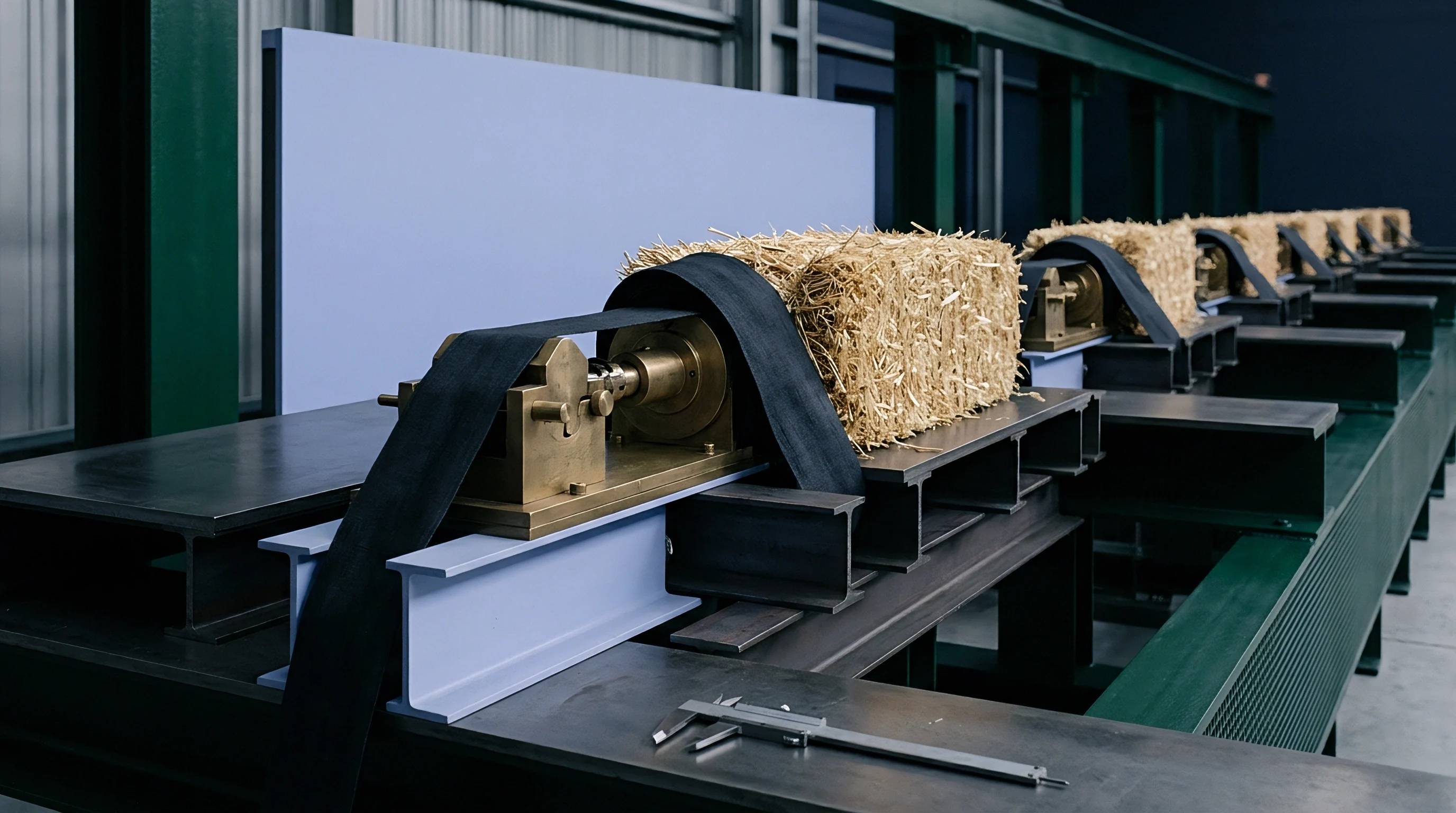
Dual parallel cutting edges fix the precise segment length of the restrained specimen. In ISO 2370 cut gravimetry, the cutter operates as a precision guillotine: two razor blades, spaced by an engineered distance piece, drop simultaneously onto the clamped bundle. The gap between these edges defines cut length L, typically set at ten or twenty millimetres.
Because linear density is calculated as mass divided by length, blade spacing errors or edge deflection transfer directly into the calculated tex value.
Flax fibres withstand tensile stresses up to eight hundred megapascals. If the blades lack sufficient hardness or edge keenness, they crush and macerate the bundles rather than shearing cleanly through them. This compressive tearing drags fibres out from under the clamp jaws, leaving feathered ends and inconsistent cut lengths that undermine reproducibility across replicate runs.
Compliance with ISO 2370 clause seven invalidates any gravimetric cut bundle test where knife edge displacement exceeds twenty micrometres.
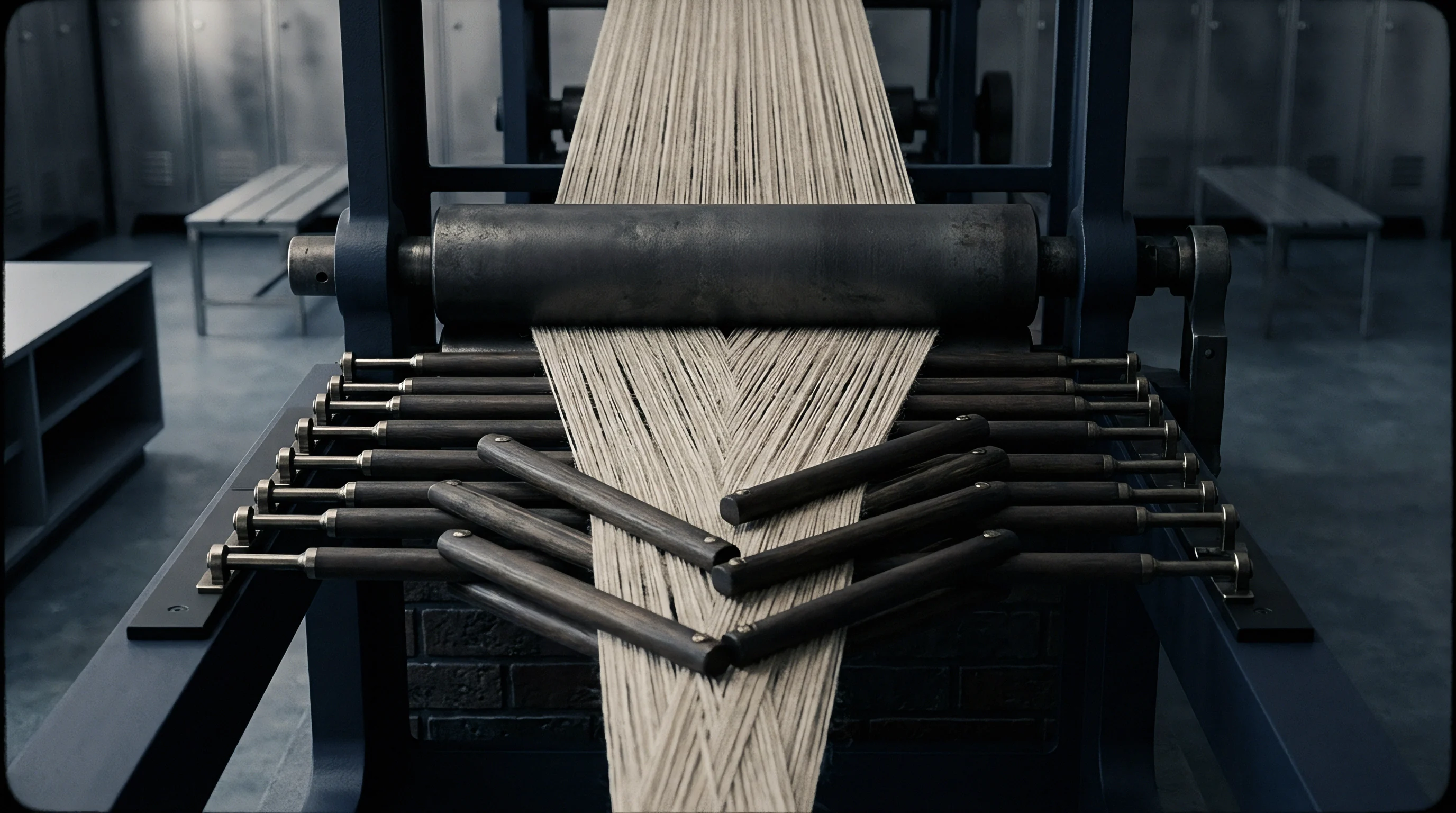
Guillotine Geometry and Sectioning Precision
Surgical steel blades in rigid brass housings maintain an exact ten-millimetre separation. The laboratory verifies this dimension under a toolmaker microscope at fifty-times magnification. The standard bundle cut length of 10.0 mm in ISO 2370 guillotine preparation rests on dual-blade razor spacing verified under a travelling microscope calibrated to plus or minus 0.02 mm; it would be invalid if fibre crimp or incomplete tensioning allows longitudinal slippage during the shear stroke.
Testing wears carbon steel edges quickly, dulling blades after roughly forty cuts because of the silica and mineral particles embedded in the fibre cuticle.
The shear stroke descends cleanly against a hardened nylon or lead anvil. The guillotine assembly prevents blade tilt, ensuring both edges penetrate the upper and lower surfaces of the ribbon at the same instant. Blade deterioration shows up as distinct defect modes across cut specimens:
- Edge chipping leaves unsevered filaments that rip out from adjacent bundle sections as the cutter withdraws, altering the total fragment mass.
- Blade deflection widens the center distance between opposing edges under heavy fibre loads, artificially increasing the cut length beyond nominal gauge.
- Bevel friction drags peripheral elementary fibres downward into the cutting block slot, losing material prior to balance transfer.
- Anvil pitting produces uneven counter-pressure across the ribbon width, leaving uncut bundles along the specimen edges.

Is Dual Blade Sectioning Distorting Fibre Geometry?
Microscopic examination of severed ends reveals compressive compaction along the shear plane. Under the blade edge, the elliptical cross-sections of the bundles flatten against the anvil. Middle lamellae undergo high local shear, sometimes cleaving along boundaries between adjacent elementary cells and leaving cut segment tips with a brush-like fringe.
Provided the fragments remain attached to the central ten-millimetre body, this geometric distortion does not affect the balance reading.
Material loss presents the true testing risk. When blunt blades crush dry bast fibres, brittle cell wall fragments shear off as micro-dust. These lost fragments escape collection on the weighing boat.
The technician sweeps the excised bundle section cleanly from the cutting stage using a sable hair brush, inspecting the blade faces under a magnifying lens to ensure no cut segments adhere to the oiled steel surfaces. Every severed fragment within the ten-millimetre cutting zone transfers into the weighing receptacle.
Ragged cuts and uncounted bevelled ends inflate measured linear density, prompting unnecessary rejection of spinning lots or improper resetting of mill draft gearing that ruins yarn regularity.


Regain
Bast fibres exchange atmospheric moisture rapidly through hydroxyl groups on their cellulose chains. Raw flax contains approximately seventy-five percent crystalline cellulose, alongside fifteen percent hemicelluloses, pectins, and residual waxes. These non-cellulosic constituents are hygroscopic: a cut bundle exposed to seventy percent relative humidity gains three percent mass compared to the same bundle tested at fifty-five percent.
Because gravimetric testing measures fractions of a milligram, unconditioned mass readings distort linear density calculations.
A microbalance reading to zero point zero zero one milligram registers ambient water alongside dry plant polymer. Standard procedures require thorough conditioning in climate-controlled chambers. Alternatively, laboratories determine the oven-dry mass of the excised bundles and apply the standard commercial moisture regain allowance defined in trade specifications.

Conditioning Chambers and Standard Atmospheres
Laboratories maintain test rooms at twenty degrees Celsius and sixty-five percent relative humidity per ISO 139. Specimens condition on perforated trays for twenty-four hours before testing. This exposure allows the moisture content of the hackled line flax to achieve hygroscopic equilibrium.
In continuous mill monitoring, technicians place weighing bottles inside the conditioning enclosure alongside the cutting stage. The technician handles all cut bundles using polished stainless steel forceps, preventing finger oils and skin moisture from corrupting the specimen mass.
When rapid commercial clearing prevents twenty-four-hour conditioning, the laboratory cuts the specimens immediately and dries them inside a ventilated conditioning oven at one hundred and five degrees Celsius. The dry mass multiplies by the official commercial regain coefficient to determine the commercial linear density. The standard 12.0 percent commercial moisture regain for flax tow and line fibre in ISO 6741-1 rests on oven-drying trials across European dew-retted crops standardised in 1989 on 50-gram specimen lots; it moves downward to 10.5 percent if residual wax and shive contents exceed 4 percent, since hydrophobic cuticular waxes reject bound moisture.
Finer technical bundles generate softer yarn handle because flexible ribbons bend around the drafting cylinder without buckling.
| Observed RH (%) | Bundle Raw Mass (mg) | Observed Regain (%) | Calculated Raw Tex | Oven-Dry Mass (mg) | Commercial Tex (12% Regain) |
|---|---|---|---|---|---|
| 50.0 | 11.85 | 8.8 | 2.37 | 10.89 | 2.44 |
| 58.0 | 12.08 | 10.4 | 2.42 | 10.94 | 2.45 |
| 65.0 (Standard) | 12.28 | 12.0 | 2.46 | 10.96 | 2.45 |
| 72.0 | 12.52 | 13.9 | 2.50 | 10.99 | 2.46 |
| 80.0 | 12.86 | 16.8 | 2.57 | 11.01 | 2.47 |

Oven Dry Methods versus Commercial Allowances
Desiccating flax specimens at one hundred and five degrees Celsius removes all capillary and hygroscopic water. The test bundle reaches constant mass when successive weighings at twenty-minute intervals differ by less than 0.05 percent. In aerospace composite reinforcement and high-performance bast yarn spinning, gravimetric drying parallels methods utilized in carbon fibre tow testing, where structural epoxy resin matrices demand zero residual moisture across prepreg interfaces.
Once dry, the flax bundle transfers into a sealed weighing bottle within the desiccator cabinet, cooling for twenty minutes before placement on the balance pan.
The mathematical conversion follows standard gravimetric mechanics. Commercial linear density in tex equals dry mass in milligrams divided by the cut length in metres, multiplied by one point one two. If an operator bypasses oven drying and records raw weight in a wet mill laboratory operating at seventy-five percent relative humidity, the measured bundle linear density increases by over four percent.
A lot testing at an acceptable 2.45 commercial tex reads as 2.55 raw tex, incorrectly pushing the consignment outside the contract tolerance band for fine wet spinning.
A purchase contract invoking ISO 6741-1 commercial mass calculations converts all raw scale measurements to an oven-dry baseline plus twelve percent allowance, stripping seller invoice claims based on ambient warehouse humidity.
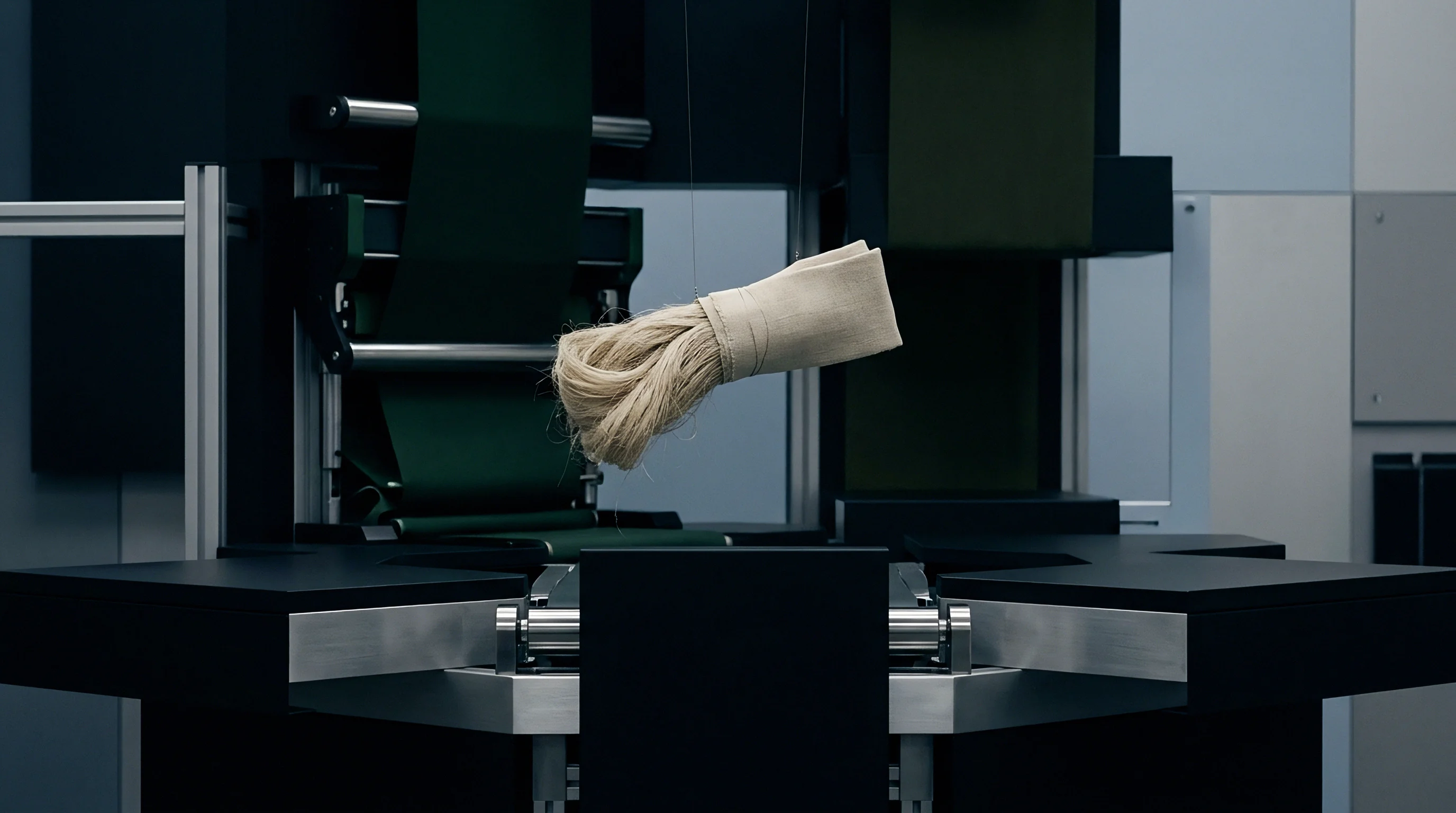

Tolerance
Lot qualification rests on establishing statistical bounds around gravimetric readings. Bast fibre populations display substantial natural variance across agricultural growing regions, retting basins, and bale positions. Even within a single hackled strick, technical bundles drawn from the exterior periphery measure coarser than bundles extracted from the protected interior core.
A single gravimetric bundle cut provides zero commercial confidence. Reliable testing demands a structured sampling plan with defined sample sizes, replicates, and statistical acceptance criteria.
A single laboratory test comprises fifty distinct cut bundles extracted across five representative bales. The laboratory computes the mean bundle linear density, standard deviation, and coefficient of variation. High-grade European hackled line flax exhibits a linear density coefficient of variation between eight and twelve percent.
If the measured coefficient of variation exceeds fifteen percent, the delivery contains mixed crops or irregular hackling, which triggers excessive draft variation and unevenness during yarn manufacture.
Should Laboratories Mandate Preconditioning in Bundle Gravimetry?
Specimens entering test chambers directly from high-humidity transit ocean containers carry moisture hysteresis bias. Cellulose desorbing moisture toward equilibrium at sixty-five percent relative humidity retains higher water content than cellulose absorbing moisture from an arid state. Preconditioning eliminates this divergence.
Technicians place incoming samples into a preconditioning chamber operating at thirty-five degrees Celsius and fifteen percent relative humidity for four hours prior to standard atmospheric conditioning.
Preconditioning brings all fibres onto the absorption isotherm curve. The laboratory technician inspects each cut bundle under a stereo-zoom microscope, picking out unretted cortical bark, cuticle shive flakes, or foreign vegetal matter with micro-tweezers before final weighing. Retaining a two-milligram shive fragment in a twelve-milligram bundle specimen distorts the resulting linear density reading by over sixteen percent.

Acceptance Sampling for Mill Delivery Lots
Quality managers draw twenty distinct laboratory samples per five-tonne delivery. The sampling protocol enforces strict compliance criteria to prevent dispute escalation between mills and merchants:
- Gross consignment sampling draws five full stricks from twenty unopened bales chosen across distinct container positions.
- Sub-sample stratification divides each strick into root, middle, and tip sections, reserving the central thirty-centimetre zone for gravimetric cutting.
- Replicate threshold verification mandates a minimum of fifty valid bundle cuts per delivery lot, with each cut weighing between eight and fifteen milligrams.
- Balance calibration compliance checks the analytical balance across three certified standard weights before and after every ten-specimen weighing cycle.
Disputes frequently center on the exact average splitting ratio of technical bundles into elementary ultimates in the wet-spinning draft zone (often cited as 3.2 ultimates per technical bundle segment). That 3.2 value remains difficult to verify in production because hot water trough temperature, acid pretreatment, and drafting roll hardness introduce erratic interfacial saponification. A buyer handles this uncertainty by setting incoming roving specifications on raw bundle gravimetry rather than relying on spinner splitting models.
The open technical dilemma remains whether optical image analysis of technical bundle cross-sections can ever replace physical cut gravimetry when testing variable, polygon-shaped bast fibre cells.

Valuation
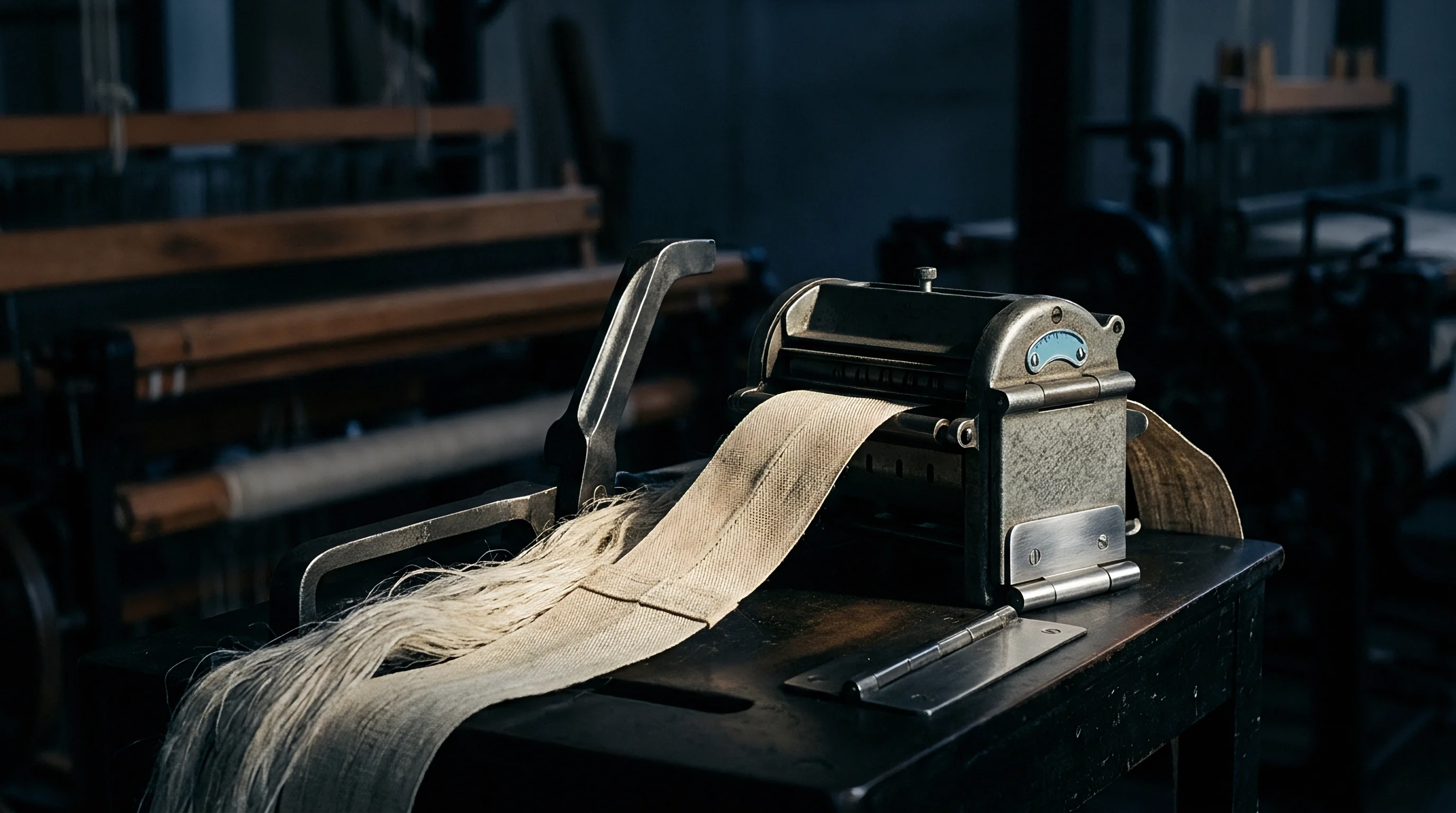
Raw fibre linear density directly governs the economic output of the spinning shed. A spinning mill buys hackled line flax by metric ton, but sells finished yarn by length and count. When technical bundles test coarser than specification, the mill must insert additional drawing passes to achieve adequate attenuation, increasing labor overhead and machinery depreciation.
Coarse bundles rupture drafting triangles, dropping spinning efficiency from ninety-two percent down to seventy-eight percent on fine counts.
If the mill attempts to split coarse bundles mechanically by running the fibre across aggressive pinned hackling frames, line yield drops significantly. Long line fibre degrades into combing tow worth less than forty percent of the hackled strick purchase price. The financial loss manifests immediately on the plant ledger.
Spinners buying coarse hackled flax pay twice through elevated comb waste and reduced delivery speed.

Count Potential and Hackling Waste Tradeoffs
Spinning fine yarns of metric count sixty requires clean feedstocks testing below two point four tex. Metric count expresses the kilometres of yarn spun from one kilogram of fibre. To spin Nm 60 yarn (16.7 tex) with acceptable commercial strength, the yarn cross-section requires a minimum of thirty-five to forty elementary fibres.
If incoming line flax bundles test at 3.6 tex rather than 2.3 tex, the drafting system cannot separate the unsaponified pectins evenly. The frame tender must re-gear the draft train, spinning a coarse metric count thirty-two yarn (31.2 tex) instead.
The financial impact transfers directly into finished goods pricing. Coarse yarn produces heavier cloth with less yardage per kilogram of yarn consumed. High-count linen fabric commands thirty to fifty percent price premiums over coarse linen canvas per finished linear metre.
The loss of count potential reduces mill margins across every stage of manufacture.
| Incoming Bundle Linear Density | Max Practical Yarn Count | Wet-Spinning Efficiency (%) | Comb Waste Tow Loss (%) | Spun Yarn Output (m/kg) | Finished Cloth Cost per Metre ($) |
|---|---|---|---|---|---|
| 2.10 tex (Grade A) | Nm 60 (16.7 tex) | 93.5 | 6.5 | 56,100 | 4.25 |
| 2.45 tex (Grade B) | Nm 44 (22.7 tex) | 90.0 | 9.2 | 39,600 | 5.15 |
| 3.05 tex (Grade C) | Nm 32 (31.2 tex) | 84.2 | 14.8 | 27,200 | 6.40 |
| 3.80 tex (Grade D) | Nm 20 (50.0 tex) | 76.0 | 22.5 | 15,200 | 8.85 |

Commercial Contract Specifications and Price Adjustments
Sourcing agreements specify target bundle linear density with defined financial discount schedules for off-grade shipments. If a buyer contracts for forty tonnes of hackled European line flax at eight euros per kilogram with a guaranteed bundle fineness of 2.30 tex, incoming cut gravimetry determines commercial acceptance. If testing reveals a mean bundle linear density of 2.75 tex, the lot violates the contractual count guarantee.
The buyer enforces a three percent price deduction per 0.1 tex excess, or rejects the consignment outright if fineness exceeds 2.90 tex. The laboratory gravimetric test report serves as the sole legal basis for invoice settlement. The spinning mill absorbs the difference at the winder by deducting yarn tare and settling the contract against net conditioned weight.