Weaving Interruption
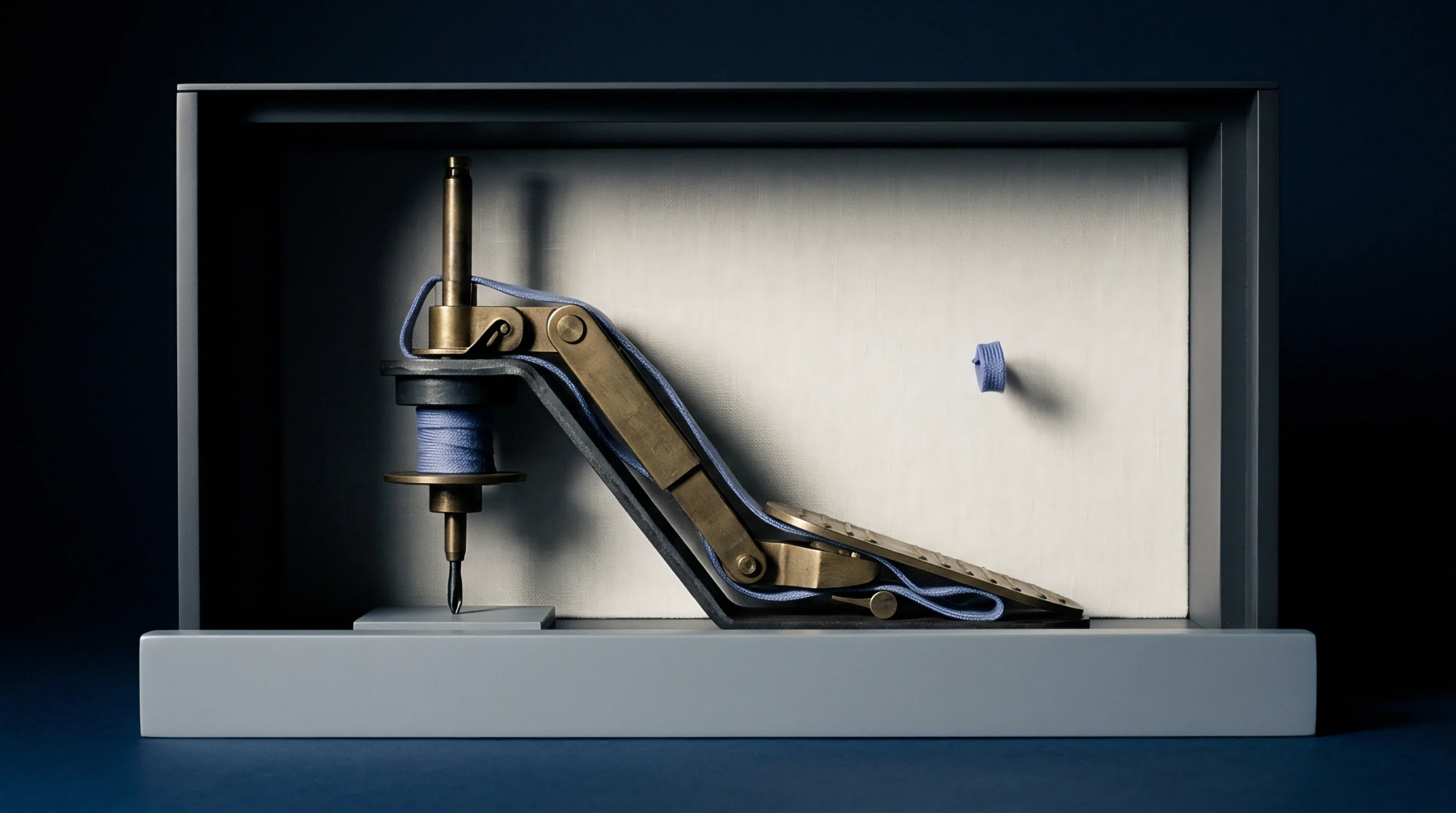
Mechanical failures resulting in the tension-induced rupture of longitudinal yarns on an operating weaving loom interrupt fabric production. Recorded as warp breaks, these occurrences stop loom motions through electrical drop wire circuits or visual sensor mechanisms. Bast fiber yarns, particularly pure flax yarns, display low natural elasticity and high sensitivity to abrasion, making them susceptible to sudden snapping under cyclic shed-opening stresses.
The phenomenon marks an operational failure in the weaving process, originating from defects introduced during spinning, sizing, warping or shed adjustment. It concerns longitudinal warp yarns under active weaving tension, leaving weft insertions and finished fabric defects to separate classification systems.
Failure Mechanisms
Loom shedding harnesses lift and lower tightly tensioned warp ends while the reed beats each newly inserted weft pick against the fabric fell. This continuous friction abrades yarn surfaces, stripping protective size coats and lifting loose flax fibers into tangled clusters. Untwisted sections, weak thin places, slubs or poorly spliced knots within the yarn fail to withstand the cyclic stress, causing yarn parting.
Drop wires suspended on each individual warp thread fall onto an electrical contact rail immediately upon yarn rupture, triggering automatic loom shutoff. The weaver locates the broken yarn ends, mends the break using mechanical weaver knots or adhesive bonding, threads the end through the correct heddle eye and drop wire, and restarts the machine. High rupture frequencies reduce weaving efficiency, elevate labor overhead and produce starting marks on high-density linen fabrics.
Chinese linen weaving sheds monitor break numbers per hundred thousand picks using computerized central production tracking networks.
Control Standards
Weaving performance metrics define acceptable rupture limits per loom running hour based on fabric density, yarn count and loom operational speed. Sizing formulations, which apply modified starches and lubricating waxes to the yarn, serve to suppress rupture rates by gluing down protruding fibers and increasing strand abrasion resistance. Quality assurance logs compare yarn strength test results, such as skein break and elongation values, against recorded loom break frequencies to pinpoint defective yarn deliveries.
If warp breaks exceed contractual tolerances during export fabric manufacture, the weaving mill re-evaluates tension settings on the warp let-off motions and alters shed timing. Fabric inspection frames record mended warp breaks as structural point deductions on commercial grading sheets. Weaving efficiency audits evaluate warp failure distributions across the loom width to identify mechanical issues such as damaged reed dents or burred drop wires.