Insertion Mechanism
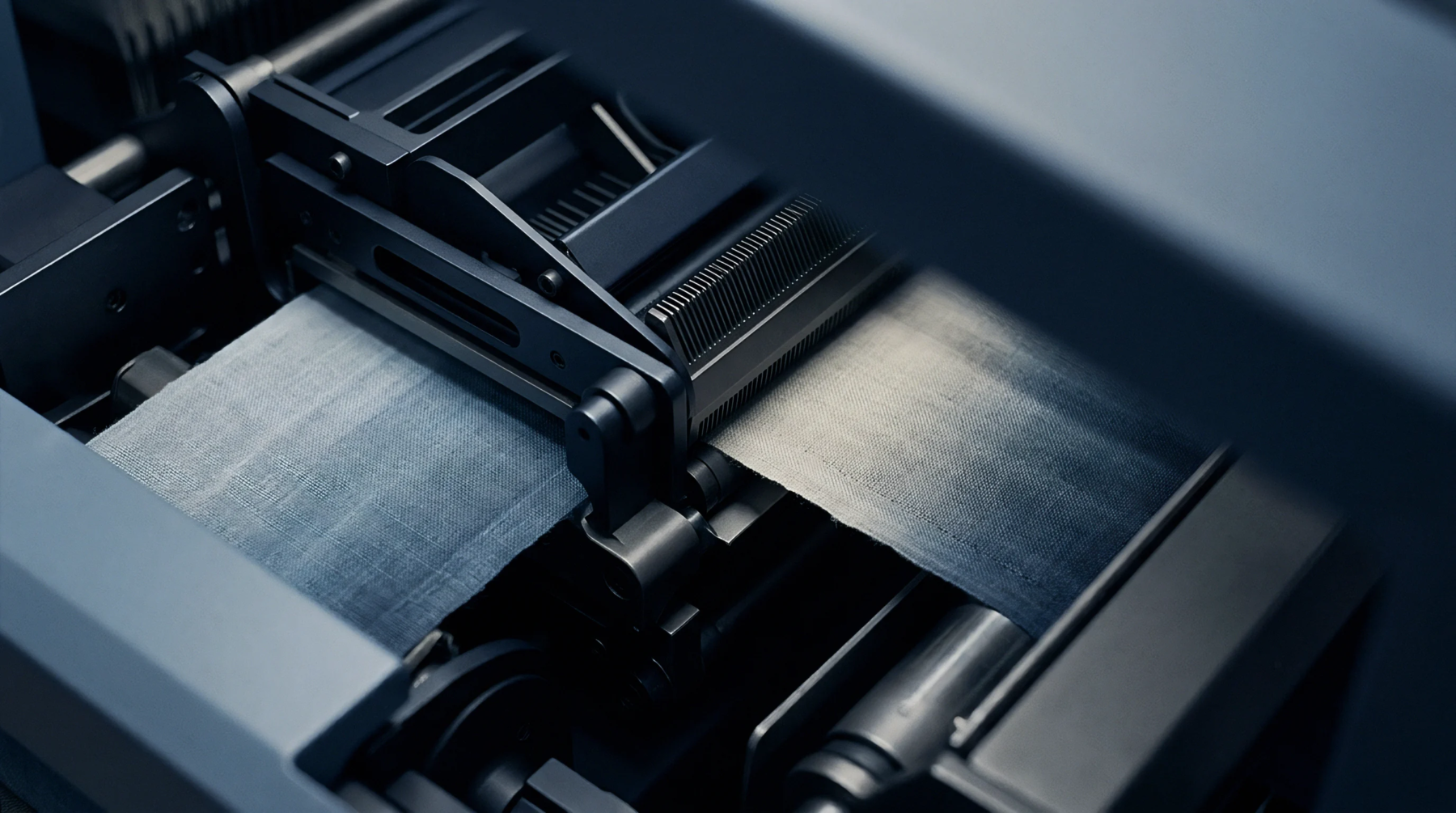
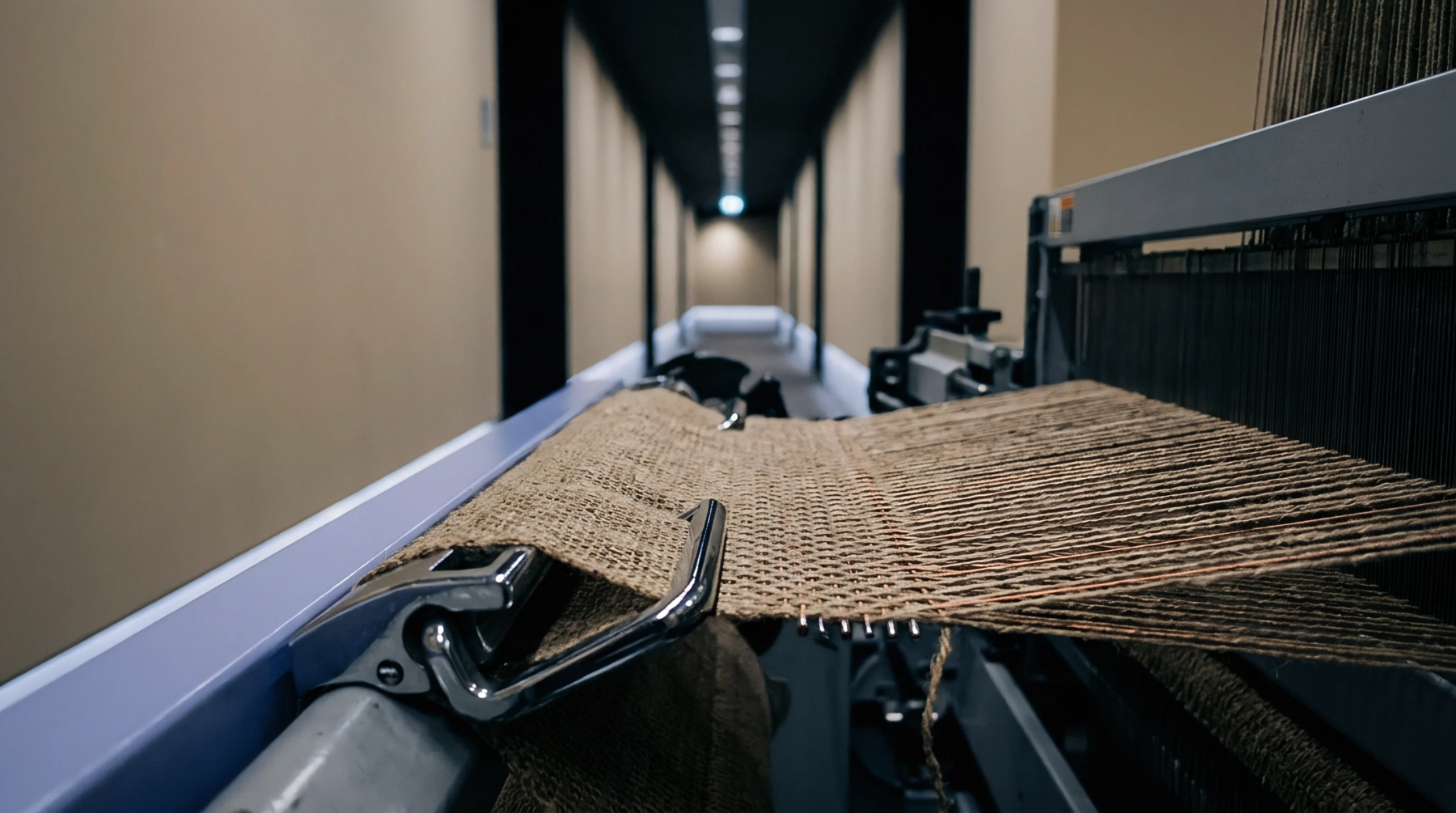
High-speed loom technology utilizes compressed air nozzles to propel filling yarn across a fabric shed during industrial weaving operations. In linen production, air jet weaving demands precise yarn quality because flax fibres possess lower elasticity than cotton or synthetic filaments. Main nozzles supply the initial impulse while relay nozzles along the profile reed sustain the fluid stream across wider loom widths.
This mechanism governs weft insertion rate and limits maximum fabric weight, stopping at the threshold where heavy spun flax yarns cause excessive drag or nozzle clogging.
Yarn Strain
Flax spun yarns present distinct challenges under high-velocity fluid propulsion. Irregularities in yarn diameter create fluctuating drag forces inside the air channel, which leads to unstable flight paths and bent weft tips. Tension spikes occur as the main nozzle releases compressed air, pulling the yarn off its supply package at speeds exceeding one thousand metres per minute.
If the flax yarn lacks sufficient tensile strength or contains uncontrolled slubs, the air stream snaps individual fibres, generating localized stop motions and loom idle time. Mill operators adjust air pressure settings and nozzle timing to balance energy consumption with yarn integrity. Excess pressure abrades the yarn surface, while insufficient pressure causes short picks that fail to reach the receiving side.
Insertion Threshold
Industrial weaving sheds establish clear boundaries for pneumatic insertion based on yarn count and density. High-density linen fabrics requiring coarse yarn exceed the operational envelope of compressed air propulsion. Rapier looms take over when weft yarns exceed specific weight thresholds or when slub textures disrupt fluid dynamics.