Reconciling Mass Balance Variances in Industrial Alkaline Scouring of Hackled Flax Roving
Standardizing dry mass calculations and auditing liquor COD reconciles industrial scouring loss variances between raw hackled flax and finished packages.


Loss
Ten thousand kilograms of raw hackled flax roving may enter the mill kettle on a weighbridge ticket, yet only eight thousand eight hundred kilograms of dried package roving emerge from the hot air drying chamber. Alkaline scouring strips non-cellulosic matter from bast fibre bundles while liquor circulation agitates the stock mechanically. The resulting mass deficit combines predictable chemical extraction with unmeasured mechanical fibre wash-out.
Quantifying that gap requires separating bath chemistry from physical shedding.

Pectin Hydrolysis and Wax Removal Pathways
Sodium hydroxide breaks down the inter-cellular pectic substances binding technical fibres together. Raw hackled roving carries roughly five to seven percent pectin by dry weight, along with one to two percent natural waxes and fats. In the scour, caustic bath temperatures of eighty-five to ninety-five degrees Celsius hydrolyze middle lamella pectins into soluble sodium pectates.
At the same time, the alkali saponifies fatty acids, converting water-insoluble lipids into soluble soaps that rinse out during the wash cycle. Hemicellulose fractions also dissolve in the alkaline bath, shedding another three to five percent in mass. Under typical industrial recipes, these reactions lower roving mass by nine to thirteen percent.
Extracted pectin substances account for the largest proportion of mass weight lost during continuous caustic bath treatment.
Initial non-cellulosic content depends heavily on retting history. Dew-retted flax roving retains higher residual pectin levels than under-retted or water-retted stock. When a mill runs under-retted roving, the scouring liquor extracts less material, leaving a stiff, harsh roving with poor drafting uniformity.
Over-retted material lacks structural cohesion and sheds excessive micro-fibres into the bath. Unchecked chemical extraction can also disrupt package density, opening channels for scouring liquor that leave uneven patches throughout the roving bobbin.
Physical Fibre Drift and Mechanical Shedding
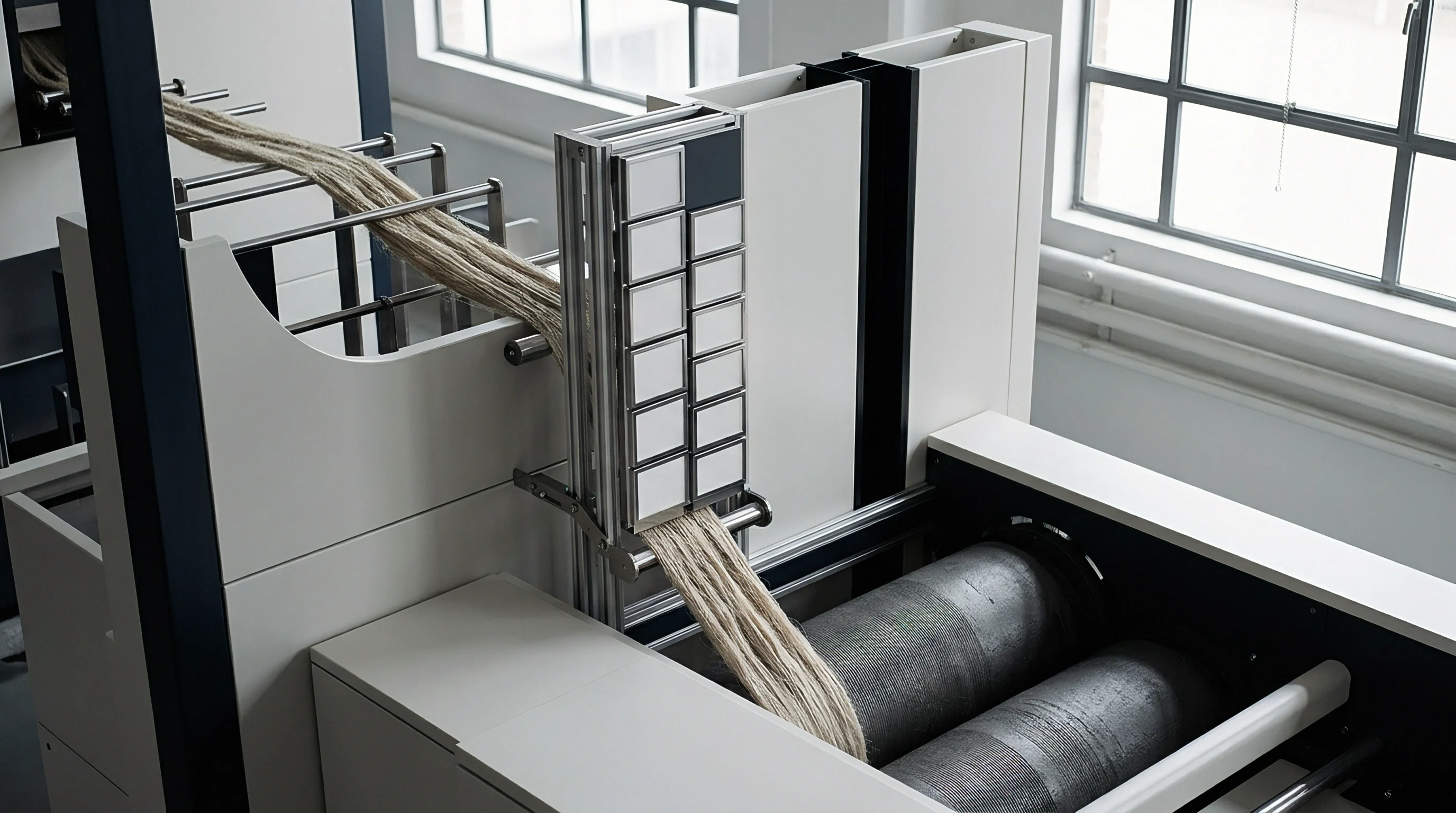
Liquor circulation pumps drive liquid through roving packages under pressure, stripping loose, short fibre fragments from the surface of hackled strands. While stainless steel package spindles secure the bobbins, fluid shear still tears loose short fibres into the bath, carrying them toward circulation pumps and internal filtration screens. Friction between adjacent roving layers inside package dyeing machines frees additional solid material.
Lint filters catch coarse fragments, but fine micro-lint passes straight into effluent drainage lines.
- Dissolved Pectic Fractions pass into wastewater streams as water-soluble sodium salts during primary bath discharge.
- Saponified Lipids emulsify in warm rinse cycles, carrying natural waxes out of the package core.
- Hemicellulose Degradation Products dissolve under hot caustic exposure, reducing overall bundle mass.
- Dislodged Surface Short Fibres wash into pump suction grates, accumulating on secondary lint traps.
- Fine Micro-Lint Suspensions remain suspended in rinse water, bypassing filtration grids entirely.
Unaccounted mechanical shedding skews batch yield records. When mill technicians attribute every lost kilogram to chemical cleaning, filtration losses go unnoticed. Higher pump pressure accelerates fibre wash-out without improving chemical uniformity, and excess fluid velocity frays roving surfaces, lowering yarn tenacity in wet spinning.
Overlooking physical shedding also skews chemical dosing calculations on subsequent production runs.


Alkali
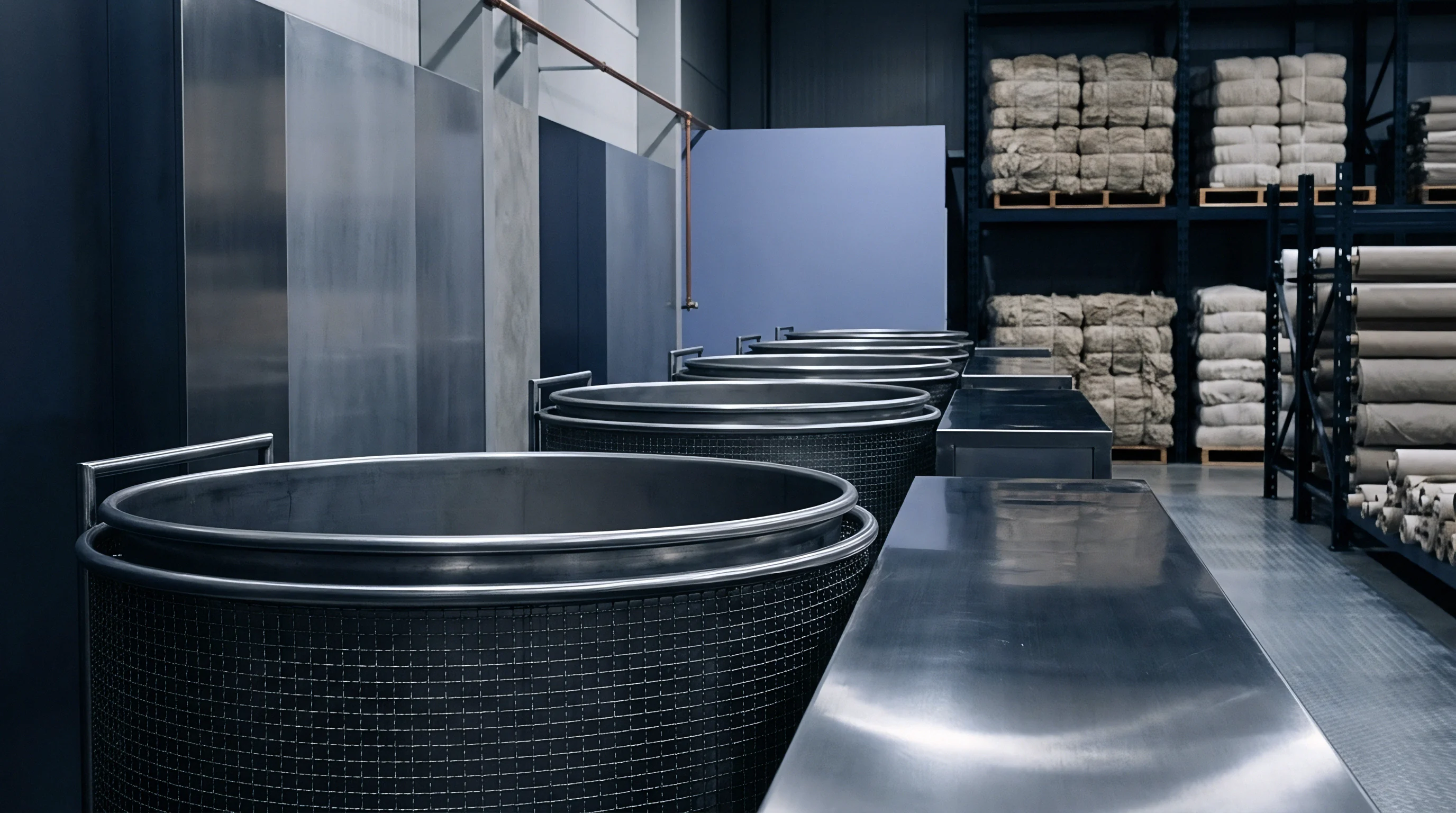
Caustic soda baths dissolve hemicellulose and saponify natural fats across the roving structure, but uniform wax extraction depends on balancing chemical strength against duration. Standard scouring formulations use six to twelve grams per litre of solid sodium hydroxide alongside two grams per litre of wetting agents. Chelating additives sequester calcium and magnesium ions in hard water, preventing insoluble pectates from precipitating back onto fibre surfaces.
Chemical concentration directly sets how fast non-cellulosic matter dissolves from the inner wraps of the hackled roving package.
Caustic Concentration and Temperature Interdependence
Maintaining six to twelve grams per litre of chemical agent allows effective non-cellulosic extraction. Bath temperatures held at ninety degrees Celsius break down structural waxes within forty-five minutes. Exceeding one hundred degrees Celsius accelerates cellulose chain breakdown, stripping alpha-cellulose mass and weakening individual strands.
Conversely, lower temperatures leave natural waxes behind, yielding hydrophobic roving that repels water during wet spinning. Titrating the alkaline bath confirms active chemical strength before liquor pumps start.

Liquor Ratio Effects on Dissolved Solids
The volumetric ratio between bath liquor and textile mass determines how much dissolved organic matter the bath can hold. Industrial package scouring generally runs at liquor ratios between eight-to-one and twelve-to-one. Tighter liquor ratios concentrate dissolved pectins, which thickens the liquor and slows circulation through package interiors.
Excessively high ratios waste energy and water without pulling significantly more wax. Maintaining accurate bath volumes prevents localized chemical exhaustion inside dense roving bobbins.
- Sodium Hydroxide Titer drops continuously during circulation as saponification consumes active hydroxyl ions.
- Surfactant Wetting Capability diminishes when organic loading inside the bath exceeds ten grams per litre.
- Sequestering Agent Saturation leads to calcium pectate precipitation on outer package layers when hard water supply is unsoftened.
- Rinse Bath Exchange Rate determines residual alkali concentration left inside roving package centers prior to drying.
Rinsing flushes out residual alkali and suspended organics from the roving core. Warm rinsing at sixty degrees Celsius stops waxes from re-solidifying on cooling fibre surfaces. An acid sour with acetic acid neutralizes remaining sodium hydroxide, stabilizing fibre pH between five point five and six point five.
Skimping on rinses leaves salts trapped in the package, artificially boosting dry scale weight while embrittling fibres in the dryer. Thorough neutralisation guarantees stable physical properties across stored roving stock.
Unpredictable batch weight drops often originate from variations in raw fibre retting severity across European flax growing regions.


Variance
Gaps between laboratory forecasts and commercial mill yields usually trace back to uncalibrated moisture measurement. Raw hackled flax roving absorbs atmospheric moisture quickly; weighing raw stock at fourteen percent moisture and comparing it against scoured roving dried to eight percent fabricates a six percent mass loss. Accurate reconciliation requires converting all scale and package weights to bone-dry equivalent mass through standard testing.
Without bone-dry standardization, ledger corrections reflect weather shifts rather than real processing loss.

Can Industrial Scouring Loss Be Predicted Accurately?
Testing small roving hanks in static laboratory beakers fails to replicate dynamic liquor flow. Bench assays measure pure chemical solubility at generous liquor-to-goods ratios with negligible mechanical friction, whereas industrial kiers force liquor across dense roving layers under pressure, driving short-fibre migration. Field tests show laboratory assays underestimate actual mill mass loss by one point five to three percent because they miss mechanical shedding.
Bench numbers establish a chemical baseline, but they cannot substitute for full-scale operational calibration.

Moisture Regain Standardization and Bone Dry Mass Calculation
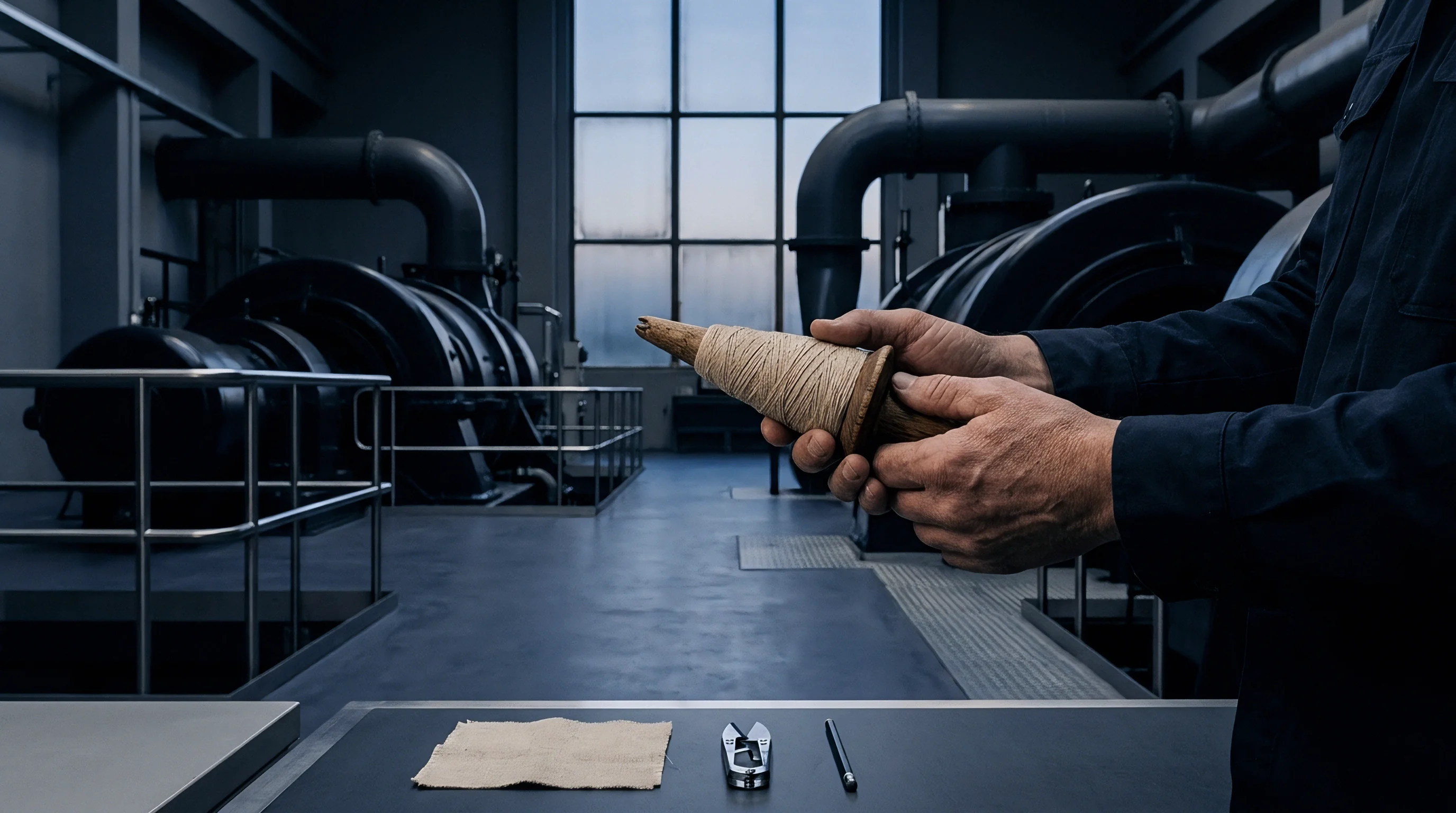
Commercial rules set standard regain for flax yarn and roving at twelve percent. Converting scale readings to official invoice weight requires laboratory moisture verification. Standard drying ovens hold roving samples at one hundred and five degrees Celsius until consecutive weighings show no further loss.
The resulting bone-dry weight serves as the reference baseline for mass balance calculations across every stage.
Standard ISO 2060 oven-dry testing establishes the reference mass necessary to override unverified moisture declarations.
| Processing Stage | Scale Weight (kg) | Measured Regain (%) | Bone-Dry Mass (kg) | Commercial Weight (kg) |
|---|---|---|---|---|
| Raw Hackled Roving Intake | 10,000.0 | 13.5 | 8,810.6 | 9,867.9 |
| Post-Scour Wet Package | 18,500.0 | 118.0 | 8,486.2 | 9,504.5 |
| Dried Package Exit | 8,950.0 | 7.2 | 8,348.9 | 9,350.8 |
| Net Chemical and Physical Loss | 1,050.0 | N/A | 461.7 | 517.1 |
The table illustrates how raw scale readings distort operating reality. Gross scale loss sits at one thousand fifty kilograms, suggesting a ten point five percent processing drop. Bone-dry analysis shows the true loss is four hundred sixty-one point seven kilograms, or five point two percent across chemical and physical mechanisms.
Moisture differences inflate raw scale readings and mask true chemical extraction. Applying regain corrections prevents erroneous financial adjustments between spinning mills and commission processors.
Commercial laboratory re-tests of the same scoured roving lot frequently report conflicting dry-weight baseline figures.

Yield
Reconciling unrefined roving input with outgoing scoured package weight requires an accounting model that tracks every mass transfer route: dry fibre, chemical inputs, dissolved organics, and caught solids. Closing this balance prevents unrecorded fibre loss from eroding spinning margins.

Mass Accounting Model for Roving Processing
Material tracking separates total input mass into four distinct solid and effluent streams. Chemical dissolution removes non-cellulosic components into bath liquor. Mechanical filtration collects dislodged surface lint from circulation screens.
Effluent discharge carries dissolved organics and uncollected micro-fibres to wastewater facilities. Final dried roving package mass completes the physical balance equation. Every kilogram of raw material enters one of these four output categories during processing.
A two percent shift in ambient yarn regain alters billing weight by twenty kilograms on a single one-tonne shipment tested at standard room conditions.
| Loss Component | Mass Percentage Range (%) | Primary Phase | Measurement Instrument |
|---|---|---|---|
| Pectin Extraction | 4.5 – 6.5 | Aqueous Solution | TOC Effluent Analysis |
| Hemicellulose Removal | 2.5 – 4.0 | Aqueous Solution | COD Discrepancy Assay |
| Wax Saponification | 1.0 – 1.8 | Emulsified Liquid | Solvent Extraction Test |
| Physical Lint Shedding | 0.8 – 2.2 | Solid Particles | Dry Filter Basket Weight |
| Mineral Ash Solubilization | 0.3 – 0.7 | Aqueous Solution | Ash Content Gravimetry |
| Testing methodologies conform to ISO 2060 for dry mass determination and ISO 6060 for chemical oxygen demand in water discharge. | |||
Effluent Organic Load and Lint Trap Recovery
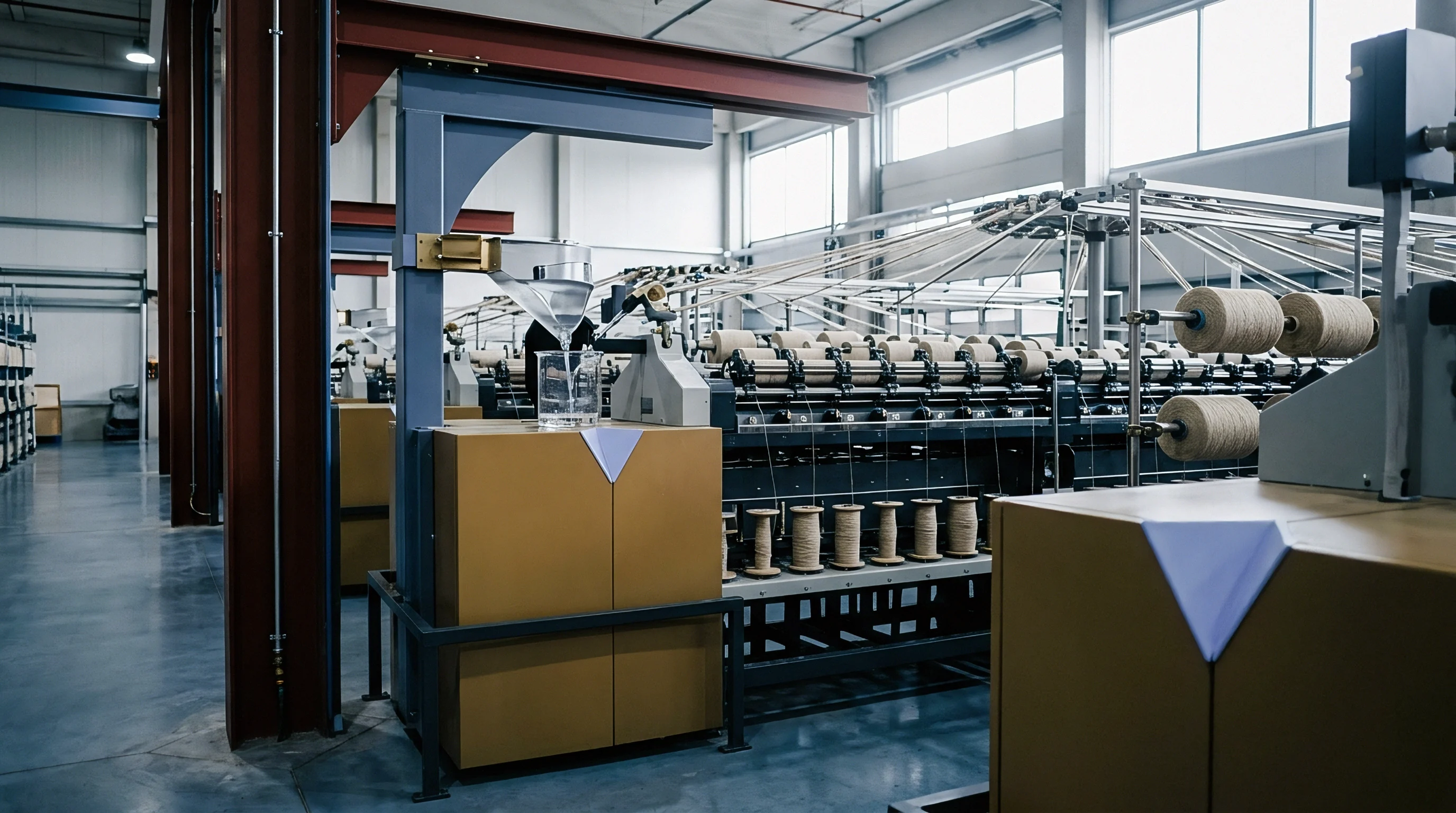
Chemical oxygen demand in bath discharge serves as a direct proxy for dissolved hemicellulose. Dissolved organics raise wastewater chemical oxygen demand by thirty to fifty grams per kilogram of processed fibre, allowing technicians to correlate effluent load with structural weight loss from bast bundles. Recovered filter basket solids provide physical proof of mechanical shedding.
Combined, effluent assays and dry lint mass account for over ninety-eight percent of total processing weight loss.
- Sample incoming raw roving across ten distinct package positions to establish initial lot moisture content.
- Drying representative sample strands at one hundred and five degrees Celsius for three hours establishes accurate bone-dry baseline weight.
- Measuring raw batch weighbridge scale mass provides gross intake figures before kettle loading.
- Recording scouring chemical addition weights identifies total solid reagent input into processing liquor.
- Extracting liquor samples post-scour determines chemical oxygen demand and dissolved solids concentration.
- Drying caught lint filter basket solids yields exact physical shedding mass.
- Weighing output roving packages immediately after drying chamber exit records final gross yield.
- Oven-testing output roving package cores confirms residual moisture content for final regain conversion.
Coarse retted fibre stock yields higher chemical mass losses during boiling than uniform water-retted material.


Settlement
Contractual adjustments for weight lost during alkaline treatment depend on clear tolerance definitions. Raw flax roving contracts specify maximum acceptable non-cellulosic content alongside baseline moisture levels, while commission scouring agreements define target mass loss windows based on retting grade. When weight loss exceeds agreed thresholds, settlement protocols govern cost allocation between spinner and commission processor.
Clear documentation keeps missing fibre inventory from turning into commercial disputes.

Contractual Mass Tolerance Specifications
Purchasing agreements set allowable variation windows for dry fibre output, typically permitting an operational band of plus or minus one point five percent around target mass loss. If weight loss falls short of the minimum, the buyer receives under-scoured roving with poor spinability. Exceeding upper loss limits points to fibre degradation or excessive mechanical shedding.
Claims for excess loss demand complete oven-dry balance sheets supported by wastewater analytical records.
Invoicing Rules under Regain Standard Deviations
Financial adjustments convert gross scale readings into billing weights using certified oven-dry tests, relying on standard commercial regain rather than scale weight at delivery. When delivered moisture drops below the standard twelve percent regain, the seller adds a weight surcharge to restore commercial parity; excess moisture triggers a proportional deduction. Standardized regain calculations prevent weather shifts during transport from skewing invoices.
According to the standard arbitration clause of the International Linen and Hemp Confederation, commercial weight claims require joint sampling within fourteen calendar days of shipment delivery at the destination spinning mill.