Establishing Certified Fiber Conversion Baselines in Fine Linen Spinning
Fine linen conversion baselines require dry-weight mass balance tracking across hackling, boiling, and wet spinning to verify certified fiber origin.


Baseline

Conversion Fundamentals in Fine Linen Yarn Manufacturing
Spinning fine linen demands strict mass accounting as scutched flax passes through hackling, drawing, roving, and wet spinning. Setting a certified conversion baseline means pinning down expected fiber loss at each mechanical handoff. Raw scutched long flax arrives at the mill with uneven moisture, non-cellulosic impurities, and varied staple lengths.
Running this stock into fine yarns ~ specifically between count Nm 40 and count Nm 110 ~ sheds considerable mass as hackling tow, shive dust, and rove-boiling extracts.
Without solid empirical benchmarks at each transformation stage, an auditor cannot tell routine process scrap from unrecorded fiber blending. Sourcing teams reviewing Chinese wet-spinning operations frequently find that declared raw material purchases do not reconcile with invoiced yarn weights. Conversion formulas have to reflect the yield swings natural to European long-staple flax, particularly since high-count wet spinning requires combed line sliver stripped of fibers under thirty millimeters.
| Stage Transition | Expected Fiber Yield Range (%) | Main Co-Product / Waste | Certified Mass Loss Factor |
|---|---|---|---|
| Scutched Long Flax to Hackled Line Sliver | 52.0 – 64.0 | Combing Tow and Shive Dust | 0.42 |
| Hackled Sliver to Combed Drawing Sliver | 82.0 – 88.0 | Short Tow and Noils | 0.15 |
| Combed Sliver to Boiled Rove Bobbin | 88.0 – 93.0 | Pectin Leachate and Fly Fiber | 0.10 |
| Boiled Rove to Fine Wet-Spun Yarn (Nm 40-110) | 84.0 – 91.0 | Spinning End-Breaks and Slubs | 0.12 |
Any unexplained weight discrepancy at the hackling stage distorts both the cost structure and the origin math of the finished yarn. Scutching operations separate long flax bundles from short tow, and subsequent hackling combs those bundles to divide parallel line fibers from tangled tow. The finer the target count, the more combed line fiber is required, which diverts a larger share of secondary tow into coarser industrial yarns.
Hackled line yields drop sharply when unretted straw stiffens the scutched ribbons, forcing hackling pins to break long fibers into tow.

Establishing Yield Benchmarks for European Origin Fibers
European Flax certification requires unbroken physical segregation and clear mass balances once fiber moves into spinning facilities outside Europe. When flax harvested in France, Belgium, or the Netherlands arrives at mills in Jiangsu or Zhejiang, transformation yields govern exactly how much yarn can be certified. Ambient moisture complicates this baseline.
Because raw flax absorbs up to twelve percent moisture under standard conditions of twenty degrees Celsius and sixty-five percent relative humidity, weighbridge tickets recorded without moisture adjustments distort yields by several percentage points.
Auditing requires dry-weight calculations. True fiber mass can only be assessed after deducting commercial moisture regain allowances before calculating conversion efficiency. In wet spinning, warm-water troughs soften pectins between fibers during drafting, leaching water-soluble matter directly into the bath.
This chemical loss runs parallel to physical waste; finer hackling pins strip away cortical fragments, cutting gross input weight to raise sliver fineness.
While coarse yarns tolerate residual pectin and shorter fibers, fine counts demand the removal of heavy bundle fragments. Spinning at Nm 70 or higher requires multiple drawing passes to keep yarn even, each frame casting off short fibers into suction hoods. Mill floor records must track these collection weights daily to preserve an auditable chain of custody under international verification rules.
Straw quality largely dictates the line-to-tow ratio. Well-retted flax loosens pectin bonds while leaving cellulosic cell walls intact, whereas uneven field retting leaves brittle sections that shatter against hackling pins and drag down line yield.


Spindle
Mechanical Transformation Mechanics and Yield Separation
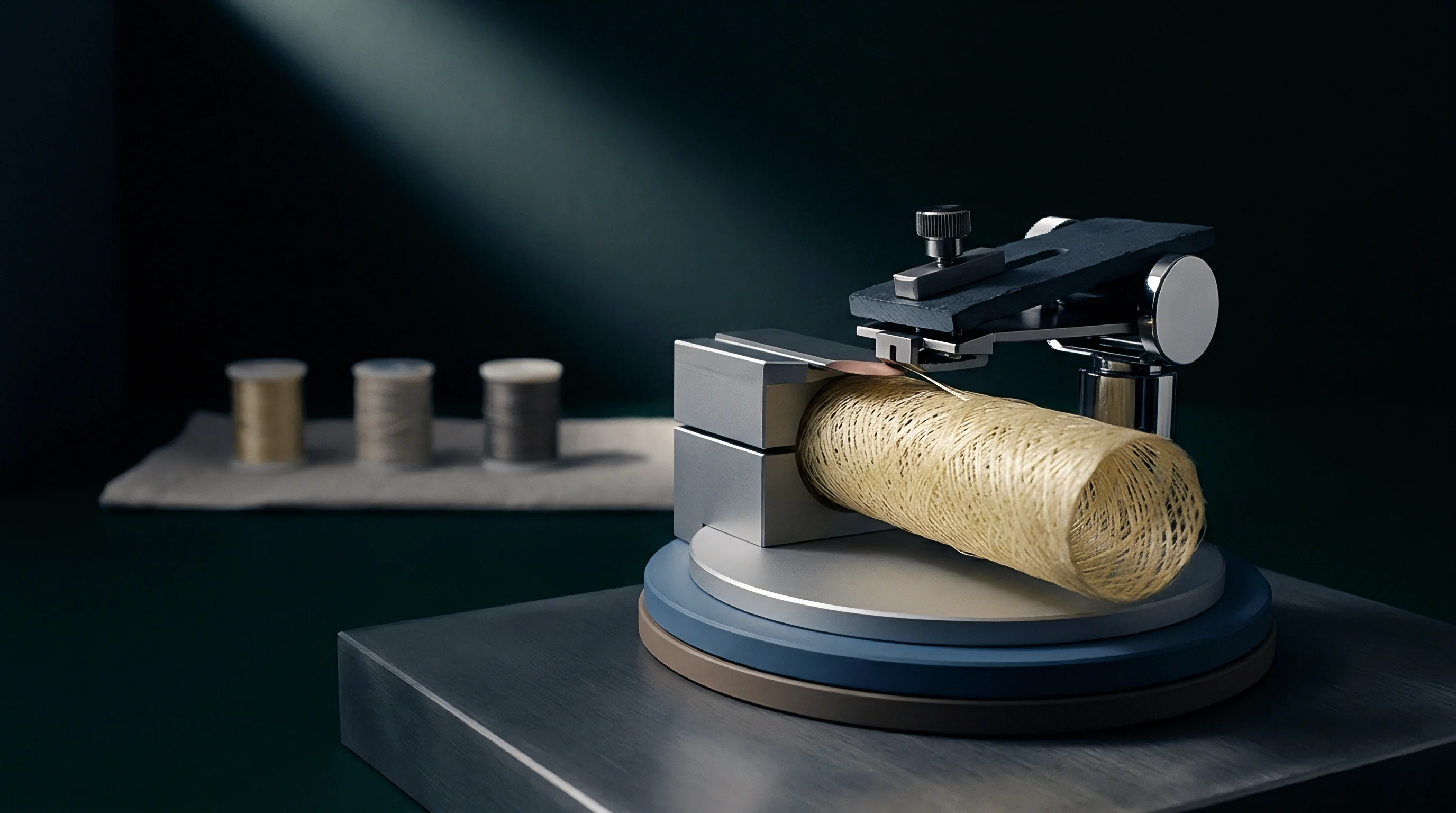
Fine linen yarn is produced on ring frames fitted with heated water troughs that wet out the rove just before drafting. The process balances spindle speed, draft ratio, and flyer geometry to consolidate delicate fiber ribbons into consistent yarn. Above Nm 50, bast bundles face severe mechanical drag; pushing spindle speeds beyond eight thousand revolutions per minute triggers frequent end-breaks unless staple length remains exceptionally uniform.
Broken ends generate pneumatic fly waste at the spinning triangle. Together with bottom-roller laps, this scrap cannot be re-fed into fine-count spinning, making it an inevitable structural loss in baseline modeling. For instance, wet spinning one thousand kilograms of boiled rove into Nm 80 yarn typically yields about eight hundred and sixty kilograms of bobbin yarn, with the remaining mass split across suction waste, roller laps, and bath liquor residue.
Under European Flax certification rules, a spinning mill mixing certified long flax sliver with uncertified short fiber forfeits batch classification across the entire lot.

Physical Segregation Failure Points in High-Speed Mills
Preserving fiber integrity requires isolating certified runs at every mechanical stage. Mill floor audits consistently point to four structural vulnerabilities where European flax lots risk contamination or unrecorded substitution.
- Bale Tag Depletion occurs when mill workers remove bale tags in the opening room without logging lot numbers directly onto internal job cards.
- Sliver Can Contamination takes place when drawing frames switch between certified and conventional stock without clearing residual fibers from the drafting rollers.
- Rove Creel Mixing happens when operators mount bobbins from separate fiber lots onto the same ring frame during lot changeovers.
- Pneumatic Suction Cross-Over occurs when common ducting routes waste from certified and conventional spinning frames into a shared collection hopper.
Preventing cross-contamination requires dedicated machinery and visual tracking on the floor. Reserving specific drawing sets and ring frames for certified orders prevents physical mixing, while color-coded sliver cans and flagged bobbins let floor supervisors confirm batch boundaries at a glance during spinning runs.
Drafting Mechanics and Count-Specific Waste Dynamics
High yarn counts call for steep draft ratios, exposing any unevenness in staple length. While longer flax fibers draw smoothly through the warm bath, shorter fibers slip early, generating slubs or dropping straight into the suction flutes. Waste rates climb noticeably as draft ratios rise.
Trimming spindle speed relieves yarn tension, but high counts stay vulnerable to uneven rove linear density. Drafting rollers must maintain uniform nip pressure to avoid slippage. At counts like Nm 100, even minor density fluctuations trigger breaks that spike spinning waste and pull net conversion yields below certification thresholds.
Procurement contracts for certified linen yarn routinely incorporate count-specific yield tolerances. Under typical terms for wet-spun line flax, transaction certificates are released only when delivered yarn weight falls within five percent of the established conversion baseline for that target count.


Scrutiny

Transaction Certificate Mass Balance Auditing Mechanics
Auditing certified linen production means matching incoming scope certificates with outgoing transaction certificates across every step of processing. When reviewing an operating mill in China, an auditor checks the gross tonnage documented on European Flax scope certificates against the total weight of yarn leaving on outbound transaction certificates.
The core audit formula is straightforward: raw fiber input must equal yarn output plus verified scrap and measured inventory adjustments. When reported output exceeds conversion norms, it suggests undocumented blending with conventional stock or inflated yield figures. Reconciling these numbers requires benchmarking reported rates against shift logs collected over several months.
The accounting becomes tricky when a mill processes line fiber and tow under the same roof. Combed tow taken from hackling lines is either fed into dry spinning or sold off to external yarn mills. Auditors have to isolate these diverted tow volumes so the underlying mass is not claimed twice.
Confirming transformation yields across international trade channels requires a sequential audit path.
- Reconcile gross incoming bale weights from sea freight bills of lading against certified scope certificate quantities.
- Deduct certified moisture variance by testing draw-bag samples from unopened fiber bales in accordance with ISO 6741 standards.
- Audit hackling production logs to match long line sliver output and hackled tow co-product weights against initial scutched flax inputs.
- Verify rove boiling weight loss logs, ensuring pectin removal mass reductions match laboratory bath analysis benchmarks.
- Cross-examine wet spinning bobbin weighing tickets against winding package manifests to determine exact bobbin-to-cone conversion scrap.
- Calculate total net certified yarn yield and compare the result against the target count conversion baseline range.
- Issue final transaction certificates only for yarn weights that fall strictly within approved mass balance baseline parameters.
A loss baseline of eighteen percent applies during wet spinning fine counts between Nm 50 and Nm 80 when rove boiling removes pectins prior to drafting.
How Does Mass Balance Accounting Handle Combed Tow Diversion?
Tow combed out during line hackling retains certified origin if the parent scutched flax was certified, but spinning it into coarse yarn uses a different route of carding and dry spinning. Auditors split the incoming Scope Certificate volume into separate ledgers for line fiber and tow, tracking each with its own yield baseline.
Reintroducing combed tow into fine-count spinning degrades yarn quality, as tow carries shorter fibers and higher residual shive. Blending tow back into high-count lots spikes end-breaks and skews conversion baselines. An auditor flags any abnormal bump in line yarn yield relative to scutched flax input as potential evidence of undocumented blending or fiber dilution.
Discrepancies in mass balance are often attributed to raw fiber anomalies, such as imported scutched flax containing excessive short-fiber fractions that elevate hackling waste above standard baselines. However, auditors reject these explanations unless supported by pre-processing laboratory fiber tests.

Loss
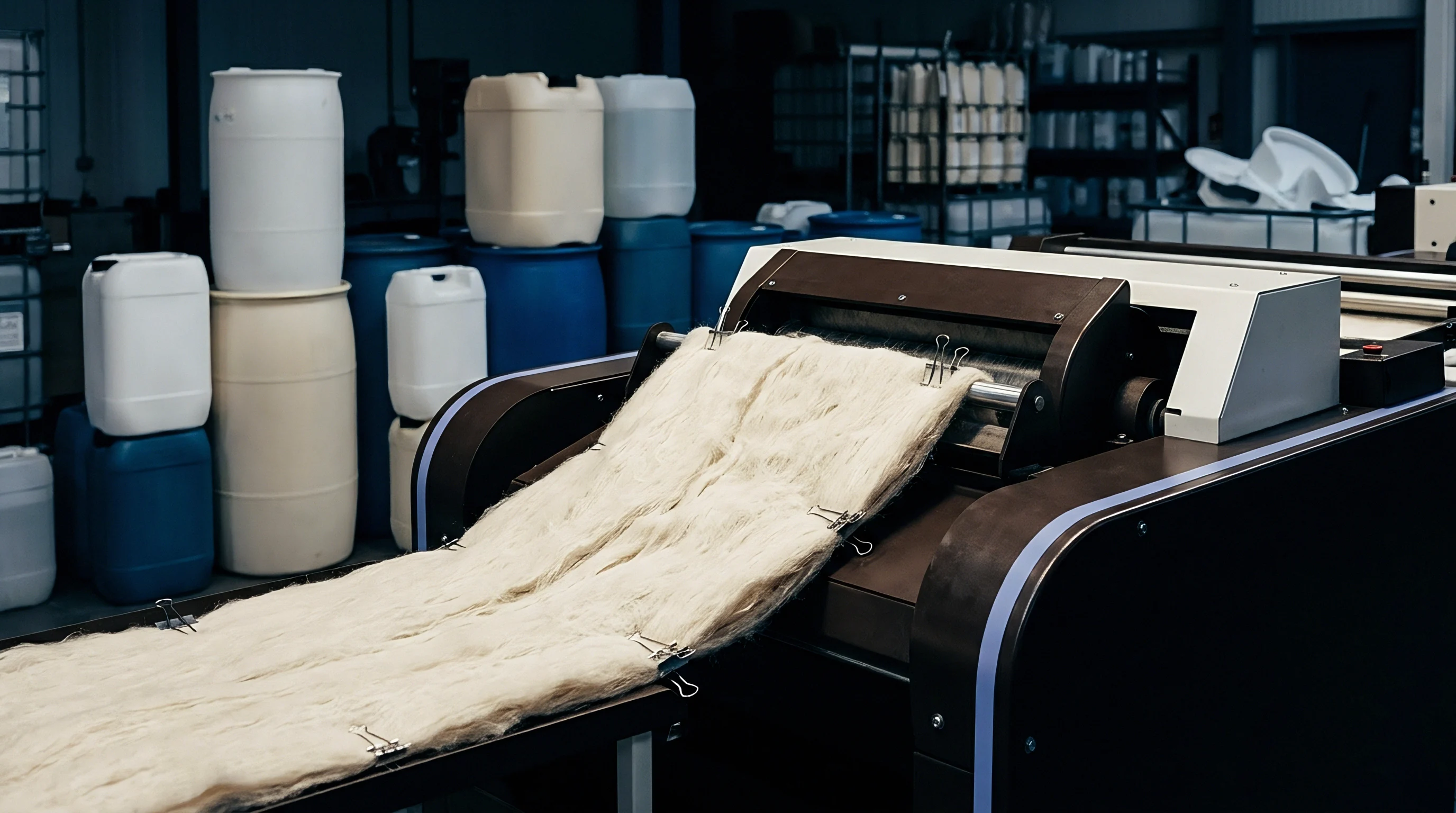
Quantifying Yield Reductions across Fine Count Processing
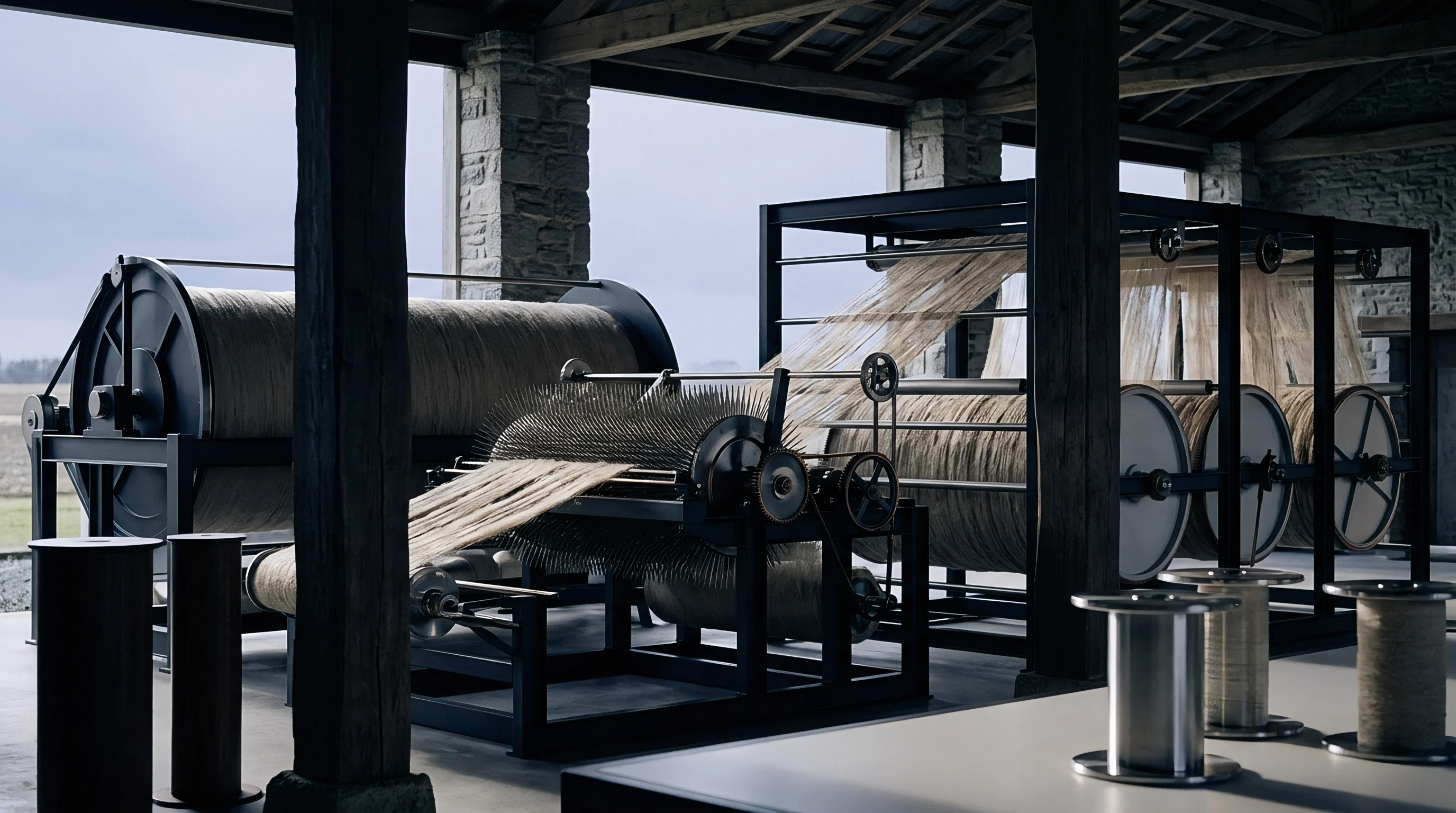
Fiber loss in fine linen spinning accumulates across every operation: mechanical hackling, rove boiling, wet drafting, and electronic winding. Establishing workable cost models and audit tolerances requires mapping the exact loss curve for each count bracket, because spinning finer yarns demands longer, cleaner fibers and consequently discards more raw mass.
Boiling rove dissolves surface waxes, pectins, and hemicellulose, loosening bast bundles so ultimate fibers can slide past one another in drafting. Depending on cycle time, bath alkalinity, and surfactant concentrations, boiling sheds between eight and twelve percent of rove weight. Shortening this step keeps weight on the bobbin but ruins drafting performance above Nm 60, resulting in heavy slubbing and end-breaks.
| Yarn Count Range (Nm) | Hackling Loss (%) | Rove Boiling Loss (%) | Spinning Scrap (%) | Net Certified Conversion Yield (%) |
|---|---|---|---|---|
| Nm 40 – Nm 49 | 38.0 | 8.5 | 6.5 | 51.9 |
| Nm 50 – Nm 69 | 42.0 | 9.5 | 7.5 | 47.2 |
| Nm 70 – Nm 89 | 46.0 | 10.5 | 8.5 | 42.6 |
| Nm 90 – Nm 110 | 50.0 | 11.5 | 10.0 | 37.9 |
Cone winding introduces another yield drop. Optical and capacitive yarn clearers scan the running yarn on automated winders, cutting out thick spots, thin places, and plant trash. Meeting weaving and knitting specs for fine yarn requires aggressive clearer settings, which triggers frequent cuts, splices, and cone-winding waste.
Centralized mill vacuums continuously gather fly fiber and drafting waste for baling and sale to non-woven or paper manufacturers. While these secondary sales recover a fraction of raw material costs, the diverted material leaves the certified textile chain and cannot be applied toward certified apparel yarn claims.
A recurring audit problem is separating yield losses caused by brittle raw fiber from losses caused by poorly tuned machinery. Weak scutched flax causes yield to drop across drafting and winding at the same time. Whether standards bodies should introduce dynamic baselines tied to lot-specific tensile tests remains a point of contention in international traceability committees.

Dossier

Commercial Verification Dossier Assembly and Sourcing Integration
A provenance dossier anchors physical yarn shipments directly to audited conversion baselines. Brands buying certified linen require proof that declared raw material purchases legitimately account for the volume of finished yarn delivered, which means compiling sequentially validated paperwork from each stage of processing.
The verification file brings incoming material certificates, internal shift tallies, waste receipts, and outgoing transaction certificates into a single digital record. Gaps in lot numbers, bill-of-lading dates, or net weights compromise certification validity. Buyers increasingly rely on contract terms that tie final payment release to verified yield compliance.
Transaction certificates issued after yarn spinning must balance physical delivery notes within a three percent moisture-adjusted window.
Procurement Audit Checklist for Fine Linen Yarn Buyers
Auditing mill compliance requires reviewing both physical floor procedures and administrative records against a consistent checklist.
- Scope Certificate Validity must be checked directly against certifying body databases to verify product categories and expiration dates.
- Moisture Testing Logs are reviewed to confirm incoming raw flax and finished yarn weights are adjusted to standard dry-weight commercial regains.
- Hackling Yield Records are audited against conversion baselines to spot short-fiber blending or unexplained line yields.
- Rove Boiling Protocols must be examined to verify that recorded weight loss matches chemical recipes and bath duration.
- Waste Sale Manifests are reconciled against secondary fiber invoices to confirm rejected tow is not recycled back into certified lots.
- Transaction Certificate Alignment is verified by comparing outgoing yarn weights directly against calculated net conversion limits.
Enforcing strict conversion baselines guards against false labeling claims under import trade regulations. Unsubstantiated yield numbers leave brands open to customs fines, shipment seizures, and mandatory product recalls in regulated markets.