Isotopic Soil Analysis for European Flax Origin Tracking
Strontium isotope mass spectrometry isolates bioavailable soil ratios in flax cellulose, enabling direct verification of European origin against mill declarations.


Strata
Geological bedrock composition creates distinct elemental ratios in topsoil that plants absorb during active growth cycles. Bioavailable strontium isotopes, specifically the 87Sr to 86Sr ratio, pass from soil minerals into groundwater and enter the roots of Linum usitatissimum without atomic fractionation. Flax fiber bio-accumulates these trace minerals within its cell walls during the ninety-day growth window between April sowing and July pulling in Western Europe.
Bedrock weathering controls strontium isotopes.
The primary flax-producing belt stretching across coastal Normandy, Picardy, Flanders, and Zeeland sits atop Cenozoic and Mesozoic sedimentary basins dominated by marine chalk, limestone, and tertiary clays. These formations exhibit tightly bounded 87Sr/86Sr ratios between 0.7085 and 0.7102. Alternative production regions present divergent isotopic baselines based on older crystalline rocks or volcanic soils.
Heilongjiang basin soils in Northeastern China, derived from volcanic and granite parent material, yield higher 87Sr/86Sr ratios ranging from 0.7115 to 0.7150. Silt deposits along the Egyptian Nile basin carry basaltic signals with lower ratios between 0.7055 and 0.7075.
Soil chemistry dictates cellulose ratios. Stable oxygen isotope ratios (delta 18O) in plant tissue mirror local precipitation and relative atmospheric humidity during fiber formation. Evapotranspiration in coastal Western Europe creates a delta 18O signature in raw flax cellulose centered between +27.5 per mil and +29.5 per mil relative to Vienna Standard Mean Ocean Water.
Inland continental environments with higher evaporation rates drive delta 18O values significantly higher, often exceeding +32.0 per mil.
Bioavailable strontium isotope ratios in Western European flax stalks remain fixed between 0.7085 and 0.7102 regardless of seasonal rainfall variations.

Geological Baselines across European Growing Belts
Regional variations within the Western European flax belt reflect subtle changes in soil chemistry and distance from the marine coast. Coastal alluvial soils in Zeeland exhibit rainwater isotopic signatures influenced by sea spray, whereas interior Seine-Maritime soils show slightly higher radiogenic strontium levels. Measuring heavy trace element profiles alongside stable isotopes narrows the geographic boundary of raw fiber production to specific river catchments.
| Region | 87Sr/86Sr Ratio Range | delta 18O Range (per mil VSMOW) | delta 13C Range (per mil VPDB) | Dominant Bedrock Type |
|---|---|---|---|---|
| Normandy (France) | 0.7088 to 0.7096 | +27.8 to +29.1 | -27.2 to -26.1 | Cretaceous Chalk & Loess |
| Flanders (Belgium) | 0.7091 to 0.7101 | +28.1 to +29.4 | -26.9 to -25.8 | Tertiary Marine Sand & Clay |
| Heilongjiang (China) | 0.7118 to 0.7145 | +23.5 to +26.0 | -25.5 to -24.2 | Granite & Volcanic Ash |
| Nile Delta (Egypt) | 0.7058 to 0.7072 | +31.5 to +34.8 | -24.8 to -23.5 | Ethiopian Basaltic Alluvium |
| Saskatchewan (Canada) | 0.7130 to 0.7162 | +19.8 to +22.5 | -26.5 to -25.1 | Glacial Till & Shale |

Bioavailable Strontium Ratios in Bast Fibre Bio-Accumulation
Strontium ions replace calcium ions in the pectins and structural cellulose during the elongation of flax phloem fibers. Because strontium carries a relatively heavy atomic mass, standard metabolic processes in the plant do not alter the ratio between isotope 87 and isotope 86. The ratio recorded in the unretted stalk directly matches the bioavailable fraction of the soil solution in the field.
Misidentifying fiber origin in commercial transactions exposes buyers to mislabeling penalties under international customs regulations, preferential trade agreement disqualifications, and immediate forfeiture of certified brand premiums when downstream testing reveals non-European isotopic signatures in declared inventory.


Spectra
Thermal ionization mass spectrometry isolates heavy elemental isotopes from purified plant cellulose with precision sufficient to distinguish regional soil signatures. Isotope ratio mass spectrometry coupled to elemental analyzers measures light stable isotopes including carbon, nitrogen, hydrogen, and oxygen. Combining heavy trace element isotope ratios with light stable isotope profiles creates a multi-dimensional analytical matrix that isolates geographic origin.
Standard laboratory protocol isolates purified alpha-cellulose from raw bast fiber, scutched tow, or spun yarn before mass spectrometer injection. Non-cellulosic constituents such as surface waxes, lignins, hemicellulose, and pectin contain non-structural elements that introduce analytical noise if unremoved. The extraction procedure eliminates non-cellulosic components through sequential solvent washes and alkaline digestion.
- Organic impurities dissolve during a two-hour Soxhlet extraction using a toluene and ethanol mixture at reflux temperature.
- Structural pectins and hemicellulose yield to sodium chlorite and acetic acid delignification at 70 degrees Celsius for three hours.
- Purified alpha-cellulose precipitates after treatment with a 17.5 percent sodium hydroxide solution at ambient temperature.
- Acid digestion in sealed Teflon vessels with concentrated nitric acid yields a clear mineral solution for mass spectrometry.

Mass Spectrometry Protocols for Fiber Cellulose Digestion
Inductively coupled plasma mass spectrometry with multi-collector arrays measures 87Sr/86Sr ratios on digested cellulose samples down to parts-per-billion concentrations. Precise calibration against international reference material NIST SRM 987 anchors laboratory measurements to global baseline standards. The signal remains intact.
Purified cellulose holds regional ratios. Carbon isotope ratios (delta 13C) provide additional discrimination by capturing photosynthetic conditions, water availability, and canopy density during crop growth. C3 plants like flax exhibit delta 13C values between -30 per mil and -24 per mil, influenced by regional cloud cover and stomatal conductance.

Multi-Element Isotope Discriminant Analysis
Applying canonical discriminant analysis to combined 87Sr/86Sr, delta 18O, delta 13C, and delta 2H isotopic data points yields distinct geographical clustering. Overlap between adjacent regions in Western Europe remains minimal when analyzing at least three independent isotopic systems simultaneously.
Disputed lots evaluated by offshore suppliers often prompt statements attributing non-conforming isotopic signatures to unusual microclimates, heavy municipal groundwater irrigation during dry summers, or localized application of imported mineral fertilizers altering the topsoil signature.


Yarn
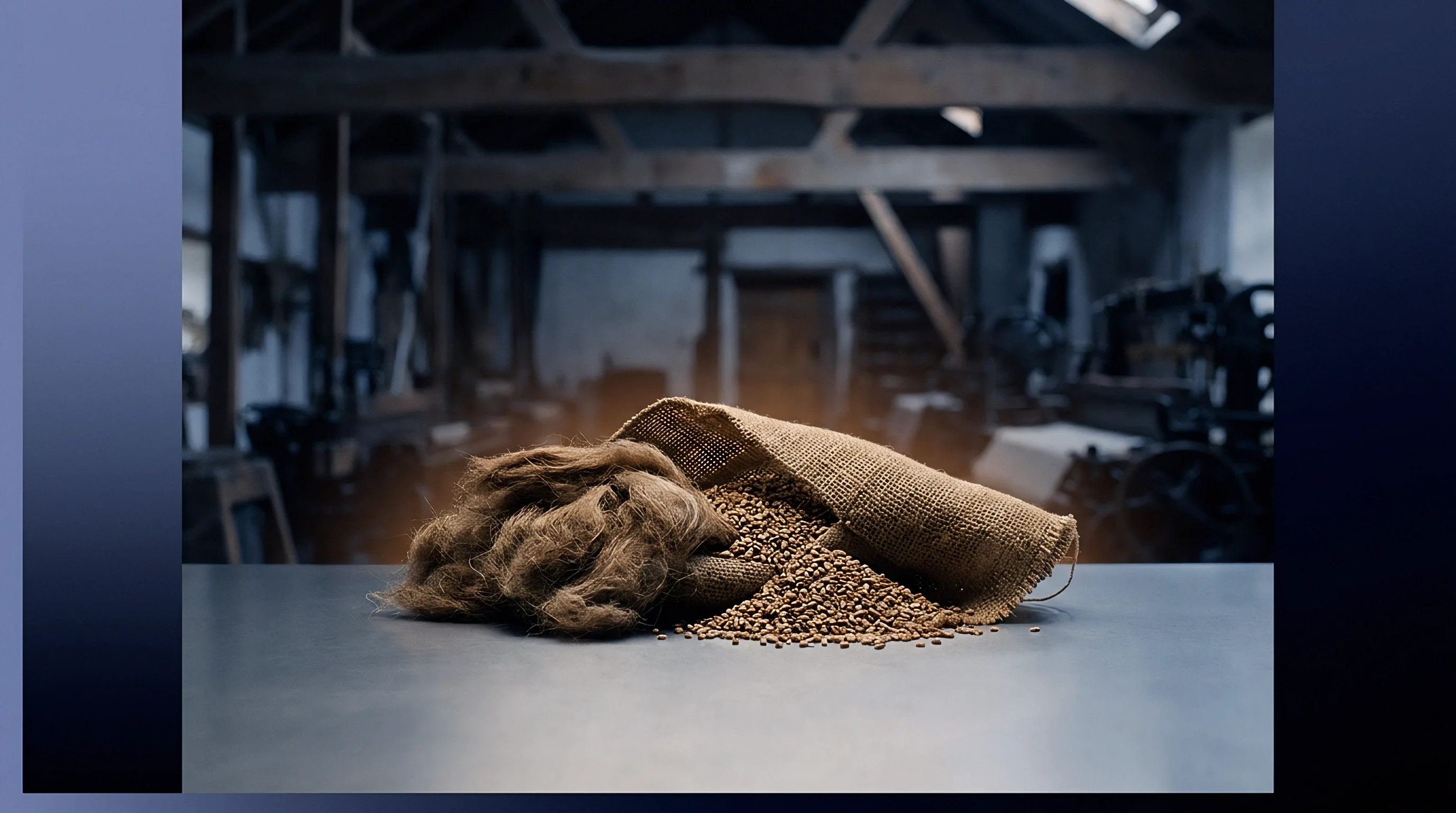
Industrial spinning operations process raw flax bast fiber through retting, scutching, hackling, drawing, and spinning, followed by wet processing including boiling off, bleaching, and dyeing. Retting relies on soil or water micro-organisms to break down pectins binding fiber bundles to the woody shive. Field retting exposes flax stalks to dew and soil fungi in the growing field, preserving the local strontium isotope profile while slightly incorporating surface mineral dust.
Does Chemical Bleaching Obscure Bioavailable Isotopic Markers?
Caustic scouring and hydrogen peroxide bleaching strip soluble minerals, waxes, and outer pectins from the fiber bundle. Heavy elements like strontium remain securely integrated within the crystalline structural cellulose microfibrils of the secondary cell wall. Wet processing strips labile elements.
Strontium bonds tightly in cell walls.
Oxygen and hydrogen stable isotopes undergo partial exchange during hot aqueous processing and intense chemical bleaching. Industrial bath processing replaces labile hydroxyl hydrogen atoms in cellulose with hydrogen atoms from local process water, shifting the delta 2H value of finished fabric toward the isotopic signature of the mill location rather than the origin farm. Oxygen isotopes within structural cellulose microfibrils resist exchange under mild processing conditions but shift during high-temperature alkaline scouring.
Testing protocols relying on carbon isotope shifts fail when caustic soda scouring removes surface pectins.

Industrial Wet Processing Effects on Heavy Trace Metals
Heavy metal isotopes like strontium resist chemical modification during spinning, scouring, bleaching, and dyeing. Laboratory trials demonstrate that hydrogen peroxide bleaching alters 87Sr/86Sr ratios by less than 0.00005, a margin within standard mass spectrometry measurement uncertainty. Mass spectrometry resolves isotopic values.
| Isotopic System | Retting Impact | Bleaching Impact | Dyeing Impact | Origin Traceability Reliability |
|---|---|---|---|---|
| 87Sr/86Sr Ratio | Negligible (<0.01%) | None (<0.005%) | None (<0.005%) | High (Unchanged by processing) |
| delta 18O (Cellulose) | Low (<0.5 per mil) | Moderate (0.8-1.5 per mil) | Low (<0.4 per mil) | Moderate (Requires process adjustment) |
| delta 13C (Bulk) | Low (<0.3 per mil) | Moderate (Removes lipids) | High (Dyes add synthetic carbon) | Low on dyed fabric, High on greige |
| delta 2H (Exchangeable) | Moderate (Dew impact) | High (Exchanges with bath) | Severe (Matches mill water) | Unsuitable for origin tracking |
Blending 70 percent European Flax tow with 30 percent non-European short fiber during sliver drafting generates linear proportional shifts in isotopic values. The resulting 87Sr/86Sr ratio lands strictly between the end-member values of the two component fibers according to their mass fraction in the yarn blend.
How far chemical finishing baths containing dissolved calcium and mineral additives substitute trace strontium ions into the outer amorphous regions of bleached flax cellulose remains a subject of active research across analytical laboratories.


Manifest
Documentary verification relies on physical chain-of-custody paper flows matching physical inventory movements across intermediate processing steps. Scope certificates issued under European Flax or Masters of Linen certifications validate that a facility possesses the operational capability to process certified material. Transaction certificates confirm that a specific weight of certified fiber moved from a named seller to a named buyer under a specific invoice and lot number.

Documentary Auditing versus Chemical Verification
Paper trails demand physical confirmation. Scutcher records confirm lot weights. Reconciling mill records requires matching incoming bale tags, weighbridge weight slips, internal spinning lot numbers, greige fabric roll logs, and outgoing commercial invoices.
Discrepancies between documentary declarations and physical fiber reality arise when uncertified material enters the spinning line during unannounced fiber substitution.
- Scope Certificate Mismatch arises when an intermediary trader presents a corporate scope certificate that lacks coverage for the specific transformation stage or facility location processing the order.
- Bale Tag Omission occurs when incoming fiber bales arrive at the spinning mill lacking physical bale tags or carrying generic barcode labels that fail to map to specific scutcher output dockets.
- Mass Balance Inflation appears when a mill reports yarn output weights exceeding raw scutcher fiber inputs after accounting for standard process loss factors during hackling and drafting.
- Transaction Certificate Delay emerges when suppliers delay issuing transaction certificates until months after shipment, masking gaps in certified raw material inventory.
Discrepancies between mill delivery weight and scutcher output indicate uncertified fibre substitution long before laboratory testing confirms the blend.

Reconciliation Matrix for Traceability Audits
Combining physical isotopic laboratory testing with documentary transaction reviews creates a dual-layer chain-of-custody audit model. Unannounced sampling of greige yarn from loom beams provides immediate physical verification against declared European Flax transaction certificate weights.
| Supply Chain Stage | Primary Document | Physical Tracking Marker | Isotopic Audit Trigger |
|---|---|---|---|
| Scutching (Farm/Co-op) | Scutcher Delivery Docket | Bale Tag with Batch ID | Baseline mapping of field crop |
| Combing & Spinning | Transaction Certificate | Sliver Can Barcode Log | Mismatched bale weight to yarn yield |
| Weaving Shed | Yarn Invoice & Mill Spec | Loom Beam Identification Tag | Random lot sampling on beam creel |
| Finishing & Dyeing | Finishing Route Card | Piece Roll Identification Label | Disputed origin claim on finished cloth |
Standard purchase contracts incorporating strict provenance clauses specify that supplier declarations of European origin remain unverified until isotopic mass spectrometry testing confirms 87Sr/86Sr ratios fall between 0.7085 and 0.7102, with testing costs shifting entirely to the seller upon any non-conforming laboratory result.


Remedy
Commercial dispute resolution depends on contractual allocation of origin liability, clear sampling protocols, and explicit cost-shifting mechanisms. Unverified origins void contract terms. Qualifying an offshore spinning mill to supply European Flax certified yarn demands rigorous verification before placing commercial production orders.
Lab results override paper declarations.
Take a purchase contract for 50 metric tonnes of wet-spun flax yarn declared as 100 percent European Flax, priced at 14.50 Euros per kilogram landed duty paid. The certified yarn carries a 1.80 Euro per kilogram premium over conventional non-European flax yarn. Total contract value reaches 725,000 Euros, with 90,000 Euros representing the specific certified origin premium.

Worked Financial Calculation for Origin Verification Audits
Assume an audit protocol requiring composite sampling of five yarn packages per 5-tonne production sub-lot, resulting in ten discrete analytical samples for the 50-tonne consignment. Thermal ionization mass spectrometry testing costs 450 Euros per sample for 87Sr/86Sr ratios, yielding a total laboratory testing cost of 4,500 Euros.
Audit costs scale per lot. Surcharge rates vary by region. If testing confirms European origin, the buyer absorbs the 4,500 Euro testing fee, representing 0.62 percent of total contract value.
If testing reveals an isotopic ratio of 0.7128—indicating substitution with continental Asian fiber—the buyer rejects the consignment, invokes the contract warranty clause, recovers the full 725,000 Euro invoice amount, and charges the seller 4,500 Euros in lab fees plus a 5 percent contractual administrative penalty totaling 36,250 Euros.

Implementation Protocol for Sourcing Practices
Implementing an origin verification policy requires incorporating clear procedural steps into standard purchase orders and supplier qualification frameworks.
- Baseline Profile Mapping establishes target isotopic ratio bands for approved European growing districts prior to issuing purchase orders.
- Consignment Sampling Frequency mandates taking physical yarn samples from sealed shipping containers immediately upon port entry under independent surveyor supervision.
- Warranty Threshold Selection inserts specific numerical 87Sr/86Sr acceptance windows directly into standard commercial purchase agreements.
- Penalty Clause Enforcement defines automatic financial compensation, inventory replacement obligations, and test-cost re-allocation triggered by non-conforming isotopic test reports.
Verification protocols based on physical isotope testing protect procurement capital when supported by unambiguous contractual remedies.