Quantifying Microstructural Fiber Scrap Partitioning in High-Speed Wet Flax Spinning Accounting
Accurate mass accounting in wet flax spinning requires deducting 3.5% solubilized pectin and micro-fiber sludge from dry input weights to verify yarn origin claims.

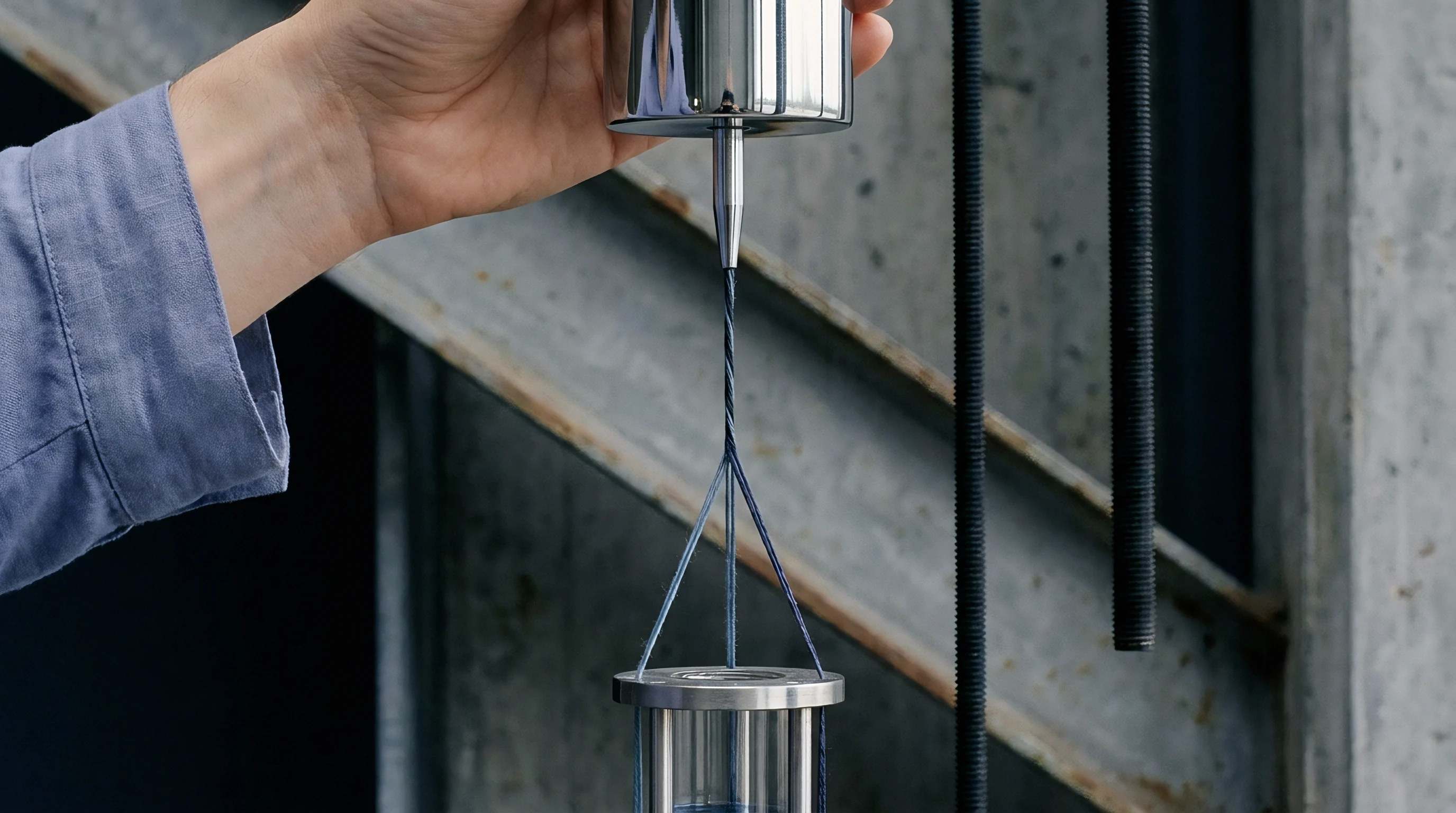
Basin

Solubilization Dynamics in High-Temperature Roving Troughs
Hot water at 68°C changes how technical flax bundles behave during high-speed wet spinning. Industrial frames running at delivery speeds over 210 meters per minute pull twisted roving through shallow troughs right before roller attenuation. Warm water softens the intercellular pectin matrix that binds elementary fibers within the bundle.
Calcium and magnesium pectates cross-linking polygalacturonic acid chains in the middle lamella dissociate and leach into the bath. As this pectin sheath weakens, elementary fibers slide past each other more easily, lowering drafting resistance but shedding fine cellulosic fragments into the fluid.
Continuous fluid circulation carries these detached micro-fragments away from the nip zone. Dissolved organic solids and suspended micro-fibers under 80 micrometers long build up in the recycled bath. High turnover rates keep the bath from reaching local saturation, preserving the concentration gradient that drives the chemical extraction of non-cellulosic matter.
When mills calculate mass balances simply by comparing output yarn weight to input roving weight, this loss shows up as unaccounted process shrinkage, obscuring how raw material is actually consumed.
Thermal and Chemical Extraction Rates
Chemical analysis of bath samples from commercial frames shows distinct stages of material release during processing. Water temperature, alkalinity, and residence time determine how much total mass is lost to solubilization compared to mechanical detachment. Cold water systems under 40°C barely soften the pectin, demanding higher drafting forces that break fibers and generate coarse macro-scrap.
Raising the bath temperature to 72°C speeds up pectin dissolution, washing up to 3.8 percent of total roving dry weight into the fluid within a four-second contact window.
| Bath Temperature | Fluid Turnover Rate | Solubilized Pectin Ratio | Suspended Micro-Fiber Loss | Total Partition Scrap Rate |
|---|---|---|---|---|
| 55°C | 1.2 L/min per spindle | 1.45% | 0.62% | 2.07% |
| 65°C | 1.2 L/min per spindle | 2.30% | 1.15% | 3.45% |
| 68°C | 1.8 L/min per spindle | 2.85% | 1.48% | 4.33% |
| 75°C | 2.4 L/min per spindle | 3.62% | 2.10% | 5.72% |
Chelating agents in hard process water strip divalent cations from cell walls, converting insoluble pectates into soluble sodium salts. Mill operators adjust chemical dosing to balance spinnability against final yarn strength. While aggressive extraction yields clean, highly aligned fine yarns, it causes substantial invisible mass losses that skew origin mass-balance accounting when transaction certificates track only gross physical output.
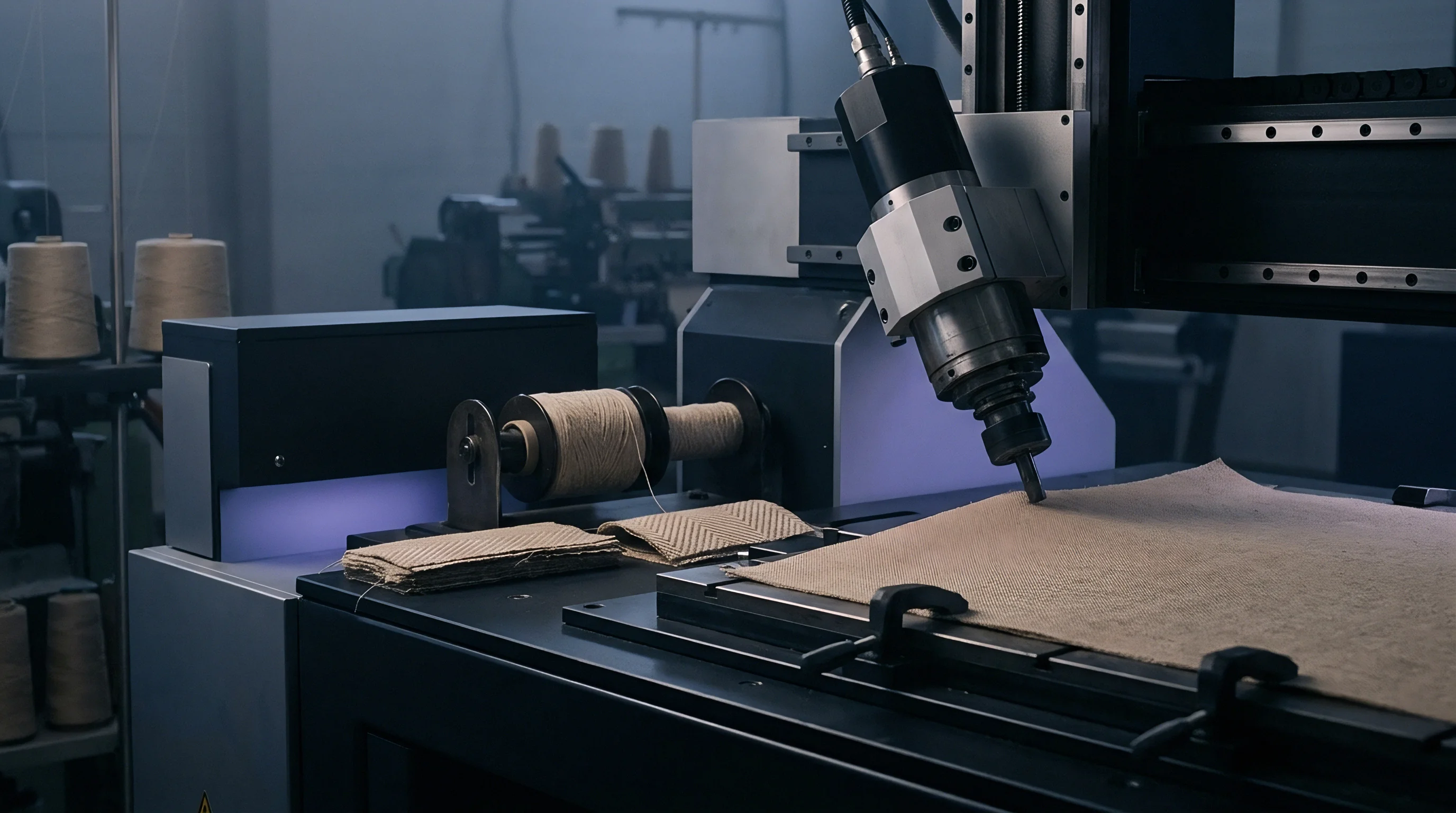
Physical Partitioning of Micro-Fiber Sludge
Recirculation pumps force bath fluid through filtration sumps to catch particulates before the water returns to heating manifolds. Coarse screens catch fiber clumps, while fine sludge of short elementary fiber fragments settles at the bottom of weir tanks. Wet flax mills in Jiangsu and Zhejiang collect metric tons of this sludge every month.
Technical audits often ignore this secondary scrap stream, writing it off as feed for biological effluent treatment plants rather than accounting for it as input flax mass.
Water bath temperature exceeding 70°C drives soluble pectin mass loss above 3.5 percent of initial dry roving weight.
Microscopic analysis of sludge solids shows that over 80 percent of suspended particles are damaged elementary flax cells between 5 and 35 micrometers long. These fragments come from the outer cortical layers of the flax stem, stripped by strong hydraulic shear in the drafting zone. When auditors reconcile raw fiber inputs against delivered yarn without measuring sludge solids, the missing mass creates an unverified gap in traceability records.
Treating thermal dissolution losses as moisture variance lets mills cover up fiber substitution in later production runs. An unaccounted 4 percent scrap allowance in a 20-ton lot leaves 800 kilograms of certified fiber unassigned on physical yield sheets. Mills can exploit that gap by blending uncertified coarse tow sliver into uncertified batches while claiming full certified origin yields on output certificates.
Leaving fluid dissolution and sludge settling rates out of auditing models destroys mass-balance integrity on high-speed wet spinning lines.


Draft
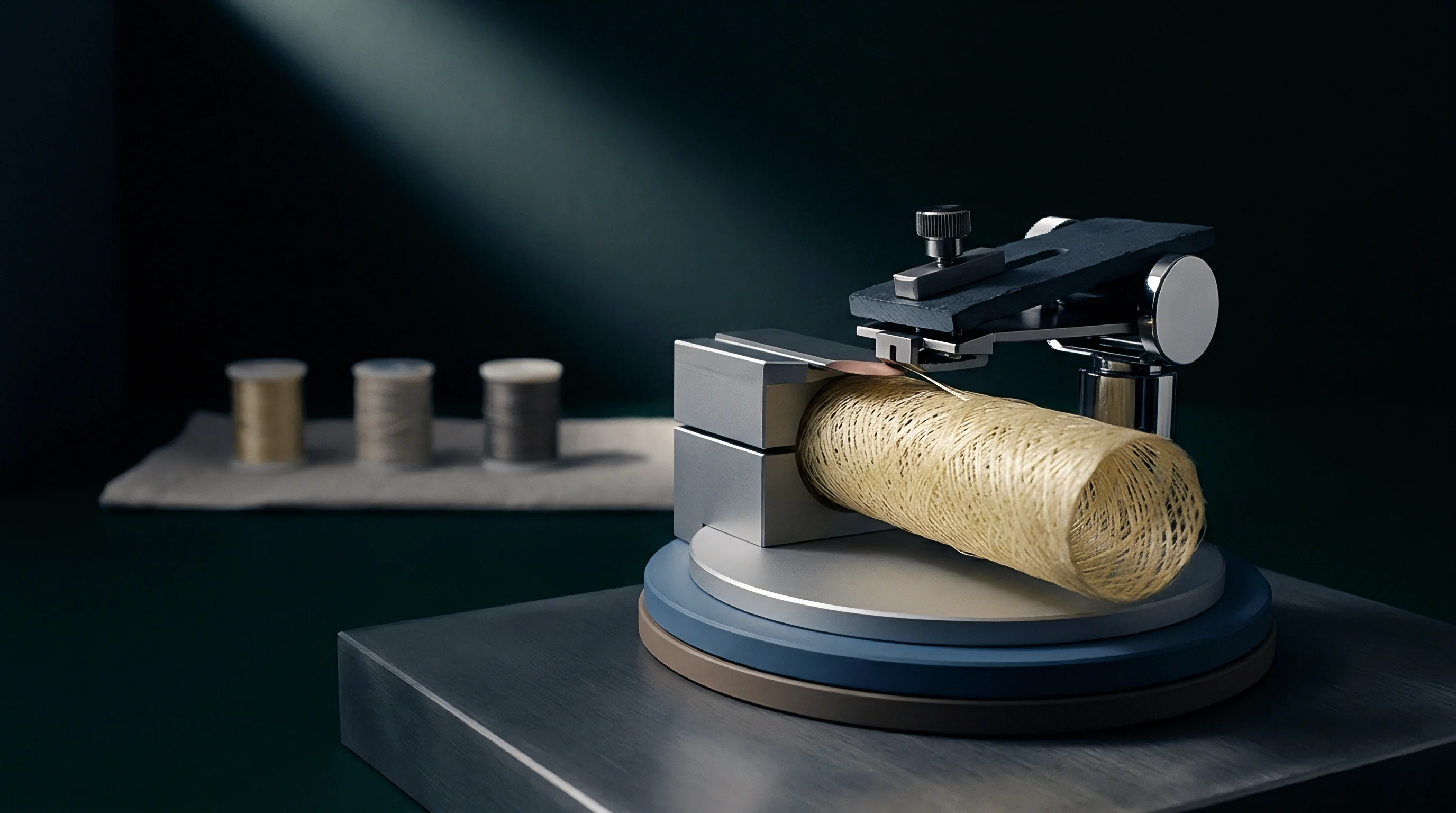
Kinematics of Fiber Attenuation at High Speeds
Mechanical drawing zones on modern wet spinning frames place high tension on softened flax strands. Front roller surface speeds up to 240 meters per minute generate shear forces that pull technical bundles apart into fine elementary fibers. Drafting ratios between 10 and 22 force individual filaments to slide against adjacent cell walls, breaking weak intercellular bonds and shedding micro-scrap through the entire drafting zone.
Dynamic friction in the wet bundle depends on roller nip pressure and the viscosity of entrained bath fluid. Too much nip pressure crushes cell walls, creating micro-fractures along the fiber axis. These fractures release tiny fragments that fall into the machine bed or get pulled into suction flumes as airborne dust and mist.

Mechanical Disintegration Sequences
Process engineers track micro-scrap across the attenuation zone using step-by-step mass extraction protocols. The attenuation sequence breaks down into discrete mechanical phases that drive fiber loss.
- Mechanical nip compression flattens the wet roving strand, squeezing out free water and dissolving surface pectins under high linear pressure.
- Initial roller speed differences put technical fiber bundles under longitudinal tension, breaking remaining middle lamella bonds.
- Secondary drafting forces elementary fibers to slide past each other, shedding fragments shorter than critical fiber length into the surrounding liquid film.
- High-speed twist insertion locks remaining continuous fibers into the yarn core while centrifugal force throws detached micro-fiber ends outward.
Spindle speeds over 10,000 revolutions per minute generate centrifugal forces that sling liquid droplets and short fiber fragments against the spindle rails. Collection trays below the frame gather this material, creating a dense, wet mass that mills call rail scrap. This scrap contains a mix of high-grade long elementary fibers lost during rapid twist insertion and short cell fragments ejected during initial drafting.
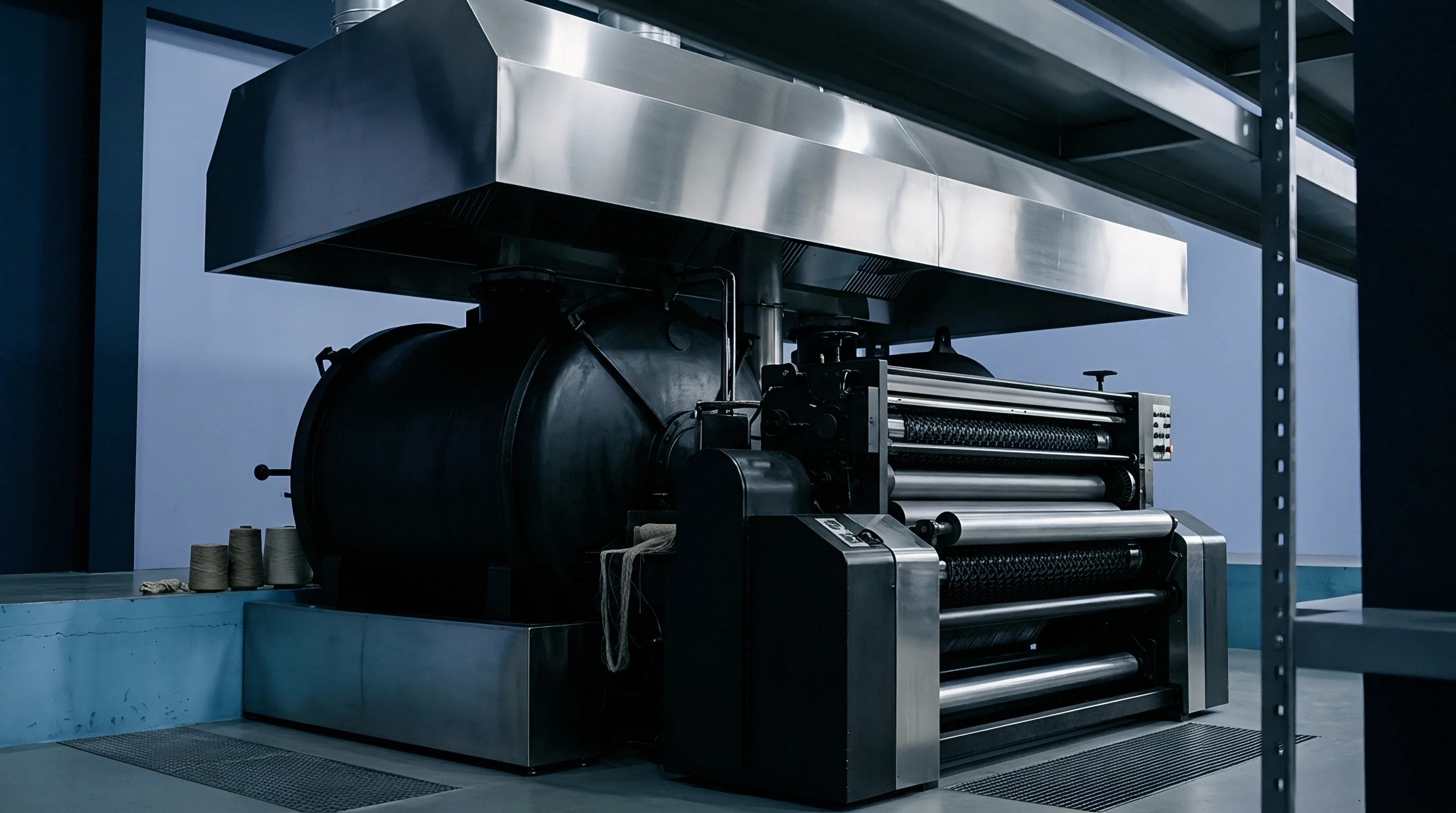
Velocity Vector Impact on Micro-Scrap Release
Faster linear speeds increase micro-scrap generation exponentially, not linearly. Running line speed up from 140 meters per minute to 220 meters per minute increases total fiber scrap loss by 87 percent because of hydrodynamic drag and harder mechanical contact against control guides. Higher speeds shorten bath residence time, forcing mills to raise temperatures or increase nip pressure to maintain the target draft ratio.
Machine vibration at high speeds causes periodic tension spikes in the drafting strand. These spikes snap local fiber bundles, releasing clusters of short fibers that fail to twist into the yarn. Suction lines along the spinning rail draw in these airborne fragments immediately, depositing them in central waste collection cyclones.
Tracing input fibers through high-speed drawing stages verifies that physical losses match theoretical attenuation models. Discrepancies between theoretical drawing loss and recorded cyclone waste usually mean operators are manually removing yarn waste without logging it. Failing to record cyclone collection accurately skews batch mass balance ledgers across entire production runs.


Tow
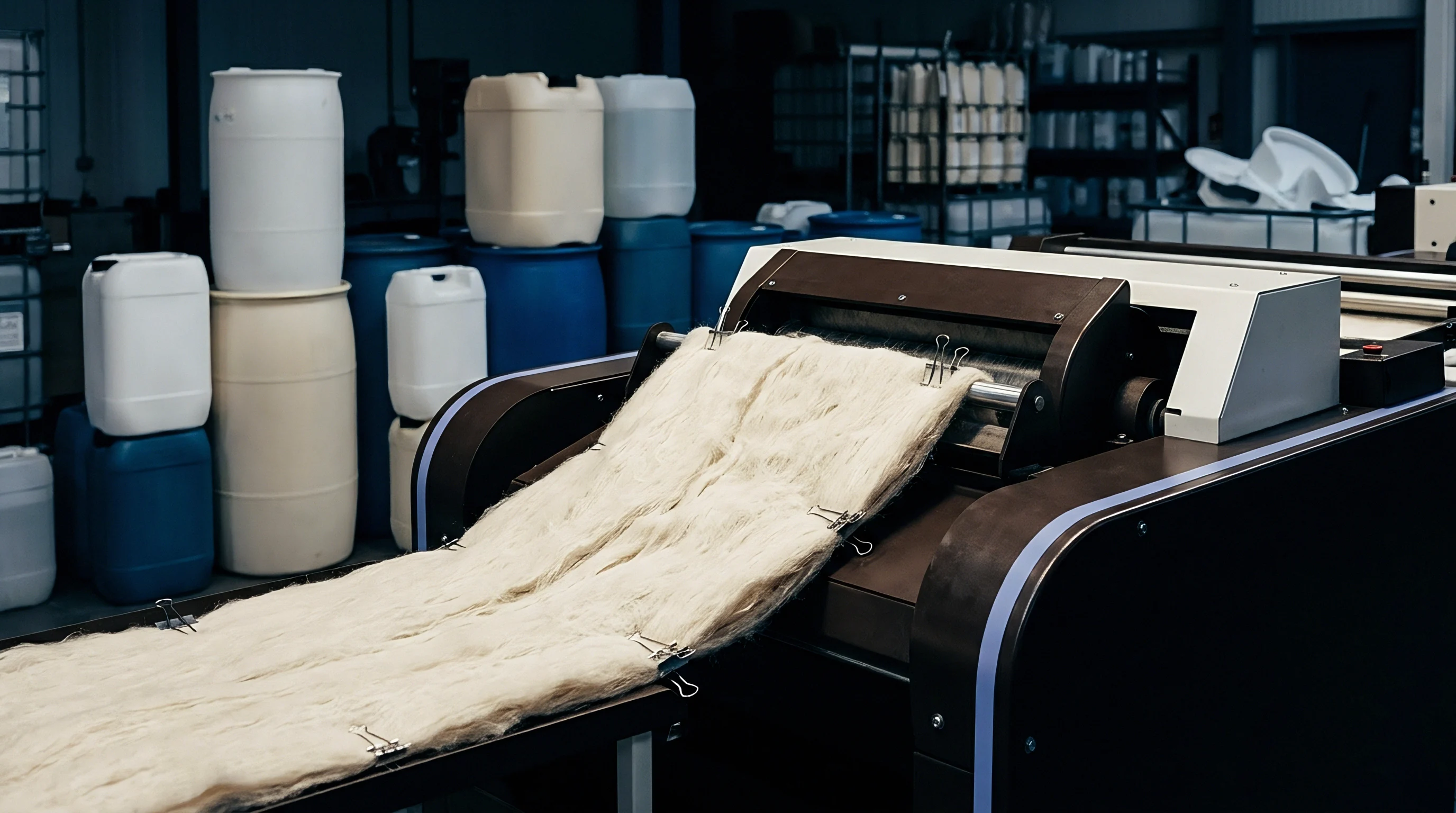
Categorization of Macro and Micro Scrap Streams
Flax processing produces distinct categories of fiber waste that must be classified separately in mill accounts. Hackling yields coarse long-fiber tow, whereas wet spinning generates fine roving scrap, suction waste, and liquid-borne micro-scrap. Standards such as European Flax and Masters of Linen require strict segregation between long line fiber and secondary tow streams to preserve chain-of-custody integrity.
Historically, mill accounting lumped all solid spinning waste into a single tow category sold to coarse yarn spinners or non-woven fabric makers. High-speed wet spinning makes this broad grouping inaccurate because the microstructural properties and purity levels of each scrap stream vary widely. High-value long line fiber lost at the roving frame retains the same origin credentials as finished yarn, whereas basin sludge consists of degraded non-cellulosic material that cannot be re-spun into textiles.
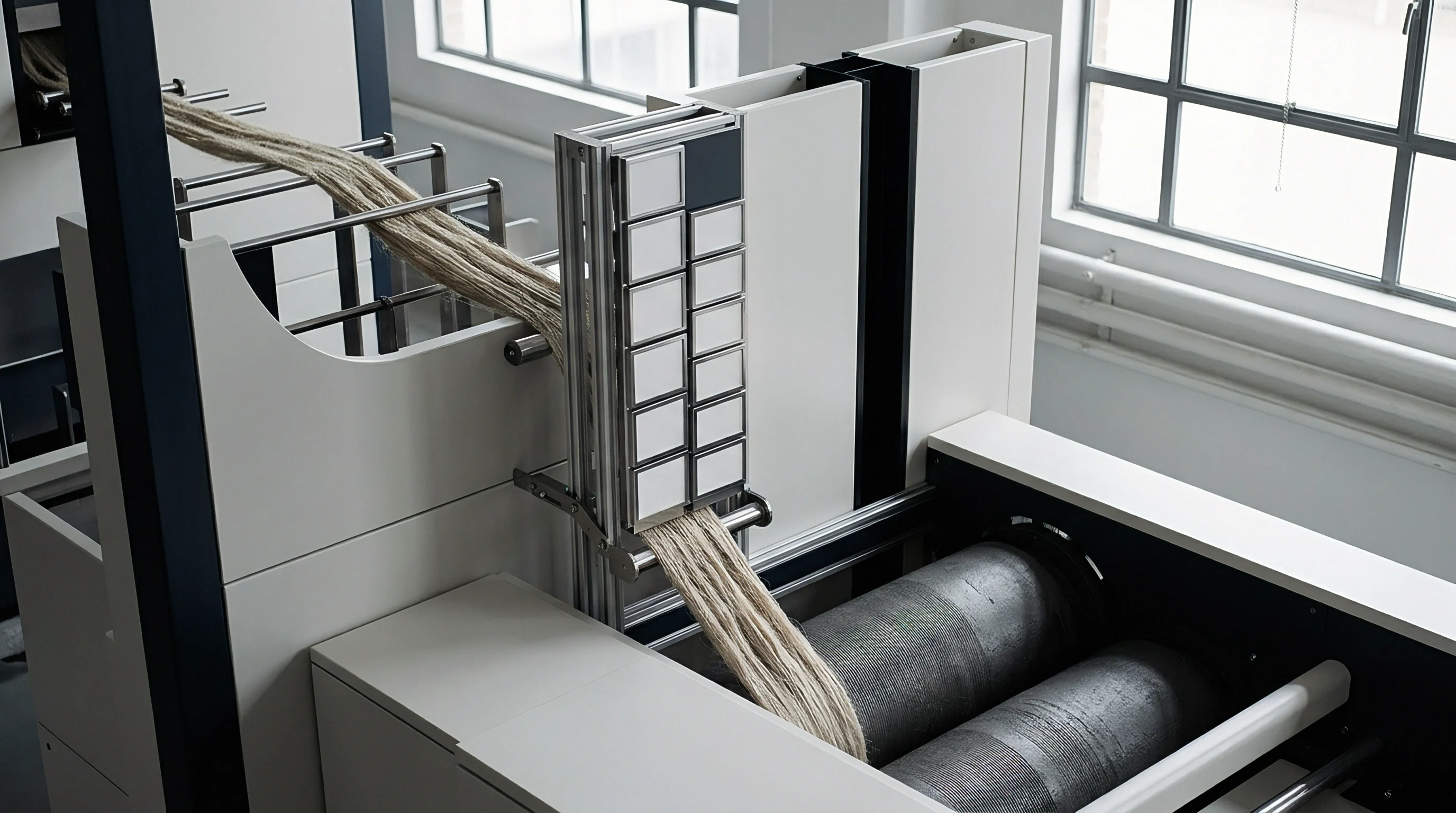
Does Tow Recovery Alter Mass Balance Certification Scopes?
Blending recovered spinning tow back into commercial yarn production creates complicated verification problems for origin auditors. Mills running blended lines often mix suction waste and carded roving scrap with lower-grade uncertified tow to produce coarse dry-spun yarns. If the original roving carried European Flax certification, sloppy accounting of recovered scrap lets uncertified mill inventory absorb certified weight credits.
Standard ISO 1833 mass balance procedures demand complete physical segregation of wet-process scrap streams prior to allocation of certified weight fractions.
Certification rules require that mass credits allocated to secondary scrap streams reflect exact physical dry weights, adjusted for non-cellulosic extraction losses. Reporting gross wet weight instead of net dry cellulosic mass artificially inflates the certified mass pool. Auditors reviewing mill ledgers must match hackling weight certificates directly against secondary transaction certificates issued for recovered tow sales.

Failure Modes in Mill Waste Segregation Protocols
Physical audits of spinning plants show recurring points where origin documentation breaks down in the waste handling chain. Operator habits and floor layouts directly drive these mass balance discrepancies.
- Unlabeled Waste Bins allow operators to mix certified European Flax roving end-breaks with uncertified short-staple waste during shift changes.
- Moisture Oversaturation of suction collector waste leads to inflated gross weight entries on internal mill transit dockets before drying.
- Cross-Contamination occurs when shared carding machines process certified tow scrap right after uncertified secondary flax runs without a full machine cleanout.
- Inconsistent Dry-Weight Basis calculations applied to basin sludge create phantom weight additions in mill material balance ledgers.
Attributing mass balance discrepancies to fluctuating humidity or the administrative burden of real-time dry weight tracking fails under ISO 17065 auditing frameworks, which mandate verified physical records for every mass transfer between certified lot accounts.
Mismanaging tow scrap segregation invalidates origin claims across secondary product lines. Buyers purchasing yarn made from recovered flax tow face strict customs re-classifications if origin certificates cannot prove continuous physical segregation throughout wet spinning. Continuous documentation from scutching mill to yarn spool remains essential for origin validity.
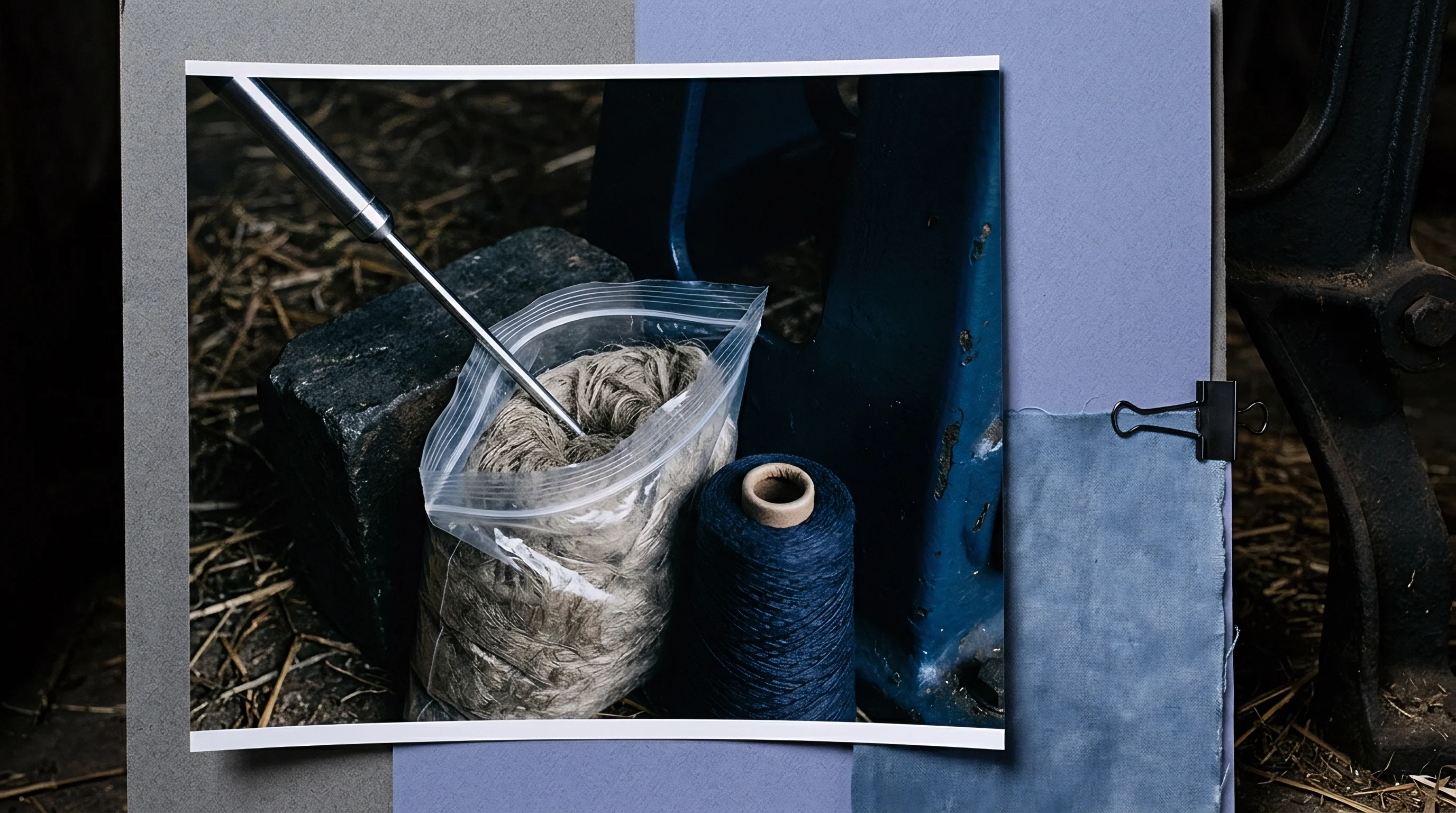

Assay

Analytical Verification of Cellulosic Content
Quantifying microstructural fiber scrap takes analytical methods that can isolate pure alpha-cellulose from non-cellulosic plant matter and chemical residues. Gravimetric testing protocols separate insoluble cellulosic structural material from soluble pectins, hemicelluloses, lignin, and processing waxes. Accurate mass-balance accounting depends on these test methods to convert wet waste weights into dry structural fiber equivalents.
Chemical extraction uses sequential washes of boiling sodium hydroxide, followed by acid neutralization and an ethanol rinse. What remains is pure insoluble cellulosic fiber mass. Subtracting this dry structural mass from total raw roving input gives the exact non-cellulosic scrap fraction lost to dissolution and chemical breakdown during wet processing.
| Standard Code | Analytical Methodology | Targeted Scrap Component | Measurement Accuracy Range |
|---|---|---|---|
| ISO 1833-11 | Chemical dissolution via sulfuric acid | Non-cellulosic pectin and hemicellulose fraction | ± 0.15% dry weight |
| ASTM D2496 | Microscopic image analysis and fiber counting | Micro-short fiber length distribution in sludge | ± 0.50 μm mean length |
| ISO 3074 | Solvent extraction using dichloromethane | Residual wax, spinning lubricants, and natural fats | ± 0.08% mass fraction |
| EN 12127 | Gravimetric oven-drying at 105°C | Absolute dry mass determination of wet scrap | ± 0.05% moisture content |

Quantitative Microscopic Partition Analysis
Optical and scanning electron microscopy provide visual verification of micro-scrap morphology, letting auditors distinguish mechanical fiber shear from chemical degradation. High-resolution image analysis measures fiber length distributions in basin sludge and suction cyclone dust. Samples with high proportions of clean, transverse cell wall fractures indicate excessive roller nip pressure, whereas fibrillated, split ends point to overly aggressive mechanical drafting.
Microscopic analysis also catches foreign fiber contamination in certified scrap pools. Blending uncertified cotton, hemp, or synthetic fibers into flax roving changes the cross-sectional profile of collected waste. Polarized light microscopy easily distinguishes the smooth, thick-walled polygonal cross-sections of high-grade European flax elementary fibers from the flattened, ribbon-like shape of short secondary fibers or synthetic substitutes.
Quantitative chemical extraction according to ISO 1833-11 provides the sole recognized legal proof of dry cellulosic mass yield in certified textile accounting.
Auditors must establish baseline samples for every raw material lot entering the spinning plant. Variations in retting intensity alter the initial pectin content of incoming roving, changing expected solubilization rates. Unretted or green flax retains up to 6 percent total pectin mass, whereas over-retted material sheds micro-fibers rapidly while dissolving very little pectin during hot water immersion.
Reliable mass accounting demands continuous calibration between laboratory assay data and floor weighbridge records. A mill that relies strictly on standard reference tables for fiber yield calculations risks significant accounting drift. Chemical assays run on actual batch samples provide the empirical foundation needed to defend mass balance accuracy during independent audits.


Shrinkage

Mass Reconciliation Mechanics across Partition Streams
Reconciling raw material input against output yarn volume requires an accounting framework for every physical, chemical, and moisture-driven mass shift. High-speed wet flax spinning involves complex transitions where physical fiber loss, chemical dissolution, and water absorption happen at the same time. Standard mass-balance equations that miss these microstructural variables fail to catch physical inventory leaks or deliberate fiber substitution.
Total mass balance reconciliation across a wet spinning lot follows a basic identity: input roving dry mass equals yarn dry mass plus macro-scrap dry mass, micro-scrap sludge mass, solubilized liquid mass, and unaccounted process variance. Converting all measured streams to absolute dry weight through oven-drying protocols removes moisture volatility from the ledger.
Mass balance partitions based on 1,000 kilograms of certified European Flax roving input establish baseline distribution limits across process streams.
| Process Partition Stream | Physical State | Mass Yield (kg Dry Weight) | Percentage of Input Mass | Traceability Allocation |
|---|---|---|---|---|
| Finished Wet-Spun Yarn | Solid (Spooled) | 885.0 kg | 88.50% | Certified Primary Product |
| Roving & Suction Macro-Scrap | Solid (Dry/Damp) | 38.5 kg | 3.85% | Certified Secondary Tow Stream |
| Basin Micro-Fiber Sludge | Suspended Solid | 22.0 kg | 2.20% | Uncertified Effluent Waste |
| Dissolved Pectins & Extractives | Liquid Solution | 34.5 kg | 3.45% | Non-Cellulosic Mass Loss |
| Winding Trim & Splice Scrap | Solid (Dry) | 11.0 kg | 1.10% | Certified Recycled Stream |
| Unaccounted Process Variance | Dispersed/Airborne | 9.0 kg | 0.90% | Allowable Shrinkage Limit |
The reconciliation model shows that yarn yield under high-speed wet spinning rarely exceeds 89 percent of dry roving mass. Mills claiming conversion yields above 92 percent without accounting for pectin dissolution and sludge shedding are either under-drying yarn samples during weighing or topping up input roving with uncertified fiber.

Invisible Loss Calculations and Allocation Rules
Invisible loss covers both chemical extraction mass lost to the bath and tiny fiber fragments dispersed into the mill air. Allocation rules govern how mills distribute this unrecoverable weight reduction across transaction certificates. Standard commercial practice allows mills to write off up to 1.5 percent of total lot mass as unallocated invisible loss without losing certification.
When measured invisible loss exceeds 1.5 percent, certifying bodies require chemical assay reports proving that the excess comes from non-cellulosic solubilization. High-temperature boiling of roving before spinning increases non-cellulosic removal, pushing total chemical mass reduction as high as 4.5 percent. In those cases, the mill must update its registered conversion coefficients in the transaction certificate portal to maintain alignment.
Commercial conversion coefficients that fail to isolate chemical dissolution from physical scrap create unprovable discrepancies on yarn transaction certificates.
Sourcing teams evaluating mill claims must run structured decision checks before approving mass-balance transaction entries. This process prevents certified weight inflation.
- Verify that input roving weighbridge certificates reflect clean dry weight established through standardized moisture regain testing under ISO 6741 conditions.
- Compare reported yarn delivery weights against maximum theoretical yield curves calibrated for the specific wet spinning draft ratio and bath temperature.
- Audit secondary scrap transfer dockets to confirm that recovered roving waste mass matches physical inventory present in the waste storehouse.
- Deduct measured non-cellulosic dissolution losses from the certified mass pool before calculating final transaction certificate weight balances for output yarn.
Accounting for invisible loss requires consistent moisture regain factors across every weighing point. Flax fiber has a standard commercial regain allowance of 12.0 percent, but wet roving leaving the bath contains over 40.0 percent free water. Weighing wet output without applying exact moisture regain corrections introduces major errors into physical yield ledgers, undermining traceability across the entire supply chain.
Contractual agreements must specify whether yarn delivery prices settle on gross weight, net weight, or standard dry mass plus official moisture regain. Under standard International Linen and Hemp Confederation (CILC) rules, contract line items settle strictly on conditioned weight ~ calculated as oven-dry mass multiplied by 1.12. Deviating from this pricing basis exposes buyers to hidden surcharges from water weight manipulation.
Warrant

Contractual Origin Risk Mitigation in Supply Agreements
Documenting microstructural scrap partitioning is essential legal risk management for brands and buyers specifying certified flax origin. Standard purchase orders referencing generic linen certificates leave buyers vulnerable to origin substitution during wet processing. Writing precise scrap accounting standards directly into supply contracts establishes legal liability for mass-balance discrepancies in overseas spinning mills.
Cross-border supply agreements must bind mills to physical segregation rules and mass-reconciliation reporting. Contracts signed with spinners outside Europe require explicit enforcement mechanisms, since local courts rarely enforce external scheme rules unless they are directly written into the contract. Including audit clauses that give independent inspectors unannounced access to weighbridge records, basin sludge sumps, and waste storage areas reduces the risk of fraudulent certificates.

Transaction Certificate Audit Verification Steps
Auditing Chinese and Southeast Asian spinning facilities requires physical verification of floor records rather than simple paperwork reviews. Mill offices frequently assemble perfectly balanced transaction certificate files for inspectors while running uncertified secondary fiber through high-speed wet spinning frames. Uncovering origin fraud requires auditors to cross-examine primary production logs against material input dockets.
Floor audit reconciliations revealing physical tow waste stock 3.2 tons lower than reported transaction balances resulted in the rejection of 14 metric tons of yarn. That missing waste mass showed the mill had secretly re-introduced uncertified tow scrap into certified yarn lots to inflate production volume. Discrepancies like this prove that paper certificate audits alone cannot guarantee origin integrity without floor-level mass balance checks.
To build an unassailable provenance dossier for wet-spun flax yarn, corporate compliance teams must gather and verify a specific set of commercial and technical records.
- Original Scutcher Bale Tags stating European Flax scope certification lot numbers matching field harvesting origin declarations.
- Roving Mill Delivery Notes recording initial dry mass, lot identification codes, and transport weighbridge receipts.
- Spinning Line Shift Sheets documenting daily input roving consumption, spindle assignment, draft ratios, and fluid bath operating temperatures.
- Secondary Waste Transfer Records proving physical weight, moisture content, and purchaser identity for all recovered macro-tow scrap streams.
- Laboratory Assay Certificates validating chemical pectin extraction rates and dry cellulosic mass content for each processed spinning lot.
- Final Yarn Scope Certificates issued by accredited third-party certification bodies explicitly naming the covered production lot and volume limits.
Legal disputes over origin claims center on contractually defined material default thresholds. Standard warranty clauses must state that any origin certificate discrepancy over 1.0 percent of total lot dry weight constitutes a material breach of contract, entitling the buyer to reject the shipment entirely and recover financial damages. Putting explicit scrap partitioning metrics into purchase contracts turns raw technical data into enforceable legal protection across international supply networks.
The standard warranty language inserted into supply contracts governs transaction certificate validity by binding the seller to physical yield reconciliation. The seller warrants that all transaction certificates issued for wet-spun flax yarn reflect real dry cellulosic mass yield calculated after deducting solubilized pectin loss and micro-fiber sludge waste verified under ISO 1833-11 analytical standards. Any unaccounted mass gap between certified roving input and delivered yarn output exceeding 1.5 percent of dry input weight voids the origin declaration, triggering immediate buyer indemnification rights and mandatory independent lot re-auditing at seller expense.