Identifying Bast Fibre Grades in Raw Flax Quotes
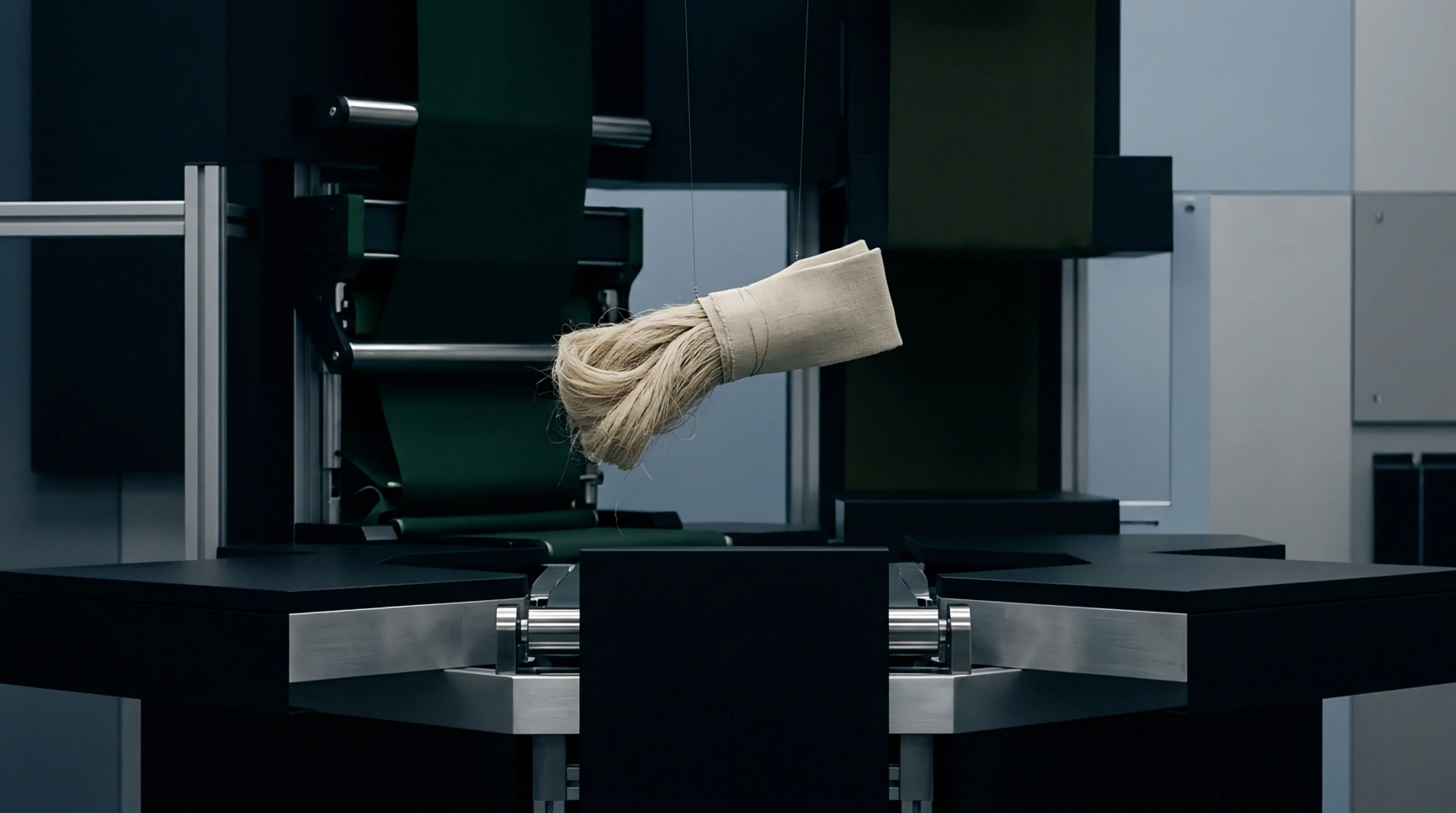
Evaluating raw flax fibre grade quotes demands checking retting degree, shive loading, metric fineness, and hackling yield against target wet-spun yarn counts.

Evaluating raw flax fibre grade quotes demands checking retting degree, shive loading, metric fineness, and hackling yield against target wet-spun yarn counts.
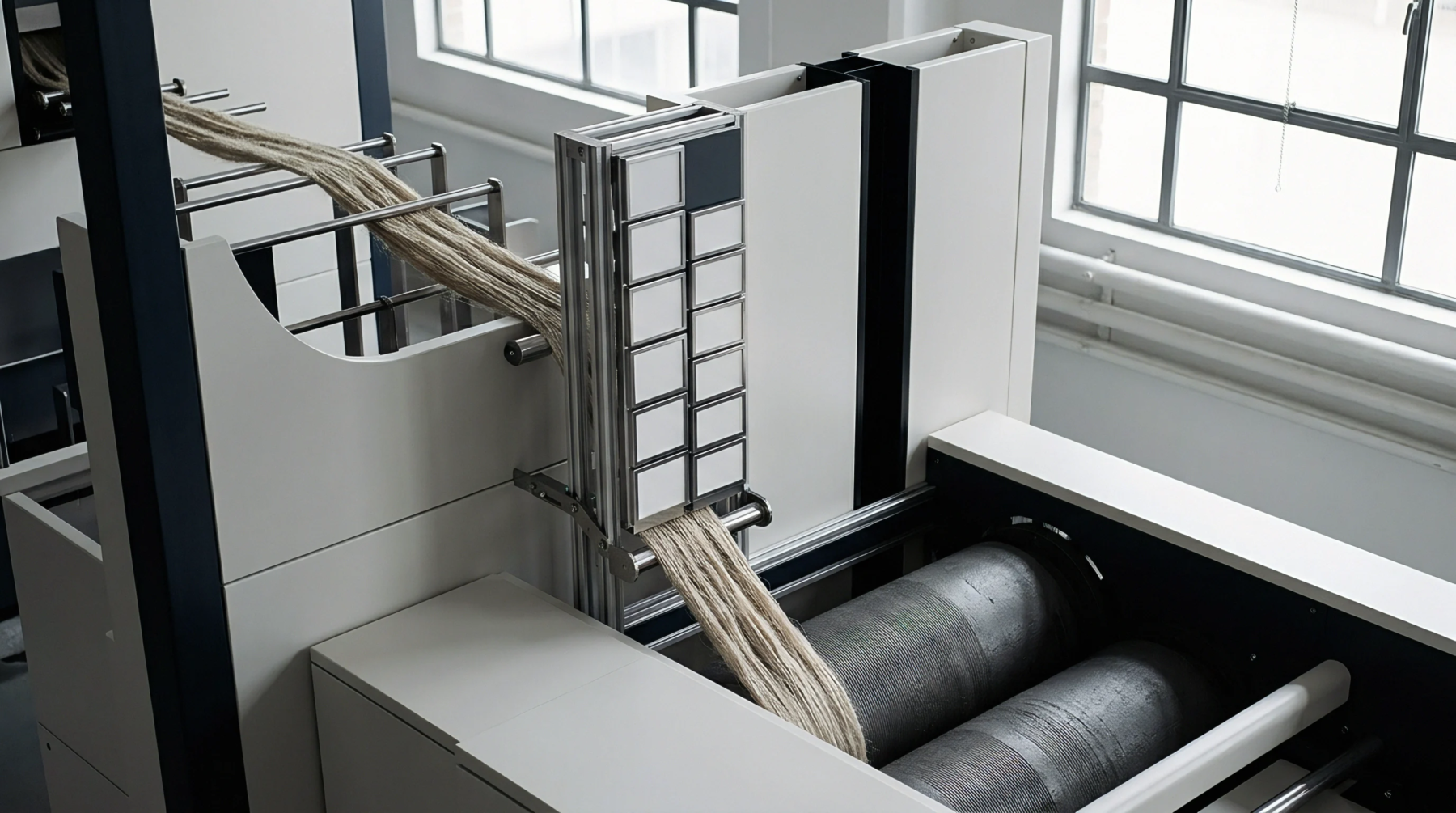
Ultrasonic assistance thixotropically thins pectin matrices, enabling line flax drafting at 300 m/min without bundle fracture or sliver mass variance.
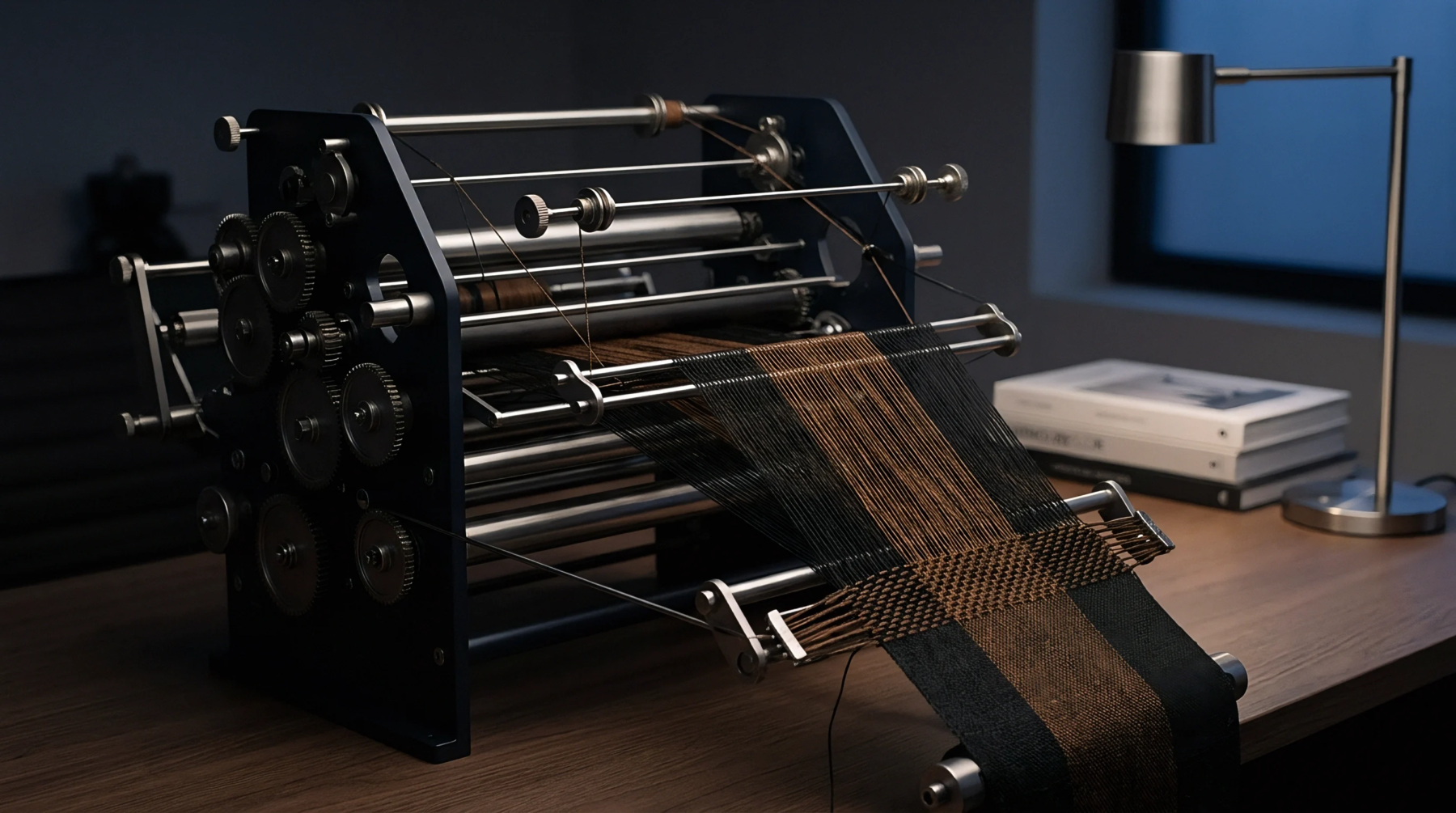
Flax yarn stiffness forces dynamic crimp interchange during beat-up, where warp tension directly converts warp curvature into weft deflection.
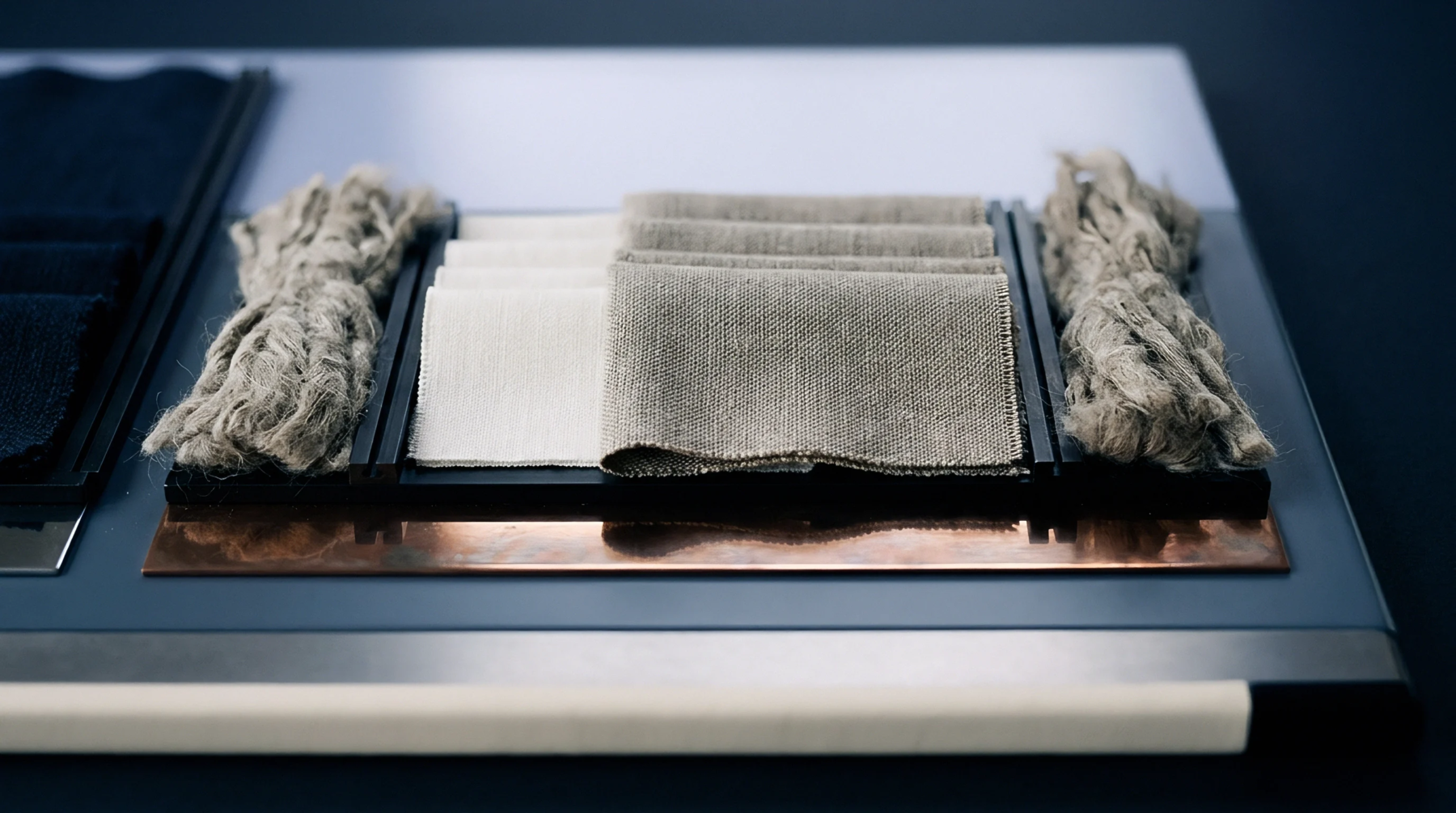
Verifying European Flax origin requires matching annual scope certificates to batch transaction certificates while enforcing mill mass balance yield limits.

Dew retted flax yields 12 to 16 percent non cellulosic extraction mass loss while water retted yields 8 to 11 percent altering scouring requirements and cost.

Non preferential origin for hemmed linen articles attaches to the country of fabric weaving, making simple cut and sew documentation insufficient.

Made-up linen tariff classification requires verifying edge-finish status under Legal Note 7 and confirming yarn mass fractions via ISO 1833-11 solvent testing.
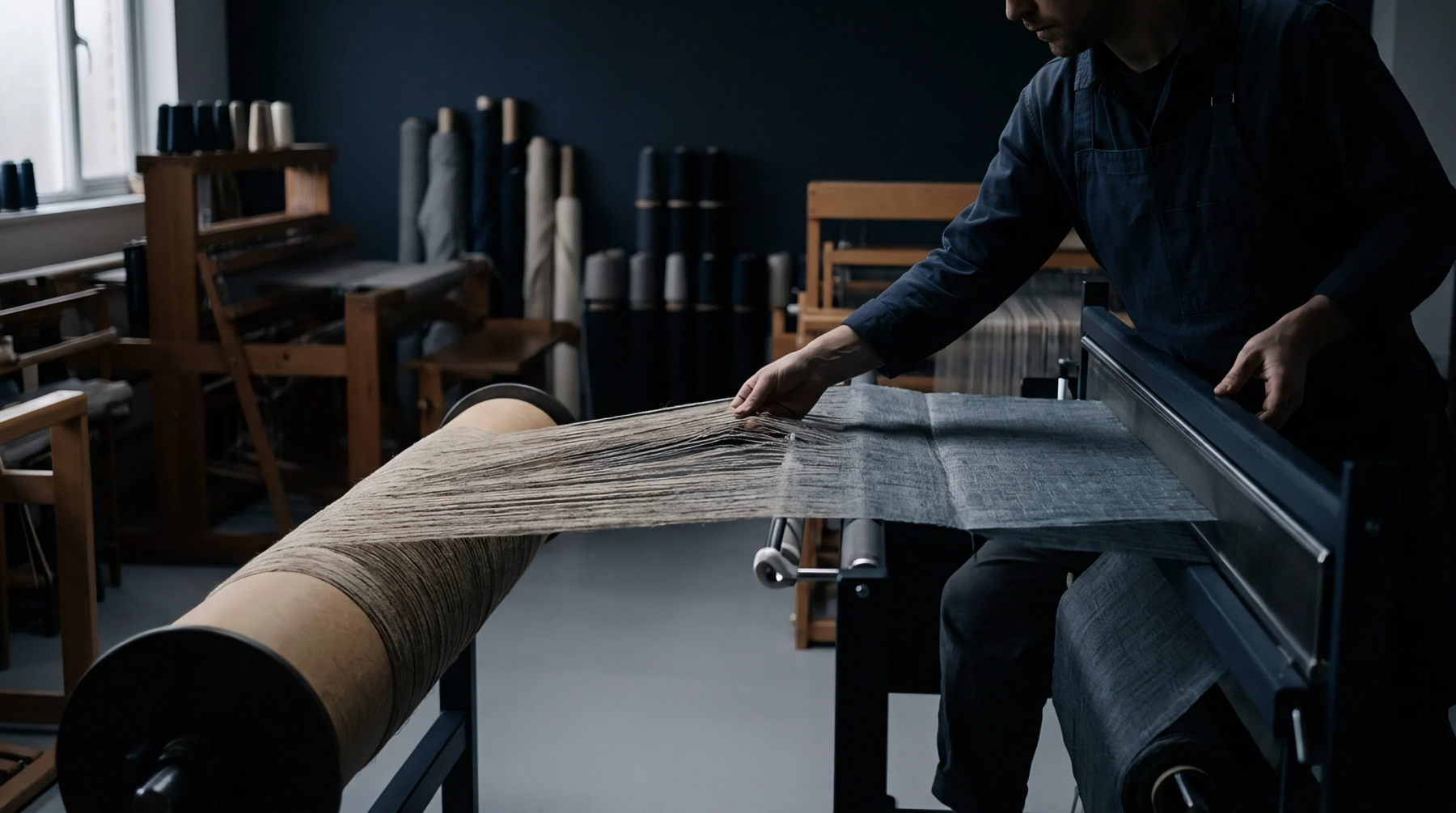
Finished fabric yield calculations must deduct dry size pickup percentages and natural scour losses from greige warp mass before applying crimp factors.

Pectin plasticization relaxes bast middle lamellae, enabling microfibril realignment to drive fine count spinning yields and cut fabric meter costs.

Mass balance chain of custody requires dry-weight intake reconciliation, facility-specific yield factors, and valid transaction certificates at every border.
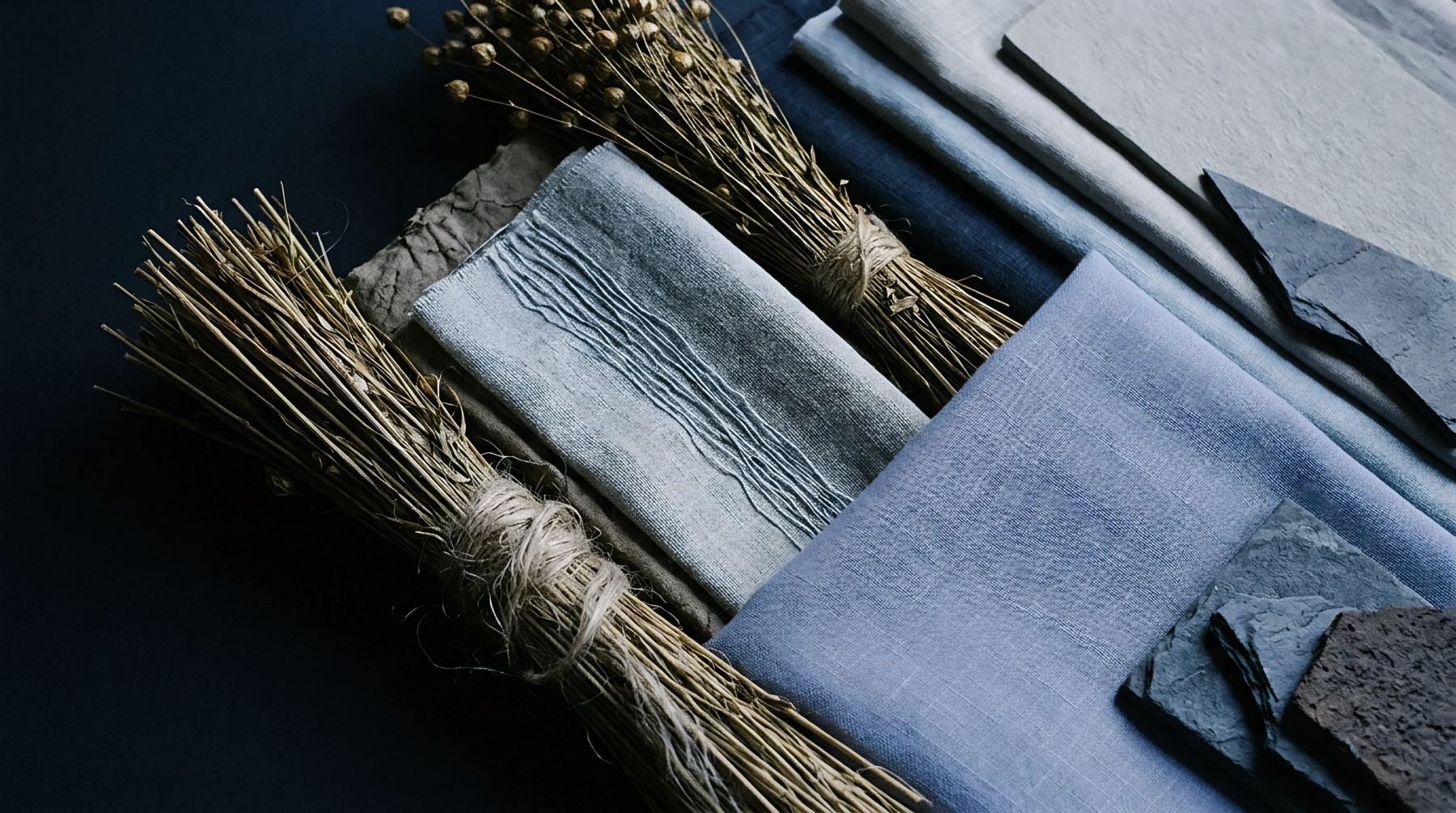
Oven dry mass baselines for grey linen yarns require 105C desiccation and solvent extraction adjustments to prevent structural yarn count and billing errors.

Tariff shift compliance for synthetic-edged hybrid linen requires aligning the non-originating trim weight with regional de minimis thresholds.

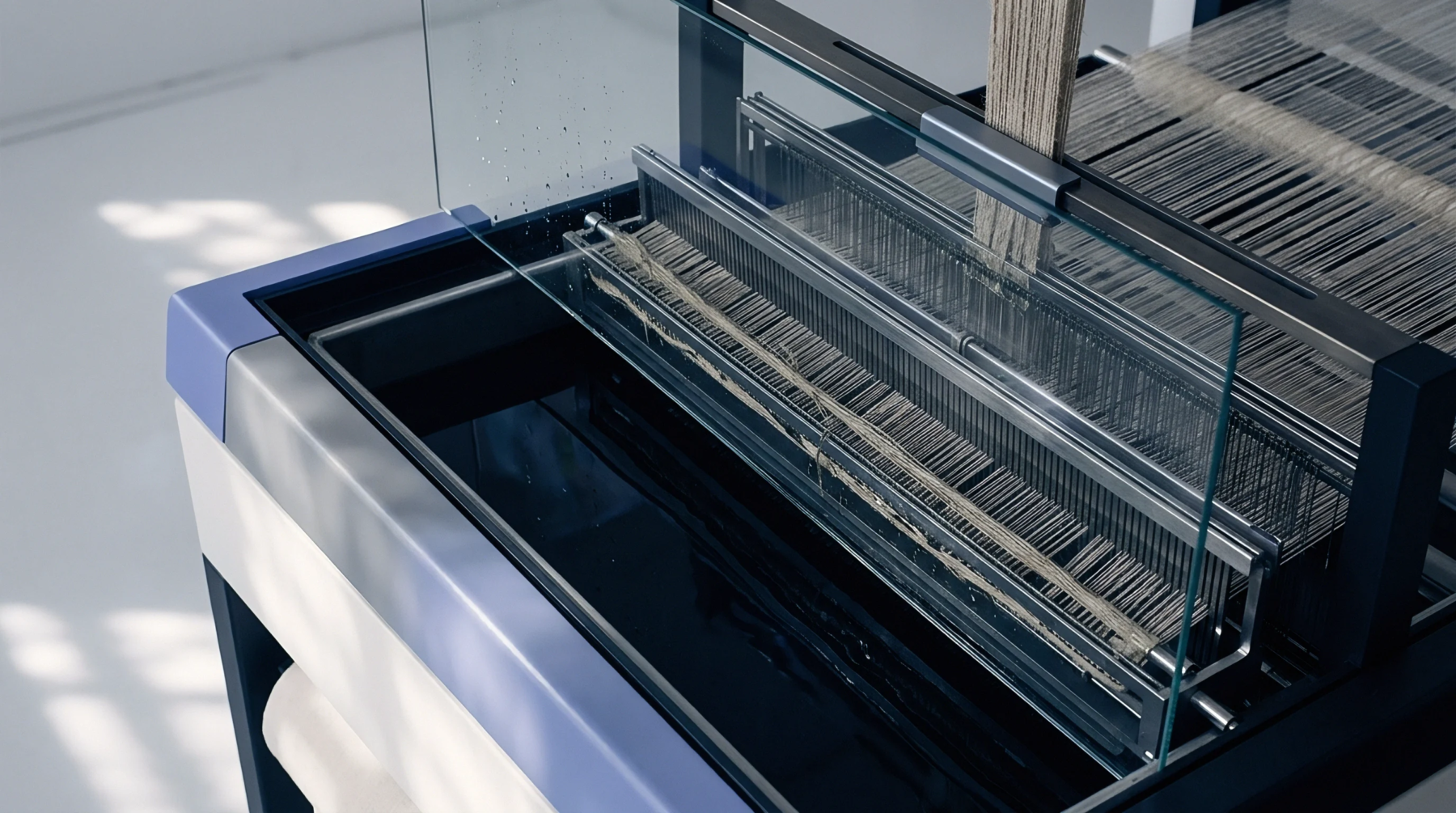
Thermal water baths operating at 60°C to 70°C dissolve calcium pectinate bonds to allow inter-fibre slip and high count spinning without strand rupture.

Nonlinear damping in wet spun flax yarns depends on strain rate amplitude, pectin shear, and fiber alignment, dictating dynamic warp tension limits.

Dynamic transverse pin shear cleaves the pectin middle lamella into fine elementary fibers only when retting depletes calcium cross-links without weakening walls.

Dynamic acoustic wave velocity metrics predict high-speed weft break frequencies in wet-spun flax by identifying localized stress wave superposition points.
Calculating high-speed weft tension profiles stabilizes pre-winder braking, controls peak deceleration forces, and prevents costly shed stoppage rate spikes.

Polyvinyl alcohol adhesion on raw bast yarns requires adjusting degree of hydrolysis to match surface impurity wax content and maintain size film integrity.

Partially hydrolyzed PVA (87-89 mol%) delivers superior film flexibility and bast adhesion, cutting linen warp breaks by 85% compared to fully hydrolyzed grades.

X-ray diffraction measures cellulose microfibril dispersion in scutched line flax to predict hackling yield and wet-spinning end breakage rates.
Determining PVA pick up on flax requires correcting hot-water gravimetric mass loss for non-cellulosic extractables or using iodine spectrophotometry at 670 nm.
Steep cellulose microfibril angles maximize flax tensile modulus, while processing kinks trigger premature shear failure that degrades hackling yields and yarn counts.

Accelerating wet ring drafting above 200 m/min requires chelator-driven calcium sequestration at 80°C to cleave pectin lamellae within a 0.3-second dwell window.

Dynamic speed compensation profiles match loom load curves to flax moisture regain, preventing tension spikes during high density beat-up.

Optimal wet-spun flax tenacity demands controlling trough temperature and water hardness to dissolve 3.2-4.1% pectin mass without degrading cellulose strands.

Dynamic operator workload reallocation prevents machine interference losses during wet spun linen warp breakage spikes when calculated workload crosses 75 percent.

Maintaining precise electronic let off tension and backrest dampening on high density linen warps prevents yarn breakage and eliminates reed marks.

Section XI Note Seven creates Chapter 63 made-up articles via edging, but non-preferential origin remains anchored to where broadcloth was woven.

Non-preferential origin for woven flax fabrics under customs law is determined by the country of weaving rather than where raw flax fiber was grown.
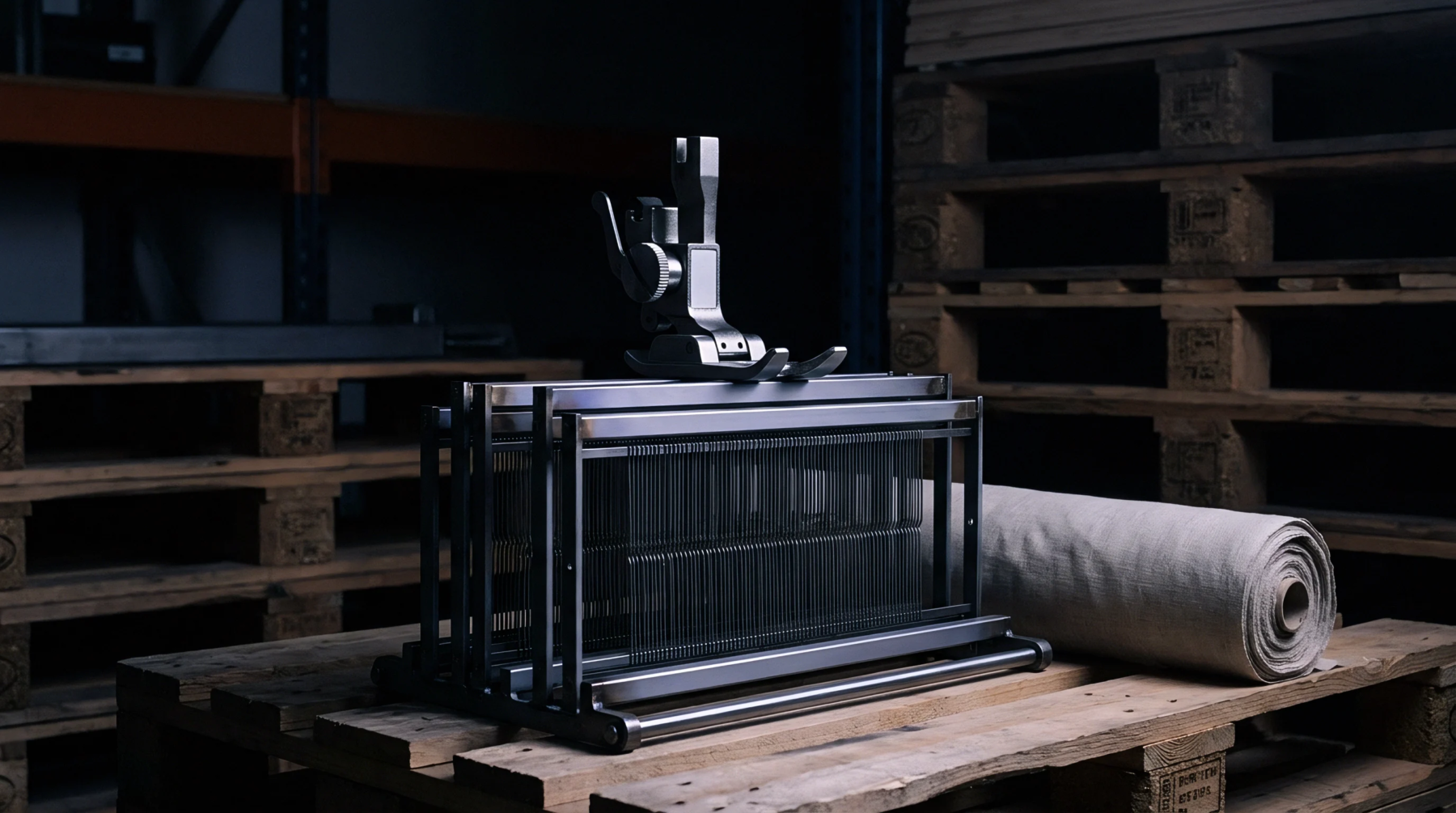
Predict localized jacquard harness friction by calculating Euler cord wrap angles through comber board perimeters and grading return springs to prevent shed sag.
Expertise is a utility, not a secret. sentiention™ publishes its working knowledge as open reference: intelligence layer covering the materials it sources, the markets it enters, and the reference that serves both.