Identifying Bast Fibre Grades in Raw Flax Quotes
Evaluating raw flax fibre grade quotes demands checking retting degree, shive loading, metric fineness, and hackling yield against target wet-spun yarn counts.
Strand
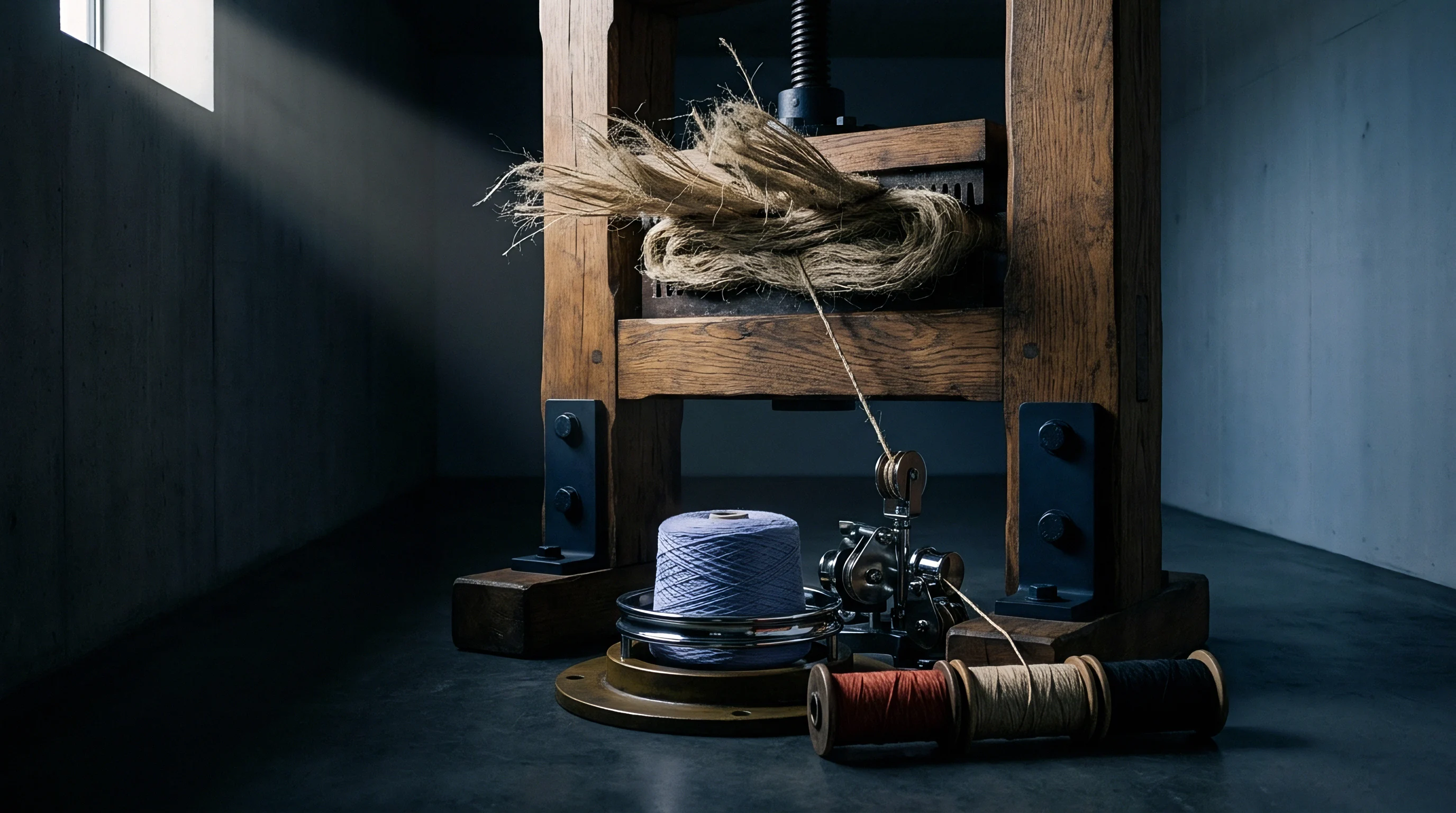
Raw flax arrives at the spinning mill in dense, compressed bales of either long scutched line or short tangled tow. Trade offers classify this bast material by extraction method, retting state, and visual bundle purity. Primary decortication strips the outer bark from the inner woody core as mechanical fluted rollers and scutching turbines strike the crushed straw.
Held together by middle lamella pectins, the resulting fiber bundles form the basic starting point for all subsequent spinning.
Dew retting dominates European raw supply, and scutched line commands the highest market premiums. How easily individual bast filaments separate from surrounding parenchymal cells depends entirely on retting severity. Under-retted straw holds onto stiff woody shives, whereas over-retted material suffers cellulolytic damage that lowers ultimate tensile strength.
Scutched Long Fibre Classifications
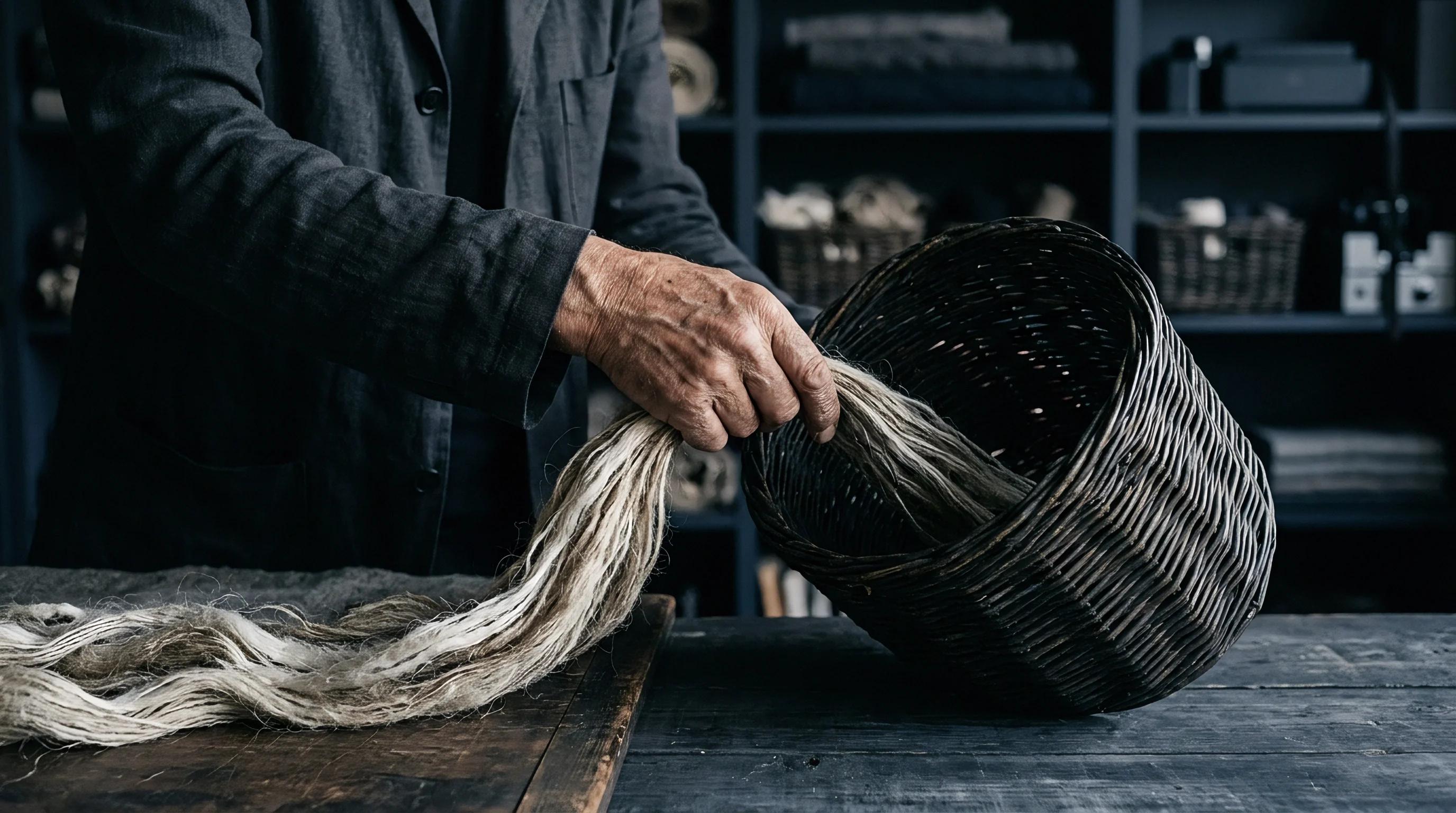
Trade offers specify bast material using a mix of traditional regional terms and metric physical measurements. Scutched line consists of long, parallel filaments running the full length of the stem, typically six hundred to nine hundred millimetres. Scutched tow comprises the shorter, disorganized filaments that drop beneath scutching turbines during decortication; it sells at lower prices but demands thorough carding and combing before it can be spun.
- Long Line Scutched primary parallel bundle extracted from full-length straw, suitable for high-count wet spinning.
- Scutched Tow short tangled filaments combed out during primary decortication, processed through carding frames for dry or coarse wet spinning.
- Dew Retted Fibre field-conditioned straw acted upon by naturally occurring fungi, producing greyish-silver bundles with high tenacity.
- Enzyme Retted Fibre tank-processed straw treated with controlled pectinase solutions, yielding uniform blonde filaments with consistent residual pectin levels.
Fibre bundle cohesion governs drafting behaviour during drawing and roving. Scutched line flax from Normandy or Flanders crops carries a natural wax coating of one point five to two point two percent by weight. This lipid layer lubricates the material during mechanical hackling, preventing filament rupture as comb pins penetrate dense bundles.
Dew-retted long flax fibres exhibiting a metric fineness of 1,800 Nm deliver bundle tenacity values above 45 centinewtons per tex under standard ambient testing conditions of 20 degrees Celsius and 65 percent relative humidity.
Retting Regimes and Pectin Degradation
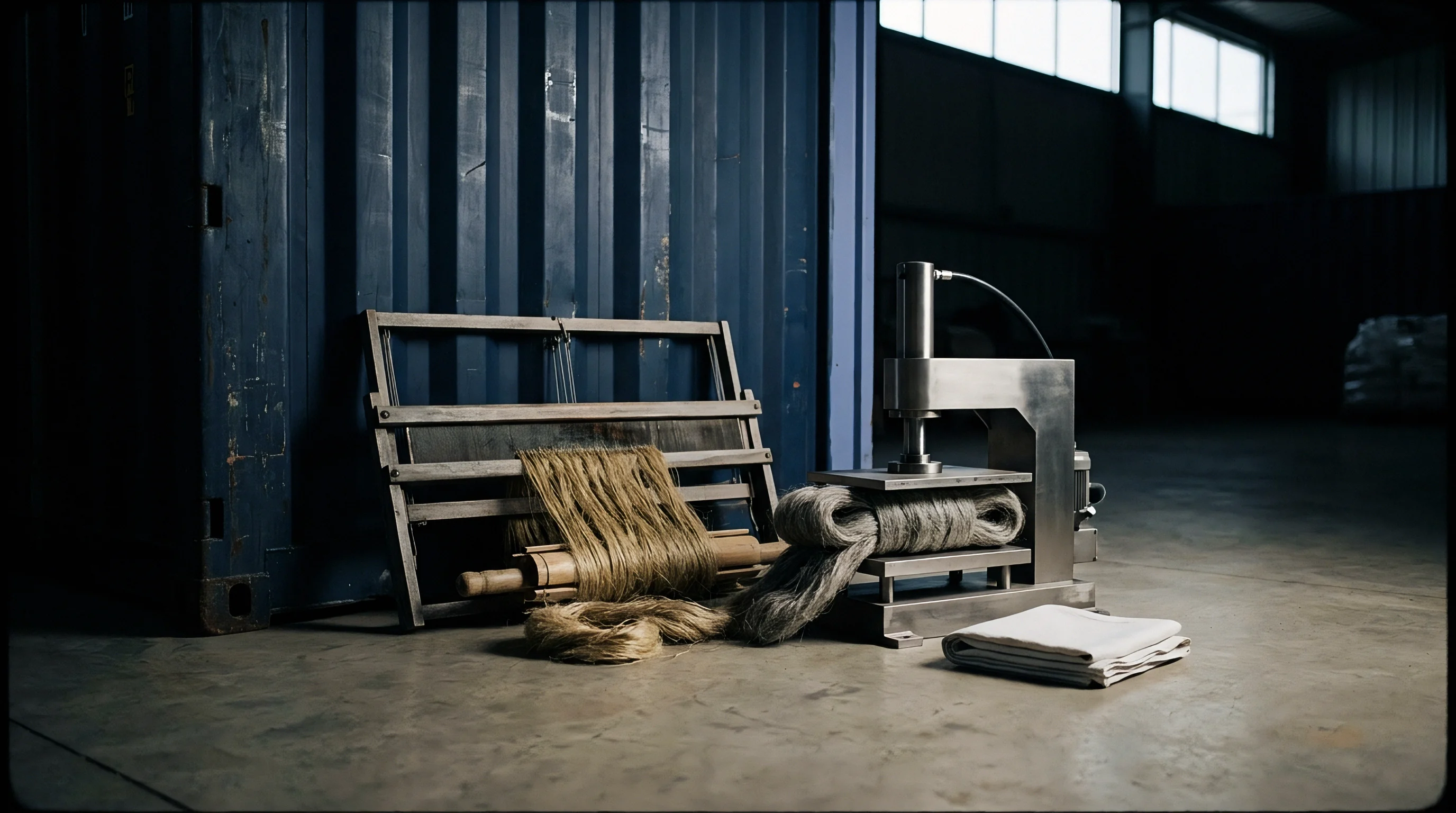
Field exposure relies on soil fungi and bacteria to break down calcium pectate bonds inside parenchymal tissue. Water retting, traditionally done in slow rivers or heated tanks, yields pale blonde straw with little chemical damage to cellulose microfibrils, but environmental rules have largely forced a shift to field dew retting. Moisture during field retting requires careful monitoring so fungal growth stays uniform without rotting the straw.
| Grade Category | Processing Method | Staple Length Range (mm) | Linear Density (dtex) | Shive Target (%) |
|---|---|---|---|---|
| Long Line Scutched (Flax Line) | Dew Retted | 600 to 900 mm | 12.0 to 18.0 dtex | Less than 1.5% |
| Long Line Scutched (Flax Line) | Water or Enzyme Retted | 650 to 950 mm | 10.0 to 15.0 dtex | Less than 1.0% |
| Scutched Tow (Etoupes) | Dew Retted | 100 to 350 mm | 22.0 to 35.0 dtex | 3.0 to 6.0% |
| Scutched Tow (Etoupes) | Green or Unretted | 80 to 300 mm | 30.0 to 50.0 dtex | Greater than 8.0% |
Enzyme retting applies specific pectinase formulations inside closed tank reactors, removing pectin completely within twenty-four hours and bypassing weather risks altogether. Buyers compare enzyme-treated lots against traditional dew-retted stock by checking residual hemicellulose levels and wax retention, as reduced wax content often causes friction spikes on high-speed ring frames.
Whether enzyme-retted straw can match the precise bundle cohesion and natural wax content of traditional dew-retted Normandy flax without leaving unwanted chemical residues remains an open question on spinning floors.


Impurities
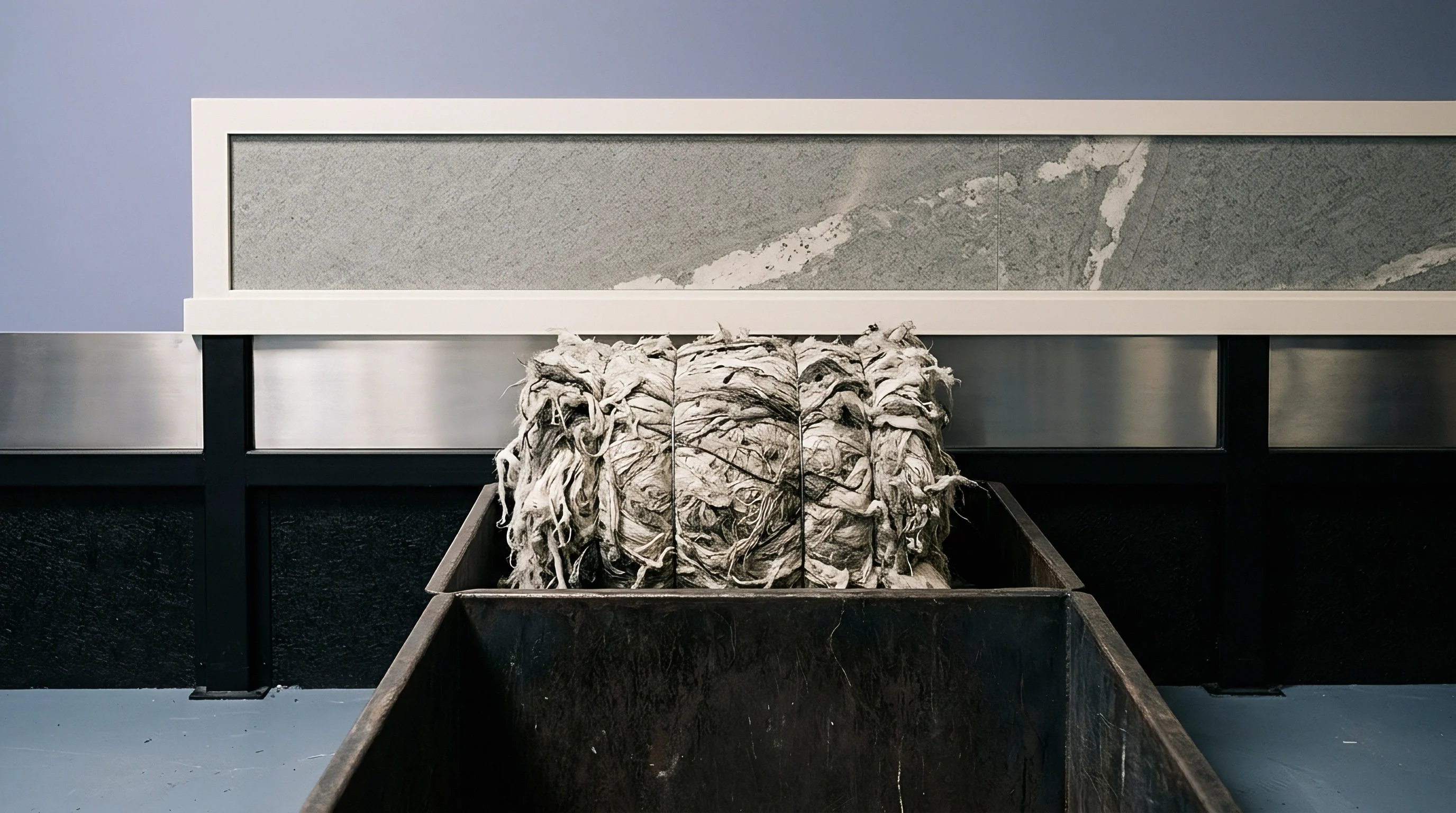
Non-fibrous straw elements remain attached to bast bundles through primary decortication. Shive particles ~ fragments of woody core xylem ~ are the main non-cellulosic contaminant listed in raw offers. Bark adhesion, unretted epidermal tissue, and plant dust all lower processing efficiency, while high overall impurity levels increase hackling loss, wear down comb pins, and leave thick defects in drawn slivers.
Because shives reduce effective yarn tenacity and coarse technical bundles break spinning needles, assessing impurity loads requires separating gravimetric shive percentages from entangling neps and short fibre mass.

Shive Content and Nep Indexing
Woody core particles entering the carding machine snap filaments and create irregular spots in the sliver. Gravimetric testing isolates shive mass from raw samples using standard sieve shakers and hand sorting. Offers for long line flax typically cap shive content at under one point five percent by dry mass, while tow contracts accept three to eight percent depending on the target yarn count.
- Extract ten representative primary samples from top, middle, and bottom sections of five unopened bales per lot.
- Blend sub-samples manually to assemble a five hundred gram aggregated test specimen.
- Condition specimen for twenty-four hours in standard testing atmosphere at twenty degrees Celsius and sixty-five percent relative humidity.
- Separate woody shive particles from bast filaments using mechanical sieve shaking combined with manual tweezers extraction.
- Weigh extracted shive mass on analytical balance to calculate percentage ratio relative to dry conditioned fibre mass.
Neps form when fine, over-retted filaments tangle around rigid shive fragments during carding. The nep index measures these dense fiber knots per gram of carded sliver; elevated counts force mills to run combs at lower speeds, driving up conversion costs per kilogram of finished yarn.
Standard delivery contracts adhering to international bast fibre trade rules deduct three percent from gross invoice weight when unretted woody shive mass exceeds two point five percent by dry weight.

Combing Waste and Cortical Bark Adhesion
Hackling pin rolls strike suspended flax bundles to comb out short entanglements and residual outer skin. Cortical bark clings stubbornly to under-retted stems and resists pin penetration. These hard patches pass through hackling combs intact and reach the roving package, where they cause end breaks during ring drafting.
Pectin bonds holding bark to bast bundles demand higher bath temperatures during wet spinning preparation. When handling low-grade unretted tow, mills often raise caustic soda concentrations in roving bleaching baths to dissolve residual bark. That chemical treatment, however, degrades surrounding cellulose chains and reduces final thread tenacity.
Bales containing dark, coarse epidermal bark produce rough sliver that frequently breaks fine wet-spinning roving.

Fineness
Linear density dictates how many individual filaments must span a yarn cross-section to maintain drafting stability. Flax fineness operates on two structural levels: the elementary single cell and the composite technical bundle. Single ultimate cells measure ten to thirty micrometres across and twenty to forty millimetres long.
Technical bundles combine multiple ultimate cells bound by middle lamella pectins, forming the long strands sold in commercial lots.
Because fine yarns require higher fiber counts, metric fibre number expresses linear density as length in metres per gram of fibre mass. Higher metric numbers indicate finer stock. A quote listing Nm 1,800 points to a fine long-line lot suited for delicate wet-spun yarns, while Nm 600 marks coarse material suitable mainly for heavy dry-spun duck fabrics.

What Fibre Metrics Predict Ring Frame End Breaks?
Yarn strength and spinning limits depend on slender ultimate filaments sliding past one another during wet drafting. Hot water in the wet spinning trough, kept between sixty and eighty degrees Celsius, softens residual pectins between elementary cells inside technical bundles. This thermal softening allows thick bundles to draw out into fine, uniform strands before twist is inserted.
Wet spinning requires fine, uniform roving. When raw stock lacks division capability, technical bundles remain thick even after hot water soaking; these coarse bundles draft unevenly, creating thin spots that break on ring frames. Assessing division potential requires testing metric fineness in the lab after standardized chemical retting.
| Physical Property | Test Standard | Testing Method / Instrument | Standard Conditioning | Target Acceptance Limit |
|---|---|---|---|---|
| Bundle Fineness | ISO 2370 | Air Permeability / Cut Length Weighing | 20°C and 65% RH | Nm 1,500 to Nm 2,200 |
| Filament Linear Density | ISO 1973 | Vibroscope Single Filament Tester | 20°C and 65% RH | 1.2 to 2.5 dtex |
| Bundle Tenacity | Stelometer Method | 1/8 inch Gauge Clamp Assembly | Standard Atmosphere | Greater than 40 cN/tex |
| Moisture Regain | ISO 6741 | Oven Drying to Constant Mass | 105°C Drying Basis | 12.0% Nominal Basis |
Bundle Tensile Strength and Linear Density
Stelometer testing measures the force needed to break a clamped bundle of parallel filaments. Standard procedures use a one-eighth-inch clamp distance to evaluate structural integrity across middle lamella boundaries. Tenacity values above forty-five centinewtons per tex confirm a sound cellulolytic structure undamaged by severe over-retting or high drying temperatures.
Dry spinning uses no hot water, so technical bundles remain un-attenuated and act as single solid elements in the yarn matrix. Consequently, dry-spun yarns require raw material with higher linear density to maintain sufficient fiber mass across coarse yarn counts like Nm 10 or Nm 14.
Coarse technical bundles that resist separation in the hot water trough invariably cause drafted roving to break before twist insertion.
Measuring linear density with a vibroscope per ISO 1973 records single filament vibration frequency under set tension. Values between one point two and two point five dtex correlate directly with good spinning performance at fine counts above Nm 60. Omitting linear density figures from offers hides potential lot-to-lot variation.
Using coarse fiber bundles for fine-count wet spinning leads to frequent end breaks, excessive comb waste, and direct margin losses.

Yield
The market value of raw flax hinges on the yield of long dressed sliver recovered during hackling. Pin hackling divides scutched line into long dressed line, combed tow, and waste shive dust. High-grade scutched line yields up to seventy percent long line sliver, whereas tangled or brittle straw yields under fifty percent.
Because hackling separates valuable long line from tow, buyers discount offers with low expected yields. At an initial purchase price of four Euros per kilogram for raw scutched flax, a yield drop from sixty-five percent to fifty-five percent creates significant cost escalation.

Hackling Extraction and Waste Ratios
Machine pins split coarse flax bundles while combing short entanglements into tow collector bins. Pin density increases progressively through successive hackling fields, from two pins per centimetre up to twenty-four. Brittle stems snap under impact from the finer pins, generating more tow at the expense of long line sliver.
- Comb Pin Density machine pin spacing per centimetre dictating filament splitting efficiency and short fiber extraction rates.
- Feed Weight Uniformity consistent grist mass introduced to coarse hackling combs to prevent localized pin damage and fiber bunching.
- Roving Moisture Level moisture content retained during drawing frame storage to preserve pectin flexibility during attenuation.
- Drafting Roll Pressure nip roll force preventing sliver slippage during final attenuating draws across wet spinning frames.
Hackling performance reflects overall retting quality. Over-retted crops generate heavy comb waste because weakened filaments break under pin penetration. Under-retted crops yield little long line because rigid, unseparated straw snaps under mechanical force.
Low hackling yield often stems from damp field harvesting conditions rather than uneven retting across the straw profile.
Worked Calculation of Hackled Line Cost
Evaluating a raw offer of 4.20 Euros per kilo requires tracking mass losses across primary processing. Consider a 10,000-kilogram lot of raw scutched line flax run through a standard hackling line. Assume output yields 62 percent dressed long line, 26 percent hackling tow, and 12 percent shive waste and dust.
Processing costs equal 0.45 Euros per input kilogram, and recovered tow resells to secondary mills at 1.50 Euros per kilogram.
| Processing Stage / Mass Fraction | Mass Yield (%) | Mass Output (kg) | Unit Value / Cost (€/kg) | Net Extended Value (€) |
|---|---|---|---|---|
| Raw Scutched Line Input | 100.0% | 10,000 kg | €4.20 input cost | €42,000 gross purchase cost |
| Hackling Processing Cost | N/A | 10,000 kg input | €0.45 conversion cost | €4,500 total processing cost |
| Recovered Dressed Long Line | 62.0% | 6,200 kg | Calculated net cost | €42,600 net allocated cost |
| Combed Hackling Tow Recovery | 26.0% | 2,600 kg | €1.50 byproduct credit | -€3,900 revenue offset |
| Unrecoverable Waste and Dust | 12.0% | 1,200 kg | €0.00 value | €0 zero value |
Dividing the net allocated cost of 42,600 Euros by the 6,200 kilograms of recovered long line gives a landed cost of 6.87 Euros per kilogram of dressed line. If brittleness reduces yield by five percent to 57 percent, long line output drops to 5,700 kilograms and tow rises to 3,100 kilograms. Under these lower yields, the net dressed line cost rises to 7.34 Euros per kilogram, adding 0.47 Euros per kilogram directly to yarn material costs.
Unexpected yield drops often stem from localized rain during field retting rather than improper machine pin density.

Contract
Price sheets for raw bast fibers list grade codes alongside moisture baseline standards. Quoted prices mean little unless contract terms specify mass adjustments based on moisture regain. International trade rules govern commercial weight under ISO 6741 standards; bales delivered above moisture limits face price penalties or automatic weight deductions upon clearance.
High moisture causes mold in transit, while bale cores can harbor unretted bark. Buyers evaluating quotes must carefully verify grade codes, moisture allowances, and freight weight terms.
Deciphering Fibre Quotation Terminology
Supplier quote sheets list origin, scutching method, color code, and commercial weight basis. Offer lines using traditional French nomenclature ~ such as Courtai, Scutched Line Flax Grade 3, or Flax Tow No. 6 ~ correspond to specific spinning count ranges. A Grade 3 line flax designation suits medium wet-spun counts between Nm 30 and Nm 40, whereas Grade 5 stock supports fine yarns up to Nm 60.
Green flax quotes describe decorticated straw produced without field retting. Because green flax requires heavy chemical boiling in yarn form to dissolve intact pectins and lignins, its initial price sits thirty to forty percent below dew-retted line stock. However, downstream processing costs and weight losses offset the lower purchase price.
Commercial Mass Adjustments and Landed Metre Arithmetic
Invoices convert delivered weight to conditioned weight using standard moisture regain baselines. For raw flax, the standard commercial regain baseline is twelve percent. A shipment testing at fifteen percent moisture carries three percent excess water; applying ISO 6741 regain formulas reduces payable mass accordingly so buyers avoid paying fiber rates for ambient water.
Calculating raw material cost per metre of finished fabric requires tracking mass through hackling, drawing, roving, wet spinning, weaving, and finishing shrinkage. Consider a linen fabric with a target weight of 200 grams per square metre at a finished width of 1.50 metres, woven from Nm 30 wet-spun warp and weft yarns. Each running metre contains 300 grams of net yarn.
Factoring in eight percent weaving waste and twelve percent spinning preparation loss requires 371 grams of dressed hackled line per linear metre.
Applying the dressed hackled line cost of 6.87 Euros per kilogram gives a direct fiber input cost of 2.55 Euros per running metre. If higher impurity levels push spinning preparation waste from twelve to eighteen percent, fiber requirements rise to 398 grams per metre, increasing landed fabric material cost to 2.73 Euros per metre. Contracts that omit strict impurity limits leave weavers vulnerable to margin erosion on long runs.
Contract terms incorporating ISO 6741 baseline regain standards adjust gross invoice mass directly to protect buyers against paying for excess moisture.